If All Your Friends Were Jumping Off A Cliff…

…would you do it too?

Okay, quick show of hands: how many of you heard your Mom or Dad say this to you? I’ve got both my hands up!

I always hated this statement, because I felt like saying, “Mom, I’m not an idiot. I know where to draw the line.” This an extreme example (a hyperbole) intended to get a point across. The point that our parents were trying to make is: humans tend to be crowd followers.

We want to be accepted, so sometimes we bend ourselves a little bit to get the stamp of approval from our peers. It might be a little more obvious among teenagers with clothing choices, music preferences, or attitudes toward those “outside” the mainstream. Although it gets a little more subtle among adults, I think the desire to be accepted—to go along with the crowd—is always there.

Or else we become rebels. If society says “Right” the rebel says “Left.” If society says “War” the rebel says “Peace.” If Mom and Dad say, “Go to church,” the rebel says, “I’m going to stay away from church.” Which shows another tendency of human nature: we tend to go to extremes.

God says, “Do what is right. Period”…

You must not follow the crowd in doing wrong. When you are called to testify in a dispute, do not be swayed by the crowd to twist justice. And do not slant your testimony in favor of a person just because that person is poor.

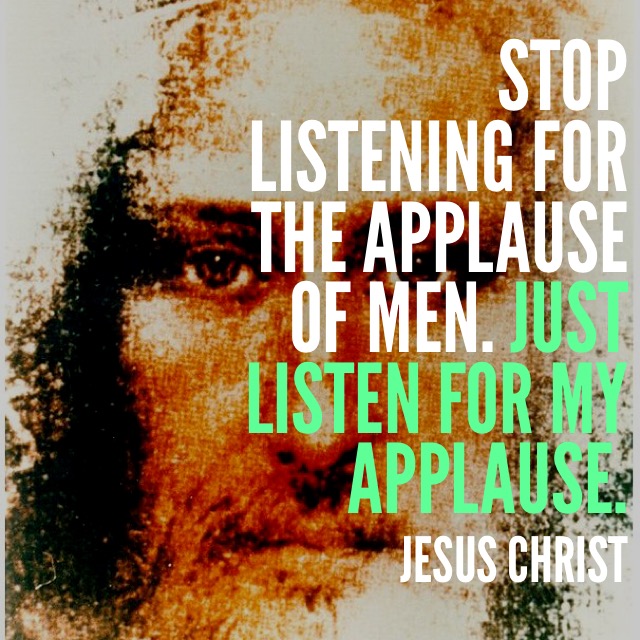
Don’t go along with the crowd just to be accepted.

Don’t go alone just to be an individual.

Live for the approval of an audience of One.

It’s only when I take the time to reflect on my conversations, my actions, my thoughts, that I see these two tendencies in me: I do one thing to go along and then do something entirely different to show that I’m my own man. Instead of these extremes, I need to ask, “Is this pleasing to God?”

I’m working on it. How about you?
Higher Standards For Greater Rewards

Most people think of the Ten Commandments as God’s law given through Moses. Actually the Ten Commandments are just the beginning of the laws, practices, and regulations that God gives to His people. The rest of the book of Exodus, the entire book of Leviticus, and the first ten chapters of Numbers compromise the bulk of the law.

For those of you keeping track, that’s nearly 60 chapters of rules and regulations.

Why so many? I think the answer is found in the lead-up to the Ten Commandments:

Now if you obey Me fully and keep My covenant, then out of all nations you will be My treasured possession. Although the whole earth is Mine, you will be for Me a kingdom of priests and a holy nation.

God wants people who are treasured. A people who are priests. A people who are holy. In short: He wants pacesetting leaders.

Priests have intimate access to God, and they are people who set an example for others to follow. In order to enjoy these special privileges, priests must be held to higher standards.

These are not standards just for those of Jewish ancestry, but for anyone who is a follower of Jesus Christ. Look what John recorded in the last book of the Bible:

To Him who loves us and has freed us from our sins by His blood, and has made us to be a kingdom and priests to serve His God and Father—to Him be glory and power for ever and ever! Amen.

…With Your blood You purchased men for God from every tribe and language and people and nation. You have made them to be a kingdom and priests to serve our God, and they will reign on the earth.

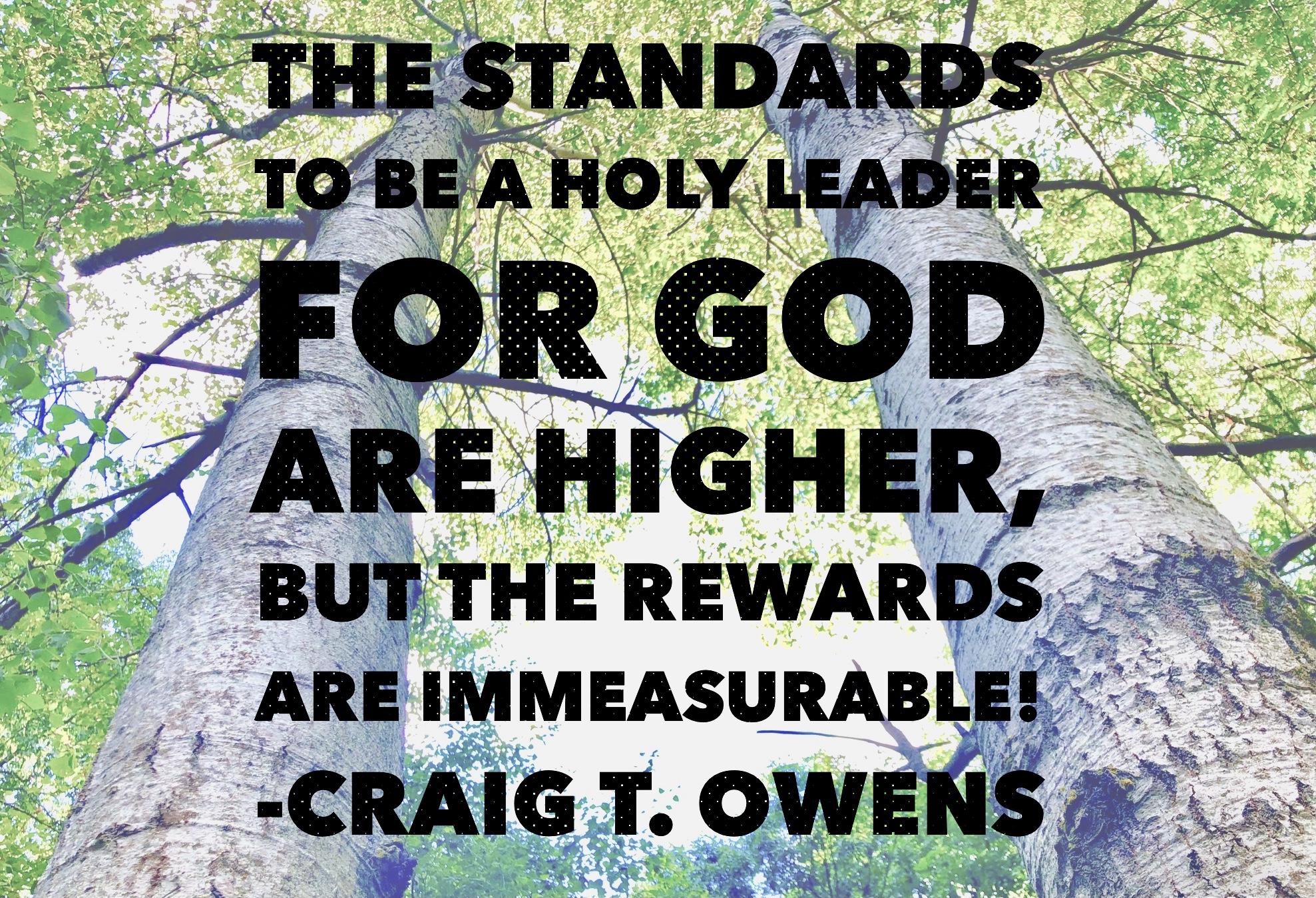
Yes, the standards to be a priest—to be a holy leader—are higher. But the rewards are immeasurable!

Are you ready to bring greater glory to God? Do you want to be a pacesetting leader for the Kingdom of heaven? Then ask the Holy Spirit to sanctify you as you take on the discipline of greater responsibility. Live up to higher standards, and you won’t be disappointed by the rewards!

Building Blocks

Whether you have been a follower of Jesus for years, or you’ve just invited Him into your life, there are important building blocks that can help this relationship grow stronger. Join us as we discuss the basic building blocks of a relationship with God over the next four Sundays…

April 11—Relationships. A satisfying relationship with God shows up in satisfying relationships with others. How do we make all our relationships better?

April 18—Bible Reading. Just what is this big book and how can we use it to help us every day?

April 25—Prayer. Does talking to God sound scary? It doesn’t have to be. In fact, it can be the best conversation ever!

May 2—The Holy Spirit. His role is probably the least understood, but the most vital, for our day-to-day lives.

We’d love to see you on Sundays at 10:30am.

Worth It

We went big for our Resurrection Sunday celebration. Instead of our usual format, we had two services, we provided breakfast for everyone, and we wrote and presented an original Easter drama. It was a stretch for us. Going big means:

  • More nights and weekends spent writing and rehearsing.
  • Recruiting more nursery workers.
  • Asking those nursery workers to give up being in the service to minister to our kids.
  • Spending Saturday setting up tables and chairs.
  • Spending money on food that we wouldn’t normally spend.
  • Asking our music team to come earlier and stay later.
  • Speaking twice.

But it was so worth it! At the end of the morning, 18 people invited Jesus into their life!

Since Jesus gave His life for these folks, I think it is a small sacrifice for us to give the money and time and effort that we gave.

I’m so proud of my cast and crew, and kitchen workers, and worship team members, and nursery workers. Not to mention all of our church members who invited family and friends to come to our Easter breakfast drama this morning.

Ah, yes, it is so worth it!!

What’s So Good About Good Friday?

Good Friday? Good for whom?

For you and me? Yes.

Good for Jesus, no. It was Bad Friday for Him, wasn’t it?

Or was it?

The writer of Hebrews says, “For the joy set before Him, Jesus endured the Cross, scorning its shame.”

What joy?

It was for the joy of what was nailed to the Cross.

So what exactly was nailed to the Cross?

Isaiah records an usual statement from God –

Comfort, comfort My people, says your God. Speak tenderly to Jerusalem, and proclaim to her that her hard service has been completed, that her sin has been paid for, that she has received from the Lord’s hand double for all her sins.

That seems unfair! We receive double (!) for our sins! Here’s a brief video where I explain what this means culturally –

Only when invoices were paid-in-full did they get doubled-up.

The Bible tells us that we’ve all sinned, and that the invoice or penalty for our sin is death. We have the IOUs of sin nailed to the door of our heart where God says “You owe Me your life!” But we cannot pay this debt by ourselves.

But Jesus can. And Jesus did! Check this out –

He personally carried our sins in His body on the Cross…. (1 Peter 2:24, NLT)

Having cancelled and blotted out and wiped away the handwriting of the note with its legal decrees and demands which was in force and stood against us. This He set aside and cleared completely out of our way by nailing it to His Cross. (Colossians 2:14, AMP)

That’s what is good about Good Friday. Jesus knew that taking our sins on His body, and then allowing His body to be nailed to the Cross, would double-up and nail-down our sin once and for all!

When Jesus said, “It is finished!” He was really saying, “It is was paid-in-full!”

Let Me Give You A Piece Of Advice

How many times have you heard someone say you, “Let me give you a piece of advice”? Ah, yes, everyone has some advice to share. Everyone has an opinion. Everyone wants to give you a piece of their mind. Everyone is an expert in an area where they think you’re deficient.

I remember going through comment cards at the end of a long week of youth camp. I’d read one card that would say the food was excellent. Just a couple of cards later some “expert” would share how terrible the food was. One would say they loved the evangelist, another would give their “advice” on where the evangelist missed it.

Whom should I listen to? Who should get my ear?

In William Shakespeare’s Hamlet, Polonius gives this counsel to Laertes “Give every man thine ear, but few thy voice: Take each man’s censure, but reserve thy judgment.”

Nice prose, but how do we live it out?

I like the example I see from a man named Jethro in the Bible. Jethro is Moses’ father-in-law, and he really only appears on the scene in just one chapter (Exodus 18), but his method of giving advice should be a model for us all.

Credentials—Jethro was a God-fearing man. If you are a follower of Jesus Christ, weigh carefully the advice given to you by those who don’t have the same biblical foundation.

Relationship—Jethro had a personal relationship with Moses, he wasn’t just a business acquaintance. That means Jethro had a vested interest in Moses’ success or failure.

Firsthand—Jethro heard about what was happening, but he came to see it for himself. Beware of those “experts” who only have secondhand information about you or your situation.

Up-Close—Jethro spent an entire day right by Moses’ side just watching and listening. He saw what was going on from the front row.

Questions—Jethro led with questions, not with advice. Before giving Moses his opinion, Jethro asked clarifying questions.

Wisdom—Only after all of this did Jethro give his opinion to Moses. The words that he shared were then received by Moses as God-given wisdom.

Your counselors should earn the right to be heard. Just because someone has an opinion doesn’t make him an expert. And just because someone has been-there-done-that doesn’t mean that her way should be your way.

Screen out the clamoring voices by making sure they have credentials, a relationship with you, firsthand experience, and godly wisdom.

God Tests Us

I’m challenged by this quote from Rick Warren: “God develops the fruit of the Spirit in your life by allowing you to experience circumstances in which you’re tempted to express the exact opposite quality!”

In school, your teacher had to test you to see if you knew the material. She probably didn’t want to give you the test, but she had to. It would be unkind of her to promote you to the next level of learning if you weren’t prepared for it.

God does the same thing. He tests us on what we’ve learned in order to take us to the next level of fruitfulness. Many times these tests tempt us, as Rick Warren said, to do the opposite of what we’ve learned. But if we don’t pass the test, God cannot promote us.

As the Israelites began their journey out of Egypt, twice in the first few days of their freedom the Bible says God tested them.

  • God tested their thirst to see if they would trust Him to provide.
  • God tested their hunger to see if they would still trust Him even after they were full.

God loves you so much that He wants to keep promoting you. He wants to see more and more fruitfulness coming from your life. That means He has to keep preparing you for the next test, and then administering that test. Don’t run away from His testing.

Right now you are in one of three places:

  1. The Holy Spirit is preparing you for a test;
  2. God is giving you a test; or
  3. You just completed a test.

Listen to the voice of the Holy Spirit, your Divine Tutor. He will remind you of everything you have learned and help you ace that test!

Now if you’ll excuse me, I have to get back to studying for my next test…