What Can Your Pain Tell You?

Listen to the podcast of this post by clicking on the player below, and you can also subscribe on AppleSpotify, or Audible. 

Have you ever been trying to finish a DIY project and you’re getting frustrated because there’s one part you cannot seem to complete? Then you phone a friend. They come over, look at the situation, pull the perfect tool out of their toolbox, and quickly fix the problem. You are amazed and they think, “It’s no big deal. I just happened to have the right tool for the job and the skill to know how to use it.”  

We are all gifted, but in different ways. 

God has uniquely prepared you for the situations you will face in your life. David declared, “All the days ordained for me were written in Your book before one of them came to be” (Psalm 139:16). That tells me that your loving Creator knew the challenges and opportunities you would have, and He has already placed the perfect tool in your toolbox that you will need to excel in that moment. 

We have already talked about how your passion helps you discover your areas of giftedness. Finding out what thrills you and what fills you is one key step on this journey. There’s another aspect of this discovery process that at first seems almost the opposite, but I think they are actually two sides of the same coin. 

If passion is what thrills me, then pain is what kills me. I think a good word for this is zeal. In the biblical context, zeal would be anger at the things that keep people from experiencing all that God has for them—things that keep them from knowing the fullness of God’s glory. 

As Moses grew older, it killed him that the Jewish people were now enslaved by the Egyptians and kept from worshiping God in their own place (Exodus 2:11-12). 

(Check out all of the Scriptures in this post by clicking here.)

We see Moses’ zeal misapplied at first (I mean, he did commit a murder!). This about the differences between a river powerfully flowing within its banks, and a flood when the river overflows its banks. When we use our God-implanted zeal in ways that He hasn’t sanctioned, we make a mess like that flood. But when we use our zeal to glorify God, it is as powerful as a mighty river within its banks. 

We see perfect zeal in Jesus. We see Him cleansing the temple so all worshipers could come close to God (John 2:13-17). We see his anger over the religious rules that kept people trapped in their disease( Mark 3:1-5; Luke 13:10-16). 

If passion asks, “What is God passionate about that thrills my heart too?” then pain asks, “What breaks God’s heart that also breaks my heart?” or “What’s broken that I would love to fix?” 

Zeal moves us to action! 

When we move forward in our zeal, others may say we are meddling or we are sticking our nose in places where it shouldn’t be. But we simply cannot help ourselves. 

In Moses’ initial zeal—without God’s commission—he committed murder and then fled to the wilderness. 

Stephen says, “Moses was well educated in all the wisdom of the Egyptians and was powerful in speech and action” (Acts 7:22). The word Stephen uses for “educated” means Moses was fully trained to interact success with is culture. And he also says Moses was “powerful” in speech and action. 

So why does Moses say of himself that he is not “eloquent” and “slow of tongue” (Exodus 4:10)? Literally, Moses is saying, “I might make the same mistake that I made previously.” 

Moses looked back on his initial stumble and was fearful he may misfire again. He was comfortable staying in his restricted comfort zone, but this attitude made God angry (Exodus 4:10-12). 

Saul in his zeal for the rules and traditions of Judaism, persecuted the Christians. After he became a Christian, we see the same zeal—calling out Barnabas and Peter, and asking the Galatians who has bewitched them to stay entangled with meaningless traditions. 

We usually discover our giftedness by looking backward. The devil would love for us to see our previous missteps as disqualifications for future service. But God says that He can use all of these things for His glory (Romans 8:28). We have to surrender our fears to Him if we want to soar out of our comfort zone and into our comfort zone. 

Let me give you three things to consider:

  1. What do you find yourself praying about more than anything else? 
  2. What do you move toward that others ignore or move away from?  
  3. What topic do you talk about all the time?  

Here’s your homework: Think about the three things to consider regarding pain, and then consider where your passion circle and your pain circle may overlap. 

If you’ve missed any of the messages in our series Living In Your Gift Zone, you can find them all here. 

►► Would you please prayerfully consider supporting this ministry? My Patreon supporters get behind-the-scenes access to exclusive materials. ◀︎◀︎

Zeal For God

Listen to the podcast of this post by clicking on the player below, and you can also subscribe on Apple or Spotify.

For zeal for Your house consumes me, and the insults of those who insult You fall on me (Psalm 69:9). 

David said this about 1000 years before Jesus lived it out. 

David was uncomfortable with the spiritual status quo that had seemed to descend on him and the people around him. He desperately wanted to stoke the passion of his heart to burn hot for God again. So he prayed, he fasted, he abased himself, he cried out to God. Zeal for God consumed David! 

Jesus wanted all people everywhere to come into His Father’s presence. So when Jesus saw His Father’s house overrun by merchants, effectively keeping people away from the closeness that David and others longed for, He went into action. Zeal for God consumed Jesus! 

In both of them we see a passion for God that moved them to action, but action that also aroused the anger of those who preferred the passivity of “religious activity” to the realness of God’s presence. Both David and Jesus became the targets of insults, scorn, and mockery. 

Just as Jesus would announce 1000 years later, David expressed the same motivation that prompted his zealous action: God’s glory—

  • may those who hope in You not be disgraced because of me
  • may those who seek You not be put to shame because of me
  • may Your salvation protect me 

Zeal for a real closeness to God’s presence is rare.

Zeal for that intimacy upsets hypocrites. 

Zeal for God empowers others who aren’t satisfied with merely playing at religion. 

Zeal for God glorifies God. 

And most importantly: Zeal for God pleases God! 

When you see play actors and religionists blocking hungry seekers from coming closer to God, I pray that your zeal, too, burns white hot. Be prepared to be the target of scorn, but know that God’s smile on your zeal for Him far outweighs their insults. 

►► Would you please prayerfully consider supporting this ministry? ◀︎◀︎

What Christians Often Miss About Zeal

On what we now refer to as Palm Sunday, Jesus arrived in Jerusalem with the crowd shouting, “Hosanna” because they thought Jesus was going to set things right. In this, they were disappointed. Jesus knew that His time for reigning in Jerusalem hadn’t come yet, and Christ’s passionate journey meant He would not cut any corners!

Before Jesus left Jerusalem that Sunday evening, Mark noted that “He looked around at everything.” He didn’t respond right away to what He saw. This is very important to note because we shouldn’t think that His response on Monday was something spontaneous. No, it was planned out in specific detail.  

On Monday morning, Jesus prepared to make the 2-mile trip from Bethany to Jerusalem. The Gospels note quite frequently the amount of time Jesus spent in prayer, including beginning His day in conversation with His Father (see Mark 1:35). On this morning, He must have talked with His Father about everything He had seen in Jerusalem the day before. 

 En route to Jerusalem, Jesus encounters a fig tree that gives every appearance of life and vitality. It looks like it’s ready to serve people, but upon closer inspection, Jesus discovers that there is no fruit on it. He curses the tree for its deceptive outward appearance. This is definite foreshadowing for what’s about to happen! 

Jesus enters the temple and begins to drive out merchants, and moneychangers, and dove sellers. He roars at them, “God says this is to be a place of prayer for all nations, but you have turned it into a den of robbers!” (see Matthew 21:12-17; Mark 11:15-19; and Luke 19:45-48). 

The phrases house of prayer and den of robbers are direct quotations from Isaiah and Jeremiah, respectively (Isaiah 56:3-7; Jeremiah 7:1-11), but what do they mean? 

The temple had specific courts available—

  1. The Court of the Gentiles was open to all people, foreigners included.
  2. The Women’s Court was open to all Jews and, their “uncontaminated” wives.
  3. The Court of Israel was limited to male Jews who were clean and purified.
  4. The fourth court was the Holy Place limited to priests robed in their priestly vestments. 

This buying and selling was undoubtedly happening in the Court of the Gentiles. As the Passover was approaching, people from all over the world were here—some purchasing animals to use as sacrifices, and some exchanging their foreign money for Israelite money for the temple tax. 

There was a lot of hustle and bustle, but very little worship. This is what angered Jesus. The activity in the temple was like the fig tree He cursed—it looked like it was fruitful, but that was merely outward deception. 

Were the merchants exploiting people? Perhaps. But they were certainly occupying the only space where non-Jews could worship. They were certainly becoming a distraction to any true worship activities. They were clearly becoming the main attraction. 

There are two important lessons in this outburst that Jesus gives to all His disciples:

  1. As our Christlikeness increases, our intolerance of religious showmanship should increase. 
  2. As our Christlikeness increases, our intolerance of unrighteousness should increase—both a greater hate for sin and a greater love for sinners! 

“Let the zeal of the house of the Lord ever eat you up. For example: do you see a brother running [toward sin]? Stop him, warn him, be grieved for him, if the zeal of God’s house has now eaten you up. Do you see others running and wanting to drink themselves drunk? Stop whom you can, hold whom you can, frighten whom you can; win in gentleness whom you can: do not in any way sit still and do nothing.” —Augustine 

Christ’s passionate journey was out of love for us. Which means He hates anything that keeps us from His Father. 

If you know God’s love, be zealous about those things that keep others from coming in to know God’s love for themselves. Not angry at people, but angry at practices and “religious shows” that hinder people from knowing God’s love like you know God’s love. 

Links & Quotes

link quote

“God is not merely mending, not simply restoring a status quo. Redeemed humanity is to be something more glorious than unfallen humanity would have been, more glorious than any unfallen race now is (if at this moment the night sky conceals any such). The greater the sin, the greater the mercy: the deeper the death, the brighter the re-birth.” —C.S. Lewis

“Zeal for God feeds itself upon the thought of the eternal future. It looks with tearful eyes down to the flames of Hell and it cannot slumber: it looks up with anxious gaze to the glories of Heaven, and it cannot but bestir itself. Zeal for God thinks of death, and hears the hoofs of the white horse with the skeleton rider close behind. Zeal for God feels that all it can do is little compared with what is wanting, and that time is short compared with the work to be done, and therefore it devotes all that it has to the cause of its Lord.” —Charles Spurgeon

“For those who know the sound of a Goliath, David gives us this reminder: Focus on giants—you stumble. Focus on God—your giants tumble.” —Max Lucado

Frank Viola has some excellent thoughts for Christians to respond to the narrative of the culture.

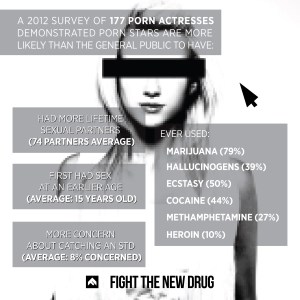
Porn surveyFight The New Drug shares the results of a survey of pornography actresses, that shows their lifestyles are highly unhealthy compared to the general population. Read the full article here. Here is the important takeaway: If you are watching porn, you are keeping these young ladies in bondage to these destructive habits.

Jeffrey Kranz at the Overview Bible Project has a great infographic to help us all understand why publishers sometimes change an English translation of the Bible. (And while you’re there, check out all the other great resources on the Overview site.)

Poetry Saturday—The Eternal Goodness

917_05_010316O Friends! with whom my feet have trod
The quiet aisles of prayer,
Glad witness to your zeal for God
And love of man I bear.

I trace your lines of argument;
Your logic linked and strong
I weigh as one who dreads dissent,
And fears a doubt as wrong.

But still my human hands are weak
To hold your iron creeds:
Against the words ye bid me speak
My heart within me pleads.

Who fathoms the Eternal Thought?
Who talks of scheme and plan?
The Lord is God! He needeth not
The poor device of man.

I walk with bare, hushed feet the ground
Ye tread with boldness shod;
I dare not fix with mete and bound
The love and power of God.

Ye praise His justice; even such
His pitying love I deem:
Ye seek a king; I fain would touch
The robe that hath no seam.

Ye see the curse which overbroods
A world of pain and loss;
I hear our Lord′s beatitudes
And prayer upon the cross. —John Greenleaf Whittier

Fizzle

Jehu, the king of Israel, said, “Come with me and see my zeal for the Lord!” Wow, this guy was so fired up about doing great things for God! He got rid of all of King Ahab’s idol-worshipping family, he removed all of the court officials who supported Ahab, and he even cleared all of the priests of Baal out of Israel.

God was so pleased with Jehu and his zeal for holiness that God said, “Well done! Because of what you have done, your descendants will sit on the throne of Israel for the next four generations.”

What a God-fearing man Jehu was! How on fire for God!

Unfortunately, Jehu’s passion fizzled.

Aristotle famously said, “Well begun is only half done.” Jehu started well, but his zeal for God fizzled in the end.

In fact, the very next verse after God says, “Well done!” begins with a very telling word: Yet.

Jehu didn’t continue his walk with God. He began to fall away, and so the Bible adds this sad note: In those days the Lord began to reduce the size of Israel. Yes, Jehu and his descendants still sat on the throne, but Israel became smaller and smaller.

I want to start well and finish strong.

I don’t want to hear God say, “Well begun.” I want to hear Him say, “Well done, good and faithful servant.”

I don’t want to be “king” of a smaller and smaller sphere of influence.

I don’t want to fizzle—I want to keep on burning bright for God!