Listen to the podcast of this post by clicking on the player below, and you can also subscribe on Apple, Spotify, or Audible.
A meme that makes me chuckle every time I see it is a “quote” attributed to Abraham Lincoln in which he says, “The problem with quotes found on the internet is that they are often not true.”
(Not to spoil the joke for you, but unless Lincoln knew how to time travel to the future, I don’t think he knew about the modern internet! 😂)
I love this meme because it captures something that so many people fall into: a quick acceptance of a statement without verifying its source or thinking through the implications of the statement’s truthfulness.
Some insightful comments sound Shakespearean, but William never wrote them.
Some pieces of wisdom sound Socratic, but Socrates never taught them.
Some religious maxims sound godly, but the Bible never recorded them.
I would like to invite you to join me as we relaunch this series called Is That In The Bible? I think you may be surprised to discover just how many phrases we call biblical aren’t, and how many phrases there are that we never realized are actually in the Bible.
By the way, if you have a phrase that you would like to have us explore in this series, please leave it in a comment below. You may want to check out the questions we have already addressed:
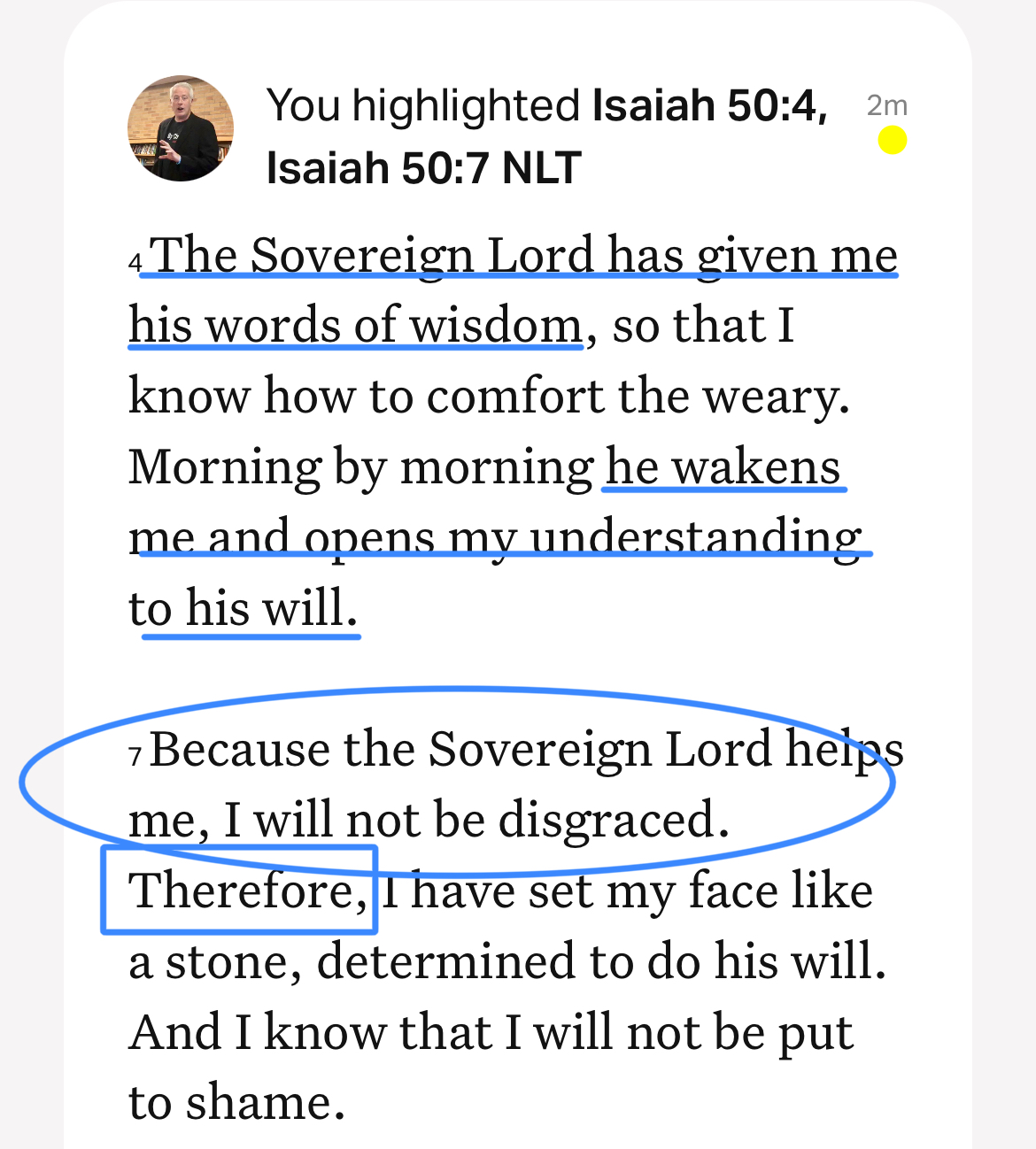
The Sovereign Lord has given me His words of wisdom, so that I know how to comfort the weary. Morning by morning He wakens me and opens my understanding to His will. … Because the Sovereign Lord helps me, I will not be disgraced. Therefore, I have set my face like a stone, determined to do His will. And I know that I will not be put to shame. (Isaiah 50:4, 7 NLT)
The Holy Spirit knows the best place to use us, the best time to use us, and the best way to use us. We must trust Him! I have lots of new content every week, which you can check out on my YouTube channel.
“In our rush to be thanked or appreciated, or even in our shortsighted compassion, we can undermine the good God is patiently working. In that sense our good is actually evil, for it resists the wisdom, love, and transformative lessons of God.” —Dick Brogden, in Proverbs: Amplified and Applied
I love this quote in J.R.R. Tolkien’s Fellowship of the Ring when Merry Brandybuck tells Frodo about the stick-to-it-iveness of his friends: “You can trust us to stick to you through thick and thin to the bitter end. And you can trust us to keep any secret of yours closer than you keep it yourself. But you cannot trust us to let you face trouble alone. … We are your friends, Frodo.”
I love this devotional from John Piper about God-given foes and God-given faith. “The logic of fearlessness in the face of adversity is this double truth: Both your adversity and your faith in the face of adversity are gifts of God.”
Listen to the podcast of this post by clicking on the player below, and you can also subscribe on Apple, Spotify, or Audible.
Bruce Barton said, “When you’re through changing, you’re through!” I think the same thing could be said about a leader’s learning—when you think you’ve learned it all, your leadership is beginning to crumble.
I never want to get to the place where I think I have “arrived” as a leader, but I want to be humble enough to admit that there are so many things I have yet to learn. Jesus reminded us, “Every student of the Scriptures who becomes a disciple in the kingdom of heaven is like someone who brings out new and old treasures from the storeroom” (Matthew 13:52 CEV).
“New and old treasures” tells me that there’s some good stuff we need to protect, and also some good stuff we haven’t yet learned.
A mark of a godly leader is his commitment to being a lifelong learner.
Here are three new things the Holy Spirit has recently taught me:
Acts 6:3 says, “Choose seven men from among you who are known to be full of the Spirit and wisdom. We will turn this responsibility over to them.”
My lesson: The résumé for those that are to be placed in ministry leadership positions should include servant-heartedness, Christlike character, wise experience for the task, and reliance on the Holy Spirit.
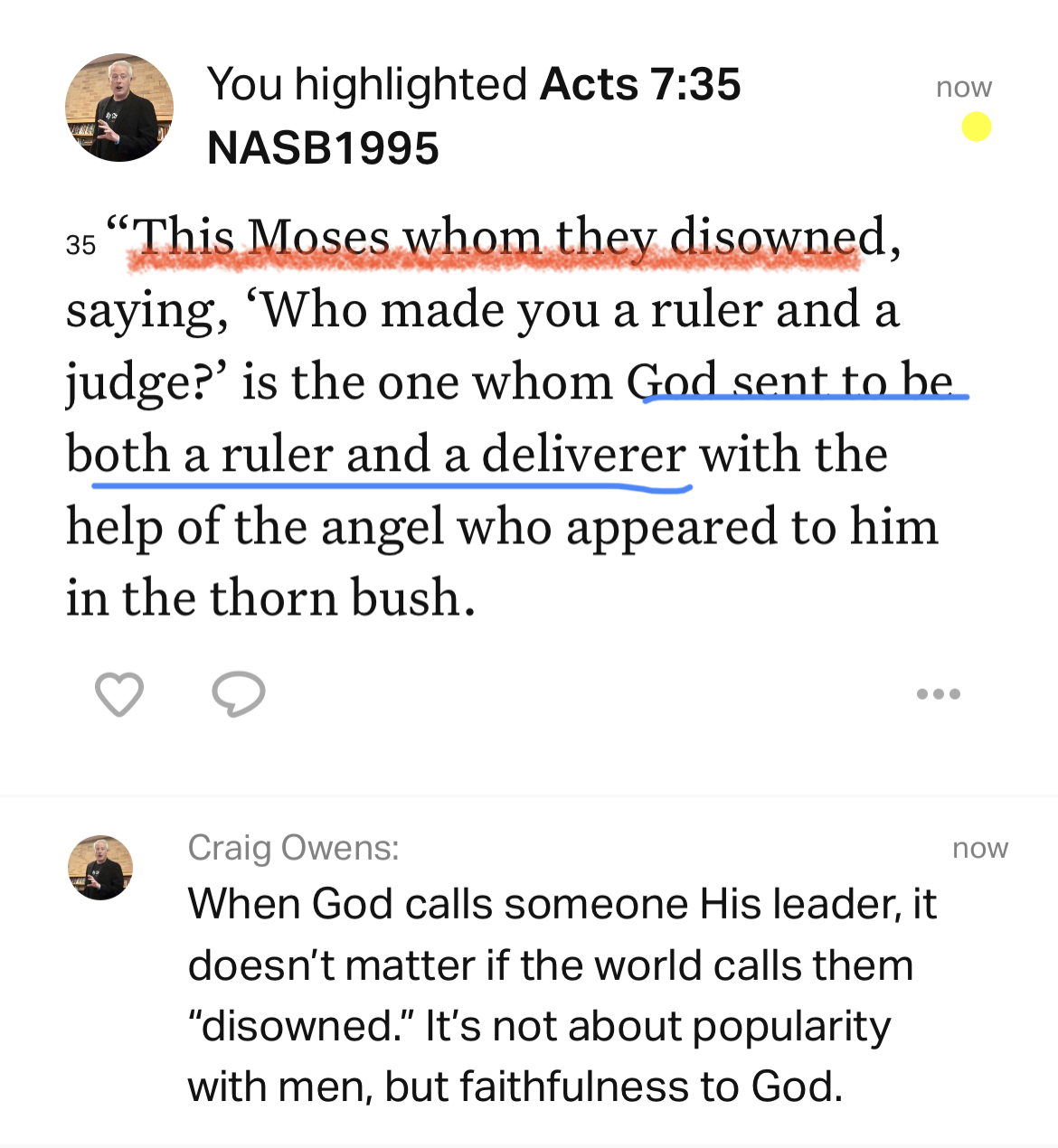
“This Moses whom they disowned…is the one God sent to be both a ruler and a deliverer” (Acts 7:35).
My lesson: When God calls someone His leader, it doesn’t matter if the world calls them disowned. It’s not about popularity with men, but faithfulness to God.
Listen to the podcast of this post by clicking on the player below, and you can also subscribe on Apple, Spotify, or Audible.
When I was younger—and so much more immature—I thought it would diminish my leadership if I ever answered, “I don’t know” to any question. As a result, I fired off very self-assured answers that probably weren’t well thought-out.
They probably weren’t very God-honoring answers either.
Once a leader is “on the record” with an answer, they will usually defend their stance even if it appears to be wrong. After all, they must save face at all costs.
A downward slide continues when a leader then uses their position of authority to say something like, “Because I’m the leader and I said so!” With this stance, people are often repelled from that leader.
How much better to to wait before giving an answer—to give up the need to always be “The Answer Man”!
And better yet, let’s not give anyone our answer, but let’s seek God for HIS answer! Not only will this be the best answer, but God will defend Himself without us having to step in to “help” Him.
With this stance, the people are not only drawn to this godly leader but they are drawn to God as well.
Consider these examples from Moses:
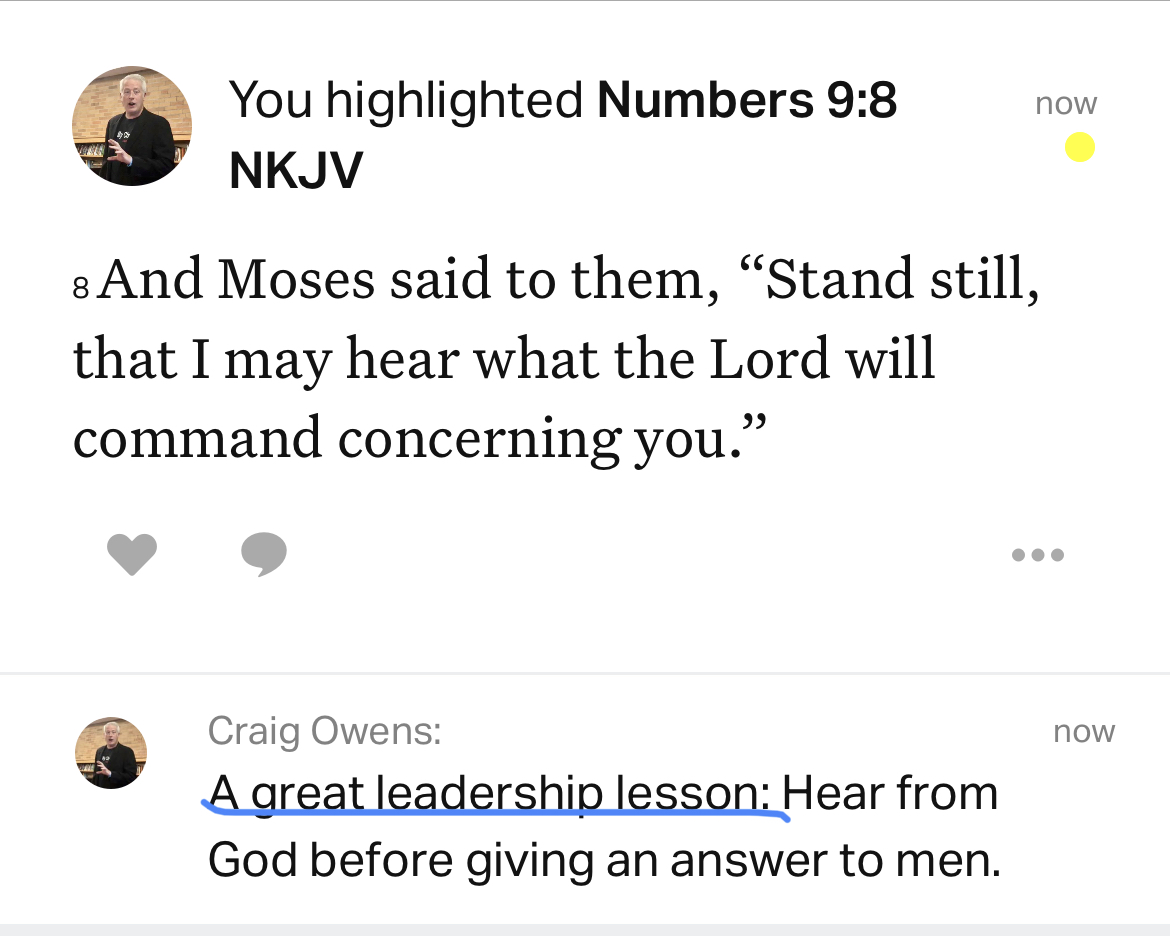
Stand still, that I may hear what the Lord will command concerning you. (Numbers 9:8)
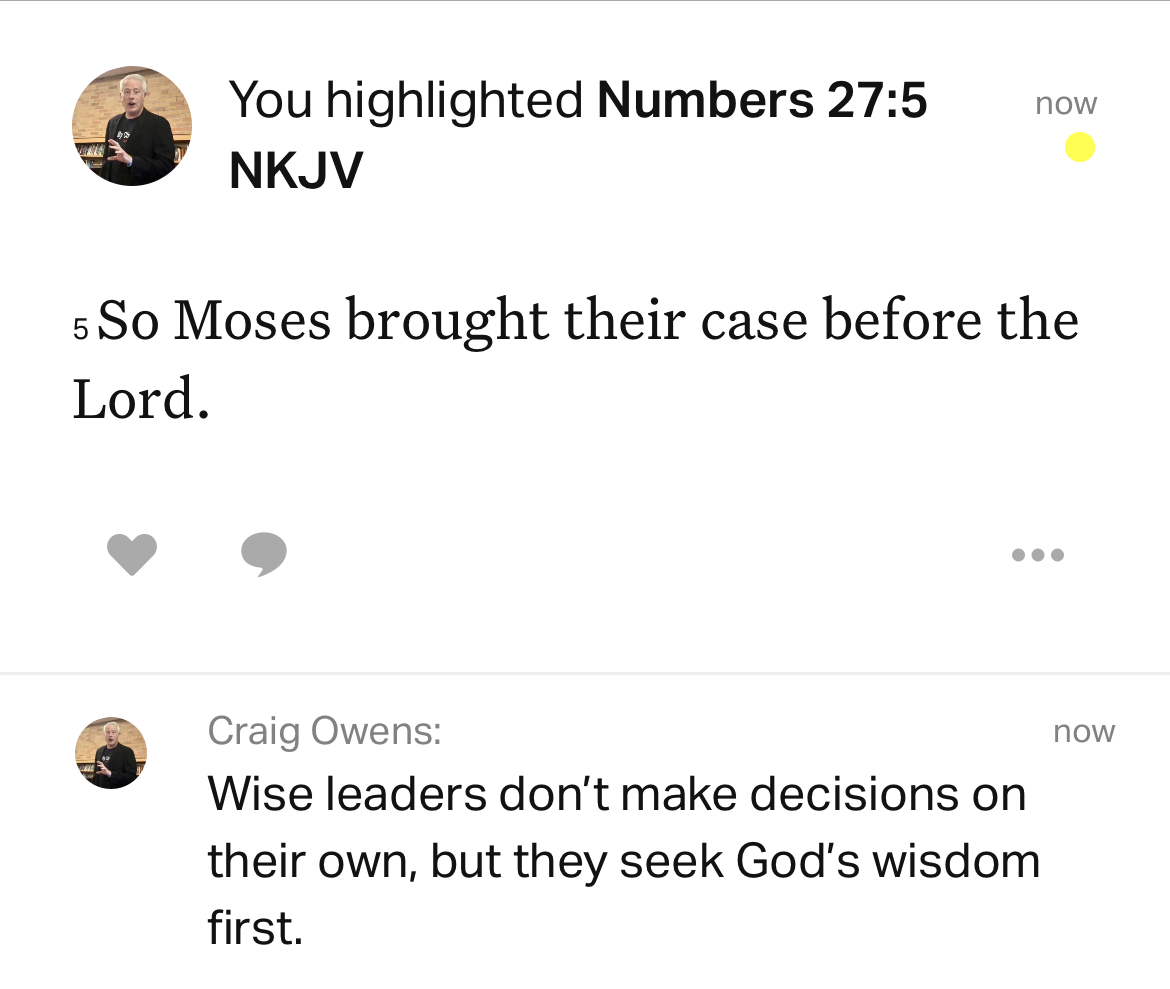
So Moses brought their case before the Lord. (Numbers 27:5)
A mark of a godly leader is one who hears from God before answering men.
So the next time someone asks your opinion, pause. Remember that it’s okay to say, “I’m not sure how to answer you on that one. I need to hear what God has to say about this.” Let’s give up the desire to be “The Answer Man” for everything. Instead we can simply announce the answer that God has given.
This is part 69 in my series on godly leadership. You can check out all of my posts in this series by clicking here.
Listen to the podcast of this post by clicking on the player below, and you can also subscribe on Apple, Spotify, or Audible.
Being the firstborn, I didn’t have a big brother, but I took being the big brother to my little sister very seriously! Like when young men would come to pick her up for a date, I would meet them on the front porch and say, “I hope you have a really nice evening. Just so you know, I will be home all evening waiting by the phone. You’d better pray that my little sister doesn’t have to call me!” Hopefully, that let my sister know I was ready to protect her whenever she may need it.
Whenever we go into any situation for the first time, there is always a natural fear of the unknown. What’s going to happen? How do I behave? What do I say? How will others treat me? How will I know who to trust? Or even, how will I know what to pray for?
Those unknowns cause fear, and fear prevents intimacy. The Bible says, “There is no fear in love” (1 John 4:18). Where there is love, fear has to leave. But when there is fear, love is pushed aside.
We learned that we can come to God in prayer as a Father—we can bring Him all our fears and concerns and problems—but did you know that we can also come to God in prayer as coming to a Brother?
Jesus loves the fact that we can come to our Abba Father just as He did, which is why He taught us to begin our prayers with, “Our Father in heaven.”
How wonderful it is to have a “big brother” to show us the ropes, to walk with us, to give us his counsel! One that says, “I’ve already been to that high school … I know that employer … I have experience with that kind of relationship … I’ve solved that problem … I’ve tasted that pain.…” That’s exactly what Jesus does for us. He is our perfect Big Brother!
Jesus knows everything we will experience in life. There might be unknown things that we walk into, but they are never unknown to Him. And more importantly, they are never unexperienced by Him. Check out these assuring words from the Book of Hebrews—
Both the One who makes people holy and those who are made holy are of the same family. So Jesus is not ashamed to call them brothers and sisters. … For this reason He had to be made like them,fully human in every way, in order that He might become a merciful and faithful high priest in service to God, and that He might make atonement for the sins of the people. Because He Himself suffered when He was tempted, He is able to help those who are being tempted. (2:11, 17-18)
For we do not have a high priest who is unable to empathize with our weaknesses, but we have one who has been tempted in every way, just as we are—yet He did not sin. Let us then approach God’s throne of grace with confidence, so that we may receive mercy and find grace to help us in our time of need. (4:15-16)
Jesus has been there, done that, and has the scars to prove that He is victorious!
We never have to be at a loss of what to say (John 12:49-50)
We never have to be at a loss of what path to take (John 14:6)
We never have to be at a loss of what prayer to pray (John 16:23)
Charles Spurgeon said, “The Lord Jesus Christ is always ready to take the most imperfect prayer and perfect it for us. If our prayers had to go up to heaven as they are, they would never succeed; but they find a Friend on the way, and therefore they prosper.”
Solomon wrote, “Trust in the Lord with all your heart; do not depend on your own understanding.Seek His will in all you do, and He will show you which path to take (Proverbs 3:5-6).
“We tend to crave God’s explicit direction for the momentous choices of life—marriage, study, career, transition, promotion, change—but sail through a thousand daily choices independent of consultation with Him. Functionally, we act as if we only need God’s help for big things because we can handle the small things without Him. The error in this dichotomy of dependence (thinking we only need God’s help for big decisions) is twofold. First, big decisions are not divorced from small decisions; they are simply the crowning act, the summary of a legion of choices. Second, big decisions are not more important than small decisions. It is the small, simple, silent, serial choices of daily living that make one wise. When we acknowledge the Lord in all the minutia, our course is chosen and our path is set, and we do not stand bewildered at the critical crossroads of life.”
Walking with Jesus as our Brother keeps us free from fear. His perfect love opens our hearts to have intimate conversation with our Heavenly Father. You can trust our Brother to help you with every single decision at every single moment. Let’s learn to lean on Him more!
Listen to the podcast of this post by clicking on the player below, and you can also subscribe on Apple, Spotify, or Audible.
A meme that makes me chuckle every time I see it is a “quote” attributed to Abraham Lincoln in which he says, “The problem with quotes found on the internet is that they are often not true.”
(Not to spoil the joke for you, but unless Lincoln knew how to time travel to the future, I don’t think he knew about the modern internet! 😂)
I love this meme because it captures something that so many people fall into: a quick acceptance of a statement without verifying its source or thinking through the implications of the statement’s truthfulness.
Some insightful comments sound Shakespearean, but William never wrote them.
Some pieces of wisdom sound Socratic, but Socrates never taught them.
Some religious maxims sound godly, but the Bible never recorded them.
I would like to invite you to join me as we relaunch this series called Is That In The Bible? I think you may be surprised to discover just how many phrases we call biblical aren’t, and how many phrases there are that we never realized are actually in the Bible.
By the way, if you have a phrase that you would like to have us explore in this series, please leave it in a comment below. You may want to check out the questions we addressed in both the first installment and second installment of this series.
In this installment of this series, we asked: Is this in the Bible…
According to 1 Corinthians 12-14, the Holy Spirit operates in nine different gifts to both evangelize the sinner and edify the saints. The apostle Paul says that these gifts are available to all Christians who will allow the Holy Spirit to operate through them.
C.S. Lewis identifies one of the harmful effects of pornography. “For me the real evil of masturbation would be that it takes an appetite which, in lawful use, leads the individual out of himself to complete (and correct) his own personality in that of another (and finally in children and even grandchildren) and turns it back: sends the man back into the prison of himself, there to keep a harem of imaginary brides. And this harem, once admitted, works against his ever getting out and really uniting with a real woman. For the harem is always accessible, always subservient, calls for no sacrifices or adjustments, and can be endowed with erotic and psychological attractions which no woman can rival.” —C.S. Lewis
“Joy is not a requirement of Christian discipleship; it is a consequence.” —Eugene Peterson
In my personal devotional time, I came across a sobering idea in the book of Amos about God’s love. I am reading through the Bible in Halley’s Study Bible, where I also read this: “The basket of ripe fruit [Amos 8] is another symbol that the sinful kingdom was ripe for ruin. And Amos reiterates the causes: greed, dishonesty, and merciless brutality toward the poor. Over and over, through many images, the Bible makes it plain that there is no possible way to escape the consequences of persistent sin.” —Dr. Henry Halley
J. Warner Wallace wrote, “The historic development of language and communication prepared the way for the birth of Jesus. God orchestrated this timing, along with the development of roads, postal services and a 200-year period peace within the Roman Empire (known as the Pax Romana) to prepare the world for the arrival of Jesus.”
Our church is taking time on Fridays to fast and pray. Here is a reminder of the expected results that I shared with our church family—
This is a weekly series with things I’m reading and pondering from Charles Spurgeon. You can read the original seed thought here, or type “Thursdays With Spurgeon” in the search box to read more entries.
Listen to the podcast of this post by clicking on the player below, and you can also subscribe on Apple, Spotify, or Audible.
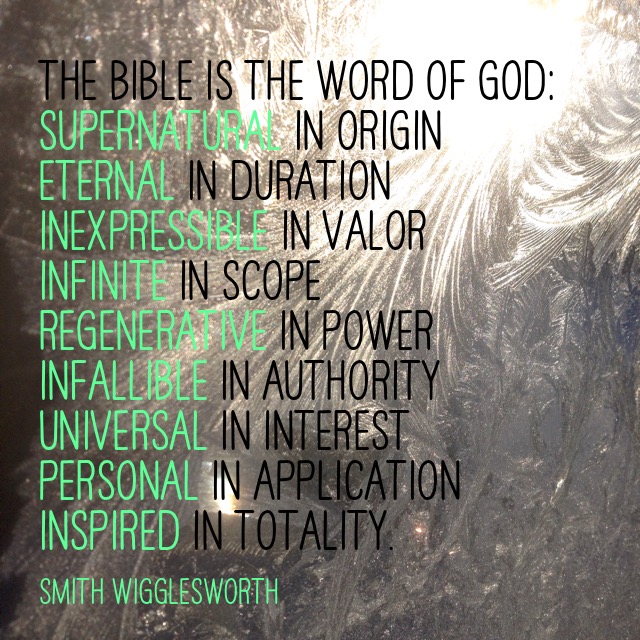
The Final, Authoritative Word
…For the mouth of the Lord has spoken (Isaiah 1:20).
It would not be worth our while to speak what Isaiah had spoken if in it there was nothing more than Isaiah’s thought—neither should we care to meditate hour after hour upon the writings of Paul, if there was nothing more than Paul in them. …
It is not mine to amend or adapt the gospel. What? Shall we attempt to improve upon what God has revealed? The Infinitely Wise to be corrected by creatures of a day? Is the infallible revelation of the infallible Jehovah to be shaped, moderated, and toned down to the fashions and fancies of the hour? God forgive us if we have ever altered His Word unwittingly. …
One Word of God is worth more than libraries of human lore. ‘It is written’ is the great gun which silences all the batteries of man’s thought.
From The Infallibility Of Scripture
As Solomon neared the end of his writings in the Book of Ecclesiastes, he made this observation, “Of making many books there is no end, and much study wearies the body” (12:12). How true that is. Have you walked through a bookstore lately?! There is no end to the opinions that people want to share with you.
But there is one thing that all of the books in all of the bookstores and all of the libraries have in common: not one of them is given to us by “the mouth of the Lord.”
There are certainly many, many books that are saturated in Scripture, but they are still the opinions of man. We need to make sure that everything we read, or every wise person that we listen to, or even every conversation that we have with ourselves are all proven to be true or false based on what God has spoken.
Jesus told us that the Holy Spirit would remind us of everything God’s mouth had spoken to us (John 14:26), and that He would guide us into all truth (John 16:13).



 A meme that makes me chuckle every time I see it is a “quote” attributed to Abraham Lincoln in which he says, “The problem with quotes found on the internet is that they are often not true.”