Lincoln’s Battle With God (book review)

Lincoln's Battle With GodI’m a big fan of the historical and biographical work of Stephen Mansfield. His books are thoroughly researched but they don’t read like scholarly works, but have a more storytelling feel to them. This is especially true in his book Lincoln’s Battle With God.

I have read several biographies about our 16th president, Abraham Lincoln, but this is one of the most innovative angles of this great leader’s life. Mansfield tells the story of Lincoln as a boy growing up in an overly-strict, hyper-Calvinistic home where religious observance was demanded and oppressive. Lincoln’s father was distant and didn’t have satisfactory answers for his young son when life was painful.

This contributed to Lincoln as a young man who, while searching for answers, went the opposite direction of his father’s faith, and became immersed in rationalism and even agnosticism. Through it all as Lincoln searched for answers, he and his friends had to cope with Lincoln’s “hypo” (his word for deep, almost debilitating, depression).

When rationalism didn’t help him discover the answers he so desperately desired, Lincoln came full circle to begin to explore the tenants of Scripture once again. But this time he looked at the Bible through a different paradigm, being much more thoughtful and circumspect.

His journey to the White House where he had to deal with a nation torn apart by Civil War and the premature death of his young sons exposed him once again to events which would have caused the younger Lincoln to spiral into depression. But his faith in God now had grown rock solid and sustaining.

This book is a fascinating journey through Lincoln’s spiritual struggles, and it’s one that I think many will benefit from reading. Those who are admirers of Abraham Lincoln, those battling depression, and even those searching for life’s answers will find a lot to learn in these pages.

15 Quotes From “Finding The Love Of Your Life”

Finding The Love Of Your LifeFinding The Love Of Your Life by Dr. Neil Clark Warren is a wonderful resource for anyone contemplating marriage, or for parents to help prepare their children for marriage. You can rad my full book review by clicking here. Below are some of the quotes I found especially interesting in this book.

“The person you can become is far more important than the person you are today. … When you start with who you are today and commit yourself to moving steadily toward goals, the progress you experience will not only make you feel genuinely proud, but it will also make you significantly more attractive to members of the opposite sex. … This kind of emotional growth is best achieved when you start with a deep understanding that you are totally lovable just the way you are. If your pursuit of excellence grows out of an appreciation for the way you have been created, you’ll grow by leaps and bounds.”

“The crucial thing is not to seek after someone whose personality is like your father’s or mother’s, but to search for that person whose personality would make you genuinely happy through the years.”

“Research has consistently shown that religious commitment and marital success are highly related.” 

“Research findings are highly consistent: the most stable marriages are those involving two people with many similarities. … For couples, similarities are like money in the bank, and differences are like debts they owe. Suppose you received two bank statements in the mail today, one showing the amount of money in your savings account, the other showing the amount you owe on your credit card. If you have a large savings account and little debt, you’re in a position of strength and you can weather economic storms. If a financial crisis arises, you have the means to handle it. You can make decisions and purchases without scrambling to figure out how you’ll manage. But the reverse is also true. With big debts and little savings, you’re on shaky financial ground. You have to work a lot harder to cover the bills, and you worry about job security and making ends meet. … If you want to make a marriage work with someone who is very different from you, you had better have a large number of similarities as permanent equity in your account. If you don’t, your relationship could be bankrupt at a frighteningly early stage. Why is this the case? Because every difference you have requires negotiation and adaptation. One of you has to give a lot, or both of you have to give some, and in either case there is the need for plenty of change.”

“If the qualities that attracted you to someone are different from your own, be cautious.” 

“A great marriage requires two healthy people, and the time to get healthy is before you get married. … What I am particularly concerned about here is the emotional and mental health of the two people considering a lifelong partnership.”

“When we marry, it will be ideal if in relation to our parents (1) we are essentially free from them—emotionally independent individuals—so we do not have to make decisions and live our lives to please them; (2) we are clear about what is particularly true of our relationship with our mother and father, and what is true in relation to our spouse. When we confuse these relationships, we leave our spouse feeling violated and helpless; and (3) we have established a relationship with our parents in which they will not intrude in our marriage, will not dictate to us in any authoritative ways, and yet we can still maintain a closeness and connectedness to them.”

“The desire to touch, hold hands and hug is critical for long-term satisfaction. I agree. Building a great marriage is virtually impossible without the attraction and excitement that comes with passionate love. … I am deeply convinced that any two people who choose to marry need to maintain clear minds until the moment they say ‘I do.’ Because of this, I believe in sexual abstinence prior to marriage. Sexual intercourse before marriage is a clear act of commitment! Once you have become sexually involved with a potential mate, your ability to think clearly and objectively becomes impossible. … In one impulsive moment, two people cut short the process of ‘choosing’ one another, and they rob themselves of their own wisdom. Once they are sexually involved, they forfeit their combined ability to make a wise, unhindered decision.”

“(1) Passionate love between two people is a crucial ingredient if they are to have a long and satisfying relationship. (2) Passionate love always involves strong physical attraction. (3) Physical involvement must be managed with extreme care. (4) Every progression of physical activity establishes a new plateau—and it is extremely difficult to retreat once it has been reached. (5) When sexual expression is not kept in check, the emotional, cognitive and spiritual aspects of the relationship become slaves to the physical desires.”

“Too many failed marriages involve fantasy triumphing over fact.”

“When you are intimate with the person you love, you create unlimited possibilities for the growth of your relationship. Intimacy has the potential for lifting the two of you out of the lonely world of separateness and into the stratosphere of emotional oneness. Conversely, the number one enemy of any marriage is the lack of intimacy. If two people do not know each other deeply, they can never become what the Bible calls ‘one flesh.’” 

“You have to know yourself if you’re going to be intimate with someone else.”

“When two people discover that they have a spiritual hunger or spiritual awareness in common, they are strongly drawn to one another. In fact, I have found that a lack of mutually held spiritual beliefs often signals an intimacy deficit that leaves couples dangerously unconnected. In fact, one research study showed that spirituality ranked among the six most common characteristics of strong families. The strongest families in this study reported experiencing ‘a sense of power and a purpose’ greater than themselves—a spiritual orientation.”

“The fatal flaw of our society is that the principles of business have increasingly infiltrated our intimate relationships. That’s why society has found it necessary to trivialize wedding vows, to pretend they are no longer binding or relevant. Marriage makes very little sense when viewed from a business perspective. Let me explain: Two fundamental principles in business are: (1) What you pay for something is based on what you get in return; (2) When a business arrangement is no longer a ‘good deal,’ you either alter the arrangement or terminate it. But marriage is radically different! It depends on unconditional commitment. When you get married, you pledge to love, honor and cherish another person for a lifetime. If your mate changes over time, you are not released from your pledge. … Relationships that are conditional allow almost no room for trust and intimacy.”

“There is only one time to think about commitment-—before you make it!

Links & Quotes

link quote

Some good reading from today…

William Wilberforce and the Clapham Sect show us a successful model for positive social change.

Farshid Fathi is a Christian pastor imprisoned in Iran for his faith. His letter from prison is absolutely amazing!

So some of Lois Lerner’s “lost” emails have been found, and it is clear why she and the IRS wanted them not to be seen. Check out how liberal political agents attack their conservative opponents.

“The solution to life’s problems is spiritual because the essence of life is spiritual. It is astonishing how many difficulties clear up without any effort when the inner life gets straightened out.” —A.W. Tozer

“It’s natural enough in our species, as in others, that the young birds should show off their plumage—in the mating season. But the trouble in the modern world is that there’s a tendency to rush all the birds on to that age as soon as possible and then keep them there as late as possible, thus losing all the real value of the other parts of life in a senseless, pitiful attempt to prolong what, after all, is neither its wisest, its happiest, or most innocent period. I suspect merely commercial motives are behind it all: for it is at the showing-off age that birds of both sexes have least sales resistance!” —C.S. Lewis

13 Quotes From “The Solomon Seduction”

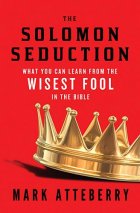
Solomon SeductionThe Solomon Seduction is a biography on King Solomon, a Bible study, a book for men to overcome temptation, a leadership book, and a great discussion starter for a men’s group. In other words, there are lots of reasons for guys to read this book! You can read my full book review by clicking here, and below are some of the quotes I highlighted from this book.

“Moderation can be a great thing. But the idea that anything is okay as long as it’s done in moderation has given rise to some of the wackiest notions known to man. … One of the big problems with using moderation as a justification for whatever you want to do is that it’s almost impossible to take just a bite when you’re really hungry.” 

“Are you just a guy who goes to church, or are you serious about growing spiritually and acquiring discernment? satan’s chances of seducing you will rise or fall on your answers to these questions.”

“Solomon is the perfect example of the fact that you can have your cranium crammed full of discernment and still end up embarrassing yourself. Keep in mind, he not only knew the book of Proverbs, he wrote the vast majority of it! And then ended up doing many of the very things he himself said were foolish!” 

“All of satan’s various attempts at seducing believers must include an attempt to undermine Scripture.”

“What we have here is a case not of ignorance or confusion or misinterpretation, but of satan subtly and artfully manipulating Solomon’s thinking to the point where he felt the commands of God seemed out of touch with his real-world experience.”

“satan doesn’t try to get you to forsake your good priorities. He just encourages you to mix in a few lesser priorities that will compete with those good priorities.”

“Mark it down. When the word I starts replacing the word we in your speech, something ugly is happening in your heart. Your ego is swelling.” 

“Big-ego people almost never back up and take another look at their actions. Why should they? They’re convinced that everything they do is right. It never occurs to them that they might be on the wrong track. They’re so infatuated with themselves that they can see nothing but that beautiful image in the mirror.”

‘What’s the big deal?’ If ever a question spoke to the attitude of our generation towards sin, that one does. We shrug off sin as though it’s just a little harmless fun. You know, boys will be boys. Everybody sows some wild oats, right? Or, if we don’t play the what’s-the-big-deal card, we claim that the sin we are indulging in is actually necessary.” 

“Instead of repenting, instead of exterminating, illuminating, or correcting their bad behavior, [sin managers] try to manage it. They believe that if they can keep the behavior from getting out of hand, keep people from being hurt or offended, keep the status quo from being upset, keep the ugliness under wraps and out of sight, they can hang on to their sin and everything will be fine. … This is typical of sin managers. Instead of seeing sin as the problem, they see the awkwardness the sin creates as the problem and believe, therefore, that if they can find an answer for the awkwardness, they will have solved the problem.”

“In the category of cold, hard truths, this is a doozy: God doesn’t share the throne of your heart with anybody or anything. You either give it to Him wholly and completely, or He vacates it. You can tell yourself that God comes first and that the sin you’re harboring is just a little something you need to work on, but if you choose a lifestyle of sin management over repentance, you’ve pledged your allegiance to your sin, not to God.”

“Repentance is not what saves us; grace is. But repentance is a response to grace that makes what we are after having received grace different from what we were before. … Repentance concerns itself with how things are while sin management only worries about how things look. Think of a messy closet. Repentance cleans out the closet. Sin management straightens up the closet. Repentance throws away the junk. Sin management rearranges the junk. Repentance gives you a better closet. Sin management only gives you a better-looking closet.”

“When we see Solomon at the height of his idolatrous lifestyle, marrying and buying and indulging like an out-of-control sailor on a weekend pass, what does he say over and over again? ‘I said to myself…’ (Ecclesiastes 1:16, 2:1, 2:15, 3:17, 7:23). Solomon was talking to himself about a lot of things he should have been discussing with God. Who can argue that the reason why he was seduced and eventually reduced to an object of scorn and pity was because he excluded God from so many areas of his life?” 


A Perilous Profession

My dear fellow pastor, please be on guard! Be careful to remain physically fit, spiritually full, emotionally strong, and mentally stimulated. Keep your relationships healthy and guard against the attacks of the enemy.

Heed these wise words of A.W. Tozer—

A.W. Tozer“Yet the ministry is one of the most perilous of professions. The devil hates the Spirit-filled minister with an intensity second only to that which he feels for Christ Himself. The source of this hatred is not difficult to discover. An effective, Christ-like minister is a constant embarrassment to the devil, a threat to his dominion, a rebuttal of his best arguments and a dogged reminder of his coming overthrow. No wonder he hates him. satan knows that the downfall of a prophet of God is a strategic victory for him, so he rests not day or night devising hidden snares and deadfalls for the ministry. Perhaps a better figure would be the poison dart that only paralyzes its victim, for I think that satan has little interest in killing the preacher outright. An ineffective, half-alive minister is a better advertisement for hell than a good man dead. So the preacher’s dangers are likely to be spiritual rather than physical, though sometimes the enemy works through bodily weaknesses to get to the preacher’s soul.”

What do you do to keep yourself healthy and on-guard?

Caring For Your Soul

Thomas a KempisThe spiritual man puts the care of his soul before all else; and whoever diligently attends to his own affairs is ready to keep silence about others. You will never become interior and devout unless you refrain from criticism of others, and pay attention to yourself. If you are wholly intent on God and yourself, you will be little affected by anything outside this.” —Thomas á Kempis

My dear pastor, by the very nature of our position we are constantly giving out. We are ministering to the needs of others and it is physically, spiritually, emotionally and intellectually draining.

It’s a pretty simple statement: You cannot give what you do not have. You have physical, spiritual, emotional and intellectual limits.

So some simple questions for you to ponder this weekend:

  • What are you doing to care for your own soul?
  • How are you replenishing yourself?
  • After you have emptied yourself in ministry, how are you being re-filled?

If you’d like to share some thoughts in the comments, please feel free to do so.

The Dictatorship Of The Routine

Wow, I am really challenged by this word from A.W. Tozer! I pray that my personal life, and my life as a pastor, never falls under the dictatorship of the routine.

Tozer“The treacherous enemy facing the church of Jesus Christ today is the dictatorship of the routine, when the routine becomes ‘lord’ in the life of the church. Programs are organized and the prevailing conditions are accepted as normal. Anyone can predict next Sunday’s service and what will happen. This seems to be the most deadly threat in the church today. When we come to the place where everything can be predicted and nobody expects anything unusual from God, we are in a rut. The routine dictates, and we can tell not only what will happen next Sunday, but what will occur next month and, if things do not improve, what will take place next year. Then we have reached the place where what has been determines what is, and what is determines what will be. That would be perfectly all right and proper for a cemetery. Nobody expects a cemetery to do anything but conform…. Everyone and everything in a cemetery has accepted the routine. Nobody expects anything out of those buried in the cemetery. But the church is not a cemetery and we should expect much from it, because what has been should not be lord to tell us what is, and what is should not be ruler to tell us what will be. God’s people are supposed to grow.” —A.W. Tozer (emphasis added)

What do you think about this?

Remain

Jesus says, REMAIN in Me,
And I will REMAIN in you.
The branch must REMAIN in the vine; there’s
No fruit unless you REMAIN in Me.
If you REMAIN, you’ll bear much fruit;
If you don’t REMAIN, you’ll wither up.
So REMAIN in me, and
My words will REMAIN in you.
Stay and REMAIN in Me.
If you obey, you’ll REMAIN in My love, just as
I REMAIN in My Father’s love
And My joy will REMAIN in you. (John 15)