Can’t, Won’t, or Don’t

Listen to the podcast of this post by clicking on the player below, and you can also subscribe on AppleSpotify, or Audible. 

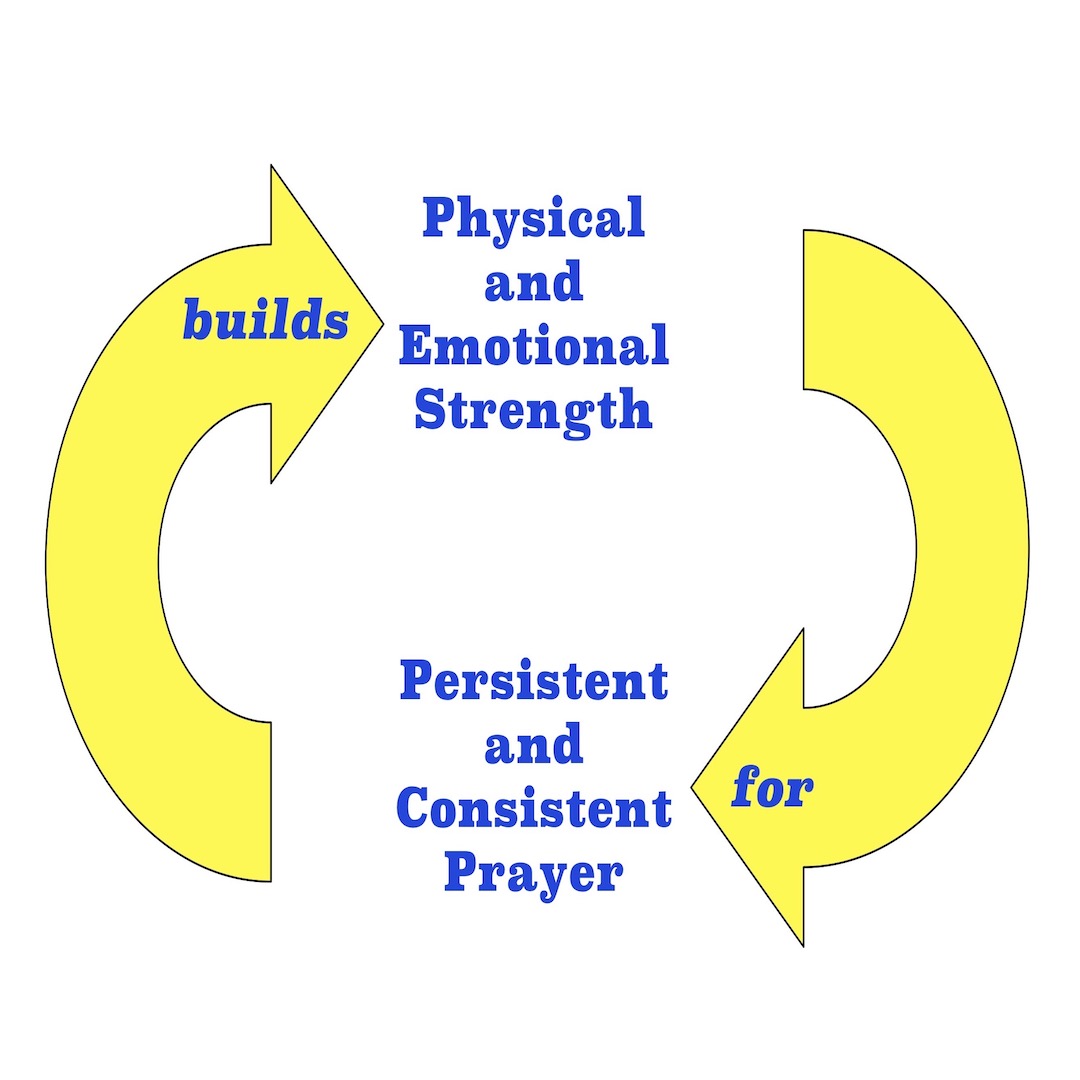
I think it is very instructive that Jesus began His three years of public ministry after thirty years of preparation, and that He began His daily ministry after an early-morning prayer session. If Jesus needed that kind of preparation time, what would make us think we could do with anything less?

Karl Vaters and I discussed Chapter 10 of my book Shepherd Leadership which is entitled “Can’t, Won’t, or Don’t” This chapter (and our conversation) covers the three main reasons leaders need to address to make sure they are being adequately prepared.

►► Would you please prayerfully consider supporting this ministry? My Patreon supporters get behind-the-scenes access to exclusive materials. Like this recent post where I shared a map and an app to help with your Bible study time. ◀︎◀︎

Different Types Of Healthy Rest

Listen to the podcast of this post by clicking on the player below, and you can also subscribe on AppleSpotify, or Audible. 

I had a great time on the Thriving In Ministry podcast with Kyle Willis while his podcast partner Dace Clifton was on sabbatical. 

There is a profound truth in a simple observation about how Jesus grew: “And Jesus grew in wisdom and stature, and in favor with God and man” (Luke 2:52). Jesus was healthy in all of these areas. That means He had the proper work-rest balance in each of these areas too. 

We should learn from this example and find different ways to rest and recover mentally, physically, spiritually, and relationally, just as Jesus did.  

I encourage you to take a listen to this part of our conversation.

How can you take a mental rest? Perhaps by reading or listening to something uplifting, or maybe simply taking time to think about what you’ve been thinking about. 

For physical rest, you might take a nap, schedule a vacation, or contemplate changing something in your diet. 

For spiritual rest, you could sing a worship song or quietly meditate on a passage of Scripture. 

For relational rest, you could have breakfast with a good friend or go for a walk with your spouse. 

And don’t forget to tap into the wisdom and expertise of others in these areas. Talk with a mental health professional about your mental health, see a doctor about your physical health, visit with a wise mentor to discuss your spiritual health, or see a counselor about your relational health. You don’t have to come up with all of the answers on your own. 

In my book Shepherd Leadership, I take five chapters to unpack how we can improve our health in all four of these areas. I encourage you to check it out by clicking here. 

►► Would you please prayerfully consider supporting this ministry? My Patreon supporters get behind-the-scenes access to exclusive materials. ◀︎◀︎

Conquering Two Roadblocks To Sabbathing

Listen to the podcast of this post by clicking on the player below, and you can also subscribe on AppleSpotify, or Audible. 

I thought it was very appropriate that I got to be a guest on the Thriving In Ministry podcast with Kyle Willis while his podcast partner Dace Clifton was on sabbatical. It was appropriate because Kyle and I talked about the importance of pastors finding time to rest. 

Proper rest is absolutely vital for longevity and vitality. I hope you will listen to this short segment from this conversation. 

I shared with Kyle two main roadblocks to sabbathing. 

(1) Trying to be something you’re not. 

We are all wired differently. God wired us that way on purpose. So if you’re an early bird, guard those morning hours for your creative work and use the evenings for rest. If you’re a night owl, don’t try to copy the early birds, but rest early in the day and do your creative work when you are at your best. 

→ So the key concept to overcoming this roadblock is personalization. 

(2) Getting distracted by the non-essentials. 

Two things have really helped me with this one: Sticking to sustainable daily routines, while at the same time being sensitive to the Holy Spirit’s redirection (check out my post on the idea I call I.T.L.W.). 

→ The key concept here is flexible focus. 

I talk more about this concept of sabbathing and a leader’s overall healthiness in my book Shepherd Leadership. You can also check out some other posts about sabbathing by clicking here.

►► Would you please prayerfully consider supporting this ministry? My Patreon supporters get behind-the-scenes access to exclusive materials. ◀︎◀︎

How I Learned To Stop Sabotaging My Sabbath

Listen to the podcast of this post by clicking on the player below, and you can also subscribe on AppleSpotify, or Audible. 

We all know that it’s impossible for a leader to be “on” 24 hours a day, seven days per week. Yet many leaders continue to operate as though they are supposed to be “on” all the time. The Bible not only calls for us to take a Sabbath rest, but it is something that God Himself demonstrated for us. 

I enjoyed my time on the Thriving In Ministry podcast with Kyle Willis while his podcast partner Dace Clifton was on sabbatical. Kyle and I didn’t plan this, but he mentioned a passage from Hebrews 4 that the Holy Spirit used years ago to get my attention. 

I would make my plans for a day off, or even a break in the middle of a busy day, only to find myself allowing work to consume that time. I was sabotaging my sabbath time until I saw three life-changing words in Hebrews 4:10. 

It is a very humbling thing to recognize that it is “my own work” that is sabotaging my sabbath rest. God is aware of my need for sabbathing, but I have to submit my plans to His plan. As I mentioned in this interview, and in a previous blog post, writing “ITLW” at the top of my daily To Do list has helped me immensely. It is a reminder to me that God knows what I need to be doing, with whom I need to be speaking, and what ministry needs to be accomplished each day far, far better than I ever could. I must listen to the Holy Spirit and submit “my own work” to God’s will. 

I talk about some other strategies that helped me in this area in my book Shepherd Leadership. It is a part of a 5-chapter section where I discuss how leaders can achieve wholly healthiness—mental, physical, spiritual, and relational health. I hope you will pick up a copy for yourself.

I’ll be sharing more clips from this Thriving In Ministry interview soon, so please stay tuned. Shepherd Leadership: The Metrics That Really Matter is available in print or ebook, and in audiobook through either Audible or Apple. 

►► Would you please prayerfully consider supporting this ministry? My Patreon supporters get behind-the-scenes access to exclusive materials. ◀︎◀︎

You Have To Be Tuned In To Yourself

Listen to the podcast of this post by clicking on the player below, and you can also subscribe on AppleSpotify, or Audible. 

I had a great time on the Thriving In Ministry podcast with Kyle Willis while his podcast partner Dace Clifton was on sabbatical.

From all of the podcasts and interviews they had done, Kyle shared with me how so many pastors find it difficult to take a Sabbath break. Kyle noted that a pastor’s day of rest seems to bump into everyone else’s day of work. 

I’ve found this to be true for anyone in leadership, even if they’re not a pastor. It seems that a leader’s work is never done, making it very easy to try to maintain a 24/7 availability. If you feel like rest is a difficult thing to maintain, you’re in good company because Jesus had the same struggle. 

That passage in Mark 6 that I mentioned is instructive for leaders in a couple of ways. First, Jesus was looking out for His teammates. He saw that they were tired and He called them to a place of rest. Good shepherds are always tuned in to the needs of the flock around them. As David said in Psalm 23, the Good Shepherd knows when to lead us to quiet pastures and still waters. 

Second, I see that Jesus was also tuned in to Himself. Even though He was trying to get to a quiet place, He took time to minister in teaching and food to a crowd that was described as “sheep without a shepherd.” When this time was finished, Jesus took time alone to pray (Mark 6:46). 

I think sometimes leaders have sabotaged their own health and effectiveness by saying things like, “This is quitting time” or “This is my day off.” Instead, we should listen to the Holy Spirit giving us insight like, “Take a break now. It’s time to go to a quiet pasture. It’s time to recharge in prayer.” 

Leaders, don’t stick rigidly to your schedule but stay tuned in to yourself. Listen for the unmistakable voice of the Holy Spirit giving you wisdom. I have a section of five chapters in my book Shepherd Leadership that deal with every aspect of a leader’s health. Please pick up a copy today.

I’ll be sharing more clips from this Thriving In Ministry interview soon, so please stay tuned. Shepherd Leadership: The Metrics That Really Matter is available in print or ebook, and in audiobook through either Audible or Apple.

►► Would you please prayerfully consider supporting this ministry? My Patreon supporters get behind-the-scenes access to exclusive materials. ◀︎◀︎
Optimal Spiritual Health

Listen to the podcast of this post by clicking on the player below, and you can also subscribe on AppleSpotify, or Audible. 

I had a great time on the 200churches podcast with Jeff Keady. 

Jeff and I spent a good chunk of our time talking about the health of pastors. I think it is very important for shepherd leaders to be wholly healthy because we cannot give to our flocks what we don’t possess ourselves. 

One of the things that is very interesting to me is the parallels between maintaining our physical health and maintaining our spiritual health. When it comes right down to it, our physical health can be optimized by getting a handle on four key elements: (1) proper diet, (2) regular exercise, (3) appropriate rest and recovery, and (4) regular times of evaluation and adjustment. 

Our spiritual health is optimized with these same four elements. 

As my friend Josh Schram reminded me, “Health is not just a big one-time choice. Health is small daily choices.” Jesus made these daily choices to eat well, exercise regularly, rest when needed, and make the adjustments His Father spoke to His heart. He set us an example for healthy spiritual growth that will keep us in a place to grow our shepherd leadership capacities. 

I have found that we are much more likely to make and stick to a plan to get physically healthy when we have a workout friend or someone who is holding us accountable. The same is true for our spiritual health. So pastor, don’t try to get and stay healthy on your own, but get a trusted friend or two working out alongside you. 

In my book Shepherd Leadership, I have five chapters that focus on a leader’s mental, physical, spiritual, and relational health. I hope you will pick up a copy to help you operate at peak healthiness. 

If you want to catch up on some of the other clips I’ve already shared from this interview, you can find them here, and I’ll be sharing more clips from this 200churches interview soon, so please stay tuned. Shepherd Leadership: The Metrics That Really Matter is available in print or ebook, and in audiobook through either Audible or Apple. 

►► Would you please prayerfully consider supporting this ministry? My Patreon supporters get behind-the-scenes access to exclusive materials. ◀︎◀︎

The Best Laid Plans

Listen to the podcast of this post by clicking on the player below, and you can also subscribe on AppleSpotify, or Audible. 

Perhaps you’ve heard the phrase, “The best laid plans of mice and men often go awry.” 

This is a line from a poem written by Robert Burns in 1785 called To A Mouse. The story behind the poem is Burns had been plowing his field and destroyed a nest that a mouse had been working all day to build. His poem was written as an apology. The famous line from the Scottish poet actually is written like this—

The best laid schemes o’ Mice an’ Men
     Gang aft agley,
An’ lea’e us nought but grief an’ pain,
     For promis’d joy!

That phrase “gang aft agley” means often go awry. 

Do you ever feel this way? Like your perfectly planned agenda got derailed before you even finished breakfast? Or that your To Do list never quite gets “To Done” by the end of the day?  

I had a great time on the Thriving In Ministry podcast with Kyle Willis while his podcast partner Dace Clifton was on sabbatical. We had planned to discuss how to help pastors get some rest so they could be at their optimal health, but our best laid plans definitely “gang aft agley”! We had multiple technical issues before we could even start recording, and then just as we talked about how pastors could find a way to rest, well, this happened…

Ah yes! Plans gone awry, indeed! 

But here is an important principle for all of us to remember. The Bible says this: We can make our plans, but the Lord determines our steps (Proverbs 16:9). That means the thing that I call “an interruption” may be something or someone God has sent my way. 

I used to really struggle with this, saying things like, “My plans never work out.” Until one day I heard the distinct voice of the Holy Spirit ask me, “Whose plans?” 

Right—I plan, but God directs. 

And He directly perfectly. 

So now I write the initials I.T.L.W. on the top of my well-crafted daily To Do list. That is shorthand for “If the Lord wills” which I took from this passage—

Now listen, you who say, “Today or tomorrow we will go to this or that city, spend a year there, carry on business and make money.” Why, you do not even know what will happen tomorrow. What is your life? You are a mist that appears for a little while and then vanishes. Instead, you ought to say, “If it is the Lord’s will, we will live and do this or that.” (James 4:13-15) 

Pastor, look at the life of Jesus. He often tried to get away for a time of rest, but people with needs showed up. His well-laid plans appeared to go awry. But He had compassion on them because He viewed them “like sheep without a shepherd” (Matthew 9:36; Mark 6:34). Jesus then found time to sabbath later. 

Don’t view people with needs as an interruption or as something that derails your plans, but thank God for sending them your way. Then listen to the Holy Spirit showing you how and when you can get the rest you need to be energized to accomplish the rest of the items on your agenda.

I’ll be sharing more clips from this Thriving In Ministry interview soon, so please stay tuned. Shepherd Leadership: The Metrics That Really Matter is available in print or ebook, and in audiobook through either Audible or Apple.

►► Would you please prayerfully consider supporting this ministry? My Patreon supporters get behind-the-scenes access to exclusive materials. ◀︎◀︎

Sunday ≠ Sabbath

Listen to the podcast of this post by clicking on the player below, and you can also subscribe on AppleSpotify, or Audible. 

I had a great time on the Thriving In Ministry podcast with Kyle Willis while his podcast partner Dace Clifton was on sabbatical. 

Kyle and I wanted to help pastors get a better understanding of the value of a sabbath rest, but also an understanding of the challenges that come with trying to sabbath. Throughout the Old Testament, we read of God taking the Israelites to task for their unwillingness to rest, which ultimately led to them having to take a forced rest.   

As I mentioned in this interview, just because the calendar says “Sunday” doesn’t automatically mean that it’s a sabbath day. This is especially true for pastors who are busily engaged in ministry activities on Sundays. But I take comfort in the example of Jesus who showed shepherd leaders how to make sabbathing an active and integral part of effective ministry. 

I have a chapter in my book Shepherd Leadership called “A Healthy Shepherd’s Sabbath,” and then I have a follow-up chapter called “Can’t, Won’t, or Don’t” which addresses some changes pastors can make to ensure they are getting the vital rest they need. If you are a church leader, I encourage you to pick up a copy of my book Shepherd Leadership: The Metrics That Really Matter. 

I’ll be sharing more clips from this Thriving In Ministry interview soon, so please stay tuned. Shepherd Leadership: The Metrics That Really Matter is available in print or ebook, and in audiobook through either Audible or Apple.

►► Would you please prayerfully consider supporting this ministry? My Patreon supporters get behind-the-scenes access to exclusive materials. ◀︎◀︎

Sabbathing For Pastors

Listen to the podcast of this post by clicking on the player below, and you can also subscribe on AppleSpotify, or Audible. 

During a Bible study I was recently leading, I was asked how a pastor finds a day to set aside as a Sabbath day. This is tricky for pastors because Sunday is usually considered a “workday” for us. And even if we can take a “day off” there are still people who need to speak with us.  

Being able to Sabbath is vital for all leaders, but especially for pastors. I spend five chapters in my book Shepherd Leadership talking about the mental, physical, spiritual, and relational health of pastors. If you are a pastor, I encourage you to pick up a copy of my book. If you love your pastor, please get a copy for him or her. 

I was recently interviewed on the Thriving In Ministry podcast specifically on the topic of sabbathing, you can listen to that interview here. You can also check out some other blog posts I’ve written about sabbathing by clicking here.

►► Would you please prayerfully consider supporting this ministry? My Patreon supporters get behind-the-scenes access to exclusive materials. ◀︎◀︎

Recovering Mentally

Listen to the podcast of this post by clicking on the player below, and you can also subscribe on AppleSpotify, or Audible. 

I had a great time on the Thriving In Ministry podcast with Kyle Willis and Dace Clifton. 

Kyle asked me a question about how I recharge myself mentally. A key verse in the Bible for me is 2 Corinthians 10:5 where the the apostle Paul counsels us to capture our thoughts. This is extremely hard to do when we are physically or mentally drained. 

In my younger years, I used to try to “do nothing” as my recovery time. As I matured, I realized that top athletes had a different way to help their body recover, and I began to adapt those practices to my time of mental recovery. Dace also shares a very helpful tip for his mental recovery time. 

In my book Shepherd Leadership: The Metrics That Really Matter I make the case that in order for the sheep to be healthy, the shepherd has to get healthy first. The principle is simple: You cannot give to others what you do not possess yourself. I hope you will pick up a copy of my book to learn how Jesus taught us to be wholly healthy leaders.

I’ll be sharing more clips from this Thriving In Ministry interview soon, so please stay tuned. Shepherd Leadership: The Metrics That Really Matter is available in print or ebook, and in audiobook through either Audible or Apple.

►► Would you please prayerfully consider supporting this ministry? ◀︎◀︎