A Sense Of Urgency?

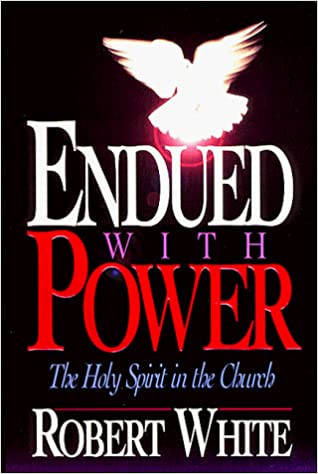
I’m reading a challenging book today called Endued With Power: The Holy Spirit in the Church. I just read a thought-provoking quote from the book:

“If the church that is claiming to be Spirit-filled is not a missionary community that is living with a sense of urgency, then its members will be caught up in the rush to respectability and social accommodation” —Steven J. Land

(1) Do we have that sense of urgency? Are we living and working and sharing like today is the day Jesus could return?

…or…

(2) Or are we more concerned about what is socially acceptable and politically correct? Are we just playing church?

I pray that I am leading our church always into that first category. I pray that I personally am always living with that sense of urgency.

Rats In My Cellar

We started our Love To The Fourth Power series yesterday morning, looking at what it means to Love God with all your heart… and to love your neighbor the same way. As usual, I’m speaking more to myself than I am to our congregation. During my study time, the Holy Spirit usually does a number on me!

So here’s the recap from yesterday:

  • Loving actions are fine, but loving REactions are more important.
  • The way I REact may say more about my love-with-all-my-heart level than the way I act.
  • In order to know if my REaction is compassion, I have to take the time to reflect on my REactions.

I love this picturesque quote from C.S. Lewis:

“When I come to my evening prayers and try to reckon up the sins of the day, nine times out of ten the most obvious one is some sin against charity; I have sulked or snapped or sneered or snubbed or stormed. And the excuse that immediately springs to mind is that the provocation was so sudden or unexpected. I was caught off my guard, I had not time to collect myself…. Surely what a man does when he is taken off guard is the best evidence of what sort of man he is. Surely what pops out before the man has time to put on a disguise is the truth. If there are rats in the cellar you are most likely to see them if you go in very suddenly. But the suddenness did not create the rats; it only prevents them from hiding. In the same way, the suddenness of the provocation does not make me an ill-tempered man: it only shows what an ill-tempered man I am….”

I’m working on looking for the rats in my cellar without making any excuses for how they got there. I just want the Holy Spirit to reveal them and help me eliminate them.

I want my REaction to be compassion all the time.

Is My Church Worldly?

I read this quote this morning from David F. Wells. It’s very challenging. I believe my responsibility as a pastor is to always be wrestling with issues like this.

What do you think about this quote:

“. . . Where Christian faith is offered as a means of finding personal wholeness rather than holiness, the church has become worldly.

“There are many other forms of worldliness that are comfortably at home in the evangelical church today. Where it substitutes intuition and feelings for biblical truth, it is being worldly. Where its appetite for the Word has been lost in favor of light discourses and entertainment, it is being worldly. Where it has restructured what it is and what it offers around the rhythms of consumption, it is being worldly, for customers are actually sinners whose place in the church is not to be explained by a quest for self-satisfaction but by a need for repentance. Where it cares more about success than about faithfulness, more about size than spiritual health, it is being worldly. Where the centrality of God to worship is lost amidst the need to be distracted and to have fun, the church is being worldly because it is simply accommodating itself to the preeminent entertainment culture in the world.

“Is it not odd that in so many church services each Sunday, services that are ostensibly about worshiping God, those in attendance may not be obliged to think even once about His greatness, grace, and commands? Worship in such contexts often has little or nothing to do with God.” —David F. Wells

The Power Of -Ing

Have you ever heard someone say something like:

  • “Wow, look at her. She arrived in style!”
  • “I think I’ve finally arrived.”

This is weird because arriving implies stopping. When I’m driving to the store and I arrive at the store, I don’t keep on driving; I stop at the store. That’s the whole reason I left my house in the first place.

So when we talk about people arriving, do we really mean that they are supposed to stop and park? Correct me on this, but I think the only time we stop in life is when life stops. In other words: We’re dead!

We don’t really want to arrive, do we? We want to hit goals and then keep on going. We want to keep on “ing”ing. Here’s how I’m trying to leverage the power of ing:

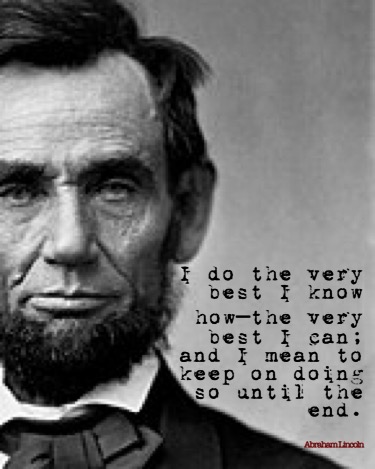
I love the words of Abraham Lincoln, who knew the power of ing:

“I do the very best I know how—the very best I can; and I mean to keep on doing so until the end.”

Don’t arrive. Don’t stop. Keep on “ing”ing the right things—God’s things—and see how God will bless your efforts. There is an incredible power in ing!

The Least-Attended Church Service…

…and quite possibly my least-popular blog post.

Just to give you a chance to bail out right now: (1) This blog post is about prayer, and (2) I’m going to offend you.

In every church I’ve ever attended or been associated with, the least-attended gathering is the prayer meeting. Guaranteed. When the pastor says, “We’re going to gather just to prayer,” people stay away. Want to hear something else painful? Jim Cymbala nailed it in Fresh Wind, Fresh Fire:

“You can tell how popular a church is by who comes on Sunday morning. You can tell how popular the pastor or evangelist is by who comes on Sunday night. You can tell how popular Jesus is by who comes to the prayer meeting.”

Jesus knew this, too. When He had a prayer meeting with His followers, they couldn’t even stay awake!

Here are four reasons why I think this is true:

1.  Prayer has no entertainment value. Don’t get me wrong, I’m not saying we go to church to be entertained, but there is a certain element of that in a typical church service: we listen to good music, laugh at a humorous video, engage with an effective sermon. We’re largely passive, just absorbing what’s going on.

2.  Prayer is hard work. We’re doing spiritual battle, and everything in our flesh is going to fight against this. Prayer requires physical, mental, emotional, and spiritual energy. It’s draining work.

3.  We want immediate visible results. In our microwave, cellular phone, on-the-go world, we want everything faster and faster. Something is happening when we pray, but we may not see the results of our prayers immediately.

4.  Prayer is naked communication. We’re talking to the All-Knowing Creator of the Universe. There is a certain level of discomfort when we come into God’s presence. Adam and Eve hid when they knew their sins would be seen by God, and we have a tendency to avoid God’s presence for the same reason.

Perhaps this is why Jesus said if just two of us come together in prayer He would be right there with us. I think Jesus knew that prayer meetings wouldn’t attract the large crowds of a concert or even a Sunday morning church service. So if just two people got together who wanted to do the hard work of praying, He would be right there.

If your church, like ours, is kicking off this new year with a time of prayer, don’t become discouraged by the lack of attendance. Keep on praying—Jesus is right there with you.

“Gentleman, This Is A Football”

Listen to the podcast of this post by clicking on the player below, and you can also subscribe on AppleSpotify, or Audible.

After reading Mark Batterson’s book Primal, I started thinking quite a bit about the “stuff” that gets accumulated in our walk with Christ. Especially church traditions.

I find it amazing that neither Jesus nor Paul nor Peter nor any other biblical writer gave us a format for how we should “do” church. Over time we’ve just come to expect that a church service will have some songs, announcements, an offering time, some special music, and a sermon. But even changing the order of the service is so jarring to some people that they treat it like one of the Ten Commandments has been broken.

We can’t just keep doing church the way we’ve always done church. Sometimes we need to step back to ask, “Why do we do what we do?

So I’ve been spending some time reading through the Book of Psalms. I want to get back to the essence of worship.

  • What is it?
  • Is it just singing songs? If so, what songs?
  • Is there a style that is more God-honoring?
  • What instruments should we use? Should we even use instruments at all?
  • Do we sing hymns? Choruses? Both? Neither?
  • Does music only come at the beginning and the ending of a service?

Since I love sports, I frequently go back to sports analogies. Several years ago I read David Maraniss’ excellent biography on Vince Lombardi. Every year the Green Bay Packers coach went into pre-season drills with a stronger and stronger passion to win. Here’s how Maraniss describes it:

“He began a tradition of starting from scratch, assuming that the players were blank slates who carried over no knowledge from the year before. He reviewed the fundamentals of blocking and tackling, the basic plays, how to study the playbook. He began with the most elemental statement of all. ’Gentleman,’ he said, holding a pigskin in his right hand, ’this is a football.’”

“Folks, this is worship…” 

  • I know it can involve instruments, but it can also be acapella.
  • I know it can be loud shouts, but it can also be quiet whispers.
  • I know it can be hymns written 150 years ago, but it can also be spontaneously composed.
  • I know it can open a service, but it can also be throughout a service, or even at the close of a service.
  • I know it can be in a church building, but it can also be in a grocery store.

I know it is highly personal.

I know it is based on what attributes of God I have experienced firsthand.

I know God loves it when I worship Him.

As for the other details, well, I’m still wrestling with that.

►► Would you please prayerfully consider supporting this ministry? My Patreon supporters get behind-the-scenes access to exclusive materials. Like some exclusive quotes from a book I just reviewed. ◀︎◀︎

A Dollar Or A Cent

Last night my two young nephews were staying at our house. After dinner (and ice cream!) my youngest nephew decided he would rather go back home to sleep in his own bed. As I was driving him back toward his house, we had a fascinating conversation.

Fascinating for me because of the sincere simplicity of his young mind. He sees the world so innocently, and yet so sincerely as well. It reminded me of… me.

When I was a kid, my Grandfather offered me my choice of a dollar bill or a single penny. Without any hesitation, I chose the penny. “Why do you want just one penny,” my Grandfather asked, “Don’t you know that a dollar is worth 100 pennies?”

“Yes,” I replied in all my 3-year-old wisdom, “But you can’t put a dollar in a gumball machine.”

I robbed myself of a greater blessing because of my innocent simplicity. I saw only the immediate gain and not the greater blessing. I might have to go through an extra step to exchange the dollar for 100 pennies, but wouldn’t the effort be worth it?

Here’s what C.S. Lewis said:

“If there lurks in most modern minds the notion that to desire our own good and earnestly hope for the enjoyment of it is a bad thing, I submit that this notion has crept in from Kant and the Stoics and is no part of the Christian faith. Indeed, if we consider the unblushing promises of reward and the staggering nature of the rewards promised in the Gospels, it would seem that our Lord finds our desires, not too strong, but too weak. We are half-hearted creatures, fooling about with drink and sex and ambition when infinite joy is offered us, like an ignorant child who wants to go on making mud pies in a slum because he cannot imagine what is meant by the offer of a holiday at the sea. We are far too easily pleased.”

Are you too easily pleased? Can you believe God for greater blessings? You might have to give up the immediate gain, but won’t it be worth it to trade mud pies in a slum for a holiday at the sea? Don’t settle for a single penny, when there are immeasurable treasures waiting for you!

Power To Serve (book review)

Smith Wigglesworth: funny-sounding name, but he spoke such powerful, confronting words. Power To Serve was not actually written by Wigglesworth, but spoken by him. This book—like most books that bear his name—is a series of sermons transcribed for us.

I liked the feel of this book. Instead of the fine polished writing of an accomplished author, these words feel like they are coming right from the mouth of this fiery Pentecostal preacher. Wigglesworth is an expositor of God’s Word with few peers. He takes a passage of Scripture and finds the many facets of life in which to bring its holy application.

This book (as its title suggests) challenged me to think about leadership in terms of servanthood. The greatest of leaders are the greatest of servants. And the best servants are those who serve like Jesus.

This is not a book I could speed-read, but had to digest it slowly as I thought about the application to my own life. Here’s a quote which sums up the head-on, no-holds-barred challenges that these words bring to me:

“The Bible is the plumb line of everything. And unless we are lined right up with the Word of God, we will fail in the measure in which we are not righteous. And so, may God the Holy Spirit bring us into that blessed ministry of righteousness.”

I’m trying to line up to God’s Word. These sermons are a great reminder of just how far I still have to go.

Respected Mentor


Last week I was listening to an interview with former Indianapolis coach Tony Dungy on the Catalyst podcast. In this interview, he had some amazing things to say about his relationship with Michael Vick.

Then this evening I opened up the latest issue of Sports Spectrum, and in the opening article, I read some more about the relationship between Coach Dungy and Vick.

In his Catalyst interview Coach Dungy said, “I felt like I let Michael down. Our schedules never coordinated for us to spend a day fishing. If I would have been able to spend a day with him, perhaps it would have come up in conversation about some of the poor decisions he was making. If I had the time to spend with him, maybe I could have given him some counsel that would have helped him make a different decision.” Wow!

Then Sports Spectrum reports that NFL Commissioner Roger Goodell allowed Michael Vick to be reinstated into the league only on the condition that Tony Dungy would be Vick’s mentor. “Michael needs that right now,” Goodell said, “And I’ve asked Tony Dungy to play a more formal role on my behalf, but also on Michael’s behalf, to serve as a mentor to Michael and help him and guide him through some very difficult decisions he’s going to have to make going forward.”

So I’m thinking…

  • Would I put my reputation on the line for someone like Michael Vick? Would you?
  • Would someone even think to ask me to be his mentor?

I hope that you and I are both willing to mentor others, and that others will give us the chance to do so.

I Am What I Think I Am

Years ago I read a book that transformed the way I read and studied. This one book probably caused me to become a more discriminating reader than any other factor. Although it’s less than 50 pages long, As A Man Thinketh by James Allen revolutionized my thinking. Over the last couple of days, I’ve been listening to the audiobook as I have been driving around.

Here’s a quote from James Allen:

A man is literally what he thinks, his character being the complete sum of all his thoughts. … A noble and Godlike character is not a thing of favor or chance, but is the natural result of continued effort in right thinking, the effect of long-cherished association with Godlike thoughts.”

This is what the Bible says about the seeds of great thoughts:

“Finally, brethren, whatever things are true, whatever things are noble, whatever things are just, whatever things are pure, whatever things are lovely, whatever things are of good report, if there is any virtue and if there is anything praiseworthy—meditate on these things.”

What are you thinking about today? What’s going in? You are making yourself by what you are thinking, so choose those thought-stimulators wisely.