Praying For Your Pastor

For the past few years, October has been designated as Pastor Appreciation Month. Honestly, I feel appreciated by the great folks at Calvary Assembly of God every single week! I can only pray that other pastors feel the same love I feel.

Here’s a simple way you can show your pastor appreciation both in October, and all year long: Pray for him or her. Multiple times the Apostle Paul wrote pray for us (Colossians 4:3; 1 Thessalonians 5:25; 2 Thessalonians 3:1). Prayer is SO NEEDED for your pastor!

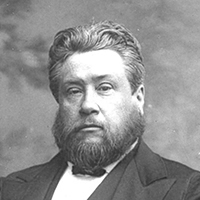
Here’s what the eminent pastor Charles Spurgeon wrote:

The members of the body of Christ should have a care for one another, but especially should the minister receive the prayers of his flock. I have sometimes heard his duties called arduous, but that word is not expressive enough. The works in which he is occupied lie quite out of the region of human power. The minister is sent to be God’s messenger for the quickening of the dead. What can he do in it? He can do nothing whatever unless the Spirit of God be with him through the prayer of his brethren.

He is sent to bring spiritual food to the multitude, that is to say, he is to take the loaves and fishes, and with them, few as they are, he is to feed the thousands. An impossible commission! He cannot perform it. Apart from divine help, the enterprise of a Christian minister is only worthy of ridicule. Apart from the power of the Eternal Spirit, the things which the preacher has to do are as much beyond him as though he had to weld the sun and moon into one, light up new stars, or turn the Sahara into a garden of flowers. We have a work to do concerning which we often cry, “Who is sufficient for these things?” and if we be put to this work but have not your prayers, and in consequence have not the supply of the Spirit, we are of all men the most miserable.

Show how much you appreciate your pastor by upholding him/her in prayer every day.
No Sinking Down

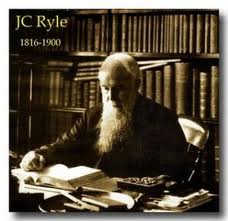
I am so challenged by this quote from J.C. Ryle:

“Men and women who hear the Gospel regularly, I often fear much for you. I fear lest you become so familiar with the sounds of its doctrines, that you gradually become dead to its power. I fear lest your religion should sink down into a little vague talk about your own weakness and corruption, and a few sentimental expressions about Christ, while real practical fighting on Christ’s side is altogether neglected. Oh, beware of this state of mind! ‘Be doers of the Word, and not hearers only.’ No victory—no crown! Fight and overcome!”

If you would like to read more of Ryle’s quotes, check out this blog for a daily dose.

God Made You You

God doesn’t make mistakes.

Ever!

That means you are not a mistake. You might make a mistake (or, if you’re like me, maybe lots of mistakes), but you are not a mistake.

God had you in mind before He created this universe. He knew the perfect time to send you to Earth. And He knew just what you needed to be.

You are God’s workmanship, created in Christ Jesus to do good works, which God prepared in advance for you to do. (Ephesians 2:10)

STOP comparing yourself to others.

STOP beating yourself up.

STOP doubting how special you are.

Even the fun and entertaining Dr. Seuss got it:

Today you are you! That is truer than true!
There is no one alive who you-er than you!

“You are most attractive when you are yourself, simply because real is attractive.” —Howard Hendricks

Christian Disconnect

The Barna Group just released a study that looks at some of the disconnects between what Christians believe and how they live. You can read the full report by clicking here, but here are the main disconnects:

  • 81% of Christians say Jesus is important to them; but only 18% are committed to developing their relationship with Jesus.
  • 64% of Christians have confessed their sins to God; but only 12% realize how devastating their personal sin is.
  • Lots of Christians participate in “normal” religious activities every week; but “less than one out of ten have talked about their faith with a non-Christian, fasted for religious purposes, and had an extended time of spiritual reflection during the past week.”
  • Most Christians feel “comfortable” in their church; but their comfort level is only surface-deep, with no accountability nor confession.

As a pastor, I place the responsibility for these disconnects squarely on the pastors. On me.

Unless pastors are teaching this stuff—and living this stuff—the disconnects will always remain.

Gregory the Great (ca. 540-604) wrote, “There are some who investigate spiritual precepts with cunning care, but what they penetrate with understanding they trample on in their lives: all at once they are teaching the things which not by practice but by study they have learnt; and what in words they preach, by their manners they impugn. Whence it comes to pass that when the shepherd walks through steep places, the flock follows to the precipice.”

I’m challenged by this, and I’m going to spend some time in prayer this week regarding these disconnects. I want to take a good look at what I’m teaching and living, and allow the Holy Spirit to correct what needs to be corrected.

Thursdays With Oswald—Stop Doing That!

This is a weekly series with things I’m reading and pondering from Oswald Chambers. You can read the original seed thought here, or type “Thursdays With Oswald” in the search box to read more entries.

Stop Doing That!

     Deliverance from sin is not the same as deliverance from human nature. There are things in human nature, such as prejudices, that the saint can only destroy through sheer neglect. But there are other things that have to be destroyed through violence, that is, through God’s divine strength imparted by His Spirit. … We can either turn back, making ourselves of no value to the kingdom of God, or we can determinedly demolish these things, allowing Jesus to bring another son to glory.

From My Utmost For His Highest

I’m usually pretty good at making To-Do lists. But how am I at making Don’t-Do lists?

I need find those things that are holding me back, and deliberately destroy them—totally neglect them, and let them die from starvation. Doing has a certain power in my spiritual growth, but not doing can have an equal power as well.

“The average human being in any line of work could double his productive [or spiritual] capacity overnight if he began right now to do all the things he knows he should do, and to stop doing all the things he knows he should not do.” —Elmer G. Letterman

Inventive Faith

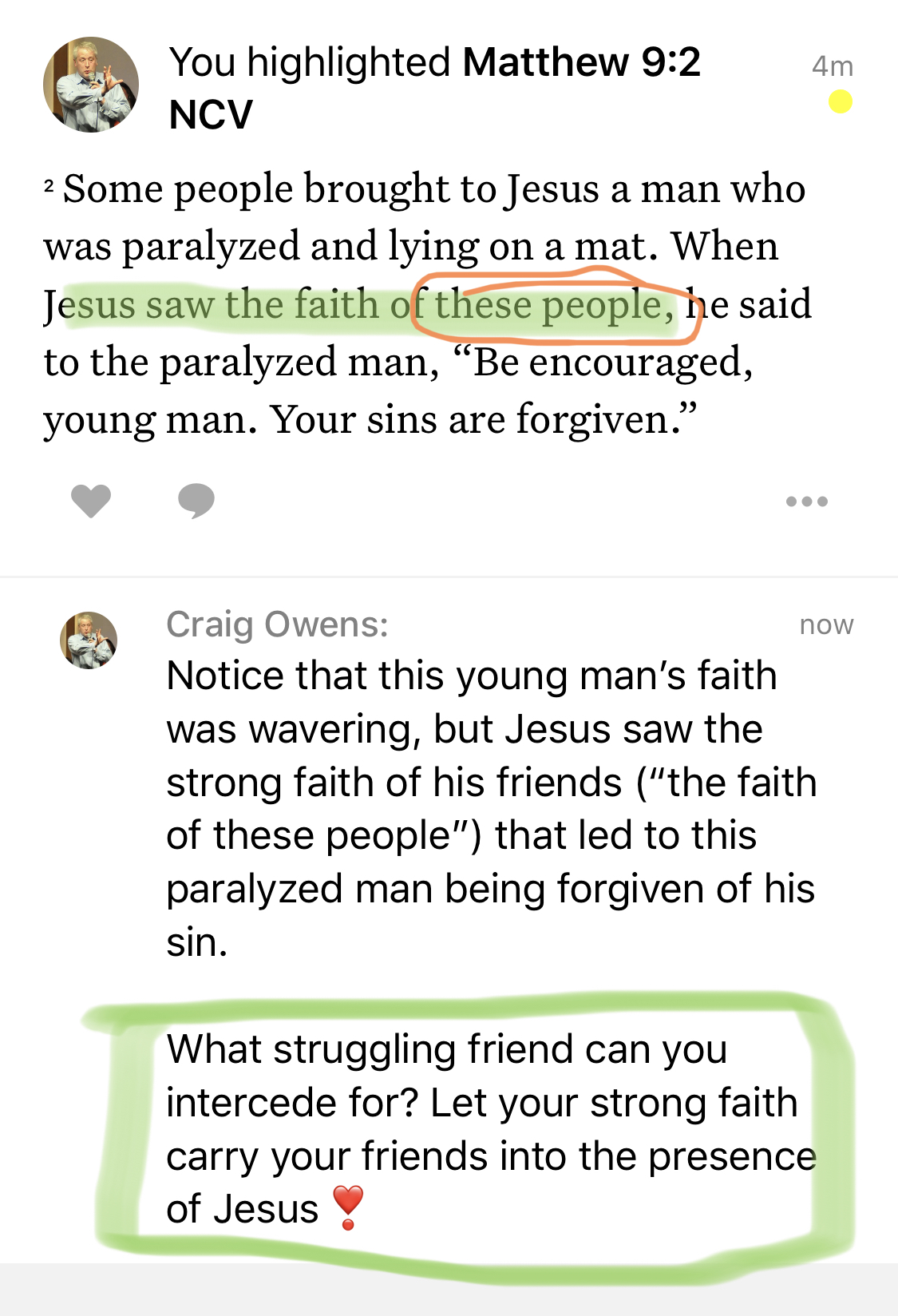
I love the story of the four friends who wanted to get their sick companion in to see Jesus. They had heard about Jesus healing others, and they believed that He would heal their friend too. But when they arrived at the house where Jesus was, they found it packed with people, and the doors and windows blocked by crowds who also wanted to see and hear Jesus. So these four friends made an appointment with one of Jesus’ disciples to come back at a more convenient time.

Ummm, not so much!

These guys were so convinced that Jesus could heal their friend, that they didn’t let crowds stop them. They climbed up on top of the house, ripped off some of the roof tiles, and lowered their friend down to Jesus. I love their inventive faith!

How many times do circumstances stop me?

  • there were too many people
  • or not enough people
  • they seemed busy
  • they seemed uninterested
  • it was raining

Oh, so many flimsy excuses that seem to derail my faith!

I love this thought from Charles Spurgeon:

“Faith is full of inventions. The world is constantly inventing; genius serves all the purposes of human desire: cannot faith invent too, and reach by some new means the outcasts who lie perishing around us?

“…Through door, through window, or through roof, let us, breaking through all impediments, labor to bring poor souls to Jesus. All means are good and decorous when faith and love are truly set on winning souls. If hunger for bread can break through stone walls, surely hunger for souls is not to be hindered in its efforts. O Lord, make us quick to suggest methods of reaching thy poor sin-sick ones, and bold to carry them out at all hazards.”

How much more inventive can your faith be?

More Amateurs Needed

Did you know that the origin of the word clergy comes from the Latin meaning “learned men”? These are the men and women who are supposed to lead our churches, because they have the education that others don’t. They are professionals.

Now compare that with the definition of laity: “the people outside of a particular profession, as distinguished from those belonging to it.”

Did you catch that? The laity are outside and uneducated. They are amateurs.

The origins of clergy is traced back to the 12th century, and laity first appears in the 16th century. But long before this, the Apostle Paul had a different idea —

Take a good look, friends, at who you were when you got called into this life. I don’t see many of “the brightest and the best” among you, not many influential, not many from high-society families. Isn’t it obvious that God deliberately chose men and women that the culture overlooks and exploits and abuses, chose these “nobodies” to expose the hollow pretensions of the “somebodies”? (1 Corinthians 1:26-28 from The Message, emphasis added)

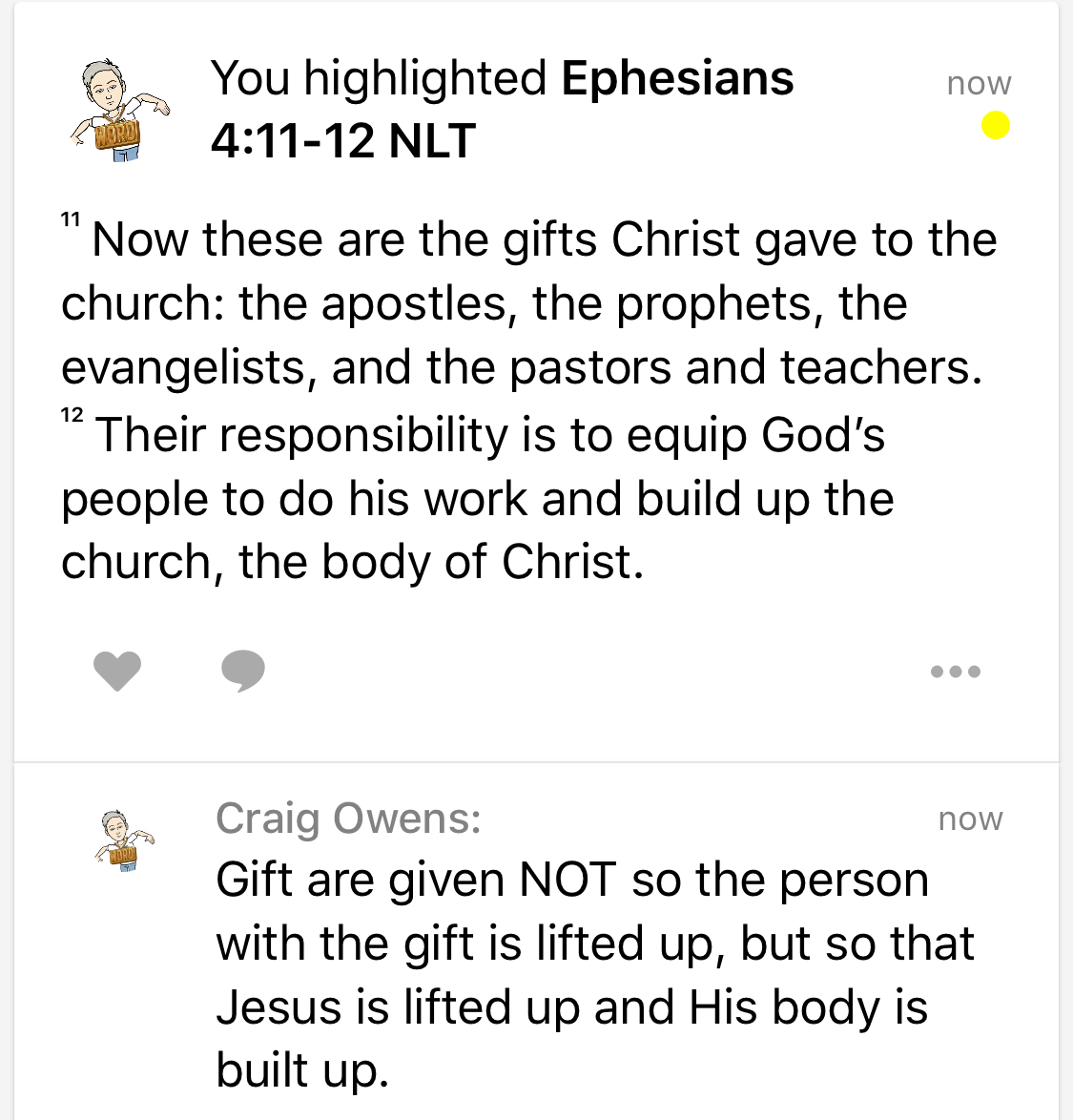
There is a HUGE PROBLEM when we think that only the professional clergy is equipped to do the ministry of the church! What makes a healthy church (like the first century church we read about in the book of Acts) is when EVERYONE is actively involved in ministry.

These words from Howard Hendricks are tough to hear, but right on target:

“I believe a great problem in evangelicalism today—whether in the local church, missions, seminary education, or what have you—is we have too many big-time operators! And too few servants. … 

“The typical church hires a clergyman to rob them of the privilege of exercising Christ’s gifts. … The greatest curse on the Church today is that we are expecting a small group of professionals to get God’s work done.”

I hope I haven’t stepped on too many toes with this one. My intent is not to offend, but to get the church thinking. I want to see EVERYONE that calls themselves a Christian actively involved in ministry.

New Habits

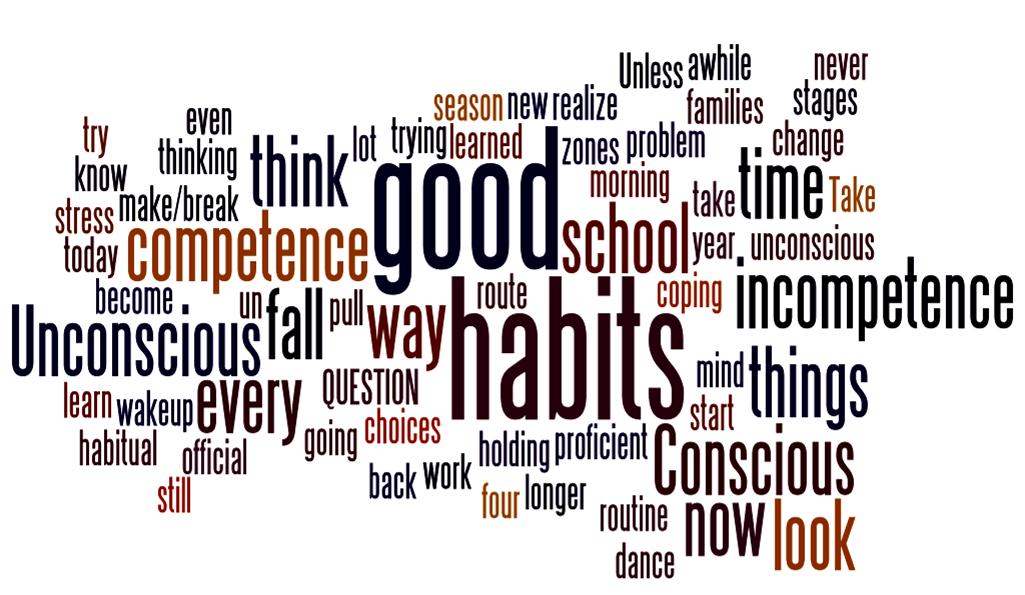
Do you have any habits? I’ll bet you have more of them that you realize! In fact, most of our day is made up of habitual things: same wakeup time, same morning routine, same route to work of school, same lunch choices, same way of thinking, same way of coping with stress, and so on.

For many families, a new school year begins today. Even if you don’t have school-aged children, the Tuesday following Labor Day is sort of the (un)official start of the fall season. And it’s a good time to take a look at your habits.

“Take your mind out every now and then and dance on it. It is getting all caked up.” —Mark Twain

Good advice! We usually learn things through four stages:

  • Unconscious incompetence: we’re no good at something, but we don’t even realize it.
  • Conscious incompetence: we realize something must change, but we’re still no good at it.
  • Conscious competence: we’ve learned something, and now we’re good at, but we have to think about it a lot.
  • Unconscious competence: we’ve become proficient at something, and we don’t have to think about it any longer.

The problem is with both of our unconscious zones. Unless we pull out our habits and look at them every once in awhile, we may never know what’s holding us back.

QUESTION: What new habits are you going to try to make/break this fall?

Integrity At Home

I read this verse the other day in my devotions, and it’s really been doing a number on my heart.

…I will lead a life of integrity in my own home. (Psalm 101:2 NLT)

I would hate it if I was considered a hero at work, but considered a zero in my own home.

Here’s what I’m processing:

  • Do I earn the same level of respect at home as I do at the office?
  • Do I put in the same diligence into growing my home life as I do growing my career?
  • Am I as forgiving with my family as with friends and coworkers?
  • Do I have the same level of preparation at home as I do at work?
  • Am I learning the craft of being a husband and father like I’m learning the craft of being a pastor?
  • Do I honor my commitments at home like I do with others?

I don’t want to live as John Bunyan described Talkative in Pilgrim’s Progress: “He was a saint abroad and a devil at home.”

Instead one of my life verses is this: I have no greater joy than knowing my children all walk in the truth (3 John 4).

The only way this will be possible is if I led a life of integrity in my own home.

No Toleration

We need to elevate our vocabulary when it comes to God and the things about His nature and His Kingdom.

I was convicted of this a few years ago. I came home from church and was watching an NFL game on a Sunday afternoon, when a receiver made an amazingly acrobatic catch for a touchdown. I jumped off the couch and shouted, “That. Was. Awesome!!

Immediately the Holy Spirit brought something to my mind. “When you were worshiping at church this morning,” He gently reminded me, “didn’t you say how awesome God was? Is He as awesome as that catch?”

Right then and there I decided that I needed to be more careful of my vocabulary. I want to reserve words for God that I used nowhere else. Theologians do it all the time: creating new words to try to capture the majesty, omnipotence, and mind-blowing-vocabulary-defying greatness of Almighty God.

I’m certainly not perfect at this, but I’m working on it.

I was reminded of this again when I read these words from Charles Spurgeon:

“My Master has riches

beyond the count of arithmetic,

the measurement of reason,

the dream of imagination,

or the eloquence of words.

They are unsearchable!

You may look,

and study,

and weigh,

but Jesus is a greater Savior

than you think Him to be

when your thoughts are at the greatest.

My Lord is more ready to pardon

than you to sin,

more able to forgive

than you to transgress.

My Master is more willing to supply your wants

than you are to confess them.

Never tolerate low thoughts of my Lord Jesus.”