Inventive Faith

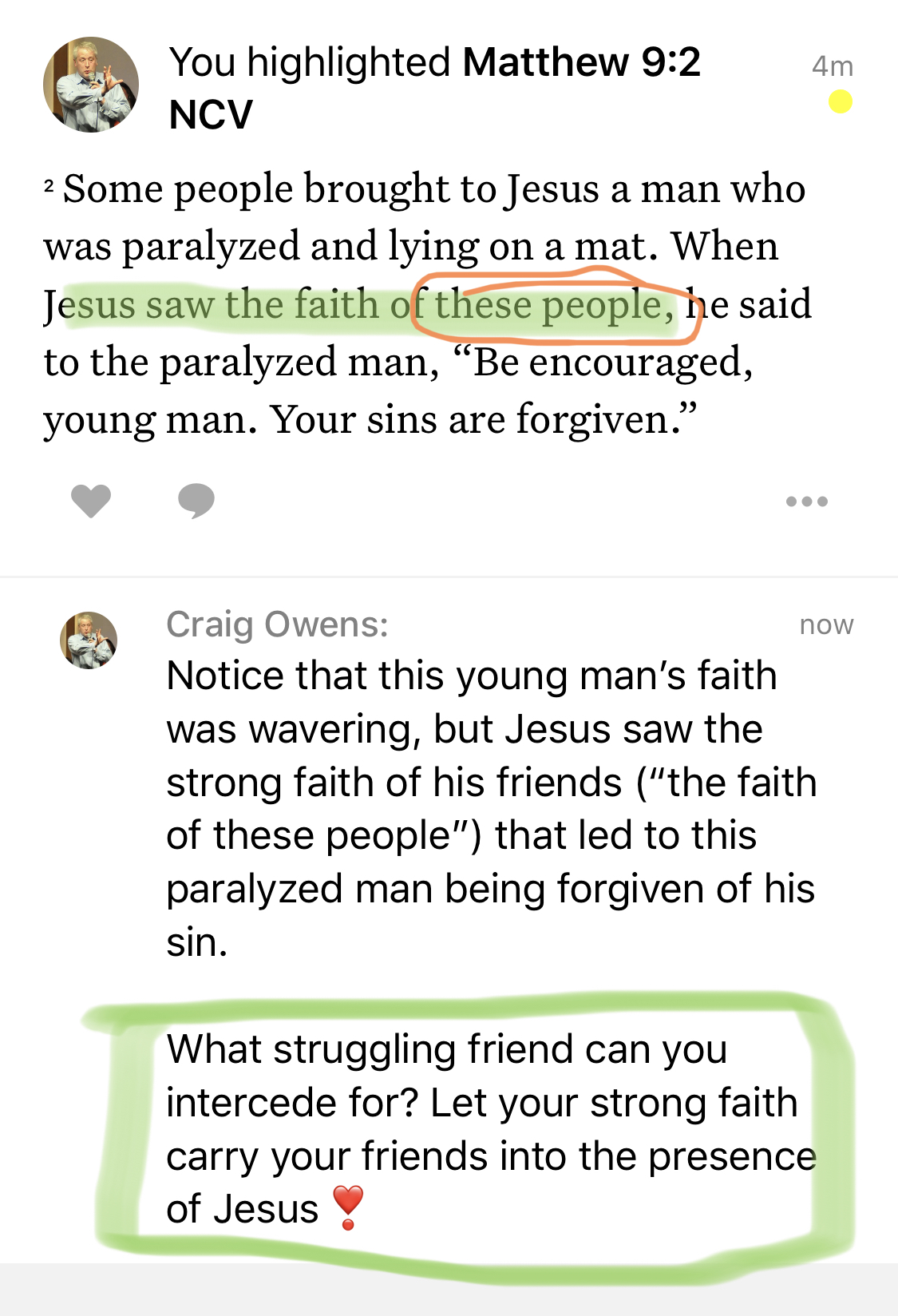
I love the story of the four friends who wanted to get their sick companion in to see Jesus. They had heard about Jesus healing others, and they believed that He would heal their friend too. But when they arrived at the house where Jesus was, they found it packed with people, and the doors and windows blocked by crowds who also wanted to see and hear Jesus. So these four friends made an appointment with one of Jesus’ disciples to come back at a more convenient time.

Ummm, not so much!

These guys were so convinced that Jesus could heal their friend, that they didn’t let crowds stop them. They climbed up on top of the house, ripped off some of the roof tiles, and lowered their friend down to Jesus. I love their inventive faith!

How many times do circumstances stop me?

  • there were too many people
  • or not enough people
  • they seemed busy
  • they seemed uninterested
  • it was raining

Oh, so many flimsy excuses that seem to derail my faith!

I love this thought from Charles Spurgeon:

“Faith is full of inventions. The world is constantly inventing; genius serves all the purposes of human desire: cannot faith invent too, and reach by some new means the outcasts who lie perishing around us?

“…Through door, through window, or through roof, let us, breaking through all impediments, labor to bring poor souls to Jesus. All means are good and decorous when faith and love are truly set on winning souls. If hunger for bread can break through stone walls, surely hunger for souls is not to be hindered in its efforts. O Lord, make us quick to suggest methods of reaching thy poor sin-sick ones, and bold to carry them out at all hazards.”

How much more inventive can your faith be?

More Amateurs Needed

Did you know that the origin of the word clergy comes from the Latin meaning “learned men”? These are the men and women who are supposed to lead our churches, because they have the education that others don’t. They are professionals.

Now compare that with the definition of laity: “the people outside of a particular profession, as distinguished from those belonging to it.”

Did you catch that? The laity are outside and uneducated. They are amateurs.

The origins of clergy is traced back to the 12th century, and laity first appears in the 16th century. But long before this, the Apostle Paul had a different idea —

Take a good look, friends, at who you were when you got called into this life. I don’t see many of “the brightest and the best” among you, not many influential, not many from high-society families. Isn’t it obvious that God deliberately chose men and women that the culture overlooks and exploits and abuses, chose these “nobodies” to expose the hollow pretensions of the “somebodies”? (1 Corinthians 1:26-28 from The Message, emphasis added)

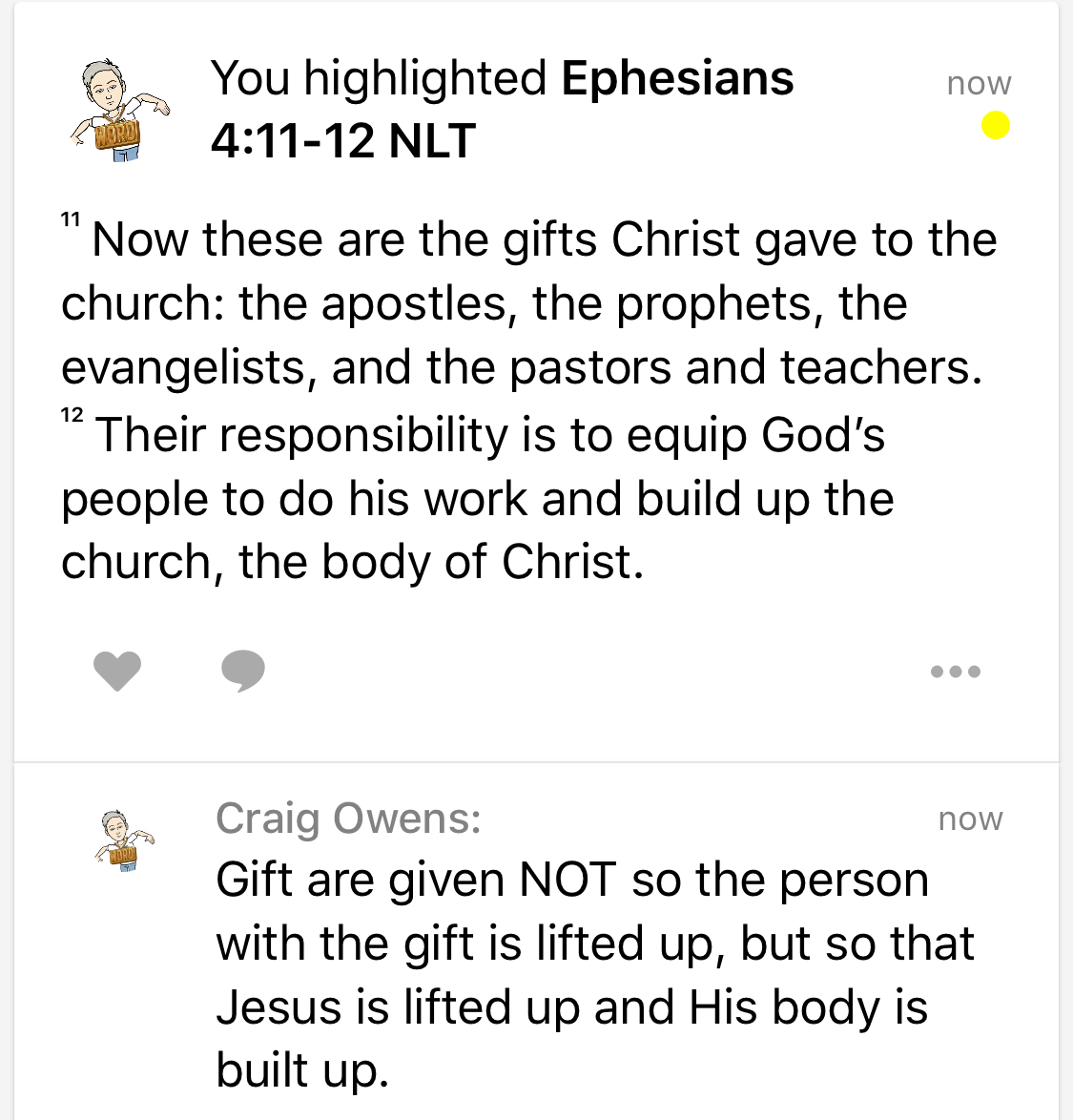
There is a HUGE PROBLEM when we think that only the professional clergy is equipped to do the ministry of the church! What makes a healthy church (like the first century church we read about in the book of Acts) is when EVERYONE is actively involved in ministry.

These words from Howard Hendricks are tough to hear, but right on target:

“I believe a great problem in evangelicalism today—whether in the local church, missions, seminary education, or what have you—is we have too many big-time operators! And too few servants. … 

“The typical church hires a clergyman to rob them of the privilege of exercising Christ’s gifts. … The greatest curse on the Church today is that we are expecting a small group of professionals to get God’s work done.”

I hope I haven’t stepped on too many toes with this one. My intent is not to offend, but to get the church thinking. I want to see EVERYONE that calls themselves a Christian actively involved in ministry.

New Habits

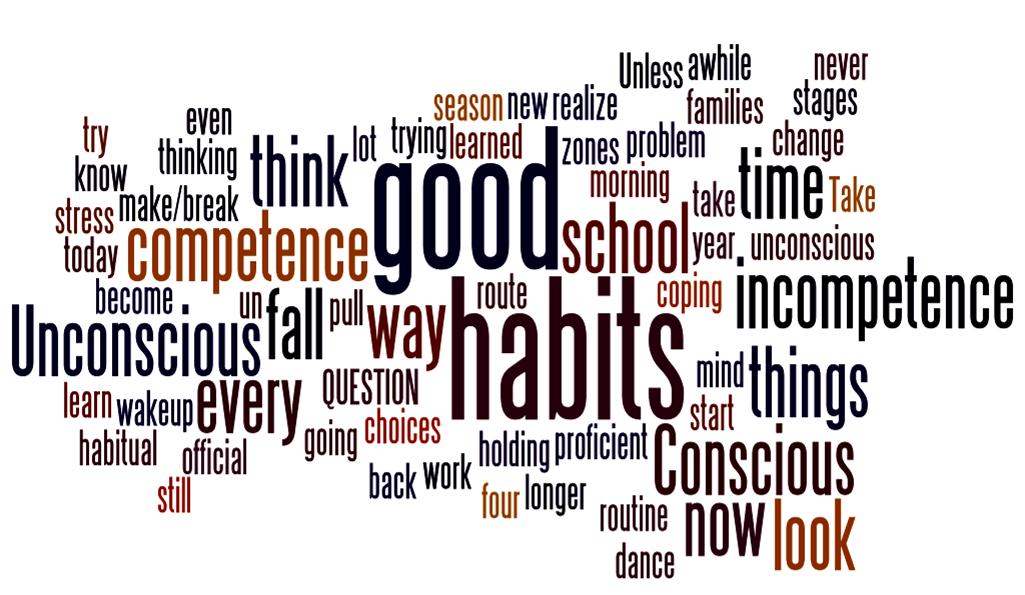
Do you have any habits? I’ll bet you have more of them that you realize! In fact, most of our day is made up of habitual things: same wakeup time, same morning routine, same route to work of school, same lunch choices, same way of thinking, same way of coping with stress, and so on.

For many families, a new school year begins today. Even if you don’t have school-aged children, the Tuesday following Labor Day is sort of the (un)official start of the fall season. And it’s a good time to take a look at your habits.

“Take your mind out every now and then and dance on it. It is getting all caked up.” —Mark Twain

Good advice! We usually learn things through four stages:

  • Unconscious incompetence: we’re no good at something, but we don’t even realize it.
  • Conscious incompetence: we realize something must change, but we’re still no good at it.
  • Conscious competence: we’ve learned something, and now we’re good at, but we have to think about it a lot.
  • Unconscious competence: we’ve become proficient at something, and we don’t have to think about it any longer.

The problem is with both of our unconscious zones. Unless we pull out our habits and look at them every once in awhile, we may never know what’s holding us back.

QUESTION: What new habits are you going to try to make/break this fall?

Integrity At Home

I read this verse the other day in my devotions, and it’s really been doing a number on my heart.

…I will lead a life of integrity in my own home. (Psalm 101:2 NLT)

I would hate it if I was considered a hero at work, but considered a zero in my own home.

Here’s what I’m processing:

  • Do I earn the same level of respect at home as I do at the office?
  • Do I put in the same diligence into growing my home life as I do growing my career?
  • Am I as forgiving with my family as with friends and coworkers?
  • Do I have the same level of preparation at home as I do at work?
  • Am I learning the craft of being a husband and father like I’m learning the craft of being a pastor?
  • Do I honor my commitments at home like I do with others?

I don’t want to live as John Bunyan described Talkative in Pilgrim’s Progress: “He was a saint abroad and a devil at home.”

Instead one of my life verses is this: I have no greater joy than knowing my children all walk in the truth (3 John 4).

The only way this will be possible is if I led a life of integrity in my own home.

No Toleration

We need to elevate our vocabulary when it comes to God and the things about His nature and His Kingdom.

I was convicted of this a few years ago. I came home from church and was watching an NFL game on a Sunday afternoon, when a receiver made an amazingly acrobatic catch for a touchdown. I jumped off the couch and shouted, “That. Was. Awesome!!

Immediately the Holy Spirit brought something to my mind. “When you were worshiping at church this morning,” He gently reminded me, “didn’t you say how awesome God was? Is He as awesome as that catch?”

Right then and there I decided that I needed to be more careful of my vocabulary. I want to reserve words for God that I used nowhere else. Theologians do it all the time: creating new words to try to capture the majesty, omnipotence, and mind-blowing-vocabulary-defying greatness of Almighty God.

I’m certainly not perfect at this, but I’m working on it.

I was reminded of this again when I read these words from Charles Spurgeon:

“My Master has riches

beyond the count of arithmetic,

the measurement of reason,

the dream of imagination,

or the eloquence of words.

They are unsearchable!

You may look,

and study,

and weigh,

but Jesus is a greater Savior

than you think Him to be

when your thoughts are at the greatest.

My Lord is more ready to pardon

than you to sin,

more able to forgive

than you to transgress.

My Master is more willing to supply your wants

than you are to confess them.

Never tolerate low thoughts of my Lord Jesus.”

Plant The God Seed

Have you ever been disappointed because you had a dream that died? How do we justify this with the biblical definition of faith which says, “faith is being sure of what we hope for”?

It’s just this:

  • If God takes away a dream, it’s because the dream was too small.
  • God wants us to be more focused on the Dream Giver than we are on the dream.

So sometimes God asks us to let a dream die.

Think of a watermelon seed. It’s not very big, sort of dull in color, and it’s only a single seed. To plant the seed, means you have to take your hands off it: the seed is now out of your sight and out of your control. But it is there—dead in the ground—that a miracle happens!

A single watermelon seed grows 200,000 times its own weight! A colorless seed produces the vibrant greens and pinks of a mature watermelon. And that single seed produces 100+ seeds.

Has God given you a dream? Has He asked you to give up that dream? Then plant that seed! When you do, the results will be more than you can imagine.

“Faith is to believe what we do not see; and the reward of faith is to see what we believe.” —Augustine

These are some of my notes from part 3 of my See The Invisible series at Calvary Assembly of God. I would love to have you join me when we continue this series on September 4.

Servant

Someone said to me, “Great job!” and then not too much later I heard someone else say, “Umm, not so much!” What’s a guy to do?

Here’s what I refocus on: I’m living for the approval of only One.

The only comment that matters to me is God saying, “Well done, good and faithful servant.”

Well done = done with excellence.

Well done = finished well, not just well begun.

Good = pleasantly done.

Faithful = trustworthy, reliable.

Servant = not my will, but Yours be done.

And when it comes to praise and criticism from men, I like this:

“Every man needs a blind eye and a deaf ear, so when people applaud, you’ll only hear half of it, and when people salute, you’ll only see part of it. Believe only half the praise and half the criticism.” —C.H. Spurgeon

UPDATE: This idea of servant leadership is a key component of my book Shepherd Leadership: The Metrics That Really Matter.

Plugged-In Parenting (book review)

Media saturates our lives. But it’s even more of a factor for the lives of our children. For years I’ve trusted the insights and movie/TV reviews from Focus On The Family’s Bob Waliszewski. Now in Plugged-In Parenting we get to go behind the reviews to learn the whys of the reviews.

In today’s world, we look at our presidents, our prime ministers, our princes and our potentates and we describe them as our leaders, but they’re not. They’re merely our rulers. The leaders are the people who change the minds and stimulate the imaginations of the public, whether children or adults. That means the movie makers, the people who make TV shows, the entertainment people in the business. —Douglas Gresham

Bob lays out some practical, biblically-sound principles that will help parents develop a framework for making sound decisions about media consumption. His approach is not a top-down, because-I-said-so approach, but one that involves even the kids in understanding why these decisions need to be made.

One of the more thought-provoking chapters is about developing a family constitution which gives the guidelines for what types of media are acceptable or unacceptable for your family.

I would recommend this book for every household who wants to ensure that only the highest quality media is being viewed in their homes. In addition, I appreciate the Plugged-In reviews both on their website and on the handy iPhone app.

I am a Tyndale book reviewer.

Marriage Math

Listen to the podcast of this post by clicking on the player below, and you can also subscribe on AppleSpotify, or Audible.

Martin Luther said:

“There is no more lovely, friendly, and charming relationship, communion, or company than a good marriage.”

Unfortunately our culture has watered-down and diminished the value of marriage. Far too often marriage is seen as something which diminishes life, instead of enhancing it.

Perhaps this is because we have been viewing marriage with the wrong math.

Marriage is NOT ½ + ½ = 1

That makes sense mathematically, but it’s inaccurate. God didn’t create us a half-people. God created us whole and complete. So our spouse is not our better half, he/she is our better whole.

Marriage is NOT 1 + 1 = 2

Again, this makes sense mathematically, but it is not biblical. Why? Because 2 is divisible, and the Bible makes it clear that a man and woman who are married are one flesh.

Marriage IS 1 X 1 = 1

Not only does this work mathematically, but biblically too. God sees marriage as one whole man and one whole woman coming together to make one whole marriage.

Not coincidentally, X (chi) is the first Greek letter of the name Christ. When Christ is at the center of a marriage, and when the husband and wife are more in love with Him than they are with their spouse, then a wholeness exists in the marriage.

1 X 1 = 1 is the type of marriage that glorifies God.

1 X 1 =1 is the type of marriage that is so lovely, friendly, and charming.

If you are single, keep yourself pure so you can bring your “oneness” as a gift to your future spouse. If you are married, keep the X—Jesus Christ—at the center of your marriage.

►► Would you please prayerfully consider supporting this ministry? ◀︎◀︎

Why Great Men Fall (book review)

Dr. Wayde Goodall addresses a subject that I wish didn’t have to be addressed in Why Great Men Fall. Unfortunately, we’ve all seen it; perhaps you’ve even experienced it firsthand with someone close to you. How tragic it is when we see spiritual, business or political leaders lose their influence in the wake of a devastating fall.

Dr. Goodall pulls no punches as he identifies the things that seem to trip men up time and time again. He looks squarely at the root causes – not just the symptoms – and challenges men to do the same. We’re all susceptible to sin and failure. The Bible warns us: “So, if you think you are standing firm, be careful that you don’t fall!” (1 Corinthians 10:12).

These words from J.C. Ryle are a sober reminder:

“Great falls seldom happen to a saint, without a previous course of secret backsliding. The church and the world are sometimes shocked by the sudden misconduct of some great professor of religion. Believers are discouraged and stumbled by it. The enemies of God rejoice and blaspheme. But if the truth could be known, the explanation of such cases would generally be found to have been private departure from God. People fall in private, long before they fall in public. The tree falls with a great crash, but the secret decay which accounts for it, is often not discovered until it is down on the ground.”

Why Great Men Fall is not a long book, nor does Dr. Goodall present complicated arguments. It’s a straightforward, easy-to-understand diagnosis of the most common things which trip up great men. I cannot encourage you strongly enough to not only read this book, but to read it with a friend who will hold you accountable.

Guys, your family, your church, and your community need you to STAND STRONG!