Links & Quotes

link quote

Some good reading & watching from this weekend…

Eric Metaxas has a thought-provoking commentary: What Chuck [Colson] Would Say About The US and ISIS.

Ouch! What Gossip Says About God.

This isn’t a problem in far-away places: Forced Abortion In America.

“It was always meant to be more about marshalling enthusiasm for a cause than making firm pledges.” Yep, they even admit that so-called global warming is more hype than substance.

“Do not dilute the power of this new day with the hardship of yesterday. Greet this day with endless possibility.” —Steve Maraboli

This would give further evidence to why the Bible refers to a married couple as “one flesh”: How Your Spouse’s Personality Affects Your Success At Work.

“We are emotional people, but we don’t have to be controlled by our emotions.” Watch John Maxwell talk about anger.

“Always vote for principle, though you may vote alone, and you may cherish the sweetest reflection that your vote is never lost.” —John Quincy Adams

Links & Quotes

link quote

Some good reading from today…

“One doesn’t realize in early life that the price of freedom is loneliness. To be happy one must be tied.” —C.S. Lewis

“The Savior looks at sin through the glass of compassion; we often look upon it through the lens of Pharisaic pride.” —Charles Spurgeon

The longer the answer is delayed and the more effectually you pray, the more important He becomes and the less important the answer becomes.” Read more from David Wilkerson in his post Power In Prayer.

I always enjoy Tim Elmore’s insights into the youth mindset. Check out his post 4 Meta-Beliefs of Generation iY.

I think it is quite comical that so-called serious scientist says that a certain level of CO2 gas is “symbolic,” and how they extrapolate data with no regard to past data nor any mitigating future events. All in all, “climate change” proponents are more philosopher than they are scientist.

Links & Quotes

link quote

Some good reading & watching from this weekend…

“Our mistake is that we want God to send revival on our terms. We want to get the power of God into our hands, to call it to us that it may work for us in promoting and furthering our kind of Christianity. We want still to be in charge, guiding the chariot through the religious sky in the direction we want it to go, shouting ‘Glory to God,’ it is true, but modestly accepting a share of the glory for ourselves in a nice inoffensive sort of way. We are calling on God to send fire on our altars, completely ignoring the fact that they are our altars and not God’s.” —A.W. Tozer

Eric Metaxas has a great take on depression in his post Depression And Black Dog Beliefs.

[VIDEO] I’m not a huge Duck Dynasty fan, but this short quote from Phil Robertson is pure gold!

Paleontologists has found the bones of a huge dinosaur called Dreadnoughtus, that was bigger than a 737 airplane! It sounds a lot like what God described to Job.

Earth has a new address. Our home supercluster is called Laniakea (for the Hawaiian word meaning immeasurable heaven).

Whether you are a Detroit Tigers fan or not, this is a great story about teammates and friends.

“We are atheists in this matter of prayer compared to the early church. Many today look upon secret prayer as hard work and boring, so they do it only occasionally. Can you imagine a husband and wife living in the same house, hardly ever speaking and yet in public speaking as if they were intimate? So some treat our blessed Lord! Prayer, hidden secret prayer, is the mightiest weapon God has given His people; yet it is neglected, disdained, and seldom used.” —David Wilkerson

“Kindness is an inner desire that makes us want to do good things even if we do not get anything in return.” —Emmanuel Swedenborg

“Now if God be wisdom, as truth and Scripture testify, then a true philosopher is a lover of God.” —Augustine

12 Noteworthy Quotes From “There Is A God”

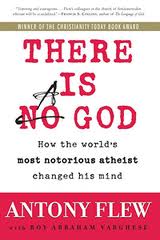
There Is A GodAs I said in my book review of Anthony Flew’s There Is A God, the real value of this book is in the arguments which contributed to Flew’s shift from atheism to theism. You can read my full book review by clicking here.

Frankly, it’s hard to share a lot of the quotes because the context of the full argument would be lacking, but I’ve been sharing a few of them over several posts. To wrap up this series, here are several other noteworthy quotes from this thought-provoking book.

“I would have liked to convince my father that I had found what he had been looking for, the ineffable something he had longed for all his life. I would have liked to persuade him that the search for God does not have to be in vain. But it was hopeless. He had known too many blind Christians, bleak moralists who sucked the joy from life and persuaded their opponents; he would never have been able to see the truth they were hiding.” —Katherine Tait, daughter of Bertrand Russell 

“Nothing can penetrate the loneliness of the human heart except the highest intensity of the sort of love the religious teachers have preached.” —Bertrand Russell

“In sum, to the Being who he considered to be the explanation of the world and its broad form, Aristotle ascribed the following attributes: immutability, immateriality, omnipotence, omniscience, oneness or indivisibility, perfect goodness and necessary existence. There is an impressive correspondence between this set of attributes and those traditionally ascribed to God within the Judaeo-Christian tradition. It is one that fully justifies us in viewing Aristotle as having had the same Divine Being in mind as the cause of the world that is the object of worship of these two religions.” —David Conway

“There can never be any real opposition between religion and science; for the one is the complement of the other. … Religion and natural science are fighting the joint battle in an incessant, never relaxing crusade against skepticism and against dogmatism, against unbelief and superstition … and therefore ‘On to God!’” —Max Planck

“God is a mathematician of a very high order and He used advanced mathematics in constructing the universe.” —Paul A.M. Dirac 

“Reason tells me of the extreme difficulty or rather impossibility of conceiving this immense and wonderful universe, including man with his capability of looking far backwards and far into the futurity, as a result of blind chance or necessity. When thus reflecting I feel compelled to look to a First Cause having an intelligent mind in some degree analogous to that of mine; and I deserve to be called a Theist.” —Charles Darwin

“Science can proceed only if the scientist adopts an essentially theological worldview. … Even the most atheistic scientist accepts as an act of faith the existence of a lawlike order in nature that is at least in part comprehensible to us.” —Paul Davies, Templeton Prize winner 

“It is crazy to postulate a trillion (casually unconnected) universes to explain the features of one universe, when postulating one entity (God) will do the job.” —Richard Swinburne

“The problem of how meaningful or semantic information can emerge spontaneously from a collection of mindless molecules subject to blind and purposeless forces percents a deep conceptual challenge.” —Paul Davies 

“One feature of life, though, remains certain: Life could not have evolved without a genetic mechanism—one able to store, replicate, and transmit to its progeny information that can change with time. … Precisely how the first genetic machinery involved also persists as an unresolved issue.” —Antonia Lazcano

“The world is rational. The order of the world reflects the order of the supreme mind governing it.” —Kurt Gödel

“The reality of rationality cannot be evaded with any appeal to natural selection. Natural selection presupposes the existence of physical entities that interact according to specific laws and of a code that manages the processes of life. And to talk of natural selection is to assume that there is some logic to what is happening in nature (adaptation) and that we are capable of understanding this logic.” —Roy Abraham Varghese

  • You can read some direct quotes from Anthony Flew by clicking here.
  • Some Albert Einstein quotes can be found by clicking here.
  • A fascinating mathematical explanation from Gerald Schroeder is found by clicking here.

5 Quotes From Albert Einstein In “There Is A God”

There Is A GodAs I said in my book review of Anthony Flew’s There Is A God, the real value of this book is in the arguments which contributed to Flew’s shift from atheism to theism. You can read my full book review by clicking here.

Frankly, it’s hard to share a lot of the quotes because the context of the full argument would be lacking, but I’ve begun sharing some of them over several posts. To continue, below are some quotes from Albert Einstein.

“I am not a positivist. Positivism states that what cannot be observed does not exist. This conception is scientifically indefensible, for it is impossible to make valid affirmations of what people ‘can’ or ‘cannot’ observe. One would have to say ‘only what we observe exists,’ which is obviously false.” —Albert Einstein

“The man of science is a poor philosopher.” —Albert Einstein

“I want to know how God created this world. … I want to know His thoughts, the rest are details.” —Albert Einstein

“I’m not an atheist, and I don’t think I can call myself a pantheist. We are in the position of a little child entering a huge library filled with books in many languages. The child knows someone must have written those books. It does not know how. It does not understand the languages in which they are written. The child dimly suspects a mysterious order in the arrangement of the books but doesn’t know what it is. That, it seems to me, is the attitude of even the most intelligent human being toward God. We see the universe marvelously arranged and obeying certain laws but only dimly understand these laws. Our limited minds grasp the mysterious force that moves the constellations.” —Albert Einstein

“Every one who is seriously engaged in the pursuit of science becomes convinced the laws of nature manifest the existence of a spirit vastly superior to that of men, and one in the face of which we with our modest powers must feel humble.” —Albert Einstein

More quotes are forthcoming. You can read some direct quotes from Anthony Flew by clicking here.

5 Quotes From Anthony Flew In “There Is A God”

There Is A GodAs I said in my book review of Anthony Flew’s There Is A God, the real value of this book is in the arguments which contributed to Flew’s shift from atheism to theism. You can read my full book review by clicking here.

Frankly, it’s hard to share a lot of the quotes because the context of the full argument would be lacking, but I’m going to attempt to share some of them in multiple posts. To start with, below are some of the direct quotes from Anthony Flew.

“I have said in some of my later atheist writings that I reached the conclusion about the nonexistence of God much too quickly, much too easily, and for what later seemed to me the wrong reasons. I reconsidered this negative conclusion at length and often, but for nearly seventy years thereafter I never found the grounds sufficient to warrant any fundamental reversal. One of those early reasons for my conversion to atheism was the problem of evil.” 

“The presumption of atheism can be justified by the inescapable demand for grounds. To believe there is a God, we have to have good grounds for the belief. But if no such grounds are provided, there exists no sufficient reason for believing in God, and the only reasonable position is to be a negative atheist or an agnostic (by negative atheist, I meant ‘a-theist,’ parallel to such words as atypical and amoral). … This argument garnered many and varied responses. Writing as an agnostic, the English philosopher Anthony Kenny maintained that there may be a presumption for agnosticism, but not for positive or negative atheism. He suggested that it takes more effort to show that you know something than that you do not (this includes even the claim that the concept of God is not coherent). But he said this does not let agnostics off the hook; a candidate for an examination may be able to justify the claim that he or she does not know the answer to one of the questions, but this does not enable the person to pass the examination. … By far, the heaviest challenge to the argument came from America. The modal logician Alvin Plantinga introduced the idea that theism is a properly basic belief. He asserted that belief in God is similar to belief in other basic truths, such as belief in other minds or perception (seeing a tree) or memory (belief in the past). In all these instances, you trust your cognitive faculties, although you cannot prove the truth of the belief in question. Similarly, people take certain propositions (e.g., the existence of the world) as basic and others as derivative from these basic propositions. Believers, it is argued, take the existence of God as a basic proposition.”

“If there is an infinite series of books about geometry that owe their pattern to copying from earlier books, we still do not have an adequate answer as to why the book is the way it is (e.g., it is about geometry) or why there is a book at all. The entire series needs an explanation.” 

“Science qua science cannot furnish an argument for God’s existence. But the three items of evidence we have considered in this volume—the laws of nature, life with its teleological organization, and the existence of the universe—can only be explained in the light of an Intelligence that explains both its own existence and that of the world.”

“My discovery of the Divine has been a pilgrimage of reason and not of faith.”

Check back soon for some additional quotes from this thought-provoking book.

There Is A God (book review)

There Is A GodIt’s a mark of a strong, confident person that can admit, “I was wrong. I made a mistake.” Anthony Flew is just such a strong man. His book is called There Is A God: How the world’s most notorious atheist changed his mind.

The one sentence summary of this book could be: Anthony Flew was a noted philosopher who concluded there was no God, but then was persuaded to rethink his position and came to a complete reversal. But that would sell his story short.

The real meat-and-potatoes of the book are the arguments which helped change Anthony Flew’s mind. This, I must warn you, is no easy reading. The arguments are so nuanced and metaphysical at times, that it really requires a careful reading. This was not a book I could speed read, because the chain of logic in the arguments was simply too good to miss anything.

I throughly appreciated the candor with which Flew shared his metamorphosis from atheist to Theist. The book also includes two appendices which address the current state of modern atheism, and an interview with N.T. Wright on Jesus being God Incarnate.

If you are ready to study some of the atheistic and theistic arguments that the brightest apologists for both viewpoints are presenting today, then this is the book for you! I thought the journey of discovery was fantastic and mind-expanding!

Links & Quotes

link quote

Some readable reading from today.

I find the science driving “global warming” or “climate change” to be more philosophy than science. A new report notes, “Even if we were to stop emitting greenhouse gas emissions entirely, we would not moderate the Earth’s temperature more than a few tenths of a degree Celsius by the end of the century.” Read more in this post: Obama Hasn’t Healed The Planet.

I love the Bible Overview Project. Here is a cool infographic on the least popular book of the Bible.

“How could it [the Bible], assailed so strongly from every side, have resisted if it had relied upon human protection alone? Rather, by this very fact it is proved to be from God, because, with all human efforts striving against it, still it has of its own power thus far prevailed. Besides this, it is not one state, not one people, that has agreed to receive and embrace it; but, as far and as wide as the earth extends, it has obtained its authority by the holy concord of divers peoples, who otherwise had nothing in common among themselves. Such agreement of minds, so disparate and otherwise disagreeing in everything among themselves, ought to move us greatly, since it is clear that this agreement is brought about by nothing else than the divine will.” —John Calvin

I don’t agree with everything in this post ‘The Idol Of Church Growth,’ but I definitely agree with this statement: “The question churches should be asking is not ‘How do we grow our church?’ but ‘How do we grow His kingdom?’ Sadly, those interests are often kingdoms apart.” 

Ask to summarize his theology, Karl Barth said, “Jesus loves me this I know, for the Bible tells me so.”

“There must be illumination before revelation can get to a person’s soul. It is not enough that I hold an inspired Book in my hands. I must have an inspired heart.” —A.W. Tozer

Miracles And Nature

C.S. Lewis at his deskI recently re-read C.S. Lewis’ book Miracles (you can read my full book review by clicking here). As you may have noticed, after reading and reviewing books on this blog, I also like to share some quotes that caught my attention. Doing this with Lewis is difficult, because in order to get the context of a particular quote, I think I would have to cite almost a full page or more. So over the next few weeks I plan to share some quotes from Miracles that require not as much context, or I will provide a bit of background to set the stage.

Lewis talks at great length how Nature (and our natural laws) had to come out of something, which he calls Supernature. What we commonly refer to as a miracle is not a miracle in the sense of natural laws being broken, but in Nature accommodating Supernature. Thus, Lewis writes…

“This perhaps helps to make a little clearer what the laws of Nature really are. We are in the habit of talking as if they caused the events to happen; but they have never caused any event at all. … Thus in one sense the laws of Nature cover the whole field of space and time; in another, what they leave out is precisely the whole real universe—the incessant torrent of actual events which makes up true history. That must come from somewhere else. To think the laws can produce it is like thinking that you can create real money by simply doing sums. … It is therefore inaccurate to define a miracle as something that breaks the laws of Nature. It doesn’t. … The divine art of miracle is not an act of suspending the pattern to which events conform but of feeding new events into that pattern. It does not violate the laws proviso, ‘If A, then B’: it says, ‘But this time instead of A, A2,’ and Nature, speaking through all her laws, replies, ‘Then B2’ and naturalizes the immigrant, as she well knows how. She is an accomplished hostess. A miracle is emphatically not an event without cause or without results. Its cause is the activity of God: its results follow according to Natural law.”

For another quote from this book, see Miracle Or “Cheating”?

Miracles (book review)

MiraclesReading C.S. Lewis elaborate on theology is no easy task. But for those willing to work through his profound thoughts, a treasure trove of new insights into Scripture await. Miracles: How God Intervenes In Nature And Human Affairs is no exception to this.

“Miracle” is directly mentioned so 30 times in Scripture, but the Bible never explicitly defines miracle. Lewis gives this definition: “I use the word Miracle to mean an interference with Nature by supernatural power.” He then proceeds to explain what philosophers such as Socrates, Plato and Aristotle meant by “nature” and “super-nature” and how those understandings have been dismissed, adapted or corrupted throughout history.

Lewis moves through several chapters without admitting miracles are probable (or even possible) and without ascribing any possible miracles to God. When he finally reveals that there is a God, he states, “From the admission that God exists and is the author of Nature, it by no means follows that miracles must, or even can, occur.” He then moves to the Scripture to show how God could—and indeed, does—work miraculously.

Even after all of Lewis’ brilliant arguments, I appreciate one of his final admissions in this book: “If you find that [these ideas] so distract you, think of them no more. I most fully allow that it is of more importance for you or me today to refrain from one sneer or to extend one charitable thought to an enemy than to know all that angels and archangels know about the mysteries of the New Creation.”

Even for those who accept his arguments, Lewis offers this counsel: “My work ends here. If, after reading it, you now turn to study the historical evidence for yourself, begin with the New Testament and not with the books about it.” Ultimately I recommend this book for this one reason—Miracles creates a hunger to study God’s Word more.