Listen to the podcast of this post by clicking on the player below, and you can also subscribe on Apple, Spotify, or Audible.
I would like to make a case for you to really slow down this week.
Check out this episode of The Podcast.
Here are some helpful resources from this episode:
I have two series of messages focusing on the Passion Week that will help you go deeper in your Bible study time: Christ’s Passionate Journey (which I mentioned in this podcast) and Bold Claims.
Listen to the podcast of this post by clicking on the player below, and you can also subscribe on Apple, Spotify, or Audible.
I’ve noticed over the years that some people get quite nervous—even fearful—with the thought of God coming close to then. Some people have told me, “I can’t go to church—the roof will fall in on me!”
If I’m honest, I had a time in my life when I feared God’s approach. I didn’t want to pray, “God, use me however You want to” because I just knew He was going to send me somewhere I didn’t want to go, or ask me to give up something that was special to me.
But from the the birth of Jesus until His ascension, the consistent message is: Fear not! and Rejoice!
Matthew 21:4 says that Christ’s arrival on a donkey was “to fulfill” another one of the jots and tittles. And John adds, “Jesus found a young donkey and sat upon it, as it is written, ‘Do not be afraid, O Daughter of Zion; see, your King is coming, seated on a donkey’s colt’” (John 12:14-15).
Typically, conquerors came with a show of overwhelming force, not a show of humility. But Jesus came to Jerusalem with the same message repeated at His birth, “Fear not.”
This is elaborated on in the original prophecy found in Zechariah 9:9-14, where the opening word is, “Rejoice!” We rejoice because He is coming to take away the instruments of war that the occupying forces used to keep the citizens in bondage. He is coming to bring freedom He is coming to announce hope and restoration.
With all of these jot-and-tittle prophecies, we have been asking three questions.
(1) What did it mean then? Quite simply, on that first Palm Sunday it meant that this was not the time for judgment.
(2) What does it mean now? Since the final judgment has not taken place, it must mean it still is not a time of judgment, but a time of favor. God is still drawing people to Himself by His kindness (Romans 2:4).
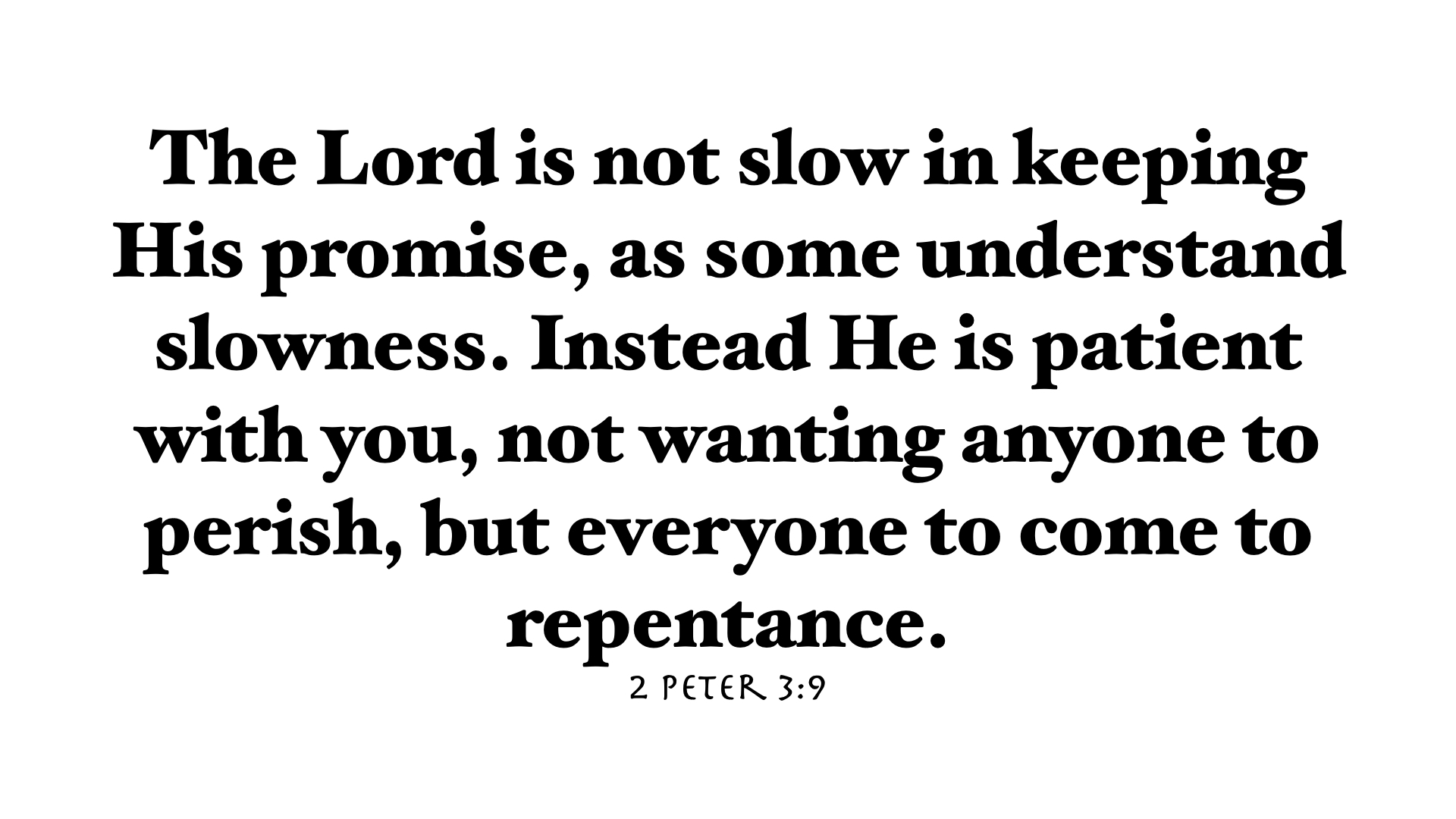
Zechariah 9:14 makes it clear that there will be a day of judgment. And Peter says that God’s not being slow about this, but He is demonstrating His patience so that none will have to perish without Him (2 Peter 3:9-10).
(3) What does it mean for me? It means that I don’t have to fear the approach of God.
First, there is no fear when God calls me to stand before Him because my sins have been forgiven (Romans 8:1).
Second, there is no fear when God asks me to give something to Him because God has equipped me ahead of time to respond obediently. When Jesus sent His disciples ahead of Him to bring back the donkey that He would ride into Jerusalem, Jesus must have already informed the donkey’s owners that this would be coming. The disciples were simply to say, “The Master needs the donkey now.”
God has already prepared me to say, “Yes” to whatever He calls me to do (Psalm 139:16).
Finally, there is no fear when God asks me to give something to Him because I’m only giving back to Him what is already His. You and I are just stewards of what God has given us. When the disciples talked to the steward of the donkey, they assured him, “The Lord needs it and will send it back here shortly” (Mark 3:11). And the prophecy in Zechariah, God says, “Now I announce that I will restore twice as much to you” (Zechariah 9:12). Maybe not here on earth, but the rewards in Heaven will be incalculable for His faithful servants!
Those who know Jesus as their Master can live as fearless stewards.
We don’t fear the requests of our King, but we rejoice to allow Him access. We don’t fear the approach of our Judge, but we rejoice to stand before Him forgiven and rejoicing!
The Sunday before Christ’s crucifixion is typically called “The Triumphal Entry.” But was it really? One thing’s for sure—Jesus didn’t come to Jerusalem the way the people expected!
To fully get the picture of what’s happening we need to turn back the calendar several hundred years. Ever since Jerusalem fell to invading armies, the Jews hung on to the promise that God would restore their king and their kingdom. They were awaiting a descendant from the line of King David who would drive out their overlords and restore Jerusalem to its rightful place.
They clung to a promise in Psalm 118 that included these words—“Lord, save us! Lord, grant us success! Blessed is He who comes in the name of the Lord. From the house of the Lord we bless you.The Lord is God, and He has made His light shine on us. With boughs in hand, join in the festal procession upto the horns of the altar” (vv. 25-27).
But Jesus was prophesied to come as the Prince of Peace, gentle and unassuming, the Servant of all people (Isaiah 9:6; 42:1-3). Jesus simply didn’t do things the way the crowds expected! He was born in a manger in Bethlehem (not as a king in Jerusalem), and hailing from Nazareth caused people to mock, “Nazareth? Can anything good come from Nazareth?!”
So on that Sunday as Jesus approached Jerusalem, it wasn’t as a conquering King but as a humble servant. As He came near, He wept a sobbing lament over Jerusalem (Matthew 23:37).
The crowd took palm branches (as Psalm 118 suggested) and shouted, “Hosanna!” That word means “Save us,” but what they really meant was, “Save us NOW!” Jesus came riding a mule—a lowly work animal, not a war horse—to remove any fear people may have, and to show them His servant’s heart.
Even His disciples didn’t get this. But the Pharisees sure did: They wanted Jesus to rebuke the crowd for their insolence and blasphemy! Many of the worshippers were eyewitnesses to the resurrection of Lazarus, so Jesus said to the Pharisees, “They have to give praise to God for this!”
Jesus made His way to the temple but there were no sacrifices, no anointing, no coronation. Mark tells us Jesus simply “looked around at everything and then left.”
Have you ever noticed that Jesus never rushes? He’s never early. He’s never late. He’s never confused. He’s never trying to catch up.
This is because Jesus was in complete sync with His Father. Jesus said that everything He did was directed by His Father, and every word He spoke was given to Him by His Father.
We, too, should be able to move in that same unrushed pace. Because of what Jesus did for us on Calvary, we may have the same “oneness” with our Father as Jesus did (John 14:20).
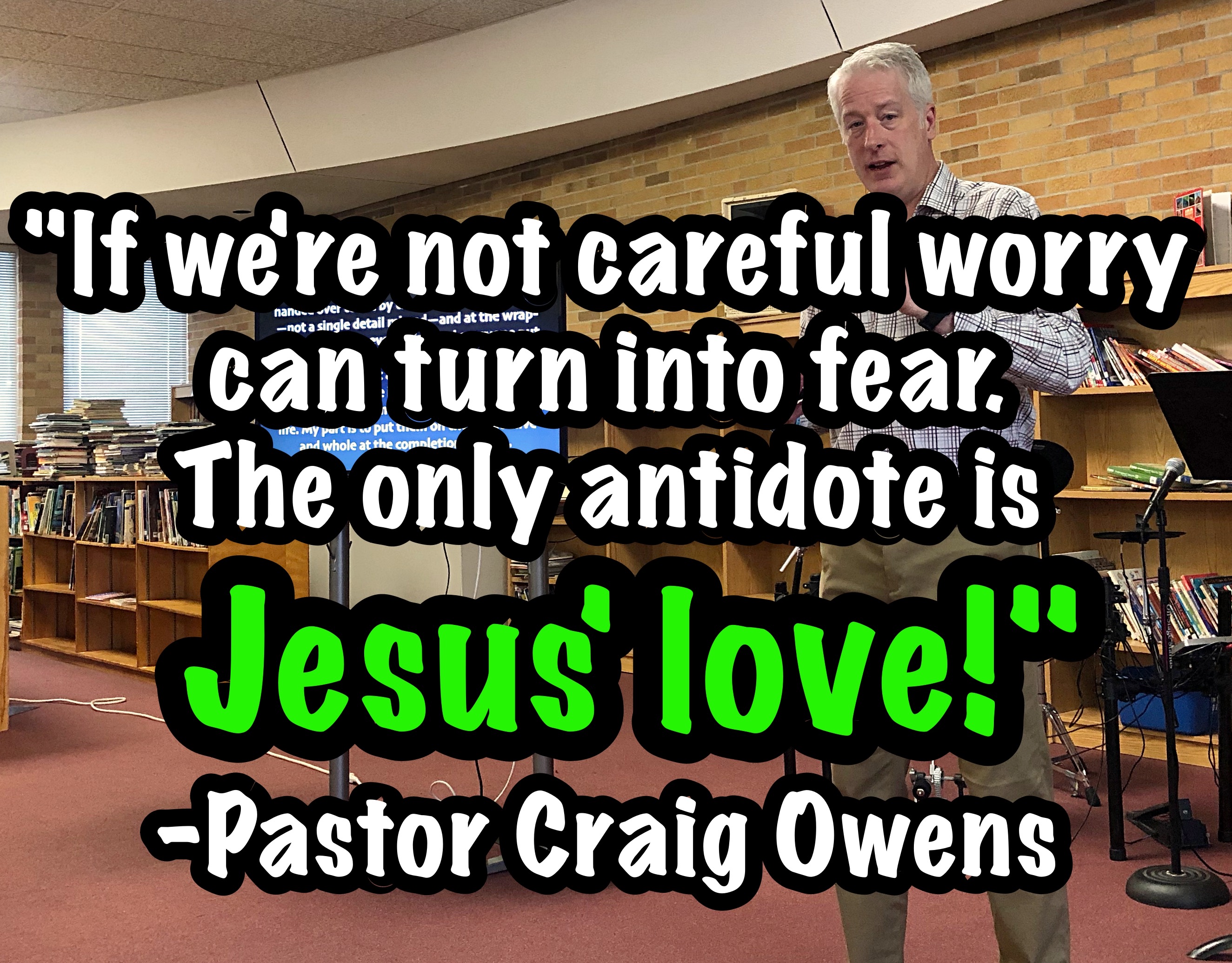
Worry creeps into our lives when—like those cheering crowds in Jerusalem—we try to make our agenda happen on our timetable with our own resources. But when we look to Jesus, we see such a perfect peace as He relied on His Father.
Christ’s passionate journey was out of love for us, so that we could know peace with God as we journey through life with Jesus.
Join me this Sunday as we take a closer look at the Monday of Christ’s Passion Week.
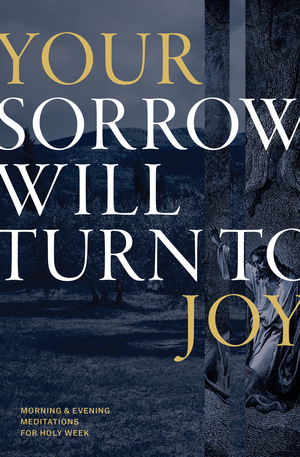
Holy Week is always a good time to slow down to take a closer look at the events leading up to Christ’s crucifixion and resurrection. I never want to “go through the motions” and miss out on some new revelation of all that Jesus did for us. An excellent companion for this journey is Your Sorrow Will Turn To Joy by the writers at Desiring God.
This book covers the eight days of Holy Week, from Palm Sunday to Resurrection Sunday. Each day has an insightful reading selection for both the morning and evening. The authors pulled together the accounts from all four of the Gospels, to offer unique insights and observations on each step of Christ’s journey to the Cross, the grave, and the empty tomb. As I read, I marveled again at the amazing love God showered on us!
The good folks at Desiring God have made this book available free of charge in its ebook format. Otherwise, the paperback can be purchased at a nominal cost.
Pick up a copy and read through it on the next Holy Week, and I promise you will see something fresh about the joy that Christ’s finished work on Calvary brings to those who will believe in Him!
Josh Byers produced a great resource for the Passion Week. It lists chronologically all of the events recorded in the Gospels for the week from Palm Sunday to Resurrection Day, along with each of the Scripture references for those events. This would be meaningful way to read your Bible this week.
You can click the image to the left to view it magnified on your screen, or you can download a PDF version by clicking here → Passion week infographic.
As we approach Easter, we approach one of the most pivotal times in the greatest story ever told: They story of Jesus Christ’s victory over satan and death! Each year I look forward to allowing the Holy Spirit to show me something new about this amazing story. A great resource this year is going to be Love To The Uttermost by John Piper.
This is a FREE ebook from Desiring God which will guide you through Palm Sunday to Resurrection Sunday. For each of the eight days of this week Pastor Piper gives us a new angle to explore in Christ’s love that led Him to the Cross, and overcame the grave. Each day’s reading will only take you a few minutes, but the central truth shared will give you something to meditate upon all day.
I read through this entire book quickly in order to write this review, but now I’m looking forward to re-reading it beginning on Palm Sunday!
Most people who have read the life of Jesus know about His triumphal arrival in Jerusalem, where the people waved palm branches and shouted, “Hosanna!” But there’s a little backstory tucked in this major event.
Jesus needed to ride a donkey into Jerusalem. So He sent two of His disciples into town, and told them where to find the donkey He would ride. He said, “If anyone asks you why you are taking this animal, just tell them, ‘The Lord needs it.’”
The disciples went, and found the donkey just like Jesus said. And, sure enough, the people there asked what they were doing. This story is recorded in the Gospels of Matthew, Mark, and Luke. After the disciples said, “The Lord needs it,” here is everything the donkey’s owners said: .
That is: they said nothing. Not a single word.
That got me thinking:
Could I do that?
If Jesus needs something of mine, do I ask for clarification?
Do I bargain when He asks me to give something of mine up for His use?








 Craig T. Owens