14 Quotes From “Beyond IQ”

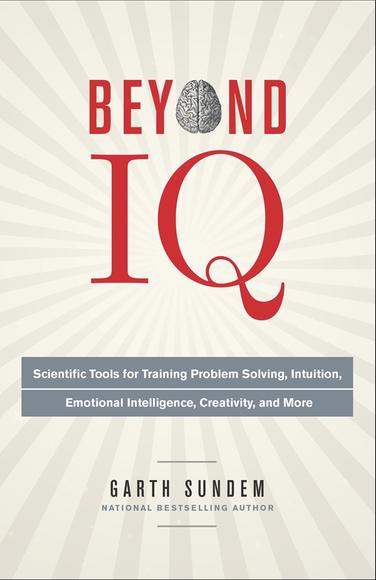
Beyond IQI found Beyond IQ by Garth Sundem to be engaging because of both the research he presents, and the engaging exercises he incorporates to make the research applicable to us. You can read my full book review by clicking here. Here are some of the quotes I especially appreciated.

“First, here’s why insight can be difficult: it requires a paradoxical mix of experience with openness. Usually, experience leads to set-in-stone ways of doing things. Typically, openness is only present when you’re forced by inexperience to remain available in your search for solutions. Experience mixed with openness is a rare cocktail. … Rather than opening your mind to insight, [John] Kounios and [Mark] Jung-Beeman show that if you want insight, the best thing you can do is to close it. A closed mind shows up on an fMRI as activation of the anterior cingulate cortex, your brain’s home of inhibiting distraction. It’s as if your ACC is a pair of noise-canceling headphones, and with these headphones in place you’re more able to hear your brain’s quiet, insightful whispers.” 

“Science has known that during sleep the brain’s hippocampus—the structure responsible for encoding new memories—replays the day’s experiences from short-term storage and filters them into the neocortex, where experiences are integrated into… ‘pre-existing knowledge representations.’ Insight is the novel connection of knowledge, and sleep knocks knowledge into new configurations.”

“[Robert] Sternberg and his frequent collaborator, Richard Wagner, showed that situational judgment tests…designed to measure practical intelligence are a much better predictor then IQ of job performance in business managers, bank managers, and graduate students. IQ doesn’t lead to success. Practical intelligence does.” 

“The language of problem-solving is: initial state, constraints, operations, and goal state. … [Richard] Mayer says that the most striking feature of people who successfully solve real-world problems is the time they spend studying the initial state and the constraints—the extra time they spend clarifying the problem.”

“University of California-San Bernardino researcher James Kaufman knows the recipe for creativity. It’s equal parts intrinsic motivation, experience, and something he calls low personal inhibition. Intrinsic motivation is pretty self-explanatory, but beware of the danger of ‘replacing intrinsic motivation and a natural curiosity with external rewards,’ says Kaufman. If a parent wants a child to become a creative pianist, the parent should encourage interest in the piano but not incentivize this interest with ice cream. Creativity blooms in fields you’re drawn to, not in fields into which you’re pushed. … Kaufman’s research has shown that creative people are hard workers with background knowledge and expertise in their creative domains. ‘It’s the “learn the rules so you can break them” approach,’ he says.” 

“Dean Keith Simonton of UC Davis found that the nineteenth-century scientists who wrote the most-cited papers also wrote the least-cited papers. … The more scientific papers or sonatas or sonnets a person writes, the greater chance that one or more will be especially creative.”

“In any kind of cognitive activity you have two kinds of things going on. You have intelligence, but there’s also learning and skill and knowledge based on practice. The more the second develops, the less important the first becomes. … Even more importantly, we’ve shown that with enough practice and hard work, you can actually change the neurophysiology of the brain. For example, practice can encourage the brain to grow greater myelin coating on neurons. Thus our behaviors become literally hard-wired. Developing expertise literally makes certain thought patterns more efficient than others.” —Paul Feltovich 

“Florida State researcher K. Anders Ericcson shows that it’s not only experience that creates expertise but a step-by-step method of sculpting experience that he calls deliberate practice. To Ericsson, famous for his theory that 10,000 hours of practice creates expertise in any field, the four-step path to expertise includes performing your skill, monitoring your performance, evaluating your success, and figuring out how to do it better next time. Completing only the first step—performing the skill itself—leads to automated, low-level, rote performance in which you perform the skill the same way every time. Monitoring, evaluating, and adjusting your skill allows you to modify it after every pass, helping skill evolved toward expertise.”

“The more you use your brain, the longer you’ll be able to use it. … People with ‘cognitively protected’ brains were those who challenge themselves through a lifestyle that included reading, writing, attending lectures, and doing word puzzles—in other words, they followed a self-imposed regimen of cognitive involvement. … Cognitive involvement is only one tine of a three-pronged approach to brain health in later life. The second tine is a healthy body. … In fact, your cardiovascular health in middle age is even more important for your later brain health than the same risk factors in old age itself. … The third tine: social interaction. … Nothing forces the brain to work like interacting with other brains.” 

“Moral reasoning and wisdom are linked. Specifically (and this is kind of cool albeit technical), for those who possess strong moral reasoning, wisdom increases with age. If you have lower moral reasoning, you gain no wisdom as you get older. So if you want wisdom later, train your moral reasoning now.”

“Wisdom requires thought and action without yourself in mind, and sociologist Monika Ardelt of the University of Florida shows that selflessness is also the best predictor of successful aging. In fact, the wisdom born of selflessness beats out physical health, income, socioeconomic status, physical environment, and even social relationships in predicting life satisfaction in old age.”

“Pressure…sits like a lead weight in your working memory, claiming space that could otherwise hold useful information. And because working memory is a mainline to general intelligence, space claimed by pressure makes you measurably dumber. … Pressure flips a mental switch from implicit to explicit thought, making you apply a layer of analysis to things that should be automatic. … Chronic pressure can make you chronically prioritize the quick rewards of drugs and alcohol while discounting their long-term risk. … So beware. Stress plugs your working memory, analysis paralysis forces you to try to use it anyway, and your dopamine circuits cry for a quick, risky solution.”

“Students with high emotional intelligence (EI) have lower rates of drug use and teachers with high EI get more support from their principals. Employees with high EI have higher job performance, especially when their IQ is low (implying that emotional intelligence can help compensate for low general intelligence—and also that these skills are distinct). EI is even implicated in resilience—the more EI you have, the higher your chances of bouncing back after trauma or negative life events.” 

“If IQ is the strength of the bulb in your lighthouse, willpower is the lens that focuses it into a beam.”


Links & Quotes

link quote

Some good reading from today…

“A good mind is also a good possession. And, further, a pure inner life is a valuable possession. Hedge in, then, this possession of thine, enclose it with thought, guard it with thorns, that is, with pious care, lest the fierce passions of the flesh should rush upon it and lead it captive, lest strong emotions should assault it, and, overstepping their bounds, carry off its vintage.” —Ambrose of Milan

“Unlike in physics and chemistry, very few of the findings in the social sciences can be characterized as incontrovertible. But there’s one major exception: the impact of fatherlessness on American children. To name but a few grim examples, 63 percent of teen suicides are from fatherless homes; 90 percent of homeless children and runaways are from fatherless homes; and 71 percent of all high school dropouts are from fatherless homes.” —Eric Metaxas

Great historial article: What Can Pentecostals Learn From John Wesley?

A former abortion worker testifies, “We would find women’s weaknesses and work on them” to convince them to have an abortion.

Joel Osteen says he doesn’t like the term “prosperity preacher” applied to him, and then describes what he believes (which sounds a lot like a prosperity doctrine to me!). John Piper debunks this garbage better than I can in this video.

4 Ways Selfishness Ruins Your Life.

[VIDEO] Ted Cruz blasts the attempt by Democrat Senators to obliterate the First Amendment.

“We only know God in His works, but we are forced by science to admit and to believe with absolute confidence in a Directive Power—in an influence other than physical, or dynamical, or electrical forces.” —William Thomson (Lord Kelvin)

Thursdays With Oswald—Sixth Sense

This is a weekly series with things I’m reading and pondering from Oswald Chambers. You can read the original seed thought here, or type “Thursdays With Oswald” in the search box to read more entries.

Oswald Chambers

Sixth Sense 

     The life of faith is the life of a soul who has given over every other life but the life of faith. Faith is not an action of the mind, nor of the heart, nor of the will, nor of the sentiment, it is the centering of the entire man in God. 

     … The faith of the saints is, as it were, a God-given sixth sense which takes hold on the spiritual facts that are revealed in the Bible. 

From Christian Disciplines 

When we look at the “hall of fame” of faith in Hebrews 11, we see the repeated phrase by faith. These amazing lives were lives not by a belief in a principle, but by belief in a Person. Faith-filled people haven’t worked themselves up into faith, but have centered themselves in the rock-solid assurance that the God of the Bible is their God.

When Christians live this way, we don’t always have “logical” rationale for why we feel a certain way, but we do have, as Chambers put it, a sixth sense. The Holy Spirit in us bears witness with our mind, and heart, and will, and sentiment that we are following God’s way.

Prayers Of Thomas Aquinas

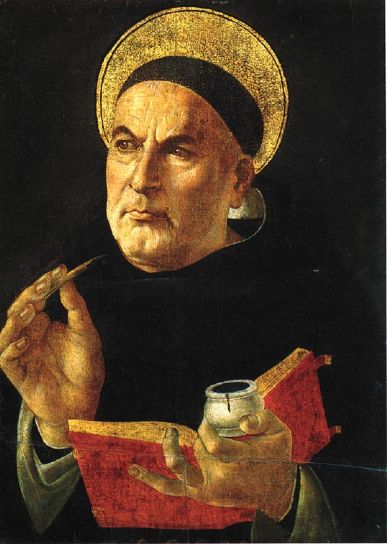
thomas aquinasI just finished reading a book of prayers compiled from the work of Thomas Aquinas. Here are a few that caught my attention—

Thy wounds, as Thomas saw, I do not see; 

Yet Thee confess my Lord and God to be: 

Make me believe Thee ever more and more; 

In Thee my hope, in Thee my love to store.

Sion, lift thy voice and sing: 

Praise thy Savior and thy King; 

Praise with hymns thy Shepherd true: 

Dare thy most to praise Him well; 

For He doth all praise excel; 

None can ever reach His due.

Almighty and everlasting God, behold I come to the Sacrament of Thine only-begotten Son, our Lord Jesus Christ: I come as one infirm to the Physician of life, as one unclean to the Fountain of mercy, as one blind to the Light of everlasting brightness, as one poor and needy to the Lord of heaven and earth. Therefore I implore the abundance of Thy measureless bounty that Thou wouldst vouchsafe to heal my infirmity, wash my uncleanness, enlighten my blindness, enrich my poverty and clothe my nakedness.

Grant me a penetrating mind to understand, a retentive memory, method and ease in learning, the lucidity to comprehend, and abundant grace in expressing myself. Guide the beginning of my work, direct its progress, and bring it to successful completion.

Building Or Tripping

Building or trippingOne of the things I love about Peter, the disciple of Jesus, is the great opportunities he gave for Jesus to teach us!

Peter said something brilliant when Jesus asked, “Who do you say I am?” Peter quickly responded, “You are the Christ, the Son of the living God!”

Now catch Jesus’ reply to Peter: “This was not revealed to you by man, but by My Father in Heaven” (Matthew 16:17).

When I have my mind open to the things of God, the words I use are rock solid: “On this rock I will build My Church, and the gates of hades will not overcome it” (verse 18).

But just a couple of verses later, Peter’s heavenly insight vanishes. Jesus told him “you do not have in mind the things of God, but the things of men” (v. 23). Jesus went even further to say that Peter’s words were a “stumbling block” to Him.

Did you notice the contrast? My Father spoke to your mind versus You aren’t listening to God but to man.

The difference is in my agenda: I can either try to “gain the whole world” for myself (v. 26), or I can “deny [myself] and take up [my] cross” to follow Jesus (v. 24).

Following God’s agenda = a solid foundation. 

Following my agenda = a stumbling block to the work of Christ. 

It’s my choice. And your choice too.

Thursdays With Oswald—The Thinking Of A Christian And An Atheist

This is a weekly series with things I’m reading and pondering from Oswald Chambers. You can read the original seed thought here, or type “Thursdays With Oswald” in the search box to read more entries.

The Thinking Of A Christian And An Atheist 

     All scientific finds have at one time been modern. Science is simply man’s attempt to explain what he knows. …

     I can explain the world outside me by thinking; then if I can explain the world outside me by my mind, there must have been a Mind that made it. That is logical, simple and clear; consequently atheism is what the Bible calls it, the belief of a fool. “The fool has said in his heart, ‘There is no God’” (Psalm 53:1). An atheist is one who says, “I can explain by my mind to a certain extent what things are like outside, but there is not a mind behind that created them.” … 

     We [Christians] have no business to be ignorant about the way God created the world, or to be unable to discern “the arm of the Lord” behind things. …

     If we [Christians] will bring our thinking into captivity to the Holy Spirit, we form what is termed “nous.” Nous is a Greek word meaning responsible intelligence. Whenever we get to this point of responsible intelligence, we have come to a sure line of thinking. Until the nous is formed in natural life and in spiritual life, we get at things by intuition, by impulse, but there is no responsible intelligence. …We have not only to be good lovers of God, but good thinkers, and it is along this line that we can “try the spirits whether they are of God.” 

From Biblical Psychology

Christians—above anyone else—should be first-rate thinkers, because we have a natural mind AND the Holy Spirit. We should constantly study, read, discuss, debate, and meditate to sharpen our thinking. The Holy Spirit will stimulate our thinking along the right lines, but we have to put some thoughts into our minds first!

“We have not only to be good lovers of God, but good thinkers.”

Thursdays With Oswald—Think As Christians

Listen to the podcast of this post by clicking on the player below, and you can also subscribe on AppleSpotify, or Audible. 

This is a weekly series with things I’m reading and pondering from Oswald Chambers. You can read the original seed thought here, or type “Thursdays With Oswald” in the search box to read more entries.

Think As Christians

     The [Holy] Spirit is the first power we practically experience but the last power we come to understand. The working of the Spirit is much easier to experience than to try and understand, the reason being that we form our ideas out of things we have seen and handled and touched; but when we come to think about the Godhead and the Spirit, language is strained to its limit, and all we can do is to use pictures to try and convey our ideas. 

     Yet in spite of the difficulty, it is very necessary that we should think as Christians as well as live as Christians. It is not sufficient to experience the reality of the Spirit of God within us and His wonderful work; we have to bring our brains in line with our experience so that we can think and understand along Christian lines. It is because so few do think along Christian lines that it is easy for wrong teaching and wrong thinking to come in, especially in connection with the Spirit. 

From Biblical Psychology

Christians should be first-rate thinkers. Why? Because the Holy Spirit in a Christian is the Mediator between our brains and our Creator.

We can have the mind of Christ, if we will but exercise our thoughts. As Paul said, we need to take our thoughts captive so that they line up with the reality of God (2 Corinthians 10:5). We cannot simply make a “theology” out of our experiences, but we need to use the thinking power of the Holy Spirit to help us find out what God is revealing to us about Himself through our experiences.

God created us with a mind, a will, and emotions. Let’s make sure we’re not emphasizing one to the diminishment—or exclusion—of the others!

►► Would you please prayerfully consider supporting this ministry? My Patreon supporters get behind-the-scenes access to exclusive materials. ◀︎◀︎

Thursdays With Oswald—My Spiritual Personality

This is a weekly series with things I’m reading and pondering from Oswald Chambers. You can read the original seed thought here, or type “Thursdays With Oswald” in the search box to read more entries.

Spiritual Personality

     When we receive the Holy Spirit, He so energizes our spirit that we are able to detect things that are wrong, and we are able to rectify them if we ‘mind’ the Holy Spirit. This is the Scotch use of the term ‘mind,’ and it means ‘remember to obey.’ It carries with it the meaning of another Scotch word, ‘lippen,’ that is, ‘trust.’ Mind the Holy Spirit, mind His light, mind His convictions, mind His guidance, and slowly and surely the sensual personality will be turned into a spiritual personality. 

From Biblical Psychology

It’s not too often that I think of personality in a spiritual light. But God created me as a unique person, complete with my own personality. He gave me the personality He did on purpose: to glorify Him.

Left to myself, my personality is highly self-serving. But when I “mind” the Holy Spirit, He helps me live out my God-given personality in a way that is more and more God-serving and God-glorifying.

I love Chambers’ list:

  • Mind the Holy Spirit
  • Mind His light [illumination]
  • Mind His convictions
  • Mind His guidance

I’m working on “minding” better. How about you?

Thursdays With Oswald—Emotions In Christianity

This is a weekly series with things I’m reading and pondering from Oswald Chambers. You can read the original seed thought here, or type “Thursdays With Oswald” in the search box to read more entries.

Emotions In Christianity

      Enthusiasm means, to use the phrase of a German mystic, ‘intoxicated with God.’ … The tendency is in us all to say, ‘You must not trust in feelings’; perfectly true, but if your religion is without feeling, there is nothing in it. If you are living a life right with God, you will have feeling, most emphatically so, but you will never run the risk of basing your faith on feelings. The Christian is one who bases his whole confidence in God and His work of grace, then the emotions become the beautiful ornament of the life, not the source of it.

From Biblical Ethics

God gave us a mind, a will, and emotions. We get ourselves in trouble when we elevate one above the rest, or worse yet, deny that one of those aspects are relevant.

So I don’t say, “I will obey God when I feel like it is the right thing to do.”

Nor do I say, “This feels so good, even though it makes no sense at all.”

We obey God’s Word by faith, because it is the right thing to do, and then the feelings of joy and peace and understanding will become the beautiful ornaments of our lives.

Obedience first, and the feelings will follow.

Thursdays With Oswald—Choose Health

This is a weekly series with things I’m reading and pondering from Oswald Chambers. You can read the original seed thought here, or type “Thursdays With Oswald” in the search box to read more entries.

Choose Health

     Such passages as Romans 12:2 (‘be transformed by the renewing of your mind’) and Ephesians 4:23 (‘be renewed in the spirit of your mind’) apply directly to the moral life of those who have been supernaturally saved by the grace of God, those in whom the Holy Spirit dwells and is at work. To renew means to transform to new life. These passages make it clear that we can be renewed in our mind when we choose. … Continual renewal of mind is the only healthy state for a Christian.

From Biblical Ethics

Far too often it seems easier to say, “If only God would change me” or “I pray that the Spirit would free me from…,” when in reality you can choose to be renewed.

God gave you a mind, emotions, and a will. Even if you don’t think you can be free, you can choose to be renewed. Even if you don’t feel free, you can choose to be renewed.

Stop letting your mind or your emotions keep you from the freedom that could be yours! Remember: “Continual renewal of mind is the only healthy state for a Christian.”