The Cross: Cruel & Wondrous

   There was no more terrible death than death by crucifixion. Even the Romans themselves regarded it with a shudder of horror. Cicero declared that it was “the most cruel and horrifying death.” Tacitus said that it was a “despicable death.” It was originally a Persian method of execution. It may have been used because, to the Persians, the earth was sacred, and they wished to avoid defiling it with the body of an evil-doer. So they nailed him to a cross and left him to die there, looking to the vultures and the carrion crows to complete the work. The Carthaginians took over crucifixion from the Persians; and the Romans learned it from the Carthaginians.

Crucifixion was never used as a method of execution in the homeland, but only in the provinces, and there only in the case of slaves. It was unthinkable that a Roman citizen should die such a death. Cicero says: “It is a crime for a Roman citizen to be bound; it is a worse crime for him to be beaten; it is well nigh parricide for him to be killed; what am I to say if he be killed on a cross? A nefarious action such as that is incapable of description by any word, for there is none fit to describe it.” It was that death, the most dreaded in the ancient world, the death of slaves and criminals, that Jesus died.

The routine of crucifixion was always the same. When the case had been heard and the criminal condemned, the judge uttered the fateful sentence: Ibis ad crucem, “You will go to the cross.” The verdict was carried out there and then. The condemned man was placed in the centre of a quaternion, a company of four Roman soldiers. His own cross was placed upon his shoulders. Scourging always preceded crucifixion and it is to be remembered how terrible scourging was. Often the criminal had to be lashed and goaded along the road, to keep him on his feet, as he staggered to the place of crucifixion. Before him walked an officer with a placard on which was written the crime for which he was to die and he was led through as many streets as possible on the way to execution. There was a double reason for that. There was the grim reason that as many as possible should see and take warning from his fate. But there was a merciful reason. The placard was carried before the condemned man and the long route was chosen, so that if anyone could still bear witness in his favor, he might come forward and do so. In such a case, the procession was halted and the case retried. —William Barclay, Commentary on John


When I survey the wondrous Cross

On which the Prince of Glory died

My richest gain I count but loss

And pour contempt on all my pride.

—Isaac Watts

Can You Hear Him?

They said she’s not worthy
with words so unkind.
They said she’s not respectable;
God said, “She’s Mine.”
I hear the voice of Jesus,
I hear the voice of my Lord,
I hear the voice of my Savior
saying, “My child, I adore you.
I hear you call My name in desperation.
I hear you call My name in praise.
I hear you call My name in worship.
I hear each time that you pray.
I know that you love Me.
I know that on Me you depend.
It’s for you My Son I did send.”
So lift your hands and heart toward heaven
when life seems unable to bear.
There’s a wooden Cross on Calvary
proving Someone cares.
Listen to the voice of Jesus.
Listen to the voice of the Lord.
Listen to the voice of the Savior.
A home in heaven will be your reward.

—Betty Ann King, I Hear Him

I pray that today you can hear Jesus calling your name and saying, “You are mine; I paid an incredibly high price to show you how much I love you!”

Progressing From . To ? To !

There is a progression that I believe Christians should be aware of as they lead others toward Christ.

First: .

Those who have been de-churched, or who have had a negative experience with another Christian, or who have become disenchanted with the Church, make factual statements about Christians and Church.

“The Church is….”

“Christians always….”

But if are truly the salt of the earth and the light of the world, we can season and shine in a way that will cause them to question their own factual statements.

Next comes: ?

“The Christian Church exists to reveal God and to utter forth His praise, to make God known to men who know Him not, that in the presence of the revelation they may be filled with awe, and wonder, and amazement—to make God known, that God shall be attractive to humanity.” —G. Morgan Campbell

“This is Church?”

“You’re a Christian?”

Which leads to: !

Jesus stated that the greatest of all commandments—indeed the fulfillment of all the commandments—was loving God with all of our heart, soul, mind, and strength and then loving others as we love ourselves. Once people see Christians as true representations of Christ … people so intent on loving God and loving others, they too will find what their hearts have been longing for.

“This is what I’ve been looking for!”

“Now this is what I call a real Church!”

Can I suggest an easy place to start? With your smile. Look at what Job said:

Men listened to me expectantly, waiting in silence for my counsel. After I had spoken, they spoke no more; my words fell gently on their ears. They waited for me as for showers and drank in my words as the spring rain. When I smiled at them, they scarcely believed it; the light of my face was precious to them. (Job 29:21-24)

Living in this way can move people from close-minded skeptics, to curious questioners, to enthusiastic followers of Jesus Christ. Let’s do this! 

Um, That’s A Bit Awkward

Somehow I don’t think this is the most effective way to start a conversation about your faith!

Here are four thoughts I have…

Don’t compartmentalize. In other words, don’t put on your “Christian hat” to talk about your relationship with Jesus. Just be Christ-like all the time. People are looking for something real, not someone who’s playing an act.

Develop relationships first. Don’t lead with a sermon; lead with a friendship. As the saying goes, “People don’t care how much (or Who) you know, until they know how much you care.” Be a genuine friend first.

Wait until they’re ready. Jesus told stories with a deeper meaning and asked a lot of questions of people before He spoke to them directly about the kingdom of God. Don’t force people into a conversation. Keep the door open, and let them step in when they are ready.

Don’t get discouraged. Just like there are some topics you’re not ready to discuss right now, others feel the same way. So just because they say “No thanks” today doesn’t mean nothing happened. The Bible says that we are the salt of the earth and the light of the world. Salt and light are always seasoning and illuminating everywhere they go. Your life is making a difference.

If Jesus Came To Your House

Listen to the podcast of this post by clicking on the player below, and you can also subscribe on Apple, Spotify, or Audible.

If Jesus came to your house to spend a day or two—
If He came unexpectedly, I wonder what you’d do.
Oh, I know you’d give your nicest room to such an honored Guest,
And all the food you’d serve to Him would be the very best,
And you would keep assuring Him you’re glad to have Him there—
That serving Him in your own home is joy beyond compare.

But when you saw Him coming, would you meet Him at the door
With arms outstretched in welcome to your heavenly Lord?
Or would you have to change your clothes before you let Him in?
Or hide some magazines and put the Bible where they’d been?
Would you turn off the radio and hope He hadn’t heard?
And wish you hadn’t uttered that last, loud, hasty word?

Would you hide your worldly music and put some hymn books out?
Could you let Jesus walk right in, or would you rush about?
And I wonder—if the Savior spent a day or two with you,
Would you go right on doing the things you always do?
Would you go right on saying the things you always say?
Would life for you continue as it does from day to day?

Would your family conversation keep up its usual pace?
And would you find it hard each meal to say a table grace?
Would you sing the songs you always sing, and read the books you read,
And let Him know the things on which your mind and spirit feed?
Would you take Jesus with you everywhere you’d planned to go?
Or would you, maybe, change your plans for just a day or so?

Would you be glad to have Him meet your very closest friends?
Or would you hope they’d stay away until His visit ends?
Would you be glad to have Him stay forever on and on?
Or would you sigh with great relief when He at last was gone?
It might be interesting to know the things that you would do
If Jesus Christ in person came to spend some time with you. —Lois Blanchard Eades

(I added the emphasis to the things that made me pause to think…)

►► Would you please prayerfully consider supporting this ministry? ◀︎◀︎

Failure To Recognize

The Apostle John opens his gospel account with these sobering words:

[Jesus] was in the world, and though the world was made through Him, the world did not recognize Him. (John 1:10)

Commenting on this verse, A.W. Tozer wrote:

My fellow man, do you not know that your great sin is this: the all-pervading and eternal Presence is here, and you cannot feel Him? Are you not aware that there is a great and true Light which brightly shines—and you cannot see it? Have you not heard within your being a tender Voice whispering of the eternal value of your soul—and yet you have said, “I have heard nothing”? This is, in essence, the charge that John levels at human kind: Jesus Christ, the Word of God, was in the world, and the world failed to recognize Him.

I never want to be guilty of failing to recognize Jesus! Sometimes in the busyness of life—even the busyness of the ministry of the church—I can become guilty of being focused on the activity, instead of focusing on Christ, Who is supposed to be the focus of my activity.

So we’re taking a “time out” today. As a church we are fasting and praying for 24-hours to cleanse our hearts to recognize Jesus, and to recognize what He wants to accomplish as we commemorate Good Friday and Resurrection Sunday later this month.

Basketball Evangelism

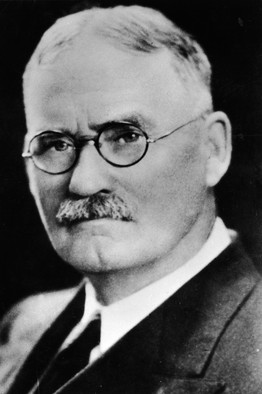
Basketball’s creator James Naismith

In preparing for our Salt & Light series which starts this Sunday, I’ve been reviewing the different places in my life where I can season and illuminate my world. It’s pretty simple:

  • In order to season like salt, we have to get out of the saltshaker.
  • In order to shine like light, we have to uncover our brightness.
  • And we have to be around people who need seasoning and illumination.

One of my favorite workout activities is playing basketball, so I absolutely loved reading a story about why James Naismith created this fun sport.

You can read the full article from the Wall Street Journal here, but this passage especially jumped out at me:

Convinced that he could better exemplify the Christian life through sports than in the pulpit, he moved to Springfield, Mass., to serve as a physical-education instructor at the Young Men’s Christian Association’s International Training School for Christian Workers (now Springfield College). Naismith’s vision? “To win men for the Master through the gym.”

To win men for the Master through the gym.

What if we looked at every activity in our lives like that?

  • To win people for the Master through playing on the football team.
  • To win people for the Master through being a valuable employee.
  • To win people for the Master through getting involved with the PTA.
  • To win people for the Master through developing a friendly relationship with my neighbors.
  • To win people for the Master through becoming a model student.

Finish the sentence for your life…

I can win people for the Master through _________________________.

Let us all work on finding innovative ways to win people for the Master!

Salt & Light

Jesus called His followers to be salt and light in the world. He said:

You are the salt of the earth. But if the salt loses its saltiness, how can it be made salty again? It is no longer good for anything, except to be thrown out and trampled underfoot. You are the light of the world. A town built on a hill cannot be hidden. Neither do people light a lamp and put it under a bowl. Instead they put it on its stand, and it gives light to everyone in the house. In the same way, let your light shine before others, that they may see your good deeds and glorify your Father in heaven.

We have been placed in this world to season it and to illuminate it. What does that mean? How do we do that in a way that glorifies your Father in heaven?

I’m really excited to kickoff our new series Salt & Light this Sunday morning. I hope you can join me at 10:30am to learn more about being seasoning and illumination.

The One To Copy

Adoniram Judson was a missionary to India and Burma in the mid-1800s. His passion for missions was so contagious that a group of students at Andover organized America’s first missionary society, and used the reports from Judson as a means to encourage other students to become involved in missions.

Local newspapers and various religious publications began to compare Judson’s missionary work to the ground-breaking and miraculous missionary trips conducted by the Apostle Paul and the other apostles of the New Testament.

Judson began to write letters to the editors, expressing his displeasure at this comparison. In one letter he wrote,

I do not want to be like them. There is but One to copy, Jesus Himself. I want to plant my feet in His footprints and measure their shortcomings by His and His alone. He is the only Copy. I want to be like Him.

Who are you copying? Your parents? Your pastor? Your mentor? Some figure from history?

Truly: There is but One to copy, Jesus Himself.

Biblical Ethics (book review)

Like every book from Oswald Chambers, be prepared for Biblical Ethics to hit you right between the eyes! In my lifetime the term ethics has had so many qualifiers added to it: situational ethics … biomedical ethics … wartime ethics. As though ethics becomes something changeable if you are in a difficult situation.

But in clear, unequivocal language, Oswald Chambers brings all ethics back to the Bible.

Keying in most frequently on the teachings of Jesus from the Sermon on the Mount, Chambers helps us get to the true intention behind the ethical requirements of God’s Law. For any who would say, “But it’s too hard to figure out what Jesus actually meant,” Chambers replies,

“When we come across something we don’t like, we say we don’t understand it; it is too plain not to be understood.”

This is not light reading, but it is valuable reading. Serious disciples of Christ will be well-rewarded by reading and studying the wisdom in Biblical Ethics. If you would like to read more thoughts from Oswald Chambers, check out my weekly installment Thursdays With Oswald.