TomTom Directions

My wife is a beautiful, talented woman, but she tends to be, uh, directionally-challenged. That is to say, it’s not hard for her to get on the wrong road, heading the wrong direction. So a wonderful Christmas gift from my folks this year was a TomTom GPS unit.

Yesterday I took a trip and borrowed her TomTom. My first destination was a familiar one, but my second stop was somewhere I hadn’t been before. So I’m driving along when all of a sudden I hear a pleasant female voice tell me, “In two miles, exit to the right.”

Cool!

The Bible tells us that we can have a moral GPS system just like my wife’s TomTom. Check this out:

Whether you turn to the right or to the left, your ears will hear a Voice behind you, saying, “This is the way; walk in it.”

That Voice is the Holy Spirit. Jesus said the Holy Spirit would guide us in the right ways to go:

But when the Father sends the Advocate as My representative—that is, the Holy Spirit—He will teach you everything and will remind you of everything I have told you.

You have this moral GPS system at your disposal. Are you using it? Prayer is the power supply that activates the Voice. Turn Him on and make better decisions, live a better life, and do greater things for God.

The Wounded Healer (book review)

Wounded Healer, The

“For the minister is called to recognize the sufferings of his time in his own heart and make that recognition the starting point of his service. Whether he tries to enter into a dislocated world, relate to a convulsive generation, or speak to a dying man, his service will not be perceived as authentic unless it comes from a heart wounded by the suffering about which he speaks” (from the introduction).

Henri Nouwen was a man ahead of his time. Although this book was written in the early 1970s, it sounds so applicable for today. The Wounded Healer challenged me as a Christian leader to step into the pain-filled lives as others in a more authentic way. Nouwen argues that healers must first be personally acquainted with the same type of pain that other wounded people are experiencing.

Isaiah 53 says that Christ “was wounded for our transgressions, He was bruised for our guilt and iniquities; the chastisement [needful to obtain] peace and well-being for us was upon Him, and with the stripes [that wounded] Him we are healed and made whole.” Because Jesus was wounded in the same way we are wounded, He knows how to help (see Hebrews 2:18).

One closing quote from Nouwen: “If there is any posture that disturbs a suffering man or woman, it is aloofness. … No one can help anyone without becoming involved, without entering with his whole person into the painful situations, without taking the risk of become hurt, wounded or even destroyed in the process. The beginning and the end of Christian leadership is to give your life for others.”

This book reconfirmed my desire to—like Jesus—be a wounded healer for others.

Objective Beauty

Do you ever doubt Scripture? I don’t mean doubting its inerrancy, but its application to real life. You know what I mean: “Okay, that sounds interesting, but I’m not sure that’s for now or for me. C’mon, that can’t mean me!”

Here’s the verse that got me thinking: “He has made everything beautiful in its time….”

Everything?! Really? Everything?!

My viewpoint is subjective. That’s a fancy way of saying, “Things should be the way I want them to be.” I see some things as beautiful, but about other things I say, “This is a pain, or this is ugly.” But if I believe God’s Word, in God’s timing everything is beautiful.

I think the second part of the verse illuminates the problem of my subjectivity. “…He has also set eternity in the hearts of men; yet they cannot fathom what God has done from beginning to end.”

Eternity—my soul’s longing for God—is in me, yet I cannot grasp it. Not naturally, at least. God knows how everything will end beautifully because He made everything beautifully.

Even me.

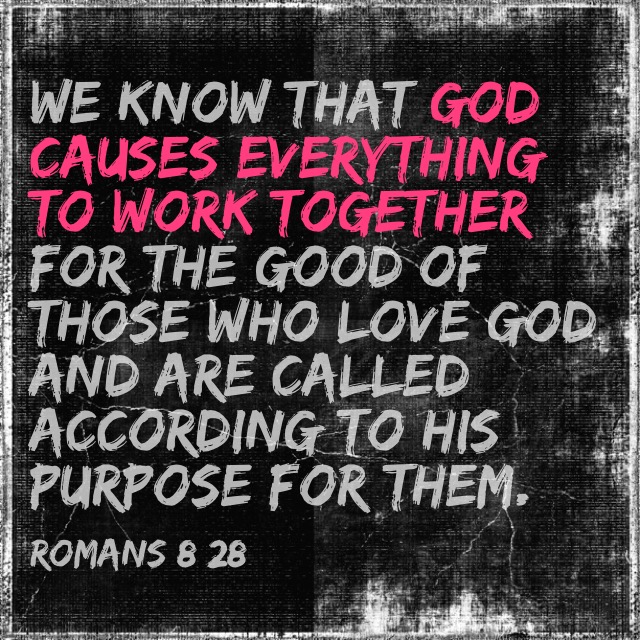
My life might seem like a mess at times: ugly, scared, scarred, even worthless. But God sees beauty. And we know that in all things [even the ugly stuff] God works for the good [the beautiful] of those who love Him, who have been called according to His purpose. (Romans 8:28). God gives His beauty to replace my ashes.

With subjective thinking, this doesn’t seem very likely. It’s hard to subjectively see how God could turn my ugliness and my pain into anything beautiful.

That’s why Scripture also contains this prayer: A prayer that will change my subjectivity (seeing only my ugliness) to objectivity (now seeing God’s beauty). If you struggle to see everything as beautiful, pray this prayer right now:

When I think of all this, I fall to my knees and pray to the Father, the Creator of everything in heaven and on earth. I pray that from His glorious, unlimited resources He will empower you with inner strength through His Spirit. Then Christ will make His home in your hearts as you trust in Him. Your roots will grow down into God’s love and keep you strong. And may you have the power to understand, as all God’s people should, how wide, how long, how high, and how deep His love is. May you experience the love of Christ, though it is too great to understand fully. Then you will be made complete with all the fullness of life and power that comes from God.

Amen!

Get Your Mind Out Of That Rut!

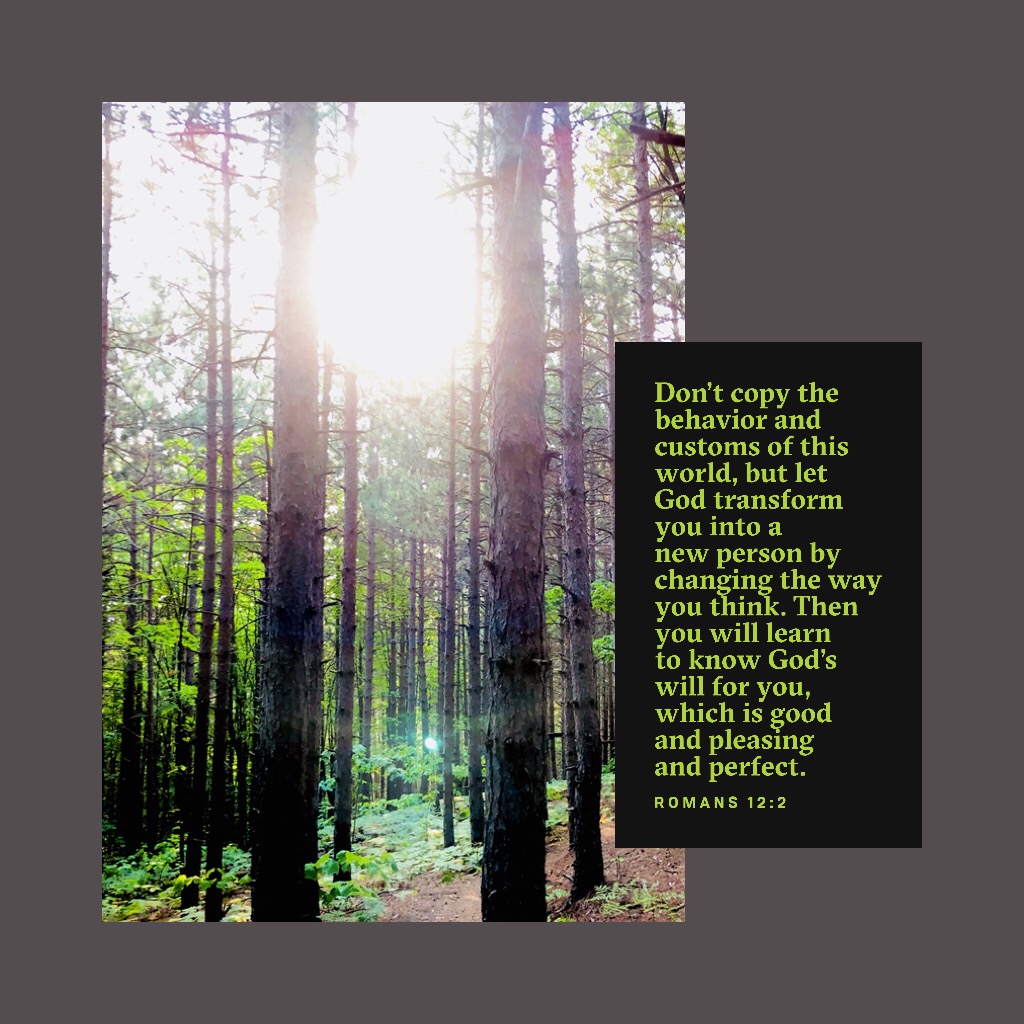
“Don’t become so well-adjusted to your culture that you fit into it without even thinking.” —Apostle Paul (Romans 12:2, The Message)

It’s important to think about your thinking—to analyze why certain thoughts are swirling through your mind. But after you identify unhealthy thoughts, you need some creative thinking to be able to move your life in a new direction. This requires a whole new set of thinking skills that are called critical thinking.

Stephen Brooking described it this way, “Critical thinkers are continually exploring new ways of thinking about their lives…. Critical thinking is complex and frequently perplexing, since it requires the suspension of belief and the jettisoning of assumptions previously accepted without question.”

  • What have you accepted without question?
  • What have you become so well-adjusted to that you simply accept it?
  • Are there things you do just because it’s always been done that way?
  • Are there some things that you won’t try because it’s never been done that way?

Two warning signs in your thinking are always and never. With the exception of God, everything changes. So when you start thinking in terms of always and never you are essentially saying, “Nothing changes. And I’ve got everything figured out.” This is mind-in-the-rut thinking!

You’ve probably heard this before but it is valuable enough to be repeated—If you always do what you’ve always done you’ll always get what you always got.

If you need a change in your life, start with a change in your thinking. Ask God to help you think in new ways. In talking to His people about what He had done for them in the past God said it was time to think in creative ways—

But forget all that—it is nothing compared to what I am going to do. For I am about to do something new. See, I have already begun! Do you not see it? I will make a pathway through the wilderness. I will create rivers in the dry wasteland. (Isaiah 43:18-19 NLT)

Don’t let your thinking stay stuck in a rut. Allow God to help you jettison the old ways of thinking and expand your horizons. God will give you greater creativity if you ask Him.

Real Raw Emotions

This week I’ve been writing about my favorite book—the Bible—and why I find it so fascinating. Yesterday I talked about how the Bible helps me mentally. But we are not just mental creatures, we are emotional, too, and I have found my Bible to be an excellent way to express some of my deepest, rawest emotions.

(If you would like to read the other parts of this series, they are here, here, here, and here.)

Humans are created in God’s image, and God expresses emotion. In fact, God expresses emotion more deeply and purely than we humans can His sorrow is more bitter, His love is more intense, His jealousy is more pure.

Emotion is expressed throughout the Bible, but I’m particularly attracted to the emotional responses in the Psalms. These are prayers and songs which express the deepest emotions of angry, loving, hurting people. A few examples—

You know what I long for, Lord; You hear my every sigh. (Psalm 38:9 NLT)

Be merciful to me, O God, for men hotly pursue me; all day long they press their attack. My slanderers pursue me all day long; many are attacking me in their pride. (Psalm 56:1-2 NIV)

God, smash my enemies’ teeth to bits, leave them toothless tigers. Let their lives be buckets of water spilled, all that’s left, a damp stain in the sand. Let them be trampled grass worn smooth by the traffic. Let them dissolve into snail slime, be a miscarried fetus that never sees sunlight. Before what they cook up is half-done, God, throw it out with the garbage! (Psalm 58:6-9 The Message)

O my God, my life is cast down upon me and I find the burden more than I can bear…. (Psalm 42:6 AMP)

My God, my God, why have You forsaken me? Why are You so far from saving me, so far from the words of my groaning? O my God, I cry out by day, but You do not answer, by night, and am not silent…. I am poured out like water, and all my bones are out of joint. My heart has turned to wax; it has melted away within me. My strength is dried up like a potsherd, and my tongue sticks to the roof of my mouth…. Dogs have surrounded me; a band of evil men has encircled me, they have pierced my hands and my feet. …But you, O Lord, be not far off; O my Strength, come quickly to help me. (Psalm 22:1-2, 14-16, 19 NIV)

Jesus came to earth as fully God and fully man, able to experience the deepest, rawest emotions of anyone. “He was despised and rejected—a man of sorrows, acquainted with deepest grief” (Isaiah 53:3). Jesus knows what you feel because He felt it, too: “For we do not have a High Priest Who is unable to understand and sympathize and have a shared feeling with our weaknesses and infirmities and liability to the assaults of temptation” (Hebrews 4:15). As a result, “He lives forever to intercede with God on [our] behalf (Hebrews 7:25).

Don’t ever be afraid to express your rawest emotions in God’s presence—He knows profoundly what you are feeling. When you are struggling with deep emotion, the Bible knows how to speak your heart’s cry to God.

The Promised Flower

Samantha's Promised IrisI just hate waiting! Especially when what I’m waiting for is going to be so good. It’s like already knowing what my birthday or Christmas present is going to be, but still having to wait for that special day to arrive.
It seems like it’s taking forever!

Three years ago our neighbors gave my daughter Samantha some iris bulbs. She carefully planted them in our garden and watered them, and tended them, and protected them from all the traffic through the garden. And waited. And waited. And waited some more. The first year: just small green shoots and nothing else. Last year: taller shoots, but not even a bud. This year: the shoots grew taller and we saw buds appear for the first time.

Then—finally!—yesterday the first purple iris opened. It was a long wait, but it finally happened.

Sounds like what God promised His people:

As the rain and the snow come down from heaven, and do not return to it without watering the earth and making it bud and flourish, so that it yields seed for the sower and bread for the eater, so is My word that goes out from My mouth: It will not return to Me empty, but will accomplish what I desire and achieve the purpose for which I sent it. (Isaiah 55:10-11)

Samantha’s iris reminds me that God’s promises do not fail, and His timing is perfect. I’m a big proponent of writing down what I sense God has impressed on my heart. Write down His promises, plant those seeds in your heart, water them with prayer, protect them from being trampled, and wait in expectation. Every day, wait in expectation.

God, the One and Only—I’ll wait as long as He says. Everything I hope for comes from Him. (Psalm 62:5, The Message)

Are you waiting for God’s promise? Plant your seeds (write it down). Water them (prayer). And wait in expectation, wait in hope. God will cause your “flower” to bloom at just the right time!

Gaining Reason By Becoming Mad

An excerpt from Kahlil Gibran’s The Madman

Once there ruled in the distant city of Wirani a king who was both mighty and wise. And he was feared for his might and loved for his wisdom.

Now, in the heart of that city was a well, whose water was cool and crystalline, from which all the inhabitants drank, even the king and his courtiers; for there was no other well.

One night when all were asleep, a witch entered the city, and poured seven drops of strange liquid into the well, and said, “From this hour he who drinks this water shall become mad.”

Next morning all the inhabitants, save the king and his lord chamberlain, drank from the well and became mad, even as the witch had foretold.

And during that day the people in the narrow streets and in the market places did naught but whisper to one another, “The king is mad. Our king and his lord chamberlain have lost their reason. Surely we cannot be ruled by a mad king. We must dethrone him.”

That evening the king ordered a golden goblet to be filled from the well. And when it was brought to him he drank deeply, and gave it to his lord chamberlain to drink.

And there was great rejoicing in that distant city of Wirani, because its king and its lord chamberlain had regained their reason.

When I was in high school some of my peers from my “Christian” school were behaving in ways I thought un-Christlike. So I challenged them on their behavior. Their response was something like, “Quit being like John the Baptist—quit being so holier-than-thou. Why can’t you just go along with us?”

In other words, they were mad (in regard to biblical behavior) and they wanted me to drink from the same cup to ‘regain their reason.’

When confronted with their poor decisions or less-than-desirable behaviors most people would rather pull the wise, reasoned man down to their level of ‘madness’ than aspire to a higher level of ‘reason.’

Check out Erwin McManus’ thoughts on this, “When we live below a standard, it is simply human nature to redefine the standard as unreasonable and establish standards that our patterns are already accomplishing. We keep lowering the bar until we clear it.”

Instead, why don’t you raise your standard today? Don’t partake of the madness of others just to be accepted by them—you set the standard for decency, holiness, nobleness, self-sacrifice, self-control, and temperance!

Live right,
speak the truth,
despise exploitation,
refuse bribes,
reject violence,
avoid evil amusements.
This is how you raise your standard of living!
A safe and stable way to live.
A nourishing, satisfying way to live.
(Isaiah 33:15-16, Message)

God’s Love Song

Aaah, amoré… love! Isn’t it wonderful to be in love? When you fell in love with your sweetheart, I’ll bet you had a special “love song” just for the two of you. Betsy and I did, and it’s still our special song today.

There’s something about music and song that seems to fuel the emotions of love. Something about those words and those haunting melodies that speak to our hearts unlike anything else can. A poem set to music.

Yesterday I wrote about God’s strong and loving hands—powerful enough to provide, loving enough to hold just you.

But did you know that God also sings a love song about you? Check it out—

The LORD your God is with you,
He is mighty to save.
He will take great delight in you,
He will quiet you with His love,
He will rejoice over you with singing.
(Zephaniah 3:17)

Isn’t it amazing to think about God being so delighted with you that He sings you a love song?! I believe it is a song written and sung just for you! And I don’t think God has just one song for you.

Think about how music has impacted you. Maybe you’ve cranked up that special tune when you’re out with friends … or the song you played over and over to help you through a tough time … or the love song that is special just for the two of you … or the ready-for-battle song you used to get pumped up for the big game! Special songs for special moments.

In every season of your life, listen for God’s special song just for you and then join in the song with Him—

But each day the LORD pours His unfailing love upon me, and through each night I sing His songs, praying to God Who gives me life. (Psalm 42:8, New Living Translation)

 Sing for joy, O heavens, and be joyful, O earth, and break forth into singing, O mountains! For the Lord has comforted His people and will have compassion upon His afflicted. (Isaiah 49:13, Amplified Bible)

But I will sing of Your strength, in the morning I will sing of Your love; for You are my fortress, my refuge in times of trouble. (Psalm 59:16, New International Version)

Are you hearing any of God’s love songs today? Are you singing along?

God’s Big Hands

Listen to the podcast of this post by clicking on the player below, and you can also subscribe on Apple or Spotify.

Mahalia Jackson sang it so well, “He’s got the whole world in His hands.” Beautiful song … incredible truth!

But what does that mean? How can we grasp that concept? The prophet Isaiah tried to capture the essence of this when he asked who else but God “has measured the waters in the hollow of His hand, or with the breadth of His hand marked off the heavens?” (Isaiah 40:12).

Hold your hand palm up, fingers tight together to make a “dish” in the palm of your hand. How much water can you hold in that hollow of your hand? I just tried it and I couldn’t even hold ¼-cup of water. Yet Isaiah says that the hollow of God’s hand holds all the water of the earth.

How much is that? According to the US Geological Survey, the total water supply of the world is 326 million cubic miles. A cubic mile is an imaginary cube measuring one mile on each side. A cubic mile of water equals more than one trillion gallons (that‘s a 1 with 12 zeros following it!)—

One cubic mile of water (1 trillion gallons) x 326 million cubic miles =
326 quintillion gallons of water (326 followed by 18 zeros)!!
God holds ALL of this in the hollow of His hand!

Now stretch out your fingers as wide apart as you can. What is the distance from the tip of your thumb to the tip of your pinky finger? The breadth of my hand is about nine inches. Isaiah says that all of the stars in the universe fit into the breadth of God‘s hand.

How many is that? According to the European Space Agency, there are something like 10 trillion stars (a 10 followed by 12 zeros) just in our galaxy, and they estimate there are something like 10 trillion galaxies—

10 trillion stars in our galaxy x 10 trillion galaxies =
10 septillion stars (10 followed by 24 zeros)!!
God holds ALL of these stars in the breadth of His hand!

To say God’s hands are big and powerful is an understatement of astronomical proportions!

You might be thinking, “With hands that big, I’m so insignificant. I’m lost to God’s sight because His hands are so big.” But there is another aspect to God’s hands—they are not only big, but they are loving.

“Behold, I have indelibly imprinted—tattooed a picture of you—on the palm of each of My hands…” (Isaiah 49:16 AMP). God knows you by name—you are tattooed on His loving hands. His hands which are big enough to hold all the water and all the stars are loving enough to hold you!

Wow, what an incredible God! Powerful enough to protect and provide for us, tender enough to love each of us as though we were the only person in the universe to love!

►► Would you please prayerfully consider supporting this ministry? ◀︎◀︎

What Jesus Didn’t Say

All throughout the first four books of the New Testament—Matthew, Mark, Luke, and John—there are lots of “red letters” (words spoken by Jesus). But as each of these gospel writers begins to recount the arrest and sham trial of Jesus, I’m struck by how many “black letters” there are. This fulfilled an Old Testament prophesy—

He was oppressed and treated harshly, yet He never said a word. He was led like a lamb to the slaughter. And as a sheep is silent before the shearers, He did not open His mouth (Isaiah 53:7).

The chief priests and the Sanhedrin brought out a string of witnesses to falsely accuse Jesus, but even then these witnesses couldn’t get their stories to jive, so Jesus remained silent. In exasperation the chief priest Caiaphas lashed out at Jesus, “Aren’t You going to answer these charges? Don’t You hear what they’re saying about You? Why won’t You defend Yourself?”

So here’s how Jesus responded to His accusers: But Jesus remained silent (Matthew 26:63). His silence resonated louder than any words could have!

How could Jesus do this? How could He stand silently when all of these nasty things were being said about Him?

He looked back—”…He had done no violence, nor was any deceit in His mouth…” (Isaiah 53:9). All four Gospels record Jesus saying, “You heard Me speaking in public all the time. My life has been on display for You. If I had said or done anything wrong, you could have arrested Me earlier, but the facts are: I haven’t said or done anything sinful.”

He looked forward—”…Because of the joy awaiting Him, He endured the Cross, disregarding its shame…” (Hebrews 12:2). He knew that one wrong word could undo all of the good words which He previously spoke, so He looked forward to the joy that would come after this was over.

I just went through a period of my life where people threw incredibly hurtful lies at me, but what was that compared to the horrific abuse heaped upon Jesus? If He could remain silent, how much more should I?

While I was in the midst of this difficult time, a prayerful friend handed me a notecard which I have kept close to me. Perhaps these words will be helpful to you, too—

May kindness be the response in you
where such a response is not expected.
May gentleness have the power
to overrule an offense and the power to heal. (David Teems)

May this Good Friday be a time of reflection in what Jesus didn’t say. And may I, along with you, learn this power of silence when falsely accused.