I Didn’t Choose This

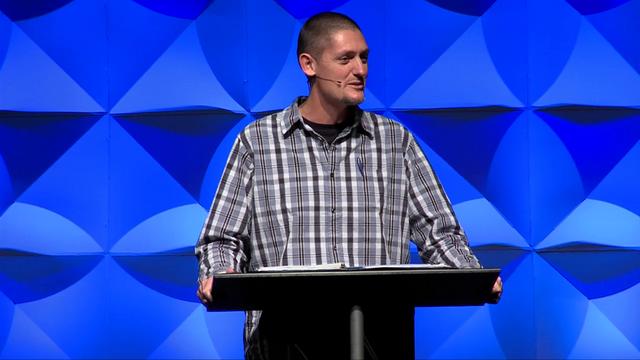
Hello, my name is Craig Owens and I’m a pastor. I wasn’t a PK (pastor’s kid). This isn’t the profession I chose for myself. I envisioned myself doing other things, but God had different plans for me.

He called, and I said “yes.” He called me to be a pastor and so He equipped me for the pastorate. I can relate to what the Apostle Paul wrote—

By God’s grace and mighty power, I have been given the privilege of serving Him by spreading this Good News. (Ephesians 3:7)

Paul, too, didn’t choose be a minister telling people about Jesus Christ. But God had different plans for him.

And so, since God has called me to do this, I must do it to the best of my ability. I don’t have the natural ability for it, I simply have God’s grace and mighty power. And to that grace and power I must add my best effort—

Study and be eager and do your utmost to present yourself to God approved (tested by trial), a workman who has no cause to be ashamed, correctly analyzing and accurately dividing [rightly handling and skillfully teaching] the Word of Truth. (2 Timothy 2:15, AMP)

I like the counsel of Charles Spurgeon:

Again, the theme of a minister should be Christ Jesus in opposition to mere doctrine. Some of my good brothers are always preaching doctrine. Well, they are right in so doing, but I would not care myself to have as the characteristic of my preaching doctrine only. I would rather have it said, ‘He dwelled much upon the person of Christ and seemed best pleased when he began to tell about the atonement and sacrifice. He was not ashamed of the doctrines; he was not afraid of threatening. But he seemed as if he preached the threatening with tears in his eyes, and the doctrine solemnly as God’s own Word. But when he preached of Jesus, his tongue was loosened, and his heart was at liberty.’”

I didn’t choose this, but God chose me. And for that I am extremely humbled and grateful.
Gutsy Prayer

I am no long my own, but Thine,

Put me to what Thou wilt, rank me with whom Thou wilt.

Put me to doing, put me to suffering.

Let me be employed by Thee or laid aside for Thee,

Exalted for Thee or brought low for Thee.

Let me be full, let me be empty.

Let me have all things, let me have nothing.

I freely and heartily yield all things

To Thy pleasure and disposal.

And now, O glorious and blessed God,

Father, Son, and Holy Spirit,

Thou art mine, and I am Thine. So be it.

And the covenant which I have made on earth,

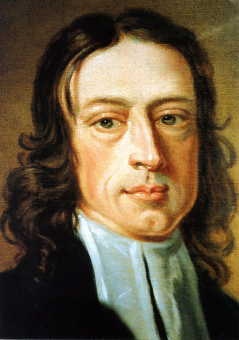
Let it be ratified in heaven. Amen. (John Wesley’s covenant prayer, 1780)

Wow, that’s a gutsy prayer to pray! I would like to think I can pray this and truly mean it. What about you? Could you really pray this?

Can You Have Too Much Blessing?

I seldom turn on religious TV shows, because when I do I typically hear the same two messages: (1) God wants you to be rich; (2) God wants you to be healthy. I believe God is good all the time, but that doesn’t mean those who follow Him always get wealth and health.

Consider this:

After Rehoboam’s position as king was established and he had become strong, he and all of Israel with him abandoned the law of the Lord.

Notice: When Rehoboam was healthy and wealthy, he abandoned God. When things looked bleak—when the future for Rehoboam was very much in doubt—Rehoboam was “walking in the ways of David and Solomon” (2 Chronicles 11:17). When the Egyptians attacked, Rehoboam and his court officials “humbled themselves before God” (12:6).

Health and wealth derailed Rehoboam, but difficulties kept him close to God.

Maybe a better prayer than “Bless me” would be “Build Your character in me.” Or as it says in Proverbs:

Give me neither poverty nor riches, but give me only my daily bread. Otherwise, I may have too much and disown You and say “Who is the Lord?” Or I may become poor and steal, and so dishonor the name of my God.

The prayer that Jesus taught us to pray is perfect: Give us today our daily bread—no more, no less. That keeps me focused on my Heavenly Father.

Thursdays With Oswald—General Maxims

This is a weekly series with things I’m reading and pondering from Oswald Chambers. You can read the original seed thought here, or type “Thursdays With Oswald” in the search box to read more entries.

General Maxims

     (a) If you lack education, first realize it; then cure it.

     (b) Beware of knowing what you don’t practice.

From Approved Unto God

I know the maxim for some is, “Fake it until you make it.” I can’t do that. I won’t do that. The Bible has a word for doing that: Hypocrisy.

How can you say to your brother, “Brother, let me take the speck out of your eye,” when you yourself fail to see the plank in your own eye? You hypocrite, first take the plank out of your eye, and then you will see clearly to remove the speck from your brother’s eye (Luke 6:42).

But just as bad is when I know what I’m supposed to do, and then make excuses not to do that. The Bible has a word for not doing that: Sin.

Remember, it is sin to know what you ought to do and then not do it (James 4:17).

Manufactured Success

Listen to the podcast of this post by clicking on the player below, and you can also subscribe on AppleSpotify, or Audible.

Does success come from hard work, or does it have another origin? We can certainly manufacture success by doing some public relations, some spin, some creative promotion. And from the outside, it can look very successful. Someone may even do such a good job manufacturing their success that they begin to believe their own press releases.

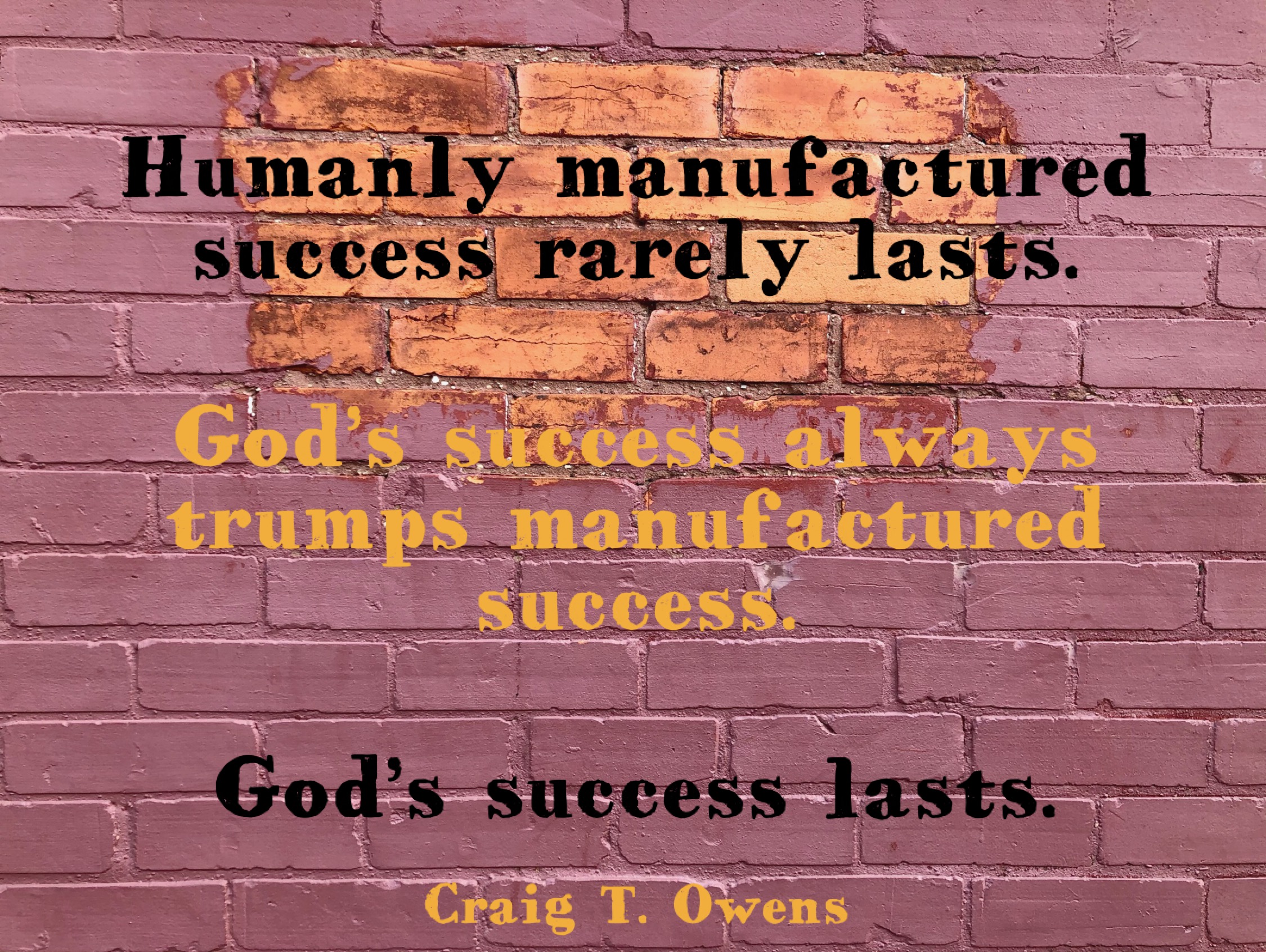
But humanly manufactured success rarely lasts.

Consider the case of a man named Adonijah. He was the heir-apparent in Israel. As the oldest living son of the famed King David, Adonijah was the odds-on favorite to be the next king. And so Adonijah began to manufacture a successful transfer of power for himself. He invited all the right people and ignored those who he knew wouldn’t go along with his plan. He set up everything just the way a prince ascending the throne should have it. His followers joined him for a party and began to raise their glasses in a toast: Long live King Adonijah!

Except God—and King David—had other plans. Just as God directed, David had his son Solomon anointed king. When the few followers that were toasting Adonijah heard this, they all bailed on him and ran away. Even Adonijah recognized that something else can trump manufactured success. Here’s what he said:

“As you know,  the kingdom was mine. All Israel looked to me as their king. But things changed, and the kingdom has gone to my brother; for it has come to him from the LORD.” (1 Kings 2:15)

Success has come to him from the Lord.God’s success always trumps humanly manufactured success.

Manufactured success leads to pride (the kingdom was mine). And pride over-exaggerates our self-worth and obscures reality (all Israel looked to me as their king). God’s success comes to the humble who recognize His lordship and their place in His Kingdom. God’s success lasts.

Although Adonijah eventually recognized this, he didn’t learn from it. In the next scene, he is again trying to manufacture a way to ascend to the throne. And this time he not only loses his position but his life as well.

Here’s what Jesus says: For whoever exalts himself will be humbled [manufactured success], and whoever humbles himself will be exalted [God’s success].

►► Would you please prayerfully consider supporting this ministry? My Patreon supporters get behind-the-scenes access to exclusive materials, like this recent Bible study tip from the Book of Ecclesiastes. ◀︎◀︎

God’s Favor

It’s a well-known story: Moses is on the mountaintop with God while all the Israelites back at camp think he’s dead. They then convince Aaron to make a golden calf to be their god. The True God is ready to bring down His punishment on these idol worshipers when two incredible words stop God’s judgment dead in its tracks…

But Moses.

God was ready to wipe them out and start all over with Moses. Think about it: God offered Moses the opportunity to be on the same level of remembrance with Abraham. Years later people would be saying, “The God of Abraham, Isaac, Israel, and Moses.” What an incredible honor for Moses!

But Moses.

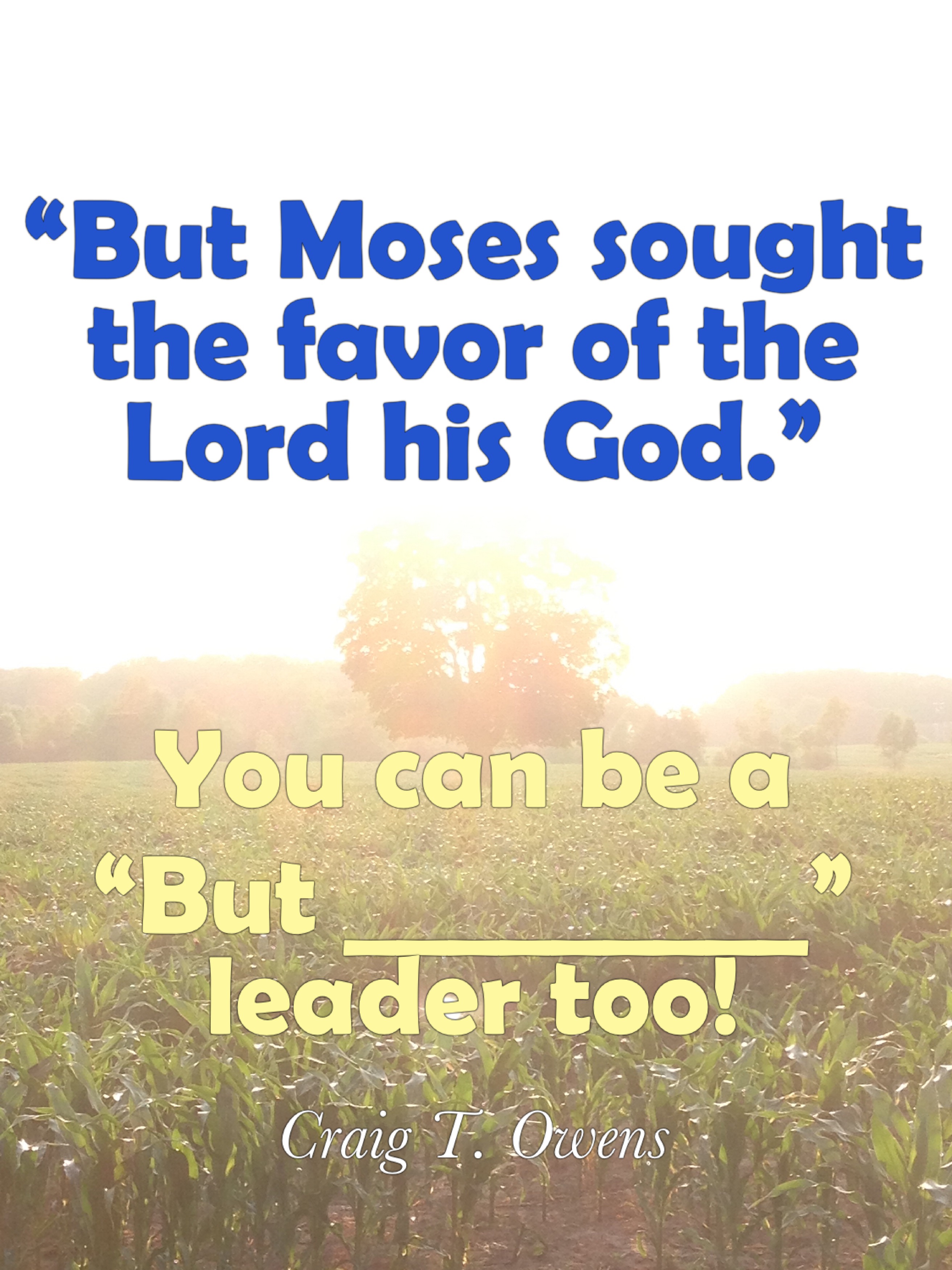
Instead, Moses interceded for his people. Moses sought God’s favor. He knew God to be the compassionate and gracious God, slow to anger, abounding in love and faithfulness, maintaining love to thousands and forgiving wickedness, rebellion and sin. He could have had it all for himself.

But Moses.

He asked God to forgive the people’s idolatry and betrayal. God replied, “I know you by name and you have found favor with Me.” If you had God’s favor, what would you do with it? Would you ask for great things for yourself? Your family? Your friends?

But Moses.

Moses used this favor to ask God to help him stay in His favor. “If You are pleased with me, teach me Your ways so I may know You and continue to find favor with You.” Moses knew that it was God’s favor that distinguishes one man from the crowd, that sets a man apart as a leader.

But Moses

just wanted God to be glorified. And God responded: “My Presence will go with you.”

I want to be a “But Craig” leader… one that stands apart as God’s leader; one who only seeks to bring glory to God.

How about you? Do you want to be that “But ____________” leader too?

Overcoming Barriers To Church Growth (book review)

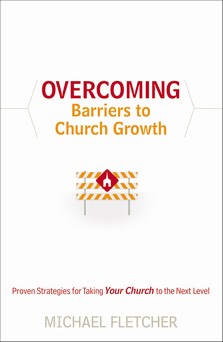
Hold on a second. I’m sure when you saw the title of Michael Fletcher’s book—Overcoming Barriers To Church Growththere were two thoughts that could have immediately popped in your mind: (1) “I’m not a pastor, so this book’s not for me”; or (2) “I am a pastor, but no one’s going to tell me how to grow my church.”

If you thought either of those things and didn’t explore this book any further, you’d really be robbing yourself.

In the case of the first objection (“I’m not a pastor”), Fletcher does a good job in making the case that church life is a team sport. The pastor cannot grow the church; the elders cannot grow the church; the attendees cannot grow the church. At least, not by themselves. Everyone needs to be involved for the church to be healthy.

In the case of the second objection (“No one’s going to tell me how to grow my church”), I would lovingly point out, “God opposes the proud, but gives grace to the humble.” Pastor Fletcher’s humble goal in writing this book was to help churches grow beyond the two natural barriers that every church will face. You’d be wise to let his hindsight be your foresight.

I found myself immediately drawn into this book. Michael’s writing style is very conversational and easy-flowing. And the concepts are uncomplicated and lend themselves to being quickly applied. The more I read the more excited I became about the potential in our church.

If you are a part of a church—pastor, elder, or attendee—you and your church will benefit from reading this book. Remember the church is a Body, so we all have our part to play in it. Arming yourself with the principles in this book will help you to play your part even better.

I’m a Bethany House book reviewer.

Esse Quam Videri

Guest Author: Dick Brogden

Dr. Warren Newberry is the head of my PhD Program in Intercultural Studies at the Assembly of God Theological Seminary. He has the Latin phrase Esse Quam Videri on his office wall. It means “To be rather than to seem.”

The phrase is first found in Cicero’s essay On Friendship. Aeschylus used a similar phrase in Seven Against Thebes, at which the scout says of the priest, “His resolve is not to seem the best but in fact to be the best.” Plato quoted this line in Republic (361b). It is also the State motto of North Carolina.

Coming back to America for the summer (studies and some meetings) has reinforced this precept. America on the surface seems whole and healthy. As a family, we have enjoyed McDonald’s, Lake Michigan, vibrant worship services, and incredible public libraries, among many other wonderful things. Last week however I took a trip on a Greyhound bus. Every American should be so lucky.

Greyhound bus stations in Middle America are fascinating places “to be.” There was a nervous young Amish couple. There was an African American street preaching pair: The woman had her Bible out, loudly laughing, scolding, and reading Scripture to all who did or did not want to listen. Her companion was a monster of a man, tattoo-covered, gold tooth glinting in the neon light. He did not speak often, but when he did you were afraid to not pay attention. Hippies, druggies, bums, out-of-work mechanics and returning U.S. Marines. Thin and fat. Old and young. Black, brown, yellow, and white. It was a living mosaic reminding me of what America is, not just what America seems.

It makes me reflect on the dichotomy between who I am and who I seem to be. In God’s mysterious grace, opportunities for higher profile ministry and service are coming our way. In front of pulpits, cameras, microphones, interviewers, and even in front of you through newsletters and emails we can seem to be a certain way.

In The Prince, Niccolò Machiavelli twists this phrase to Videri Quam Esse (to seem rather than to be) with respect to how a ruler ought to act. This is such a danger for missionaries… for me… for you.

I write to ask for prayer and for accountability. I want to ask you to pray for the judgment of God on my life. I want to ask that all falsehood and pretension is exposed and removed. I want to ask that there is no hypocrisy or pride left in me. I ask this fearfully, but it is my desire to walk humbly before God, before you, and before Muslims in Sudan. I long to be—not just seem to be—a lowly follower of Christ.

Dick Brogden and his family have served as missionaries in numerous Arabic nations for over 20 years.

The Right Questions

“The uncreative mind can spot wrong answers, but it takes a creative mind to spot wrong questions.” —Sir Anthony Jay

This has always been a challenge for me—maybe for you, too. I can easily spot when someone gives me a wrong answer, but it’s harder to spot when I’ve asked a wrong question. It could very well be that the answer I’m hearing is correct in light of the question I asked.

But spotting wrong questions requires a humility on my part to admit I may be wrong. Spotting wrong questions requires creativity, a new way of looking at things.

There is a short story about the life of King Abijah recorded in 2 Chronicles 13 in the Bible. Abijah is the second king to reign in Judah after the 10 northern tribes had seceded. He is vastly outmanned and out-spent by King Jeroboam of the northern tribes (called Israel). When it comes to a battle between north and south, Abijah can only field half as many men as Jeroboam.

Yet it is Abijah who takes charge of the battlefield before the fighting begins. He climbs to the top of Mount Zemaraim to make sure all of the northern tribes can hear him. The wrong question would have been, “Which side is God on: Israel’s or Judah’s?” The correct question which Abijah must have asked and answered for himself—is, “Are we on God’s side?

Abijah begins to recount how God chose for a descendant of David to sit on the throne (Abijah), but northern Israel was following a rebel (Jeroboam). God intended for the descendants of Aaron to oversee the sacrifices and religious practices; Judah was doing this, but Israel had their own priests. God was to be worshipped exclusively; Judah was doing this, but Jeroboam made golden calves for Israel to worship.

So Abijah correctly concludes, “God is with us; He is our leader.”

Abijah didn’t assume God was with Judah. Abijah didn’t ask, “Does God lead us or them?” Abijah asked, “Are we doing the things that God has asked of us?” Since Judah was following God, Abijah could then state with confidence, “God is with us.”

The question is not, “Is God on your side?” It’s better to ask, “Am I on God’s side?

The question is not, “What would Jesus do if He was here?” It’s better to ask, “What did Jesus already do that I can follow?

What questions are you asking? Change your questions and you just may change your life.

Anti-Sudoku Theology

I really enjoy Sudoku. It’s a challenging game of logic, and I’m (for the most part) a logical guy. I like knowing exactly where the digits one through nine are supposed to go, using logical deduction and inference to fill in all of the squares.

If I had my choice, all of life would be this logical. Simple. Neat. Well-defined. Clear. Easy. But, much to my dismay, it’s not.

If I’m following the example and teaching of Jesus, life with Him is anything but logical. Think about some of the paradoxes Jesus Christ taught and lived—

  • To advance, be humbled.
  • To have more, give away more.
  • To possess everything, desire nothing.
  • To connect with people (social), spend time alone with God (solitude).
  • To bring people in, go out.
  • To be a leader, be a servant.
  • To fill up with God, empty yourself of yourself.
  • To come first, come last.
  • To gain wisdom, become foolish.
  • To gain strength, become weak.
  • To live, die.

A.W. Tozer wrote about a godly man: “He has accepted God’s estimate of his own life. He knows he is as weak and helpless as God has declared him to be, but paradoxically, he knows at the same time that he is in the sight of God of more importance than angels. In himself, nothing; in God, everything.”

It isn’t logical, but it’s true: God loves me. And the greatest of all paradoxes: when I was the least worthy of God’s love, that’s when Jesus came to die for my sins.

God’s love for me—the greatest of paradoxes—helps me live these paradoxes Jesus taught. And His love will help you, too.

What other biblical paradoxes have you discovered?