Thursdays With Oswald—Two Ways To Handle A Crisis

Listen to the podcast of this post by clicking on the player below, and you can also subscribe on AppleSpotify, or Audible. 

This is a weekly series with things I’m reading and pondering from Oswald Chambers. You can read the original seed thought here, or type “Thursdays With Oswald” in the search box to read more entries.

Two Ways To Handle A Crisis

     A man must decide whether he will be identified with the death of the Lord Jesus Christ, which will mean the turning out not only of the “old man,” but of the old responsible intelligence, the old bondage, the old legalism, the things which used to guide the life before, and the forming of a totally new mind. 

     It works out this way: in your practical life you come to a crisis where there are two distinct ways before you, one the way of ordinary, strong, moral, common sense and the other the way of waiting on God until the mind is formed which can understand His will. 

     Any amount of backing will be given you for the first line, the backing of worldly people and of semi-Christian people, but you will feel the warning, the drawing back of the Spirit of God, and if you wait on God, study His Word, and watch Him at work in your circumstances, you will be brought to a decision along God’s line, and your worldly “backers” and your semi-Christian “backers” will fall away from you with disgust and say, “It is absurd, you are getting fanatical.” 

From Biblical Psychology 

When you have to deal with a crisis, there are two options:

  1. Use your common sense and the good ideas of others
  2. Do it God’s way

God’s ways usually defy the world’s common sense.

“As the heavens are higher than the earth, so are My ways higher than your ways and My thoughts than your thoughts,” says God. (Isaiah 55:9)

For the foolishness of God is wiser than man’s wisdom, and…the wisdom of this world is foolishness in God’s sight. (1 Corinthians 1:25; 3:19)

If you want to try to do it the “common sense” way, go ahead. God will let you try it, and a lot of people will encourage you to keep at it. But I think you will quickly find that the “God sense” way is so much better! Although very quickly your former “backers” and “cheerleaders” will look at you as a fanatic.

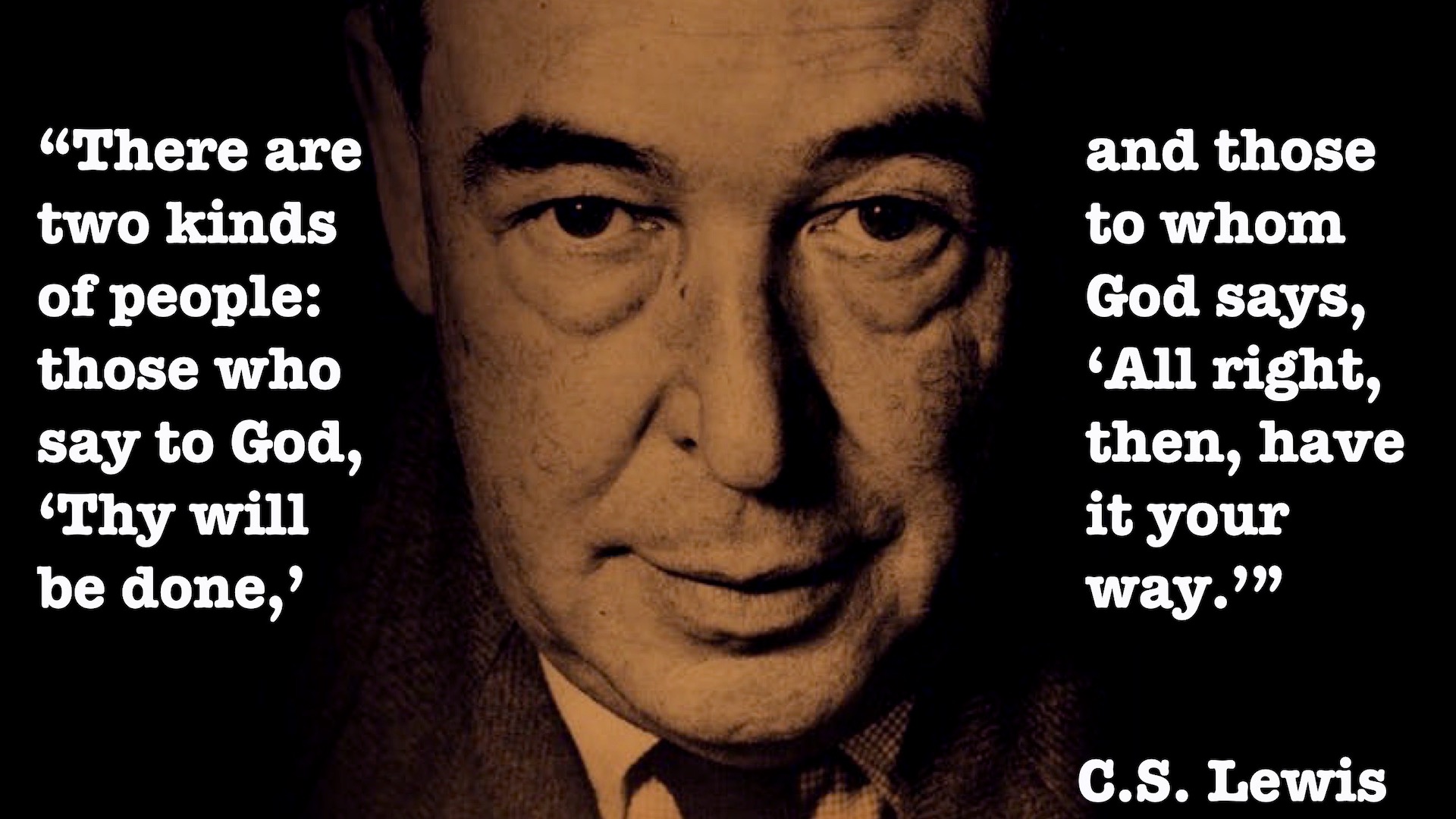
“There are two kinds of people: those who say to God ‘Thy will be done’ and those to whom God says, ‘All right then, have it your way.’” —C.S. Lewis

You must decide how you will respond in a crisis.

►► Would you please prayerfully consider supporting this ministry? My Patreon supporters get behind-the-scenes access to exclusive materials. ◀︎◀︎

Keep On Learning

Safe pathDon’t ever think you know it all.

Because you can’t!

There’s no way you can know it all.

So keep on learning.

Keep on digging into God’s Word.

Keep on letting the Holy Spirit teach you.

God is the only Know-It-All.

And He wants to teach you too.

What should a man learn?
Not hard to answer:
steadfastness in holiness,
shortness of words,
gentle brotherliness…
walking in obedience to God…
zeal in prayer…
bringing pride low,
simplicity of heart…
patience in the face of hardship. —Colmán mac Beógnai


No Presumptions

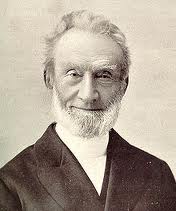
George Mueller

George Mueller

I’m a planner. I like to plan out my personal schedule. I also like to plan out my preaching schedule. Near the end of each calendar year, I spend an extended time in prayer asking God to show me what He would like me to share with my congregation in the upcoming new year.

By no means should this override being Spirit-directed in the moment. I need to remain sensitive to the “course corrections” that the Holy Spirit wants me to make, but I also think planning ahead is using His wisdom as well.

As I approach each week’s message preparation time, there is a temptation to just stick with the plan, no matter what. After all, I know what I’ve prayerfully planned, so I can just get down to the business of crafting a sermon, right?

This wise counsel from George Mueller—a pastor that was preeminent in prayer—helps me to check my impulses…

“Rather than presuming to know what is best for the hearers, I ask the Lord to graciously teach me the subject I should speak about.”

My prayer goes something like this: “Lord, You know I will be speaking this Sunday; You know each person who is going to attend our service this week; You know exactly what they have been going through and what they are about to go through; You know exactly what they need to hear this week, so speak those words to me now.

How arrogant for me to say, “Lord, here’s my sermon. Please bless it.”

Instead I need to pray, “Lord, what message will you bless? Please speak those words to me.”

Pastor, please don’t presume to know what is best for your congregation, but ask the One who truly knows to give you His timely word.

Thursdays With Oswald—Unchecked Imaginations

Listen to the podcast of this post by clicking on the player below, and you can also subscribe on AppleSpotify, or Audible.

This is a weekly series with things I’m reading and pondering from Oswald Chambers. You can read the original seed thought here, or type “Thursdays With Oswald” in the search box to read more entries.

Unchecked Imaginations 

     The day we live in is a day of wild imaginations everywhere, unchecked imaginations in music, in literature, and, worst of all, in the interpretation of Scripture. People are going off on wild speculations, they get hold of one line and run clean off at a tangent and try to explain everything on that line, then they go off on another line: none of it is in accordance with the Spirit of God.

From Biblical Psychology

We must be so cautious about not reading into Scripture what we want it to say. In other words, we cannot say, “This is what I believe to be true, now let me find a verse or two that will support that belief.” Instead, we must let the living Word of God speak. As the prophet Samuel approached God, so must we with the humble attitude, “Speak, Lord, for Your servant is listening” (1 Samuel 3:10).

Jesus said the Holy Spirit will guide us into all truth. The truth into which He will lead us is objectively true. That means it’s not true because we think it’s true, but it’s true because it’s God’s Word.

Make sure you don’t interpret Scripture through your feelings, or through the commentary of another human; rather let Scripture be its own commentary on other Scripture, and let the Spirit guide you. I love this insight from the habits of the Berean Christians—

Now the Bereans were of more noble character than the Thessalonians, for they received the message with great eagerness and examined the Scriptures every day to see if what Paul said was true. (Acts 17:11)

Watch your imagination. Don’t get caught up in others’ ideas of what God said. Read the Scriptures—or better yet, let the Scriptures read you—with the help of the Holy Spirit.

►► Would you please prayerfully consider supporting this ministry? My Patreon supporters get behind-the-scenes access to exclusive materials. ◀︎◀︎

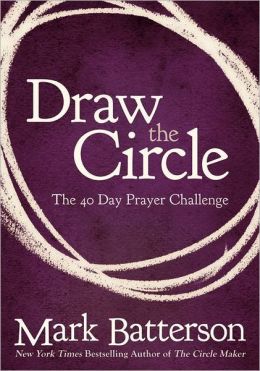
15 Quotes From “Draw The Circle”

Draw The CircleI loved the challenging message about prayer in Draw The Circle by Mark Batterson. You can read my full book review by clicking here. Here are 15 quotes that especially stood out to me.

“You don’t need to seek opportunity. All you have to do is seek God. And if you seek God, opportunity will seek you.”

“Sometimes the purpose of prayer is to get us out of circumstances, but more often than not, the purpose of prayer is to get us through them. I’m certainly not suggesting we shouldn’t pray deliverance prayers, but there are times we need to pray prevailing prayers. …We’re often so anxious to get out of difficult, painful, or challenging situations that we fail to grow through them. We’re so fixated on getting out of them that we don’t get anything out of them. We fail to learn the lessons God is trying to teach us or cultivate the character God is trying to grow in us. We’re so focused on God changing our circumstances that we never allow God to change us! So instead of ten or twenty years of experience, we have one year of experience repeated ten or twenty times. Sometimes we need to pray ‘get me out’ prayers. But sometimes we need to pray ‘get me through’ prayers. And we need the discernment to know when to pray what.”

“After hitting our knees, we need to take a small step of faith. And those small steps of faith often turn into giant leaps. Like Noah, who kept building an ark day after day, we keep hammering away at the dream God has given us. Like the Israelites, who kept circling Jericho for seven days, we keep circling God’s promises. Like Elijah, who kept sending his servant back to look for a rain cloud, we actively and expectantly wait for God’s answer. …We can pray until our knees are numb, but if our praying isn’t accompanied by acting, then we won’t get anywhere. We need to put feet to our faith. After kneeling down, we need to stand up and step out in faith.”

“Maybe our normal is so subnormal that normal seems abnormal. Maybe we need a new normal. Bold prayers and big dreams are normal. Anything less is subnormal.”

“Prayer gives us a God’s-eye view. It heightens our awareness and gives us a sixth sense that enables us to perceive spiritual realities that are beyond our five senses.” 

“Praying is planting. Each prayer is like a seed that gets planted in the ground. It disappears for a season, but it eventually bears fruit that blesses future generations. …Even when we die, our prayers don’t. Each prayer takes on a life, an eternal life, of its own.”

“It’s our childlike faith, not our theological vocabulary, that moves the heart of our Heavenly Father.” 

“Praying hard is not the path of least resistance; it’s usually the path of most resistance because we engage in spiritual warfare. …It’s the prayers you pray when you feel like you want to quit praying that can bring the greatest breakthroughs.”

“Our problem typically isn’t overclaiming the promises of God; it’s underclaiming them.” 

“You’ve got to praise God if the answer is yes and trust Him if the answer if no. If the answer is not yet, you’ve got to keep circling. It’s always too soon to give up! What other option do you have? To pray or not to pray. Those are the only options.”

“Drawing prayer circle isn’t some magic trick to get what you want from God. God is not a genie in a bottle, and your wish is not His command. His command better be your wish. If it’s not, you won’t be drawing prayer circles; you’ll end up walking in circles. …Until His sovereign will becomes your sanctified wish, your prayer life will be unplugged from its power supply.” 

“Sin doesn’t just harden the heart; it also hardens our hearing. In fact, it makes us turn a deaf ear to God because we don’t want to hear the convicting voice of the Holy Spirit. But if you aren’t willing to listen to the convicting voice of the Spirit, you won’t hear His comforting voice, forgiving voice, or merciful voice either. Sin creates relational distance, and distance makes it harder to hear the still, small voice of the Holy Spirit. But if you get close to God, you won’t miss a thing he says. And if you incline your ear to God, God will incline His ear to you.”

“There comes a moment when praying becomes a form of spiritual procrastination. It’s time to stop praying and start acting. …One of the great mistakes we make is asking God to do for us what God wants us to do for Him. …Prayer that doesn’t lead to action isn’t true prayer; it’s self-talk. When we talk to God, God will talk back to us. He will provoke us, rouse us, stir us, goad us, and prompt us. When we say ‘amen,’ inaction is no longer an option.” 

“When God answers a prayer, no matter how big or how small, we need to share it. It’s a stewardship issue. If we don’t turn the answer to prayer into praise, it may very well turn into pride.”

“Our prayers have the potential to write and rewrite history.”

Thursdays With Oswald—The Thinking Of A Christian And An Atheist

This is a weekly series with things I’m reading and pondering from Oswald Chambers. You can read the original seed thought here, or type “Thursdays With Oswald” in the search box to read more entries.

The Thinking Of A Christian And An Atheist 

     All scientific finds have at one time been modern. Science is simply man’s attempt to explain what he knows. …

     I can explain the world outside me by thinking; then if I can explain the world outside me by my mind, there must have been a Mind that made it. That is logical, simple and clear; consequently atheism is what the Bible calls it, the belief of a fool. “The fool has said in his heart, ‘There is no God’” (Psalm 53:1). An atheist is one who says, “I can explain by my mind to a certain extent what things are like outside, but there is not a mind behind that created them.” … 

     We [Christians] have no business to be ignorant about the way God created the world, or to be unable to discern “the arm of the Lord” behind things. …

     If we [Christians] will bring our thinking into captivity to the Holy Spirit, we form what is termed “nous.” Nous is a Greek word meaning responsible intelligence. Whenever we get to this point of responsible intelligence, we have come to a sure line of thinking. Until the nous is formed in natural life and in spiritual life, we get at things by intuition, by impulse, but there is no responsible intelligence. …We have not only to be good lovers of God, but good thinkers, and it is along this line that we can “try the spirits whether they are of God.” 

From Biblical Psychology

Christians—above anyone else—should be first-rate thinkers, because we have a natural mind AND the Holy Spirit. We should constantly study, read, discuss, debate, and meditate to sharpen our thinking. The Holy Spirit will stimulate our thinking along the right lines, but we have to put some thoughts into our minds first!

“We have not only to be good lovers of God, but good thinkers.”

19 Quotes From “Who Do You Think You Are?”

Who Do You Think You AreWho Do You Think You Are? by Mark Driscoll is an insightful journey through the book of Ephesians. You can read my full book review by clicking here. Below are some of the passages that especially stood out to me.

“This world’s fundamental problem is that we don’t understand who we truly are—children of God made in His image—and instead define ourselves by any number of things other than Jesus. Only by knowing our false identity apart from Christ in relation to our true identity in Him can we rightly deal with and overcome the issues in our lives.”

“What you do doesn’t determine who you are. Rather, who you are in Christ determines what you do.”

“Our worship never starts and stops. It’s not limited to a building in which we attend sacred meetings and sing worship songs. Rather, our entire life is devoted to pouring ourselves into someone or something. Saying it another way, we’re ‘unceasing worshippers.’ We aren’t created to worship, but rather we’re created worshipping.”

“While it’s not a sin to plan and strive for a better tomorrow, it is a sin to set one’s joy and identity on who we will be, what we will do, or what we will have tomorrow in our own efforts rather than on Christ today and who He will make us, what He will have us do, and what He will give to us tomorrow.”

“While it’s true that sin has affected the totality of our persons, including our minds, wills, and emotions, we fail to say all that the Bible does regarding our identity when we place undue focus on our depravity as fallen sinners and ignore our dignity as created image bearers and our new identity as redeemed Christian saints. While a non-Christian is totally depraved, a Christian is in Christ.”

“A saint does sin. But a Christian is one who has saint as their constant identity and sinner as their occasional activity. For the Christian, there is a vital difference between having sin and being sin.”

“Sin may explain some of your activity, but it’s not your identity. Your identity is in Christ, and because of your new identity, by God’s grace through the Holy Spirit’s power, you can change your activity. Because you are a new person positionally in Christ, you can live a new life practically by the power of the Holy Spirit. This truth is deeply helpful and vitally practical.”

“Pride is our enemy and humility is our ally. Pride compares us to other sinners; humility compares us to our sinless Savior. Pride covets the success of others; humility celebrates it. Pride is about me; humility is about Jesus and other people. Pride is about my glory; humility is about God’s glory. Pride causes separation from God; humility causes dependence on God. Pride is pregnant with all sins; humility is pregnant with all joys. Pride leads to arrogance; humility leads to confidence. Pride causes me to do things in my own strength; humility compels me to do things in God’s strength. …None of us, with the exception of Jesus Christ, can ever say we’re truly humble. Instead, all we can say is that we’re proud people pursuing humility by the grace of God.”

“In Christ, you’re graced. You’re chosen by grace, saved by grace, kept by grace, gifted by grace, empowered by grace, matured by grace, and sanctified by grace. You persevere by grace, and one day will see Jesus, the best Friend you’ve ever had, face-to-face, by grace.”

“God is as equally glorified when we praise Him for His unmediated grace as when we’re thankful for those through whom He chooses to deliver it. …We’re to thank God for being faithful to His people and to thank His people for being faithful to Him.”

“Before we can understand and embrace our identity in Christ, we must first accept our identity apart from Christ. Becoming a Christian is not merely accepting the truth about Jesus as our Savior. It’s also accepting the truth about ourselves as needy sinners.”

“Because afflictions cost us so much, they are too precious to waste. Though God may not cause your affliction, He can use your affliction for His glory, others’ good, and your growth, if you are in Christ.”

“Our God didn’t suffer so that we wouldn’t suffer. He suffered so that when we do suffer, we can become more like Him and point more people to Him.”

“Too many Christians pit knowledge against experience and the head against the heart. The truth is, both are needed to grasp God’s love. The love of God is what happens when the truth in our heads captivates the affections of our hearts, which spurs us on to grasp the love of God in our lives. …As the love of God increasingly captivates our hearts and we grasp onto his love, we’re changed and become increasingly mature in Christ because our affections determine our actions.”

“Sometimes, Christians shy away from involvement in a local church because they see faults with the church. Ironically, the fact that they see a lack may indicate that there’s a need for them and their gifts. Rather than complaining, it’s better to humbly start serving to meet a church’s needs and invite others to also help.”

“Through the power of the Holy Spirit, God helps us live holy lives and enables us to obey Him. In this way, regeneration is the opposite of religion, which tragically teaches that if you obey God, He will then love you. The exact opposite is true. Regeneration reveals that because God loves us, we can obey Him by the power of the Holy Spirit. You have new power in Christ.”

“Your Father is perfect, loving, gracious, merciful, patient, holy, helpful, and generous. The more you get to know Him through Scripture, prayer, song, service, and time with your brothers and sisters in Christ, the more you will come to love and enjoy Him. Your desires will change from sin to holiness, and you’ll increasingly want to be like your Dad. You’ll love what He loves and hate what He hates.”

“As Christians, our goal is not to merely experience behavior modification by changing how we act and react. Our primary goal is getting to know, love, and trust God as our Father.”

“The last thing the church needs is cowards that treat the Bible like an artifact more fit for a museum than a weapon for the battlefield.”

Thursdays With Oswald—Helping Me Do What God Desires

This is a weekly series with things I’m reading and pondering from Oswald Chambers. You can read the original seed thought here, or type “Thursdays With Oswald” in the search box to read more entries.

Helping Me Do What God Desires

     My spirit has no power in itself to lay hold of God; but when the Spirit of God comes into my spirit, He energizes my spirit, then the rest depends upon me. If I do not obey the Spirit of God and bring into the light the wrong things He reveals and let Him deal with them, I shall grieve Him, and may grieve Him away. 

     …That is a most wonderful thing in Christian psychology, viz., that a saint chooses exactly what God pre-determined he should choose. If you have never received the Spirit of God this will be one of the things which is “foolishness” to you; but if you have received the Spirit and are obeying Him, you find He brings your spirit into complete harmony with God. … 

     When God’s Spirit comes into our spirit, we can will to do what God wants us to do. “For it is God which worketh in you both to will and to do of His good pleasure” (Philippians 2:13). … 

     We cannot give ourselves the Holy Spirit; the Holy Spirit is God Almighty’s gift if we will simply become poor enough to ask for Him. … But when the Holy Spirit has come in, there is something we can do and God cannot do, we can obey Him. If we do not obey Him, we shall grieve Him. “And grieve not the Holy Spirit of God” (Ephesians 4:30). 

From Biblical Psychology

Jesus told us that the Holy Spirit would be our constant Companion in helping us come into one-ness with the Father and Son. The key question is this: Am I obeying the Spirit’s promptings?

I will never progress in my spiritual development unless I am readily obeying what the Spirit is revealing. 

Father, I need your Holy Spirit! As I feel the Spirit working in me, may I never grieve Him, but instead fully deal with whatever He reveals to me.

16 Quotes From “God’s Workmanship”

God's WorkmanshipWhere to start? It’s always hard to share a few quotes from a book that is so rich, but I hope these fews quotes will not diminish the depth of Oswald Chambers’ wisdom. These are just a very few of the outstanding quotes from God’s Workmanship (you can read my full book review by clicking here).

“Whenever I say, ‘I want to reason this thing out before I can trust,’ I will never trust. The reasoning out and the perfection of knowledge come after the response to God has been made.”

“We can never become God’s people by thinking, but we must think as God’s people. … Intellect is meant to be the handmaid of God, not the dictator to God. … We have to work out, not our redemption, but our human appreciation of our redemption. We owe it to God that we refuse to have rusty brains.”

“Separating myself from other people is the greatest means of producing deception because there is nothing to clash against me. Immediately people clash against me I know whether my beautiful thinking really expresses ‘me,’ or is a garment that disguises the real ‘me.’ If my actual life is not in agreement with my thinking the danger is that I exclude myself from actualities which bring home to me the knowledge of what I am, in spite of what I think. ‘I am a Christian worker and must put on this garb!’ That is sanctimonious jargon; the only thing that will hold me right is a personal relationship to Jesus, and that life is essentially simple, there is no break into secular and sacred, the one merges into the other, exactly as it did in the life of our Lord.”

“I want to ask a very personal question—How much do you want to be delivered from? You say, ‘I want to be delivered from wrong-doing’—then you don’t need to come to Jesus Christ. ‘I want to walk in the right way according to the judgment of men’—then you don’t need Jesus Christ. But some heart cries out—‘I want, God knows I want, that Jesus Christ should do in me all He said He would do.’ How many of us ‘want’ like that? God grant that this ‘want’ may increase until it swamps every other desire of heart and life.”

“When you are baptized with the Holy Ghost, there is only One you see, One you love, One you live for from early morning till late at night, One you die for. Every thought is gripped and held enthralled by the Master of human destiny, the Lord Jesus Christ, and the whole life is devoted to Him.”

“All that I want to possess without the power to give, is of the nature of sin. … I cannot rob God of anything, but I rob myself of God every time I stick to what I possess.”

“What kind of attitude have we got toward Jesus Christ? are we dictating to Him in pious phraseology what we intend to let Him do in us, or letting His life be manifested in our mortal flesh as we obey?” 

“‘The Truth’ is our Lord Himself; ‘the whole truth’ is the inspired Scripture interpreting the Truth to us; and ‘nothing but the truth’ is the Holy Spirit, ‘the Spirit of truth,’ efficaciously regenerating and sanctifying us, and guiding us into ‘all the truth.’”

“When I am rightly related to God, the more I love the more blessing does He pour out on other lives. The reward of love is the capacity to pour out more love all the time. … I surrender myself—not because it is bad, self is the best thing I have got, and I give it to God; then self-realization is lost in God-realization.”

“Another demand God makes of His children is that they believe not only that He is not bewildered by the confused hubbub of the nations, but that He is the abiding Factor in the hubbub.”

“God never hears prayer because a man is in earnest; He hears and answers prayer that is on the right platform—we have ‘boldness to enter into the holy place by the blood of Jesus’ (rv), and by no other way. It is not our agony and our distress, but our childlike confidence in God.”

“The evidence of the new creation in me is that I submit to God more and more easily, surrender to Him more and more readily. …God does the supernatural re-creating and the setting free of the will, I have to do the doing.”

“You can only be made a Christian by a miracle, and you can stop at any point you like. ‘I don’t intend to go through this’—and you don’t need to; but it will be a terrific awakening when you see Jesus and realize that you prevented His getting glory in your life.” 

“People say they are tired of life; no man was ever tired of life; the truth is that we are tired of being half dead while we are alive. What we need is to be transfigured by the incoming of a great and new life.”

“Resting in the Lord does not depend upon external circumstances, but on the relationship of the life of God in me to God Himself. Fussing generally ends in sin. We imagine that a little anxiety and worry is an indication of how wise we really are; it may be an indication of how wicked we really are. ‘Come unto Me,’ says Jesus, ‘and I will give you rest.’ Do Jesus Christ’s words apply to me? Does He really know my circumstances? Fretting is sinful if you are a child of God. Get back to God and tell Him with shame that you have been bolstering up that stupid soul of yours with the idea that your circumstances are too much for Him. Ask Him to forgive you and say, ‘Lord, I take Thee into my calculation as the biggest factor NOW!’”

“Have you ever realized that God challenges the saints to a tremendous conflict, the conflict of believing the Gospel in the face of an indifferent world? It is easy to say we believe in God as long as we remain in the little world we choose to live in; but get out into the great world of facts, the noisy world where people are absolutely indifferent to you, where your message is nothing more than a crazy tale belonging to a bygone age, can you believe God there?”

The Contemplative Pastor

Search mePastors can get caught in a rut, just like anyone in any number of other professions. That’s why it’s so vital for us to pause often to make sure we haven’t slipped into something without being aware of its impact.

It is absolutely vital for pastors to have regular quiet time with God. Read the Word, pray, contemplate, read other pastors (especially the “old guys”), pray, and contemplate some more. Let the Holy Spirit point out to you any blind spots.

I’ve been contemplating two quotes from the “old guys” over the last few days.

[1] “We prefer to build up converts to our own point of view.” —Oswald Chambers

I want to make sure I’m always allowing the Holy Spirit to be as unique with others as He is with me. I need to be cautious that I’m not making my practices the universal practices for everyone. I need to give these converts a solid biblical foundation, and then let the Spirit build them up as He knows best.

[2] “Recollect, as ministers, that your whole life, your whole pastoral life especially, will be affected by the vigor of your piety. If your zeal grows dull, you will not pray well in the pulpit; you will pray worse in the family, and worst in the study alone. When your soul becomes lean, your hearers, without knowing how or why, will find that your prayers in public have little savor for them; they will feel your barrenness, perhaps, before you feel it yourself.” —Charles Spurgeon

I need to be a praying pastor. My sermons must be birthed in prayer before I deliver them, and sealed in prayer after I deliver them; my appointments must be covered in prayer; my schedule must be directed by prayer; my relationships must be nurtured through prayer. I must be in prayer continually if I am to be effective at anything.

My fellow pastor, I hope you are taking the time to contemplate: to be quiet as you ponder how the Holy Spirit is speaking to you. It is absolutely vital for the health of the part of the Body of Christ to which we minister.