The Gospels Side-By-Side (book review)

Gospels Side By SideI love reading. But hands-down, without a doubt, my favorite book to read is the Bible. So I’m always intrigued by any resource that can help me get more out of my time in the Scriptures. In The Gospels Side-By-Side by Rose Publishing, I found a goldmine.

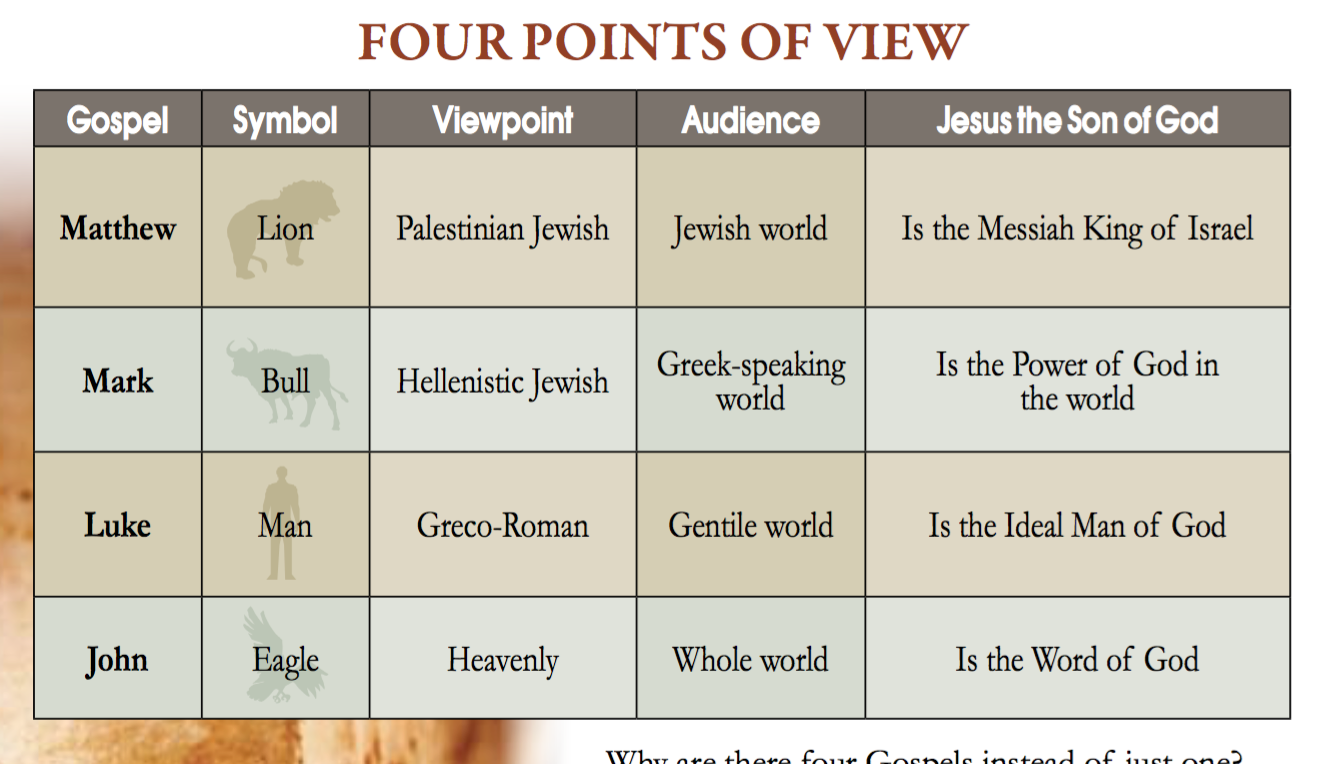
This short pamphlet is chockfull of graphics, charts, maps and historical background information  that helped me see the bigger picture of the story of Jesus that the Gospel writers were conveying to us. It begins with the unique perspective of each Gospel writer, and launches us deeper into the Bible from there.

In this book you will see things like:

  • The events of Christ’s life, and which Gospel tells particular events
  • The miracles of Jesus
  • The parables of Jesus
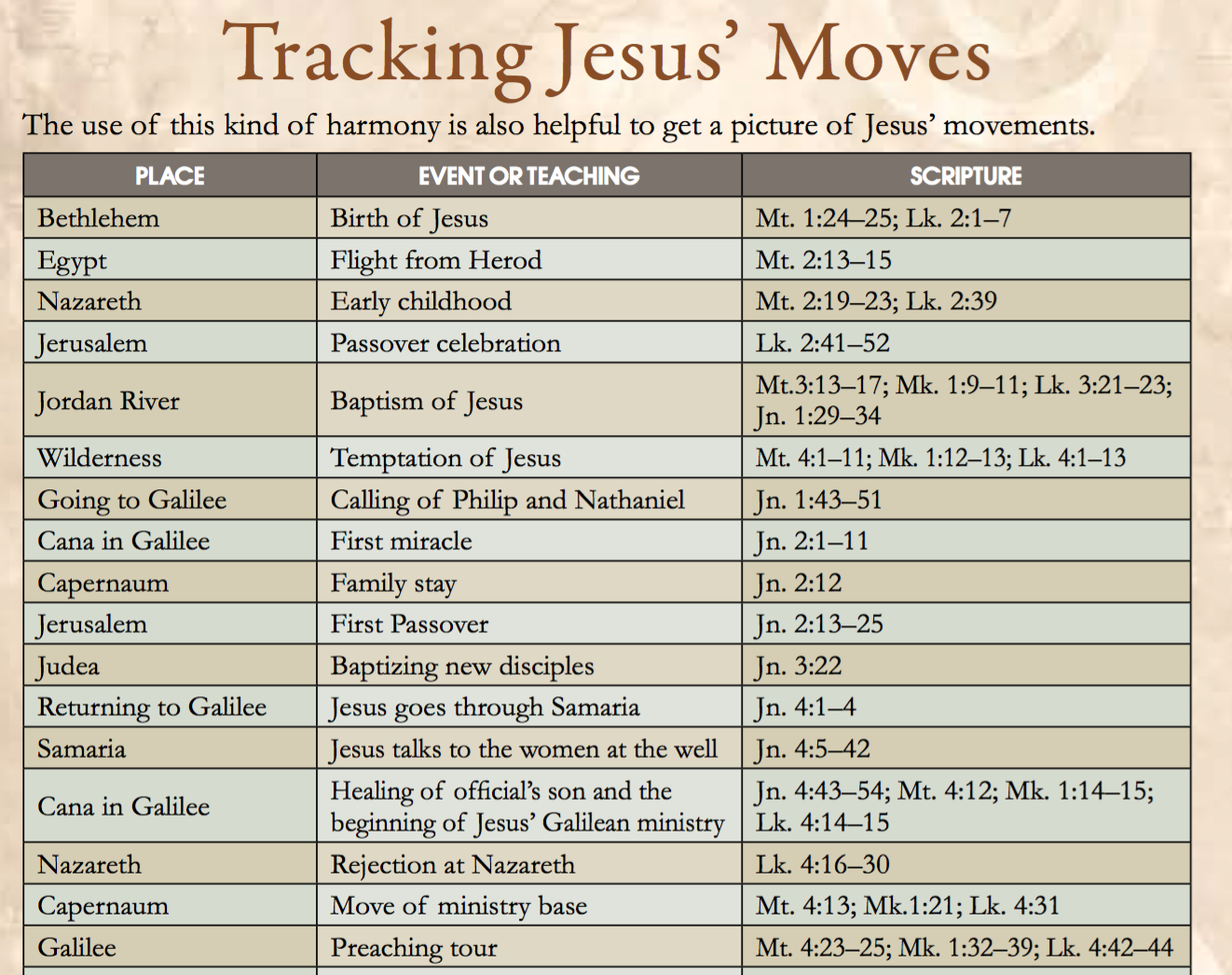
  • The chronological movements of Jesus
  • How Jesus celebrated Passovers during His public ministry
  • How these biblical biographies compare to other biographies of the era
  • Even the historical harmony of the Gospel message in the post-apostolic age

This should bring new life to any Bible student’s reading time! I highly recommend you check out not only this pamphlet, but many of the other resources available at Rose Publishing.

Here are a couple of screenshots from the book…


Screen Shot -Christ's movesScreenshot - gospel writers

Dr. Martin Luther King On Abortion

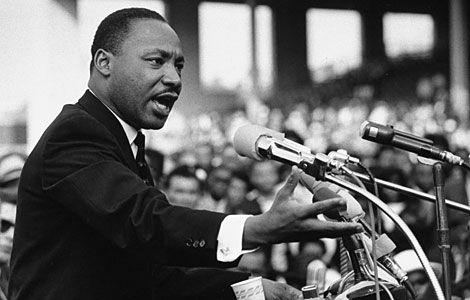
Dr. Martin Luther King Jr.In preparing for a recent book review, I re-read Dr. Martin Luther King’s amazing Letter From A Birmingham Jail. Dr. King was addressing some pastors who had advised him to slow down in his push to abolish segregation.

I believe there are some amazing parallels to what Dr. King wrote about abolishing segregation, and what many are writing and speaking about today in abolishing abortion.

Below are a few quotes from Dr. King’s Letter that I think are appropriate in the context of calling the church to not slow down in her push to abolish abortion. Just as Dr. King spoke up for the people whose voices were not being heard, we need to speak up for those children in the womb whose voices are not being heard.

I have taken the liberty to make a couple of changes in Dr. King’s original letter, to clarify how I believe he would have addressed the abortion issue. My changes are in brackets.

“You express a great deal of anxiety over our willingness to break laws. This is certainly a legitimate concern. Since [many] so diligently urge people to obey the Supreme Court’s decision of [1973 ‘legalizing’ abortion], at first glance it may seem rather paradoxical for us consciously to break laws. One may well ask: ‘How can you advocate breaking some laws and obeying others?’ The answer lies in the fact that there are two types of laws: just and unjust. I would be the first to advocate obeying just laws. One has not only a legal but a moral responsibility to obey just laws. Conversely, one has a moral responsibility to disobey unjust laws. I would agree with St. Augustine that ‘an unjust law is no law at all.’ 

“Now, what is the difference between the two? How does one determine whether a law is just or unjust? A just law is a man-made code that squares with the moral law or the law of God. An unjust law is a code that is out of harmony with the moral law. To put it in the terms of St. Thomas Aquinas: An unjust law is a human law that is not rooted in eternal law and natural law. Any law that uplifts human personality is just. Any law that degrades the human personality is unjust. All [abortion] statutes are unjust because [abortion kills an unborn] soul and [destroys a] personality. It gives the [abortionist and those who advocate for abortion] a false sense of superiority and the [aborted human baby] a false sense of inferiority. … 

“An unjust law is a code that a numerical or power majority group compels a minority group to obey but does not make binding on itself. This is a difference made legal. By the same token, a just law is a code that a majority compels a minority to follow and that it is willing to follow itself. This is sameness made it legal. Let me give another explanation. A law is unjust if it is inflicted on a minority that, as a result of being denied the right to [live], had no part in enacting or devising the law. …

“One who breaks an unjust law must do so openly, lovingly, and with a willingness to accept the penalty. I submit that an individual who breaks a law that conscience tells him is unjust, and who willingly accepts the penalty of imprisonment in order to arouse the conscience of the community over its injustice, is in reality expressing the highest respect for law.” 

“We will have to repent in this generation not merely for the [murder of innocent human beings] but for the appalling silence of the good people. Human progress never rolls in on wheels of inevitability; it comes through the tireless efforts of men willing to be co-workers with God, and without this hard work, time itself becomes an ally of the forces of social stagnation. We must use time creatively, in the knowledge that the time is always ripe to do right.” 

“So the question is not whether we will be extremists, but what kind of extremists we will be. Will we be extremist for hate or for love? Will we be extremist for the preservation of [abortion laws] or for the [saving] of [life]?” 

“I have heard many ministers say: ‘Those are social issues, with which the gospel has no real concern.’ And I have watched many churches commit themselves to a completely other-worldly religion which makes a strange, un-Biblical distinction between body and soul, between the sacred and secular.” 

“Yes, I see the church as the body of Christ. But, oh! how we have blemished and scarred that body through social neglect and through fear of being nonconformists.” 

“There was a time when the church was very powerful—in that time when the early Christians rejoiced at being deemed worthy to suffer for what they believed. In those days the church was not merely a thermometer that recorded the ideas and principles of popular opinion; it was a thermostat that transformed the mores of society. Whenever the early Christians entered a town, the people in power became disturbed and immediately sought to convict the Christians for being ‘disturbers of the peace’ and ‘outside agitators.’ But the Christians pressed on, in the conviction that they were ‘a colony of heaven,’ called to obey God rather than man. Small in number, they were big in commitment. They were too God intoxicated to be ‘astronomically intimidated.’ By their effort and example they brought an end to such ancient evils as infanticide and gladiatorial contests. 

“Things are different now. So often the contemporary church is a weak, ineffectual voice with an uncertain sound. So often it is an arch-defender of the status quo. Far from being disturbed by the presence of the church, the power structure of the average community is consoled by the church’s silent—and often even the vocal—sanction of things as they are.

“But the judgment of God is upon the church as never before. If today’s church does not recapture the sacrificial spirit of the early church, it will lose its authenticity, forfeit the loyalty of millions, and be dismissed as an irrelevant social club with no meaning for the [twenty-first] century.” 

“Over the past few years I have consistently preached that nonviolence demands that the means we use must be as pure as the ends we seek. I have tried to make clear that it is wrong to use immoral means to attain moral ends. But now I must affirm that it is just as wrong, or perhaps even more so, to use moral means to preserve immoral ends.”

10 Quotes From “Letters To A Birmingham Jail”

Letters To A Birmingham JailIn Letters To A Birmingham Jail, it was very eye-opening to read how modern-day clergy respond to Dr. Martin Luther King’s 50-year-old “Letter From A Birmingham Jail.” What an innovative book! Check out my review of this book by clicking here, and then enjoy a few quotes.

“Our nation is losing a sense of gratitude for the abundance and great bounty that God has bestowed upon us. In America we have witnessed the god of materialism sink his teeth into the fabric of the human soul. He has unleashed a spirit of rugged individualism, fueled by selfish greed. This has become normalized behavior that discourages a care for the other, and especially for the poor. The hope for America is that we will see our responsibility to care for the least among us in recognition of the truth that every person is created in the very image of God.” —John Perkins

“God-centered, Christ-exalting, Bible-saturated churches where the gospel is cherished—these are the birthplace of the kind of racial harmony that gives long-term glory to God and long-term gospel good to the world.” —John Piper

“Some may have quoted, ‘Wait for the Lord; be strong, and let your heart take courage; wait for the Lord!’ (Psalm 27:14). But this call to wait for the Lord never meant stop doing what He commanded us to do in the pursuit of holy goals. Waiting for the Lord means our action is essential, but His is decisive. The farmer must wait for the harvest. But no one works harder than the farmer.” —John Piper

“Now, to be sure the Bible teaches that the government does exist for the well-being of the people; but too many Christians got lock-jaw, saying very little or nothing when in fact the country needed the engagement of the church and a word from God. Silence and business as usual did severe damage to our prophetic integrity. We’ve made progress but our efforts are still woefully inadequate.” —Crawford W. Loritts, Jr.

“I believe from Genesis to Revelation that God is the God of all nations and all peoples. He created all things, including all peoples, all people groups, all races, and all skin colors. From the beginning of the Bible to the end of the Bible, you see God redeeming all people to Himself. John 3:16 tells us God sent Jesus because ‘God so loved the world.’ The Acts of the Apostles tells the story of the earliest church plants. The gospel-dominated people of Matthew, Mark, Luke, and John spilled over into the launching of gospel communities, or church plants in Acts. Racial and cultural issues surfaced almost immediately. Jesus had actually been the One to begin stirring the pot in His ministry as He intentionally went to Samaria, and did all sorts of things with and for Gentiles that Jewish men were not supposed to do.” —John Bryson

“If the torrential force of the first church as found in the book of Acts is to become our twenty-first-century reality, then the faces of most of our churches must look like the faces of the first-century church: multiethnic.” —Bryan Loritts

“If folks feel that this kind of ‘affirmative action’ equals ‘reverse discrimination,’ we can gently lead them to the apostolic solution to the racial controversy in Acts 6:1-7, where the men appointed to resolve a serious ethnic crisis all appear to be from the minority Hellenistic population! It’s called Christian wisdom.” —Sandy Willson

“The mission of the church, the pursuit of the legacy of Christ, cannot simply be about business and culture as usual. If we allow it to be so simple, we will soon find ourselves in the trap the disciples are caught in as they begin to walk around Samaria out of habit, only to notice that Jesus is going a different way. How often this conflict arises when we attempt to follow Jesus! We set out with the best of intentions, and soon find ourselves not following Him but expecting Him to follow us. The sin in us longs to travel only the road that offers comfort and familiarity. Yet Jesus unapologetically walks the more challenging road, inviting us to witness what He will do if we choose to follow.” —Albert Tate

“Diversity is an implication and hope fueled by the gospel, but it is not the good news. Yet, while the gospel and diversity are not equal ideas, diversity is nevertheless an issue that we are weak in and need to grow in—an issue that requires much time, energy, and prayer.” —Matt Chandler

“Producing homogenous churches can be done with relative ease and a total lack of dependence on the Spirit.” —Matt Chandler

Letters To A Birmingham Jail (book review)

Letters To A Birmingham JailIt’s been fifty years since Dr. Martin Luther King wrote his amazing Letter From A Birmingham Jail. His letter was written in response to some clergy who had exhorted Dr. King to slow down a bit in his drive to abolish segregation. Now, fifty years later, some of our notable clergy members are responding to Dr. King in Letters To A Birmingham Jail.

Ten different clergymen—from different races, ages, and parts of the country—all responded to Dr. King’s seminal letter with gratitude, passion, and a unified voice for the twenty-first century church. Gratitude for Dr. King’s tireless trailblazing work, and for the indelible mark he made on each author’s life; passion for the church to rise up and fulfill its calling as a symbol of God’s picture of racial reconciliation in the world; and a united voice calling all Christians to follow in Dr. King’s footsteps, making the church look more like Heaven.

As a student of both history, leadership, and the church, Letters To A Birmingham Jail hit on multiple fronts for me. In the case of two of the authors, I got to witness Dr. King’s impact on both a father and son. In all the authors, I could see what a passionate, persuasive leader can do to change the attitudes and paradigm of an entire nation. Now, listening to these impactful church leaders calling us to fulfill the mandate of Jesus to evangelize “all nations,” I can see principles I can apply to my life, my community, and my church.

We owe a huge “thank you” to Bryan Loritts for dreaming up this book idea and pulling together such passionate and articulate voices from across our nation, to sound a unified and clear call to all Christians. I am confident that any one who desires to see the Church return to its apostolic roots will enjoy reading this book.

I am a Moody Press book reviewer.

40 Questions About Your Religion

The Mathematical Proof For ChristianityDan Delzell wrote a very thought-provoking book—The Mathematical Proof For Christianity—which gives skeptics a lot of evidence to contemplate. As I said in my review of this book (which you can read here), this is a good book for Christians to read with a skeptic as a great conversation-starter about the Christian faith.

Dan also presented this list…

“The true religion is a match to all 40 questions:

  1. Which religion was started by a prophet who never did anything wrong?
  2. Which religion produces scores of people who speak out against injustice and work hard to correct it?
  3. Which religion fulfills hundreds of prophecies that were written down hundreds of years before the prophet fulfilled them?
  4. Which religion produces followers who have established thousands of hospitals, orphanages, and homeless shelters?
  5. Which religion, when practiced correctly, empowers followers to turn the other cheek when being mistreated?
  6. Which religion began with a leader who died, but then came back to life?
  7. Which religion, when practiced correctly, produces followers who do not judge others or look down on them?
  8. Which religion produces a tender love for God in heaven, rather than lingering fear and trepidation?
  9. Which religion do people turn to in tough times and when disaster strikes?
  10. Which religion has done the most to advance the rights of women?
  11. Which religion details historic events that are supported by plenty of archeological evidence?
  12. Which religion is based upon documents that are better preserved and more numerous than any other ancient writings?
  13. Which religion began with a prophet who is loved and even worshipped by millions of followers?
  14. Which religion has been around for thousands of years and continues to expand around the world?
  15. Which religion teaches that eternal life in paradise is a free gift through faith in its prophet?
  16. Which religion has millions of followers who experience tremendous peace as a result of their prophet?
  17. Which religion, when practiced correctly, produces followers who are quick to forgive rather than to seek vengeance?
  18. Which religion offers the forgiveness of sins based solely on the goodness and sacrifice of the prophet?
  19. Which religion, when practiced correctly, produces genuine humility before God and man?
  20. Which religion teaches that you cannot earn your way to heaven?
  21. Which religion produces men and women of justice who speak out when others are committing atrocities?
  22. Which religion, when practiced correctly, lines up with the humble and compassionate attributes of the prophet?
  23. Which religion seeks to bring help to the hurting, comfort to the sorrowful, and encouragement to the downcast?
  24. Which religion, when practiced correctly, produces genuine love, joy, peace, and patience?
  25. Which religion requires divine revelation in order to understand it?
  26. Which religion rules not by force, but by love, as demonstrated by the prophet?
  27. Which religion has produced the most freedom of religion in the world?
  28. Which religion turns man’s body into a temple where the Spirit of God comes to reside?
  29. Which religion, when practiced correctly, has done the most to advance the rights of minorities?
  30. Which religion gives followers the grace to say ‘no’ to ungodly passions?
  31. Which religion produces people who long to improve the lives of those from other religions?
  32. Which religion cares as much for the unborn and elderly as it done for the youthful and strong?
  33. Which religion has done more than any other to help turn communities into places of freedom and safety for all?
  34. Which religion provides a personal assurance of salvation based solely on the sacrifice of the prophet?
  35. Which religion has a prophet whose name is used by many as a curse word?
  36. Which religion, when practiced correctly, produces followers who focus on their own sins rather than the sins of others?
  37. Which religion can turn a terrorist into a loving peacemaker?
  38. Which religion teaches that your works become ‘good’ in God’s eyes only after you accept the prophet through faith?
  39. Which religion will you wish you had followed on Judgment Day?
  40. Which religion is the answer to all 40 questions?”

To read some of the other quotes I shared from this book, please click here.

4 Quotes On Selfless Sacrifice From “The Seven Laws Of Love”

The Seven Laws Of LoveIn The Seven Laws Of Love, Dave Willis gives us some highly practical, biblically-based counsel for investing in all of our relationships. Normally when I share quotes from books, I share all of them at once, but for this book I felt like it would be good to share these quotes a bit more slowly, to give you time to read them and apply them.

The seven laws Dave identifies are:

  1. Love requires commitment (read the quotes here)
  2. Love selflessly sacrifices
  3. Love speaks truth
  4. Love conquers fear
  5. Love offers grace
  6. Love brings healing
  7. Love lives forever

From law #2, here are some quotes on selfless sacrifice—

“That’s the beautiful irony of love. The only way we can truly keep it is to give it away.”

“First Lieutenant Alonzo Cushing was a twenty-two-year-old officer in the Union Army during the Civil War when he made the ultimate sacrifice. The young West Point graduate was in charge of six cannons and more than one hundred men during the Battle of Gettysburg. His small force found itself trapped in the middle of the battlefield during the Confederate Army’s infamous assault known as Pickett’s Charge. The full force of the rebels was closing in on Cushing and his men. The young officer had already been shot twice and was critically wounded. He had every right to retreat to safety, but he recognized the magnitude of the moment. Instead, he ordered the cannons moved to the front lines, and he limped forward to lead a counterattack. His courage and tenacity inspired the men around him, and they fought back valiantly before Cushing was shot again. The final shot proved to be fatal. The sacrifice of one young man turned the tide of a battle, which turned the tide of war, which ultimately held a nation together.”

“We don’t make our sacrifices for recognition; we make our sacrifices for love. When love moves you to sacrifice, you can rest assured that lives will be changed and eternity will be impacted.”

“Many people believe they have put their faith in Jesus, but they also believe they have to earn what He did for them on the Cross. Here’s the good news: when Jesus was hanging on that Cross, dying to save you, He did not use His dying words to say, ‘Earn this.’ Do you know what He said instead? He said, ‘It is finished!’ Did you catch that? It is finished. That means done, complete, sealed, finished! That’s God’s gift of grace. Jesus has done all the work already. You couldn’t possibly earn it even if you tried with everything you had, and God never expected you to.”

Check out my review of The Seven Laws Of Love by clicking here.

Watch for more quotes from the other laws of love explained in this book throughout the next few days.

11 Quotes From “Answering Jihad”

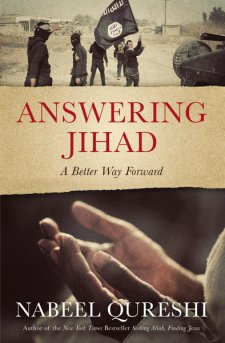
Answering JihadAnswering Jihad by Nabeel Qureshi is an excellent resource to get clarity on all of the terms floating around about Islam, Muslims, and the use of jihad. You can read my full book review by clicking here.

Below are the first set of quotes from this book that I’d like to share with you. Unless otherwise noted, all the quotes are from Nabeel Qureshi.

“There is a great deal of violence in Islam, even in the very foundations of the faith, and it is not all defensive. Quite to the contrary, if the traditions about the prophet of Islam are in any way reliable, then Islam glorifies violent jihad arguably more than any other action a Muslim can take.”

“As Islam is practiced in a way that calls Muslims to return to its foundations, violence will follow.”

“Islam is not Muslims, and Muslims are not Islam. Though Muslims are adherents of Islam, and Islam is the worldview of Muslims, the two are not the same, as many uncritically believe. … Islam is not Muslims, and one can criticize Islam while affirming and loving Muslims.” 

“Islam was first called ‘the religion of peace’ as late as 1930, and the title of a book published In India. … The phrase was slow to take off, but by the 1970s it was appearing more and more frequently in the writings of Muslims for western audiences.” —Mark Durie, a research scholar of linguistics and Islam at Melbourne School of Theology, in an article for the Independent Journal

“The Quran never says, ‘Islam is the religion of peace,’ nor do the traditions of Muhammad.”

“To contend that the word Islam signifies peace in the absence of violence is incorrect. Islam signifies a peace after violence, or under the threat of it. According to Islamic tradition, that is how Muhammad himself used the word. His warning to neighboring tribes is famous: Aslim taslam, ‘If you surrender, you will have peace.’ It was a play on words, as aslim also connotes becoming Muslim: ‘If you convert, you will have safety through surrender.’”

“The vast majority of Muslims inherit their understanding of Islam and have not investigated the foundations of Islam for themselves. If they were raised in the West and taught that Islam is the religion of peace, as I was, then their first foray into the foundations might be somewhat of a shock, and they will probably soon find themselves either in a defensive position or grappling with significant cognitive dissonance.”

“Since there are thousands of verses in the Quran and hundreds of thousands of hadith, it is expected that only trained Muslim jurists can engage in determining what sharia teachers. The jurist must give primacy to the Quran, then consider the actions (sunnah) and sayings (hadith) of Muhammad, followed by reviewing the consensus of Islamic scholars, or ijma, before using his own reasoning (qiyas). By following these four steps, a Muslim jurist can make a decision, or fatwa, about what sharia teaches on a given matter. The ultimate goal is to apply the teachings of sharia to Muslim life, and that is called fiqh.”

“As is probably clear by now, at no point was the average Muslim expected to read the Quran to decide upon correct Islamic practices by himself or herself. Not only is Islam not a faith that upholds the sufficiency of scripture alone, the complexity of its foundations virtually necessitates a reliance on jurists and scholars for proper practice.”

“Islam was not in fact ‘spread by the sword’—conversion was not forced on the occupants of conquered territories—but the conquests created the necessary preconditions for the spread of Islam. With only a few exceptions… Islam has become the majority faith only in territories that were conquered by force. Thus, the conquests and the doctrine that motivated these conquests—jihad—were crucial to the development of Islam.” —David Cook

“I ask your pardon, but I really do feel that the Christian teaching of loving one’s enemies, even in the face of death, might perhaps be the most powerful answer to jihad at our disposal today. Not only does it allow us to counter jihad, it also enables us to treat Muslims with the utmost dignity: as image bearers of God.” 

Stay tuned for more quotes from Answering Jihad

Answering Jihad (book review)

Answering JihadMilitant Islam … Jihad … Religion of peace … ISIS … Islamic terrorism. These phrases dominate the news stories and the water-cooler conversations, but do we really know what they mean? Nabeel Qureshi does. He was born to devout Muslim parents, trained in the Quran, and ready to follow in his parents’ footsteps. But along the way, Nabeel became a Christian. Knowing both the Muslim and Christian angles of these topics, Dr. Qureshi can capably help us Westerners in Answering Jihad.

(By the way, if you haven’t read Nabeel’s account of how he became a Christian, you really should read Seeking Allah, Finding Jesus.)

Answering Jihad is presented to us in the form of answers to 18 of the most-asked questions about how jihad is really perceived in the Muslim community. As he did in his biography, Nabeel presents this information in a way Western minds can grasp. He introduces key points of history that surround Muhammed, explains Islamic terms, and quotes relevant passages from the Quran and other Muslim scholars. I think you will find, as I did, so much more clarity than the sound bytes thrown around on news sources and on social media.

Nabeel concludes his book by telling us that there is a better way forward than the “either-or” extremes that are usually proposed. He explains it this way—

“If we avoid the truth about jihad, we leave the door open for innocent people to be killed in attacks like Paris and San Bernardino. If we lack compassion, we close the door to innocent people who need refuge from places like Syria and Somalia. … Even though Muslims are often raised with the teaching that ‘Islam is the religion of peace,’ when they study the texts for themselves, they are faced with the reality that Mohammed and the Quran call for jihad. They will stand at the crossroads for only so long before they choose what path they will take—apostasy, apathy, or radicalization. As Muslims make that choice, it would benefit the whole world if they did not make it alone, or worse, with radical recruiters. We need to show compassion for Muslims and befriend them.”

Well said! And with the information in Answering Jihad, you can be ready to befriend your Muslim neighbors on their journey.

I am a Zondervan book reviewer.

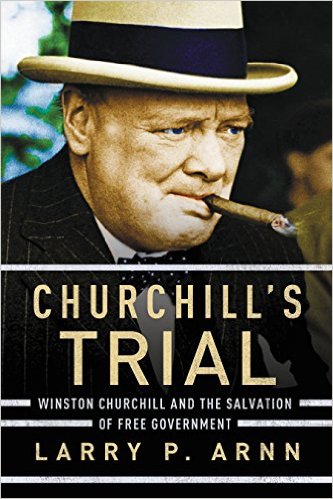
Churchill’s Trial (book review)

Churchill's TrialI have read so much written by and about Winston Churchill, that it’s hard to imagine learning something new about this remarkable man. And yet, I was amazed at how much more I learned in reading Churchill’s Trial by Larry Arnn.

It’s easy to take for granted the freedoms people have in countries like England and the United States because of the foresight of the framers of our Constitutions. But there are trials which put these freedoms in a precarious place, and if it were not for strong and insightful men—like Winston Churchill—those freedoms could have disappeared.

Churchill played key roles in his country, and in world politics, through two world wars, a global depression, the coming of age of new military super-powers, the dawn of the era of atomic warfare, and the rise of Communism. In all of these intense events, the temptation was there to make radical changes to meet the challenge of the moment. Churchill had the wisdom and foresight to leverage the strength of his country’s Constitution, without undermining it nor setting a precedent which would erode future freedoms.

In what Churchill did for England, he also helped strength the resolve of key leaders in the United States, who faced similar challenges in a shifting geopolitical climate. Churchill not only saved the world from the spread of fascism and communism, but he did so in a way that would guarantee freedom for millions of people in generations to follow. The question before us now is: Will we learn from Churchill’s example, or will we fail the trial we now face?

For history buffs, political junkies, and fans of Winston Churchill, Churchill’s Trial is an excellent read.

I am a Thomas Nelson book reviewer.

3 Possibilities For An Empty Tomb

3 possibilitiesLast week we explored the validity of the evidence for the accuracy of the biblical accounts for the life of Jesus (you can check that out here). You might be one who says, “Okay, I think Jesus was a good Man, but I think it’s a bit of a stretch to believe that anyone could be raised from the dead after three days.” I think that’s a reasonable thing to explore…

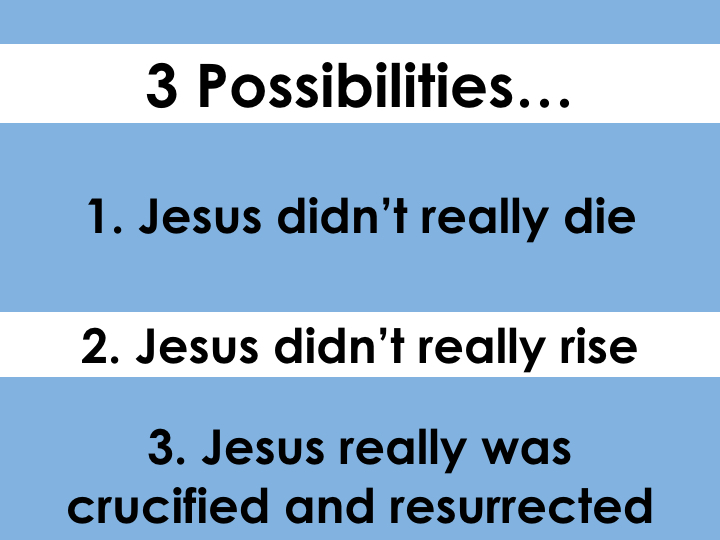
If the tomb where Jesus was placed is really empty, then there are only three possibilities for us to consider.

(1) Jesus didn’t really die.

  • It’s hard to imagine anyone could go through the intense torture Jesus did prior to His crucifixion unscathed.
  • The crucifixion process itself is one of the most gruesome forms of execution man has ever invented.
  • As a result, forensic science shows that Jesus most likely died of a heart attack. The mention in John 19:34 of the blood and water that flowed from Christ’s body is an indication of the cardiac distress His body experienced.
  • Men who were followers of Jesus handled His dead body, and undoubtedly would have checked for any signs life (John 19:38-40).
  • A Roman centurion reported to the Roman governor Pilate that Jesus had in fact died (Mark 15:43-45).
  • Extra-biblical historians, many of whom were unfriendly to Jews and Christians, reported Christ’s death as an historical fact.

(2) Jesus didn’t really rise.

  • Some have claimed that Christ’s followers “saw” Jesus only in a grief-induced hallucination. The problem is, Jesus appeared to individuals, small groups, and large groups multiple times and in multiple settings over the course of 40 days (1 Corinthians 15:3-8).
  • At least one of Christ’s closest followers said he wouldn’t be convinced by verbal testimony alone, but needed to touch Christ’s body for Himself (John 20:24-28).
  • The disciples were afraid and lacked any military training that would have allowed them to get past the trained soldiers guarding the tomb (Matthew 27:62-66; 28:11-15).

(3) Jesus really did die on a Cross and was raised back to life.

Arthur Conan Doyle’s Sherlock Holmes rightly said, “When you have eliminated the impossible, whatever remains, however improbable, must be the truth.”

Real-life cold-case detective J. Warner Wallace explains how detectives use abductive reasoning to examine all of the evidence and infer to the most reasonable explanation from that. As a result, Detective Wallace says about this third explanation:

“The last explanation (although it is a miraculous, supernatural explanation) suffers from the least number of liabilities and deficiencies. If we simply enter into the investigation without a pre-existing bias against anything supernatural, the final explanation accounts for all of the evidence without any difficulty. The final explanation accounts for the evidence most simply and most exhaustively, and it is logically consistent…. The final explanation is also superior to all other accounts (given that it does not suffer from all the problems we see with the other explanations).” —J. Warner Wallace, Alive

The truth is Jesus loved you so much that He had to die for you. He had to pay the penalty for your sins. And God loved His Son so much, that He raised Him back to life. Jesus can live in you now, and you can live with Him forever, if you will simply believe what He did for you on Calvary.

Jesus left an empty tomb behind to show how powerful His love and life is!