Poetry Saturday—When The Winds Are Raging

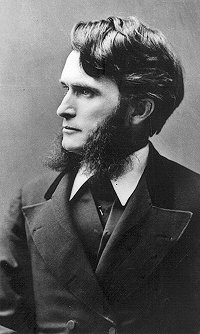
harriet-beecher-stoweWhen winds are raging o’er the upper ocean,
And billows wild contend with angry roar,
‘Tis said, far down beneath the wild commotion,
That peaceful stillness reigneth evermore.
Far, far beneath, the noise of tempest dieth,
And silver waves chime ever peacefully,
And no rude storm, how fierce soe’er it flieth,
Disturbs the Sabbath of that deeper sea.
So to the heart that knows Thy love, O Purest,
There is a temple sacred evermore,
And all the babble of life’s angry voices
Dies in hushed silence at its peaceful door.
Far, far away, the roar of passion dieth,
And loving thoughts rise calm and peacefully,
And no rude storm, how fierce soe’er it flieth,
Disturbs the soul that dwells, O Lord, in Thee. —Harriet Beecher Stowe

Poetry Saturday—Lean Hard

jeremiah-eames-rankin“Child of My love, lean hard,
And let Me feel the pressure of thy care;
I know thy burden, child. I shaped it;
Poised it in Mine Own hand; made no proportion
In its weight to thine unaided strength,
For even as I laid it on, I said,
‘I shall be near, and while she leans on Me,
This burden shall be Mine, not hers;
So shall I keep My child within the circling arms
Of My Own love.’ 
Here lay it down, nor fear
To impose it on a shoulder which upholds the government of worlds.
Yet closer come: Thou art not near enough.
I would embrace thy care;
So I might feel My child reposing on My breast.
Thou lovest Me? I knew it.
Doubt not then;
But Loving Me, lean hard.” —Jeremiah Eames Rankin

10 More Quotes From “The Beauty Of Intolerance”

Beauty Of IntoleranceI found Josh and Sean McDowell’s book The Beauty Of Intolerance to be such a timely book! Parents, teachers, pastors, and anyone who works with youth should definitely read this book to help navigate through the tolerance-saturated world we live in. You can check out my review of this book by clicking here.

“God gave Moses pages and pages of highly specific rules to govern the relationships and morality of His people. Each of those rules, which we call precepts, applies to a specific situation. But each is important because it is grounded in a principle, which is a fundamental, primary law from which other laws—the precepts—are derived. Each principle, in turn, is grounded in a Person—in the very character of God Himself. … God is not behind the principles and precepts simply to validate the rules; He is there as a Person for the purpose of relationship.”

“When moral truth becomes a matter of opinion, personal preference, or the individual’s views and feelings, then practically anything goes. … In a culture of tolerance where the individual decides morality, morality has no bounds.”

“An entire generation tends to go to the Bible not to discover the truth and bend their lives to it accordingly but to use it as sort of a self-help book to help them form their own version of what’s true and false, good and evil, right and wrong.”

“When you discuss the Bible, do not refer to it simply as a spiritual book that teaches us how to live, but as a road map leading one toward the discovery of true reality. … The one true God’s communication to humanity and the whole of Christianity as a religion is based on three primary realities supported by evidences: (1) The historic reliability of Scripture; (2) The deity of Christ; and (3) Christ’s bodily resurrection.”

“While we all may have a sense of what is evil and what is good, under the philosophy of cultural tolerance, evil and good can only be relative ideals. Without an objective truth—a set of universal moral values—good and evil are defined by the individual, community, or society. Therefore we have no moral basis by which to judge another person, community, or nation for what they do or don’t do.”

“Unless justice is rooted in a moral authority beyond those with the most power or even with the most votes, there cannot be true justice for all. … Justice, charity, and human rights are grounded in the fact that we are created in God’s image with value, dignity, and worth. … God’s mercy and justice as our model has fostered societal justice and provided more positive contributions to society in general than any other force in history.”

“The intolerance of the early Christians was a beautiful thing. They believed that everyone—including the poor, the homeless, the handicapped, the sick—was made in the image of God with dignity and worth. They were utterly intolerant of injustice, and they did whatever they could to correct the injustices they saw in society.”

“Real love—biblical, Godlike love—exposes cultural tolerance as the counterfeit of love because cultural tolerance fails to point people to a universal standard of morality designed to save them from serious harm. Cultural tolerance does not address what is in the best interest of a person—it possesses no moral standard that aligns to what is universally right and good. Real love, on the other hand, looks out for the best interest of others.”

“Every truth, every rule, and every guideline coming from God’s Word is issued from the loving heart and character of God for our own good.”

“Love is making the security, happiness, and welfare of another person as important as your own. Biblical love is not merely focused on another but on the good of another, even if the other does not recognize or accept the reality of the good.”

To read the first set of quotes I shared from The Beauty Of Intolerance, please click here. And be sure to follow me on Twitter and Tumblr to read more quotes from this book, and from lots of other profound thinkers, that I share daily.

Spurgeon: Rain Without Clouds?

C.H. Spurgeon“How can we have rain without clouds? Our troubles have always brought us blessings, and they always will. They are the dark chariots of bright grace. These clouds will empty themselves before long, and every tender herb will be gladder for the shower. Our God may drench us with grief, but He will refresh us with mercy. Our Lord’s love-letters often come to us in black-edged envelopes. His wagons rumble, but they are loaded with benefits. His rod blossoms with sweet flowers and nourishing fruits. Let us not worry about the clouds, but sing because May flowers are brought to us through the April clouds and showers.

“O Lord, the clouds are the dust of Thy feet! How near Thou art in the cloudy and dark day! Love beholds Thee, and is glad. Faith sees the clouds emptying themselves and making the little hills rejoice on every side.” —Charles Spurgeon (emphasis added)

Ken Blanchard & Phil Hodges On Forgiveness

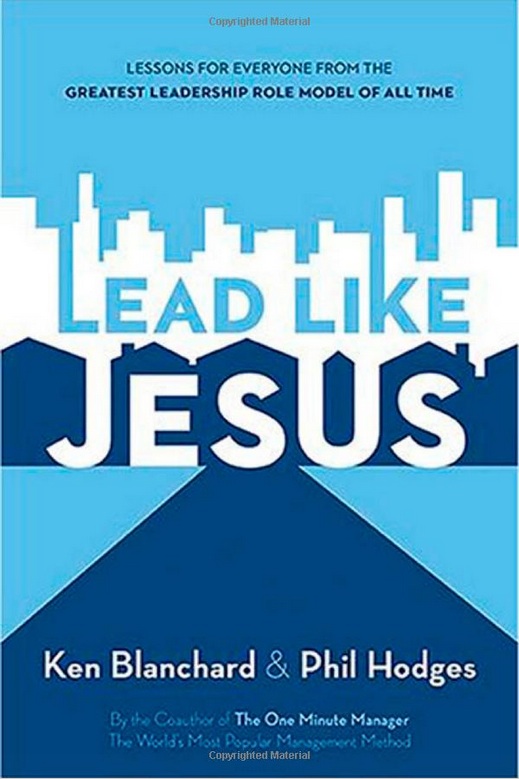
lead-like-jesus“Forgiveness is the way for a heart grounded in the unconditional love of God to respond to the imperfections of others. … EGO-driven leaders, impatient for results, are quick to judge and discount less-than-perfect efforts as failure rather than to forgive and redirect. Forgiveness is a supernatural act, not a natural response to being hurt or let down. It is an act of the will, a choice, of one who has surrendered control to a higher court of judgment. …

“The opposite of forgiveness is judgment. Your motivation for doing something is as important as what you do. In theological terms, judgment is pointing out a fault with a view to condemnation. On the other hand, discernment is pointing out a fault with a view to correction or restoration. When we withhold forgiveness, is it because we are sincerely trying to correct or restore—or is it because there is some benefit to us in condemning?” —Ken Blanchard & Phil Hodges

7 Quotes From “The Beauty Of Intolerance”

Beauty Of IntoleranceTolerance and intolerance are definitely the buzzwords of today’s culture. But depending upon whom you’re asking, the definition of these words may be dramatically different. This is where Josh McDowell and Sean McDowell’s book The Beauty Of Intolerance can help. Please be sure to check out my book review here, and then check out some of the quotes from this very important book below.

“It’s natural—and if done properly, even healthy—for the people of each new generation to establish a unique identity apart from their parents. Yet what we are experiencing today is far from the typical generation gap. We are seeing a cultural shift that is separating Christian parents from their children perhaps unlike anything seen before.”

“Your narrative about truth is probably based on your understanding of the Bible. Whether they realize it or not, our young people today largely derive their narrative about truth from a culture that says moral truth is found within the individual. These two narratives can be expressed in terms of the biblical narrative about truth and the cultural narrative about truth. When our young people accept the cultural narrative, it becomes the lens by which they interpret relationships and much of the world around them.”

“If each person is a valid, independent source of applied truth, then there can be no basis for external disapproval. There is no overarching standard by which to apply judgment. That means tolerance as the culture defines it is the only appropriate response to each individual’s moral choices. That kind of tolerance—what we will call cultural tolerance—propagates the notion that all moral truth is equal. From that perspective it only seems right to respect, accept, and approve of diverse views and the behavior of others, since doing otherwise would be intolerant and judgmental. … But what many of today’s young people don’t understand is that they have unwittingly bought into cultural tolerance, which is a faulty narrative about moral truth that fundamentally changes the traditional meaning of words like tolerance, acceptance, respect, and the like. They tend to think that they have the right to determine what is right and wrong for themselves.”

“God is not only the standard of what is true—He is truth—but He is also the perfect standard for tolerance. That is, He is the standard for tolerance in the original and traditional meaning of the word—a tolerance that loves us without approving of our sinful condition. Both truth and traditional tolerance reside in the character of God, and they are inseparable.”

“While the Incarnation is the personification of love and acceptance, God’s disdain for sin reflects His holy intolerance. What sin did to humans broke His heart. Separated from God, the human race wallowed in greed, lust, jealousy, hatred, and conflict. Human sin has rippled down from one generation to another with the same tragic results: pain and suffering, heartache and ruin, destruction and death. God’s hatred of evil and injustice—of everything that hurts us—prompted Him to be radically intolerant of sin and its devastating effects on His creation. His amazing love for us prompted Him to do something to save us from it. That something cost Him the death of His only Son, but He considered you and me worth it. God’s intolerance is an amazing and beautiful thing.”

“Moral truth isn’t simply an abstract concept; it originates in a Person who is the original and standard for morality. Jesus said, ‘I am the way, the truth, and the life’ (John 14:6). Moral truth ultimately finds its source in a ‘Who,’ not merely in a ‘what.’ In other words, moral claims are true if they correspond to the character of God—Who is the objective source for morality. God is the source of all moral truth.”

“The reason we think there are such concepts as ‘fair’ and ‘unfair’ is because our Maker is a just God and we have been made in His image (Genesis 1:27). The reason love is a virtue and hatred a vice is because the God of relationships who formed us is a God of love. The reason honesty is right and deceit is wrong is because God is true. The reason fidelity in marriage is honorable and infidelity is not is because God is faithful. The reason chastity is moral and promiscuity is immoral is because God is pure. … All truth claims cannot be equal because Jesus didn’t claim to be ‘a’ truth—one among viable others. His claim was exclusive.”

I will be posting more quotes from The Beauty Of Intolerance in the near future. If you would like to be notified when these quotes appear, please enter your email address in the form on the right to subscribe.

Also check out quotes from this and other books that I share daily on Twitter and Tumblr.

Poetry Saturday—More Grace

Annie Johnson FlintHe giveth more grace when the burdens grow greater,
He sendeth more strength when the labors increase;
To added affliction He addeth His mercies,
To multiplied trials His multiplied peace.

When we have exhausted our store of endurance,
When our strength has failed ere the day is half done,
When we reach the end of our hoarded resources
Our Father’s full giving is only begun.

His love has no limit, His grace has no measure,
His power no boundary known unto men;
For out of His infinite riches in Jesus
He giveth and giveth and giveth again. —Annie Johnson Flint

The Lesson Of The Lost Brooch

Corrie ten BoomCorrie ten Boom shares this memorable story about patience in her book I Stand At The Door And Knock

The old story of the lost brooch really helped me.

A lady lost a valuable brooch at the theater. She noticed it was missing when she arrived home. Early the next day she rang the caretaker of the theater and asked if he had found the brooch. “No,” he said, “but where was your seat? I will go and have a look if it is under your seat.”

“My seat was on the fifth row, number two.” The man went to have a look and found the brooch.

He went to the telephone and said, “Yes, I am pleased to tell you I found your brooch. Hello? Hello?”

There was no reply; she had impatiently hung up the phone. She will never know that her brooch was found.

The Holy Spirit teaches us to have great expectations for the Lord. Listen to the Lord. If you don’t hear His voice immediately, wait patiently. Waiting for the Lord is a blessing too. He is a good Shepherd. And a good Shepherd speaks to His sheep. Don’t put the receiver down too quickly. He loves you and has so much to say to you.

Thursdays With Oswald—God’s Plan For Building Spiritual Muscles

Oswald ChambersThis is a weekly series with things I’m reading and pondering from Oswald Chambers. You can read the original seed thought here, or type “Thursdays With Oswald” in the search box to read more entries.

God’s Plan For Building Spiritual Muscles

     If a man has used his arm only for writing, and then becomes a blacksmith, he will groan for days with the tremendous pain in the deltoid muscle until by practice the time comes when there is no more pain because the muscle has become rightly adjusted to its new work. 

     The same thing happens spiritually, God begins to teach us how to walk and over and over again we begin to howl and complain. May God save us from the continual whine of spiritual babes—“Teach us the same things over and over again, don’t give us the revelations of God which are painful, give us the ‘simple gospel,’ what we have always believed, don’t tell us of things we have never thought about before, because that causes pain” (Hebrews 5:12). Of course it does. 

     Thank God there is a pain attached to being saved, the pain of growing until we come to maturity where we can do the work of a son or daughter of God. … 

     Look back over your life in grace, whether long or short, and ask yourself which are the days that have furthered you most in the knowledge of God—the days of sunshine and peace and prosperity? Never! The days of adversity, the days of strain, the days of sudden surprises, the days when the earthly house of this tabernacle was strained to its last limit, those are the days when you learned the meaning of this passion of “Go.” 

From The Philosophy Of Sin

The only way to build physical muscles is to push them beyond their comfort level.

The only way to build physical stamina is to run farther than you have run before.

The only way God can build our spiritual muscles—and our spiritual stamina—is to push us beyond our comfort zone, to challenge us to go deeper and farther than we’ve gone before. Don’t push Him away. God loves you too much to leave you where you are!

Poetry Saturday—Pressed

Annie Johnson FlintPressed beyond measure ; yes, pressed to great length.
Pressed so intensely, beyond my own strength;
Pressed in the body and pressed in the soul,
Pressed in the mind till the dark surges roll.
Pressure from foes, and pressures from dear friends.
Pressure on pressure, till life nearly ends.

Pressed into knowing no helper but God;
Pressed into loving His staff and His rod.
Pressed into liberty where nothing clings;
Pressed into faith for impossible things.
Pressed into living my life for the Lord,

Pressed into living a Christ-life outpoured. —Annie Johnson Flint