Listen to the podcast of this post by clicking on the player below, and you can also subscribe on Apple, Spotify, or Audible.
When I say a rebuke can be loving, let me start off with this reminder: People need to know you truly love them before they will pay attention to a rebuke. If they don’t know you love them and want the best for them, your rebuke will simply make them angry and may create an uncrossable chasm between you.
Nathan was the prophet who confronted David with his sin, saying, “You are the man!” (2 Samuel 12:1-7). Nathan not only took his life into his hands by speaking so boldly against King David, but he risked the lives of his family as well.
Thankfully, David acknowledged his sin, repented, and asked forgiveness (2 Samuel 12:13; Psalm 51:3-12). Instead of being banished, Nathan was honored. In fact, we see Nathan faithfully serving in King David’s inner circle even after the king is dead and King Solomon ascends to the throne.
And then during the reign of King Solomon, two of Nathan’s sons are honored with prestigious positions in Solomon’s court. “Azariah son of Nathan was over the officers; Zabud son of Nathan was priest and the king’s friend and private advisor” (1 Kings 4:5).
Solomon wrote, “He who rebukes a man shall afterward find more favor than he who flatters with the tongue” (Proverbs 28:23).
We must speak the truth in love. Not so that we are rewarded here (because that may or may not happen), but because God has called us to this. And He keeps perfect records so that we will be rewarded in Heaven.
Listen to the podcast of this post by clicking on the player below, and you can also subscribe on Apple, Spotify, or Audible.
Check out a couple of ways I could greet you in this post:
It’s great to see all of you today. I am really glad you stopped by my blog.
In fact, no one is as astute as you are. No one digs into the Scripture the way you do. There is no one else in the world that I would want visiting my blog today.
What did I just do? I went from genuinely complimenting you to flattering you. I bit you. Flattery is a sneaky bite that we need to be aware of.
A compliment is simply defined as an expression of praise or admiration.
Flattery, on the other hand, crosses the line. It’s defined as trying to please someone by excessive or insincere praise. The reason why I call flattery a bite is because the flatterer is only thinking about himself, not about you.
Flatterers are trying to get something for themselves. See how the rich young man tried to do this by flattering Jesus in Mark 10:17. The Amplified Bible brings out the man’s flattery more clearly: Teacher, You are essentially and perfectly morally good.
This man was looking for the secret formula that would get him into Heaven, so he wasn’t complimenting Jesus but flattering Him to get a favorable answer.
Jude described these pseudo-religious people as ones who “flatter others for their own advantage” (Jude 1:16). The NKJV says they use “great swelling words.” Peter describes these same kinds of people as speaking “great swelling words of emptiness” (2 Peter 2:18).
Flatterers are trying to trip you up so they are recognized as your superior. Once again, we can see how tricksters tried this tactic on Jesus in Mark 12:14. We know they are insincere because of the background information Mark gives us in vv. 12-13.
David described flatterers in Psalm 12:1-3. The AMPC says they talk “with flattering lips and double heart” and The Message paraphrases it, “Lies slide off their oily lips. They doubletalk with forked tongues” (v. 2).
Solomon warns us of the net they are setting for us: Those who flatter their neighbors are spreading nets for their feet (Proverbs 29:5).
Flatterers are trying to cover up their own sinfulness. David again diagnoses this in Psalm 36:1-4. This also means that sometimes we can flatter ourselves to avoid dealing with our own sin.
It’s natural to want to hear a compliment, but we need supernatural discernment to protect ourselves from the sneaky bite of flattery.
Look how Jesus did this in Mark 10:17-18. Remember the Amplified Bible that laid it on so thick? Jesus responded correctly: “There is no one essentially and perfectly morally good—except God alone” (v. 18). If we are going to do any comparing at all, let’s compare ourselves to our perfect God and Savior. Remember, we have done a self-check (Psalm 26:2) so we know what’s really there!
Swallowing this flattery only fuels the pride inside us. C.S. Lewis warned, “It was through Pride that the devil became the devil; it is the complete anti-God state of mind. … Pride is a spiritual cancer: it eats up the very possibility of love, or contentment, or even common sense.”
Look at the other example from Jesus in Mark 12:12-15. When Jesus sensed their flattery, He called it what it was: hypocrisy!
Flattery makes you feel like you’re on top of the world. Flattery makes you forget the things the Holy Spirit has revealed to you that needs work. But Jesus asked, “What do you benefit if you gain the whole world but lose your own soul?” (Mark 8:36 NLT).
The sincerest compliment we should all be living to hear is, “Well done, good and faithful servant! Enter into your Master’s happiness forever and ever!” No other voice matters!
Check out the other messages in this series called When Sheep Bite Sheep by clicking here. And if you are a pastor, check out my book When Sheep Bite.
[Each chapter in the Book of Proverbs contains thoughts that fit into a theme; they are not just random thoughts gathered together. In this “Saturday In The Proverbs” series, I will share a theme that I see in each chapter. But the cool thing about God’s Word is that you may see an entirely different theme. That’s great! If you do, I would love for you to share it in the comments below.]
[Each chapter in the Book of Proverbs contains thoughts that fit into a theme; they are not just random thoughts gathered together. In this “Saturday In The Proverbs” series, I will share a theme that I see in each chapter. But the cool thing about God’s Word is that you may see an entirely different theme. That’s great! If you do, I would love for you to share it in the comments below.]
…call understanding your nearest kin… [or be] devoid of understanding… (Proverbs 7:4, 7).
Two pursuits lead to two totally different outcomes.
Pursuit #1—I can keep God’s Word in my sight, treasure His laws and commands, and pursue His understanding. Outcome: I am kept safe from the flattery of anything that would try to seduce me (vv. 1-5).
—OR—
Pursuit #2—I can ignore God’s ways and rely on myself. I become devoid of understanding and I pursue what I want to pursue. Outcome: Seduced by flattery and led to the slaughter (vv. 6-27).
If you argue your case with a neighbor… (Proverbs 25:9). Notice the first word of this proverb is “IF” which tells me I don’t have to argue. But if I do, then here are eight things to remember.
God’s commandments aren’t a bunch of Don’ts. If we look at them through the perspective of a loving Lawgiver, they are really Dos that will keep us in a place that God can bless.
Take the 9th Commandment: You shall not give false testimony against your neighbor (Exodus 20:16; Deuteronomy 5:20). This is the first of two commandments that emphasize the damage that can be done to our neighbor if we violate the law. Speaking falsely against someone does real harm to our neighbor, so in a sense God says, “Don’t do it!”
But God also tells us what to Do sothatHe can bless us—
How good and pleasant it is when brothers live together in unity! … For there the Lord bestows His blessing, even life forevermore (Psalm 133:1, 3).
Psalm 15 says that he who will live in God’s presence is the one who speaks the truth from his heart and has no slander on his tongue, who does his neighbor no wrong and casts no slur on his fellowman (vv. 1-3).
The word for false in this commandment can mean: (1) an untruth; (2) insincere or deceptive words (e.g. flattery); (3) being purposely vague; or (4) speaking words that are true but harmful. So we Don’t want to do those, but what should we Do?
Jesus said that the way we speak is an indication of what has been going on in our heart and mind (Luke 6:45), so the way to fulfill the Do part of the commandment starts inside. A good guide is Paul’s list in Philippians 4:8—are my thoughts about my neighbor focused on what’s true? noble? right? pure? lovely? admirable? excellent? and praiseworthy?
In the New Testament, the word “blessing” is a compound word that literally means good words. So here’s the question I’m asking myself: Are my words to and about my neighbor a burden to them or a blessing?



 When I say a rebuke can be loving, let me start off with this reminder: People need to know you truly love them before they will pay attention to a rebuke. If they don’t know you love them and want the best for them, your rebuke will simply make them angry and may create an uncrossable chasm between you.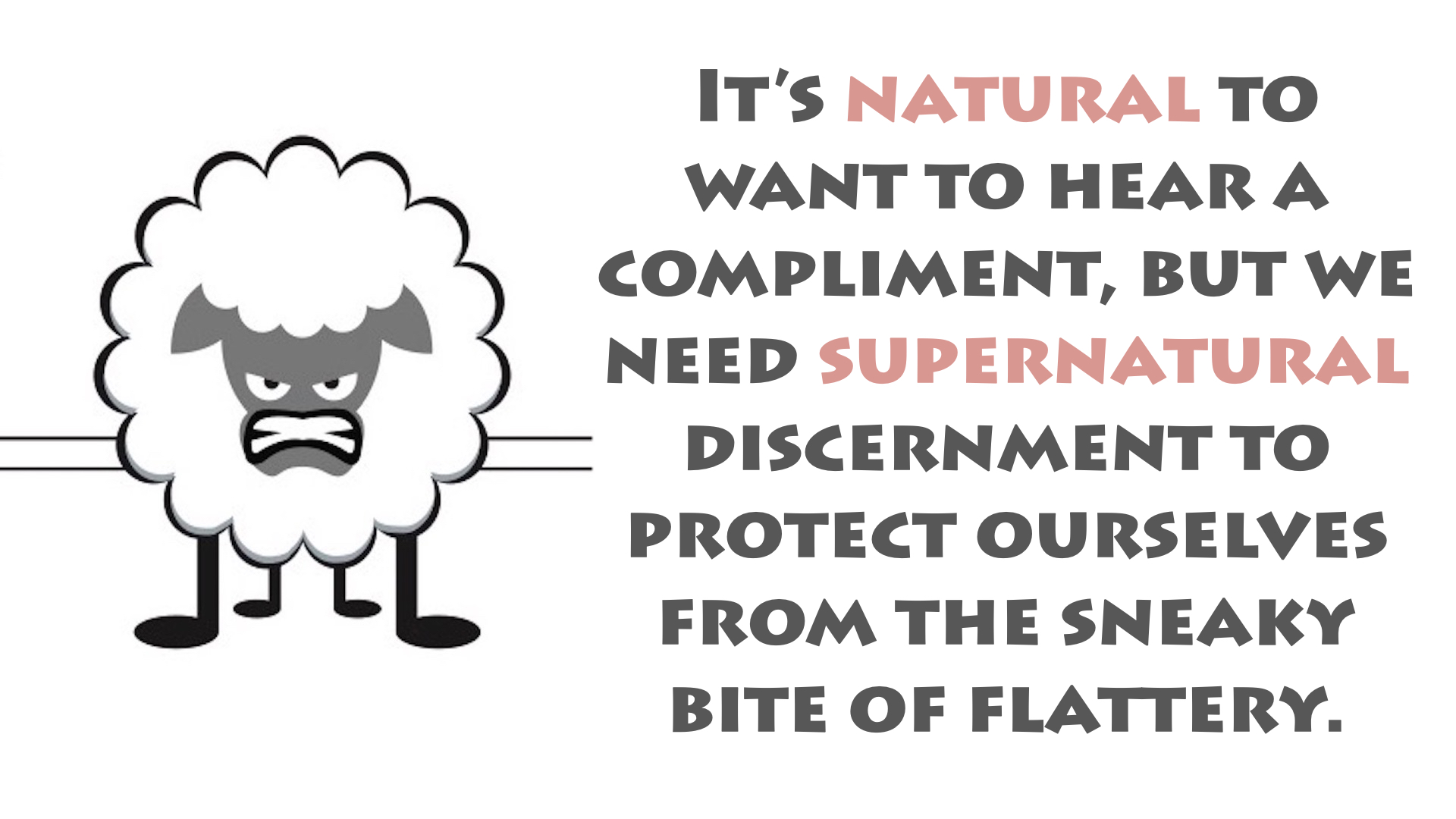





 Craig T. Owens