Listen to the audio-only version of this podcast by clicking on the player below, or scroll down to watch the video.
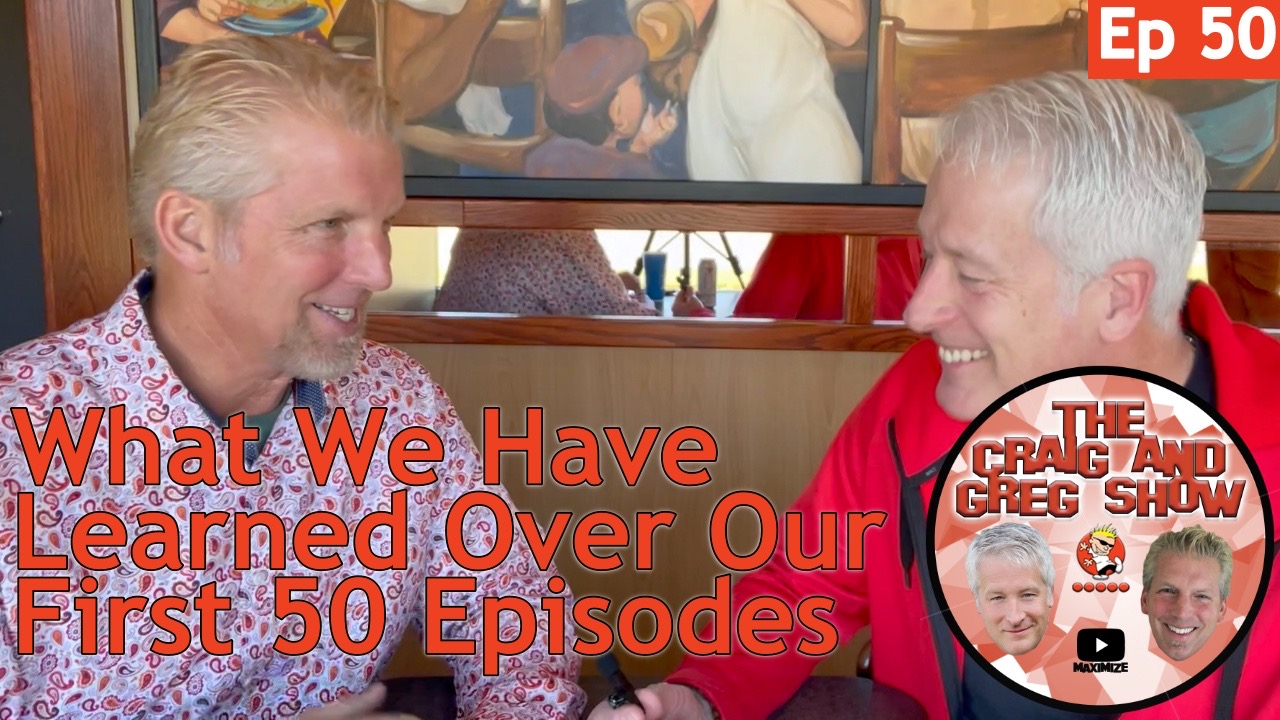
On this episode of “The Craig And Greg Show” we talk about how the first episode of The Craig and Greg Show debuted over two years ago on September 15th, 2020, and was appropriately titled “Leaders are Learners.” However, the discussions that became this show go back years before then.
On our 50th episode, Greg and I take you into the bagel shop where many long conversations about leadership became the show you see today.
Thank you for your support over the last fifty episodes. The entire Craig and Greg Show team wishes you a very merry Christmas, and we’re so excited to share more leadership insight with you in 2023 and beyond!
Check out this episode and subscribe on YouTube so you can watch all of the upcoming episodes. You can also listen to our podcast on Spotify and Apple.
[0:30] Change is a four-letter word for some people.
[2:05] What holds people back from embracing change?
[4:39] How does a leader’s pride play into successful change?
[5:50] People don’t buy-in to change overnight, which is why a change catalyst is needed.
[9:00] Improvement committee can work well to help an organization make changes.
[10:49] The unselfishness of leaders is key for making effective changes.
[12:22] Who should be on your improvement committee?
[14:34] The benefit of diversity on your teams.
[16:55] The right and wrong ways to roll out changes.
[19:59] Give and get lots of feedback during the change process.
[21:14] What is unacceptable for a leader in the arena of change?
[23:16] How can leaders overcome the fears that your teammates have about changes?
[27:13] We can help you with changes in your organization.
Check out this episode and subscribe on YouTube so you can watch all of the upcoming episodes. You can also listen to our podcast on Spotify and Apple.
[8:16] How do leaders create an environment that excites workers to contribute?
[9:00] Leaders can unleash the potential in their teammates.
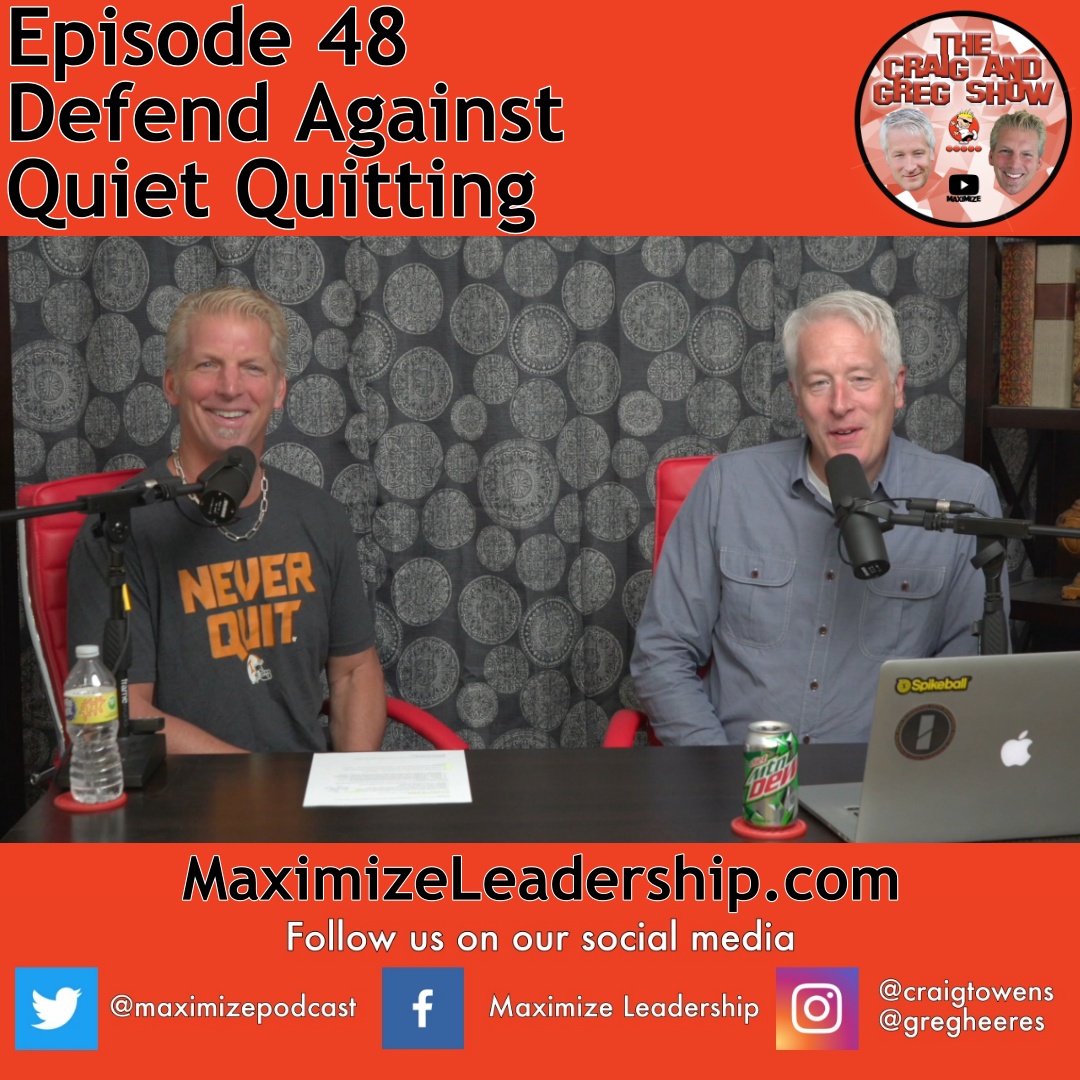
[9:43] What do leaders need to know about quiet quitters?
[11:06] How do leaders really gauge productivity?
[12:39] How do leaders “push the button” to motivate their teammates?
[13:44] Leaders need to defend a high-productivity culture.
[14:28] Craig adapts five principles from a book he read to help us motivate our team.
[19:56] The sad fate of leaders who quiet quit.
[20:47] Leaders need empowered teammates to expand their influence.
[22:22] We celebrate the behaviors we want to see throughout the organization.
Check out this episode and subscribe on YouTube so you can watch all of the upcoming episodes. You can also listen to our podcast on Spotify and Apple.
[0:38] We prefer preventative care both physically and in our leadership health
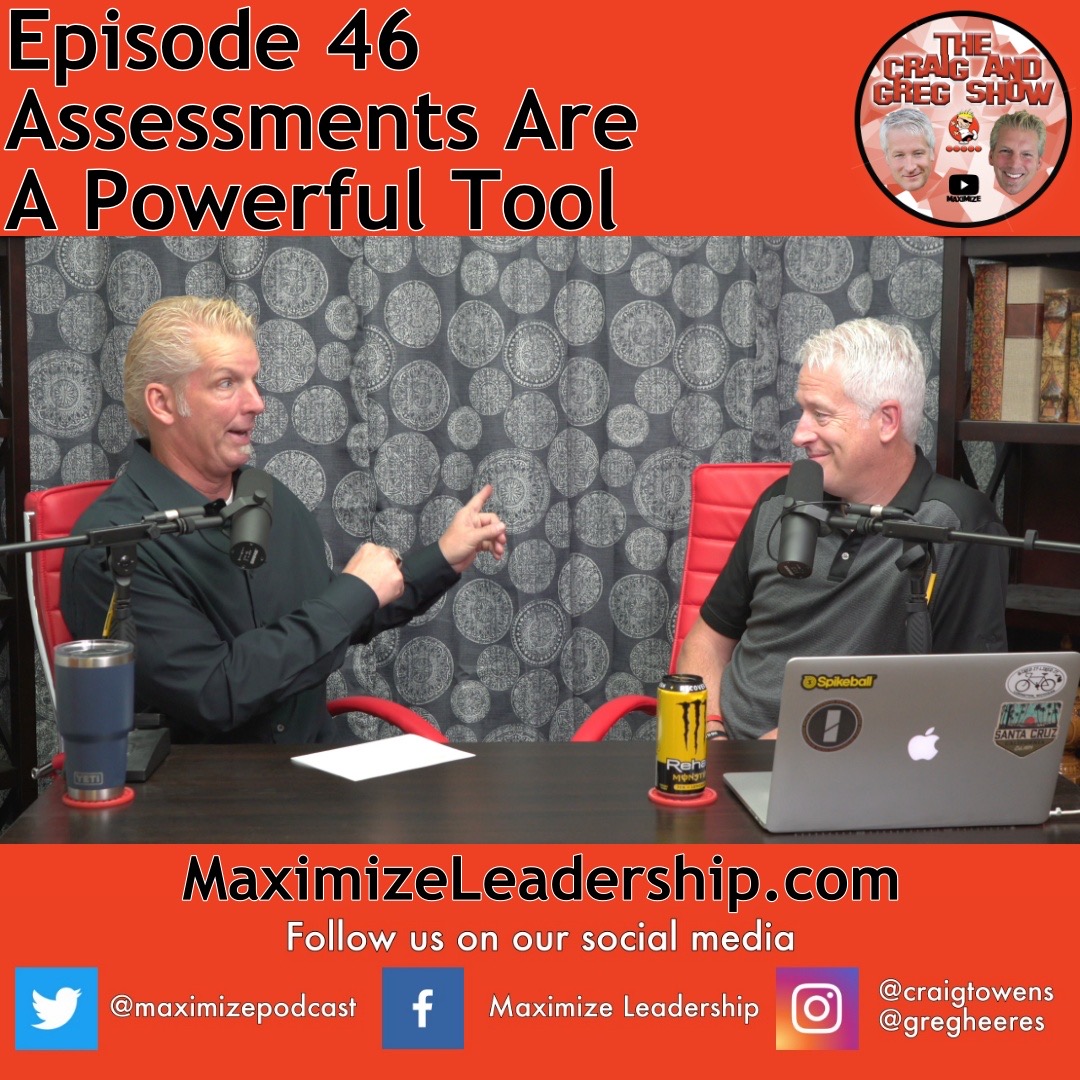
[1:40] When should we use assessments?
[3:10] Assessments can help leaders get an objective perspective on themselves and their team members
[4:36] We need windows of insight into ourselves first before we start working with our teammates
[5:40] What’s the goal of assessments?
[7:40] There are no “wrong answers” in assessment results
[9:39] How do leaders share the results of assessments with the whole team?
[13:31] When we have insight about our teammates, it helps us grow and understand each other
[15:34] Intuition and assessments work really well together
[17:01] What if an assessment appears to raise a warning flag?
[18:02] Leaders should use their assessments to setup their teammates for consistent success
[19:35] Assessments allow leaders to craft a complete team
[20:37] An outside coach can help your organization know what assessments to use and how to implement the results of any assessments
Check out this episode and subscribe on YouTube so you can watch all of the upcoming episodes. You can also listen to our podcast on Spotify and Apple.
Premier athletes know the value of flexibility for keeping them in the game. I think we would be wise to practice flexibility in our relationships too—this is definitely a game-changing move! Check out my weekly Monday Motivation videos on my YouTube channel.
“The bravest are surely those who have the clearest vision of what is before them, glory and danger like, and yet notwithstanding, go out to meet it.” —Thucydides
One of my YouVersion friends (Nikki) commented a great reminder: “God can do way more with my surrender than with my striving.”
Thomas Zimmerman was an influential leader in the early days of the Assembly of God fellowship’s history. “Over a 50-year period, Thomas F. Zimmerman (1912-1991) served the Assemblies of God as pastor, district official, department leader, assistant general superintendent, and general superintendent. His leadership greatly increased the influence of the Pentecostal movement in the evangelical world, as well as in the broader American religious landscape.”
I post quality content nearly every day. If you don’t have time to read all that I share, please let me read it for you. The Craig T. Owens Audio Blog is just like this blog, except you get to hear me read my blog posts. Check it out my podcast on Spotify, Apple, and even Audible.
“The word ‘hell’ is used in the New Testament fourteen times, twelve times by Jesus Himself. It is not a myth created by dismal and angry preachers. It is a solemn warning from the Son of God who died to deliver sinners from its curse. We ignore it at great risk.” —John Piper
Christian apologist and cold-case detective J. Warner Wallace wrote, “the battleground on the abortion issue is beginning to shift, and this shift is going to cause us to rethink our approach to the debate.” Pro-life advocates need to check out Wallace’s post Justifying Homicide: The Future Battleground In The Abortion Debate.
[19:25] What can we do with the notes from the books that we read?
[21:53] Greg has a new book coming out soon. Stay tuned for Sage Advice
Check out this episode and subscribe on YouTube so you can watch all of the upcoming episodes. You can also listen to our podcast on Spotify and Apple.
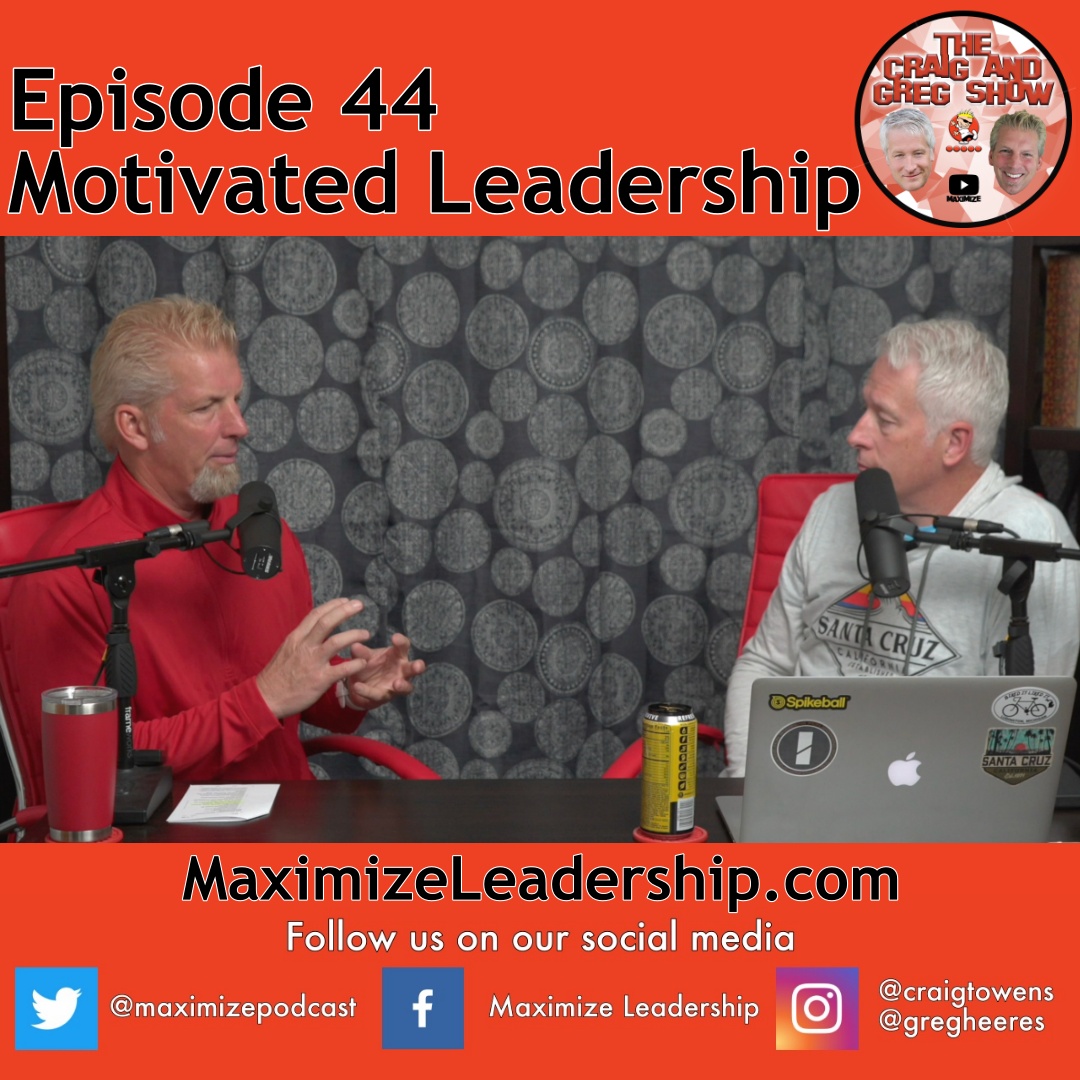
[13:56] How do leaders “call out” what’s in our team members?
[16:01] A leader’s self-assessment is key to how well we motivate others.
[18:23] Are company-wide benefits demotivating? How can we switch this up?
[20:30] Does the carrot-or-stick method of motivation actually work?
[21:10] Greg shares a quote about how dreams can help motivation.
[22:51] Great leaders don’t assume, but they ask important questions.
[23:53] Our coaching huddles can help you individualize your leadership motivational skills and practices.
Check out this episode and subscribe on YouTube so you can watch all of the upcoming episodes. You can also listen to our podcast on Spotify and Apple.
I co-host a leadership podcast with my good friend of 30+ years Greg Heeres. In an episode that came out last week, we were discussing the importance of friendships for leaders. All of us need friends that are investing in our lives. You may check out the rest of the conversation Greg and I had by clicking here.
Jonathan Woodward writes, “The right use of authority or power can make people glad. In our age, however, power is often immediately viewed with skepticism or outright disdain.” He also talks about our responsibility to the incorrect use of leadership authority: “It’s absolutely necessary to identify, challenge, and rebuke sinful leadership. It ensures that people are cared for and God is honored.” Check out The Power to Bless: Six Dimensions of Good Leadership.
More and more scientists are dissatisfied with the lack of evidence supporting the theory of evolution. ICR reports, “Indiana University Biologist Armin Moczek told The Guardian, ‘We still do not have a good answer. This classic idea of gradual change, one happy accident at a time, has so far fallen flat.’”
The churches in my hometown of Cedar Springs, MI, have partnered together to make sure students who are food insecure on the weekend are supplied with nutritious food to carry them through the weekend. If you would like to know more, or if you would like to help us, please check out the Cedar Springs Ministerial Association website.
“Because we love something else other than this world, we love even this world better than those who know no other.” —C.S. Lewis
This is one of the best interviews I have done. I so enjoyed this! And the good news is this is only part 1. We had such a good conversation that the hosts asked me to stick around to record another episode with them. Here is the first session…
[11:55] We discuss being intentional about how you spend your time.
[14:31] I describe the qualities I look for in a strong leadership friend.
[16:45] We discuss how a “yes man” isn’t a true friend.
[18:12] Leaders need to be careful not to end up on an island.
[21:52] How do you navigate friendships through organizational groups and silos?
[23:20] I shares a humorous note Greg left me to illustrate the friendship tradeoff.
[24:22] Greg says you need a trusted friend to help you monitor your energy level.
[25:30] I say it’s important to thank friends for paying attention to you.
[26:14] We use Jesus’ relationships with His disciples to model their own friendships.
[27:40] We would love to be your leadership friend in our coaching huddles.
Check out this episode and subscribe on YouTube so you can watch all of the upcoming episodes. You can also listen to our podcast on Spotify and Apple.
[0:55] What’s one of the biggest attributes that sets leaders apart from their peers?
[1:56] Check out why Stephen Covey’s definition of responsibility is so important in our discussion
[3:02] Why do people like to play “the blame game”?
[4:18] Accountability must be a partner with healthy responsibility
[4:52] Greg learned the blame game early on with his younger sister
[5:57] I worked in an unhealthy organization where the senior leader never accepted personal responsibility
[8:04] How do leaders “own it” in a healthy way?
[9:22] Exemplary leaders demonstrate how to accept consequences in a healthy way
[10:34] Responsibility and coachability strengthen a team and unleash greater potential
[11:27] Blame is “so dang easy” and makes the blamer a laughingstock
[13:27] What things contribute to blaming?
[14:14] How Greg handled the compliments and complaints from his clients
[15:11] Blaming is a spreading cancer in your organization
[15:44] Being a control freak isn’t the same thing as taking responsibility
[17:01] There is a balance for leaders so they don’t “fall on their swords”
[18:49] Team sports give us a good analogy of what shared responsibility looks like
[21:07] What’s on the other side of responsibility and blame?
[21:47] Leaders can enhance the benefits of responsibility through self-reflection
[23:51] Greg has a memorable and disarming way of helping people accept responsibility
[24:27] Our coaching huddles can help you learn to enhance the benefits of responsibility in your personal leadership
Check out this episode and subscribe on YouTube so you can watch all of the upcoming episodes. You can also listen to our podcast on Spotify and Apple.