


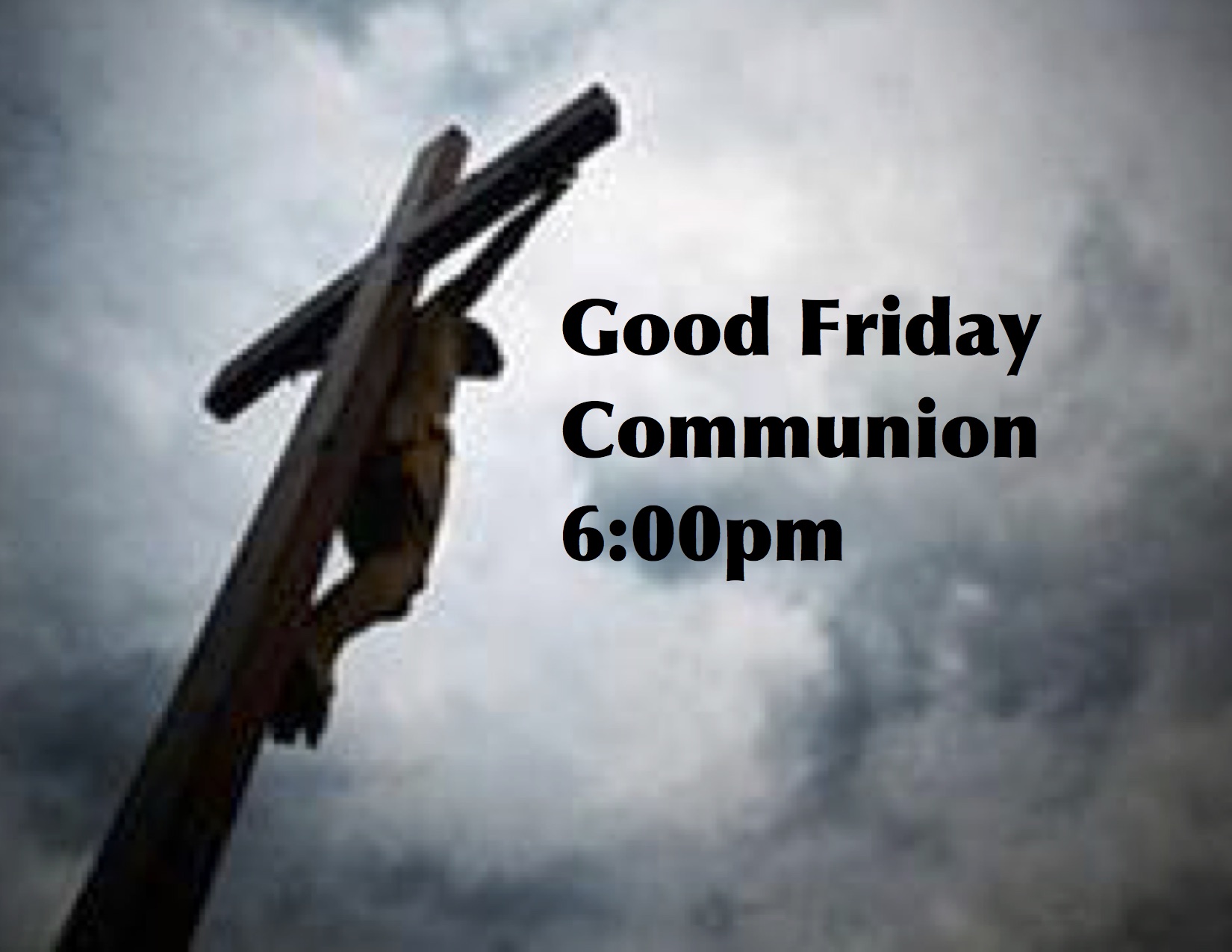
Join me this Friday, April 3, at 6pm as we remember what Jesus did for us on Calvary. We will be reflecting on Christ’s sacrificial death in a meaningful time of Communion.
Directions to Calvary Assembly of God can be found by clicking here.
Join me this Friday, April 3, at 6pm as we remember what Jesus did for us on Calvary. We will be reflecting on Christ’s sacrificial death in a meaningful time of Communion.
Directions to Calvary Assembly of God can be found by clicking here.
Listen to the podcast of this post by clicking on the player below, and you can also subscribe on Apple, Spotify, or Audible.
 Some people really know how to find the deals when they’re shopping. They know where to shop, when to shop, where to find the coupons, and how to find the rebates.
Rebates have always amazed me. I wondered how companies could give away money and still make a profit. Then I read that often up to 70 percent of rebates go unclaimed. Some people say it’s too much work to fill out all the correct forms, others say it takes too long to get their rebate, and still others think the amount they get back isn’t worth the effort.
I’m concerned about Christians who slip into a rebate mentality with God. It seems some Christians believe that they need to “fill out the right forms” in order to claim all that God has for them. They seem to think that salvation isn’t enough, and that they have to add church attendance, offerings, good works, Bible reading and other activities to make sure they don’t miss out.
Not that there’s anything wrong with those activities, but there is something wrong with thinking we have to do something to keep our salvation at its full effectiveness.
If we have placed our faith in Christ’s work on an old rugged Cross, then all of our sins have been forgiven (see Psalm 103:1-5, 10-12; Jeremiah 33:8). This is a gift that is available to everyone (Acts 10:43).
But here’s when I think satan steps in to deceive us: It’s when we feel convicted by the Holy Spirit. God’s Spirit is constantly refining us to make Christ’s image visible in us. But satan wants to twist and pervert this conviction into condemnation.
It’s only in the shadow of the old rugged Cross that I can see my sin correctly. Consider these four points:
(1) The Holy Spirit’s conviction of sin tells me that He desires for me to be more like Jesus―John 14:25-27.
(2) Sin isn’t my master any longer―Romans 6:1-2, 8-11.
(3) My sin never diminishes God’s love for me―1 John 1:8-2:2.
(4) Sin cannot condemn me―Romans 8:1-2.
As we remember and celebrate what Jesus did on Calvary for us, let’s also remember to stay in the shadow of the Cross. It’s only there we can see ourselves accurately from Heaven’s point of view.
If you are in the area and don’t have a church home, I would love for you to celebrate Resurrection Sunday with us! We’ll continue our look at what happened on the old rugged Cross.
►► Would you please prayerfully consider supporting this ministry? My Patreon supporters get behind-the-scenes access to exclusive materials. ◀︎◀︎
 When couples are divorcing, their most common complaint is summed up in two words: irreconcilable differences. The couple is saying that things have gotten so bad―and the distance between them has gotten so vast―that there is no hope at all of ever patching things up.
Sometimes we might be able to say that both husband and wife shared some of the blame. But this isn’t true in a spiritual divorce. When we are separated from God, it’s all on us. Paul describes us as powerless sinners, unholy enemies of God (see Romans 5:6, 8, 10). We did the leaving; we are the problem.
But in the desire to bring reconciliation, God puts it all on Himself―more specifically, on the death of His Son Jesus on an old rugged Cross. In Romans 5 Paul says our reconciliation was through Christ five times in just three verses (vv. 9-11).
As if it weren’t amazing enough that Christ’s death on the Cross saved us, justified us, and reconciled us, giving us a brand new start (2 Corinthians 5:16-17), God then gave us the same ministry that He undertook through Jesus: the ministry of reconciliation (vv. 18-19)!
What Jesus purchased for us on an old rugged Cross allows us to “become the righteousness of Christ” (v. 21). Not reflect His righteousness, not talk about His righteousness, but actually become His righteousness!
We have the supreme privilege of being able to bring the message of reconciliation to others who used to be where we were: powerless sinners, unholy enemies of God!
We have the awesome joy of being God’s righteousness to people who think their irreconcilable differences will keep them from God!
The greatest act of serving you could ever do for anyone is telling them that they can be reconciled to God through Jesus Christ’s work on an old rugged Cross!
Absolutely amazing!
We’ll continue our look at the Old Rugged Cross next Sunday, and I’d love to have you join me at Calvary Assembly of God.
 When we realize that nothing can thwart God’s plan, and that you and I are a part of that plan, I think there could be a couple of attitudes that might pop up: (1) Confidence―not in my abilities, but in God’s; or (2) Humility―not thinking less of myself, but thinking of myself less.
Confidence without humility leads to self-destructive pride, and humility without confidence leads to self-destructive fear. We need confidence with humility, just like Jesus demonstrated in going to the old rugged Cross.
We can see the confidence in Jesus when He claims to be the “I AM” (John 8:54-59). But we can also see the humility of Jesus when He said He would lay His life down (John 10:11, 15:13).
These two attitudes converge powerfully in John 13:1-17 when we read that Jesus knew that God had put all authority under His command (vv. 1, 3), and then He used His confident authority to serve His friends by washing their feet.
Confidence without humility won’t serve because it thinks others must serve them. Humility without confidence won’t serve because it thinks others will take advantage of them. But Jesus was confidently humble (or humbly confident) so He could serve. It’s the only time Jesus said “I have set you an example” (v. 15). Our attitude is to mirror His, and we are to confidently and humbly serve.
A humbly-confident / confidently-humble servant is known by his or her:
If you were to honestly reflect on this, where do you rate yourself?
We’ll be continuing our series on The Old Rugged Cross next Sunday, and I would love to have you join us.
[*] My thanks to Kenneth Blanchard for his insightful description of E.G.O. in his book Lead Like Jesus
 In my family, what starts off as Plan A at the beginning of the day is highly likely to end up as Plan K-13 by the end of the day! We just try to be flexible and roll with the changes.
But we must be careful about giving the characteristic of “flexibility” to God—He doesn’t need to be flexible and modify His plans. He has no Plan B; everything is His Plan A.
Jesus is described as being the sacrificial Lamb from before the dawn of Creation (1 Peter 1:18-20). And in Heaven Jesus is still known as the Lamb that was slain (Revelation 13:8 and 5:5-6). Jesus coming to earth to die on an old rugged Cross was always God’s Plan A. The whole time Jesus Christ was on earth, He knew what was happening.
Here are 5 things Jesus knew. He knew…
With this in mind, here are 5 things we should know. We should know…
The old rugged Cross reminds us that God’s Plan A was always for Christ’s death to make it possible for our lives to make sense!
As Andrew Murray wrote: “God fully relied on His Son to see to it that His honor was respected. And in Jesus we too may bravely enter this covenant without fear that we will not be able to fulfill it. We can rely upon Jesus to see to it that He will bring everything to completion. Jesus has not only discharged our old debt but also undertaken the responsibility for whatever else may be required.”
I’ll be continuing our series on The Old Rugged Cross this Sunday, and I hope you can join me.
The Apostle Paul traveled the known world preaching and teaching. Luke preserves some of his sermons for us in the Book of Acts, and Paul’s letters reveal the depth of and breadth of his Spirit-inspired thoughts. But of all the doctrines which this eminent apostle taught, there was one truth that stood out as the foundation for all others—
And when I came to you, brethren, I did not come with superiority of speech or of wisdom, proclaiming to you the testimony of God. For I determined to know nothing among you except Jesus Christ, and Him crucified (1 Corinthians 2:1-2).
The work that Jesus Christ did on an old rugged Cross is absolutely the most central message of all others. Without the Cross, no other doctrine makes sense.
Sadly, we spend far too little time looking at the Cross.
Join me this Sunday as we take a long look at the Cross and the Lamb of God Who was sacrificed on it. Our series is simply called The Old Rugged Cross.
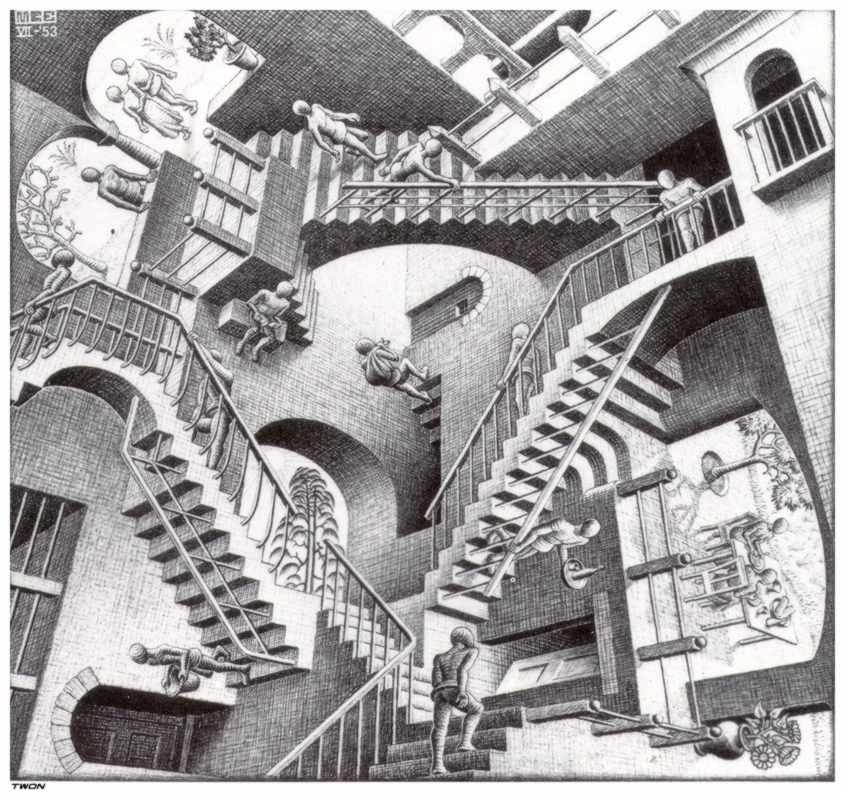 I love the drawings of M.C. Escher. But some of his sketches are clearly optical illusions we all know couldn’t work in the real world. We don’t have to be architects or engineers or builders to know that for a building to be functional it has to have (1) a solid foundation, (2) it must be built with quality materials, and (3) it must be constructed by someone who knows what he/she is doing.
The Apostle Paul tells us that (1) Jesus Christ is the cornerstone of the sure foundation, (2) you and I—God’s saints—are the quality building materials that are being used, and (3) the Holy Spirit knows exactly what He is doing as He joins us together.
A cornerstone is the first stone set in the construction, the reference point for all other stone, which determines the position of the entire structure. Christ Jesus Himself is the cornerstone of His Church (Ephesians 2:20b). Orientated to that cornerstone we have the foundation of the apostles and prophets (2:20a).
This foundation is the Word of God (2 Peter 1:19-2:3 and 2 Timothy 3:14-4:5). We dare not try to replace, nullify, update, or change His Word. Not would this cause the foundation to crumble, but there are dire consequences for the one who tries to do so (Revelation 22:18-19).
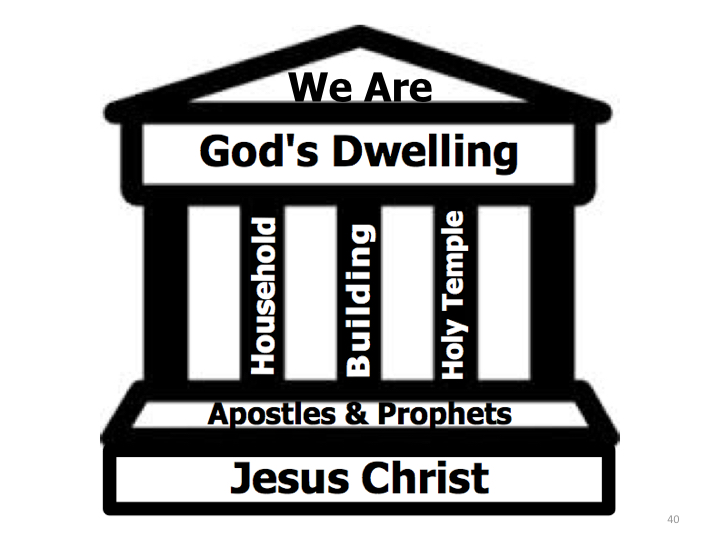 On this foundation, God is constructing three things, each one growing in its level of intimacy with Him and with the surrounding saints:
God’s Presence dwells in us individually, but collectively we make a more powerful statement (1 Corinthians 3:16). There is a far greater testimony to the world when individuals willingly and actively allow themselves to be built together; when Christians give up their personal agendas to say, “I want to be a part of something bigger than me—I want to be a part of we.”
We must study God’s Word to make sure we are building on the same foundation. We must allow our lives to be quality building materials. We must allow the Holy Spirit to build us together through prayer and fellowship! This becomes the fulfillment of the prayer Jesus Himself prayed for us (John 17:20-23).
This was the last message (for this time) in our series on the Book of Ephesians. I hope to be able to continue this study next year.
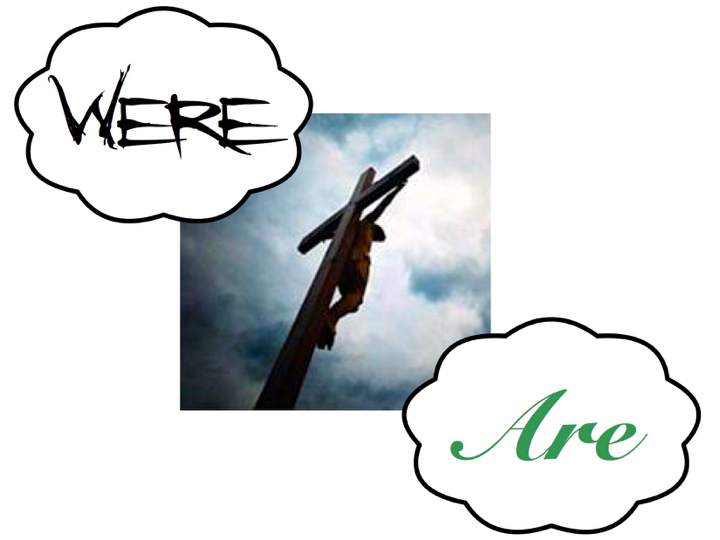 Last week I shared how important it is for us to remember what we were before meeting Christ, and what we now are after meeting Him (you can click here to read that post). But we need to spend some time looking at how we went from “were” to “are.”
First, we need to recall how bad we really were without Christ. We were…
“The man on the street would simply shrugged his shoulders at this charge and say, ‘Sure, no one’s perfect.’ Even we Christians talk about failures and defeats, but the Bible uses other terms. It speaks of wickedness and rebellion (Leviticus 16:21). The Bible speaks of King David as despising God (2 Samuel 12:9-10). It charges another man of God with defying the word of the Lord… (1 Kings 13:21). It is evident by these descriptive synonyms for sin—rebellion, despising, defying—that God takes a far more serious view of sin than the man on the street or even most Christians.” —Jerry Bridges, in Transforming Grace (bold font added)
…and then a miracle occurs! You who once WERE far away [dead, separated, alienated, disgustingly sinful] HAVE BEEN brought near through the blood of Christ (Ephesians 2:13). Jesus Himself becomes our salvation … He IS the miracle! Notice the wording here—
Jesus Himself IS (1) our peace, (2) our reconciliation, and (3) our atonement.
Not only must we always remember what we WERE and what we ARE, but remember the MIRACLE whereby this transformation could happen: The blood of Jesus spilled for us on the Cross!
We’ll be continuing our walk through the Book of Ephesians next Sunday, and I’d love to have you join us.
 Remembering our past is so important. Forgetting where we’ve come from can make us insensitive to the feelings of others, it can make us falsely proud of what we assume we’ve accomplished for ourselves, and it can make us fearful that God cannot handle what’s coming next.
So God want us to remember two things: what we were, and what we are. In Ephesians the verb tense Paul uses literally says, “Keep on calling this to mind; keep on keeping it fresh in your thoughts” (Ephesians 2:11 & 12).
Keep on remembering what you WERE:
And then come two amazing words―BUT NOW (v. 13) keep on remember what you ARE:
Constantly calling this to mind should produce three attitudes―
We are continuing our study of the Book of Ephesians this coming Sunday. Please join us!
 This coming Sunday we re-start a series at Calvary Assembly of God which we began last year called Sit Walk Stand: A Study In The Book Of Ephesians.
Why Ephesians? Dr. Martin Lloyd-Jones, who preached 232 sermons on this book to his packed-out church, said, “It is very difficult to speak of Ephesians in a controlled manner because of its greatness. Many have tried to describe it. One writer has described it as the crown and climax of Pauline theology. Another has said that it is the distilled essence of the Christian religion, the most authoritative and most consummate compendium of our holy Christian faith. What language! And it is by no means exaggerated.”
It is my desire that our congregation be as biblically literate as I can encourage and resource them to be. So Tom Kaastra, a 38-year veteran pastor, is going to co-teach with me again this year as we continue our attempt to master this powerful epistle.
The name of our series—Sit Walk Stand—comes from Watchman Nee, who wrote, “Of all Paul’s epistles, it is in Ephesians that we find the highest spiritual truths concerning the Christian life. The letter abounds with spiritual riches, and yet at the same time is intensely practical.”
Please join us this Sunday at 10:30am.
Whether you were with us last year or not, I posted some sermon recaps each week which will help prepare you as we re-launch this series. Click on the links below:


