Finding Purpose Beyond Our Pain (book review)

I’ve been a fan of Dr. Paul Meier for quite some time, and his latest book—co-authored with Dr. David Henderson—kept me cheering. Finding Purpose Beyond Our Pain explores seven areas that prompt some of the deepest soul-searching and some of the stickiest questions that humans face.

There are a couple of things I admire about Drs. Meier and Henderson. One is their understanding that humans are a tri-part being: body, soul, and spirit. Those that try to bring help for the deep pain that we all experience by addressing just one area are missing the mark. There is physical pain, emotional pain, and spiritual pain.

I’ve often found that humanists who just want to address the physical and emotional symptoms, but ignore the spiritual symptoms, offer only short-sighted answers. On the other extreme, some in the church world want to offer spiritual solutions for everything, and completely ignore the physical and emotional causes. Either extreme is unhelpful to someone who is hurting. Drs. Meier and Henderson do an excellent job addressing all three areas.

The other thing I’ve always appreciated about Dr. Meier, and now his new coauthor as well, is his accessible writing style. In other words, although these are incredibly well-educated men, they write in a way that everyone can understand. And more importantly, their writing style allows for ready application.

This book is divided into seven sections of four chapters each. Each section diagnosis an area of pain, looks at the causes, explores the possible responses, and ultimately uncovers the purpose beyond the pain. In every section, the physical, emotional, and spiritual dimensions are addressed. These sections cover the most common pain-filled struggles we all face:

  • Injustice
  • Rejection
  • Loneliness
  • Loss
  • Discipline
  • Failure
  • Death

As a pastor, I have to deal with people who are experiencing past or present pain quite frequently. This book has enlightened me in some biblically-rooted, practical ways I can point to the purpose beyond their pain. But even if you are not a pastor or counselor, this book will be a great resource to have on your shelf. Whether you have lingering questions about the pain you have experienced, or you simply want to be ready to help a friend or loved one who may be battling one of these areas, you will appreciate Finding Purpose Beyond Our Pain.

I am a book review blogger for Thomas Nelson.

Primal (book review)

It’s been quite a while since I have been this excited about a book. Mark Batterson has given us a winner with the release of this third book entitled Primal. I highly recommend that you add this to your 2010 reading list, as this would be a great way to start your new year.

One of the knocks I hear non-churched people level at Christians is, “You have too many rules to follow. It seems like being a Christian is too restrictive.” Unfortunately, far too many people who call themselves Christian live like this. Their definition of Christianity boils down to We can’t do that or We don’t do that or These are the rules.

In Primal, Batterson takes us back to the life Jesus intended for His followers to live. Jesus is asked what it takes to be a follower of God, and He answers with this primal phrase, “Love the Lord your God with all your heart, with all your soul, with all your mind, and with all your strength.” This is primal Christianity.

Mark then leads us through a reawakening of what it really means to love God fully in these four areas:

  1. Passionate, God-directed, and others-focused love
  2. Wide-eyed, awe-struck, transcendent wonder
  3. A searching, engaged, holy curiosity
  4. Energetic, all-encompassing, servant-hearted work

It’s so simple. It’s so primal. And it’s so liberating to be reminded of the raw essence of living a Spirit-empowered life which is so God-glorifying and Christ-magnifying.

This book gets all five stars from me.

I am a Multnomah book review blogger.

Power To Serve (book review)

Smith Wigglesworth: funny-sounding name, but he spoke such powerful, confronting words. Power To Serve was not actually written by Wigglesworth, but spoken by him. This book—like most books that bear his name—is a series of sermons transcribed for us.

I liked the feel of this book. Instead of the fine polished writing of an accomplished author, these words feel like they are coming right from the mouth of this fiery Pentecostal preacher. Wigglesworth is an expositor of God’s Word with few peers. He takes a passage of Scripture and finds the many facets of life in which to bring its holy application.

This book (as its title suggests) challenged me to think about leadership in terms of servanthood. The greatest of leaders are the greatest of servants. And the best servants are those who serve like Jesus.

This is not a book I could speed-read, but had to digest it slowly as I thought about the application to my own life. Here’s a quote which sums up the head-on, no-holds-barred challenges that these words bring to me:

“The Bible is the plumb line of everything. And unless we are lined right up with the Word of God, we will fail in the measure in which we are not righteous. And so, may God the Holy Spirit bring us into that blessed ministry of righteousness.”

I’m trying to line up to God’s Word. These sermons are a great reminder of just how far I still have to go.

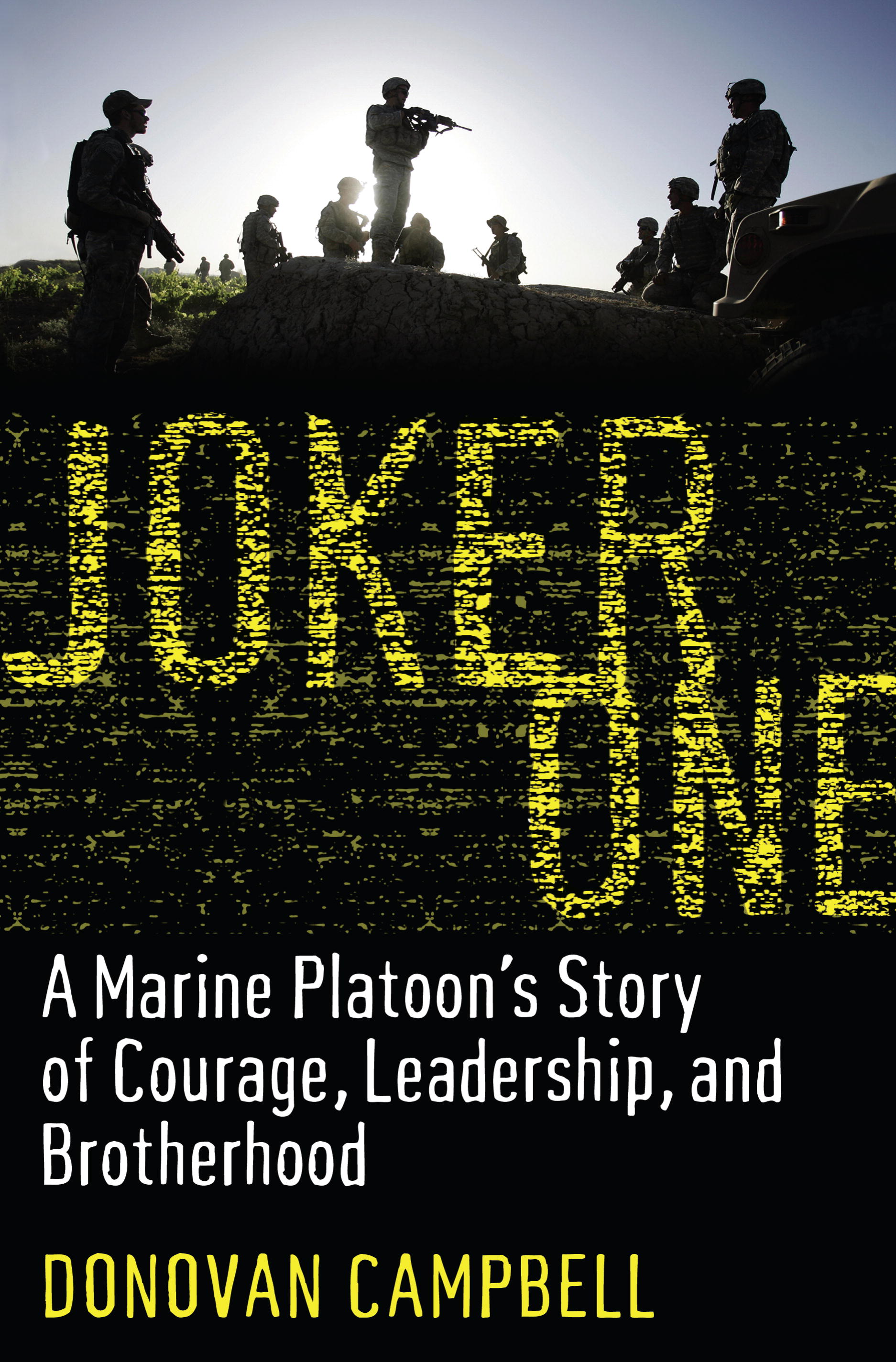
Joker One (book review)

At first glance, Donovan Campbell’s narrative of his time in Ramadi, Iraq, might seem like a typical war story. But, as the old cliché says, you cannot judge a book by its cover.

Joker One is the name of a United States Marine Corps platoon. But Joker One the book is really more about leadership. Lieutenant Campbell leads us through his day-by-day struggles to lead his men to success. Along the way he has to do the full 360-leadership cycle: leading up with his commanding officers; leading sideways with other commissioned officers; and lead leading down with his squad leaders. Along the way he discovers something remarkable: his Marines are great leaders themselves.

Lt. Campbell sees his men grow in their own leadership skills under his mentorship. He finds his strength in them. He carries a heavy leadership load until his men have to carry him. It reminded me so much of the leadership principles that others have postulated for the board room, but the Marines of Joker One make them happen on the battlefield.

This is a gripping story. Some of the battle scenes are gritty, and some of the language is a little rough (this is probably a PG-13 book). The love and respect that develops between this officer and his men is an amazing study in leadership. It’s also a book about decision-making under fire, the consequences of those decisions, pain, redemption, faith.

I cried and I cheered while reading this book. I hold the members of our military in very high esteem. This book raised my level of respect for our airmen, sailors, soldiers, and Marines even higher. You will be challenged and stirred by the exploits of Joker One.

Give This Christmas Away (book review)

Matthew West wrote Give This Christmas Away based on two simple questions: What if December looked different this year? What if we all just give this Christmas away?

If you are becoming as frustrated as I am with the over-commercialization of Christmas, this book is like a breath of crisp, clean winter air. Matthew West gives us “101 simple and thoughtful ways” to truly focus on the reason for the Christmas season. This is a great book for your family to read together. It will help you begin a meaningful discussion of what Christmas truly means.

I anticipate that this book will become a seasonal classic: with families pulling it out each year as they begin to decorate for Christmas. The ideas in here are simple and easy to put into practice. Just reading this book will open your eyes to numerous possibilities. And if you happen to think of idea number 102 and beyond, log onto the Give This Christmas Away website to share your idea.

I highly recommend this book to your family.

I am a Tyndale House book reviewer.

Derailed (book review)

Derailed

As I read Dr. Tim Irwin’s latest book, Derailed, I thought about a quote from John Maxwell: “A wise man learns from his mistakes. A wiser man learns from others’ mistakes. The wisest man learns from others’ successes.”

The subtitle of this book is “Five lessons learned from catastrophic failures of leadership.” In this, we learn from others’ mistakes. But then Dr. Irwin goes on to show us successes that we can learn from as well. Combining the insight from successful—or should I say “non-derailed” leaders—with his own discernment, Dr. Irwin shows us how to stay on the rails.

When I first noticed that the examples in the book were all high-profile CEOs, I thought, “What could I learn from them? After all, I’m not the CEO of a Fortune 500 company.” But Dr. Irwin does an excellent job of bringing the four qualities of character—authenticity, self-management, humility, and courage—down to a pedestrian level where even we non-CEO-types can benefit from his wisdom.

Although the principles in Derailed can benefit anyone in leadership, or aspiring to a leadership position, this book still might not be for everyone. The six case studies in the book are all derailed CEOs, and unless you have a penchant for the business world, you might not find them very enjoyable reading. However, for those of you who enjoy business history, there is much to gain from a careful reading of Derailed.

I am a Thomas Nelson book reviewer.

Learning Tough Lessons

In my role as a book reviewer, I am presently reading Derailed. This book has really jolted me wide awake!

Dr. Tim Irwin is walking through the profiles of six high-profile business leaders who got derailed on their path to success. These CEOs seemed to have everything: talent, opportunity, great ideas, a proven track record of success. In short, everything they would need to be successful.

Yet they got derailed.

Here’s the wake-up call for me: The same thing can happen to me. The Apostle Paul wrote his own “derailed” story about the Israelite leaders:

These are all warning markers—danger!—in our history books, written down so that we don’t repeat their mistakes. Our positions in the story are parallel—they at the beginning, we at the end—and we are just as capable of messing it up as they were. Don’t be so naive and self-confident. You’re not exempt. You could fall flat on your face as easily as anyone else. Forget about self-confidence; it’s useless. Cultivate God-confidence.

I don’t want to get derailed, so I’m focusing on God-confidence today.

Love & Respect (book review)

Love & Respect

My Grandma used to say this poem, “Good, better, best, never let it rest until your good is better and your better is best.” I thought of this again while reading Emerson Eggerichs’ book Love & Respect. If your marriage is bad, this book can help it get good; if your marriage is already good, this book can help it getter even better; if your marriage is already better, you can use this book to “best it.”

Many of the principles in this book generated an initial push-back from me. I found myself thinking, “I’m not so sure that would work.” But as I read on, I found almost all of those initial hesitancies dissolving.

The book is divided into three overarching sections that cover the three cycles in which your marriage could be: the Crazy Cycle (a bad marriage), the Energizing Cycle (a good marriage), and the Rewarded Cycle (the best marriage). Throughout all of the sections, there is sound, biblically-based counsel for husbands and wives. The title of the book—and most of the underlying principles—come from Ephesians 5:33 where the Apostle Paul tells women to respect their husbands, while husbands are to love their wives.

Be forewarned: the first part of this book felt a little like a commercial for Dr. Eggerichs’ Love & Respect seminar. And oftentimes I felt he was “plugging” his seminar throughout the book. But if you don’t mind the occasional sales-pitch feel, you will uncover some great truths to help your marriage go from bad to better to best.

I am a book review blogger for Thomas Nelson Publishers.

The Wounded Healer (book review)

Wounded Healer, The

“For the minister is called to recognize the sufferings of his time in his own heart and make that recognition the starting point of his service. Whether he tries to enter into a dislocated world, relate to a convulsive generation, or speak to a dying man, his service will not be perceived as authentic unless it comes from a heart wounded by the suffering about which he speaks” (from the introduction).

Henri Nouwen was a man ahead of his time. Although this book was written in the early 1970s, it sounds so applicable for today. The Wounded Healer challenged me as a Christian leader to step into the pain-filled lives as others in a more authentic way. Nouwen argues that healers must first be personally acquainted with the same type of pain that other wounded people are experiencing.

Isaiah 53 says that Christ “was wounded for our transgressions, He was bruised for our guilt and iniquities; the chastisement [needful to obtain] peace and well-being for us was upon Him, and with the stripes [that wounded] Him we are healed and made whole.” Because Jesus was wounded in the same way we are wounded, He knows how to help (see Hebrews 2:18).

One closing quote from Nouwen: “If there is any posture that disturbs a suffering man or woman, it is aloofness. … No one can help anyone without becoming involved, without entering with his whole person into the painful situations, without taking the risk of become hurt, wounded or even destroyed in the process. The beginning and the end of Christian leadership is to give your life for others.”

This book reconfirmed my desire to—like Jesus—be a wounded healer for others.

Find Your Strongest Life (book review)


You might be thinking, “Why is he reviewing this book?” After all, the subtitle of Marcus Buckingham’s latest book is “What the happiest and most successful women do differently.” Well, guess what? I absolutely loved this book! I’m excited for my wife to be able to read Find Your Strongest Life, but in the meantime, I got so much out of it.

One of the things I love about Marcus Buckingham’s books is that they read just like he sounds: a silky smooth British accent. But it’s not just about style; his books have plenty of substance too. I especially love Marcus’ focus on building on strengths, as opposed to trying to fix weaknesses.

The other thing I appreciate is how affirming Marcus is. His comfortable style feels highly personalized—sort of like he’s sitting on the other side of the coffee table from me.

Find Your Strongest Life opens with some background information on the important timing for this book. Then after taking a simple online assessment to learn your leading and supporting Life Roles, you’ll learn more about how to capture and cradle your strongest moments. Then you’ll learn how to use these strong moments to purposely imbalance your life in favor of those strong moments.

So many of Marcus’ ideas sound counter-intuitive, and yet they ring so true at the same time. From my personal experience from reading and applying the principles in his other books, I can attest that this man knows what he’s talking about. I know I found several takeaways from this book, and I’m especially excited to see how my wife and the other key women in my life are going to be able to use this book to make a stronger life for themselves.

An excellent read for anyone.