Long before Stephen Covey wrote about Habit 7: Sharpening The Saw, Solomon saw the value of taking time to sharpen the saw.
Using a dull ax requires great strength, so sharpen the blade. That’s the value of wisdom; it helps you succeed. (Ecclesiastes 10:10)
What are you doing TODAYto gain wisdom?
J. Wilbur Chapman asked F.B. Meyer, “What is the matter with me? So many times I fail, so many times I am powerless.”
Dr. Meyer responded, “Have you ever tried breathing out three times without breathing in once?”
What are you doing TODAYto breathe in?
Look at the mower in the summer’s day, with so much to cut down ere the sun sets. He pauses in his labor—is he a sluggard? He looks for his stone, and begins to draw it up and down his scythe, with rink-atink, rink-atink, rink-atink. Is that idle music—is he wasting precious moments? How much he might have mowed while he has been ringing out those notes on his scythe! But he is sharpening his tool. And he will do far more when once again he gives his strength to those long sweeps which lay the grass prostrate in rows before him. —Charles Spurgeon
Like every book from Oswald Chambers, be prepared for Biblical Ethics to hit you right between the eyes! In my lifetime the term ethics has had so many qualifiers added to it: situational ethics … biomedical ethics … wartime ethics. As though ethics becomes something changeable if you are in a difficult situation.
But in clear, unequivocal language, Oswald Chambers brings all ethics back to the Bible.
Keying in most frequently on the teachings of Jesus from the Sermon on the Mount, Chambers helps us get to the true intention behind the ethical requirements of God’s Law. For any who would say, “But it’s too hard to figure out what Jesus actually meant,” Chambers replies,
“When we come across something we don’t like, we say we don’t understand it; it is too plain not to be understood.”
This is not light reading, but it is valuable reading. Serious disciples of Christ will be well-rewarded by reading and studying the wisdom in Biblical Ethics. If you would like to read more thoughts from Oswald Chambers, check out my weekly installment Thursdays With Oswald.
Today is Ash Wednesday: the start of the season of Lent. For the next 46 days, people all around the world will be preparing themselves to celebrate Good Friday, Holy Saturday, and Resurrection Sunday.
Whether you have celebrated Lent for years, or you aren’t quite sure what Lent even is, I’d like to suggest a great tool. I love how YouVersion has made the Bible so accessible. Not only in multiple languages and a variety of translations, but via smart phones and the web, it’s so easy to read the Word.
There is a daily devotional plan now available for the Lent season. You can access it by clicking here. This is a 46-day Bible and devotional reading plan. I started it today, and I encourage you to read along with me.
Let’s keep learning more and more about the amazing work Christ did for us on Calvary, and what our response to His atoning work should be. As I tweeted this morning:
Keep learning: "The mind of the prudent is ever getting knowledge & the ear of the wise is ever seeking (inquiring for & craving) knowledge"
This is a weekly series with things I’m reading and pondering from Oswald Chambers. You can read the original seed thought here, or type “Thursdays With Oswald” in the search box to read more entries.
The Word Of God
The Bible nowhere says we have to believe it is the Word of God before we can be Christians. The Bible is not the Word of God to me unless I come at it through what Jesus Christ says, it is of no use to me unless I know Him. The key to my understanding of the Bible is not my intelligence, but my personal relationship to Jesus Christ. … You may believe the Bible is the Word of God from Genesis to Revelation and not be a Christian at all.
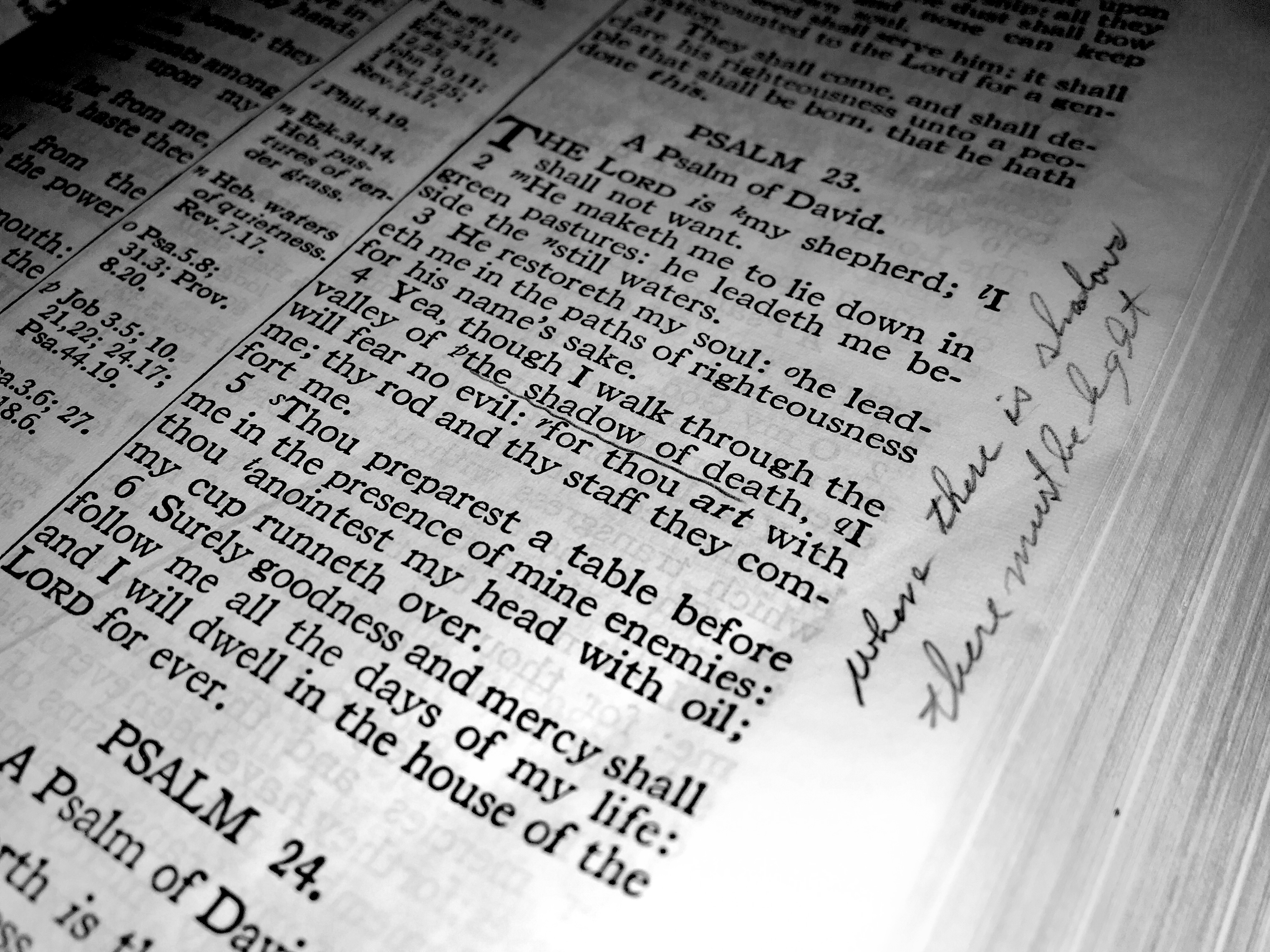
I’ve been studying the lives of the kings of Judah. The last God-fearing king before the fall of Jerusalem was a man named Josiah. He became king as an 8-year-old and really began looking for God as a teenager. Apparently, during all of this time, the book of the Law (the first five books of our current Bible) was hidden away and forgotten. As Josiah started seeking God, he gave orders that the temple in Jerusalem be repaired. During the clean-up work, the workers rediscovered the book of the Law and brought it to the palace. They began to read the Law to Josiah…
When the king heard the words of the Law, he tore his robes.
Tearing of the robes is a sign of deep mourning. The words of Scripture cut Josiah like a dagger to the heart because he knew he and his people weren’t living according to God’s standards. He started telling everyone the Scriptural standards that they needed to honor, and had the words of the Law read aloud for everyone to hear. Then in the presence of everyone, Josiah reaffirmed his commitment to be a man who lived by the words of God’s Word.
This got me thinking:
Do I have an emotional response when I read the Bible? Or is it just a mental exercise? Or worse yet, just a meaningless daily habit?
Am I truly sorry when I read in the Bible where I’ve fallen short of what God desires? Or do I make excuses?
Do I ask the Holy Spirit to help me live out what I’ve read in the Word? Or do I convince myself that those parts don’t pertain to me?
Do I share with others what’s been revealed to me? Or do I keep it to myself?
Am I willing to be accountable to others about the changes I need to make? Or am I trying to be a lone ranger saint?
Do I just read the Bible? Or do I allow the Bible to read me?
This is a weekly series with things I’m reading and pondering from Oswald Chambers. You can read the original seed thought here, or type “Thursdays With Oswald” in the search box to read more entries.
The Preacher And The Word
Keep yourself full to the brim in reading; but remember that the first great Resource is the Holy Spirit Who lays at your disposal the Word of God. The thing to prepare is not the sermon, but the preacher. …
It is easy to tell men they must be saved and filled with the Holy Spirit; but we have to live amongst men and show them what a life filled with the Holy Spirit ought to be.
From Approved Unto God
My takeaways: (a) My other reading is fine, but it should never take the place of the reading of the Bible; and (b) People would rather see a sermon in me than hear a sermon from me any day.
Listen to the podcast of this post by clicking on the player below, and you can also subscribe on Apple, Spotify, or Audible.
King Josiah is widely regarded as one of the greatest reformers of Judah. He led a revival in Israel that led to the people cleaning out their idols and worshipping God in ways that hadn’t been seen since the time of King David.
This whole revival started with a Book. Not just any book, but the Book of the Law (the Bible).
When the king heard what was written in the book, God’s Revelation, he ripped his robes in dismay. And then he called for Hilkiah the priest, Ahikam son of Shaphan, Acbor son of Micaiah, Shaphan the royal secretary, and Asaiah the king’s personal aide. He ordered them all: “Go and pray to God for me and for this people—for all Judah! Find out what we must do in response to what is written in this Book that has just been found! God’s anger must be burning furiously against us—our ancestors haven’t obeyed a thing written in this book, followed none of the instructions directed to us.”
Josiah’s leadership was already stellar. The Bible describes Josiah this way: “He did what was right in the eyes of the Lord.” But 18 years into his reign as king, the Scriptures were rediscovered and his leadership went up a notch.
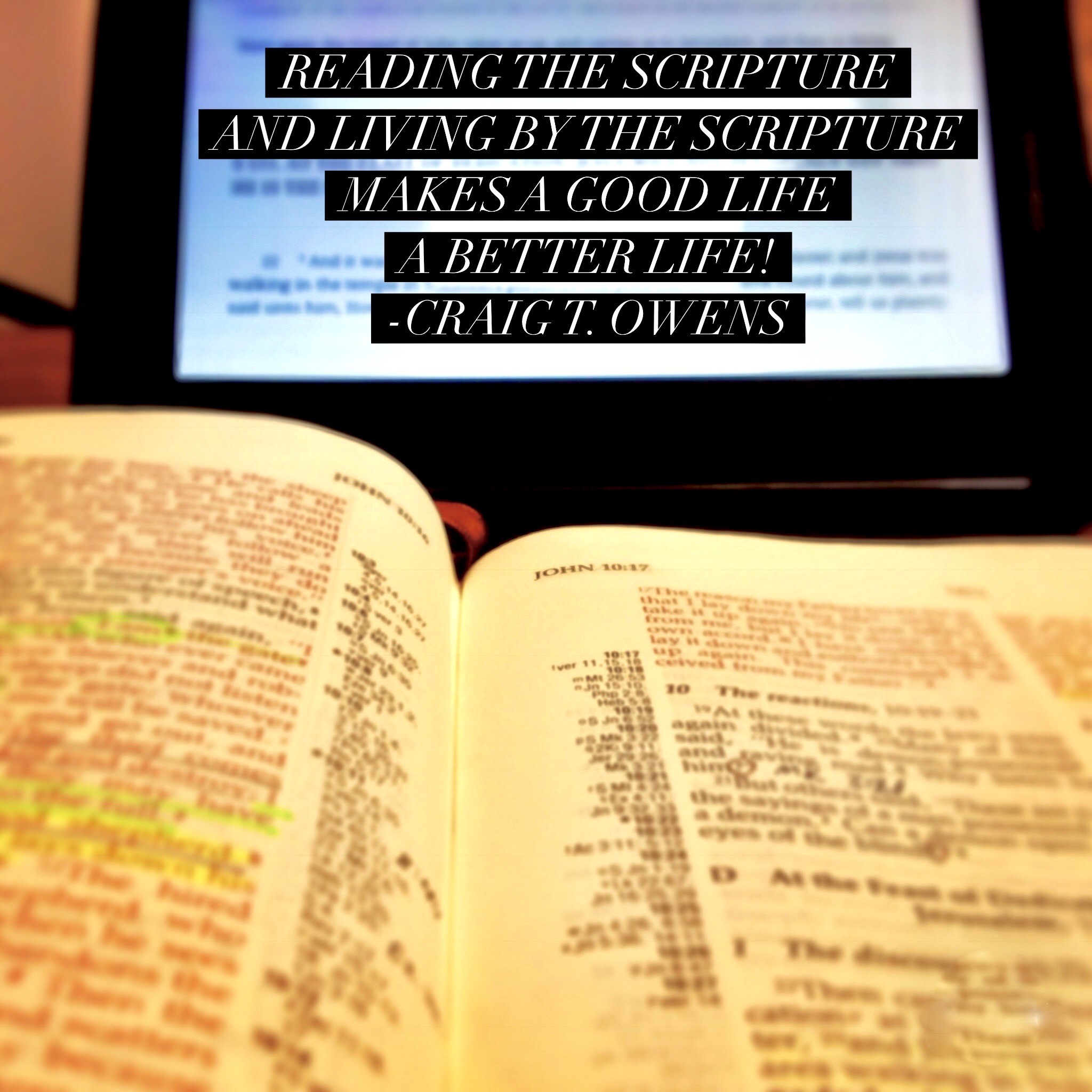
Reading the Scripture and living by the Scripture makes a good life a better life!
At the end of Josiah’s life, something is recorded about him that isn’t mentioned about any other king:
The prophet Jeremiah composed funeral songs for Josiah, and to this day choirs still sing these sad songs about his death. These songs of sorrow have become a tradition and are recorded in The Book of Laments.
Do you want to take your life up a notch? Get into God’s Word and let it get into you and change the way you think and live.
Listen to the podcast of this post by clicking on the player below, and you can also subscribe on Apple, Spotify, or Audible.
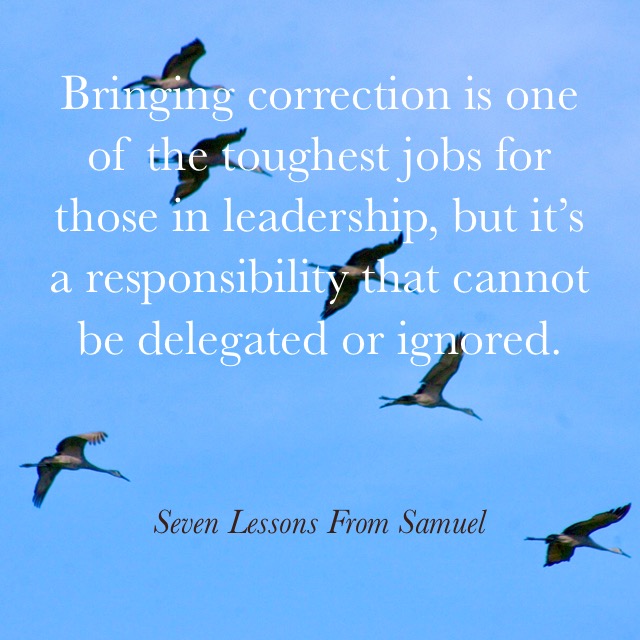
Bringing correction is one of the toughest jobs for those in leadership, but it’s a responsibility that cannot be delegated or ignored. In order for correction to be effective, it must not be too light or too heavy. Unfortunately, many of us have experienced far too many ineffective forms of leadership correction.
I read a great example of how to properly correct in the life of Samuel. In 1 Samuel 12, the people had gotten off track, and Samuel lovingly and effectively brought them back into line. Here’s what his example teaches us on how to correct followers:
1. Shared history (v. 2). Samuel reminded them of what had happened in their history, and even what they had experienced together. “Newbie” leaders need to be cautious about bringing correction that violates an organization’s established culture.
2. Integrity (v. 3). Samuel’s words and lifestyle lined up. That doesn’t mean he never made a mistake, but it does mean that he was willing to acknowledge and repair his mistakes. Nothing is worse than a leader who says, “Do as I say, not as I do!”
3. Common ground (vv. 6-11). A leader needs to get everyone on the same page. Find something somewhere on which everyone can agree, and then move forward from there.
4. Just say it (vv. 12-13). Don’t beat around the bush; don’t try to bring correction through a parable; don’t soften the blow. Just say it: “This is where I believe you made a mistake.” Far too many leaders talk too much and leave their followers saying, “Huh?” If you are going to bring correction, make sure your followers know exactly what it is you are correcting.
5. Give the remedy (vv. 14-15, 20-21). Samuel pointed out the error, and he just as clearly told them how to get back on track. The remedy should be as clear and simple as possible.
6. Remove the fear (vv. 20, 22). Don’t let the corrected follower be afraid of you! Fear will never re-establish trust. Samuel couldn’t have been more clear on this. He literally said to the Israelites, “Do not be afraid.”
7. Demonstrate servant leadership (v. 23). At the close of the meeting, Samuel said he would do two things: “I will continue to pray for you, and I will continue to teach you.” In telling them this, Samuel was really saying, “Let’s walk through this together.”
If you lead your family, your church, your company, or your team, you are going to have to bring correction at some point. When you need to do this, take some time to review this list and bring correction the way Samuel did: lovingly and effectively.
P.S. You can also check out this post where the apostle Paul gives us another example of how to handle correction properly.
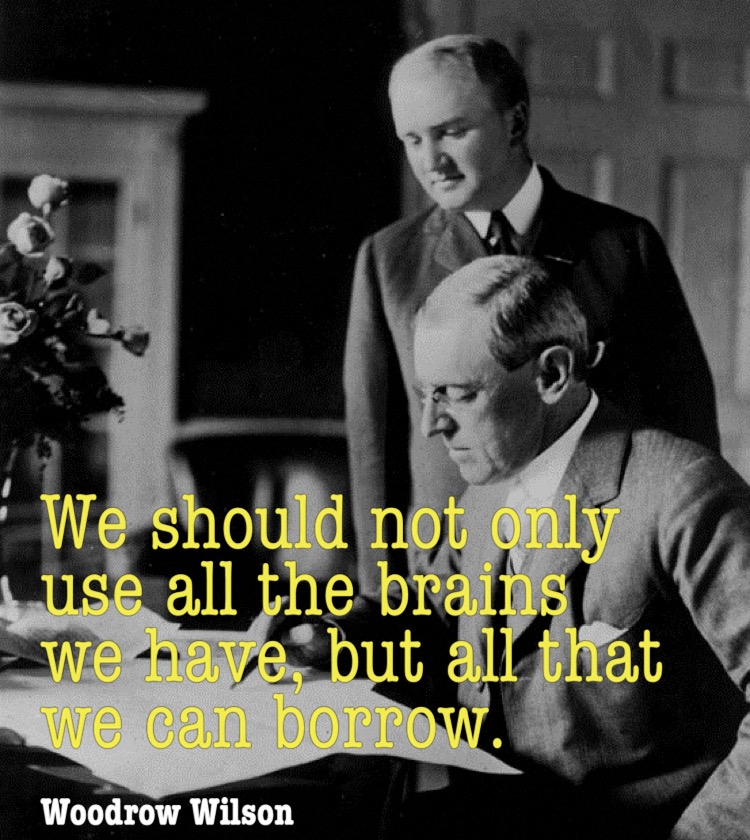
“We should not only use all the brains we have, but all that we can borrow.” —Woodrow Wilson
It’s so important to learn from others—to borrow their brains. I try to take something from other people’s brains every day.
Every morning I begin my day by studying the timeless truths found in the Bible.
Then I pray to ask God to give me the mind of Christ for my day.
Throughout my day I learn from the brains of other business and ministry leaders. People who have been-there-done-that and are willing to share are an invaluable source of wisdom.
I also consume a regular diet of biographies and autobiographies of past and present leaders. I try to put myself in their shoes to see why they made the decisions they made.
And I have some close friends that can give me their honest insight and critique.
One of the saddest things is to hear someone say, “I’m a self-made man” or “I’m a self-made woman.” Really?! That’s rather limited, isn’t it?
Listen to the podcast of this post by clicking on the player below, and you can also subscribe on Apple, Spotify, or Audible.
I love the incredible love story in the Bible about Ruth and Boaz. I’m not sure why this hasn’t been made into a movie yet, because it would be a blockbuster!
Ruth is a picture of a God-fearing woman who turns her back on all she’s known to follow God’s leading. Boaz is a real man: strong, successful, respectful of women, honoring of tradition, hard-working, God-loving. You would expect in a story about two people who love God, and who fall in love with each other, and who have a son who becomes the grandfather of King David, that there would be at least one “divine moment.” You know, one of those unmistakable God-ordained moments when everything falls into place.
Here it is. In chapter 2 when Ruth first meets Boaz—when they have their first divine encounter—the Bible says:
As it turned out, Ruth found herself working in a field belonging to Boaz.
As it turned out?!? That’s not very romantic. Or powerful. Or even God-honoring. Other translations are equally as bland:
The Message: Eventually she ended up in the field owned by Boaz.
ESV: She happened to come to the part of the field belonging to Boaz.
KJV: And her hap was to light on a part of the field belonging to Boaz.
You see, we know the end of the story. We know God was in control of their lives. We know God set it up for Ruth and Boaz to cross paths. And yet even Samuel (or whoever wrote down this story) or Ruth (or whoever told this story to the author) could hardly believe it. “I just happened to end up in the right field at the right time!”
At the end of the story of my life, I think I will look back and see so many as-it-turned-out moments. So many things that just-so-happened. But that would mean I’m living in an as-it-turned-out moment right now. If I believe God is directing my paths, then…
…every momentis divinely orchestrated.
…every moment is strategic.
…every moment is God-directed.
If you knew that this moment was a divine moment, how would you live differently? If you knew this was an as-it-turned-out, God-directed moment, how would you respond? Well, you are living in that moment right now so be on the lookout for what God is doing.
P.S. I shared both a Mother’s Day and a Father’s Day message using this story. The series was called Ruth + Boaz.



 Long before Stephen Covey wrote about Habit 7: Sharpening The Saw, Solomon saw the value of taking time to sharpen the saw.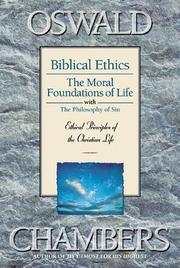






 Craig T. Owens