Know Your Theological Terms

I shared these helpful memory devices this morning, and perhaps they will be helpful to you as well. Some of the terms theologians use can be somewhat confusing, perhaps just because the words look so big! But the nice thing about the big words, they come from much smaller root words.

In these instances, these are just a different way of stating the big words, to help you remember the importance of their definitions.

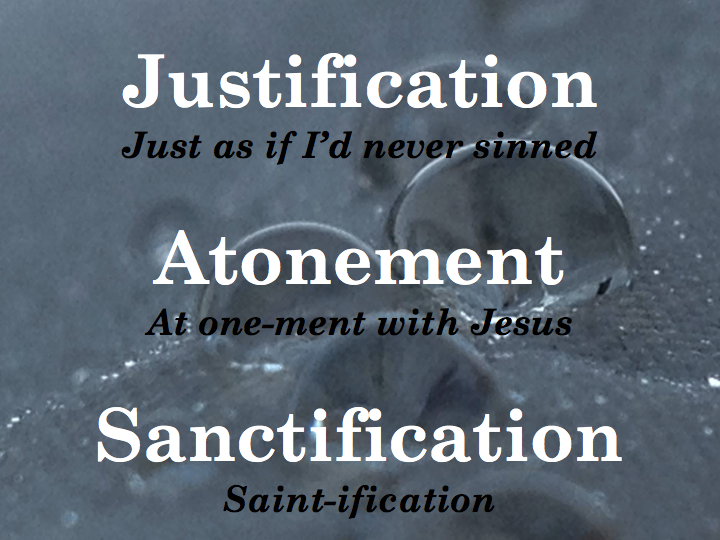
Justification = just-as-if I had never sinned. When your sins have been forgiven, you appear to God just as if you had never sinned, so you have been justified by your faith (see Romans 3:22-24).

Atonement = at one-ment with Jesus. Christ said that He was the way, the truth, and the life, and that no one could come into the Father’s presence except through Jesus. So atonement makes at one-ment with Jesus, which allows us to enter into God’s presence (see Romans 3:25).

Sanctification = saint-ification. The Holy Spirit begins a process in our lives where He is forming us into saints. Whereas justification and atonement are one-time events, sanctification is an ongoing process that is conforming us more and more into the image of Jesus (see 2 Thessalonians 2:13).

I hope this helps you understand and apply these terms.

Neglect Of Our Gift

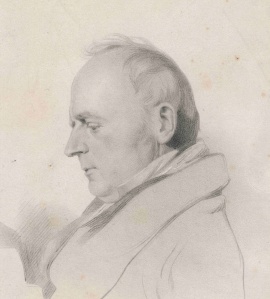
Pastors, I’m challenged by these words from Charles Bridges—

It is indeed a ‘neglect of the gift of God that is in us,’ to trifle either in the study or in the pulpit. God will bless our endeavors—not our idleness. Our Master, and our people for our Master’s sake, have a just claim to our best time and talents, our most matured thoughts, and most careful studies. To venture upon this infinite work of God with slender furniture, proves a guilty unconcern to our high responsibility.

Idleness is not just laziness (although it can be that too). Think of your car when it’s idling: perhaps it’s not in gear, or maybe your foot is still on the brake. In either case, the car is not moving along to its full potential.

It’s the same for us. If we’re not moving along to our full potential as pastors, we’re idling. And that, in the words of Charles Bridges, is a neglect of the gift of God that is in us.

How might you and I be idling?

  • Not spending enough time in prayer? If we’re not praying, we’re operating in our own strength, not in God’s strength.
  • Hunting for a text to share, instead of seeking the mind of the Lord and letting Him reveal the text we should share?
  • Taking on too many projects?
  • Not delegating?
  • Not organizing or planning ahead?
  • Not taking care of our physical health, so we’re battling staying alert or staying healthy?
  • Not spending enough time in personal devotions, so our “tank” is nearly dry?

Those are just a few thoughts that came to my mind. The Holy Spirit can reveal where you may be idling and possibly neglecting such a precious gift, if you will ask Him.

Let’s always be men and women who live up to the full potential of what God has called us to. I’m praying for you!

I Have Arrived!

Listen to the podcast of this post by clicking on the player below, and you can also subscribe on AppleSpotify, or Audible.

Do you remember when you got your first job that came with your name on a business card? What about when you were promoted to an office with your name on the door? Even better: what if you became so influential that your name is now on the stationary, or even becomes a part of the organization’s official name?!?

Look at you! You’ve arrived!

At least that’s how a lot of people see it. The more their name is plastered all over something, the more powerful they feel.

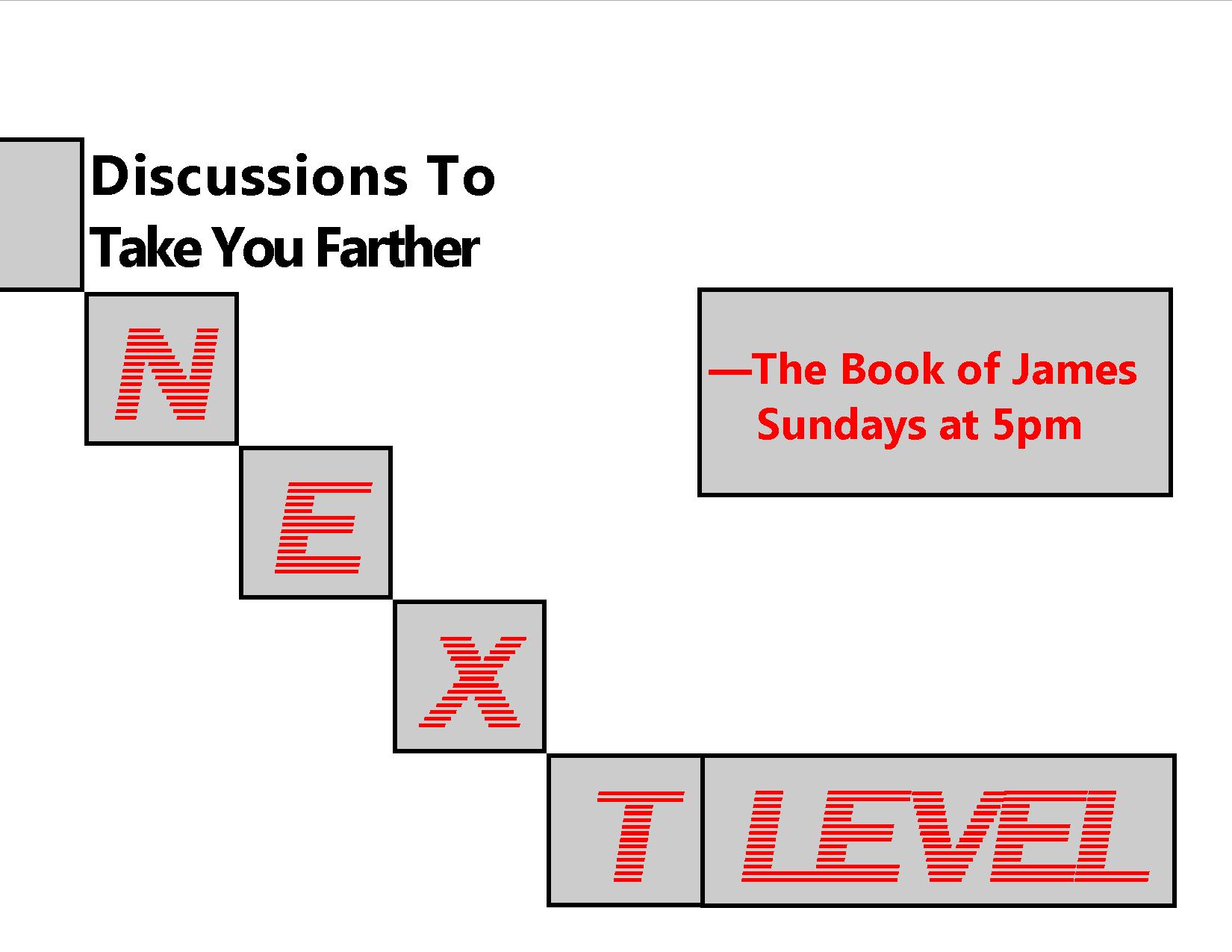
On Sunday evenings our Next Level Bible study is looking at the Book of James. In the first week of our study, we barely got past the first word: James. Who was this guy that has his name attached to a book in the Bible?

  • James was the half-brother of Jesus. In fact, since his name is listed first, he probably was the next oldest sibling after Jesus. Isn’t this the carpenter’s Son? Isn’t His mother’s name Mary, and aren’t His brothers James, Joseph, Simon and Judas? (Matthew 13:55).
  • Since Joseph (the earthly father of Jesus) is not mentioned again in the New Testament, many feel he died while Jesus was a teenager. As a result, after Jesus began His public ministry, the head-of-the-household responsibilities would have passed to James.
  • James met with Jesus one-on-one after His resurrection. Then [Jesus] appeared to James, then to all the apostles (1 Corinthians 15:7).
  • James was recognized by others as the leader of the Church in Jerusalem. James, Peter and John, those reputed to be pillars… (Galatians 2:9). He was also the chairman of the Council in Acts 15, and his decision was the final decision at that meeting.

From all appearances, it looks as though James has arrived! He’s got his name in all the right places, and is one of the most influential people in the early Church.

Yet look at how James referred to himself: James, a servant of God and of the Lord Jesus Christ (James 1:1).

If James thought he had “arrived,” it was only to arrive as a servant. His name may have been on the business card, or the church door, or the church letterhead. But he was only there to serve!

History gives us two other names for this great man: James The Just and Old Camel Knees (because of how much time he spent kneeling in prayer, and kneeling in service to Jesus and His followers).

If I ever “arrive,” I pray that like James I’ve only arrived to serve!

►► Would you please prayerfully consider supporting this ministry? My Patreon supporters get behind-the-scenes access to exclusive materials. ◀︎◀︎

Next Level: James

It was a time of explosive growth. And with that growth came challenges, questions, problems, and opportunities! I’m talking about the Church in its earliest days in Jerusalem.

The Bible tells us that God prepares people in advance (Colossians 2:10) to do the works that He has equipped them to do. Into this environment of rapid growth and previously unheard-of opportunities stepped a man named James. His leadership and wisdom were just what the church needed then.

And his leadership and wisdom are just what the church needs now.

That’s why I’m leading our Next Level study group into an in-depth look at the book James wrote. The wisdom that is found in the Book of James has been called “the proverbs of the New Testament,” and we’ll be learning how to apply those proverbs to our lives and our church.

Please join me for this fascinating and informative study at 5pm each Sunday afternoon.

23 Quotes From “The Inner Chamber & The Inner Life”

I only recently discovered the writings of Andrew Murray, but I’m making up for lost time and reading a lot more of his brilliant insights. Here are 23 quotes from The Inner Chamber and The Inner Life. You can read my full book review by clicking here.

“Personal devotional time is to serve as a means to an end. And that end is—to secure the presence of Christ for the whole day.” 

“Christian! there is a terrible danger to which you stand exposed in your inner chamber. You are in danger of substituting Prayer and Bible Study for living fellowship with God, the living interchange of giving Him your love, your heart, and your life, and receiving from Him His love, His life, and His Spirit. Your needs and their expression, your desire to pray humbly and earnestly and believingly, may so occupy you, that the light of His countenance and the joy of His love cannot enter you. Your Bible Study may so interest you, and so waken pleasing religious sentiment, that—yes—the very Word of God may become a substitute for God Himself, the greatest hindrance to fellowship because it keeps the soul occupied instead of leading it to God.”

“What strength would be imparted by the consciousness: God has taken charge of me; He is going with me Himself; I am going to do His will all day in His strength; I am ready for all that may come. Yes, what a nobility would come into life, if secret prayer were not only an asking for some new sense of comfort, or light, or strength, but the giving away of life just for one day into the sure and safe keeping of a mighty and faithful God.”

“Many are so occupied with the much or the little they have to say in their prayers, that the Voice of One speaking off the mercy seat is never heard, because it is not expected or waited for.”

“Prayer seeks God: the Word reveals God. In prayer man asks God: in the Word God answers man. In prayer man rises to heaven to dwell with God: in the Word God comes to dwell with man. In prayer man gives himself to God: in the Word God gives Himself to man.”

“And where a man gives himself up wholly to the presence of the Holy Spirit, not only as a power working in him, but as God dwelling in him (John 14:16, 20, 23; 1 John 4) he may become, in the deepest meaning of the word, a man of God!”

“God will refuse to unlock the real meaning and blessing of His Word to any but those whose will is definitely set upon doing it.” 

“Keeping Christ’s commandments is the indispensable condition of all true spiritual blessing.”

“The knowledge of the intellect cannot quicken. ‘Though I understand all mysteries and all knowledge, and have not love, I am nothing.’ It is in our daily Bible reading that this danger meets us; it is there it must be met and conquered. We need the intellect to hear and understand God’s Word in its human meaning. But we need to know that the possession of the truth by the intellect cannot profit but as the Holy Spirit makes it life and truth in the heart. We need to yield our heart, and wait on God in quiet submission and faith to work in us by that Spirit. As this becomes a holy habit, we shall learn the art of intellect and heart working in perfect harmony, and each movement of the mind being ever accompanied by the corresponding movement of the heart, waiting on and listening for the teaching of the Spirit.”

“Let a deep sense of our ignorance, a deep distrust of our own power of understanding the things of God even, mark our Bible study. Then, the deeper our despair of entering aright into the thoughts of God, the greater the confidence of expectancy may be. God wants to make His Word true in us.”

“The first and chief mark of being a child of God, of being like Jesus Christ, is an absolute dependence upon God for every blessing, and specially for any real knowledge of spiritual things.”

“Beware of trying to assume this state of mind only when you want to study Scripture. It must be the permanent habit of your mind, the state of your heart. Then alone can you enjoy the continual guidance of the Holy Spirit.”

“The written Word is powerless, except as it helps us to the Living Word.”

“I, nevertheless, urge all Bible students, thoughtfully and prayerfully to enquire whether the very first question to be settled in the inner chamber is not this: Is my heart in the state in which my Teacher desires it to be?”

“The fact of being occupied with, and possessing good wholesome corn, will not nourish a man. The fact of being deeply interested in the knowledge of God’s Word will not of itself nourish the soul.”

“It is not the amount of truth I gather from God’s Word; it is not the interest or success of my Bible study; it is not the increased clearness of view or largeness of grasp I am obtaining, that secure the health and growth of the spiritual life. By no means. All this often leaves the nature very much unsanctified and unspiritual with very little of the holiness or humility of Christ Jesus: something else is needed. Jesus said: My meat is TO DO the will of Him that sent me. Taking a small portion of God’s Word, some definite command or duty of the new life, quietly receiving it into the will and the love of the heart, yielding the whole being to its rule, and vowing, in the power of the Lord Jesus, to perform it: this, and then GOING TO DO IT, this is eating the Word, taking it so into our inmost being, that it becomes a constituent part of our very life.”

“Above all, realize that the world is needing you and depending on you to be its light. Christ is waiting for you as a member of His body, day by day, to do His saving work through you. Neither He, nor the world, nor you, can afford to lose a single day.”

“What can the daily Bible study and prayer profit, unless we set our heart on what God has set His on: the new man being renewed day by day after the image of Him that created him.”

“By nature we are of this world. When renewed by grace we are still in the world, subject to the subtle all-pervading influence from which we cannot withdraw ourselves. And what is more, the world is still in us, as the leaven of the nature which nothing can purge out but the mighty power of the Holy Spirit, filling us with the life of heaven.”

“No diligence or success in Bible study will really profit us unless it makes us humbler, holier men.”

“The Word, separate from God and His direct operation, cannot avail. The Word is an instrument: God Himself must use it. God is the alone Holy One. He alone can make holy. The unspeakable value of God’s Word is that it is God’s means of holiness. The terrible mistake of many is that they forget that God alone can use it or make it effectual. It is not enough that I have access to the dispensary of a physician. I need him to prescribe. Without him my use of his medicines might be fatal. It was so with the scribes. They made their boast of God’s law; they delighted in their study of Scripture and yet remained unsanctified. The Word did not sanctify them, because they did not seek for this in the Word, and did not yield to God to do it for them.” 

“Do not spend your chief time in prayer in reiterating your petition, but in humbly, quietly, confidently claiming your place in Christ, your perfect union with Him, your access to God in Him.”

“Praying and working go together.” 

The Inner Chamber & The Inner Life (book review)

Andrew Murray is a brilliantly straightforward author. There aren’t hidden meanings, or complex phrases, or deep theology to wade through; instead, he takes you right to the heart of the matter. And the heart of the matter in The Inner Chamber & The Inner Life is our daily personal devotional time with God.

Never before have I read a book like this that taught me how to prepare myself to have my personal quiet time with God each morning. I have made it a habit to pray before I open my Bible, asking the Holy Spirit to illuminate the Word to my heart. But Andrew Murray has given us 36 short chapters on how and why we should spend more time preparing ourselves even before we open the Bible.

I am a morning person, so I love to get up early to spend my quiet time with God before my day gets started. Whether you are a morning person or not, Andrew Murray makes a pretty good case for why the morning hour with God is indispensable. (I know my “night owl” friends may groan at this, but you really should check this out!)

If you would like to see your personal devotional time become a richer time with God, you will do well to read The Inner Chamber & The Inner Life.

(Check out some quotes I shared from this book by clicking here.)

Spiritual Sword Play

Pastor, consider these words from Charles Spurgeon—

“We pastors depend entirely upon the Spirit of God to produce actual effect from the gospel, and at this effect we must always aim. We do not stand up in our pulpits to display our skill in spiritual sword play, but we come to actual fighting: our object is to drive the sword of the Spirit through men’s hearts.”

In order to effectively drive the sword of the Spirit through men’s hearts we must be well-trained in spiritual warfare. That training takes place in the secret chamber alone with God. Eugene Peterson gives this warning to pastors—

“Three pastoral acts—praying, reading Scripture and giving spiritual direction—are so basic, so critical, that they determine the shape of everything else in ministry. Besides being basic, these three acts are quiet and done mostly out of the spotlight of public ministry. Because they do not call attention to themselves, they are so often neglected. …Because almost never does anyone notice whether we do these things or not, and only occasionally does someone ask if we do them, these real acts of ministry suffer widespread neglect.”

You cannot give to others what you do not possess yourself!

Pastor, get alone with God. Everyday. Sharpen your sword through private prayer and personal devotion. Everyday!

Counsel From Billy Graham

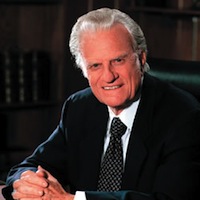
There are very few people who bring to mind such a picture of ministry success, passion for lost souls, and total integrity like Billy Graham.

So for my pastor friends, here are a few quotes from this renowned preacher about study habits, sermon preparation, and message delivery.

“The sword of the Spirit—the Bible—is the weapon God has provided for us to use in this battle between truth and deception. Make it a priority to wield that sword skillfully.”

“If I stick to the Bible and preach the principles and the teachings of the Bible, and quote the Bible, it has an impact of its own.”

“The fact that God is infinite makes the study of His Word a lifetime occupation.”

“A seminary professor I once knew told his students, ‘Never preach about hell without tears in your eyes.’”

“Our preaching emerges out of what we are.”

“Sometimes I’m asked to list the most important steps in preparing for an evangelistic mission, and my reply is always the same: prayer . . . prayer . . . prayer.”

“Preach with authority. The authority for us is the Word of God. Preach with simplicity . . . Preach with urgency . . . Heaven and Hell are at stake. Preach for a decision.”

“Proclaiming ‘the whole will of God’ should be the goal—and the joy— of every church and every preacher.”

“When we preach or teach the Scripture, we open the door for the Holy Spirit to do His work. God has not promised to bless oratory or clever preaching. He has promised to bless His Word.”

“It is vitally important for local church leaders to keep in touch with the spiritual state of their members, to discuss their level of biblical knowledge, and to teach them how to study God’s Word and pray.”

Why Do You Read The Bible?

Do you exercise? Why? What’s the purpose of all of your exercises? To get stronger? To last longer? To get or stay healthy? Yes! But to what end? Why do you want to be stronger, have greater endurance, or better health?

I could ask the same question regarding the spiritual realm: Why would you want to do a spiritual workout? To quote more Bible verses? To have more endurance in prayer? But why do you want to know more of the Bible, or pray better or longer?

Our goal should be simply this: To know God more intimately.

We have to be careful about being so focused on the workout that we miss the purpose (or should I say the Person). Andrew Murray wrote this:

“Christian! there is a terrible danger to which you stand exposed in your inner chamber. You are in danger of substituting Prayer and Bible Study for living fellowship with God, the living interchange of giving Him your love, your heart, and your life, and receiving from Him His love, His life, and His spirit. Your needs and their expression, your desire to pray humbly and earnestly and believingly, may so occupy you, that the light of His countenance and the joy of His love cannot enter you. Your Bible Study may so interest you, and so waken pleasing religious sentiment, that—yes—the very Word of God may become a substitute for God Himself, the greatest hindrance to fellowship because it keeps the soul occupied instead of leading it to God Himself.”

Our spiritual workouts should help us integrate God’s presence into our souls. He is not just someone that we know about; He is the One we know. The One we have let into our hearts. The One who is at the very center of our being. He is the CORE of who we are.

So then, just as you received Christ Jesus as Lord, continue to live in Him. Have the roots [of your being] firmly and deeply planted [in Him, fixed and founded in Him], being continually built up in Him, becoming increasingly more confirmed and established in the faith, just as you were taught, and abounding and overflowing in it with thanksgiving. (Colossians 2:6-7 AMP)

Don’t lose sight of WHY you read the Bible, and respond in prayer; of why you glorify God and enjoy Him forever; of why you go through your spiritual workouts. You do all of this because Christ is in you, and you are in Christ, and you want to strengthen this core relationship, and let everything else that you do flow out from this core!

If you have missed any of the messages in our P119 series, you can access them all by clicking here.

The Greatest Thing In The World (book review)

If you’ve been around Christian circles for any length of time, you probably have heard people talk about the “love chapter” (1 Corinthians 13). And if you’ve heard anyone talk about this love chapter, you probably think you’ve heard all that there is to hear about it. But think again: The Greatest Thing In The World by Henry Drummond will open your eyes to new insights on love.

D.L. Moody heard Henry Drummond share these thoughts live in 1884, and said, “It seemed to me that I had never heard anything as beautiful.” Moody then asked Drummond to not only share this with his congregation but then requested that principals in his schools read this to the students every year.

There are some wonderful insights on love that I think you will thoroughly enjoy in this short book.

If you have a Kindle, you can download The Greatest Thing In The World for free by clicking here. If you don’t have  Kindle, you can read it online for free by clicking here. And be sure to check out some of the quotes I shared from this book by clicking here.