7 Ways To Avoid Becoming An Adulterer

DisciplineGod said quite simple, “You shall not commit adultery” (Exodus 20:14; Deuteronomy 5:18). This entire verse is just one word in the Hebrew language—na’aph—but it packs quite a punch.

Na’aph has two dimensions to it: physical and spiritual. Physically it prohibits sexual relations between a married person and someone not their spouse. Closely related to adultery is fornication, which is unmarried people engaging in sexual activity outside the covenant of marriage. Spiritually na’aph prohibits worship of anything other than Jehovah God.

This means that an inappropriate intimate relationship on the physical level affects our spiritual relationship with God, and vice versa. That is why immoral sexual acts are almost always incorporated into the worship of false gods. But which came first? Did someone leave behind God’s design for sexuality and begin a downward slide away from Him, or did someone’s heart stray from God and the evidence was the illicit sexual acts? It starts when we leave God’s love behind (see Romans 1:21-32).

Adultery and fornication are fueled by lust. Lust is rooted in selfishness. And by it’s very definition, selfishness kills love. Adulterers and fornicators cannot truly love each other; they are only using each other to satisfy their own selfish cravings, and in so doing, they are actually abusing each other.

So here are 7 ways to avoid becoming an adulterer:

  1. Love God passionately—Mark 12:30.
  2. If you’re married, invest in your marriage—emotionally, physically, mentally, spiritually.
  3. If you’re single, develop discipline. I define discipline as choosing what you want most over what you want now.
  4. Guard your eyes—Job 31:1.
  5. Avoid tempting places—Proverbs 5:8.
  6. Fill your mind with God’s Word—Proverbs 6:20-24.
  7. Have an accountability friend—Proverbs 7:6-9.

Any sexual relationship outside of God’s prescription—one man married to one woman for life—short-circuits God’s design, so it can never fully satisfy. Adultery and fornication break God’s heart because of the damage it does to our relationship with Him and to our relationships with each other.

If you have missed any of the messages in our series The Love In The Law, you can find them all by clicking here.

Links & Quotes

link quote

Some good reading from today…

C.S. Lewis on the value of “one another.”

“Faith is the backbone and marrow of the Christian’s power to do good: we are weak as water till we enter into union with God by faith, and then we are omnipotent. We can do nothing for our fellowmen by way of promoting their spiritual and eternal interests if we walk according to the sight of our eyes; but when we get into the power of God, and grasp His promise by a daring confidence, then it is that we obtain the power to bless.” —Charles Spurgeon

“As long as I see anything to be done for God, life is worth having; but O how vain and unworthy it is to live for any lower end!” —David Brainerd

“Let each citizen remember at the moment he is offering his vote that he is not making a present or a compliment to please an individual—or at least that he ought not so to do; but that he is executing one of the most solemn trusts in human society for which he is accountable to God and his country.” —Samuel Adams

In Desperate Need Of A Physician

Here’s a really simple statement: You cannot give what you do not have. Even if I really want to give my friend the $20 he is asking for, I can’t give it to him if my wallet is empty. And yet pastors are guilty of trying to do this spiritually frequently.

Somehow we’ve forgotten that Peter denied Jesus, that Paul persecuted Christians and called himself the chief of sinners, that James at one time thought Jesus was out of His mind. We hold these men up as “saints” and “perfect” pastors. But all of these men knew that they were were in desperate need of The Physician who could restore them and fill them for service.

Pastor, do you feel the need to look “perfect” to your congregation? Are you leery of ever mentioning any of your shortcomings? Do you think you have to have what everyone else needs? Do you think you have to answer every call?

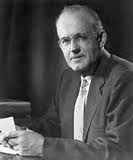
Read carefully these words from A.W. Tozer—

Tozer

“Human nature being what it is, the man of God may soon adopt an air of constant piety and try to appear what the public thinks he is. The fixed smile and hollow tones of the professional cleric are too well known to require further mention. All this show of godliness, by the squeeze of circumstances and through no fault of the man himself, may become a front behind which the man hides, a plaintive, secretly discouraged and lonely soul. Here is no hypocrisy, no intentional double living, no actual desire to deceive. The man has been mastered by the circumstances. He has been made the keeper of other people’s vineyards but his own vineyard has not been kept. So many demands have been made upon him that they have long ago exhausted his supply. He has been compelled to minister to others while he himself is in desperate need of a physician.” (emphasis added)

My dear pastor, please drop the pretense: you are not super-human.

  • It’s okay to say “no” to another request so you can spend time at home.
  • It’s important to make the time to “keep your own vineyard”—read the Bible for you (not for sermon prep), spend time with your spouse and children, get a good night’s rest, take a vacation.
  • You need to find a friend who can hold you accountable, and listen to your struggles, and pray for you.
  • You must take all the time you need to get filled up with God’s presence, to meet with The Physician of your soul.

Remember: you cannot give what you do not have. So make sure you’ve got it before you try to give it!

Watch Out For Pride

Listen to the podcast of this post by clicking on the player below, and you can also subscribe on AppleSpotify, or Audible.

This post is especially for my fellow pastors, but it would be thoughtful reading for anyone in a leadership position.

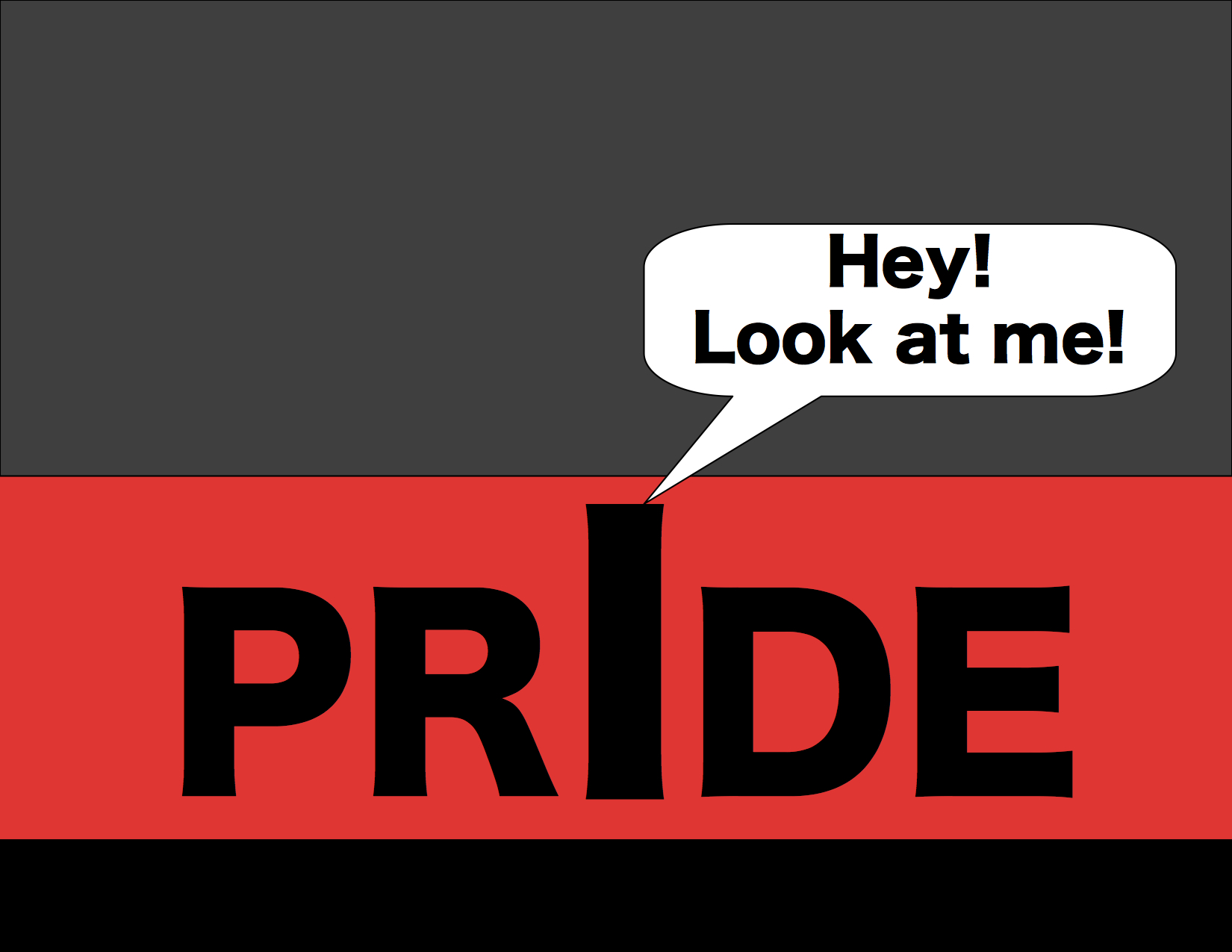
Let me state it simply: Pastor, you need to watch out for pride.

Listen to the words of A.W. Tozer—

“A clergyman is a man, and often he has a proud little kingdom of his own, a kingdom of position and often of pride and sometimes with power.”

Pride is so insidious that it can creep into the hearts of leaders at anytime.

  • When things are going well. We think to ourselves, “Look what I’ve done” or we even spiritualize it a bit to say, “Look what God’s done through me.”
  • When things are going poorly. Pride causes us to look out the window at others, instead of looking in the mirror at ourselves.
  • When we’ve successfully handled a situation. We think, “Wow, I’ve really got it!”
  • When we’ve dropped the ball and we make excuses instead of asking for forgiveness.
  • And on and on it goes….

One of the things that has helped me immensely is the thoughts Kenneth Blanchard and Phil Hodges shared in their book Lead Like Jesus. They point out that every leader has an ego. The issue is what kind of ego is it?

It can be negative: E.G.O. = Edging God Out 

It can be positive: E.G.O. = Exalting God Only

So what do we do to make sure we have the God-honoring E.G.O.?

  • Look in the mirror. James says the Bible is the perfect mirror. So how does your life line up with the Scripture? Don’t sugarcoat it … Don’t make excuses … Say the words “Look at me” or “Wow, I’ve got it” out loud. Do you find those in God’s Word? If not, root it out!
  • Get some tough guys around you. You need some loving people around you that aren’t the ones writing your press releases. You need people around you that can boldly say, “Ahem! You appear to be getting off track.”
  • Monitor your gut-level responses. If you feel defensive, or if you feel the need to justify or make excuses, watch out because that’s pride’s signature.
  • Stay on your knees. Not only in prayer, but in service too. It’s awfully hard to get full of yourself when you’re washing feet, or scrubbing toilets. If you ever think any job is beneath you, watch out because you may have been infected by pride.

“Depth under depth of self-love and self-admiration. Pride! It was through Pride that the devil became the devil; it is the complete anti-God state of mind. Pride is essentially competitive in a way the other vices are not. Pride is a spiritual cancer. —C.S. Lewis

I have two companion chapters in my book Shepherd Leadership: The Metrics That Really Matter that dive deeper into this topic: “A confident leader’s attitude adjustment” and “A humble leader’s attitude adjustment.” I hope you will pick up a copy.

►► Would you please prayerfully consider supporting this ministry? My Patreon supporters get behind-the-scenes access to exclusive materials. ◀︎◀︎

Thursdays With Oswald—Temptation

This is a weekly series with things I’m reading and pondering from Oswald Chambers. You can read the original seed thought here, or type “Thursdays With Oswald” in the search box to read more entries.

Temptation 

     The old Puritan idea that the devil tempts men had this remarkable effect, it produced the man of iron who fought; the modern idea of blaming his heredity or his circumstance produces the man who succumbs at once. … 

     When we say a thing is “satanic” we mean something abominable according to our standards: the Bible mean something remarkably subtle and wise. … The Holy Spirit is the only One who can detect the temptations of satan, neither our common sense nor our human wisdom can detect them as temptations. …

     satan does not tempt to gross sins, the one thing he tempts to is putting myself as master instead of God. …How are we to face the tempter? By prayer? No. With the Word of God? No. Face the tempter with Jesus Christ, and He will apply the Word of God to you, and the temptation will cease. “Because He Himself suffered when He was tempted, He is able to help those who are being tempted” (Hebrews 2:18). The moments of severest temptation are the moments of His divinest help. 

From Disciples Indeed 

There’s not much to add to Oswald Chambers’ words, except this: Beware of your pride which says, “I am above temptation.” The Bible says,

So, if you think you are standing firm, be careful that you don’t fall! (1 Corinthians 10:12).

And one more thought: Beware of your pride which says, “I can defeat temptation on my own!” In order to defeat temptation you need (a) God’s Word to fortify you, (b) the Holy Spirit to apply that Word; (c) Christ’s nature to stand up to the tempter; and (d) iron-sharp friends who will hold you up and hold you accountable.

You will be tempted.

You can defeat temptation.

You cannot defeat temptation on your own.

Why Great Men Fall (book review)

Dr. Wayde Goodall addresses a subject that I wish didn’t have to be addressed in Why Great Men Fall. Unfortunately, we’ve all seen it; perhaps you’ve even experienced it firsthand with someone close to you. How tragic it is when we see spiritual, business or political leaders lose their influence in the wake of a devastating fall.

Dr. Goodall pulls no punches as he identifies the things that seem to trip men up time and time again. He looks squarely at the root causes – not just the symptoms – and challenges men to do the same. We’re all susceptible to sin and failure. The Bible warns us: “So, if you think you are standing firm, be careful that you don’t fall!” (1 Corinthians 10:12).

These words from J.C. Ryle are a sober reminder:

“Great falls seldom happen to a saint, without a previous course of secret backsliding. The church and the world are sometimes shocked by the sudden misconduct of some great professor of religion. Believers are discouraged and stumbled by it. The enemies of God rejoice and blaspheme. But if the truth could be known, the explanation of such cases would generally be found to have been private departure from God. People fall in private, long before they fall in public. The tree falls with a great crash, but the secret decay which accounts for it, is often not discovered until it is down on the ground.”

Why Great Men Fall is not a long book, nor does Dr. Goodall present complicated arguments. It’s a straightforward, easy-to-understand diagnosis of the most common things which trip up great men. I cannot encourage you strongly enough to not only read this book, but to read it with a friend who will hold you accountable.

Guys, your family, your church, and your community need you to STAND STRONG!

Don’t Get Left Behind

This post is especially for the men (but, ladies, feel free to read along too).

No, I’m not talking here about the series of Left Behind books that tell a story about people who may miss out on the rapture of the Church. I’m talking about you leaving the protection of your friends and being exposed to a serious defeat.

Most times when I am counseling men who have given in to a temptation, or those who are battling the same old perplexing problems, I find a common theme. It’s not something new—it’s been around a long, long time.

Take this for example:

In the spring of the year, when kings normally go out to war, David sent Joab and the Israelite army to fight the Ammonites.

You probably know the rest of this sad story: David cannot contain his lust for Bathsheba (another man’s wife) so he seduces her, sleeps with her, gets her pregnant, and then kills her husband to try to cover it up. But look where it all started: David was alone. When he normally would have been with his brothers-in-arms, he stayed behind.

I’m a big believer in accountability, so I’ve written before about a brother who makes sure I stay on the straight-and-narrow. What about you? Are you trying to stay pure all by yourself? Are you battling temptations on your own?

Two people are better off than one, for they can help each other succeed. If one person falls, the other can reach out and help. But someone who falls alone is in real trouble. Likewise, two people lying close together can keep each other warm. But how can one be warm alone? A person standing alone can be attacked and defeated, but two can stand back-to-back and conquer. (Ecclesiastes 4:9-12)

Don’t try to go into battle all by yourself. If David—a man after God’s own heart—couldn’t win on his own, what makes you think you can?

Do You Read The Bible Or Does The Bible Read You?

I’ve been studying the lives of the kings of Judah. The last God-fearing king before the fall of Jerusalem was a man named Josiah. He became king as an 8-year-old and really began looking for God as a teenager. Apparently, during all of this time, the book of the Law (the first five books of our current Bible) was hidden away and forgotten. As Josiah started seeking God, he gave orders that the temple in Jerusalem be repaired. During the clean-up work, the workers rediscovered the book of the Law and brought it to the palace. They began to read the Law to Josiah

When the king heard the words of the Law, he tore his robes.

Tearing of the robes is a sign of deep mourning. The words of Scripture cut Josiah like a dagger to the heart because he knew he and his people weren’t living according to God’s standards. He started telling everyone the Scriptural standards that they needed to honor, and had the words of the Law read aloud for everyone to hear. Then in the presence of everyone, Josiah reaffirmed his commitment to be a man who lived by the words of God’s Word.

This got me thinking:

  • Do I have an emotional response when I read the Bible? Or is it just a mental exercise? Or worse yet, just a meaningless daily habit?
  • Am I truly sorry when I read in the Bible where I’ve fallen short of what God desires? Or do I make excuses?
  • Do I ask the Holy Spirit to help me live out what I’ve read in the Word? Or do I convince myself that those parts don’t pertain to me?
  • Do I share with others what’s been revealed to me? Or do I keep it to myself?
  • Am I willing to be accountable to others about the changes I need to make? Or am I trying to be a lone ranger saint?

Do I just read the Bible? Or do I allow the Bible to read me?

Chazown (book review)

I’m a huge Craig Groeschel fan, and Chazown didn’t do anything to diminish my respect and admiration for what Craig has to say. Chazown may be a funny-looking word (it’s pronounced khaw-zone, by the way), but it is vitally important to a successful life.

Right at the beginning of the book, Craig defines the importance of Chazown this way:

Where there is no Chazown—no dream, no revelation, no vision, no sense of our created purpose—we perish.
Where there is no vision that you were created to have a growing, lifelong, and personal relationship with your Creator, your inner being withers and dies.
Where there is no vision that you have been placed on earth to matter deeply to people, and reveal God’s love and power to them, you live in loneliness and your relationships perish.
Where there is no vision for a godly family, you have a 50 percent chance of ending up divorced.
Where there is no vision that your body is the temple of God’s Spirit—property on loan from Him—your physical health slips away. Your exuberance fades.
Where there is no vision for a financially wise lifestyle, you can live in the richest country on earth and still be drowning in debt.
Where there is no vision for meaningful work, people live for five o’clock. They really just exist. Their goal is to survive—to pay bills, stay married, keep the kids out of jail….
But you and I were made for so much more.

Chazown is easy to read (most of the chapters are very short), and the “You Are The Author” exercises throughout the book make the message of chazown applicable to your life. And Craig’s transparency about his own struggles and successes makes the message of chazown real to your life.

A key component in making your chazown work for you is accountability. The back of this book contains study guides for small groups, and there are plenty of team resources available on the chazown website.

This book is especially timely at the beginning of a New Year when so many are making resolutions. Chazown can help you make meaningful life changes that make a real difference.

I am a Multnomah book reviewer.

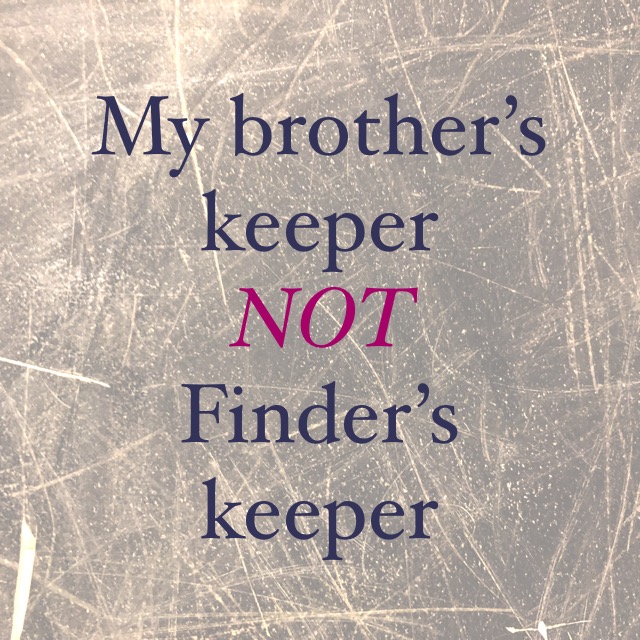
My Brother’s Keeper…

…is not Finder’s Keeper.

Society has it backward: On the playground, on the worksite, and sadly even in the church, we tend to play by the opposite:

  • I found it, so I get to keep it!
  • Hey, I’m not my brother’s keeper!

Look at what God says:

If you see your neighbor’s ox or sheep or goat wandering away, don’t ignore your responsibility. Take it back to its owner. If its owner does not live nearby or you don’t know who the owner is, take it to your place and keep it until the owner comes looking for it. Then you must return it.

My brother’s property is my responsibility. Notice that even if I don’t know who the owner is, I’m still supposed to safeguard his property until I can return it to him.

Finding something that isn’t mine makes me responsible to care for it. I am my brother’s keeper; it’s not simply finder’s keeper.

What if my mindset changed to, This is yours, but I’m going to take care of it like it’s mine until I can return it to you?

What if my values became focused on…

  • Mutual accountability?
  • Shared responsibility?
  • Genuine community?

I must be the change I wish for our society. I need to care for anothers’ property as much as I care for my own.

Would you join me in changing your community away from Finder’s Keeper and toward Brother’s Keeper?