


Brandon’s class had their annual “Living Wax Museum” at school yesterday. Can you guess who Brandon portrayed?
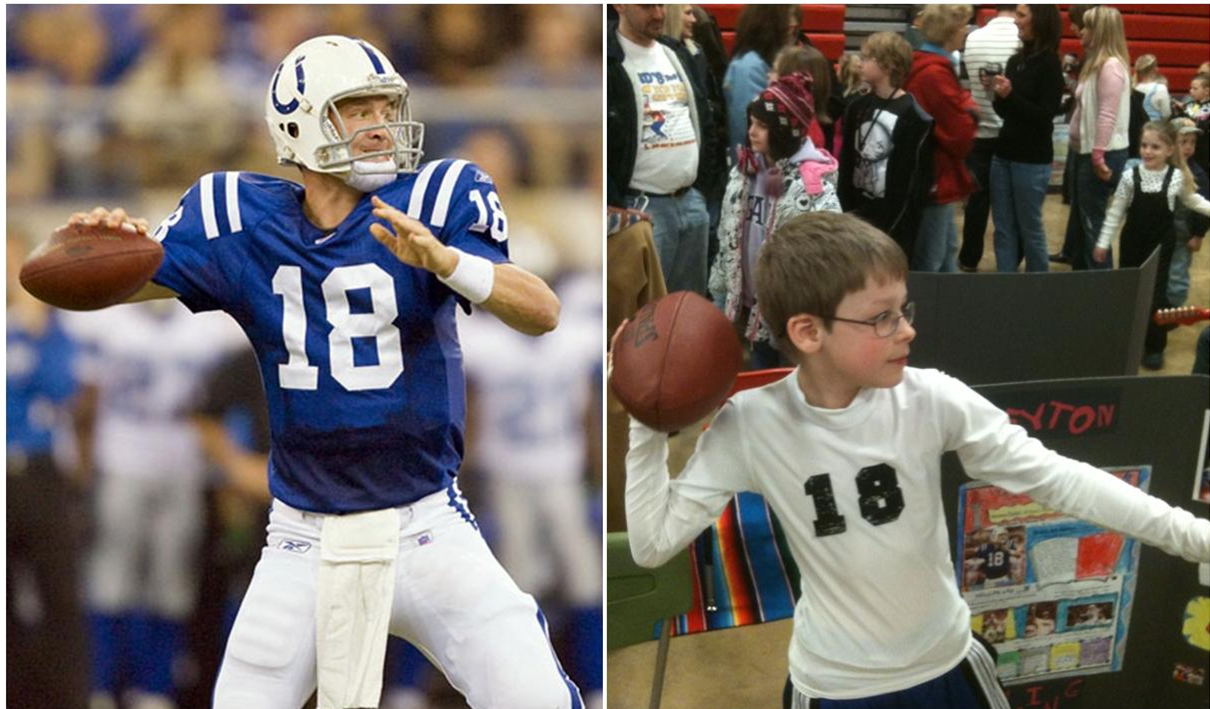
Brandon’s class had their annual “Living Wax Museum” at school yesterday. Can you guess who Brandon portrayed?
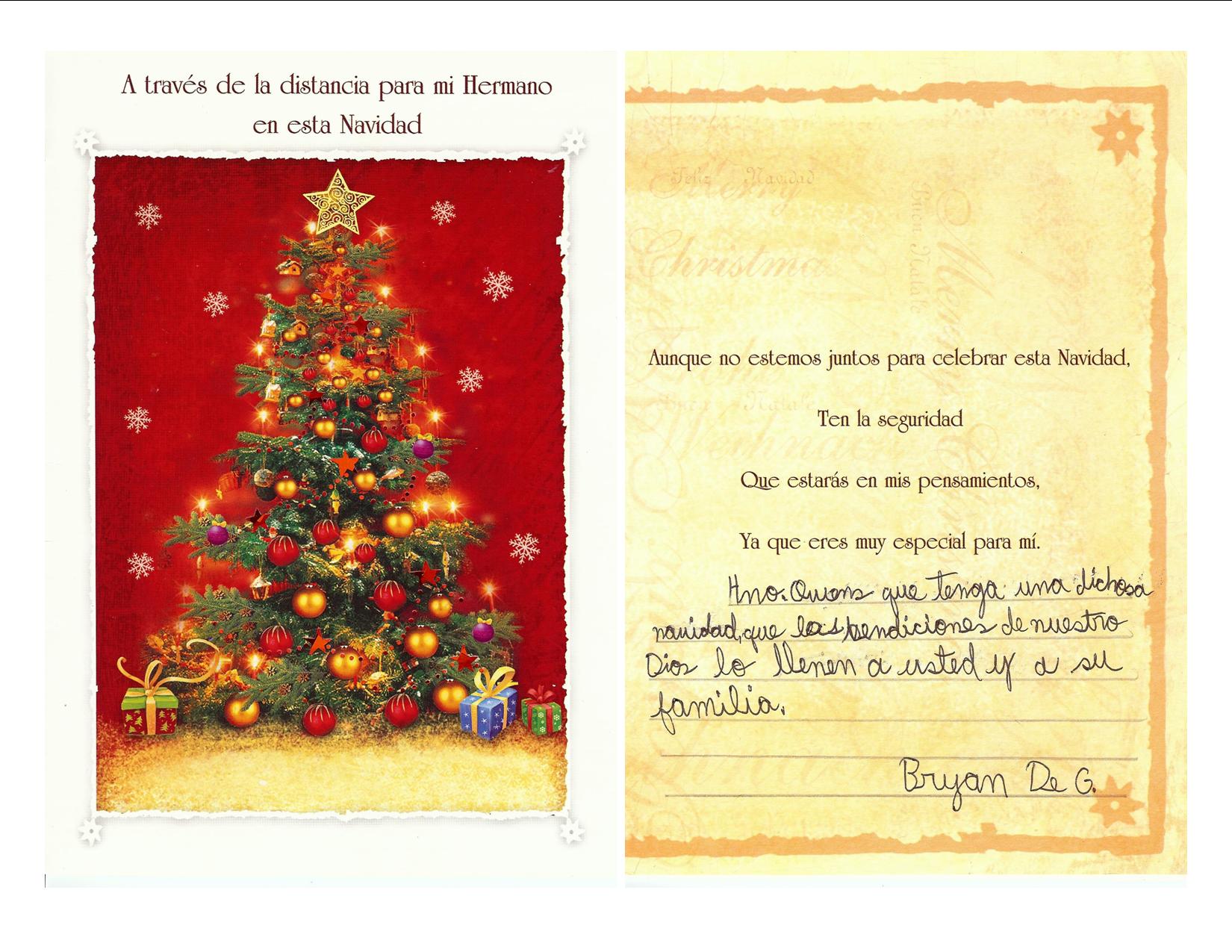
I shared with you in an earlier post that our family had taken on the sponsorship of Bryan DeGracia through Latin America Child Care. We were all very excited to be able to expand our family this way.
We received a nice surprise in the mail: a Christmas card from Bryan! We were told it would take a little time for our first correspondence with Bryan to begin. Now that it has we’re looking forward to getting to know him better.
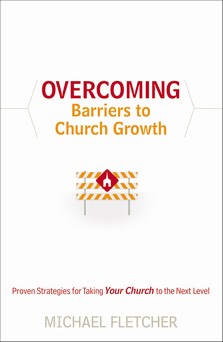
Hold on a second. I’m sure when you saw the title of Michael Fletcher’s book—Overcoming Barriers To Church Growth—there were two thoughts that could have immediately popped in your mind: (1) “I’m not a pastor, so this book’s not for me”; or (2) “I am a pastor, but no one’s going to tell me how to grow my church.”
If you thought either of those things and didn’t explore this book any further, you’d really be robbing yourself.
In the case of the first objection (“I’m not a pastor”), Fletcher does a good job in making the case that church life is a team sport. The pastor cannot grow the church; the elders cannot grow the church; the attendees cannot grow the church. At least, not by themselves. Everyone needs to be involved for the church to be healthy.
In the case of the second objection (“No one’s going to tell me how to grow my church”), I would lovingly point out, “God opposes the proud, but gives grace to the humble.” Pastor Fletcher’s humble goal in writing this book was to help churches grow beyond the two natural barriers that every church will face. You’d be wise to let his hindsight be your foresight.
I found myself immediately drawn into this book. Michael’s writing style is very conversational and easy-flowing. And the concepts are uncomplicated and lend themselves to being quickly applied. The more I read the more excited I became about the potential in our church.
If you are a part of a church—pastor, elder, or attendee—you and your church will benefit from reading this book. Remember the church is a Body, so we all have our part to play in it. Arming yourself with the principles in this book will help you to play your part even better.
I’m a Bethany House book reviewer.
 I just read an amazing story about a West Michigan doctor working in Haiti. You can read the full article here, but let me highlight one section:
At a small health clinic east of capital city Port-Au-Prince, a teenage boy with a broken pelvis was dying from loss of blood.
West Michigan orthopedic surgeon Gregory Golladay sized up the options, then acted.
“He was the same blood type as me. He had a hemoglobin level of 5. You don’t have that and live long. His heart rate was 150. His blood pressure was 80 and going south. He was going to die.”
“I gave as much as I could into an IV bag and he lived,” recalled Golladay, 39, who is among a rotating group of physicians from Orthopedic Associates of Michigan offering critically needed medical care in Haiti.
“It is indescribable really. To see him survive was a very emotional experience. We said we were brothers and I believe it.”
Sounds just like Jesus, doesn’t it?
We were dying. Crushed by sin. There wasn’t much time left. Then Jesus came to earth to die on a Cross for you and me. He gave us His blood so that we could live:
For God so loved the world that He gave His one and only Son. That whoever would believe on Him should not die but have everlasting life. (John 3:16)
And now, when we accept what Jesus did for us, we are His brothers and sisters:
God decided in advance to adopt us into His own family by bringing us to Himself through Jesus Christ. This is what He wanted to do, and it gave Him great pleasure. (Ephesians 1:5)
 On Sunday we had our annual business meeting at Calvary Assembly of God. The actual business part was minimal. The more exciting things included hearing how God had blessed us last year, and looking forward to the greater things we can do for Him this year.
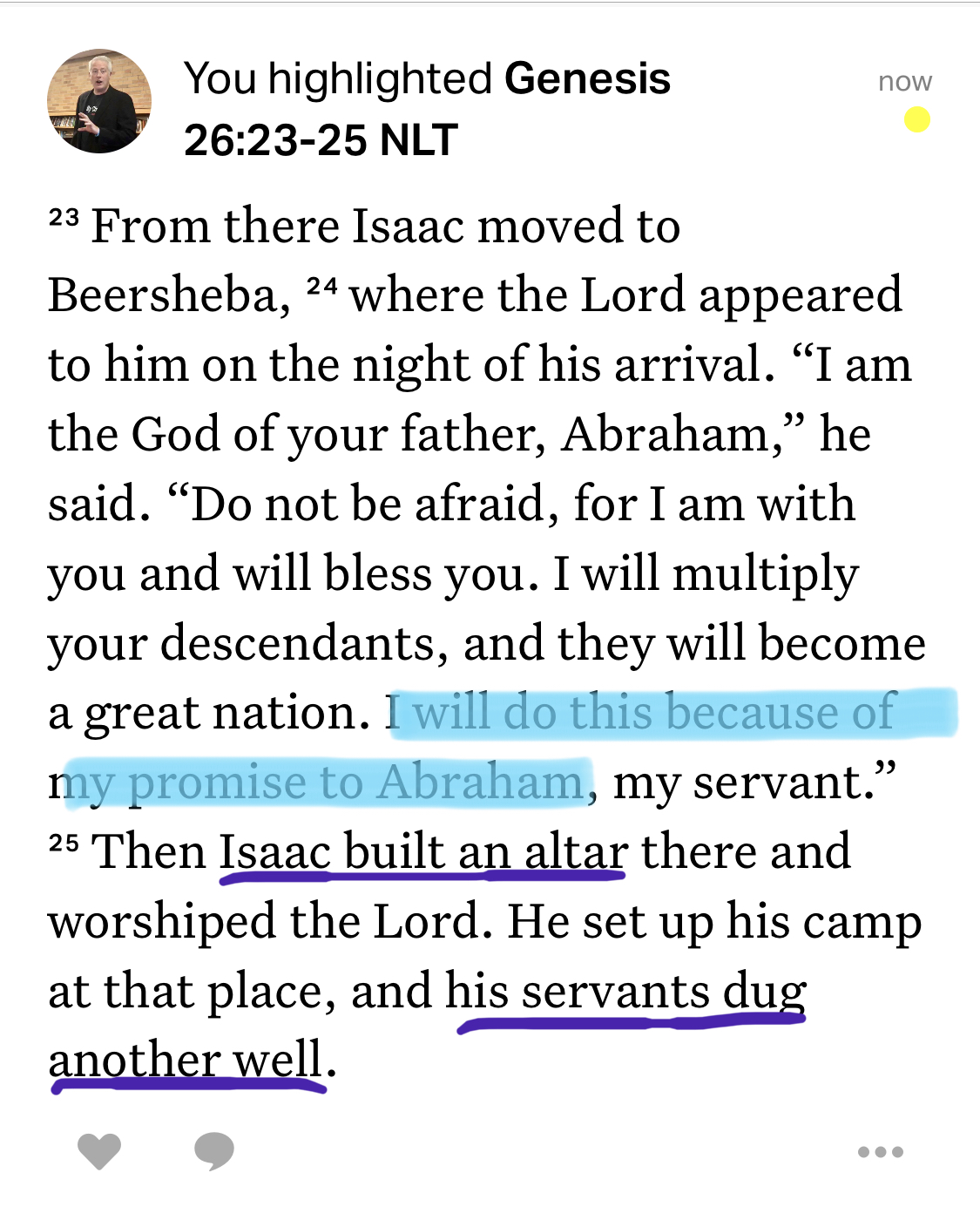
I shared a story from Genesis 26 about Isaac. This story just keeps rolling around in my mind.
Initially, God blessed Isaac just because he was Abraham’s son. God said, “Abraham obeyed me. He did everything I asked him to do, so I blessed him.” Then God challenged Isaac: “I am willing to bless you with even more if you, too, will follow Me.”
It’s interesting to note what Isaac did first. He reopened all of the old wells his father had dug, and he gave them the same name Abraham had given them…
…he honored the heritage of his father.
Honoring those who have gone before us is so important. But it’s not enough.
If Isaac was going to experience more of God’s blessings, he couldn’t be satisfied with just drinking from the old wells. Don’t get me wrong: it was good of him to reopen those wells…
…but if that’s all he did, he would have just maintained the status quo.
Isaac had to dig new wells. It didn’t start so well. The first two wells he tried to dig on his own led to quarrels with his neighbors…
…the enemy doesn’t fight against those who maintain the status quo.
…the enemy only quarrels with us when we try to dig new wells.
Isaac kept at it, and his third attempt was successful. Here’s the payoff:
…we can honor our heritage by reopening the old wells and drinking from them.
…AND we can continue to dig new wells so that we can minister to more people.
It’s not EITHER-OR. It’s BOTH-AND.
I’m trying to maintain that balance…
…re-digging the old and drinking the new.
…looking back and looking forward.
…honoring our heritage and leaving a new legacy.
…digging and drinking.
 We started our Love To The Fourth Power series yesterday morning, looking at what it means to Love God with all your heart… and to love your neighbor the same way. As usual, I’m speaking more to myself than I am to our congregation. During my study time, the Holy Spirit usually does a number on me!
So here’s the recap from yesterday:
I love this picturesque quote from C.S. Lewis:
“When I come to my evening prayers and try to reckon up the sins of the day, nine times out of ten the most obvious one is some sin against charity; I have sulked or snapped or sneered or snubbed or stormed. And the excuse that immediately springs to mind is that the provocation was so sudden or unexpected. I was caught off my guard, I had not time to collect myself…. Surely what a man does when he is taken off guard is the best evidence of what sort of man he is. Surely what pops out before the man has time to put on a disguise is the truth. If there are rats in the cellar you are most likely to see them if you go in very suddenly. But the suddenness did not create the rats; it only prevents them from hiding. In the same way, the suddenness of the provocation does not make me an ill-tempered man: it only shows what an ill-tempered man I am….”
I’m working on looking for the rats in my cellar without making any excuses for how they got there. I just want the Holy Spirit to reveal them and help me eliminate them.
I want my REaction to be compassion all the time.
 As I look back on today I feel so blessed…
…blessed to be pastoring Calvary Assembly of God.
…blessed to have talented and Spirit-led leaders around me.
…blessed to lead worship with gifted and passionate worship leaders.
…blessed that God meets with us every single time we gather together.
…blessed that our congregation responds so enthusiastically to the Word of God week after week.
…blessed by the prayerful dedication of our spiritual forerunners.
…blessed that our congregation wants to move forward into new territory.
…blessed by the unity among our church family.
If you haven’t got the point yet: I’m one blessed pastor! I can hardly wait to see what God is going to do next. It’s going to be absolutely incredible!
 Since February is known as the “love month,” we’re starting a new series this week at Calvary Assembly of God called “Love(4)” = love to the fourth power.
I’m keying off this exchange between an expert lawyer and Jesus:
“Teacher, which is the greatest commandment in the Law?” The lawyer asked.
Jesus replied, “Love the Lord your God with all your heart and with all your soul and with all your mind and with all your strength. This is the first and greatest commandment.”
Four dimensions of love: heart, soul, mind, strength.
Love to the fourth power.
I also want to give credit to Mark Batterson and his excellent book Primal for reawakening me to the power of this foundational concept.
I’d love for you to join us at 10:30am on any Sunday in February for a new look at this higher love.
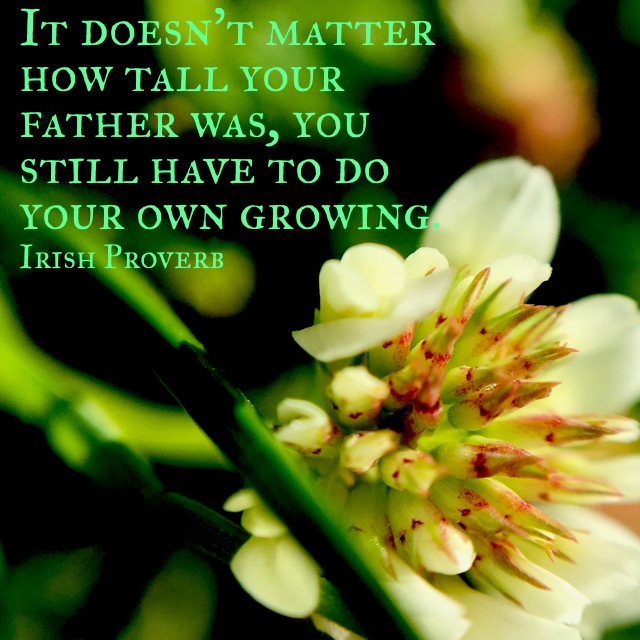 An Irish Proverb says, “It doesn’t matter how tall your father was, you still have to do your own growing.” In other words, my genes may give me a certain predisposition, but I still have to grow on my own.
The same could be said spiritually: “It doesn’t matter how close to God your parents were, you have to approach Him yourself.”
Abraham was so close to God that he was called “friend of God.” His son Isaac had some great spiritual genes, but he still had to do his own growing.
Isaac had the perfect opportunity shortly after Abraham’s death. He and his wife Rebekah wanted to start a family, but they weren’t able to do so. Then comes this great phrase:
…Isaac prayed to the Lord on behalf of his wife…
He got it! And God heard his prayer: Rebekah became pregnant with twins.
Rebekah’s parents were also close to God. But now pregnant and far, far away from home, she was having difficulty with her pregnancy. That’s when Rebekah had her chance to do her own spiritual growing,
…Rebekah went to inquire of the Lord…
She got it too!
Not only was this good for them as individuals, but undoubtedly it strengthened their marriage as well. I have found that couples who pray stay.
Are you doing your own growing today?
If you’re still blaming a parent for holding you back, it’s time to start doing your own growing.
You can do it—start talking to God yourself today!
 I read this quote this morning from David F. Wells. It’s very challenging. I believe my responsibility as a pastor is to always be wrestling with issues like this.
What do you think about this quote:
“. . . Where Christian faith is offered as a means of finding personal wholeness rather than holiness, the church has become worldly.
“There are many other forms of worldliness that are comfortably at home in the evangelical church today. Where it substitutes intuition and feelings for biblical truth, it is being worldly. Where its appetite for the Word has been lost in favor of light discourses and entertainment, it is being worldly. Where it has restructured what it is and what it offers around the rhythms of consumption, it is being worldly, for customers are actually sinners whose place in the church is not to be explained by a quest for self-satisfaction but by a need for repentance. Where it cares more about success than about faithfulness, more about size than spiritual health, it is being worldly. Where the centrality of God to worship is lost amidst the need to be distracted and to have fun, the church is being worldly because it is simply accommodating itself to the preeminent entertainment culture in the world.
“Is it not odd that in so many church services each Sunday, services that are ostensibly about worshiping God, those in attendance may not be obliged to think even once about His greatness, grace, and commands? Worship in such contexts often has little or nothing to do with God.” —David F. Wells


 Craig T. Owens