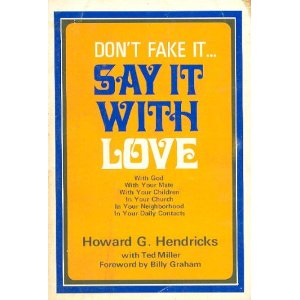
Say It With Love (book review)

There is a verse in the Bible that tells us to speak the truth in love. And that’s exactly what Howard Hendricks lives by in Say It With Love: The art and joy of telling the Good News.

For Professor Hendricks, the good news about Jesus Christ is not something that is just shared by a pastor on Sundays, but it’s something all Christians should be sharing all the time. And not just with words either, but with our very lives.

Dr. Hendricks challenges us to know why we are sharing the message of God’s love; to put ourselves in a position to share that message effectively; and then to live that message out in all of the roles of our life. This third section was the most impactful for me. Dr. Hendricks talks persuasively about living the message…

  • …with God
  • …with your mate
  • …with your children
  • …in your church
  • …in your neighborhood
  • …in your daily contacts

This is both a hopeful book and a convicting book. It’s an easy read with lots of Dr. Hendricks’ personal stories sprinkled in as examples. If you want to do a better job communicating the message of the gospel, you should check out this book.
Plant The God Seed

Have you ever been disappointed because you had a dream that died? How do we justify this with the biblical definition of faith which says, “faith is being sure of what we hope for”?

It’s just this:

  • If God takes away a dream, it’s because the dream was too small.
  • God wants us to be more focused on the Dream Giver than we are on the dream.

So sometimes God asks us to let a dream die.

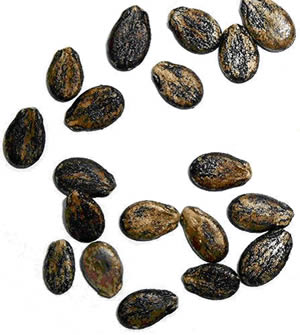
Think of a watermelon seed. It’s not very big, sort of dull in color, and it’s only a single seed. To plant the seed, means you have to take your hands off it: the seed is now out of your sight and out of your control. But it is there—dead in the ground—that a miracle happens!

A single watermelon seed grows 200,000 times its own weight! A colorless seed produces the vibrant greens and pinks of a mature watermelon. And that single seed produces 100+ seeds.

Has God given you a dream? Has He asked you to give up that dream? Then plant that seed! When you do, the results will be more than you can imagine.

“Faith is to believe what we do not see; and the reward of faith is to see what we believe.” —Augustine

These are some of my notes from part 3 of my See The Invisible series at Calvary Assembly of God. I would love to have you join me when we continue this series on September 4.

Un-Dragoned

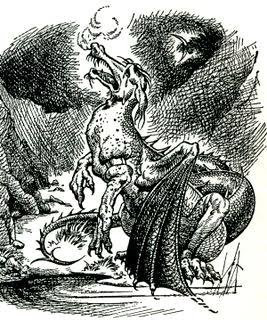
I love the scene in C.S. Lewis’ The Voyage Of The Dawn Treader where Eustace is changed back from a dragon into a boy. Not changed back into the same person, because he was surely different from that point on.

Eustace was desperate to be un-dragoned, but despite his best efforts, he couldn’t do it himself. He had to let Aslan do it for him. Eustace said,

Then the lion said, “You will have to let me undress you.” I was afraid of his claws, I can tell you, but I was pretty nearly desperate now. So I just lay flat down on my back and let him do it.

Have you ever been where Eustace was? So desperate to lose something dragon-like in your life, but unable to do it yourself?

The problem for many of us comes after we pray to God for help. We pray, and God shows up. But after He shows up, we want to tell Him how He should take care of us, instead of just letting Him do His work. Listen: if I could have done it on my own, I wouldn’t have called on God. Once I’m desperate enough to cry out for His help, why do I then still want to be in control?!

God is so gracious to us! After we’ve been undressed from our dragon-like state, He covers us in clothes He Himself has fashioned for us. Eustace explained,

“After a bit the lion took me out and dressed me–“

“Dressed you. With his paws?”

“Well, I don’t exactly remember that bit. But he did somehow or other: in new clothes.”

Don’t let any dragon-ness in your life keep you from everything God has for you. And don’t try to un-dragon yourself (because, honestly, you can’t do it!). Let our gentle God un-dragon you, and then dress you in new clothes He’s made just for you.

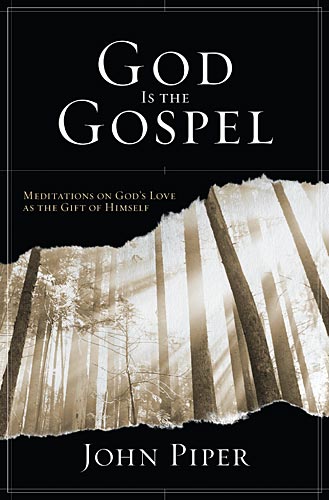
God Is The Gospel (book review)

John Piper is always a challenging read for me. He stretches my horizons, challenges my paradigms, and forces me to dig deeper into Scripture. In God Is The Gospel, I felt like he was writing to me specifically in my role as a pastor of a growing church.

The gospel is good news, right? But good news about what? Or more importantly: Who? Here’s how Pastor John himself describes why he wrote this book:

“The point of this book is that the Christian gospel is not merely that Jesus died and rose again; and not merely that these events appease God’s wrath, forgive sin, and justify sinners; and not merely that this redemption gets us out o Hell and into Heaven; but that they bring us to the glory of God in the face of Jesus Christ as our supreme, all-satisfying, and everlasting treasure. ‘Christ… suffered once for sins, the righteous for the unrighteous, that He might bring us to God’ (1 Peter 3:18).”

Too many times as a pastor I’m guilty of pointing people to the gifts of salvation, and not to the Giver of salvation. The gifts are wonderful, but the Giver of the gifts is supremely important!

This is a book about glorifying God. This is a book about worshiping God for Who He is, and not for what He gives.

Everyone will benefit from reading this book. But I would most recommend it to those who are called to preach the gospel of Jesus Christ.

Thursdays With Oswald—Why Did God Choose Me?

This is a weekly series with things I’m reading and pondering from Oswald Chambers. You can read the original seed thought here, or type “Thursdays With Oswald” in the search box to read more entries.

Why Did God Choose Me?

Oh, the bravery of God in trusting us! Do you say, “But He has been unwise to choose me, because there is nothing good in me and I have no value”? That is exactly why He chose you. As long as you think that you are of value to Him He cannot choose you, because you have purposes of your own to serve. But if you will allow Him to take you to the end of your own self-sufficiency, then He can choose you to go with Him.

From My Utmost For His Highest

If God chose me because I was so special, and if I did something valuable for Him, who would get the glory for that? I would.

But I want to exalt God only

But we have this treasure in earthen vessels, that the excellency of the power may be of God, and not of us. (2 Corinthians 4:7)

Brothers, think of what you were when you were called. Not many of you were wise by human standards; not many were influential; not many were of noble birth. But God chose the foolish things of the world to shame the wise; God chose the weak things of the world to shame the strong. He chose the lowly things of this world and the despised things—and the things that are not—to nullify the things that are, so that no one may boast before Him. It is because of Him that you are in Christ Jesus, who has become for us wisdom from God—that is, our righteousness, holiness and redemption. Therefore, as it is written: “Let him who boasts boast in the Lord.” (1 Corinthians 1:26-31)

I want to go with You, Lord. Please keep me humble!

Yet

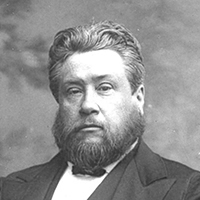
God’s mercy is AMAZING! Charles Spurgeon said:

“There is nothing little in God; His mercy is like Himself—it is infinite. You cannot measure it. His mercy is so great that it forgives great sins to great sinners, after great lengths of time, and then gives great favors and great privileges, and raises us up to great enjoyments in the great heaven of the great God.”

In the Bible, Daniel called on God’s mercy:

We do not make requests of You because we are righteous, but because of Your great mercy. O Lord, listen! O Lord, forgive! O Lord, hear and act! For Your sake, O my God, do not delay, because Your city and Your people bear Your Name. (Daniel 9:18, 19)

Mercy, simply put, is not getting the punishment we deserve. I am so grateful for God’s mercy which is new every morning. I need it.

But mercy is not something to be treated lightly. Mercy requires something of its recipient. In the verses preceding Daniel’s prayer, notice the use of the word YET:

  • All this disaster has come upon us, YET we have not sought the favor of the Lord our God by turning from our sins and giving attention to Your truth (v. 13).
  • The Lord our God is righteous in everything He does; YET we have not obeyed Him (v. 14).

If we receive God’s gift of mercy and YET do not change, we repudiate that mercy. In other words, it’s a slap in the face of God to not receive the penalty for our sins, and YET continue to live the same way.

My friend, if you have received God’s mercy gift turn from your old ways, give attention to His truth, and obey Him. This is the only way to show proper appreciation to our just God for His incredible mercy.

Be A People Person (book review)

John Maxwell’s insights into leading people perpetually astound me. He always finds such simple ways to explain what I know I should already be doing. In one of his earliest books, Be A People Person, I (re)discovered some more great people principles.

Be A People Person perfectly describes this book: It’s all about being a person who is trusted and accepted by other people. This, in turn, puts this people-person in a place to be an effective leader. So Dr. Maxwell talks about confidence, motivation, encouragement, empathy, trustworthiness, mentorship, and so many other people principles.

Because this was one of his earlier books, I see many of the seed thoughts that have become books in their own right later on. But that still didn’t take away from the refreshing insights that I uncovered.

Unless you are a solitary hermit, there is so much to discover in this book to help you grow stronger and more effective relationships with family members, coworkers, and friends.

Whale Done (book review)

I love the business and intra-personal insights that Ken Blanchard shares in all of this books. In Whale Done, I learned from Sea World’s Shamu how I can inspire people to better performance.

Following the story of a frustrated business manager, husband, and father, Ken shows us how catching people doing something right is the key to turning around performance. And in the process, we also create more pleasant work and home environments. Ken’s premise is simple:

“The more attention you pay to a behavior, the more it will be repeated. …If you don’t want to encourage poor behavior, don’t spend a lot of time on it.”

Instead of focusing on what someone is doing wrong, we should be looking for opportunities to say to others, “Whale Done!” In other words, put the bulk of our energy into encouraging people to keep doing the right things, by redirecting our energy away from the mistakes.

It’s revolutionary, but it’s also very exciting. As soon as I finished reading Whale Done, I immediately handed it to my wife and said, “You’ve got to read this!” And I would say the same thing to all parents, pastors, teachers, and business leaders.

Servant

Someone said to me, “Great job!” and then not too much later I heard someone else say, “Umm, not so much!” What’s a guy to do?

Here’s what I refocus on: I’m living for the approval of only One.

The only comment that matters to me is God saying, “Well done, good and faithful servant.”

Well done = done with excellence.

Well done = finished well, not just well begun.

Good = pleasantly done.

Faithful = trustworthy, reliable.

Servant = not my will, but Yours be done.

And when it comes to praise and criticism from men, I like this:

“Every man needs a blind eye and a deaf ear, so when people applaud, you’ll only hear half of it, and when people salute, you’ll only see part of it. Believe only half the praise and half the criticism.” —C.H. Spurgeon

UPDATE: This idea of servant leadership is a key component of my book Shepherd Leadership: The Metrics That Really Matter.

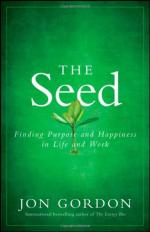
The Seed (book review)

Until I won a copy of this book from Michael Hyatt’s blog, I had not heard of Jon Gordon. Now, having read The Seed, I am so disappointed that I didn’t find out about this author sooner!

The Seed is written as a fable, following the story of a young man named Josh, who has lost his passion for his work. Given a 2-week vacation by his boss to determine what happens next, Josh encounters a series of people who help him on his journey.

Josh is first given a seed by a kindly farmer, and told to plant the seed where it will grow best. Then learning from a crop-duster pilot, his parents, a favorite professor, a former employer, a traveling businessman, and even his dog Dharma, Josh learns about the seed that leads to a life full of passion and purpose.

This book was written to so compellingly that I had a hard time putting it down. Right from the opening pages I was drawn into Josh’s life. The lessons from this book are profound, insightful, and ones that all of us can apply.

Don’t miss out on The Seed!