In Visible Fellowship (book review)

This is the second book that Jon Walker has written as a modern-day commentary of a classic Dietrich Bonhoeffer work. This time around Jon takes a look at Bonhoeffer’s Life Together in his book called In Visible Fellowship. (Jon’s first book is Costly Grace, looking at Bonhoeffer’s The Cost Of Discipleship. You can read my review of that book by clicking here.)

In visible fellowship is a phrase that Dietrich Bonhoeffer used to describe the importance of how Christians interact with each other. To Bonhoeffer, it wasn’t so much how Christians behaved in church on Sundays, but how they interacted with each other the other six days of the week. He wanted those outside of the Christian community to see something so attractive and appealing about the way the Christian community operated “in visible fellowship” with each other.

In Visible Fellowship is an excellent companion piece to Life Together. Whereas Costly Grace could almost stand on its own, In Visible Fellowship is probably best read in conjunction with Life Together. In other words, I would highly recommend that both be read at the same time.

Since Jon notes, “There is no such thing as independent study in the curriculum of Christ,” I would further recommend that In Visible Fellowship and Life Together be read with other Christians. A small group could read Life Together, and then use In Visible Fellowship as their study guide as they gather together. Toward this end, each chapter has some excellent questions that should really stimulate lively conversations.

I’m a huge fan of Dietrich Bonhoeffer, and Jon Walker has done an excellent job in bringing some thought-provoking contemporary views to these classic works. I recommend In Visible Fellowship (especially when read with Life Together).

I am an ACU Press book reviewer.

Thursdays With Oswald—You Must Say, “You Must”

This is a weekly series with things I’m reading and pondering from Oswald Chambers. You can read the original seed thought here, or type “Thursdays With Oswald” in the search box to read more entries.

You Must Say, “You Must”

     If we do not fit ourselves by practice when there is no crisis, we shall find that our nature will fail us when the crisis comes. The grace of God never fails, but we may fail the grace of God. Unless our nervous system is made the ally of the new life from God it becomes a humiliation to us, and we sit down under a tyranny of nerves. Once we receive the Holy Spirit we must sit down to nothing. … When your nervous system, which has been ruled by the wrong disposition, is inclined to say “I can’t,” you must say, “You must,” and to your amazement you find you can!

From Biblical Ethics

The time to learn how to do the God-honoring thing is when there is no crisis in my life. That’s my training time, to prepare me for when the heat is on. The apostle Paul learned this too. As a result of his training, he learned to tell himself, “You must,” in every circumstance:

I have learned to be content whatever the circumstances. I know what it is to be in need, and I know what it is to have plenty. I have learned the secret of being content in any and every situation, whether well fed or hungry, whether living in plenty or in want. I can [I must!] do everything through Him who gives me strength. (Philippians 4:11-13)

Don’t waste your non-crisis times. Learn from them how God wants to help you in the midst of your crisis.

Crumbs

When you’re starving, a crumb doesn’t seem to satisfy you.

When you’d like a special dessert, a crumb seems so unfulfilling.

What about when you are asking God for something big? Will a crumb satisfy you?

A Canaanite woman came to Jesus with a pressing need. Her daughter was possessed by a demon and was absolutely miserable. It looked as though nothing short of a major outpouring from Jesus could help this woman.

But she said, “Just a crumb from the Master’s table is enough for me.”

A crumb?!? The smallest of pieces, yet this woman knew that Christ’s power was so sufficient, that just a crumb would be more than enough!

How many times do I wait around for a feast? I say, “God, do something huge!” How small is my faith that I think God has to do something earth-shaking to answer me.

I want to be at the point where I know that just a crumb is more than enough. Just one word—one crumb—from His mouth can meet my every need.

The Land Of Tumors

My cousin Dick Brogden is one of my heroes. He has faithfully followed God to some of the toughest places on the planet to share the love of Jesus. He continues to grow in his relationship with Jesus Christ, and challenges me to grow as well.

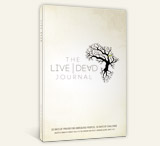
Check out these challenging words an amazing prayer journal that Dick edited called Live Dead:

Greetings From The Land Of Tumors

Three weeks ago I started getting dizzy when I stood up. Over the next few days my vision began to blur and a headache set in behind my eyes that has not left. My eyes felt like they were being pushed out from the inside, and after 2 pm it was hard to keep them open. I went to the neo-omniscient internet and diagnosed myself with a brain tumor. Yesterday I went to the doctor. He ordered a CAT scan and the result was encouraging: There is nothing in my head. The doctor had some ridiculous advice for me like getting more sleep and working less.

Flying home to Chicago from Pennsylvania this week I asked myself what I would do if I did have a tumor. My thoughts initially turned to eating a dozen Twinkies, and coughing up the $500 it would cost to take my sons to a Chicago Bears game before settling on this:

If I had a tumor, I’d hammer in the morning.
I’d hammer in the evening, all over this town.
I’d hammer out gospel, I’d hammer out warning
I’d hammer out love and truth to brothers and sisters
—all over this land.

Now that I don’t have a tumor, I have decided to live like I do. This is after all what it means to Live Dead. Dying to what people think. Dying to what doesn’t matter. Living every moment to make Jesus famous, to make much of Him, to see God glorified. Let’s all live with imaginary tumors. Let’s live as if we are dying—which incidentally we are.

Has God Spoken? (book review)

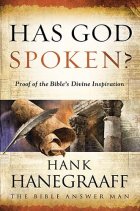
The Bible has quite a bit to say about apologetics — defending what you believe. Paul tells Christians to study God’s Word so that we won’t be ashamed of it, and Peter tells Christians to always be prepared to answer anyone who questions our faith in Christ. But how do we know the Bible is true? Hank Hanegraaff’s latest book, Has God Spoken?, is an excellent resource to help you answer that question.

You may know Hank as host of the Bible Answer Man, and have come to appreciate his wit and wisdom. In Has God Spoken? you will be well-armed to answer any critics who claim that the Bible is not all that Christians claim it to be.

And I love the format that Hank uses to share all of his wisdom. Just like musicians learned their musical notes through such statements as, “Every Good Boy Deserves Fudge,” Hank uses a variety of acrostics to make his evidence so easy to recall. In addition, this book is fully documented, with nearly 100 pages of endnotes, so you can dig a little deeper into the evidence and proofs that he presents.

The puritan pastor Thomas Watson wrote, “The Bible is a rock of diamonds, a chain of pearls, the sword of the Spirit; a chain by which the Christian sails to eternity; the map by which he daily walks; the sundial by which he sets his life; the balance by which he weighs his actions.” But if someone ever doubts the accuracy, inspiration and inerrancy of the Bible, he will never know the treasures and life resources within its pages. That’s why this book is so valuable, and I highly recommend it to both Bible believers and Bible skeptics.

I am a Thomas Nelson book reviewer.

New Attitude

“My job is boring. It’s the same-old-same-old every single day. My coworkers are incompetent, and my boss is clueless.”

If you knew nothing else about the person who made that statement, I think you could still predict how they treated their job. Would you think this person values their job? Do you think they work hard? Do they treat their coworkers with respect? Probably not.

How about this one: “My car is a piece of junk. The mileage is lousy, the radio doesn’t work when the weather is cold, and it leaks when it rains.” Can you guess how this person treats their car?

Now flip it around: What about the one who is thankful for his job, or grateful for her car. Now how will he treat his job? his coworkers? her car?

What we praise, we treat with greater respect.

Look at the last of the 150 psalms in the Bible:

Praise the Lord!

   Praise God in His sanctuary;
      praise him in His mighty heaven!
   Praise Him for His mighty works;
      praise His unequaled greatness!
   Praise Him with a blast of the ram’s horn;
      praise Him with the lyre and harp!
   Praise Him with the tambourine and dancing;
      praise Him with strings and flutes!
   Praise Him with a clash of cymbals;
      praise Him with loud clanging cymbals.
   Let everything that breathes sing praises to the Lord!

   Praise the Lord!

Thirteen times in just six verses the psalmist says PRAISE. Because what we praise, we treat with greater respect, awe, reverence. The more you praise God, the more you will find to praise about Him. And the more you praise God, the more your attitude will change about the things around you: your job, your car, your family, your friends, your country, and on and on.

Praise will change your outlook. Let everything that breathes sing praises to the Lord!

The Hour That Matters Most (book review)

I’ve been a big fan of the relationship-strengthening books from Drs. Les & Leslie Parrott for quite awhile. In The Hour That Matters Most they combine together two of my favorite topics: family and food.

I have always appreciated family meal times. Especially as my kids have gotten older—and busier—the dinner hour seems to be the one oasis during the day when we can all reconnect. This is exactly the point that the Parrotts, and co-authors Stephanie Allen and Tina Kuna, are trying to make. And they do an excellent job making their point using statistics, research, tips, stories, and even recipe ideas.

First the statistics. Research has shown that families that eat together:

  • Get along with each other better.
  • Handle stress better.
  • Have lower rates of drug abuse, alcoholism, premarital sex, depression, eating disorders, and suicide.
  • Have students who perform better in school academically and socially.

Then there are the conversation-starters. The authors give ample suggestions of how to draw everyone into a conversation around the dinner table, to gain insight into what is happening in each family member’s day.

And finally, but certainly not insignificantly, there are the recipe. Some mmm, mmm good recipes! Sprinkled throughout the book—and in full color in the middle of the book—are some easy-to-make, hard-to-resist recipes. After all, it’s hard to have a family meal without the meal!

Whether you want to enhance your family dinner times, or you are ready to (re)establish a time for your family to connect over a meal, The Hour That Matters Most is an excellent read.

I am a Tyndale book reviewer.

Thursdays With Oswald—God’s Silence

This is a weekly series with things I’m reading and pondering from Oswald Chambers. You can read the original seed thought here, or type “Thursdays With Oswald” in the search box to read more entries.

God’s Silence

     Has God trusted you with His silence—a silence that has great meaning? God’s silences are actually His answers. Just think of those days of absolute silence in the home at Bethany [John 11:1-6]! Is there anything comparable to those days in your life? Can God trust you like that, or are you still asking Him for a visible answer? God will give you the very blessings you ask if you refuse to go any further without them, but His silence is the sign that He is bringing you into an even more wonderful understanding of Himself. Are you mourning before God because you have not had an audible response? When you cannot hear God, you will find that He has trusted you in the most intimate way possible—with absolute silence, not a silence of despair, but one of pleasure, because He saw that you could withstand an even bigger revelation. If God has given you a silence, then praise Him—He is bringing you into the mainstream of His purposes.

From My Utmost For His Highest

Can God trust you like that, or are you still asking Him for a visible answer? Wow! I need to think about this one for awhile…

Powerfully Kind

Each month I am so honored that the Solon Township officials invite me back to offer a simple invocation at the beginning of their trustee meetings. I really enjoy doing this!

I pray a short, simple prayer. It is always based on a passage of Scripture, and it is typically a prayer asking God to give our township officials wisdom in all of their deliberations. But something interesting happens each month. After I conclude my prayer, they say, “Thank you.” In other words, they feel I have done something kind for them.

And I have: I have asked God to guide them, to help them, and to bless our township through their efforts. Prayer is one of the most powerfully kind things we can do for someone else.

“Prayer molds us into the image of God, and at the same time tends to mold others into the same image just in proportion as we pray for others.” —E.M. Bounds

When a coworker tells you about a situation in their life, offer to pray for them. Right on the spot.

When a friend share about their illness, say, “Can we pray right now?”

When your pastor tells you about a tough situation, offer to pray right then for God’s discernment.

When a friend is grieving, pray for God’s peace in their life.

Praying for them is powerful, and kind, and God-honoring.

Why Not Here…

…why not now?

Sometimes I get tired of the excuses:

  • “I would have loved to live when Jesus lived.”
  • “I remember when church used to be good.”
  • “I long for the good old days.”

Those are just excuses for why God isn’t moving right here right now. Surely we’re not saying God is somehow limited by a time or place! Charles Spurgeon said it this way,

“God’s power is independent of place. Think ye that there was any sanctity in the upper room at Jerusalem? Behold this room is quite as sacred as that filled by the Spirit in years gone by. Dream not that the city of Jerusalem of old, in the days of the Savior was a more proper theater for divine working than this is; He can make [your city] rejoice even as He did Jerusalem of old. Equally is the divine power independent of time. Do not dream that the ages have changed, so that in this day God cannot do His mighty works.

I believe God wants to move in Cedar Springs today just as He moved in Jerusalem on the Day of Pentecost. No!! Even more… I believe God wants to do MORE in Cedar Springs!!

Now all glory to God, Who is able, through His mighty power at work within us, to accomplish infinitely more than we might ask or think.

I’m living in this expectation: God’s power right here, right now!