Imagine Attending 86 Funerals A Day

Right after the Israelites came out of Egypt, God told Moses to count everyone (not coincidentally, this is recorded in the book of Numbers… get it?).

I’m sure you know the story well of the ten scouts who by their negative report turned everyone against Moses. They all believed that they couldn’t go into the Promised Land because of the big giants. So God said everyone in that generation (except Joshua and Caleb) would die before they entered the Promised Land.

Fast forward 38 years and God has Moses count the people again (can you guess where this is recorded in the Bible?). If you compare the two lists, you will see that 1.2 million Israelites had died.

Let that sink in: 1.2 million dead in 38 years.

That’s 31,579 funerals per year.

Or 86 funerals per day.

Talk about mixed emotions! With every funeral the younger Israelites attended, they were sad for their loss but they also knew they were one step closer to getting out of the desert and into the Promised Land.

Every day they heard about deaths—86 of them every day.

What did these deaths remind them of? Maybe these two thoughts:

  • Sin causes death.
  • I’m just as capable of sinning as they were.

Every death should have been a reminder to them to stay as close to God as possible.

Every day I hear about divorce. This should be my reminder to cherish my wife every day.

Every day I hear about a pastor’s moral failing. This should be my reminder to pursue holiness passionately every day.

Every day I hear about pornography addictions. This should be my reminder to take every precaution I can every day.

When the Israelites heard about 86 deaths every day, they had to do something positive with that.

When I hear about divorce and sin and addiction, I cannot just shake my head and say, ‘Tisk, tisk,” but I must do something positive with it.

I must use every “death” as a reminder to move closer to God.

Tiger Woods & I Have Something In Common

One part of Tiger Woods’ statement stood out to me this morning:

“I knew my actions were wrong, but I had convinced myself that normal rules did not apply … I thought only about myself…  I thought I could get away with anything I wanted to. … I thought I was entitled….”

This hits me right between the eyes. Because that sounds like… me.

And probably you, too.

I think the biggest stumbling points into sin are:

  • “This won’t hurt me.”
  • “I can handle it.”
  • “I deserve it.”

Tiger’s fame magnified what he did, but only in the eyes of our media and culture. In God’s eyes, my sins are just as painful as Tiger’s. In God’s eyes, my sins hurt my relationships with Him and with others as much as Tiger’s. But here’s the great truth for Tiger Woods, for me, and for you:

But if we confess our sins to Him, He is faithful and just to forgive us our sins and to cleanse us from ALL wickedness.

I’m glad that I can be forgiven!

One Of The Most Unusual Stories

There is one of the most unusual stories inserted in Genesis 38. I say “inserted” because it almost seems out of place. In chapter 37, Joseph’s brothers have just sold him into slavery and convinced their Dad that a wild animal killed him. In chapter 39, we pick up Joseph’s story again as he arrives in Egypt.

Genesis 38 has a story that doesn’t fit in Joseph’s story. It’s sort of a giant parenthesis. Not only that, it’s a story of mistake after error after mess up after bad judgment after more mistakes.

Judah, an older brother of Joseph, came up with the idea of selling him instead of killing him. Perhaps being around his co-conspirators was too difficult for him, so Judah left town.

  • Mistake #1: not dealing with his guilt and sin, but running away from it.

Judah married a Canaanite woman.

  • Mistake #2: inter-marrying with a non-God-fearing culture.

Judah gave his son Er in marriage to Tamar.

  • Mistake #3: allowing his son to inter-marry with the Canaanites too.

Er sinned. The Bible doesn’t say what it was, but it was so offensive that God put him to death.

  • Mistake #4: sin against God.

Onan (Judah’s second son) sinned. He had a familial responsibility to his brother and sister-in-law’s family line, but he snubbed them both.

  • Mistake #5: more sin against God.
  • Mistake #6: disregard for family.

Judah promised Shelah (his third son) to Tamar. But he procrastinated in following through on that because he thought Tamar was a black widow.

  • Mistake #7: deception.

Tamar disguised herself as a prostitute and waited along the road for Judah.

  • Mistake #8: more deception.

Judah slept with his daughter-in-law Tamar (yuck!), thinking she was a prostitute.

  • Mistake #9: fornication.
  • Mistake #10: incest.

Tamar became pregnant, and Judah wanted to have her publically punished for her infidelity.

  • Mistake #11: hypocrisy.

That’s a whole lot of sin and error and lapses in judgment and mistakes for just one family. What a mess this family had become! So, why in the world is this story inserted here? Because Tamar had twins: Perez and Zerah. In listing the royal, kingly genealogy of Jesus, Matthew writes

A record of the genealogy of Jesus Christ the son of David, the son of Abraham:
Abraham was the father of Isaac, Isaac the father of Jacob, Jacob the father of Judah and his brothers, Judah the father of Perez and Zerah, whose mother was Tamar.

Perez is listed in the genealogy of Jesus. God took all of those mistakes and made something great come from it!

It doesn’t matter how many mistakes you’ve made. It doesn’t matter how many times you think you’ve blown it. It doesn’t matter how many lapses in judgment you’ve had. God still has a plan for you. He wants to do something great through you. Will you let Him?

Naked Before God

Imagine: You and your wife are the only people on the face of the earth. No bills, no employer, no economic downturn, no kids, no school, no traffic. Just you and God. That was Adam and Eve in the Garden of Eden. The Bible gives this commentary, “Now the man and his wife were both naked, but they felt no shame.”

Nothing to hide from God. Nothing to hide from each other. A perfect relationship with God. A perfect relationship with each other.

Then the temptation, and the bite of the forbidden fruit. Sin enters. Now, something changes when God comes to talk with His favorite couple: “Then the man and his wife heard the sound of God as He was walking in the garden in the cool of the day, and they hid from God among the trees.”

“Why are you hiding from Me?” God asks.

“Uh,” Adam stammers, “because we’re naked.”

Sin made mankind uncomfortable in God’s presence. Sin made them want to hide from God. They knew He was there, but they tried to pretend He wasn’t. This is why I think many of us don’t come into God’s presence in prayer: we’re uncomfortable because of our sin.

We should not run away from God, instead, we should run to Him. “If we confess our sins to Him, He is faithful and just to forgive us our sins and to cleanse us from all wickedness” (1 John 1:9).

What happens when we’re forgiven? We’re re-clothed. God Himself clothes us. He made clothes for Adam and Eve, and He clothes us, too, in the righteous robes of Jesus. “And all who have been united with Christ in baptism have put on Christ, like putting on new clothes” (Galatians 3:27).

And when we’re clothed in Christ, we no longer have to hide from God, nor feel uncomfortable in His presence. Instead, we can “come boldly to the throne of our gracious God. There we will receive His mercy, and we will find grace to help us when we need it most” (see Ephesians 3:12 and Hebrews 4:16).

Perhaps the reason we don’t spend enough time in prayer is that we feel self-conscious, sinful, uncomfortable… naked.

You don’t have to be naked. You can be clothed in Christ. You can enter into God’s presence without shame and find the mercy and grace and help that you need.

Do It

Here’s what God said to His people through the prophet Ezekiel, “I will judge you according to your conduct.” God says the same thing in the New Testament too.

It’s not what I believe. It’s not what I discuss. It’s not what I intend to do. It’s not what I know is right and wrong. It’s what I do.

I have to give an account of my conduct. I have to answer to God for how I lived out my beliefs. I have to show God what I did with what I believe about Him. I have to put into practice what’s in my heart.

Do I believe God is God? Do I have idols?

Do I believe God is holy? Do I sin?

Do I believe God forgives? Do I repent?

Do I believe God looks after orphans and widows? Do I?

Do I believe God is my Provider? Do I steal?

Do I believe He is Lord? Do I give Him control of everything?

Do I believe I should do something for the hungry, thirsty, naked, sick, and imprisoned? Do I do something?

This is what God judges: belief put into action. Not just beliefs, but godly actions motivated by those godly beliefs.

Faith without works is just wishful dreaming. Works without faith is just religious posturing. Works with faith is God-glorifying!

Don’t just believe it… do it.

A Man Named Jonadab

What an incredible family line! Moses’ father-in-law Jethro was the ancestor of the Kenite family line, and from this family tree came a man named Recab.

The Recabite family was of immense help to the Israelites. They served as scouts for them, and they joined in the battle to defeat the Canaanites in Gaza, Ashkelon, and Ekron. Years later a Recabite named Jonadab was with King Jehu when he rid Israel of King Ahab’s evil influence of Baal worship.

Jonadab called the Recabite family to follow him in living a holy lifestyle. He set some incredibly high standards for them, but for the next 200+ years the Recabite family held to these standards. Even as the nation of Judah was carried into captivity because of their gross sin against God, the Recabite family stood solidly for God, never getting caught up in society’s pull toward sin.

Their fidelity toward God wasn’t without notice. Here’s an incredibly powerful statement: God said, “Jonadab son of Recab will never fail to have a man serve Me.”

Think about that. A family line that is always serving God for generation after generation after generation. That’s what I want. It took Jonadab making a dramatic counter-cultural stand for his faith in God and then passing that on to his family. Wow!

For the sake of never failing to have my descendants serve God, I am willing to make a stand. I am ready to live counter-culturally. I’m going to stand strong. What about you?

Cheap Trade-Off

During the reign of King Rehoboam in Judah, God’s judgment fell on the land. Because of their sin against Him, God allowed Shishak, the king of Egypt, to plunder Jerusalem. Shishak carried off all of the valuable furnishings of the temple in Jerusalem.

To replace what had been plundered Rehoboam commissioned the casting of shields made of bronze (1 Kings 14:27). Whenever the king went to the temple, all the guards would carry these shiny shields with them, but then immediately after the king left the temple the guards returned their shields to the armory.

It looked good, but it was all a cheat … an imitation … a cheap trade-off.

Looking back a few chapters we read that not only did Rehoboam’s father, King Solomon, make the original shields out of gold, but he made almost everything out of gold. In fact, the Bible says, “Nothing was made of silver, because silver was considered of little value in Solomon’s days.” If silver was of little value, can you imagine how cheap bronze was?!

The temple is plundered. The gold shields—along with anything else of value—are gone, but there is no outcry from Rehoboam or the people, no repentance for their crimes against God, no anger at their sin that allowed Shishak’s raid.

Instead, Rehoboam wanted to try to keep up appearances.

He made bronze shields to look like the stolen gold shields.
He made his trip to the temple a spectacle of pomp and circumstance.
He hid the bronze shields away after he left the temple.

Isn’t this how many people deal with the plundering of their lives? I know I have at times. It seemed so much easier to try to cover up what was lost because of my sin, than to simply admit I sinned, repent of that sin, and ask for God’s merciful forgiveness.

Sure, Rehoboam still looked like he had his act together. But he knew—every time he was on this way to the temple and saw those bronze shields—that he was living a lie. He accepted a cheap trade-off for the real deal.

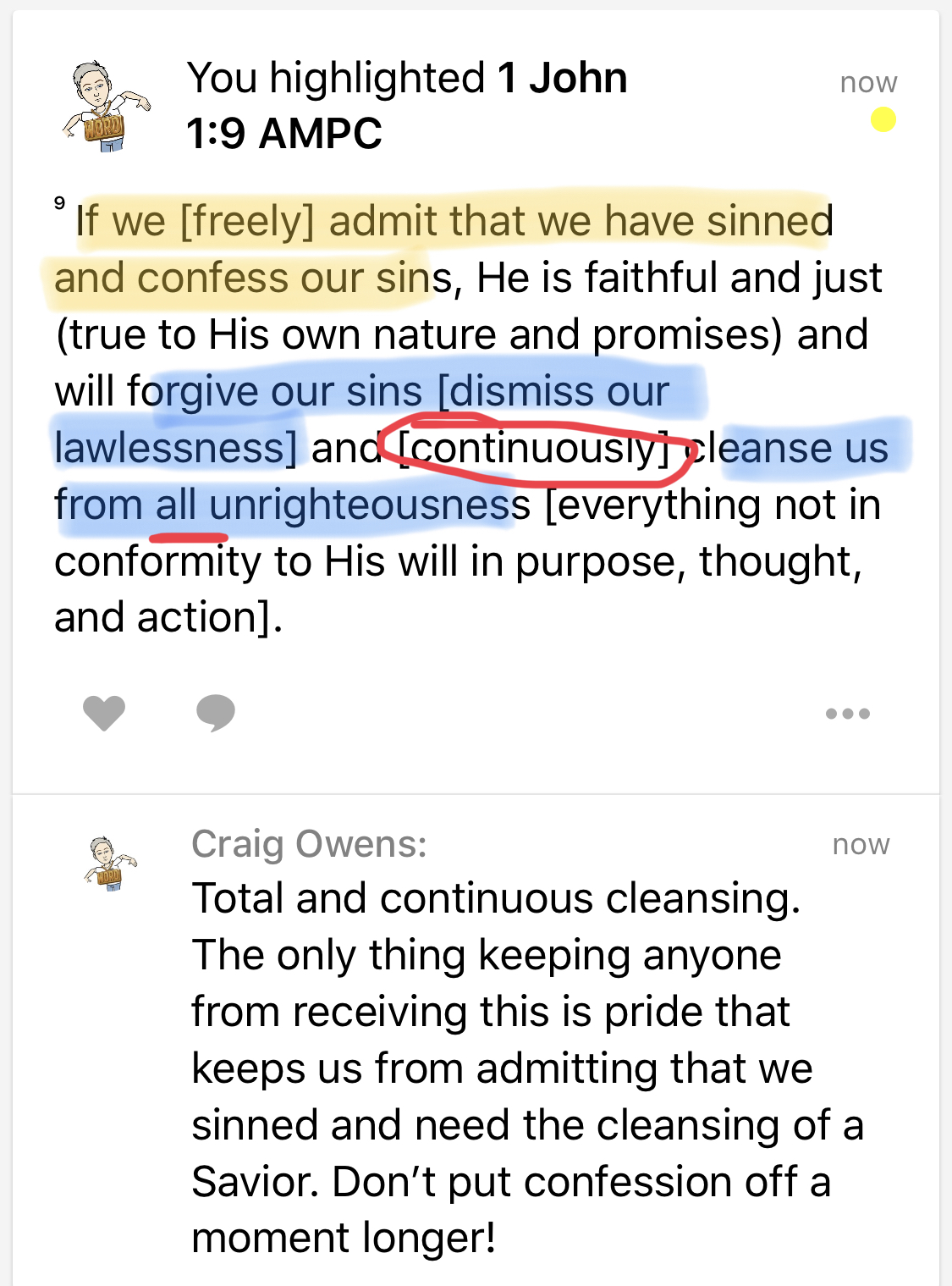
I am so grateful that, “If we confess our sins, He is faithful and just and will forgive us our sins and purify us from all unrighteousness” (1 John 1:9).

I’m not going to settle for cheap trade-offs anymore. How about you?

Moderate Back Thrusts

How would you like to have this written on your tombstone—

Appointed by God to be king
Caused all Israel to sin against God
Doomed my family line to extinction

That is exactly the epitaph of King Jeroboam (see 1 Kings 13-14). In God’s indictment of Jeroboam He says, “Because of the sins you have committed, and the sins you have caused Israel to commit, you have provoked Me to anger and thrust Me behind your back.”

I find that phrase—thrust Me behind your back—intriguing. The word thrust means to throw something away. How exactly does one go about throwing God away? Can you crumple Him up like a piece of paper and toss Him in a garbage can? Can you grab Him and shove Him behind you? Is He like a stack of old newspapers thrown in a recycling bin? Clearly not!

One only thrusts God behind one’s back little by little. Just moderate back thrusts.

John Maxwell was exactly right when he said that whatever good things a leader does in excess, those following will do in moderation. Whatever poor things the leader does in moderation, those following will do in excess. The “moderate” ways in which Jeroboam thrust God behind his back caused all of Israel to sin excessively. And that became Jeroboam’s eternal legacy!

People are watching me—my kids, my neighbors, my friends, the baristas at Starbucks—what example am I setting for them? There are only two examples I can set: (1) Pursue God with all my heart, all my soul, all my mind, and all my strength; in other words, love God to excess. Or (2) Moderately thrust God behind my back little by little by little.

Search me, O God, see if there is ANY moderate back thrusting in me and lead me in the way everlasting (see Psalm 139:23-24).