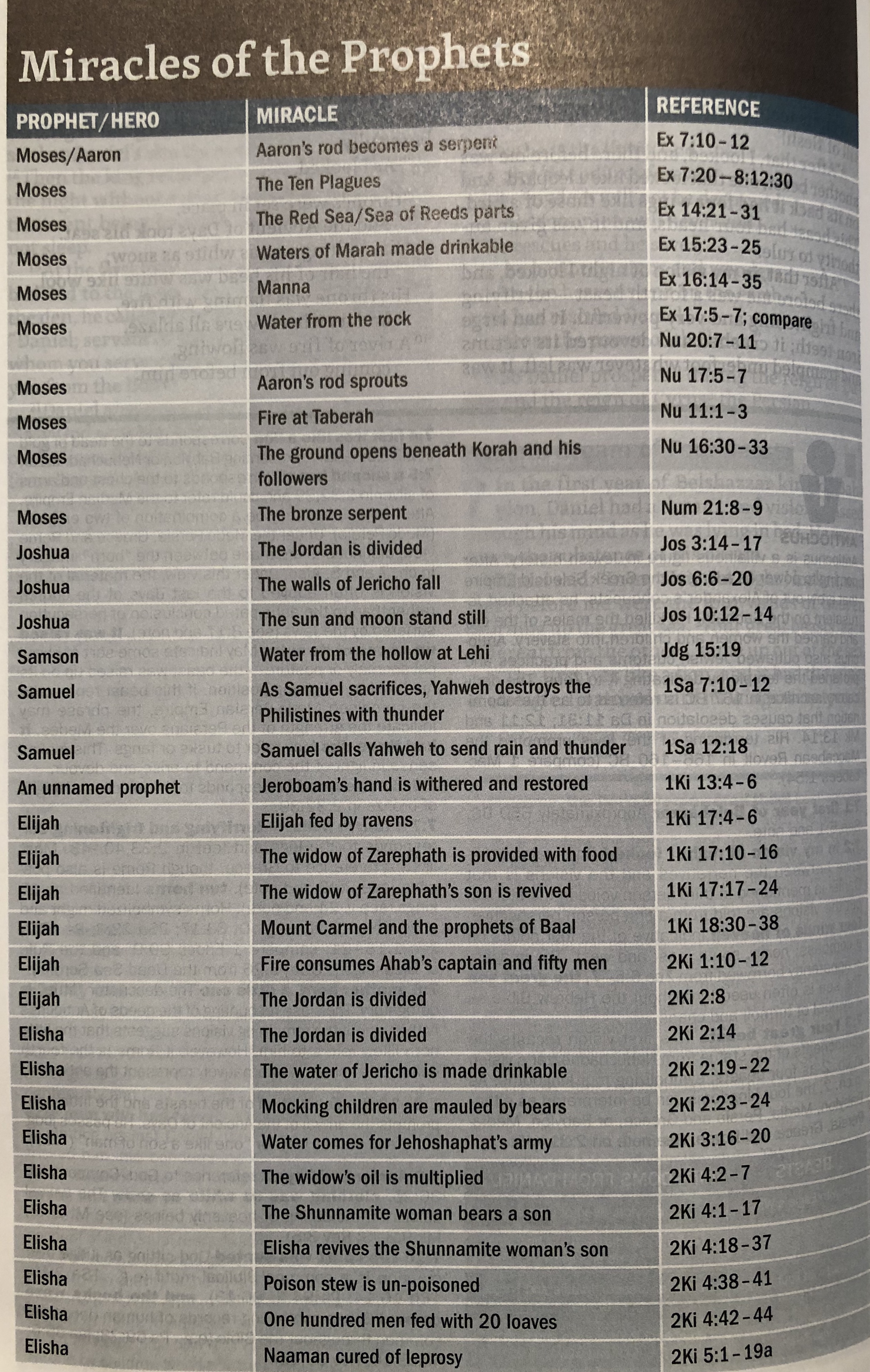
Miracles Of The Prophets

Major Lessons From Minor Prophets

Sometimes the naming of things gives us an inaccurate picture of the thing being named. For instance, many people think the “old” in Old Testament means outdated or perhaps updated by the “new” in the New Testament. When in fact, both Testaments are needed to give us the full picture of God’s love and glory. 

A similar thing happens with the headings “major prophets” and “minor prophets.” It makes it sound like the major prophets have something major to say to us, while we could take or leave the minor messages of the minor prophets. 

In reality, they were given these headings simply because of the volume of writing—the five major prophets consist of 182 chapters, whereas the 12 minor prophets only have 67 chapters. The volume of their writing may be minor, but their content carries major messages of meteoric power! 

If you missed any of the messages in this series, you can find them here:

Thursdays With Spurgeon—Study The Right Things

This is a weekly series with things I’m reading and pondering from Charles Spurgeon. You can read the original seed thought here, or type “Thursdays With Spurgeon” in the search box to read more entries.

Study The Right Things

     It is very advantageous to the Christian mind frequently to consider the deep and unsearchable attributes of God. … If we study man and make him the only object of our research, there will be a strong tendency in our minds to exaggerate his importance. We will think too much of the creature and too little of the Creator, preferring the knowledge that is to be found out by observation and reason to the divine truth that revelation alone could make known to us. … 

     The fleeting things of human life and the fickle thoughts and showy deeds of men are as movable and as changeable as the waters of the treacherous deep. But when we mount up, as it were, with eagles’ wings to Him Who sits upon the circle of the earth, before Whom all its inhabitants are as grasshoppers (Isaiah 40:22), we nestle in the Rock of Ages that from its eternal socket never starts and in its fixed immovability can never be disturbed.

From The Infallibility Of God’s Purpose

I read a lot of books. But in the hands-down, it’s-not-even-close category, I read the Bible more than anything else. It is the Book of books because it reveals the eternal Wisdom behind the earth’s wisdom. 

Zig Ziglar used to say, “Every morning I read my Bible and I read the newspaper. That way, I know what both sides are up to.” That’s pretty good!

We read the Bible not just to know the Bible, but to know the One Who authored the Bible. Or, as I like to say it—

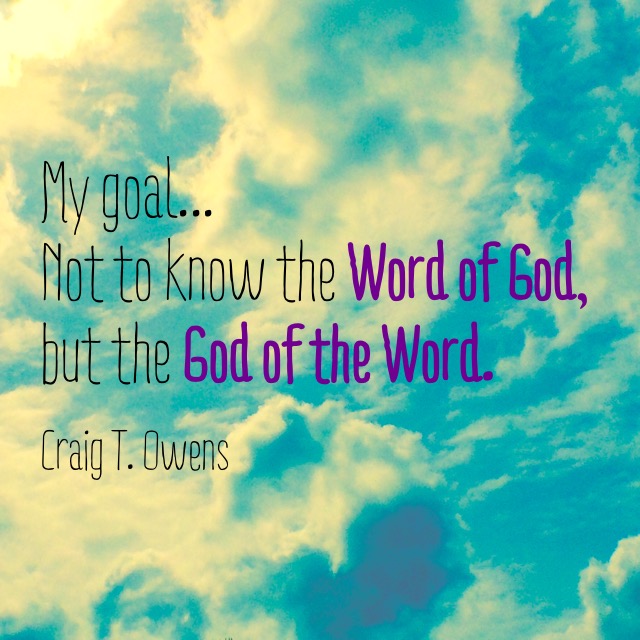
My goal in reading the Word God is to get to know the God of the Word better and better.

Charles Spurgeon would never say—nor do I—that you shouldn’t study a variety of topics. Just make sure that your priority is God’s Word. This will give you the greatest insight into other topics and will protect you from humanistic error. 

Read Your Bible More

“Read your Bible more and more every year. Read it whether you feel like reading it or not. And pray without ceasing that the joy return and pleasures increase.

“Three reasons this is not legalism:

  1. You are confessing your lack of desire as sin, and pleading as a helpless child for the desire you long to have. Legalists don’t cry like that. They strut.
  2. You are reading out of desperation for the effects of this heavenly medicine. Bible-reading is not a cure for a bad conscience; it’s chemo for your cancer. Legalists feel better because the box is checked. Saints feel better when their blindness lifts, and they see Jesus in the Word. Let’s get real. We are desperately sick with worldliness, and only the Holy Spirit, by the Word of God, can cure this terminal disease.
  3. It is not legalism because only justified people can see the preciousness and power of the Word of God. Legalists trudge with their Bibles on the path toward justification. Saints sit down in the shade of the Cross and plead for the blood-bought pleasures.

“So let’s give heed to Mr. Ryle and never grow weary of the slow, steady, growth that comes from the daily, disciplined, increasing, love affair with reading the Bible. 

‘Do not think you are getting no good from the Bible, merely because you do not see that good day by day. The greatest effects are by no means those which make the most noise, and are most easily observed. The greatest effects are often silent, quiet, and hard to detect at the time they are being produced. Think of the influence of the moon upon the earth, and of the air upon the human lungs. Remember how silently the dew falls, and how imperceptibly the grass grows. There may be far more doing than you think in your soul by your Bible-reading’ (J.C. Ryle, in Practical Religion).” —John Piper 

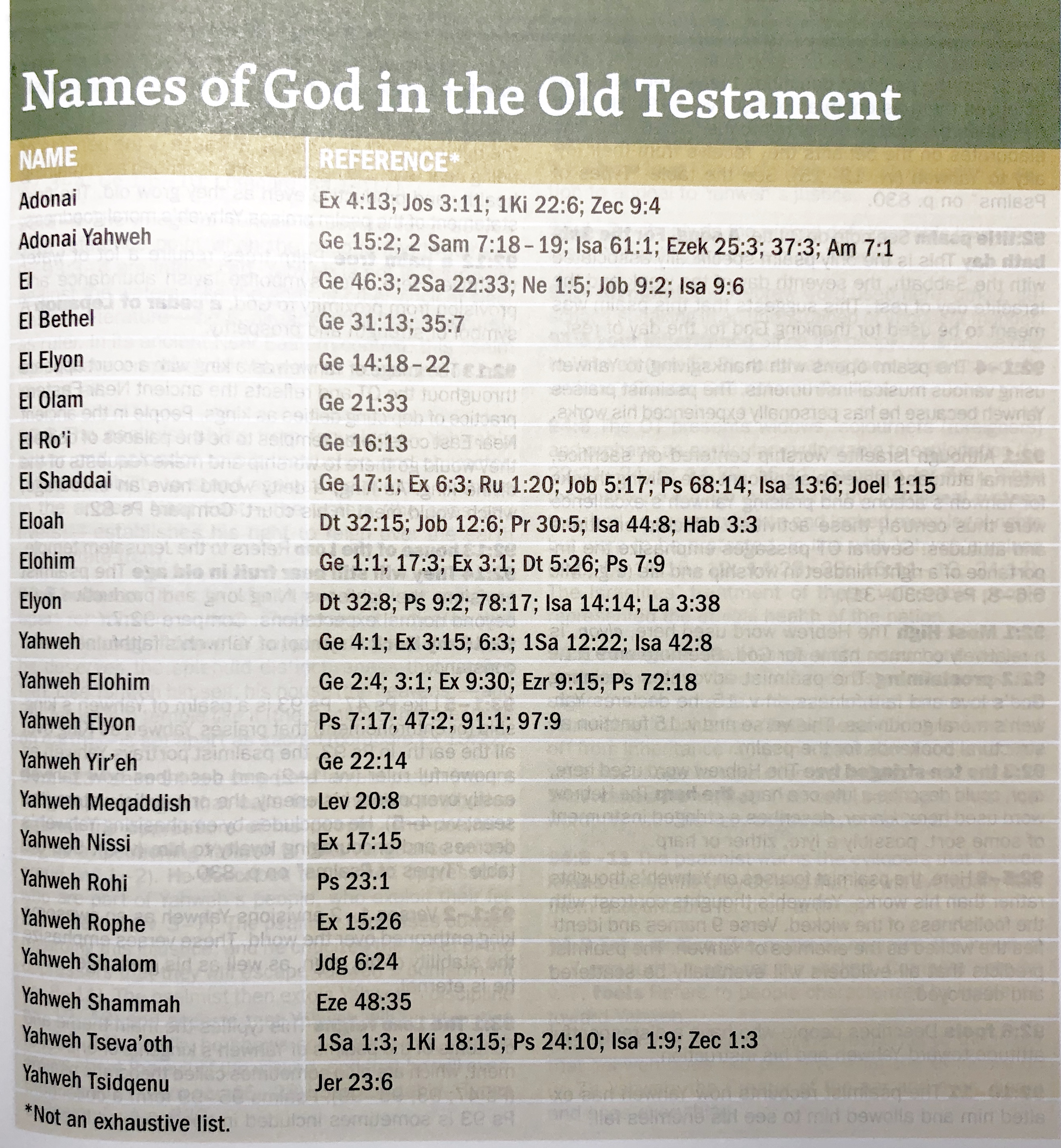
Names Of God In The Old Testament

I love my Faithlife Illustrated Study Bible! I found this gem while reading in the Psalms.

יהוה (yhwh)

The name יהוה (yhwh) is known as the Tetragrammaton, and was probably pronounced as Yahweh. In the Old Testament, it is the proper name of God and is the most common term used to refer to Him (e.g., Gen 4:1). Exodus 3:13–15 connects this name with the verb הָיָה (hayah) “to be”; in this passage, God uses two related names for Himself that are not used elsewhere in the Bible: אֶהְיֶה אֲשֶׁר אֶהְיֶה (ehyeh asher ehyeh, “I am who I am”) and the abbreviated אֶהְיֶה (ehyeh, “I am”), and declares that יהוה (yhwh) is His name. By the time that the Septuagint version of the Torah was translated in the third century bc, Jews avoided pronouncing the Tetragrammaton to avoid committing blasphemy; in reading the Scriptures, the name אֲדֹנָי (adonay, “Lord”) was substituted, and the Septuagint translated this with the Greek word κύριος (kyrios, “Lord”). In English translations of the Bible, יהוה (yhwh) is usually represented as “the Lord,” using capital or small-capital letters to distinguish it from “Lord” as a translation for other Hebrew words. The English representation of this name as “Jehovah” is based on a misunderstanding of a scribal convention that combined the consonants of יהוה (yhwh) with the vowels of אֲדֹנָי(adonay) to remind the reader to pronounce Adonai in place of the Tetragrammaton.

For further details, see these articles: YHWH; Tetragrammaton; Tetragrammaton in the New Testament; Jehovah; I Am Who I Am.

Compound names with יהוה (yhwh)

Sometimes the name יהוה (yhwh) was combined with other terms characterizing God to produce a compound name. The most important of these is יְהוָה צְבָאוֹת (yhwh tseva’oth, “YHWH of Hosts”; e.g., 1 Sam 1:11), which expresses God’s position as the leader of the armies of heaven. Some compound names involving יהוה (yhwh) are translated in the King James Version or in other English translations using the erroneous representation “Jehovah.”

For further details, see these articles: Lord of Hosts; Jehovah-Jireh; Jehovah-Tsidkenu; Jehovah-Nissi.

אֱלֹהִים (elohim) and Related Words

Hebrew אֱלֹהִים (elohim) is by far the most common member of a small group of Hebrew and Aramaic words used to refer to God and other deities. This word is plural in form, but is most often used with singular meaning as a name for the one God of Israel; in this meaning, it occurs with singular verbs (e.g., Gen 1:1). It can also be used with plural meaning to refer to deities of polytheistic belief; in this case, any verbs and adjectives that go with it are plural (e.g., Deut 13:13).

The other words in this family also refer either to the one God or to a polytheistic deity. These are Hebrew אֵל (el, “god”; e.g., Num 12:13; Deut 32:12), Hebrew אֱלוֹהַּ (eloha, “god”; e.g., Job 11:7; Dan 11:38), and Aramaic אֱלָהּ (elah, “god”; e.g., Ezra 6:3; Dan 6:7).

For further details, see these articles: Elohim; Eloah.

Compound Names with El

Hebrew El (“God”) sometimes occurs with other terms in compound names for God. These compound names differ from one another in several ways. For example, the name אֵל שַׁדַּי (el shadday) combines El with the word שַׁדַּי (shadday), which also occurs by itself as a name for God—often translated “Almighty.” The compound name El Shaddai is not frequent, but does occur in several passages (e.g., Gen 17:1; Ezek 10:5). By contrast, the name אֵל רֳאִי (el ro’iy) “God of seeing, God who sees me” occurs only in Gen 16:13, and רֳאִי (ro’iy) does not occur independently as a name of God.

For further details, see these articles: El Roi; El Elohe Israel; El Shaddai; El Elyon.

אָדוֹן (adon) and אֲדֹנָי (adonay)

The Hebrew word אָדוֹן (adon, “master, lord”) is not specifically a divine title. It can be used of humans, indicating a person who has authority (e.g., Judg 19:11; Gen 45:8). It is sometimes used to describe God, emphasizing His authority (e.g., Josh 3:13).

The divine title אֲדֹנָי (adonay) is related to אָדוֹן (adon) and is used only of God (e.g., Psa 2:4). Its form is very close to and may be derived from אֲדֹנַי (adonay, “my lords”), which is simply the plural of אָדוֹן(adon) followed by a first-person singular suffix (e.g., Gen 19:2); but it has a short a vowel in the suffix while the divine title אֲדֹנָי (adonay) has a long a vowel. The divine title may have originated as a respectful title used to address God (e.g., Exod 4:10), using a plural form to express extra respect. However, in the Old Testament it is used not merely to address God, but also to talk about Him (e.g., 2 Kgs 7:6).

For further details, see this article: Adonai.

שַׁדַּי (shadday)

The origin of the name שַׁדַּי (shadday) is uncertain, but it is used as a title for God, especially in the book of Job (e.g., Job 13:3). Its original meaning is debated, but it is often translated “Almighty.” It is sometimes combined with אֵל (el, “god”) in the compound name אֵל שַׁדַּי (el shadday) (e.g., Gen 17:1), but more often occurs alone.

For further details, see these articles: Shaddai; El Shaddai.

עֶלְיוֹן (elyon)

The word עֶלְיוֹן (elyon) means “high, highest”; as a title for God, it is commonly translated “Most High.” It most often occurs alone (e.g., Psa 91:1), but also occurs in compounds with other names of God, including El(e.g., Gen 14:18–22), YHWH (e.g., Psa 7:17), and Elohim (e.g., Psa 57:2).

For further details, see this article: El Elyon.

Other Names

A variety of other names and titles are used for God. A few examples include צוּר (tsur, “Rock”; e.g., Isa 17:10), רֹעֵה (ro’eh) (“Shepherd“; e.g., Gen 49:24), and בּוֹרֵא (bore’, “Creator”; e.g., Isa 40:28). In Psalm 68:4, the Masoretic Text refers to him as “Rider through the Desert”; this is sometimes taken to be a modification of an expression “Rider on the Clouds” which was applied to Ba’al in Ugaritic. In Hosea 2:16, God declares that Israel will no longer call Him בַּעֲלִי (ba’aliy) “my master, my Ba’al” but will instead call him אִישִׁי (ishiy, “my husband”); these names are not used elsewhere in the Old Testament.

Please check out my review of the Faithlife Illustrated Study Bible and pick up a copy for yourself.

Thursdays With Spurgeon—Following The Prompting

This is a weekly series with things I’m reading and pondering from Charles Spurgeon. You can read the original seed thought here, or type “Thursdays With Spurgeon” in the search box to read more entries.

Following The Prompting

     I once while preaching at New Park Street Chapel. I had passed happily through all the early parts of divine service on the Sabbath evening and was giving out the hymn before the sermon. I opened the Bible to find the text, which I had carefully studied as the topic of discourse, when, on the opposite page, another passage of Scripture sprang upon me like a lion from a thicket with vastly more power then I had felt when considering the text that I had chosen. The people were singing and I was sighing. I was in a strait between two, and my mind hung as in the balances. I was naturally desirous to run in the track that I had carefully planned, but the other text would take no refusal and seemed to tug at my skirts, crying, “No, no, you must preach from me! God would have you follow me.” I deliberated within myself as to my duty, for I would neither be fanatical nor unbelieving, and at last I thought within myself, Well, I should like to preach the sermon that I have prepared, and it is a great risk to run to strike out a new line of thought, but as this text constrains me, it may be of the Lord, and therefore I will venture upon it, come what may.

     I had brought myself into great difficulty by obeying what I thought to be a divine impulse, and I felt comparatively easy about it, believing that God would help me and knowing that I could at least close the service should there be nothing more to be said. I had no need to deliberate, for in one moment we were in total darkness. The gas had gone out…. Having no manuscript, I could speak just as well in the dark as in the light…. When the lamps were lit again, I saw before me an audience as rapt and subdued as ever a man beheld in his life. … Thus, providence befriended me. I cast myself upon God, and His arrangements quenched the light at the proper time for me. Some may ridicule, but I adore; others may even censure, but I rejoice.

From The Autobiography of Charles Spurgeon

God can speak to pastors as clearly in his or her sermon preparation time as He can in the very moments before the sermon begins. The key is our obedience to follow the prompting of the Holy Spirit. 

Spurgeon would never advocate that preachers “wing it” every time they step into the pulpit. His own life showed a man of diligent study of the Scripture. But neither would Spurgeon say that preachers have to stick to their prepared remarks no matter what. What I think he would say is: Trust God when you’re studying for a sermon, and trust God when you’re delivering a sermon. Allow the Spirit to change your course at any moment. 

Is this a bit nerve-wracking? Spurgeon would say, “Yes, only when deliberating whether to strike out on the new course.” But notice how once he obeyed that prompting, he felt completely at ease.

Spurgeon also reminds us, “I do not see why a man cannot speak extemporaneously upon a subject that he fully understands. Any tradesman, well versed in his line of business, could explain it without needing to retire for meditation, and surely I ought to be equally familiar with the first principles of our holy faith. I ought not to feel at a loss when called upon to speak upon topics that constitute the daily bread of my soul.”

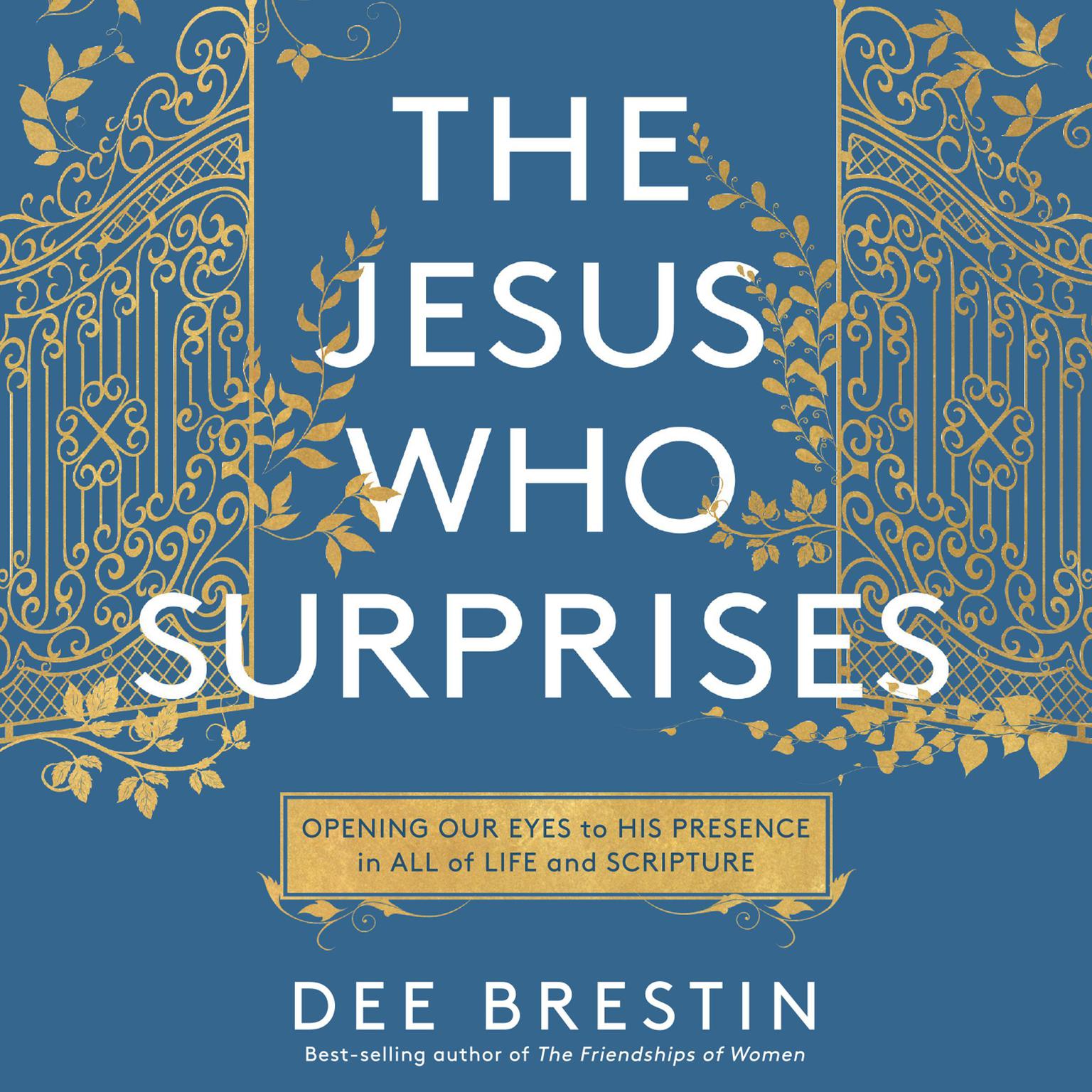
The Jesus Who Surprises (book review)

Oswald Chambers wisely noted, “God did not give a progressive revelation of Himself through the Old Testament: the people progressively grasped the revelation, which is very different.” Jesus is all throughout the Old Testament, giving us ample opportunity to discover Him on every page. A helpful guide to get you started on this journey of discovery is The Jesus Who Surprises by Dee Brestin. 

Dee wrote that she was intrigued by Christ’s words to the questioning disciples walking the road to Emmaus on the morning of His resurrection. These men were having a hard time wrapping their minds around the report from eyewitnesses who said Jesus was alive! As Jesus walked with them (although unrecognized by them for the moment), Luke records, “And beginning with Moses and all the Prophets, He explained to them what was said in all the Scriptures concerning Himself” (Luke 24:27). 

The Jews divided their Scripture—the part we now refer to as the Old Testament—into three sections: the Law, the Writings (the poetic books), and the Prophets. In The Jesus Who Surprises, Dee divides her book into the same three sections, giving us samples of how Jesus surprises us in the pages of each section of the Old Testament Scripture. Each chapter concludes with a Bible study that can be done on your own, or in a small group setting. 

The two disciples on the road Jesus commented to each other later that they felt their hearts burning as Jesus revealed Himself all throughout the Scriptures. I pray that as you read The Jesus Who Surprises you will experience the same burning. Then I believe this book will start you on your own lifelong journey to read the Scriptures for yourself and see Jesus on every single page! 

I am a Multnomah book reviewer. 

Thursdays With Spurgeon—“Follow Me”

This is a weekly series with things I’m reading and pondering from Charles Spurgeon. You can read the original seed thought here, or type “Thursdays With Spurgeon” in the search box to read more entries.

“Follow Me”

     “As Jesus passed on from there, He saw a man named Matthew sitting at the tax office. And He said to him, ‘Follow Me.’ So he arose and followed Him” [Matthew 9:9]. … I know another man, not named Matthew, but Charles, and the Lord said to him, “Follow Me,” and he also arose and followed Him. I do not know all that He saw when He looked upon me. I fear that He saw nothing in me but sin and evil and vanity, but I believe that He did say to Himself concerning me, “I see one to whom I can teach My truth, and who, when he gets ahold of it, will grip it fast and never let it go, and one who will not be afraid to speak it wherever he is.” So the Lord saw what use He could make of me. There is an adaptation in men, even while they are unconverted, that God has put into them for their future service. Luke was qualified to write his gospel because he had been a physician, and Matthew was qualified to write the particular gospel that he has left us because he had been a publican. There may be something about your habits of life, and about your constitution and your condition that will qualify you for some special niche in the church of God in the years to come. Oh, happy day, when Jesus shall look upon you and call you to follow Him! Happy day, when He did look upon some of us, and saw in us what His love meant to put there, that He might make of us vessels of mercy meet for the Master’s use! 

From The Autobiography of Charles Spurgeon

What was true of the apostle Matthew and Charles Spurgeon in past history is true of you today! 

God has plans for you. He has implanted a combination of gifts, talents, and personality in you that is unique to anyone else on this planet. He did this because He foresaw how you could be of use in fulfilling His plans for His kingdom.

Listen! Do you hear Him calling? He is saying to YOU, “Follow Me.” Will you answer that call? 

8 Quotes From “When Faith Fails”

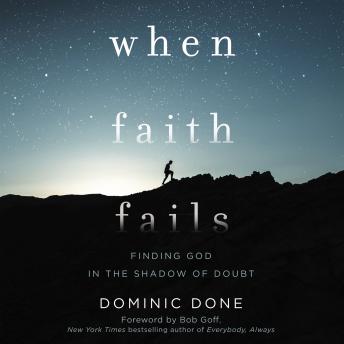
We’ve all been there: an unexpected calamity has rocked our faith, making us question what we previously believed to be true. What do we do with these times of doubt? Dominic Done has given us a helpful resource in his book When Faith Fails. Please check out my full book review by clicking here. 

“An anonymous fourteenth-century mystic once said that we find ourselves ‘in a cloud of unknowing.’ That is why we doubt. We don’t always see the sky. However, what we have to be reminded of here is that all of this was part of God’s design. He purposefully made it like this. He built limits into the system. It wasn’t an accident. He knew we would have to live with so many unknowns. And yet He chose for the human story to look this way. … When God decided to create, He could have said yes to a thousand other possibilities. But He didn’t. He chose this world. He chose you. He chose me. Limits and all. And still, He called it ‘good.’ All of this means that doubts are normal. They’re a natural consequence of living in this world.” 

“If all we care about is certainty, we lose the beauty of mystery. If all we value is explanation, we lose the joy of exploration.” 

“We need to stop vilifying those who live in the tension of conflicted faith. Doubt isn’t a malevolent demon that we need to exorcise out of our brothers and sisters with sanctimonious words. It’s part of their story. It’s part of my story. Jude 22 says, ‘Be merciful to those who doubt.’” 

“What if God made the world like this to push us to deeper faith? … Doubts aren’t just an obstacle; they’re an opportunity. Uncertainty can lead us into the beautiful mystery we call God.” 

“What’s vital to note here is that when the Bible uses the word doubt it’s different from the word unbelief (Matthew 14:31 and Hebrews 3:19). This is important because some Christians assume that doubt and unbelief are synonymous. They’re not. Doubt can lead to unbelief, just as doubt can lead to faith. But the two are not the same. Doubt says, ‘I am unsure of what is right.’ Unbelief says, ‘I don’t care about what is right.’ Doubt is searching for the light. Unbelief is choosing to gouge out your eyes. Doubt is pursuing truth, wherever it may lead. Unbelief is content with a lie. Doubt exists somewhere between belief and unbelief. Doubt is the moment of tension, which in and of itself isn’t good or bad. It’s somewhere in between. … Doubt isn’t the end of the story; it’s the suspense within it.” 

“Doubt’s greatest strength is secrecy.… But if we name our doubts and drag them into the light, we may find resolution, or we may discover the tension of authentically living in a doubt-filled faith.” 

“Abraham and Sarah doubted God’s promise (Genesis 17:17-22; 18:10-15). Gideon doubted his calling (Judges 6:36). Job doubted God’s character (Job 7:20-21). John the Baptist, whom Jesus called ‘the greatest of all the prophets,’ doubted if Jesus was the Messiah (Matthew 11:1-6). Peter doubted his faith (Mark 14:66-72). Thomas doubted the resurrection (John 20:24-29). The list goes on. Scripture doesn’t edit out the stories of those who struggled to believe. It weaves their heart-rending struggles into the narrative.” 

“If your faith is being shaken by the suffering you see, don’t be content with cheesy Christian truisms or Facebook clichés. … Lean into the chaos. Cry out to God. Talk to people who have gone through pain and have come out on the other side awash with hope. Immerse yourself in Scripture’s lament and redemption. Dare to say, ‘I will not let You go until You bless me.’” 

9 Quotes From “40 Days With Jesus”

Sarah Young does a masterful job in helping us hear Jesus speak to us in the first-person, as she weaves Scripture together so beautifully. Check out my full book review by clicking here. 

“Taste and see that I am good. The more intimately you experience Me, the more convinced you become of My goodness.” 

“Follow Me one step at a time. … Keep your mind on the present journey, enjoying My Presence. Walk by faith, not by sight, trusting Me to open up the way before you. … I set the pace in keeping with your needs and My purposes.” 

“Walking in the light of My presence blesses you in many ways. Good things are better and bad things are more bearable when you share them with Me. As you bask in My Love-Light, you are better able to love others and enjoy fellowship with them. You are less likely to stumble or fall because sins are garishly obvious in My holy Light. As you walk in this Light with Me, I encourage you to exult in My righteousness.” 

“Although your new self is being conformed to My image, this process does not erase the essence of who you are. On the contrary, the more you become like Me, the more you develop into the unique person I designed you to be.” 

“Holiness is letting Me live through you. Since I dwell in you, you are fully equipped to be holy. Pause before responding to people or situations, giving My Spirit space to act through you. Hasty words and actions leave no room for Me; this is atheistic living. I want to inhabit all your moments—gracing your thoughts, words, and behavior.” 

“Talk with Me about every aspect of your day, including your feelings. Remember that your ultimate goal is not to control or fix everything around you; it is to keep communing with Me. A successful day is one in which you have stayed in touch with Me, even if many things remain undone at the end of the day.” 

“Do not let your to-do list (written or mental) become an idol directing your life. Instead, ask My Spirit to guide you moment by moment.” 

“Exceeding Joy is for both you and Me. I delight in you now, but this Joy will be astronomically magnified when you join Me in Glory. The Joy you will experience in heaven is so far beyond anything you have known on earth that it is indescribable. Nothing can rob you of this glorious inheritance which is imperishable and will not fade away.” 

“Thankfulness is not some sort of magic formula; it is the language of Love, which enables you to communicate intimately with Me.”