


 “In praying for His enemies not only did Christ set before us a perfect example of how we should treat those who wrong and hate us, but He also taught us never to regard anyone as beyond the reach of prayer. If Christ prayed for His murderers, then surely we have encouragement to pray now for the very chief of sinners! Never lose hope. Does it seem a waste of time for you to continue praying for that man, that woman, that wayward child of yours? Does their case seem to become more hopeless every day? Does it look as though they had gone beyond the reach of divine mercy? Perhaps that one you have prayed for so long has been ensnared by one of the satanic cults of the day, or he may now be an avowed and blatant atheist, in a word, an open enemy of Christ. Remember then the Cross. Christ prayed for His enemies. Learn then not to look on any as beyond the reach of prayer.” —A.W. Pink
No One Is Beyond The Reach Of Prayer
August 22, 2016 — Craig T. OwensNever Hurry, Just Persist
May 18, 2016 — Craig T. OwensThis is from On This Day.
 We often rush when we should plod, forgetting that we usually accomplish more by persisting than by hurrying.
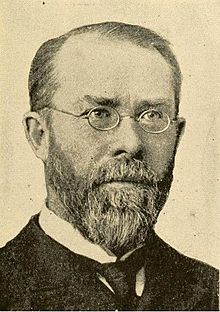
Sheldon Jackson was born on May 18, 1834 in the Mohawk Valley of New York. When he was four his parents dedicated him to God’s service, and his ambition from youth was to be a missionary. After graduating from Princeton Theological Seminary, he joined the thousands trekking to the American West. Most were searching for gold, land, and open skies. Wagon trains were leaving St. Louis daily. The golden spike tied East to West in 1866 as the Union Pacific Railway opened. Boom towns arose. Cowboys and mining camps, rowdy saloons and gunfighters filled the frontier. Jackson was everywhere, searching for souls with the fervor of a prairie fire. He once organized seven churches in 15 days.
He stood just over five feet tall, but his size, he said, allowed him to sleep anywhere. His bed was a stagecoach floor, a saloon loft, a hollow log, a teepee, a canoe. Someone described him as “short, bewhiskered, bespectacled, but a giant.”And his field was immense. He served as superintendent of Presbyterian missions from New Mexico to Minnesota.
When the United States purchased Alaska, he headed there at once, and the North soon became his passion. He explored the dangerous, uncharted fog-hidden coasts of the Bering Sea and the Arctic Ocean. He established schools for the young and placed missionaries in the hamlets. He evangelized, established churches, and brought Bibles to the Eskimos.
He worried that explorers and exploiters were slaughtering whales and seals, depriving Eskimos of their natural food supplies. So, braving criticism and ridicule, Sheldon raised $2,000 and brought reindeer from Siberia. Soon great herds were providing transportation, food, clothing, and livelihood for the people. Sheldon made 26 trips to Alaska, and during 50 years of ministry he traveled a million miles through the West and North. He oversaw the establishing of 886 churches. Few men have ever so planted the Christian faith over such a wide area. His secret? His friends simply explained, “He never hurried. He just persisted.”
Importunity
July 22, 2015 — Craig T. Owens Importunity is not a word that pops up in everyday conversation, but the concept permeates Scripture. Check out these words from Jesus—
I tell you, though he will not get up and give him the bread because he is a friend, yet because of the man’s boldness he will get up and give him as much as he needs. (Luke 11:8 NIV)
Boldness here in the NIV is translated IMPORTUNITY in the King James Version. It’s the only time this Greek word is used in the New Testament, and it is used in context to prayer (see vv. 1-4). The English and Greek dictionaries both agree on the definition of importunity…
…urgent, shameless asking, sometimes to the point of being annoying!
This is how Jesus tells us to pray.
Notice Jesus said the friend responded not out of friendship, but because of the importunate attitude.
God responds to our importunity as well (vv. 9-10). He responds not as an annoyed friend and not even as a loving earthly father (vv. 11-12). Friends and fathers have moods and they have limits—Our God has no limit on His love nor on His supply!
“He will give him as much as he needs … Ask and it will be given to you… How much more will your Father in heaven give the Holy Spirit to those who ask Him!” (vv. 8, 9, 13).
“Our giving depends much on the state of our minds at the moment. When depressed, we have no pleasure in giving; we either refuse, or we give merely to get quit of the applicant. Darkness of mind shrivels us up, makes us selfish, neglectful of others. When full of joy, giving seems our element—our joy overflows in this way; we cannot help giving; we delight in applications; we seek opportunities of giving. So with the blessed God. Being altogether happy, His delight is to give; His perfect blessedness flows out in giving. We can never come wrongly to such an infinitely happy Being.” —Horatius Bonar (emphasis added)
May the Holy Spirit help us to be importunate in our prayer today, for you can never come wrongly—nor too often—to such a happy, loving, generous Father!
Poetry Saturday—While Others Are
May 2, 2015 — Craig T. Owens Believe while others are doubting.
Matthew Henry On Prayer
January 1, 2015 — Craig T. Owens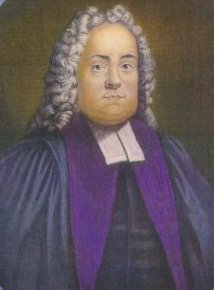 Some great quotes from Matthew Henry on prayer…
“It is good for us to keep some account of our prayers, that we may not unsay them in our practice.” —Matthew Henry
“God’s promises are to be our pleas in prayer.” —Matthew Henry
“Prayer time must be kept up as duly as meal time.” —Matthew Henry
“A truly religious life is a life of constant joy. And we should rejoice more, if we prayed more. Prayer will help forward all lawful business, and every good work. If we pray without ceasing, we shall not want matter for thanksgiving in every thing. We shall see cause to give thanks for sparing and preventing, for common and uncommon, past and present, temporal and spiritual mercies. Not only for prosperous and pleasing, but also for afflicting providences, for chastisements and corrections; for God designs all for our good, though we at present see not how they tend to it.” —Matthew Henry
“Prayer is a salve for every sore, a remedy for every malady; and when we are afflicted with thorns in the flesh, we should give ourselves to prayer. If an answer be not given to the first prayer, nor to the second, we are to continue praying. Troubles are sent to teach us to pray; and are continued, to teach us to continue instant in prayer.” —Matthew Henry
“The best we can say to God in prayer, is what He has said to us.” —Matthew Henry
“Here is a precept in three words to the same purport, Ask, Seek, Knock (Matthew 7:7); that is, in one word, ‘Pray; pray often; pray with sincerity and seriousness; pray, and pray again; make conscience of prayer, and be constant in it; make a business of prayer, and be earnest in it.’” —Matthew Henry
Don’t Get Pulled Back Down
January 30, 2012 — Craig T. Owens We wrapped up our series on The Danger Of Prayerlessness by looking at a very innocent thing: just doing what seems the natural thing to do.
In Luke 18, Jesus told a story about a persistent widow who would not stop approaching a judge to get justice. She had been wronged, but she didn’t take matters into her own hands, nor did she get tired of asking the judge for help. Either of these responses would have been very natural responses. But that’s the point: they would be natural, and not spiritual; they would depend on us, and not on God.
Luke introduces this story like this: Jesus told His disciples a parable to show them that they should always pray and not give up (Luke 18:1).
The word for give up is one that means to slide back to the natural way of doing, feeling or acting. In other words, to handle things like we always have before. But Jesus said there was a better way: keep taking your request to our Heavenly Father.
Prayer overcomes the “gravitational pull” of my natural tendencies to do things on my own. Prayer is the rocket fuel to help me break free!
Do not fret or have any anxiety about anything, but in EVERY circumstance and in EVERYthing, by prayer and petition (definite requests), with thanksgiving, continue to make your wants known to God. (Philippians 4:6 AMP)
Don’t get pulled back down. Instead always pray and never, ever give up! Let your prayers take you higher and higher!
The Circle Maker (book review)
January 16, 2012 — Craig T. Owens I’m a huge fan of Mark Batterson’s books! So I’ll admit that when I received my copy of The Circle Maker, I went into it with high expectations. And this book didn’t disappoint!
I grew up with a phrase repeated often around our church and my home: The Church (and Christians) move forward on its knees. I believe that because I have tested it in my life. I know firsthand that my life is more centered and in-tune with God when I make prayer a regular habit. And on the flip side, I know how hectic and disjointed my life seems when my prayer time is abbreviated.
I’m an action-oriented guy. I like to do things quick, and I like quick responses. This frequently carries over into my prayer life, where I pray for something, and quickly check it off my list if the answer doesn’t come quickly enough. But that’s not how Honi The Circle Maker prayed.
This is the man Mark uses to teach us to pray with more intensity and more perseverance. Honi would—literally—draw a circle and kneel in prayer in that circle until God answered his prayer. Wow! From this man’s example, Mark teaches us three key concepts about becoming circle-maker pray-ers.
- Dream Big
- Pray Hard
- Think Long
In every section I was convicted on how short-sighted and puny my prayers seemed. But at the same time, I was also encouraged and energized to make the changes to become a circle maker in my prayer life. I’m excited to see how my life will change because my prayers are changing. I’m going to be a circle maker!
If you would like to revolutionize your prayer life, I wholeheartedly recommend this book.
I am a Zondervan book reviewer.
The Power Of -Ing
January 13, 2010 — Craig T. Owens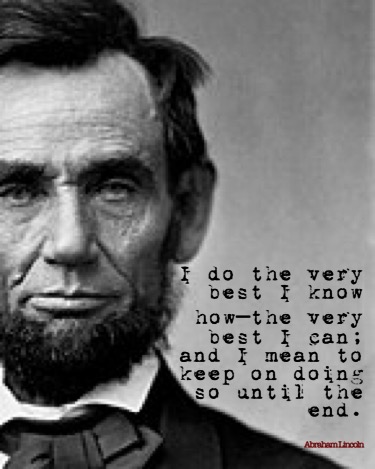 Have you ever heard someone say something like:
- “Wow, look at her. She arrived in style!”
- “I think I’ve finally arrived.”
This is weird because arriving implies stopping. When I’m driving to the store and I arrive at the store, I don’t keep on driving; I stop at the store. That’s the whole reason I left my house in the first place.
So when we talk about people arriving, do we really mean that they are supposed to stop and park? Correct me on this, but I think the only time we stop in life is when life stops. In other words: We’re dead!
We don’t really want to arrive, do we? We want to hit goals and then keep on going. We want to keep on “ing”ing. Here’s how I’m trying to leverage the power of ing:
- Keep on hoping in God (Psalm 71:14).
- Keep on obeying God’s laws (Psalm 119:44).
- Keep on coming to God with all my heart (Joel 2:12).
- Keep on asking, seeking, knocking in prayer (Matthew 7:7).
- Keep on believing in what Jesus can do for me (Mark 5:36).
- Keep on loving others (John 13:35).
- Keep on bearing good fruit (John 15:16).
- Keep on helping the poor (Galatians 2:10).
- Keep on growing in my knowledge of Jesus (Philippians 1:9).
- Keep on doing what is right (1 Peter 4:19).
I love the words of Abraham Lincoln, who knew the power of ing:
“I do the very best I know how—the very best I can; and I mean to keep on doing so until the end.”
Don’t arrive. Don’t stop. Keep on “ing”ing the right things—God’s things—and see how God will bless your efforts. There is an incredible power in ing!
The Apathy Of Blurry Eyes
January 15, 2009 — Craig T. Owens My son, Harrison, had an extensive eye exam today. Now he is asleep in my office.
During his eye exam, his pupils were dilated, so now he has blurry vision. And, apparently blurry vision leads to sleepiness. It’s actually not the eye drops that led to his malaise, but the lack of the ability to see clearly. If he cannot see what’s happening around him, why would he even try to engage in his surroundings. Instead, he’s just accepted his condition as something which can’t change.
This reminds of a man named Bart—
Then they reached Jericho, and as Jesus and His disciples left town, a large crowd followed Him. A blind beggar named Bartimaeus (son of Timaeus) was sitting beside the road. When Bartimaeus heard that Jesus of Nazareth was nearby, he began to shout, “Jesus, Son of David, have mercy on me!”
“Be quiet!” many of the people yelled at him. But he only shouted louder, “Son of David, have mercy on me!”
When Jesus heard him, He stopped and said, “Tell him to come here.”
So they called the blind man. “Cheer up,” they said. “Come on, He’s calling you!” Bartimaeus threw aside his coat, jumped up, and came to Jesus.
“What do you want Me to do for you?” Jesus asked.
“My Rabbi,” the blind man said, “I want to see!”
And Jesus said to him, “Go, for your faith has healed you.” Instantly the man could see, and he followed Jesus down the road. (Mark 10:46-52, NLT)
Were there other blind people that heard Jesus? It’s almost certain there were. Were there other blind people in Jericho? Probably. But it appears that their blindness had caused them to slip into drowsiness and apathy, to simply accept their condition as something which couldn’t be changed.
Bart would not settle! He believed Jesus could change his condition! He called out to Jesus. He shouted even louder to get Jesus’ attention. He threw aside his coat, jumped up and ran to Jesus. He boldly stated his need to see, convinced that he was talking to the one Person who could change his condition.
Jesus said that Bart’s faith—his persistence, his unquenchable desire to see clearly, his belief that Jesus could do something for him—is what brought about his healing.
Have you become accepting of your condition? What’s holding you back from shouting out even louder to Jesus? What have you given up seeking? Don’t hold back—shout out to Jesus again today!
My most-viewed posts


 Craig T. Owens