Thursdays With Oswald—Exhausted For God

This is a weekly series with things I’m reading and pondering from Oswald Chambers. You can read the original seed thought here, or type “Thursdays With Oswald” in the search box to read more entries.

Exhausted For God

     Jesus said to Peter, ‘Feed My sheep,’ but He gave him nothing to feed them with. The process of being made broken bread and poured out wine means that you have to be the nourishment for other souls until they learn to feed on God. They must drain you to the dregs. Be careful that you get your supply, or before long you will be utterly exhausted. Before other souls learn to draw on the life of the Lord Jesus direct, they have to draw on it through you; you have to be literally ‘sucked,’ until they learn to take their nourishment from God. We owe it to God to be our best for His lambs and His sheep as well as for Himself.

     Has the way in which you have been serving God betrayed you into exhaustion? If so, then rally your affections. Where did you start the service from? From your own sympathy or from the basis of the Redemption of Jesus Christ? Continually go back to the foundation of your affections and recollect where the source of power is. You have no right to say, ‘O Lord, I am so exhausted.’ He saved and sanctified you in order to exhaust you. Be exhausted for God, but remember that your supply comes from Him. ‘All my fresh springs shall be in Thee.’

From My Utmost For His Highest

He saved and sanctified you in order to exhaust you. I want to be continually filled up and poured out for God. But in order to be of any good to others, I have to keep going back to the Source of life. If I’m not filled up with God’s presence, I will be exhausted, but not in the right way.

I have shared quite a bit about the correct way for godly leaders to be replenished through self-care. Check out these posts.


Answer (Wo)Man

“Hey, pastor, I have a question for you….” As a pastor, do you feel like you need to have all the answers, all the time, to everyone’s questions? I’m not saying that as pastors we shouldn’t always be studying and learning and growing, but I think it’s a dangerous trap for us to feel like we need to have every answer.

Here’s what John Calvin wrote in The Institutes of the Christian Religion

“And since the Holy Spirit always instructs us in what is useful, but altogether omits, or only touches cursorily on matters which tend little to edification, of all such matters, it certainly is our duty to remain in willing ignorance.

“…Let us here remember that on the whole subject of religion one rule of modesty and soberness is to be observed, and it is this, in obscure matters not to speak or think, or even long to know, more than the Word of God has delivered. A second rule is, that in reading the Scriptures we should constantly direct our inquiries and meditations to those things which tend to edification, not indulge in curiosity, or in studying things of no use.

“…The duty of a Theologian, however, is not to tickle the ear, but confirm the conscience, by teaching what is true, certain, and useful.”

Study for edification, not curiosity. Teach what is true and helpful, not what is tickling ears. And don’t feel like you need to have all the answers.

Start It With Me

Pastors, I wrote earlier about the idea that you have to preach your message to yourself before you preach it you’re your congregation. But I want to back up a step to the motivation for that.

These words from William Law are challenging—

“The first business of a clergyman awakened by God into a sensibility and love of the truths of the Gospel, and of making them equally felt and loved by others, is to thankfully, joyfully, and calmly adhere to and give way to the increase of this new-risen light, and by true introversion of his heart to God, as the sole Author of it, humbly beg of Him that all that he feels a desire of doing to those under his care may be first truly and fully done in himself.”

God, if You want to do something in my congregation, start it with me. Right here, right now, in the privacy of my study, begin with me. When I come before my congregation this weekend, may my life be the example of the work You want to do in us all.

A Sharper Sermon

It’s a lot of work preparing a sermon (and even that is a major understatement!). So if we pastors are going to put all of this effort in, isn’t it right to believe for a great return on that investment?

I’ve got good news and bad news for you—and they’re both the same. Pastor, after all of your hard work preparing your message, there is only one thing you can do: pray.

Sounds simple, right? But if it’s so simple, why are so many church attendees unmoved by the sermons they hear each Sunday (check out this Barna report)?

Here is some good counsel of how we should pray—

“Of what efficacy would be the exterior word of pastors, or even the Scriptures themselves, if we had not within the word of the Holy Spirit giving to the others all their vitality? The outward word, even of the Gospel, without the fecundating, vivifying, interior word would be but an empty sound. ‘It is the letter alone that kills (2 Corinthians 3:6), and the Spirit alone can give us life.’” —Francois Fenelon

“Does anyone of us desire to help the Church of Christ? Then let him pray for a great outpouring of the Spirit. Only the Holy Spirit can give edge to sermons, and point to advice, and power to rebukes, and can cast down the high walls of sinful hearts. It is not better preaching, and finer writing that is needed in this day—but more of the presence of the Holy Spirit.” —J.C. Ryle

If I can add my two cents’ worth to these eminent theologians:

  • Pray before you write your sermon
  • Pray while you’re writing your sermon
  • Pray before you deliver your sermon
  • Pray after you deliver your sermon

And then watch what the Holy Spirit does with your sermon!

Preach It To Yourself

Before I am a pastor sharing with my congregation, I am a saved sinner standing before God.

Before I open the penetrating brilliance of God’s Word to my church, I must stand in the spotlight of His Word.

In other words, I should never stand before my church with my finger pointed at them. Instead, the finger of God should be squarely pointed at me. Only then can I share with my congregation what God is doing in my life.

I’ve always tried to pastor this way, but recently I read this passage in John Bunyan’s autobiography which made this truth even more real to me—

“Sometimes I have been about to preach upon some smart and searching portion of the Word, I have found the tempter suggest, What! will you preach this! This condemns yourself; of this your own soul is guilty; so don’t preach any of it; or if you do, mince your words, as to make way for your own escape; lest instead of awakening others, you lay that guilt upon your own soul, that you will never get from under. … It is far better that you judge yourself, even by preaching plainly unto others, than that you, to save yourself, imprison the truth in righteousness.”

So, pastor, preach the Word to yourself first. Then go share with your congregation about what God is dealing with you.

Men, Not Boys

This is an in-your-face, no-punches-pulled, right-on-target message. Watch it, think about it, and share your thoughts in the comment below…

Proper Preaching

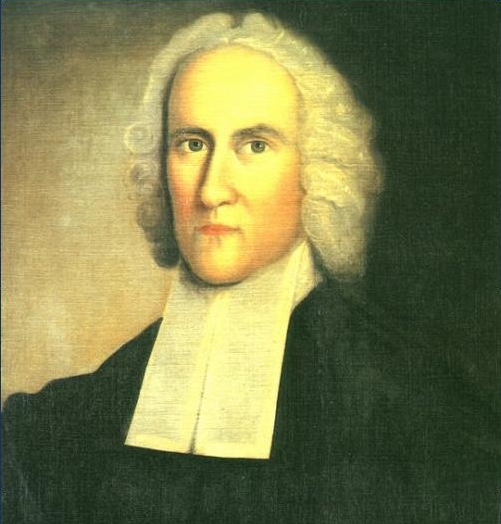
Jonathan Edwards was a brilliant man. His words here are spoken directly to preachers. I endeavor to handle my God-given responsibilities like this:

“Pure Christian humility has no such thing as roughness, or contempt, or fierceness, or bitterness in its nature; it makes a person like a little child, harmless and innocent, that none need to be afraid of, or like a lamb, destitute of all bitterness, wrath, anger, and clamor; agreeable to Ephesians 4:31. With such a spirit as this ought especially zealous ministers of the gospel to be clothed, and those that God is pleased to employ as instruments in His hands of promoting His work. They ought indeed to be thorough in preaching the word of God, without mincing the matter at all; in handling the sword of the Spirit, as the ministers of the Lord of hosts, they ought not to be mild and gentle; they are not to be gentle and moderate in searching and awakening the conscience, but should be sons of thunder. The Word of God, which is in itself sharper than any two-edged sword, ought not to be sheathed by its ministers, but so used that its sharp edges may have their full effect, even to the dividing asunder soul and spirit, joints and marrow. Yet they should do it without judging particular persons, leaving it to conscience and the Spirit of God to make the particular application. But all their conversation should savor of nothing but lowliness and good-will, love and pity to all mankind; so that such a spirit should be like a sweet odor diffused around them wherever they go. They should be like lions to guilty consciences, but like lambs to men’s persons. This would have no tendency to prevent the awakening of men’s consciences, but on the contrary would have a very great tendency to awaken them. It would make way for the sharp sword to enter; it would remove the obstacles, and make a naked breast for the arrow. —Yea, the amiable Christ-like conversation of such ministers in itself, would terrify the consciences of men, as well as their terrible preaching; both would co-operate to subdue the hard, and bring down the proud heart.”

Was Your Church Successful?

These thoughts are especially for my fellow pastors (although I think they pertain to anyone who attended a church service recently).

So… how successful was your church gathering this weekend?

Was it successful because lots of people were there? Or because the pastor preached a good sermon? Or maybe the offering was better than usual? Or because you could feel something special as the worship team sang and played their instruments?

How about these measurements:

“The great business of the church is not our number by addition, but by grace, by growing up in Christ.” (John Owen)

“The perfect church service would be one we were almost unaware of. Our attention would have been on God.” (C.S. Lewis)

“Revival is the church getting back to ‘normal.’” (A.W. Tozer)

I hope these quotes have you thinking about church “success” as much as they are working on me!

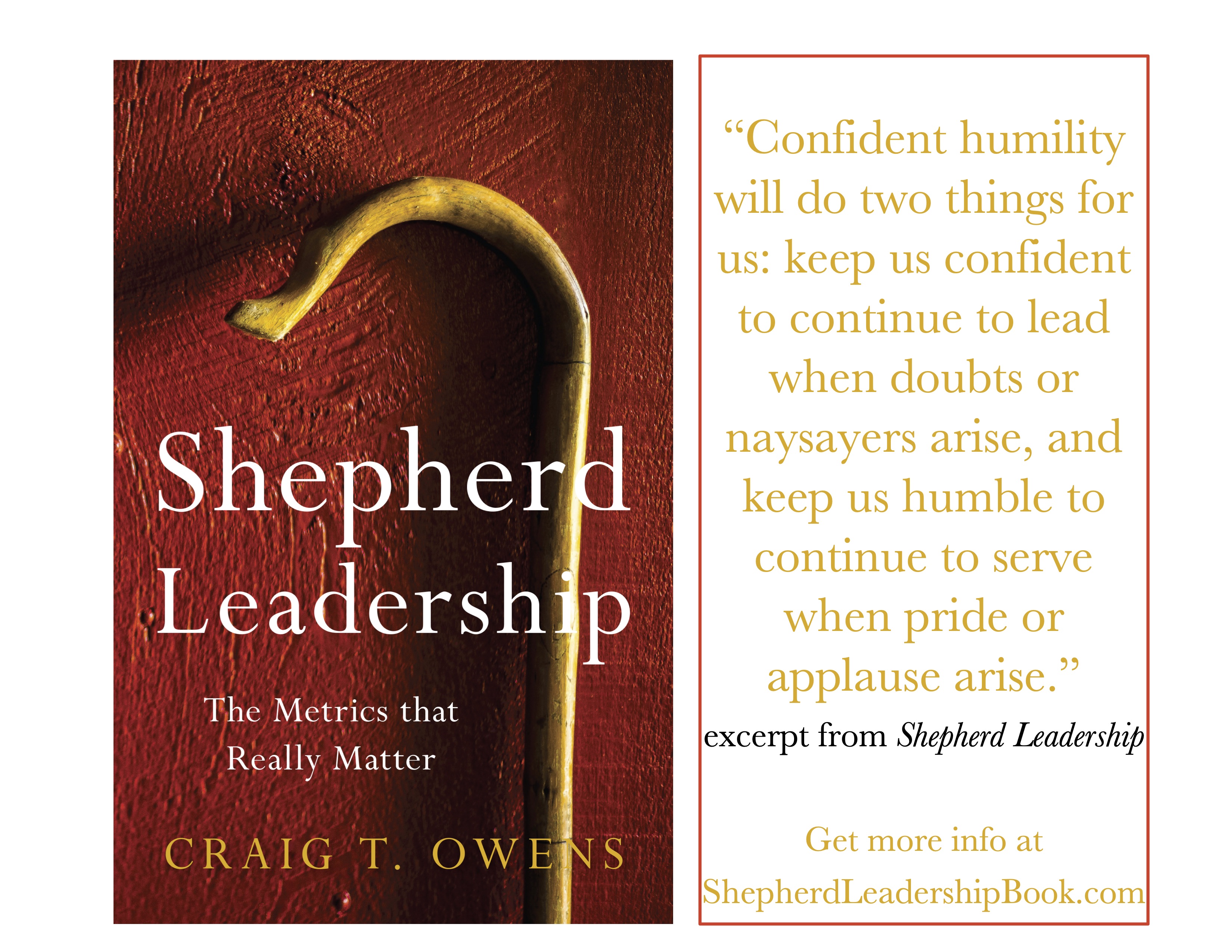
UPDATE: This post was one of the seed thoughts that went into fashioning my book Shepherd Leadership: The Metrics That Really Matter.

Praying For Your Pastor

For the past few years, October has been designated as Pastor Appreciation Month. Honestly, I feel appreciated by the great folks at Calvary Assembly of God every single week! I can only pray that other pastors feel the same love I feel.

Here’s a simple way you can show your pastor appreciation both in October, and all year long: Pray for him or her. Multiple times the Apostle Paul wrote pray for us (Colossians 4:3; 1 Thessalonians 5:25; 2 Thessalonians 3:1). Prayer is SO NEEDED for your pastor!

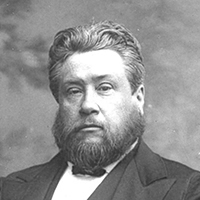
Here’s what the eminent pastor Charles Spurgeon wrote:

The members of the body of Christ should have a care for one another, but especially should the minister receive the prayers of his flock. I have sometimes heard his duties called arduous, but that word is not expressive enough. The works in which he is occupied lie quite out of the region of human power. The minister is sent to be God’s messenger for the quickening of the dead. What can he do in it? He can do nothing whatever unless the Spirit of God be with him through the prayer of his brethren.

He is sent to bring spiritual food to the multitude, that is to say, he is to take the loaves and fishes, and with them, few as they are, he is to feed the thousands. An impossible commission! He cannot perform it. Apart from divine help, the enterprise of a Christian minister is only worthy of ridicule. Apart from the power of the Eternal Spirit, the things which the preacher has to do are as much beyond him as though he had to weld the sun and moon into one, light up new stars, or turn the Sahara into a garden of flowers. We have a work to do concerning which we often cry, “Who is sufficient for these things?” and if we be put to this work but have not your prayers, and in consequence have not the supply of the Spirit, we are of all men the most miserable.

Show how much you appreciate your pastor by upholding him/her in prayer every day.

A Pastor’s Work

I have blogged before about how heavy I feel the responsibility of being a pastor. When I think of the awesome responsibility God has given me as His under-shepherd to His precious people, I am humbled.

Humility is a good thing.

Since the pastor is “out in front” at every gathering, speaking to the people, leading the church in a particular direction, people tend to view their pastor as their leader. And without humility, the people’s esteem can “puff up” a pastor. Unfortunately, I’ve been around pastors who have gotten a little too, shall I say, “puffy.”

So this dose of godly wisdom from J.C. Ryle is just the preventative medicine I need:

“We should beware of resting our claim to the people’s attention on our outward [pastoral] call only. It will never do to tell our people, ‘We are your ordained ministers, and therefore you must believe and follow whatever we tell you.’ On the contrary, we must tell them to prove our teaching by Scripture, and not to receive it unless it is scriptural. That man has no right to expect the attention of his people, who does not preach the Gospel and live the Gospel. The rule of Paul is clear on this point. He told the Thessalonians to esteem their ministers very highly ‘for their work’s sake’ (1 Thessalonians 5:13). When there is no ‘work’ done, it is vain to expect the people’s esteem.

Pastors, do the work of humbly working as God’s servant to His people. Use your position to serve, not to presume upon others.

Church attendees, make us pastors “prove our teaching by Scripture.” We don’t get to say, “Because I’m the pastor and I say so!”

UPDATE: This post went into my thinking for my book Shepherd Leadership: The Metrics That Really Matter.