Fickle Crowds

Listen to the podcast of this post by clicking on the player below, and you can also subscribe on AppleSpotify, or Audible. 

One day, the Lyaconians hailed Barnabas and Paul as gods and tried to offer sacrifices to them, and the next day they attempted to murder Paul. 

     Even in the light of these words [Barnabas and Paul] with difficulty prevented the people from offering sacrifice to them. But some Jews arrived there from Antioch and Iconium; and having persuaded the people and won them over, they stoned Paul and afterward dragged him out of the town, thinking that he was dead. (Acts 14:18-19) 

Crowds have always been fickle—quickly changing their allegiance from one person or idea to another one. Think about Jesus: they went from “Blessed is He Who comes in the name of the Lord” to “Crucify Him” in less than a week! 

Jesus wasn’t surprised by this. He knew what was in men’s hearts and never built His hopes or His ministry on them (John 2:23-25). 

So why do we? 

Why do we equate a large church attendance or lots of views of our online content as “successful” and anything less as “failure”? 

Jesus didn’t want or need the approval of a large crowd. Instead, He heard, “This is My beloved Son in Whom I am well pleased” (Matthew 3:17, 17:5). 

Paul didn’t want or need the approval of a large crowd. Instead, in his final letter he noted that with the exception of Luke, everyone else had abandoned him. And still some of his last words were, “I have fought the good fight, I have finished the race, I have kept the faith. Now there is in store for me the crown of righteousness, which the Lord, the righteous Judge, will award to me on that day—and not only to me, but also to all who have longed for His appearing” (2 Timothy 4:7-8). 

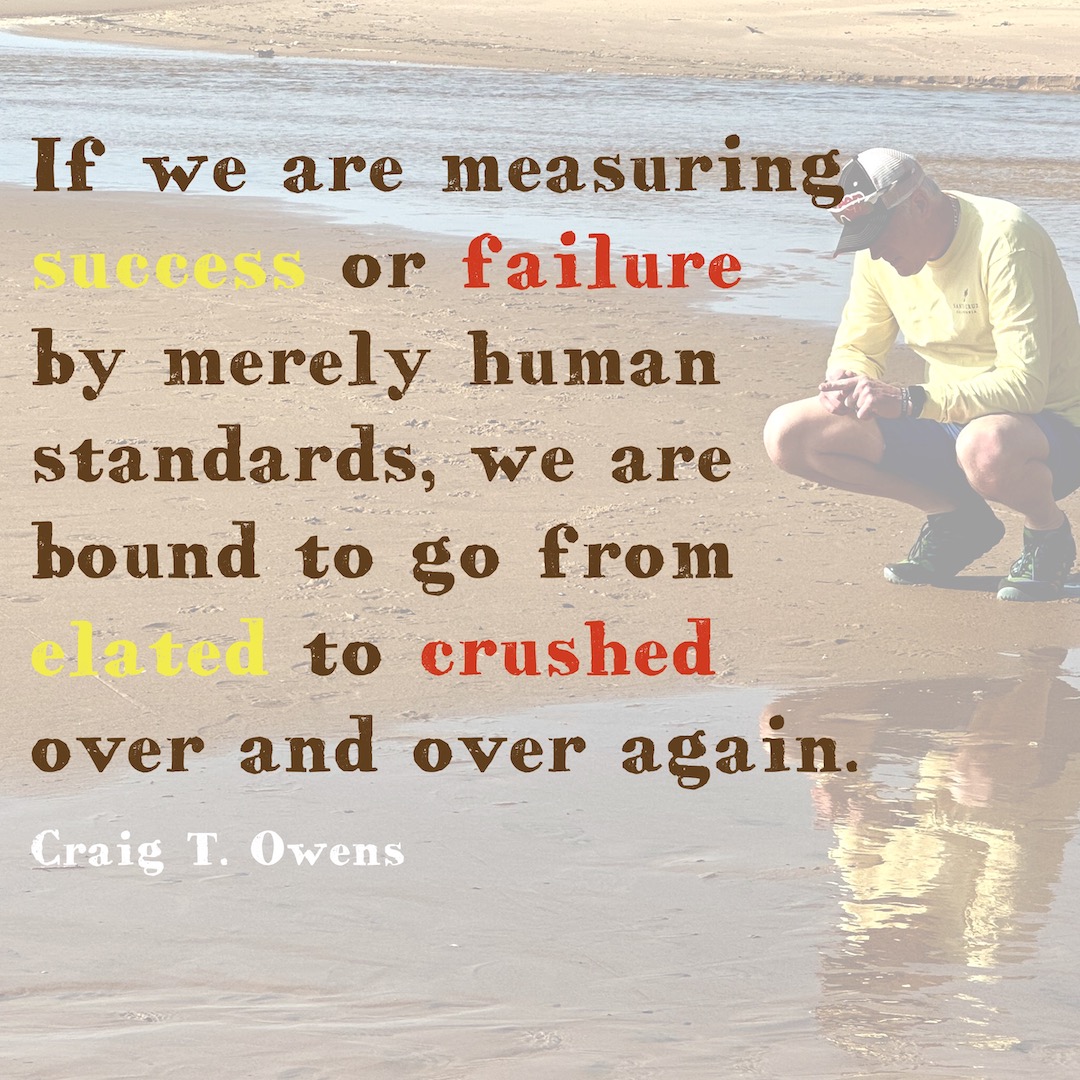
If we are measuring success or failure by merely humans standards, we are bound to go from elated to crushed over and over again. 

There is only one metric of success we should ever give weight to: 

We should only desire to hear our Master say, “Well done” because we faithfully stewarded the gifts and opportunities He gave to us. 

Let’s stop this thrilled-disappointed-thrilled-disappointed cycle by taking our eyes and hearts off of numbers, and resolving to keep our eyes and hearts solely on our Savior.

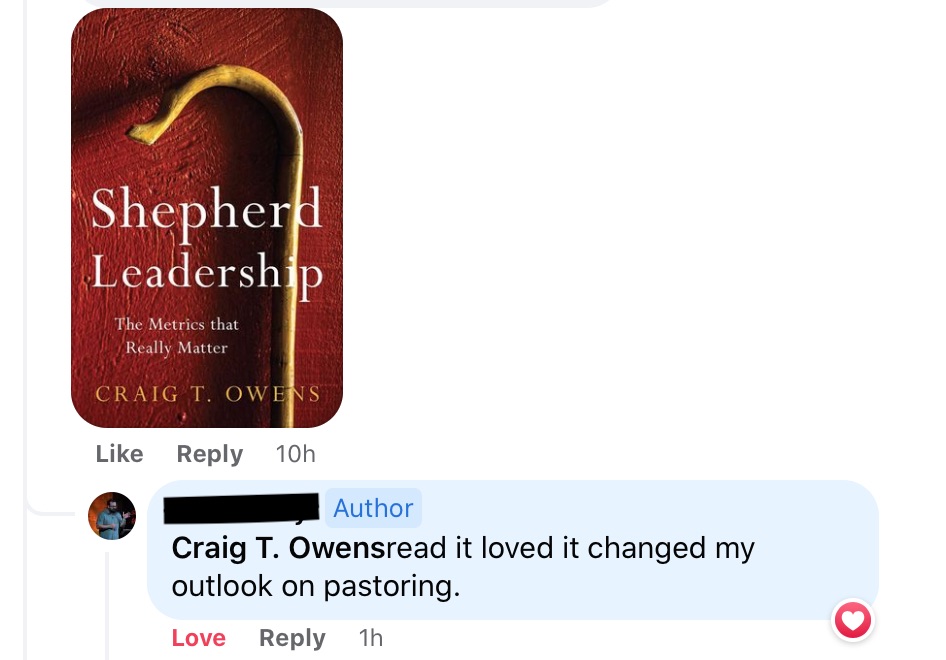
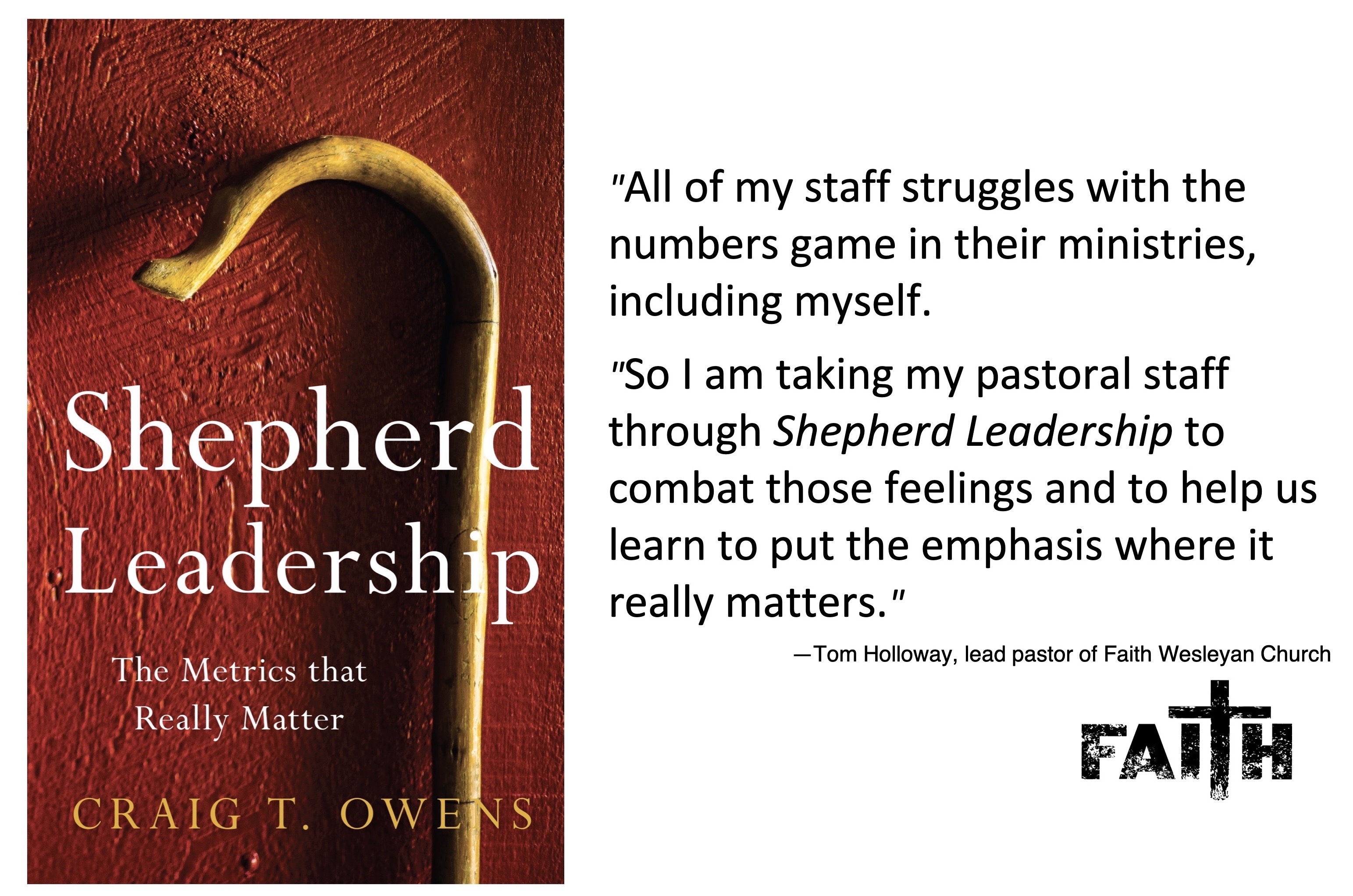
P.S. If this topic intrigues you, please consider checking out my book Shepherd Leadership: The Metrics That Really Matter.

►► Would you please prayerfully consider supporting this ministry? My Patreon supporters get behind-the-scenes access to exclusive materials. ◀︎◀︎

Counting Noses

Listen to the podcast of this post by clicking on the player below, and you can also subscribe on AppleSpotify, or Audible. 

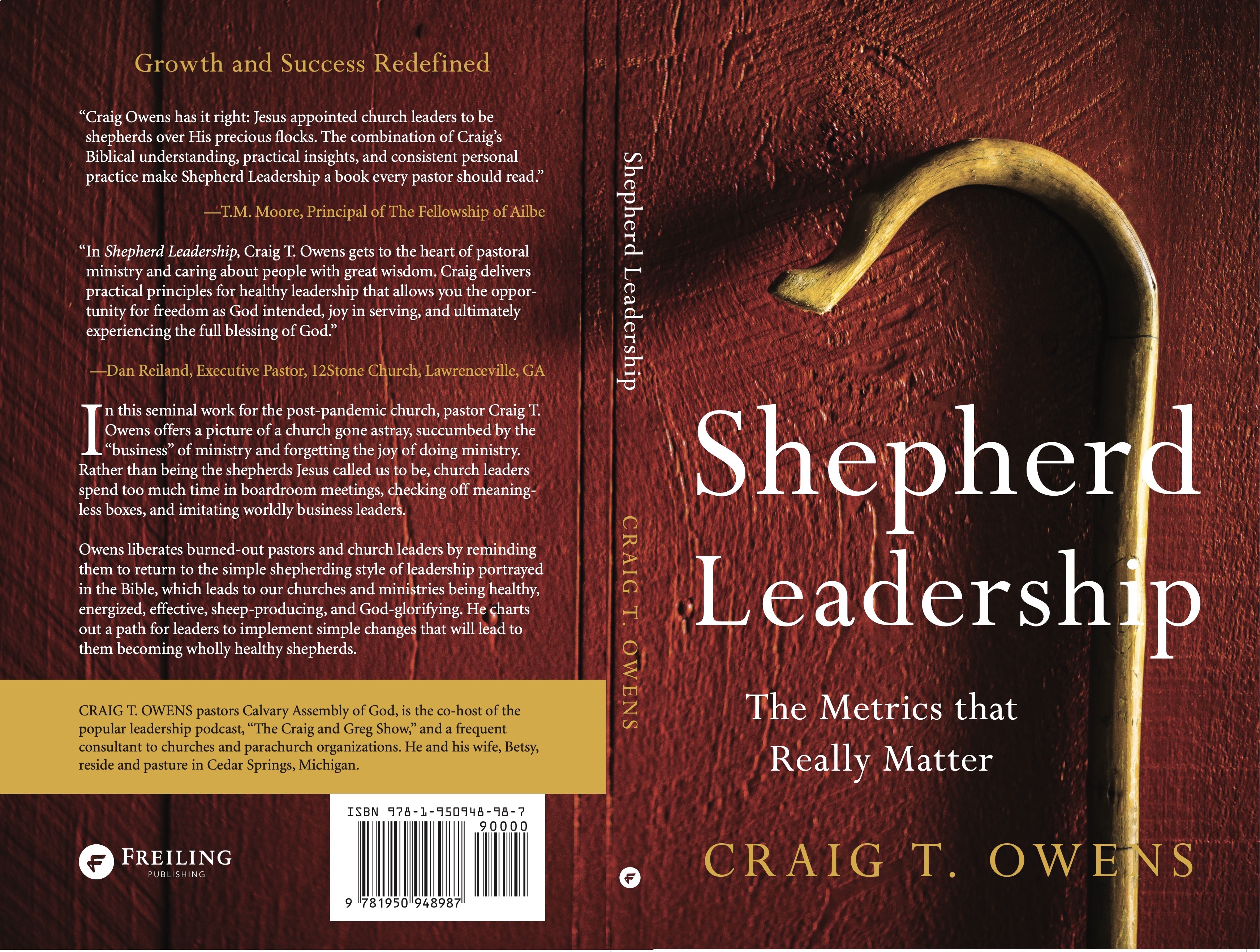
One of the reasons I felt prompted to write Shepherd Leadership was that I saw too many CEO-like metrics being used by pastors to gauge the success of their church. The subtitle of my book is “The Metrics that Really Matter.” 

Check out this excerpt from a recent blog post from T.M. Moore—

     “Even a cursory reading of Revelation 2 and 3 will convince us that Jesus has expectations for His churches. He has in His mind a template and pattern for how a church should be built and what it should look like as it takes on its calling as the Body of the Lord in its community. The seven churches Jesus singled out in these chapters represent the Church in every age and place. His assessment of these churches puts us on notice concerning how we should assess the state of our church at any time and what we must do to bring our expectations into line with His.

     “We’re not very good at this. Counting noses, tallying up contributions, and reporting on baptisms and new members—these are the criteria at which we typically aim and to which we point in determining the health of our churches. But these criteria appear nowhere in Revelation 2 and 3. Jesus is looking for more.” 

You can check out the rest of T.M.’s thoughts here. 

I was honored that T.M. Moore wrote an endorsement of Shepherd Leadership: “Craig Owens has it right: Jesus appointed church leaders to be shepherds over His precious flocks. The combination of Craig’s Biblical understanding, practical insights, and consistent personal practice make Shepherd Leadership a book every pastor should read.” 

To learn more, pick up a copy of my book for yourself. 

I would also encourage you to check out this list of blog posts and video clips where I discuss in more depth the right and wrong metrics for our churches and para-church ministries. 

►► Would you please prayerfully consider supporting this ministry? My Patreon supporters get behind-the-scenes access to exclusive materials. ◀︎◀︎

A Leadership Measurement Trap

Listen to the podcast of this post by clicking on the player below, and you can also subscribe on AppleSpotify, or Audible. 

Leaders have to be very careful of the trap of measuring the growth of their teammates by the wrong metrics. The things that matter most are often the things that are the most difficult to measure, but leaders must find a way.

Check out the full conversation we had on this topic on this episode of The Craig and Greg Show. 

In my book Shepherd Leadership, I have a chapter entitled ‘Don’t Try to Grow Your Own Ministry.’ This book is mainly written for church and non-profit leaders, but there are helpful principles here for every kind of leader. Here’s an except from this chapter—

     Businesses think in terms of quantitative gains—things they can count—but churches and nonprofits should be thinking in terms of qualitative gains—a quality improvement that isn’t as easily counted. I think we all know this, and yet we still persist in wanting to define success in a church or a nonprofit by those quantitative standards such as attendance growth, donations, and the like. When we think qualitative over quantitative, suddenly what seemed “small” is so significant and so valuable that it cannot be calculated! … 

     Don’t try to grow your ministry. First, because it’s not yours, it’s [God’s]; and second, because your measure of success is probably more slanted toward quantitative measurements than qualitative. Jesus wasn’t concerned about bigger numbers: “What do you think?” He asked, “If a man has a hundred sheep, and one of them goes astray, does he not leave the ninety-nine and go to the mountains to seek the one that is straying?” (Matthew 18:12). 

     Philip went to Samaria to tell people about Jesus. He didn’t go there because it fit his plan, but because Jesus said, “You will be My witnesses in Jerusalem, and in all Judea and Samaria, and to the ends of the earth” (Acts 1:8). Philip’s obedience brought God’s success: hundreds turned to Jesus as their Savior, demon-possessed people were delivered, the sick were healed, and the new Christians were baptized in the Holy Spirit. Yet God called Philip to leave these “ninety-nine” and go to the desert to cross paths with just one confused and wondering sheep (Acts 8). After that, Philip virtually disappears from Luke’s historical record. 

     What’s the value of one government official’s life? God says that his value is incalculable. Apparently, God knew that Philip was the perfect shepherd to lead this Ethiopian to the pasture where he would accept Jesus as his Savior. Philip was obedient, a sheep was saved, and God was pleased. But I wonder how many people today might think Philip’s ministry was unsuccessful because he left a bigger ministry in Samaria to go to a smaller ministry in the desert? 

Leaders need to be very cautious about using the right metrics to measure the growth of their teammates and the success of their organization.

►► Would you please prayerfully consider supporting this ministry? My Patreon supporters get behind-the-scenes access to exclusive materials. ◀︎◀︎

The Biblical Metric Of Success

Listen to the podcast of this post by clicking on the player below, and you can also subscribe on AppleSpotify, or Audible.

I was asked to share an article on the Converge Coaching blog.

There is no shortage of books that define “success” in our business or ministry endeavors, but as Christians, let’s try to get a more precise definition—a biblical definition.

I did a quick search for the words “success” or “successful” in just the New International Version of the Bible, and I was somewhat surprised by two things. First of all, the relatively few times this word is used: Only 25 times in the entire Scripture. We read of prayers offered for a successful journey, or a king’s reign, or a building project, success that comes to someone because of God’s favor on their life, or success in battle.

The second thing that surprised me: The word “success” isn’t used in the New Testament. The reason this surprised me is because without there being even a close second, Jesus has to be the most successful person who ever walked this planet. No one ever taught like He did, performed the miracles He did, or willingly laid down His life and was resurrected like He was. And yet the word “success” is never attached to His life.

This means we are left to draw some Holy Spirit-illuminated inferences from the Bible on how to define success. You may ask, “Why do we even need to know what ‘success’ is?” I would say we need a biblical definition for success to avoid the inevitable feelings of failure that come if things aren’t going as well as we thought they should.

In business, we often define success as revenue growth or a healthy net profit. In ministry, we typically measure success by church attendance, the number of people launched into ministry, or the amount of money given to missions work.

But what happens if we apply these metrics to the work Jesus did while He was on Earth? We see His disciples fretting over not having enough money to buy food for the congregation, and Jesus mentioning He often didn’t have a bed to sleep in, or the fact that Jesus only had one set of clothes. As a businessman, Jesus wouldn’t be considered successful by any current metrics. Even as a ministry leader, the congregation that gathered after Jesus was resurrected back to life only numbered 120 people. So if we consider Jesus as a pastor, His church wasn’t exactly thriving according to modern metrics.

After Peter’s sermon on the day of Pentecost (Acts 2) and his sermon following the healing of the lame man (Acts 3), we don’t hear much about quantitative growth throughout the rest of the Book of Acts. But in the balance of the Book of Acts, in the teachings of Jesus, and in the instructions in the epistles, we do hear substantially more about qualitative growth.

I think the clear message is that qualitative metrics are much more important to God than quantitative measurements. Specifically, I think we see the emphasis on two important qualities for godly leaders: faithfulness and excellence.

Solomon wrote, “Whatever you do, do well” (Ecclesiastes 9:10 NLT), and Paul told us, “Whatever you do, do it all for the glory of God” (1 Corinthians 10:31 NIV). These things tell us that our best effort is always required—no cutting corners, no half-measures, no bare-minimum effort. Instead, we should always do the best that we can, always striving for excellence.

My Grandma drilled a poem into my memory whenever I wanted to stop at “good enough.” She would say—

Good, better, best
Never let it rest
Until your good is better
And your better is best

How long do we do this excellent work? Until our Master returns.

Jesus said, “Who then is the faithful and wise manager, whom the master puts in charge of his servants to give them their food allowance at the proper time? It will be good for that servant whom the master finds doing so when he returns” (Luke 12:42-43 NIV).

Our devotion to these qualitative metrics of faithfulness and excellence can only truly be judged by listening to the Holy Spirit each day. He alone can speak to each of our hearts about our level of excellence and faithfulness for that day. He alone can help us know what true success is. We need to listen to His voice so that we don’t get distracted, disillusioned, and possibly even de-railed by trying to measure up to others’ quantitive metrics of success.

After all, ultimate success for any leader is to hear the applause from nail-scarred hands as our Master says, “Well done—excellently and faithfully done—My good and faithful servant!”

I can think of no better definition of success.

►► Would you please prayerfully consider supporting this ministry? My Patreon supporters get behind-the-scenes access to exclusive materials. ◀︎◀︎

Links & Quotes

When someone wants to “grow” an organization, what exactly does that look like? Is growth only numeric or is it something that’s perhaps a bit more difficult to count? The leader needs to have this clear in their mind, and they need to regularly communicate this metric to their team. I unpack this in greater detail in my book Shepherd LeadershipCheck out more of this message hereAnd be sure to check out all of my videos on my YouTube channel.

It appears that creativity is largely fueled by two things: proper sleep and finding your “sweet spot” each day. If you are an early bird, protect that creative time. If you are a night owl, don’t try to become an early bird to emulate someone else, but lean into your productive time. Check out this full post.

I love reading, but even I have trouble finding time to sit down with my books. But this insight from John Piper totally rejuvenated my thinking about reading. “Suppose that you can read about 250 words a minute. Now, that’s not real fast; most of us can do that—250 words a minute. And suppose that you set aside fifteen minutes a day to read a great book—a classic or some book that you’d been longing to read that would help you grow in your wisdom, your understanding. Now, fifteen minutes a day for 365 days is 5,475 minutes a year. Now, you multiply 5,475 times 250, and you get 1,368,750 words that you could read in a year at fifteen minutes a day. Now, an average book has about 300 to 400 words on a page. So we’ll take 350, which is kind of in the middle, and divide that into 1,368,750. And you know what you get? You get 3,910—almost 4,000 pages a year. An average book has about 200 pages. You see the implication of that? You could read twenty books by this time next year by setting aside fifteen minutes a day.”

An ancient Hebrew inscription consisting of 48 letters was discovered on Mt. Ebal in Israel and is centuries older than any known Hebrew inscription from ancient Israel. This is yet another archeological discovery that speaks to the historicity of the Bible.

T.M. Moore wrote one of the endorsements of my book Shepherd Leadership. His thoughts here about the role of godly shepherds is right on the mark: “The work of shepherds consists of helping the people of God to connect with Him—to know, love, fear, and serve Him in every area of their lives. This work cannot be fulfilled by one who is merely a good speaker, an effective organizer, or an inspiring motivator. This work must be done by one who truly knows the Lord. For unless we know the Lord, the Lord will not know us, and He will not honor our labors.”

You are one-of-a-kind! There has never, ever been anyone like you, and there never will be. God made you on purpose and for a purpose. And God wants to reveal the purpose He has for your life. You be you—that is how God is most glorified through you.

Good And Faithful Ministry

Listen to the podcast of this post by clicking on the player below, and you can also subscribe on AppleSpotify, or Audible.

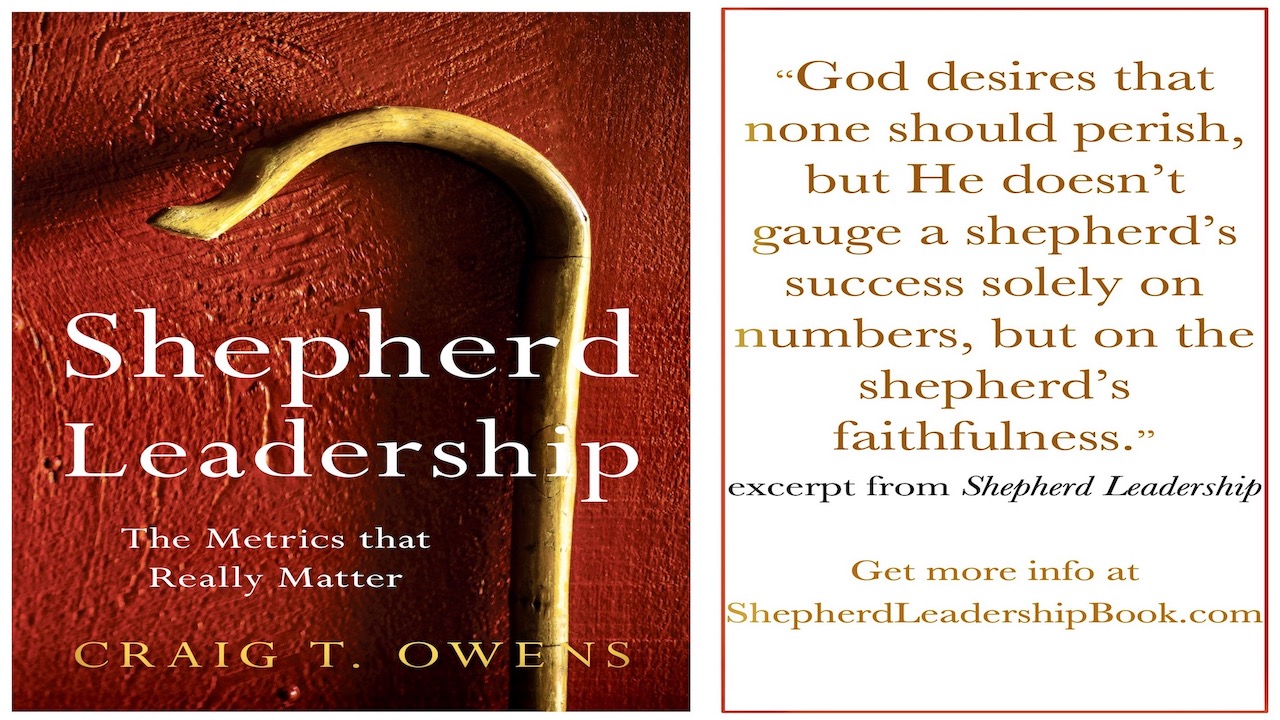
Shepherd Leadership: The Metrics That Really Matter is available in print or ebook, and in audiobook through either Audible or Apple.

►► Would you please prayerfully consider supporting this ministry? My Patreon supporters get behind-the-scenes access to exclusive materials. ◀︎◀︎
Faithfulness And Excellence

Listen to the podcast of this post by clicking on the player below, and you can also subscribe on AppleSpotify, or Audible. 

I had such a great time with Karl Vaters on his podcast called The Church Lobby. Right at the beginning of the conversation, Karl wanted to talk about the subtitle of my book: The metrics that really matter. 

Check this out…

Some resources for you to check out:

►► Would you please prayerfully consider supporting this ministry? My Patreon supporters get behind-the-scenes access to exclusive materials. ◀︎◀︎
When Leaders Need To Call A “Time Out!”

Listen to the podcast of this post by clicking on the player below, and you can also subscribe on AppleSpotify, or Audible. 

I’ve discussed quite a bit the two ways that organizations—especially churches and non-profit ministries—can measure success: By quantity or by quality. And I think a good case can be made for both of these metrics from the Bible. 

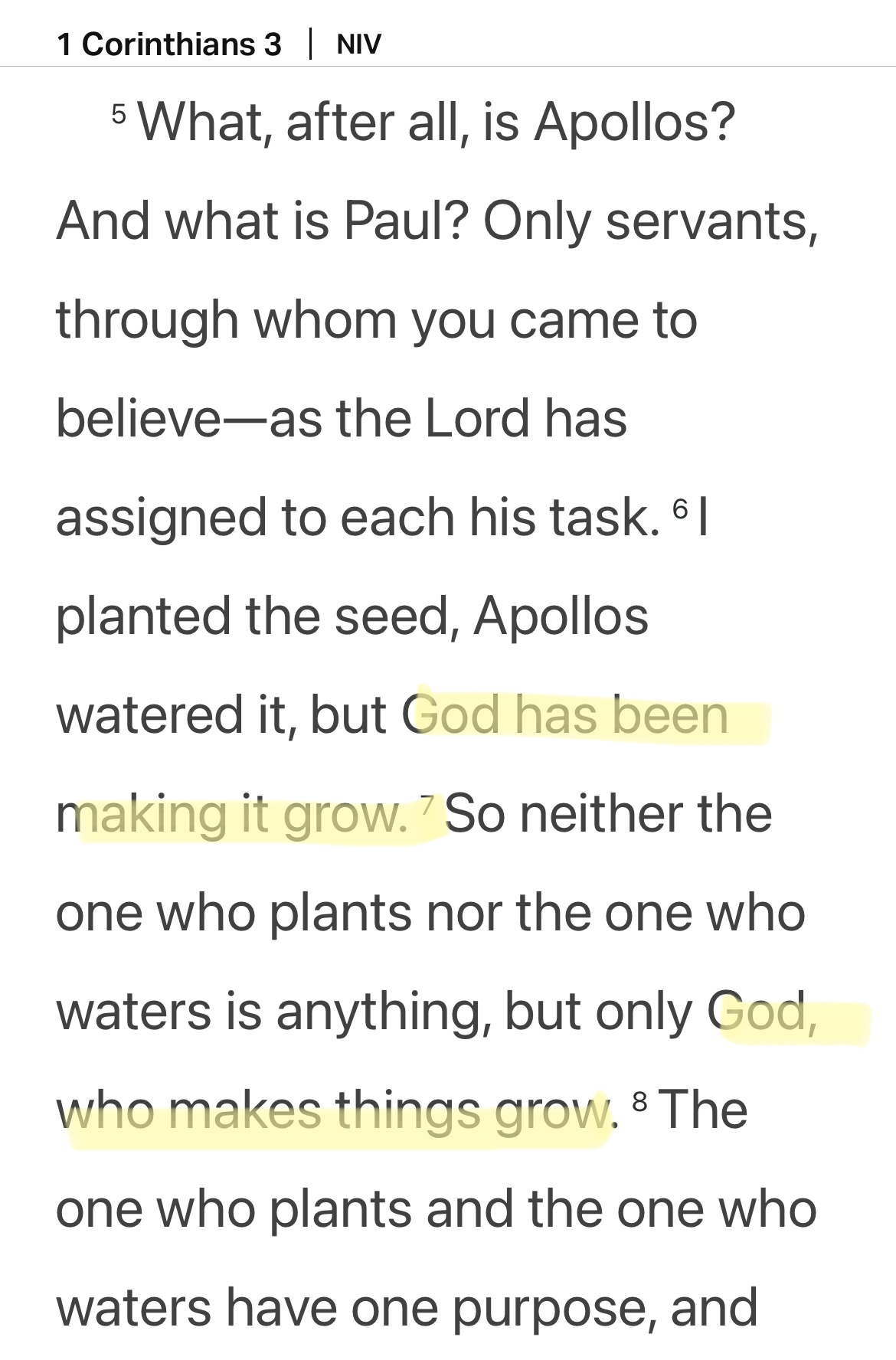
My bigger concern is when we try to use bigger numbers as the sole gauge of success. In a training time I had with some ministry interns, we took a deep dive into the reasons why the metric of bigger and ever-increasing numbers became the sole measurement for success in our churches. During this training time, I took these interns to Paul’s teaching in 1 Corinthians and two Old Testament examples where people got this wrong. Take a listen…

It’s important for shepherd leaders to call a “time out” to get their teammates to step back for a moment to consider what metrics they are using. My book Shepherd Leadership can be a good resource to use in this evaluation process. I am currently working with pastors who are using my book as a discussion-starter for their team, and I would be happy to do this with you as well. If I can be of service to you, please contact me. 

Shepherd Leadership: The Metrics That Really Matter is available in print or ebook, and in audiobook through either Audible or Apple.

►► Would you please prayerfully consider supporting this ministry? My Patreon supporters get behind-the-scenes access to exclusive materials. ◀︎◀︎
Is “Bigger” An Unbiblical Metric?

Listen to the podcast of this post by clicking on the player below, and you can also subscribe on AppleSpotify, or Audible. 

Many “church growth experts” will tell people how to grow their church. But when we say “grow,” what exactly do we mean? Does that mean more people? Does that mean more engaged church members? Or is it a combination of both? 

But more importantly: What does the Bible say about church growth? Does it give us any indication about whether church growth should be quantity or quality?

I taught on this subject with some summer ministry interns. Take a look…

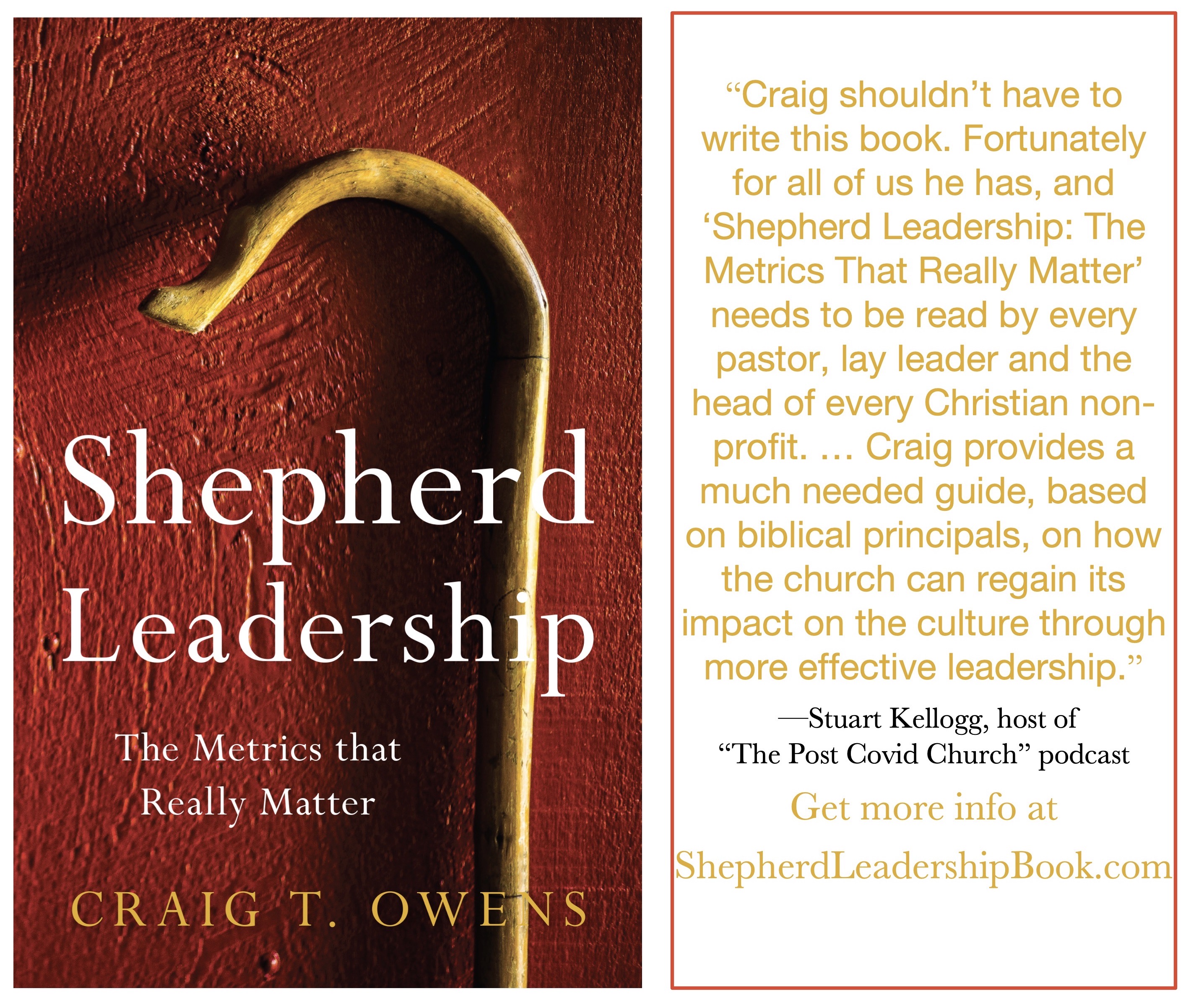
I unpack this idea in much greater depth in my book Shepherd Leadership: The Metrics That Really Matter. My book is available in print or ebook, and in audiobook through either Audible or Apple.

►► Would you please prayerfully consider supporting this ministry? My Patreon supporters get behind-the-scenes access to exclusive materials. ◀︎◀︎
“Doing” Church

Listen to the podcast of this post by clicking on the player below, and you can also subscribe on AppleSpotify, or Audible. 

I had a great time on the 200churches podcast with Jeff Keady. 

Jeff and I talked about some of the changes pastors and churches were forced to confront during the COVID shutdowns. For me, this was a time for my leadership team to examine why we “do church” the way we do. These shutdowns helped us identify the things that were biblical and non-biblical. 

One of the reasons I gave the subtitle “The Metrics That Really Matter” to my book was because of the frustration I saw in so many pastors who were feeling unsuccessful. I discovered that their frustration was largely due to trying to live up to metrics that simply aren’t found in the pages of Scripture. As I wrote in the preface of my book—

My larger concern is that churches, parachurch organizations, and nonprofit ministries that are largely founded to fulfill a biblical mandate are straying from the simple, freeing truths found in the Bible. Or maybe I should say that they are adding things to their ministries that aren’t in the pages of Scripture. Whichever way you want to say it, the result is the same: We are using the wrong metrics to define “success” for our ministries. I fear that in our focus on unbiblical practices, we are missing the joy of really doing ministry. 

Our ministry should be joyful to us as leaders and joy-giving to those to whom we are ministering. If it’s draining instead of fulfilling, that may be an indication that we are trying to gauge success by monitoring non-biblical metrics. 

If you want to dig into this a bit more, check out two previous posts I wrote: 

I’ll be sharing more clips from this 200churches interview soon, so please stay tuned. Shepherd Leadership: The Metrics That Really Matter is available in print or ebook, and in audiobook through either Audible or Apple. 

►► Would you please prayerfully consider supporting this ministry? My Patreon supporters get behind-the-scenes access to exclusive materials. ◀︎◀︎