Make Your Bible Studies Stickier

Listen to the podcast of this post by clicking on the player below, and you can also subscribe on AppleSpotify, or Audible. 

I want to give you some thoughts to take your Bible studies even deeper. Here are three strategies to make your Bible study time stickier—sticking in your heart and your mind.  

Check out this episode of The Podcast. 

The Scriptures I reference in this episode are Matthew 13:10-13 and Luke 8:18.

Here are some study Bibles I have used and reviewed: 

And if you are interested in the posts and videos where I talk about how to handle difficult-to-understand passages of Scripture, check out Handling Tough Texts and The Lens for Difficult Biblical Passages. 

►► Would you please prayerfully consider supporting this ministry? My Patreon supporters get behind-the-scenes access to exclusive materials. ◀︎◀︎

16 Quotes From “A Hobbit, A Wardrobe, And A Great War”

I loved this well-researched and insightful book by Joseph Loconte. The biographies of literary giants J.R.R. Tolkien and C.S. Lewis are intertwined as their worldview is forged in the furnace of World War I. You can read my full book review of A Hobbit, A Wardrobe, And A Great War here. 

“If we thought we were building up a heaven on earth, if we looked for something that could turn the present world from a place of pilgrimage into a permanent city satisfying the soul of man, we are disillusioned, and not a moment too soon.” —C.S. Lewis, in a speech ‘Learning in War Time’

“Perhaps the character of Faramir, the Captain of Gondor in The Lord of the Rings, expresses it best. He possesses humility as well as great courage—a warrior with a ‘grave tenderness in his eyes’—who takes no delight in the prospect of battle. As such, he conveys a message that bears repeating at the present moment, in a world that is no stranger to the sorrows and ravages of war. ‘War must be, while we defend our lives against a destroyer who would devour all,’ he explains. ‘But I do not love the bright sword for its sharpness, nor the arrow for its swiftness, nor the warrior for his glory. I love only that which they defend.’” —Joseph Loconte

“Without an equal growth of Mercy, Pity, Peace, and Love, Science herself may destroy all that makes life majestic and tolerable. There never was a time when the inherent virtue of human beings required more strong and confident expression in daily life.” —Winston Churchill 

“With God discredited, meaning must be found ‘in life itself, in the act of living, in the vitality of the moment.’ Thus, the new psychology legitimized a new hedonism. Within a decade, W.R. Matthews, the Dean of Exeter, complained of ‘the decay of institutional religion’ because of the ‘incoherence of the Christian message and its apparent contradiction with modern knowledge.’ All of this helped to produce the modern, secular zealot: the revolutionary who seeks to create heaven on earth. Science, psychology, politics, economics, education—any of these disciplines might be enlisted in the cause.“ —Joseph Loconte

“It will be a comfort to me all my life to know that the scientist and the materialist have not the last word, that Darwin and Spencer, undermining, ancestral beliefs, stand themselves on a foundation of sand.” —C.S. Lewis 

The remaining quotes are for my Patreon supporters only. Become a supporter today for only $5 per month and get access to quotes, videos, sneak peaks, and so much more. 

A Hobbit, A Wardrobe, And A Great War (book review)

Listen to the podcast of this post by clicking on the player below, and you can also subscribe on AppleSpotify, or Audible. 

Two of my favorite authors in one book? I knew this was going to be good before I even cracked the book open, and Joseph Loconte’s superb behind-the-scenes biographies in A Hobbit, A Wardrobe, And A Great War didn’t disappoint me at all! 

C.S. Lewis and J.R.R. Tolkien’s lives are intertwined on so many levels. Tolkien was instrumental in leading Lewis to Christianity, and without Lewis’ encouragement, the world may never have been enraptured with The Lord Of The Rings books. Both men were incredibly creative in numerous genres of literature, and both were highly sought essayists and speakers. 

And, as Joseph Loconte recounts, both of them had their creativity forged in the cruel furnace of Word War I—or “The Great War” as it was known then. 

Loconte tells of the horrors of this war, the disillusionment that so many felt—both on the front lines of trench warfare and at home on the supply lines—and, how these experiences became the driving force for the creation of Narnia and Middle Earth. Loconte shares the personal correspondences and private journal entries for both of these authors as they went through this horrific war, and then he shows us how those experiences became the settings, good and evil characters, and epic quests that millions of readers have enjoyed for so many years. 

If you’ve never read the Chronicles of Narnia or the space trilogy from C.S. Lewis or the Middle Earth stories from J.R.R. Tolkien, this book will be an excellent primer. If you have read these engrossing stories, reading Loconte’s book will give you new insights that will help you appreciate these timeless works even more. 

As a postscript from me, I am so thankful to my son Harrison for putting this book in my hands! 

►► Would you please prayerfully consider supporting this ministry? My Patreon supporters get behind-the-scenes access to exclusive materials. ◀︎◀︎

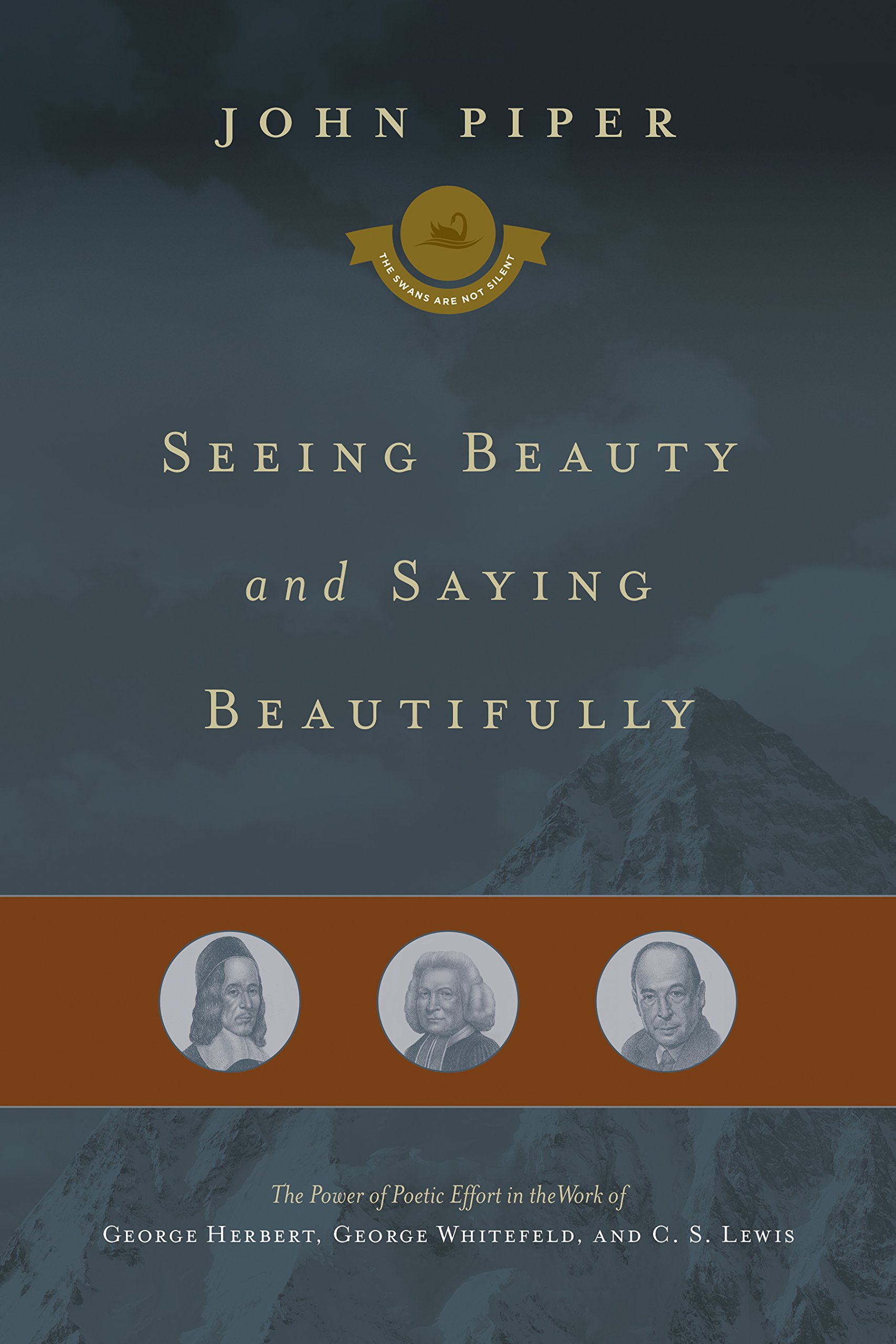
Seeing Beauty And Saying Beautifully (book review)

Listen to the podcast of this post by clicking on the player below, and you can also subscribe on Apple or Spotify.

Seeing Beauty And Saying Beautifully is, in my mind, a grand slam! It features one of my favorite poets (George Herbert), possibly the most prolific evangelist of history (George Whitefield), my all-time favorite author (C.S. Lewis), all tied together by my go-to theologian (John Piper). Seeing Beauty And Saying Beautifully is part 6 in Piper’s series called “The Swans Are Not Silent.” 

George Herbert was a pastor of a small country church and a prolific poet who wrote almost all of his poems uniquely. “Of the 167 poems in The Temple, 116 are written with meters that are not repeated,” which even modern poets find astounding. George Whitefield spent more hours of his life preaching than he did sleeping, and he spoke with such a captivating style that he was quite possibly the first celebrity of the American colonies. C.S. Lewis wrote everything from history to fantasy, autobiography to poetry, theology to children’s novels. Peter Kreeft says of him, he “was not a man: he was a world.” 

John Piper finds in all three of these men a common thread: They all were able to not only see the beauty of God in everything, but they were able to express it in a beautiful way that drew in others to see the beauty of God for themselves. Pastor John calls this “poetic effort.” 

Pastor John also wrestles with how the profound creativity and eloquence of his three subjects meshes with the apostle Paul’s admonition that human eloquence could drain the Cross of Jesus of its power (see 1 Corinthians 1:17-2:5). He concludes that poetic effort for the sake of exalting the speaker or poet does turn people’s eyes to man and away from God. But that poet, evangelist, or author that uses the beauty in God’s creation to point people to the Creator is doing so in a way in which God is supremely exalted. This, Pastor John says, is exactly what Herbert, Whitefield, and Lewis have done, and done so well that their poetic efforts are still fruitful and God-glorifying long after their deaths. 

Seeing Beauty And Saying Beautifully is a wonderful book for those who enjoy biographies, theology, or the craft of skilled artisans. If you don’t know about the poems of George Herbert, the preaching of George Whitefield, or the vast library of literature of C.S. Lewis, let this book be your doorway to a rich new world of discovery, enjoyment, and God-glorification. 

►► Would you please prayerfully consider supporting this ministry? ◀︎◀︎

The Art Of Writing And The Gift Of Writers (book review)

Listen to the podcast of this post by clicking on the player below, and you can also subscribe on iTunes or Spotify.

I am eternally grateful to my high school English teachers who not only taught me the fundamentals of reading literature and writing in different styles, but who immensely sharpened my skills. But can you imagine having C.S. Lewis as a writing mentor? That’s what you are getting when you read The Art Of Writing And The Gift Of Writers. 

This book is compromised of essays and book reviews written by Lewis, interviews that Lewis gave, and even a transcript of an extemporaneous conversation with other authors who had congregated in Lewis’ rooms at Magdalen College. 

Learning how a gifted writer like Lewis crafted his own books was insightful, as well as how he interpreted the writing process of other authors. He even talked about how he choose to handle literary critics. But most energizing of all for me was the freedom he gave me to be myself in the writing process. He made it abundantly clear that other authors shouldn’t try to emulate his literary style—nor any other author’s style either—but to use their unique talents to write their unique works of literature. 

Since Lewis has been one of my favorite authors for most of my life, I found the journey into his mind to be absolutely fascinating. I would recommend this book for any author, aspiring author, or fellow fan of C.S. Lewis’ books and essays. 

The Pilgrim’s Progress (book review)

Listen to the podcast of this post by clicking on the player below, and you can also subscribe on iTunes or Spotify.

Charles Spurgeon said of John Bunyan, “Prick him anywhere—his blood is Bibline, the very essence of the Bible flows from him. He cannot speak without quoting a text, for his very soul is full of the Word of God.” Although this can be said of all Bunyan’s books and sermons, it is abundantly clear in The Pilgrim’s Progress. 

In my mind it’s easy to classify this book as “a classic” because of its enduring message. The journey through life for pilgrims like Christian, Hopeful, Faithful, Christiana, and you and me resonate with readers all over the world. In over the nearly 350 years since this book was first published, the pilgrimage has connected with Christians and seekers alike because it is the pilgrimage we are all on. 

In The Pilgrim’s Progress it’s not hard to identify the biblical messages because Bunyan literally names them for what they are, using names like Talkative, Mr. Worldly Wiseman, the Giant Despair, Mr. Great-heart, the Interpreter, and many more. Some biblical stories are portrayed in this book just as they are in the Bible, while others are fairly easily seen for all modern-day pilgrims to learn their lessons. 

As I’ve said before about this book, it’s an excellent one for parents to read aloud to their children. Then as their kiddos get a bit older, there is an easy-to-read version called Little Pilgrim’s Progress for them to read on their own. But I still highly recommend the original version of Bunyan’s classic in its 17th-century English. To me, the Old English in a story like this makes it feel like an epic adventure story, which, in fact, it is because it is every Christian’s story still to this day. 

I can’t urge you enough to make The Pilgrim’s Progress a friend that you visit often.

The World’s Last Night (book review)

I am a huge C.S. Lewis fan! His perspective on the spiritual world is unequaled in any other author I have read. In The World’s Last Night, Lewis shares seven essays ranging from how our prayers really impact things, to life on other planets, to the end of our world as we know it.

The title of this book (and the title of the concluding chapter) are taken from a question by John Donne: “What if this present were the world’s last night?” So all of Lewis’ essays are written from that perspective. If this is the world’s last night, why should we keep praying? If demons knew this was the world’s last night, why would they keep on tempting? If atheists knew this was the world’s last night, would they keep arguing the same way?

As with all of his writings, C.S. Lewis has a unique knack of giving his readers a perspective that is totally original. His skills in philosophy, literature, and understanding the human heart are unparalleled! If you are ready to have your horizons expanded, these essays will not disappoint!

(And for any fans of The Screwtape Letters, Screwtape himself makes a special appearance as he gives a toast in hell that is sure to evoke both smiles and chagrins.)

Christmas Wisdom From Ebenezer Scrooge

Scrooge and ghostI have been listening to an audio production of Charles Dickens’ Christmas Carol. The one I’m listening to is a podcast performed by Patrick Horgan (very well done!).

Two things have stood out to me—

(1) The genius of Charles Dickens. Check out this brilliant piece of wit.

“Marley was dead, to begin with. There is no doubt whatever about that. The register of his burial was signed by the clergyman, the clerk, the undertaker, and the chief mourner. Scrooge signed it. And Scrooge’s name was good upon change for anything he chose to put his hand to. Old Marley was as dead as a door-nail. Mind! I don’t mean to say that I know, of my own knowledge, what there is particularly dead about a door-nail. I might have been inclined, myself, to regard a coffin-nail as the deadest piece of ironmongery in the trade. But the wisdom of our ancestors is in the simile; and my unhallowed hand shall not disturb it, or the Country’s done for. You will, therefore, permit me to repeat, emphatically, that Marley was as dead as a door-nail.”

(2) The biblical message which comes through so vividly.

“But you were always a good man of business, Jacob,” faltered Scrooge, who now begin to apply this to himself.

“Business!” cried the Ghost, ringing its hands again. “Mankind was my business. The common welfare was my business; charity, mercy, forbearance, and benevolence were, all, my business. The dealings of my trade were but a drop of water in the comprehensive ocean of my business!”

It held up its chain at arm’s length, as if that were the cause of all its unavailing grief, and flung it heavily upon the ground again.

“At this time of the rolling year,” the spectre said, “I suffer most. Why did I walk through crowds of fellow-beings with my eyes turned down, and never raise them to that blessed Star which led the Wise Men to a poor abode? Were there no poor homes in which its light would have conducted me?” (emphasis mine)

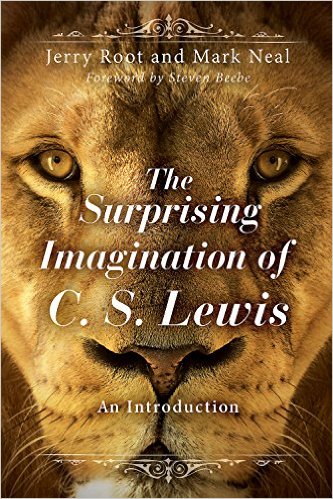
The Surprising Imagination Of C.S. Lewis (book review)

The Surprising Imagination Of C.S. LewisC.S. Lewis wrote the first books I fell in love with as a kid, and he continues to be my “go to” author as an adult. One of the things which makes Lewis so widely read and appreciated is the variety of genres in which he wrote. This is the subject of an insightful book by Jerry Root and Mark Neal—The Surprising Imagination Of C.S. Lewis.

Lewis wrote satire, poetry, literary criticism, autobiography, apologetic, children’s literature, and science fiction, to name just a few of the genres. Scholars who study his works point to seventeen literary genres in which he was adept. The fact that he could write so eloquently in this many genres is amazing, but what’s even more amazing, say Root and Neal, is that he could stick to one genre, even when it would be so tempting to shift to another mid-book.

Lewis was fond of talking about the time he felt his imagination had been “baptized.” That is to say, when he was aware of the power of using imagination to open others’ minds to new worlds and ideas. Those who have read the Narnia books or the space trilogy books know how imaginative Lewis’ writing can be. But what Root and Neal point out is that this amazing imagination was on full display in all of the different genres in which Lewis wrote.

The Surprising Imagination Of C.S. Lewis would be a great pre-read the next time you are going to read something from C.S. Lewis. Each chapter in this book zeros-in on a particular Lewis book, so reading that chapter prior to reading the corresponding C.S. Lewis book will prime your mind to spot the brilliant imagination that was on display in every book he wrote.

I am an Abingdon Press book reviewer.

Links & Quotes

link quote

At age 38, after playing 20 years for the Detroit Tigers, Ty Cobb had an amazing performance in the 1925 season.

“Everything you do is either going to raise your average or lower it. The next hire. The quality of the chickpeas you serve. The service experience on register 4. Each interaction is a choice. A choice to raise your average or lower it. Progress is almost always a series of choices, an inexorable move toward mediocrity, or its opposite.” —Seth Godin

Fight The New Drug shares 3 things that pornography doesn’t show.

“If Margaret Sanger had her way, MLK and Rosa Parks would never have been born,” said [Bishop E.W.] Jackson. “It’s an outrage the national museum would honor such a person and add insult to injury by putting her in the Struggle for Justice exhibit.” Margaret Sanger’s bust should be removed from the Smithsonian.

Married couples, have more sex to help slash the chances of prostate cancer.

Murray Vassar finds a very appropriate connection between what Harriet Beecher Stowe wrote in Uncle Tom’s Cabin and what is happening with Planned Parenthood.

So House Speaker John Boehner wants to build a coalition by calling a member of his own party this?!