Flexibility

I am working through a fascinating devotional book called Live Dead. It’s not just a book, but a challenge to live differently. I strongly encourage you to purchase this book, and then take the Live Dead challenge. With the permission of the book’s editor, I am reproducing Day 22’s challenge.

Flexibility: God’s Music, Written In Three Flats by Bob McCulley

Some of the most dangerous times in our life and ministry are when we lock our dreams and hopes in concrete, when we become so focused on what we are planning to do that we cannot see what God is trying to do. One day, while serving among the Maasai people of East Africa, I was running late for an appointment to meet with the village elders in a place called Mbirikani, which was about an hour away from our home. The purpose of the meeting was to appeal for a site where we could build a church in that village. My planned departure was delayed and my wife, Murriell, tried to soothe my anxiety with the words, “God has everything under control.”

I drove my four-by-four vehicle quickly up the road and was making good time until I got a flat tire, which I hurriedly changed. A few minutes later, I had a second flat and again made a tire change that would make a pit crew proud. Deep in the bush and well off the road, I had a third flat tire, and my third and final spare had to be removed from the luggage rack. In the process of getting it off the roof, it rolled away from me and down the hill into a large clump of thorn brush. By the time I retrieved it, my clothes were torn and my face and arms were bleeding from multiple scratches.

As I was preparing to mount the third spare tire, a Morani, a Maasai warrior, came walking out of the forest and greeted me. I did not wish to have a conversation because I was dirty from changing the flats and was now very late for what I thought was a critical appointment. His greeting was congenial and correct, while mine was harsh and abrupt. But I had good reason: I was late, dirty, bleeding, and angry. His next words stopped me. He knew my name. He had heard me preach a few weeks before, and that morning on awakening had decided to go to town to find me and to ask me to help him receive Christ. He had set off before sunrise to walk about 15 miles to town to find me and only halfway there, had found me on the roadside. I stopped changing the tire, cleaned my hands, and got my Bible out. Soon we were sitting under a thorn tree, reading and praying together as he became a newborn follower of Jesus.

When we were done, he thanked me and disappeared back into the forest, and I sat in wonder of the way God schedules our lives. By then I knew I had been right on time for the only appointment God had scheduled for me that day. I had no spare tires left, so I finished mounting the third spare and turned the truck around and headed home. Days later, I learned that the meeting had been postponed until the following day and our appeal had been granted. The community had given us 10 acres of ground on which to develop the ministry.

Our plans and dreams are often far removed from what God has in mind for us, and a lack of flexibility may cause us to miss Him and to be broken in the missing.

Live Dead Challenge—Look for a way you can be flexible today. Anticipate an interruption and welcome it as an opportunity, an event God has scheduled for you — even if it makes you late or it means that something you planned does not happen. In the days to come, look for ways you can be flexible. In service opportunities down the road, commit to flexing — dying to your plan and schedule that you might live to the surprises God injects in your daily life.

You can order the Live Dead book and other resources by clicking here.

And, for those of you who live in or near Cedar Springs, join us for a series of messages and a free copy of Live Dead in February.

Watch Your Prepositions

Prepositions are interesting words: they tell us the position of something relative to something else. Changing just one small preposition changes the whole meaning—“I left my wallet in the car” or “I left my wallet on the car.” In the first case, you can probably find your wallet again. In the second case, your wallet could be anywhere along the side of the road!

There’s a well-known story in the Gospels where a woman anoints Jesus with an expensive perfume. Some people are upset that she would “waste” something so valuable. But as Jesus corrects their incorrect view of this, notice the preposition He uses:

She has done a beautiful thing TO Me. (Matthew 26:10)

Most of the time we think we do things for Jesus. But He really doesn’t need us to do anything for Him, does He? After all, He is all-sufficient, all-powerful, all-knowing.

But Jesus loves when we do something beautiful TO Him!

We often praise God because of what He has done; that is, we praise Him for His deeds. But what if we praise God for Who He is; that is, give praise TO Him?

For is good, but TO is best.

I’m going to be watching my prepositions, to make sure I’m not only doing things for Jesus, but to Him as well—not just giving praise for what He’s done, but praise TO Him for Who He is.

The Measure Of A Man

An anonymous poem that should make any man or woman ponder the impact of their legacy…

Not “How did he die?”

But “How did he live?”

Not “What did he gain?”

But “What did he give?”

These are the units

To measure the worth

Of a man as a man

Regardless of birth.

Not “What was his station?”

But “Had he a heart?”

And how did he play

His God-given part?

Was he ever ready

With a word of good cheer,

To bring back a smile,

To banish a tear?

  Not “What did the sketch in the newspaper say?”

But “How many were sorry when he passed away?”

Dichotomy & Ricky Gervais

Dichotomy is a big word that means two parts that are opposed to each other. But it also means that they were once joined together—they were once in unity. Much like the first Christians: when people looked at them they saw Jesus; when they heard them speak they heard Jesus; when they watched their lives they saw the life of Jesus.

Christ and Christian were the same unified picture.

Today this is, sadly, far from the truth. People have a lot of wonderful things to say about Jesus, and a lot of nasty things to say about Christians. An unfortunate, and unnecessary, dichotomy exists.

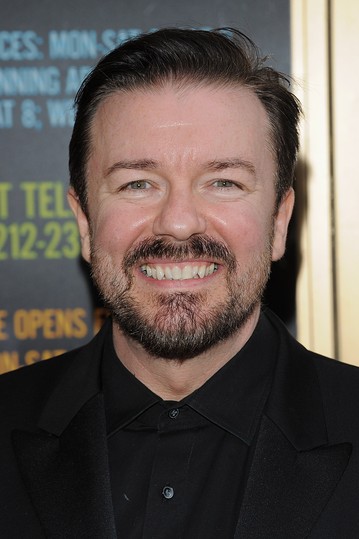
I read an editorial from Ricky Gervais, a self-proclaimed atheist, entitled “Why I’m A Good Christian.” You can read his full editorial in the Wall Street Journal here, but for me this was the key passage:

I am of course not a good Christian in the sense that I believe that Jesus was half man, half God, but I do believe I am a good Christian compared to a lot of Christians.

It’s not that I don’t believe that the teachings of Jesus wouldn’t make this a better world if they were followed. It’s just that they are rarely followed.

Gandhi summed it up really. He said, “I like your Christ, I do not like your Christians. Your Christians are so unlike your Christ.”

I have always felt this way, even when I believed in God, and in a weird way I feel I am still a pretty good “Christian” who doesn’t believe in God.

I think the way back from this dichotomy is two-fold:

(1) Christ-followers need to make an intentional effort to act more Christ-like.

(2) We Christians need to be more thoughtful in our responses to people like Ricky Gervais. I like the pattern Peter recommends

Honor Christ and let Him be the Lord of your life [our motivation for action]. Always be ready to give an answer when someone asks you about your hope [“hope,” not theology, not bad behavior]. Give a kind and respectful answer and keep your conscience clear [there is zero justification for a Christian to give a crass, disrespectful, or sarcastic answer]. This way you will make people ashamed for saying bad things about your good conduct as a follower of Christ [good conduct = we live, talk, and act like Jesus].

C’mon, followers of Christ, let’s close this dichotomy between us and Jesus!

Um, That’s A Bit Awkward

Somehow I don’t think this is the most effective way to start a conversation about your faith!

Here are four thoughts I have…

Don’t compartmentalize. In other words, don’t put on your “Christian hat” to talk about your relationship with Jesus. Just be Christ-like all the time. People are looking for something real, not someone who’s playing an act.

Develop relationships first. Don’t lead with a sermon; lead with a friendship. As the saying goes, “People don’t care how much (or Who) you know, until they know how much you care.” Be a genuine friend first.

Wait until they’re ready. Jesus told stories with a deeper meaning and asked a lot of questions of people before He spoke to them directly about the kingdom of God. Don’t force people into a conversation. Keep the door open, and let them step in when they are ready.

Don’t get discouraged. Just like there are some topics you’re not ready to discuss right now, others feel the same way. So just because they say “No thanks” today doesn’t mean nothing happened. The Bible says that we are the salt of the earth and the light of the world. Salt and light are always seasoning and illuminating everywhere they go. Your life is making a difference.

If Jesus Came To Your House

Listen to the podcast of this post by clicking on the player below, and you can also subscribe on AppleSpotify, or Audible.

If Jesus came to your house to spend a day or two—
If He came unexpectedly, I wonder what you’d do.
Oh, I know you’d give your nicest room to such an honored Guest,
And all the food you’d serve to Him would be the very best,
And you would keep assuring Him you’re glad to have Him there—
That serving Him in your own home is joy beyond compare.

But when you saw Him coming, would you meet Him at the door
With arms outstretched in welcome to your heavenly Lord?
Or would you have to change your clothes before you let Him in?
Or hide some magazines and put the Bible where they’d been?
Would you turn off the radio and hope He hadn’t heard?
And wish you hadn’t uttered that last, loud, hasty word?

Would you hide your worldly music and put some hymn books out?
Could you let Jesus walk right in, or would you rush about?
And I wonder—if the Savior spent a day or two with you,
Would you go right on doing the things you always do?
Would you go right on saying the things you always say?
Would life for you continue as it does from day to day?

Would your family conversation keep up its usual pace?
And would you find it hard each meal to say a table grace?
Would you sing the songs you always sing, and read the books you read,
And let Him know the things on which your mind and spirit feed?
Would you take Jesus with you everywhere you’d planned to go?
Or would you, maybe, change your plans for just a day or so?

Would you be glad to have Him meet your very closest friends?
Or would you hope they’d stay away until His visit ends?
Would you be glad to have Him stay forever on and on?
Or would you sigh with great relief when He at last was gone?
It might be interesting to know the things that you would do
If Jesus Christ in person came to spend some time with you. —Lois Blanchard Eades

(I added the emphasis to the things that made me pause to think…)

►► Would you please prayerfully consider supporting this ministry? ◀︎◀︎

Will You Make A Difference Today?

Moses shared a great prayer with us: Teach us to use wisely all the time we have (Psalm 90:12).

How will use your time wisely today? What does that look like in your world?

Let me today do something that shall take
A little sadness from the world’s vast store,
And may I be so favored as to make
Of joy’s too scanty sum a little more.
Let me not hurt, by any selfish deed
Or thoughtless word, the heart of foe or friend;
Nor would I pass, unseeing, worthy need,
Or sin by silence when I should defend.
However meager be my worldly wealth,
Let me give something that shall aid my kind—
A word of courage, or a thought of health,
Dropped as I pass for troubled hearts to find.
Let me tonight look back across the span
‘Twixt dawn and dark, and to my conscience say—
Because of some good act to beast or man—
“The world is better that I lived today.” (Ella Wheeler Wilcox, Morning Prayer)

Make your world a better place because you passed through it today.

Thursdays With Oswald—The Same Gospel Re-Stated

This is a weekly series with things I’m reading and pondering from Oswald Chambers. You can read the original seed thought here, or type “Thursdays With Oswald” in the search box to read more entries.

The Same Gospel Re-Stated

      What is needed today is not a new gospel, but live men and women who can re-state the Gospel of the Son of God in terms that will reach the very heart of our problems. Today men are flinging the truth overboard as well as the terms. Why should we not become “workmen who need not to be ashamed, rightly dividing the word of truth” to our own people? The majority of orthodox ministers are hopelessly useless, and the unorthodox seem to be the only ones who are used. We need men and women saturated with the truth of God who can re-state the old truth in terms that appeal to our day.

From Approved Unto God

So saturated with God’s Word that I think it, speak it, live it. Just as the Apostle Paul stated to the Corinthian church:

Clearly, you are a letter from Christ showing the result of our ministry among you. This “letter” is written not with pen and ink, but with the Spirit of the living God. It is carved not on tablets of stone, but on human hearts.

Can I repeat Oswald Chambers’ last line again, just so it can sink in: We need men and women saturated with the truth of God who can re-state the old truth in terms that appeal to our day.

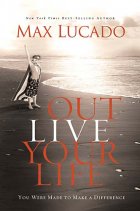
Outlive Your Life (book review)

When I hear “Max Lucado has a new book coming out,” I’m like a kid waiting for Christmas! And just like those kids on Christmas morning, when I received Outlive Your Life, I tore into this book, and scarcely put it down until I devoured it.

I love the concept: The impact your life makes can live on far after your physical life has ended here. To make his case, Max uses the example of Jesus’ first disciples whose dedication to spreading the Gospel of Jesus Christ has far outlived their first-century lives. Specifically, Max uses the first twelve chapters of Acts as the disciples begin this work right after Jesus has ascended back into heaven.

Max uses examples from 33 AD to show us a 2010 AD life application. What the original disciples did then, we 21st-century disciples can do now. As always, Max digs such timely truths out of the Scripture that makes it seem so relevant for today. For right now!

At the back of the book is a discussion and action guide which opens with the words, “Max wants you to do more than read about the book of Acts. He wants you to live out the twenty-ninth chapter, writing the story of the church for your generation.” I found both the discussion questions and action ideas personally challenging, and great conversation-starts for a small group or a Bible study.

It’s almost automatic that I give Max Lucado’s books an unreserved five-out-of-five stars, and this book is no exception. You’ll find so much in this book to apply to your life, your church, your ministry. And here’s another bonus: Max Lucado is giving 100% of his royalties to charities such as World Vision who are helping to make a life-changing difference in our world.

I am a Thomas Nelson book reviewer.

The Christian Atheist (book review)

Every time I read a Craig Groeschel book, I know I’m going to read words that cut right across all of my excuses for not changing. And I was not disappointed to find this pattern continued with his latest book The Christian Atheist.

If the title sounds like an oxymoron (you can read the definition of this funny-sounding word here), that’s because it is. Or is it? The subtitle of the book gives the right-on-target definition of a Christian atheist: believing in God but living as if He doesn’t exist.

So every chapter is titled, “When you believe in God, but…

  • …you don’t really know Him.”
  • …you are ashamed of your past.”
  • …you aren’t sure He loves you.”
  • …you don’t think you can change.”
  • …you don’t share your faith.”
  • and many more!

It reminds me of what James wrote in his letter to the church, where he called them out for being Christian atheists: “You believe in God? Good for you! Even the demons believe in Him. But you’re not living like you believe in Him.”

Brennan Manning wrote,

“The greatest single cause of atheism in the world today are Christians who acknowledge Jesus with their lips and walk out the door and deny Him by their lifestyle. That is what an unbelieving world simply finds unbelievable.”

But Craig doesn’t just identify the symptoms, he gives his readers the prescriptions too. In easy-to-apply concepts, Craig tells those who believe in God how they can make the changes that won’t deny God by their atheistic lifestyle.

I highly recommend this book to you.

I am a Zondervan book reviewer.