Links & Quotes

The Holy Spirit loves to give us those “lightbulb moments” when the Word of God almost leaps off the page! I have lots of new content every week, which you can check out on my YouTube channel.

It has long been believed that some migratory animals use the earth’s magnetic force to help them navigate. Some researchers discovered that moths can see both the magnetic fields and the stars to plot their course. The lead researcher wrote, “If you have this tiny insect with a brain a tenth the volume of a grain of rice and eyes smaller than a pinhead, that they can do this is surprising.” The protein in their eyes that allow them to do this is unevolved—it’s always been there, implant from the beginning by our awesome Creator!

In the God Speaks Science reading plan on YouVersion, John Von Sloten wrote, “Creation is God’s first book. To read it we need science. Science is not the enemy of the Christian faith; it’s an ally! … We need to read biblical creation references with the Author’s omniscience and original intent in mind. To do that, we need science. … What if you try to connect the next scientific truth you encounter to an attribute of our ever-near God? If everything comes from God’s mind, then everything has something to say about God’s nature.”

Competitive leaders need to keep both winning and losing in perspective. Check out the full conversation Greg and I had about competition on The Craig and Greg Show.

I love studying the archeological discoveries that confirm the historicity of the Bible. Check out this compilation of the kings of Judah and Israel from The Bible Archeology Report. You may also be interested in this side-by-side chart I created of the timelines of these kings.

“Men of peace must not think about retribution or recrimination. Courageous people do not fear forgiving.” —Nelson Mandela

“Leaders inspire others because they are inspired by others.” —John Maxwell

“The most important single ingredient in the formula of success is knowing how to get along with people.” —Teddy Roosevelt
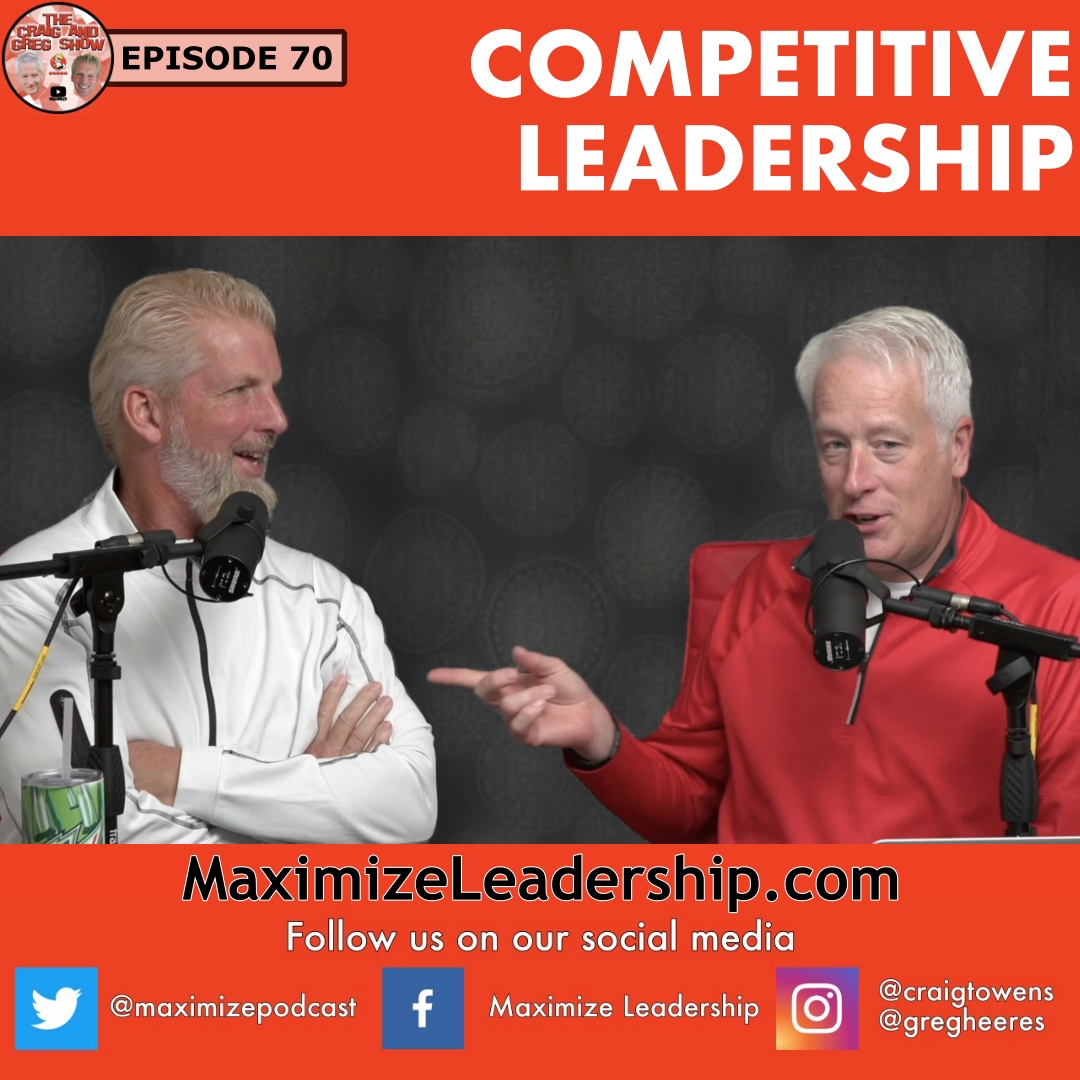
The Craig And Greg Show: Competitive Leadership

Listen to the audio-only version of this podcast by clicking on the player below, or scroll down to watch the video.

Every good leader is competitive. From dollars earned to patients treated, there isn’t a leader out there who isn’t constantly trying to improve their numbers and outdo the competition. However, the wrong kind of competition can fester and create an unhealthy workplace. In this episode, Greg and I discuss how fostering healthy competition in your organization is vital to your success.

  • [0:14] I am the best host on this show!
  • [1:52] Leaders need to be competitive but also need to keep it at a healthy level.
  • [3:42] Not every team member will have the same competitive drive as you.
  • [4:35] Leaders need to be competitive with themselves.
  • [7:40] Too much internal competition can be detrimental to the organization.
  • [8:32] Greg tells a tee-ball story highlighting how your team members innately wonder, “How are we doing?”
  • [11:50] I have used Six Sigma initiatives to foster positive competition in my organizations.
  • [13:24] Resilience doesn’t show up until adversity appears.
  • [16:26] Make halftime adjustments.
  • [17:32] Cutthroat leaders get short-term results, but their organization suffers in the long run.
  • [19:53] Giving 100% and failing is difficult, but it’s worse to not know what you could have accomplished.
  • [21:04] When you win, act like you’ve won before. When you lose, act like you’ll win again.
  • [22:49] Compete for achievable outcomes.
  • [24:38] Greg likes to win, but he’s learned more from his losses.
  • [25:34] It’s impossible to grow without competition.
  • [28:10] We would love to coach you to help you be a better competitive leader.

Check out this episode and subscribe on YouTube so you can watch all of the upcoming episodes. You can also listen to our podcast on Spotify and Apple.

Trapped By Past Fears

Listen to the podcast of this post by clicking on the player below, and you can also subscribe on AppleSpotify, or Audible. 

On a recent episode of The Craig And Greg Show, Greg and I were sharing with leaders how to reframe their fears. In this clip, I discuss the importance of making sure we aren’t hampering a new situation with an old fear.

►► Would you please prayerfully consider supporting this ministry? My Patreon supporters get behind-the-scenes access to exclusive materials. Like this recent post where I shared a map and an app to help with your Bible study time. ◀︎◀︎

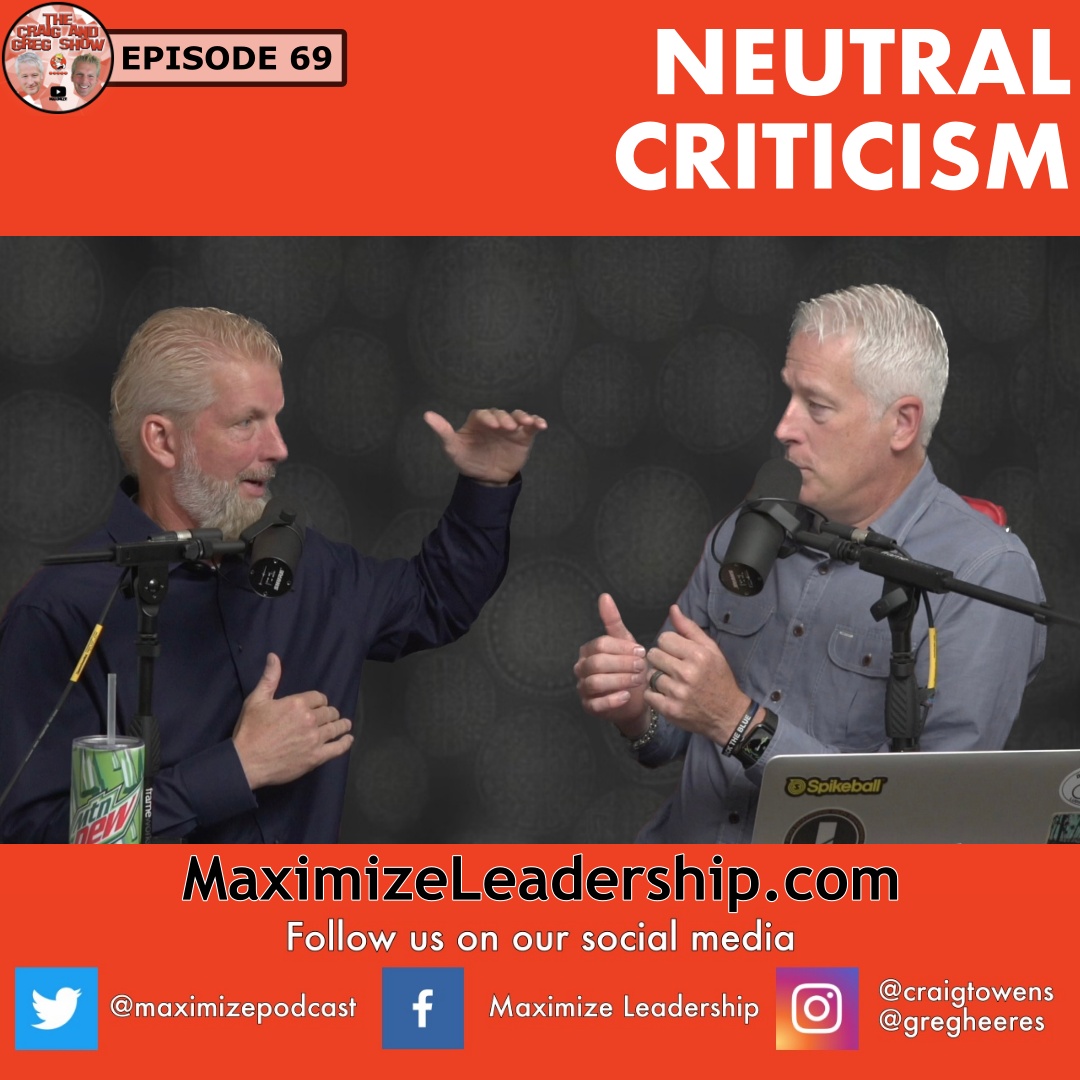
The Craig And Greg Show: Neutral Criticism

Listen to the audio-only version of this podcast by clicking on the player below, or scroll down to watch the video.

Criticism is baked into leadership. Any change you make, whether good or bad, will be met with some level of criticism either internally or externally. Other times, you’ll be in the position of having to express criticism of a decision someone on your team made.

Navigating criticism in a productive way can be tricky, but luckily Greg and I are here to help! In this episode, we discuss how the right kind of criticism can be empowering for your organization.

  • [0:27] Leaders will always be criticized, even for the good things they have done. 
  • [1:30] Leaders need both humility and confidence to process criticism in a healthy way.
  • [4:18] Is criticism different than an assessment? It seems like the word “critic” has been hijacked in a negative way.
  • [6:00] Defensiveness doesn’t help leaders, but we do need to protect ourselves.
  • [8:27] How do we give constructive criticism without putting others on the defensive?
  • [10:22] Why is it hard for people to receive criticism?
  • [12:55] How should we give feedback to others so that it will be received well?
  • [16:15] Is there a correlation between criticism and coachability?
  • [19:57] Let’s remember that many of our teammates have had negative interactions with a critical
  • leader, so we have to change the climate.
  • [21:28] What happens if a teammate won’t receive any feedback at all?
  • [23:20] Greg shares an insightful quote from Winston Churchill.
  • [25:26] As always, leaders have to go first!

Check out this episode and subscribe on YouTube so you can watch all of the upcoming episodes. You can also listen to our podcast on Spotify and Apple.

Links & Quotes

Questions engage people more than statements do. Check out the full conversation Greg and I had on The Craig And Greg Show. I have lots of new content every week, which you can check out on my YouTube channel.

How should Christians engage with artificial intelligence (AI)? This is a very thoughtful and biblically-centric post.

The Bible records the fall of Jerusalem to the Babylonians in 586 BC and to the Romans in AD 70. For the first time, archeologists have discovered evidence of both armies in close proximity to each other. Yet again, archeology confirms the historicity of the Bible. 

“In America, we have a tendency to worship our work, work at our play, and play at our worship.” —Lenny Esposito

“Young people are told, ‘You’ve got plenty of time, live a little, first,’ as if life ends after the wedding. The truth about marriage, however, is that it is, statistically, the single best predictor of long-term happiness. Making this even more important to understand is that for at least the last 20 years now, Americans have been steadily getting less happy.” Here’s how John Stonestreet shares this report from the University of Chicago.

T.M. Moore shared an interesting component of early-colonial American lawmaking: “Peruse the civil codes of the American colonies and you will discover a curious phenomenon. Frequently, colonial legislators drafted their civil codes by looking to the Old Testament Law of God.”

Dr. Tim Clarey said, “The global Flood also answers why dinosaurs were still alive and flourishing until the end of the Cretaceous. At that moment in the Flood, they were likely trying to stay on the highest ground available as waters encroached closer, week by week. As the dry land rapidly disappeared, many species herded together. This explains why varied types of dinosaurs were buried together at the end of the Cretaceous. The Flood’s tsunami-like waves eventually crashed over the remaining dinosaurs and entombed them in what’s called Upper Cretaceous strata.” Check out more evidence for the Flood that is recorded in the Book of Genesis. 

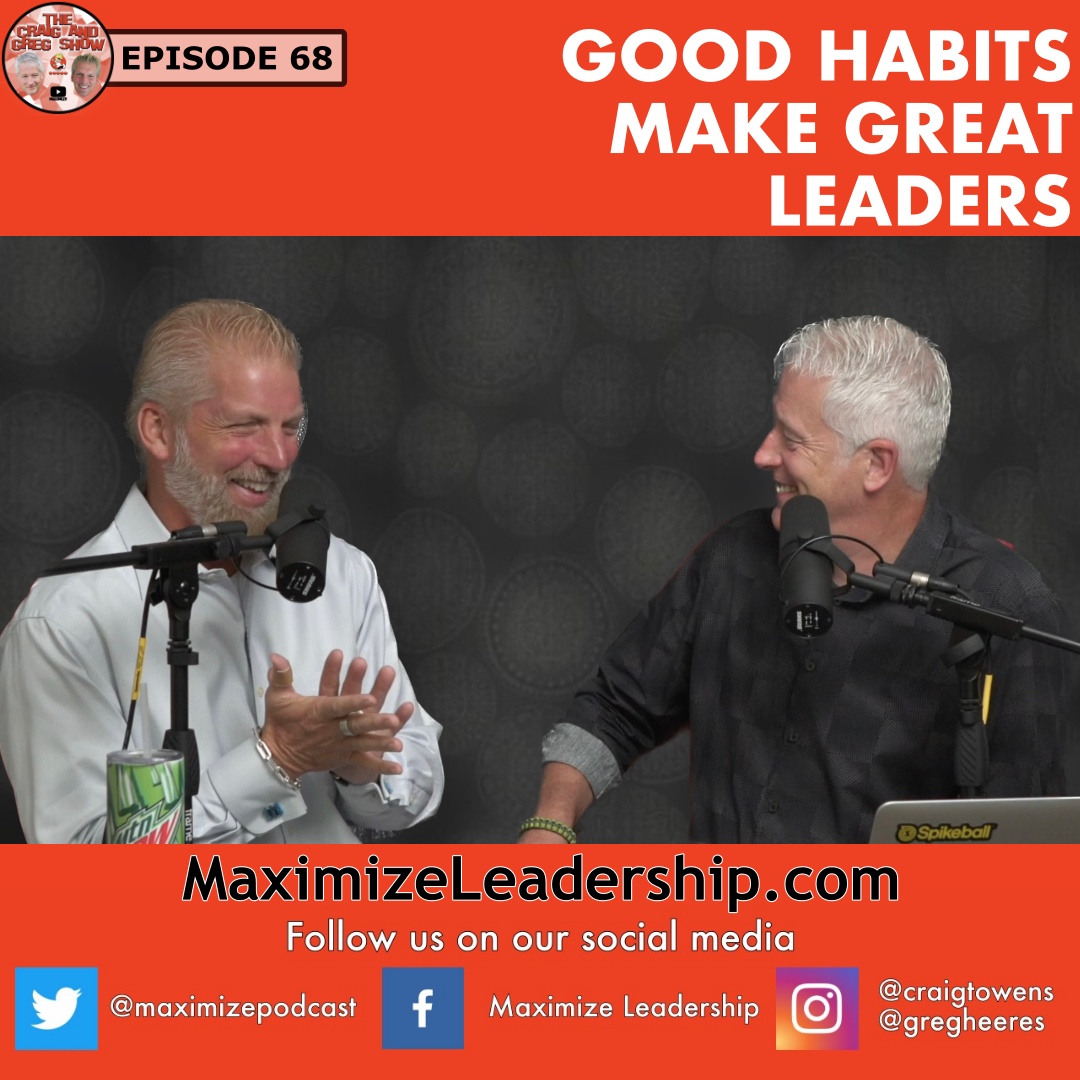
The Craig And Greg Show: Good Habits Make Great Leaders

Listen to the audio-only version of this podcast by clicking on the player below, or scroll down to watch the video.

Automatic habits are an integral part of our everyday lives. From driving a car to the way we tie our shoes, these habits help us all the time with very little thought. Of course, habits aren’t limited to these mundane tasks, we also form them in other areas, like our leadership. As a leader, it’s important to be self-reflective of our habits and make sure they are taking us in the direction we want to go. In this episode, Greg and I discuss how cultivating the right habits will help you flourish as a leader.

  • [0:19] Aristotle said excellence is a matter of our habits. 
  • [1:27] Our habits are mostly automatic—both the good and the bad habits.
  • [3:10] How do we keep our habits healthy during chaotic times?
  • [5:54] What about coping habits—should a leader use them or avoid them?
  • [7:15] My most beneficial leadership habit.
  • [9:13] Time-wasters are habits too.
  • [10:37] When we make changes in our habits, they should be incremental changes.
  • [12:17] We need to know why we want to make the change in a habit. The “why” determines the “what” and the “how.”
  • [15:24] How do leaders sustain their healthy habits?
  • [16:33] How can leaders regain their list momentum of good habits?
  • [19:27] Leaders need to be aware of the pull of their unintentional habits.
  • [22:23] How do we get our habits to serve us?
  • [23:30] I share two vital habits all high-performing leaders need.
  • [24:56] Leaders need to develop “muscle memory” to keep their healthy habits serving them.
  • [26:27] Greg shares some important quotes about a leader’s habits.

Check out this episode and subscribe on YouTube so you can watch all of the upcoming episodes. You can also listen to our podcast on Spotify and Apple.

The Craig And Greg Show: Are You A Micromanager?

Listen to the audio-only version of this podcast by clicking on the player below, or scroll down to watch the video.

If you said, “No,” are you sure? Sometimes micromanagement can come out of good intentions, or as we focus on a project, we as leaders can slide into it without even realizing it. In this episode, Greg and I discuss why micromanagement is bad for your leadership, how to identify if you’ve fallen into this trap, and, most importantly how to free yourself to soar into a place of macro-leadership.

  • [0:17] Greg and I break into song. 
  • [0:38] Micromanagers stunt the growth of others in the organization.
  • [1:45] There is a difference between intense focus and micromanagement. How do we find those differences?
  • [3:44] A definitive quote about the destructive nature of micromanaging.
  • [6:05] Micromanagers create an unhealthy environment.
  • [6:47] The Craig And Greg Show audience is exceptionally intelligent!
  • [8:36] How do we know if we are unconsciously crossing the line into micromanagement?
  • [9:50] Micromanagement needs to give way to macro-leadership.
  • [11:16] Two more telltale phrases that micromanagers use.
  • [12:30] Greg helped a struggling leader break free from his micromanagement trap.
  • [14:07] The value of an “outsider’s” perspective can be huge!
  • [15:03] Greg shares some natural consequences for the entire organization of micromanagement.
  • [17:31] Characteristics of macro-leaders
  • [19:34] Greg shares two very sad stories of micromanagers who created problems in their company.
  • [21:50] Some final quotes to bring it home.

Check out this episode and subscribe on YouTube so you can watch all of the upcoming episodes. You can also listen to our podcast on Spotify and Apple.

Last Place

Listen to the podcast of this post by clicking on the player below, and you can also subscribe on AppleSpotify, or Audible. 

I was sitting with a couple of ladies in our school district who were trying to figure out the logistics for a food distribution program. I was offering them a couple of suggestions when one of them asked me, “Have you ever had any experience with something like this?” 

I told her that I had, and then she responded, “But this is going to be pretty big. Probably about 40 families.” 

I smiled and told her that the food distribution program I helped coordinate fed nearly 5000 people. 

She said, “Well, I guess we don’t have to worry anymore!” And from then on, whenever any logistical concerns came up, these ladies confidently handed off the situation to me. Once they knew that I had some relevant experience, they didn’t have any more moments of questioning. 

Unlike Jesus, I didn’t create all of the food from a few loaves and fish. I simply organized the distribution of the food others had donated. I am glad these ladies had confidence in me, but at the same time, I had to guard my heart against the pride that can so easily puff up my ego.

Can you imagine if you were one of the disciples of Jesus, and had seen all of the miraculous things He had done and heard all of the profound things that He had said, and then still had the audacity to ask, “Who is the greatest”?! 

And yet that is exactly what they did (Mark 9:33-35). 

How in the world could they argue about something like this when Jesus was right there with them? Maybe this thought finally sunk in a little because later on they pivoted a bit in their argument to ask who was the greatest after Jesus (Matthew 20:20-28). 

Jesus minced no words and left nothing vague in His answer: “Anyone wants to be first must be the very last, and the servant of all” (Mark 9:34). 

This is exactly what Jesus embodied. He literally lived and died to prove that the highest greatness is measured by the lowest of servanthood. 

…Christ Jesus: Who, being in very nature God, did not consider equality with God something to be used to His own advantage; rather, He made Himself nothing by taking the very nature of a servant, being made in human likeness. And being found in appearance as a man, He humbled Himself by becoming obedient to death—even death on a Cross! (Philippians 2:5-8)

The very last. Jesus made Himself nothing.

Not above some and beneath some, but the servant of all. 

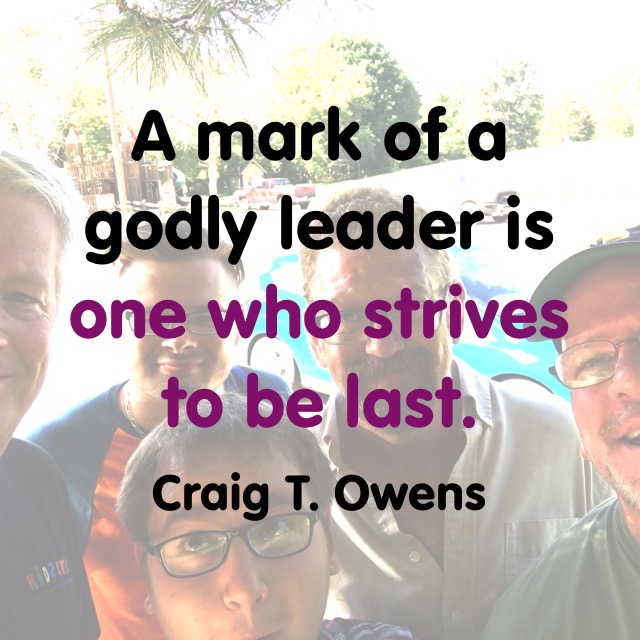
A mark of a godly leader is one who strives to be last.

Not: “I am second.” But: “I am last.” 

This is not just a declaration, but it is a declaration followed by a lifetime of submitting and serving. Not trying to lead others, but trying to out-serve all. 

This is part 74 in my series on godly leadership. You can check out all of my posts in this series by clicking here.

►► Would you please prayerfully consider supporting this ministry? My Patreon supporters get behind-the-scenes access to exclusive materials, like this recent Bible study tip from the Book of Ecclesiastes. ◀︎◀︎

Links & Quotes

If God seems distant, get your eyes off other things and put them back on Him. Check out the full sermon hereI have lots of new content every week, which you can check out on my YouTube channel.

T.M. Moore is in a series of posts about the Kingdom of God being revealed on earth. He wrote, “Jesus’ vision of the proximity of the Kingdom, therefore, was a threefold vision: The Kingdom is yet to come in all its fullness (there and then); nevertheless, at the same time, the Kingdom is unfolding in our midst (here and now); and thus every follower of Jesus Christ must make it their primary concern to seek and attain to more and more of the Kingdom of God every day of their lives. Then and there, here and now, more and more: This is how we must think about the Kingdom of God and our involvement in it.”

For many years, the theory of evolution has been unraveling. As more and more discoveries are being made, Darwin’s theory is becoming less tenable. John Stonestreet and Shane Morris wrote a recent blog post on this. Their article opens with this: “In 1973, evolutionary biologist Theodosius Dobzhansky wrote that “nothing in biology makes sense except in light of evolution.” Almost 50 years later, an increasing number of scientists are asking whether evolution makes any sense in light of what we now know from biology.”

The most effective leaders consistently see the world through their teammates’ eyes. Check out this full conversation on The Craig And Greg Show.

“Imagine yourself as a living house. God comes in to rebuild that house. At first, perhaps, you can understand what He is doing. He is getting the drains right and stopping the leaks in the roof and so on: you knew that those jobs needed doing and so you are not surprised. But presently He starts knocking the house about in a way that hurts abominably and does not seem to make sense. What on earth is He up to? The explanation is that He is building quite a different house from the one you thought of—throwing out a new wing here, putting on an extra floor there, running up towers, making courtyards. You thought you were going to be made into a decent little cottage: but He is building a palace. He intends to come and live in it Himself.“ —C.S. Lewis

“No prophet or priest, king or great leader has ever told us to dare to address God as our Father, except Jesus! He is the only One who has taught us to call God, our Maker and Creator, Father. In the Old Testament, that relationship is mentioned only a few times (for example, Exodus 4:22-23; 2 Samuel 7:14). But in the gospels, it is mentioned 165 times. Jesus wanted to instill in us how important God’s fatherhood is. It is not a mere creed. It is a relationship that is central to our new life in Christ and essential in our worship to Him.” —Sobhi Malek

The Craig And Greg Show: Ignorance And Arrogance

Listen to the audio-only version of this podcast by clicking on the player below, or scroll down to watch the video.

Periodically, Greg and I like to revisit the topic of leadership builders and killers. In this episode, you get two leadership killers, as we tackle the two-headed monster of ignorance and arrogance.

  • [0:25] The two-headed monster that kills leadership potential. 
  • [2:06] We are accepting bribes for our silence 😂
  • [2:23] Why are leaders held back by their ignorance?
  • [4:34] What happens when the followers sense that the leader above them is ignorant?
  • [6:22] What about when the leader admits a need for help?
  • [7:47] The toxicity of arrogance.
  • [9:32] Coachability is fed by humility. This is the leader’s litmus test.
  • [12:01] Our transparent leadership lessons are immensely helpful to our teammates.
  • [15:24] Greg shares a quote about this two-headed monster.
  • [17:35] We each share our personal examples of overcoming this monster.
  • [19:50] Sadly, many people who need the most help won’t seek it for themselves.
  • [21:07] If leaders are going to kill this two-headed monster, they have to stop talking and start listening.
  • [22:00] Know-it-alls are hard to cheer for, so successful leaders will have to eat some crow.

Check out this episode and subscribe on YouTube so you can watch all of the upcoming episodes. You can also listen to our podcast on Spotify and Apple.