Multifaceted Story

Today I’m preparing for our Candlelight Christmas Eve service. As I study the account of the birth of Jesus I’m always amazed at what I didn’t see in this Christmas story the last time I looked. If ever there was a multifaceted story, the coming of the Son of God to earth is it.

This story is so rich with…

  • unusual characters
  • angels
  • dreams
  • kings
  • strangers
  • scandal
  • drama
  • joy
  • sorrow
  • gifts
  • opportunities

I pray that this Christmas you will see something new. May Christmas never be the-same-old-story-all-over-again. Look with new eyes, hear with new ears, experience with a new heart. It’s the greatest story ever told!

Merry Christmas!

Jesus Tweets

Listen to the podcast of this post by clicking on the player below, and you can also subscribe on AppleSpotify, or Audible. 

I began using 𝕏 (formerly known as Twitter) in 2009. There is something challenging about conveying what I’m doing or thinking or encouraging others in 280 characters or less. I also love the bite-sized flow of comments from others that keep me informed and entertained.

As with anything I commit myself to, it always has to pass the “Would Jesus Do This” test. So, would Jesus use 𝕏? Would we be reading @JesusChrist tweets if He were on earth today?

I think so!

Just a quick survey of the Gospels will show you how many of His profound statements were in the 𝕏-ready 280-characters-or-less format…

In refuting the temptations of satan, all three Old Testament passages Jesus quoted are 𝕏-length.

  • Man does not live on bread alone, but on every word that comes from the mouth of God.
  • Do not put the Lord your God to the test.
  • Worship the Lord your God, and serve Him only.

In His famous Sermon on the Mount, all of the “blessed are” beatitudes are tweetable.

  • Blessed are the poor in spirit, for theirs is the kingdom of heaven.
  • Blessed are those who mourn, for they will be comforted.
  • Blessed are the meek, for they will inherit the earth.
  • Blessed are those who hunger and thirst for righteousness, for they will be filled.
  • Blessed are the merciful, for they will be shown mercy.
  • Blessed are the pure in heart, for they will see God.
  • Blessed are the peacemakers, for they will be called sons of God.
  • Blessed are those who are persecuted because of righteousness, for theirs is the kingdom of heaven.
  • Blessed are you when people insult you, persecute you and falsely say all kinds of evil against you because of Me.

Each sentence of Jesus’ model prayer fits in the 𝕏 dialogue box.

  • Our Father in heaven, hallowed be Your name, Your kingdom come, Your will be done on earth as it is in heaven.
  • Give us today our daily bread.
  • Forgive us our debts, as we also have forgiven our debtors.
  • And lead us not into temptation, but deliver us from the evil one.

All of Christ’s powerful “I AM” declarations in the Gospel of John are less than 140 characters.

  • I am the bread of life. He who comes to Me will never go hungry, and he who believes in Me will never be thirsty.
  • I am the light of the world. Whoever follows Me will never walk in darkness, but will have the light of life.
  • I am the gate; whoever enters through Me will be saved.
  • I am the good shepherd; I know My sheep and My sheep know Me.
  • I am the resurrection and the life. He who believes in Me will live, even though he dies.
  • I am the way and the truth and the life. No one comes to the Father except through Me.
  • I am the true vine, and My Father is the gardener.
  • I am the vine; you are the branches.

Even the most well-known verse of all fits into the 𝕏 dialogue box:

For God so loved the world that He gave His one and only Son, that whoever believes in Him shall not perish but have eternal life.

The words of Jesus are just as timely and relevant today as they were the day He first spoke them, so let’s use our social media platforms to rebroadcast (or retweet) these life-changing truths.

►► Would you please prayerfully consider supporting this ministry? My Patreon supporters get behind-the-scenes access to exclusive materials. ◀︎◀︎

Relationship Trumps Religion

Last night in our Impact youth service we wrapped up this session of The Q Series: a time where our students submit the questions they want to have answered. I’m always challenged by the questions that get turned into me, they really make me dig deep.

Last night I answered a couple of questions that went like this: “Is Christianity all about keeping the right rules?

I think there is a misconception that many people have about those who call themselves Christian. One of the most notable ones is: There are way too many rules to follow.

I answered this question with an analogy to my relationship with my wife. If I want a better marriage, would I be better off following a list of rules, or developing a more intimate relationship? I think the answer is easy: relationship always trumps rules.

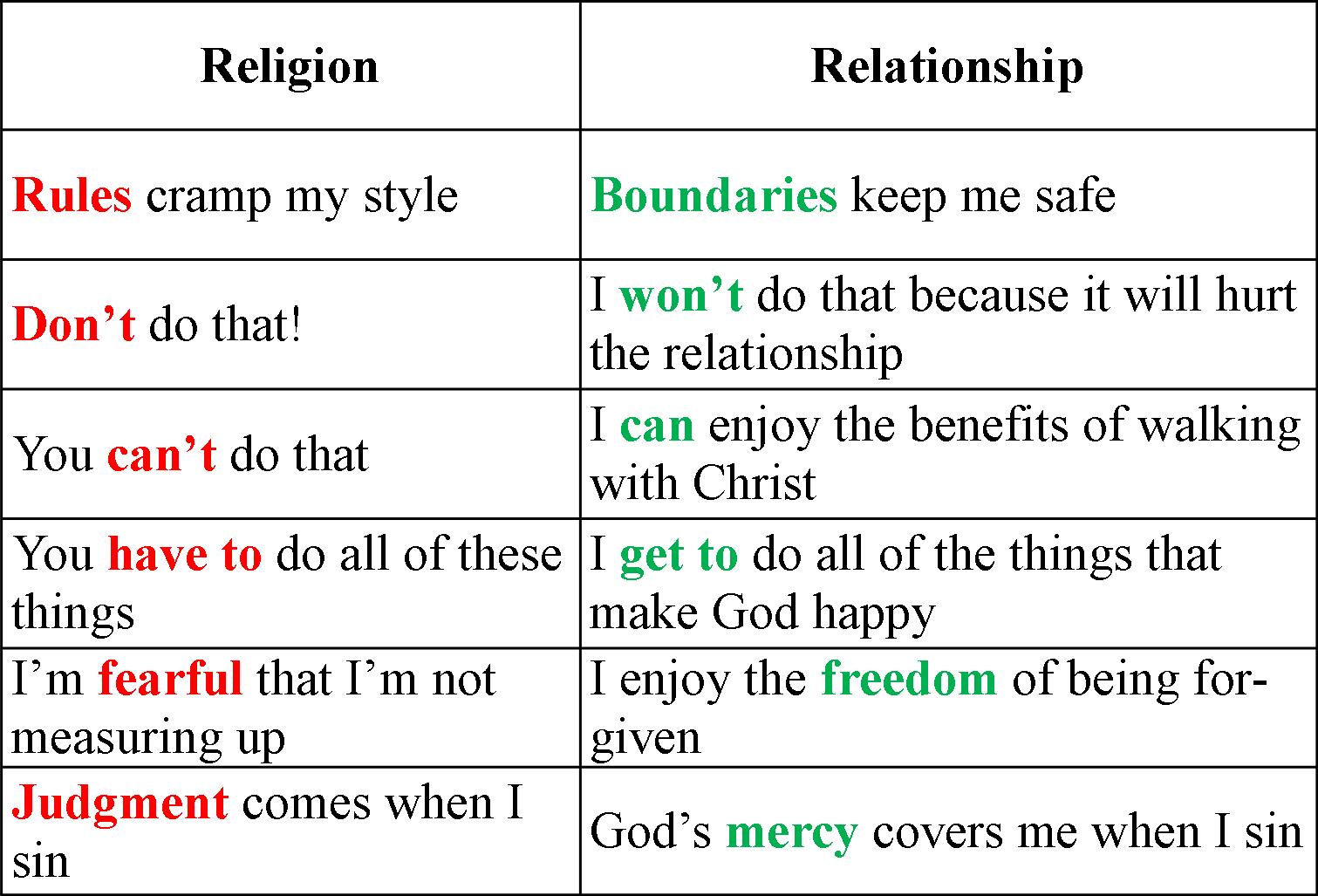
When we begin to think of Christianity as a relationship with Jesus instead of a religion, there is greater freedom. Look at the change in mindset from religion to relationship:

Clearly, a relationship with Jesus trumps trying to keep religious rules.

Our students got it. In fact, three of them got it for the first time as they prayed to ask Jesus to step into a relationship with them! That never gets old for me, in fact, it’s the greatest thing I get to see!

I hope you’re not bound up by religion, but enjoying all of the benefits of a personal relationship with Jesus Christ. It’s the best decision you could ever make.

Primal (book review)

It’s been quite a while since I have been this excited about a book. Mark Batterson has given us a winner with the release of this third book entitled Primal. I highly recommend that you add this to your 2010 reading list, as this would be a great way to start your new year.

One of the knocks I hear non-churched people level at Christians is, “You have too many rules to follow. It seems like being a Christian is too restrictive.” Unfortunately, far too many people who call themselves Christian live like this. Their definition of Christianity boils down to We can’t do that or We don’t do that or These are the rules.

In Primal, Batterson takes us back to the life Jesus intended for His followers to live. Jesus is asked what it takes to be a follower of God, and He answers with this primal phrase, “Love the Lord your God with all your heart, with all your soul, with all your mind, and with all your strength.” This is primal Christianity.

Mark then leads us through a reawakening of what it really means to love God fully in these four areas:

  1. Passionate, God-directed, and others-focused love
  2. Wide-eyed, awe-struck, transcendent wonder
  3. A searching, engaged, holy curiosity
  4. Energetic, all-encompassing, servant-hearted work

It’s so simple. It’s so primal. And it’s so liberating to be reminded of the raw essence of living a Spirit-empowered life which is so God-glorifying and Christ-magnifying.

This book gets all five stars from me.

I am a Multnomah book review blogger.

Nothing Left But Ashes

In the “Your Gift To God” series at Calvary Assembly of God, we have been following the pattern of the gifts that the Magi gave to Jesus as a pattern for the gifts that we, too, should give to God.

First, the Magi gave gold. The king of metals for the King of kings. They acknowledged that this was the Eternal King. Gold is a gift for a king.

The second gift is a bit of a head-scratcher gift: frankincense. This type of incense was used in the Old Testament in worship and sacrifices in the Tent Of Meeting. Incense is a gift for a priest. But would the Magi give a priestly gift to a king?

Jesus came as both King, Priest, and Sacrifice. The frankincense was used as the high priest went from the Holy Place to the Most Holy Place to offer the sacrifice of atonement. But look what the Bible says about Jesus:

…Christ loved us and gave Himself up for us as a fragrant offering and sacrifice to God.

And because of what Jesus did for us:

And so, dear brothers and sisters, we can boldly enter heaven’s Most Holy Place because of the blood of Jesus.

When we offer a sacrifice of frankincense to Jesus our High Priest, we’re saying, “I trust You with this. I don’t want to carry this any longer. I give it to You completely.” That means what we offer to Him is completely consumed.

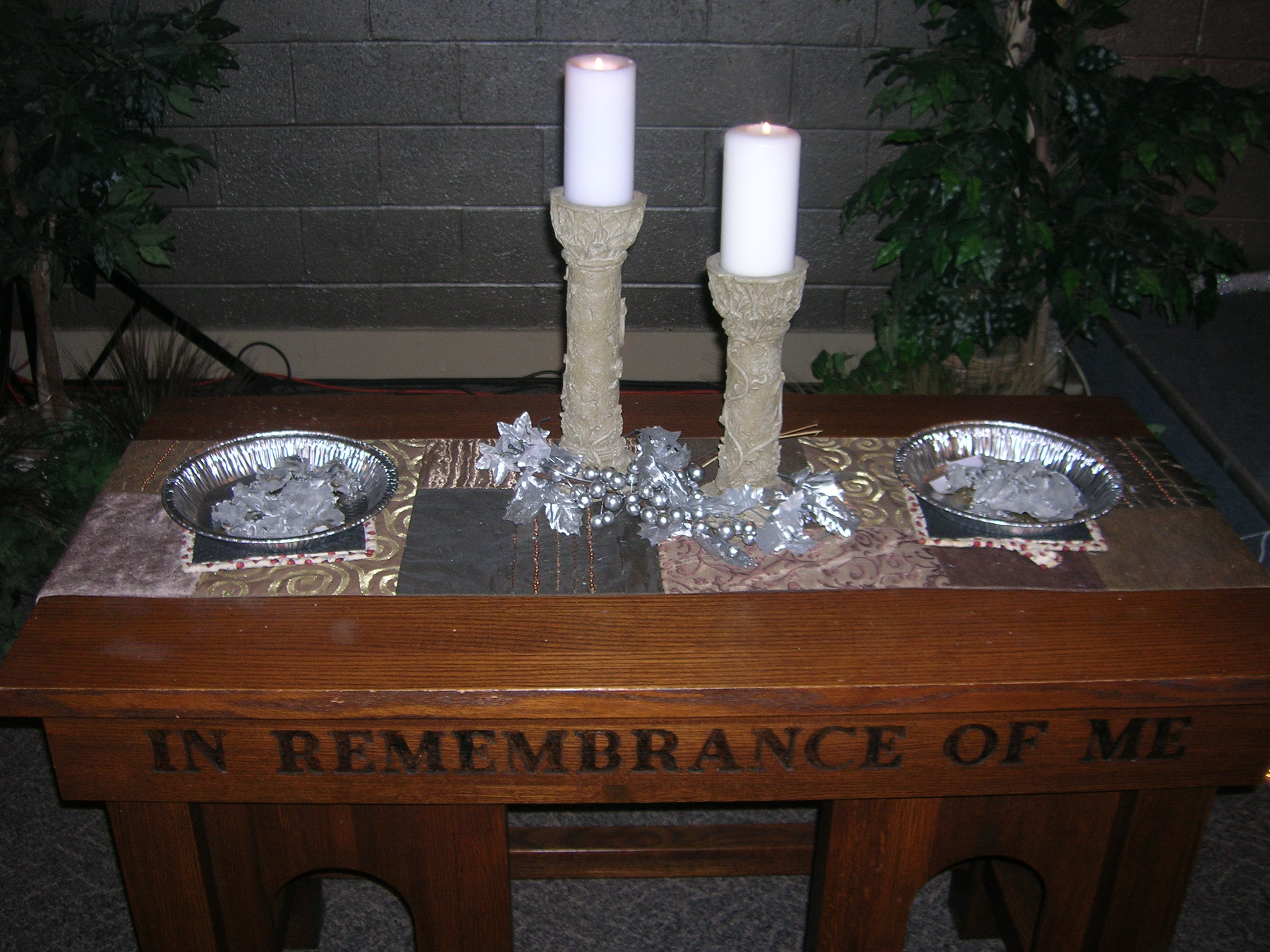
Yesterday our congregation wrote down their burdens and concerns and challenges on a slip of paper. Then we brought those concerns to Jesus and burned them up like frankincense in His presence. As I smelled the aroma, I could only imagine the incredible scent that Jesus detected.

All of the concerns people wrote down were reduced to ash yesterday morning!

I believe people were set free! The concerns were burned up like a sacrifice before our High Priest! No longer do they have to carry these heavy loads:

Casting the whole of your care [all your anxieties, all your worries, all your concerns, once and for all] on Him, for He cares for you affectionately and cares about you watchfully.

Your greatest gift to God could be all of the things that have burdened you for way too long. Give them to Him because He cares for you. Let them be consumed completely, and never pick them up again.

Live free!

Confusing Signals

The other day I met a friend for coffee at Biggby Coffee and noticed this sign. In reality, the door did take you behind the counter (that’s the “Employees Only” part), and from the behind-the-counter area is the only other exit door from the coffee shop that could be used in case of an emergency (that’s the “Emergency” part).

But when I put the two parts together, it struck me funny. “Are they saying only employees can use the emergency exit? What happens to the rest of us?”

Is this the message Christians send? “Only Christians who know how to behave themselves in a Christian way can come into the Christians-only area of our church and hear how to exit this world.” Sadly, many Christians act this way.

Or should I call them “Christianists”? After all, true Christ-followers act like Jesus and invite everyone behind the counter to hear the good news. All those who truly love Jesus want everyone to know how to find the exit from all the baggage they’ve been carrying around.

Jesus said, “Come to Me, all of you who are weary and carry heavy burdens, and I will give you rest.” Did you catch that? All of you. The good news about Jesus is for everyone everywhere. Let’s not put a confusing sign on the door, but invite them into freedom in Christ.

Serious Fun

I believe of all people, Christ-followers should be able to do the most serious of work, but those who are in love with Jesus ought to be able to have the most fun too, as they enjoy the fullness of that relationship.

We proved this yesterday.

My loving congregation donated food for us to bless some needy people with Thanksgiving groceries. We then contacted our local elementary school to ask if they could recommend a couple of needy families to us. They did, but “needy” might be a major understatement. It was a joy to be able to deliver all of the Thanksgiving fixin’s to them, but heart-breaking to see the conditions in which they were living. I pray that this simple act of compassion will help open a door for further ministry opportunities.

Then we met with our Impact youth group for some serious fun (pictures are here). We had a carnival-like atmosphere with wild-and-messy games going on everywhere. I loved seeing our students dive into (sometimes literally) these fun events. It wasn’t just the students: Betsy challenged me to a pie-eating contest. And let’s just say, apparently I have a bigger mouth than she does!

It’s great to address the serious conditions that surround us, and we should do so with love and hope. And it’s just as wonderful to have some fun. I believe that people who get stuck on either extreme are missing out on the fullness of a Christ-centered life.

I hope you have a seriously fun Thanksgiving celebration. And not just on Thursday this week, but all year long.

Satisfied Service

I started a conversation last week about being a servant (you can catch up here).

Serving should be a two-way street. Contrary to the way that some people look at servanthood, being a servant is not the same thing as being a doormat. Consider two key verses:

  • Each of you should look not only to your own interests, but also to the interests of others. (Philippians 2:4)
  • Submit to one another out of reverence for Christ. (Ephesians 5:21)

We should look equally to others’ needs as well as our own needs. Zig Ziglar says it this way, “You can have everything in life you want, if you will just help other people get what they want.”

This can be manipulation if you’re simply looking to someone else’s interests as a form of flattery or as a quid pro quo. But if you are truly serving—if you truly have the other person’s best interests in mind—if you are willing to submit to them out of reverence for Christ, serving can be liberating.

Last week Rick Warren tweeted, “The more self-centered I am, the more unsatisfied I’ll be.” I retweeted with this addition, “So the more I serve, the more satisfied I’ll be.” I believe that.

Try it for yourself—it works!

Loving Servanthood

Over the past couple of days I’ve been thinking a lot about something: What does it mean to serve? Or more specifically, what does God say about how we should serve?

The typical image that comes to mind when someone says “servant” is a person of lower status—someone who is at the lower end of the organizational chart, someone who is expected to do more with less, someone who doesn’t have many opportunities for advancement (or even a day off), or maybe someone who is expected to be tuned into everyone else’s needs but seldom has his own needs met.

Is being a servant the same thing as being a doormat?

Consider Jesus:

He now showed them the full extent of His love…. Jesus knew that the Father had put all things under His power, and that He had come from God and was returning to God; so He got up from the meal, took off His outer clothing, and wrapped a towel around His waist. After that, He poured water into a basin and began to wash His disciples’ feet, drying them with the towel that was wrapped around Him.

Jesus was the most important person in the room: Jesus KNEW that the Father had put all things under His power. He was also the most love-filled person in the room. What did He do with all of His love and power? He served others.

When He finished, John writes that He returned to His place, and asked His disciples a question, “Do you understand what I just did?” Then in the only instance of Scripture where Jesus Himself said this, “I have set you an example that you should do as I have done.”

Servants are people who use the power they have to lovingly serve others.

Servants don’t serve because someone else forces them to serve. Servants serve because the love of God empowers them to serve.

Do you love your spouse enough to serve him/her? Do you love your family enough to serve them? Do you love your coworkers enough to serve them? The greater the love we have for others, the greater the empowerment to serve. Love empowers us for service.

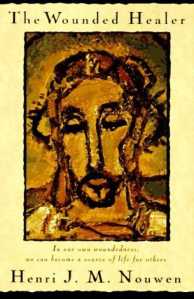
The Wounded Healer (book review)

Wounded Healer, The

“For the minister is called to recognize the sufferings of his time in his own heart and make that recognition the starting point of his service. Whether he tries to enter into a dislocated world, relate to a convulsive generation, or speak to a dying man, his service will not be perceived as authentic unless it comes from a heart wounded by the suffering about which he speaks” (from the introduction).

Henri Nouwen was a man ahead of his time. Although this book was written in the early 1970s, it sounds so applicable for today. The Wounded Healer challenged me as a Christian leader to step into the pain-filled lives as others in a more authentic way. Nouwen argues that healers must first be personally acquainted with the same type of pain that other wounded people are experiencing.

Isaiah 53 says that Christ “was wounded for our transgressions, He was bruised for our guilt and iniquities; the chastisement [needful to obtain] peace and well-being for us was upon Him, and with the stripes [that wounded] Him we are healed and made whole.” Because Jesus was wounded in the same way we are wounded, He knows how to help (see Hebrews 2:18).

One closing quote from Nouwen: “If there is any posture that disturbs a suffering man or woman, it is aloofness. … No one can help anyone without becoming involved, without entering with his whole person into the painful situations, without taking the risk of become hurt, wounded or even destroyed in the process. The beginning and the end of Christian leadership is to give your life for others.”

This book reconfirmed my desire to—like Jesus—be a wounded healer for others.