What happens when you read the Bible? Do you just read it, or do you ask questions of it? Some people seem hesitant to ask any questions, but the Bible itself is full of questions.
Zechariah was a prophet in the Old testament. If anyone would have been familiar with God’s Law, it would have been this guy. He grew up as a P.K. (priest’s kid), with several generations of religious leaders in his family tree. Yet as he was being shown the word of the Lord, he realizes how special it is, and wants to make sure he fully grasps it. So he fires away with the questions:
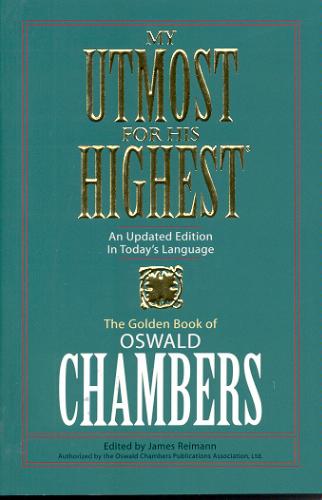
This is a weekly series with things I’m reading and pondering from Oswald Chambers. You can read the original seed thought here, or type “Thursdays With Oswald” in the search box to read more entries.

Beautiful Grapes
If we believe in Jesus, it is not what we gain but what He pours through us that really counts. God’s purpose is not simply to make us beautiful, plump grapes, but to make us grapes so that He may squeeze the sweetness out of us. Our spiritual life cannot be measured by success as the world measures it, but only by what God pours through us—and we cannot measure that at all.
The fruit of the Spirit is love, joy, peace, patience, kindness, goodness, faithfulness, gentleness and self-control. (Galatians 5:22-23)
The Holy Spirit wants to bring to maturity ALL of these fruit in my life. Not so that I can pat myself on my back and say, “Look at how fruitful I am!” But so that God may squeeze me out where He needs me.
So I’m pondering…
Am I allowing the Holy Spirit to develop this fruit in me?
When I am fruitful, am I allowing God to squeeze me? Or do I run from it?
What good is to be a Christian without bearing fruit?
What good is it to have the fruit but not let God squeeze it?
We need to elevate our vocabulary when it comes to God and the things about His nature and His Kingdom.
I was convicted of this a few years ago. I came home from church and was watching an NFL game on a Sunday afternoon, when a receiver made an amazingly acrobatic catch for a touchdown. I jumped off the couch and shouted, “That. Was. Awesome!!
Immediately the Holy Spirit brought something to my mind. “When you were worshiping at church this morning,” He gently reminded me, “didn’t you say how awesome God was? Is He as awesome as that catch?”
Right then and there I decided that I needed to be more careful of my vocabulary. I want to reserve words for God that I used nowhere else. Theologians do it all the time: creating new words to try to capture the majesty, omnipotence, and mind-blowing-vocabulary-defying greatness of Almighty God.
I’m certainly not perfect at this, but I’m working on it.
I was reminded of this again when I read these words from Charles Spurgeon:
This is a weekly series with things I’m reading and pondering from Oswald Chambers. You can read the original seed thought here, or type “Thursdays With Oswald” in the search box to read more entries.
Learning From My Experiences
It is all very well to have experiences, but there must be a standard for measuring them, and a standard more worthy than my own on the line on which I know I am worthy. The standard for Christian experience is not the experience of another Christian, but God Himself.
On the ground of the Redemption I am saved and God puts His Holy Spirit in me, then He expects me to react on the basis of that relationship. …The only way to understand the Scriptures is not to accept them blindly, but to read them in the light of a personal relationship to Jesus Christ.
From Baffled To Fight Better
Some people have said that experience is the best teacher.
That’s incorrect.
My experience is just that… MY experience. I have to have a standard other than myself to judge that experience. As a Christian I have this: God’s Word, and the Holy Spirit to help me apply that Word to my experience. If I will use this as my standard for all of my experiences, only then will I learn something eternally useful from my experiences.
As C.S. Lewis so right stated, “All that is not eternal is eternally useless.”
He may have a funny-sounding name, but—wow—can this man ever preach!
Smith Wigglesworth didn’t sit down to write a book, he just preached this book. In fact, Smith didn’t even read other books; he only read the Bible. So to read a Smith Wigglesworth book is really to “listen” to his power-packed sermons.
From 1900 to 1940, Smith traveled around the United States, speaking at various locations. His sermons are a heavy dose of Scripture, accented with frequent interpretations of a message in tongues from the Holy Spirit. So Smith Wigglesworth On Faith is a collection of faith-building sermons preached over a four decade time span.
If you want to have your faith (re)ignited, you can’t go wrong by listening (I mean: reading) these sermons. Highly, highly recommended!
This is a weekly series with things I’m reading and pondering from Oswald Chambers. You can read the original seed thought here, or type “Thursdays With Oswald” in the search box to read more entries.
A Religious Poser
It is difficult to evade pose in religious life. … If you have the idea that your duty is to catch other people, it puts you on a superior platform at once and your whole attitude takes on the guise of a prig….
The religious pose is based, not on a personal relationship to God, but on adherence to a creed. Immediately we mistake God for a creed, or Jesus Christ for a form of belief, we begin to patronize what we do not understand. When anyone is in pain the thing that hurts more than anything else is pose….
From Baffled To Fight Better
How do I avoid religious posing?
Develop a deeply intimate, highly personalized relationship with Jesus Christ.
Allow everyone around me to have their own deeply intimate, highly personalized relationship with Jesus Christ.
I cannot fake it, nor can I ask someone to be just like me or believe just like me. I need to let God be as original with everyone else as He is with me.
I’m sure I’m not the only pastor that feels occasionally (all right: frequently) overwhelmed by the heavy responsibility of sharing God’s Word with others. After all, the Apostle James said it pretty clearly: Not many of you should presume to be teachers, my brothers, because you know that we who teach will be judged more strictly (James 3:1).
“Judged more strictly”? Yikes!
But I take great consolation in knowing that if God called me, He will equip me. Just as He did with Jeremiah—The Lord reached out His hand, then He touched my mouth and said, “I am giving you the words to say” (Jeremiah 1:8)—I know He will do for me.
I also draw great confidence in knowing the Holy Spirit is helping me. Check out these words from Francois Fénelon:
“Of what efficacy would be the exterior word of pastors, or even the Scriptures themselves, if we had not within the word of the Holy Spirit giving to others all their vitality? The outward word, even of the Gospel, without the fecundating, vivifying, interior word would be but an empty sound. It is the letter that alone kills (2 Corinthians 3:6), and the Spirit alone can give us life.”
Then A.B. Simpson shares this encouraging story of the Holy Spirit’s help:
“They that possess this power will not always be popular preachers, but they will always be effectual workers. Sometimes the hearer will almost think that they are personal, and that someone has disclosed to them his secret sins. Speaking of such a sermon, one of our most honored evangelists said that he felt so indignant with the preacher under whom he was converted that he waited for some time near the door for the purpose of giving him a trashing for daring to expose him in the way he had done, thinking that someone had informed on him. Let us covet this power. It is the very stamp and seal of the Holy Spirit on a faithful minister.”
YES! I do covet this power of the Holy Spirit in my life. Without His help, I would be fearful to ever open my mouth to speak to others about the things of God.
Listen to the podcast of this post by clicking on the player below, and you can also subscribe on Apple, Spotify, or Audible.
Blind spots can be deadly. I simply don’t see what’s right there until—wham!—it crashes into me.
These blind spots have been called our “unconscious incompetence” zone. I’m not doing well in a certain area, but I just don’t know it yet until—wham!
Up to that point everything seems fine, but wise King Solomon said, “Smugness will destroy fools” (Proverbs 1:32).
It seems there are two ways I could deal with my unconscious incompetencies. (1) I could wait until I get blindsided by one of them; or (2) I could ask the Holy Spirit to reveal them to me. Neither option seems very pleasant, but if I’m going to get hit—wham!—it seems like a better option to let Someone who loves me, and wants the best for me, to do it (see Hebrews 12:5-11).
David thought so too. He prayed—
Search me thoroughly, O God, and know my heart! Try me and know my thoughts! And see if there is any wicked or hurtful way in me, and lead me in the way everlasting. (Psalm 139:23-24)
Or, how about Sir Francis Drake’s prayer:
Disturb us, Lord, when We are too well pleased with ourselves, When our dreams have come true Because we have dreamed too little, When we arrived safely Because we sailed too close to the shore.
Disturb us, Lord, when With the abundance of things we possess We have lost our thirst For the waters of life; Having fallen in love with life, We have ceased to dream of eternity And in our efforts to build a new earth, We have allowed our vision Of the new Heaven to dim.
Disturb us, Lord, to dare more boldly, To venture on wider seas Where storms will show Your mastery; Where losing sight of land, We shall find the stars.
We ask You to push back The horizons of our hopes; And to push us into the future In strength, courage, hope, and love.
The wham! moments will come. The question is how do you want them to come?
This is a weekly series with things I’m reading and pondering from Oswald Chambers. You can read the original seed thought here, or type “Thursdays With Oswald” in the search box to read more entries.
Your Theology May Be Wrong
Never be afraid if your circumstances dispute what you have been taught about God; be willing to examine what you have been taught, and never take the conception of a theologian as infallible; it is simply an attempt to state things. … Theology is the science of religion, an intellectual attempt to systematize the consciousness of God.
From Baffled To Fight Better
Far too many times I catch myself believing something just because someone else told me that was the right way to do things. I’m sure my teachers and pastors were well intentioned, but that doesn’t make them infallible.
When someone asks you, “Why do you do that?” or “Why do you believe that?” the unacceptable response is, “Someone told me this was the way.” Get into God’s Word and find out for yourself. A theologian may start you off on a path, but allow the Holy Spirit to illuminate God’s infallible truth to you personally.
I know a lot of people get uneasy when people starting talking about the Holy Spirit. But what about when the Bible talks about the Holy Spirit? In Dr. Stanley M. Horton’s book, What The Bible Says About The Holy Spirit, you won’t get opinion, just Scripture.
I’m a fourth generation Pentecostal, which means I’ve grown up in an environment where the discussions about the Holy Spirit were numerous and candid. As a result, I thought I knew quite a bit about Him, but it turns out I was so wrong! Dr. Horton is a brilliant scholar, and his knowledge of Scripture is wonderfully on display in this book.
Dr. Horton begins with the Pentateuch and progresses all the way through the Bible, showing exactly what the Bible says about the Holy Spirit. Other books I have read talk more about what the Holy Spirit does, but Dr. Horton pulls out the Scriptures to show Who the Holy Spirit is. And, believe me, there’s a huge difference! The first approach broadens your mind; the second approach deepens your relationship.
If you want to go deeper in your relationship with the Holy Spirit, or if you are simply interested in learning more about (as Francis Chan calls Him) the Forgotten God, then check out What The Bible Says About The Holy Spirit.