Plan B (book review)

I was immediately intrigued by the title of Pete Wilson’s book Plan B because it’s a phrase we use so much in my family. In fact, we sometimes take it farther than that: many times we’re talking about Plan F or even Plan Q!

Yet at the same time, I found myself asking, “Does God have a Plan B for my life?” As I read Pete’s book I discovered the answer to my question is a resounding and loving, “No!” God only has a Plan A, nothing takes Him by surprise. I, however, often get taken by surprise: that’s where Plan B comes in. And that’s where Pete’s book is so beneficial.

This book is not about scrambling to come up with an alternate plan, but learning how to rest assured in God’s Plan A for my life.

I’m pretty sure that all of us have been disappointed at some point. We thought things were heading in the right direction, but then everything seemed to be going sideways. Our first inclination is to try to come up with a Plan B to deal with our ‘crisis’. But Pete Wilson’s Plan B is a reminder that God’s Plan A still prevails, that we can still place our hope in God. I love this quote from the book:

“There is an undeniable relationship between crisis and hope. Between waiting hopefully and being transformed. Between Plan B and the glory of God.”

A practical and timely book to help you successfully navigate through the tough spots, to not collapse in crisis, but to be buoyed by hope.

I am a Thomas Nelson book reviewer.
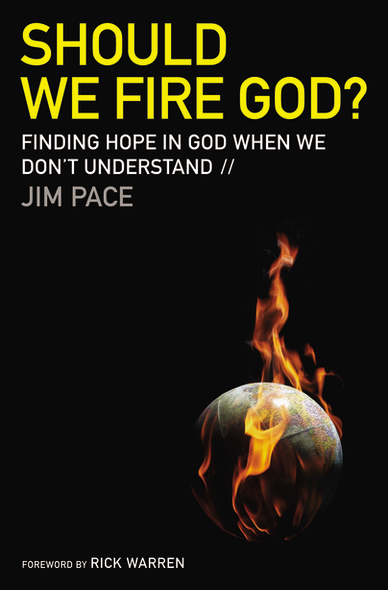
Should We Fire God? (book review)

Probably like me, the first thing that caught your eye was the title. Jim Pace didn’t entitle his book Should We Fire God? just to be provocative. It’s a legitimate question. In fact, it’s a question that so many have wrestled with for centuries: How can God allow bad things to happen?

It’s one thing when we in America are asking this question about the genocide in Darfur, or the earthquake in Haiti, or a famine in the Middle East. But what about when it hits so much closer to home?

Jim Price was pastoring at Virginia Tech University, when on April 16, 2007, a lone gunman opened fire on the campus killing over 30 people, including himself. Immediately Jim was forced face-to-face with this age-old question: How could this happen?

Some thought, “If God couldn’t keep us safe, perhaps He’s not up to the job. Should we fire God?

Carefully, honestly, loving, Jim addresses this question. For him, this is not some theoretic exercise. It’s personal. The emotion comes through raw and real. After weighing all the evidence and considering all of the possibilities, Jim reaches the conclusion that…. Well, you’ll have to read Should We Fire God? for yourself and come up with your own conclusion.

If you’ve ever faced heartache, if you’ve ever wondered how God could allow something tragic to happen, if you’ve ever wrestled with the thought of firing God, you will find some great thinking material in this book.

I am a FaithWords book reviewer.

Just Be Yourself

How many times have you ever made one of these statements:

  • “If I could only sing like her.”
  • “I wish I could draw like you.”
  • “Wow, I wish I could write like that!”
  • “You have way more Facebook friends than I do.”
  • “I could never stand up in front of an audience like that pastor.”

If you’ve ever said something like this, what you’re really saying is, “I want to be someone else.”

But God made you you. He didn’t make anyone else you. No one can be you but you.

When you get to heaven, God isn’t going to say:

  • “Why didn’t you learn to sing like her?”
  • “You should have taken art lessons.”
  • “Your blog wasn’t as popular as his.”
  • “You had fewer friends than anyone else.”
  • “Why didn’t you become a pastor/missionary/evangelist…”

All God is going to ask is this: “Were you the best you that you could be? Did you use the talents, personality, passions, gifting, and opportunities that I gave to you and to no one else?

On Wednesday nights in our Impact! youth service we’re exploring this topic in a series called Be You. That’s all God wants you to be. Come join us at 7pm on Wednesdays. In the meantime, listen to the Holy Spirit teaching you to be the best you you can be.

More Questions

Time for some more questions. Periodically I turn the subject matter for our Impact! youth group over to the students. It’s their time to fire away with the questions on their mind. I love answering questions because answering them helps me learn more too.

So now’s the time to get your question(s) in. You can get them to me in a few ways:

  • Leave a comment on this blog post.
  • Contact me via Twitter.
  • Contact me via Facebook.
  • Or if you want to remain anonymous, there’s a drop box at the church.


The Thinking Book

“The book to read is not the one which thinks for you, but the one which makes you think. No book in the world equals the Bible for that.” —James McCosh

My kids recently returned from a PK (Pastor’s Kids) Retreat weekend. Our Michigan Assembly of God District Youth Director Jeff Kennedy coordinates this weekend every year. A fun part of their time together is a take-off of Jeff Foxworthy’s “You might be a redneck if…” routine. It’s called “You might be a PK if….” Here are a couple of my favorites—

  • You might be a PK if you’ve used the church sound system as your personal stereo.
  • You might be a PK if National Take Your Kid To Work Day is any day you don’t have school.
  • You might be a PK if you’ve ever taken a bath in the baptismal tank.
  • You might be a PK if you occasionally take Sunday afternoon naps on a church pew.
  • You might be a PK if every answer your Dad gives you comes from the Bible.

Cute! And, for the most part, dead-on accurate!

But that last one got me thinking: do I do this? I sincerely hope (not just because I’m a pastor) that the answer is always “yes.”

I agree with James McCosh that no other book in the world compares to the Bible for challenging me to think. In the King James Version of the Bible, there is a phrase that James uses about God’s Word: he says that we should “receive with meekness the engrafted Word” (James 1:21).

The more I read the Bible, the more its principles become engrafted into my thought patterns. The more I think about the Bible, the more my attitude about life conforms to God’s attitude. And the more my attitude conforms to God, the more my actions and words align with the Bible.

You don’t have to read much every day for God’s Word to make a difference in your life. If you are honest with the Holy Spirit as He illuminates a passage of Scripture to you, you will see how God’s Word can be applied to your life today.

“The Bible is…a chart by which the Christian sails to eternity, the map by which he daily walks; the sundial by which he sets his life; the balance in which he weighs his actions.” —Thomas Watson

To be successful make sure you are looking often at the chart, the map, the sundial, and the balance of God’s Word.

Anti-Sudoku Theology

I really enjoy Sudoku. It’s a challenging game of logic, and I’m (for the most part) a logical guy. I like knowing exactly where the digits one through nine are supposed to go, using logical deduction and inference to fill in all of the squares.

If I had my choice, all of life would be this logical. Simple. Neat. Well-defined. Clear. Easy. But, much to my dismay, it’s not.

If I’m following the example and teaching of Jesus, life with Him is anything but logical. Think about some of the paradoxes Jesus Christ taught and lived—

  • To advance, be humbled.
  • To have more, give away more.
  • To possess everything, desire nothing.
  • To connect with people (social), spend time alone with God (solitude).
  • To bring people in, go out.
  • To be a leader, be a servant.
  • To fill up with God, empty yourself of yourself.
  • To come first, come last.
  • To gain wisdom, become foolish.
  • To gain strength, become weak.
  • To live, die.

A.W. Tozer wrote about a godly man: “He has accepted God’s estimate of his own life. He knows he is as weak and helpless as God has declared him to be, but paradoxically, he knows at the same time that he is in the sight of God of more importance than angels. In himself, nothing; in God, everything.”

It isn’t logical, but it’s true: God loves me. And the greatest of all paradoxes: when I was the least worthy of God’s love, that’s when Jesus came to die for my sins.

God’s love for me—the greatest of paradoxes—helps me live these paradoxes Jesus taught. And His love will help you, too.

What other biblical paradoxes have you discovered?

Defeating Depression

In 1 Kings 19, Elijah hears that Queen Jezebel wants to kill him, so he “ran for his life.” Just four verses earlier Elijah “ran in the power of the Lord” (18:46) but now he is running scared. After 42 days of despondent wandering, Elijah ends up in a cave and God asks Elijah, “Why are you here?” (v. 9).

Elijah’s answer seems unresponsive. He tells God—as though He didn’t already know!—all about the spiritual conditions in Israel, but he never really answers the “why” question. God reveals Himself to Elijah more intimately (as “a gentle whisper”) and asks him again, “Why are you here?” Elijah gives the same, word-for-word answer.

During difficult times—when my “enemies” seem too numerous to count or too big to defeat—the eyes of my soul become cloudy. It becomes harder to look out and so I naturally tend to look inward. As a result, I become the center of my entire universe: “Now they are trying to kill me!”

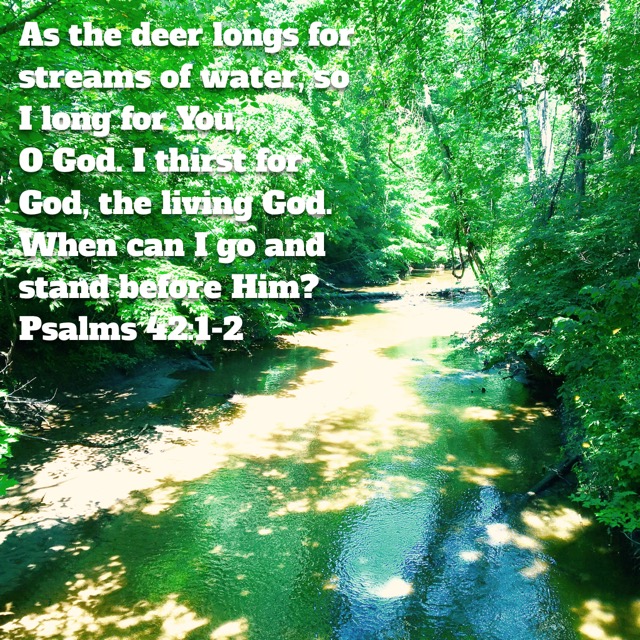
In Psalms 42 and 43, the psalmist is clearly depressed. Look at his inward, me-focused questions—

  • When can I go and meet with God? (42:2)
  • My enemies continually taunt me, saying, “Where is this God of yours?” (42:3)
  • Why are you so downcast, O my soul? Why so disturbed within me? (42:5, 11; 43:5)
  • Why have You forgotten me? (42:9)
  • Why have You rejected me? (43:2)

Just as God’s question to Elijah was supposed to get him to look outward, the psalmist does begin to turn his gaze from himself. But notice how he does it—

  • My soul is downcast within me; therefore I will remember You (42:6)
  • Put your hope in God, for I will yet praise Him, my Savior and my God (42:11; 43:5)

When I’m battling depression, it takes an act of my will to praise God, to look outward and upward. Feelings follow actions. I don’t feel like praising Him because my problems feel so overwhelming, but when I will to praise Him, the feelings will follow.

Look how David did it—

I will extol the LORD at all times; His praise will always be on my lips.
My soul will boast in the LORD; let the afflicted hear and rejoice.
Glorify the LORD with me; let us exalt His name together.
(Psalm 34:1-3)

My friend, if you are depressed—if you have become inward-focused—only an act of your will can lift you out of this funk.

Use your willpower to act—look out, look up, praise God—and the cloud over your soul will begin to lift!

Do I Know Too Much?

Thomas Huxley wrote, “I object to Christians: they know too much about God.”

When Job was going through his trials, his “friends” showed up with all kind of knowledge about God. They knew that God would never allow the innocent to go through difficulty. They knew Job had sinned somewhere along the way. They knew that God always answers a righteous man‘s prayers exactly as he had prayed it.

They knew too much about God.

They put God in their box, telling Him how to behave the way they knew He should.

They became their own god.

Job didn’t know all that God was doing, but he did know, “He does great things too marvelous to understand” (Job 9:10). The Apostle Paul echoed the same thought: “Oh, how great are God‘s riches and wisdom and knowledge! How impossible it is for us to understand His decisions and His ways!” (Romans 11:33).

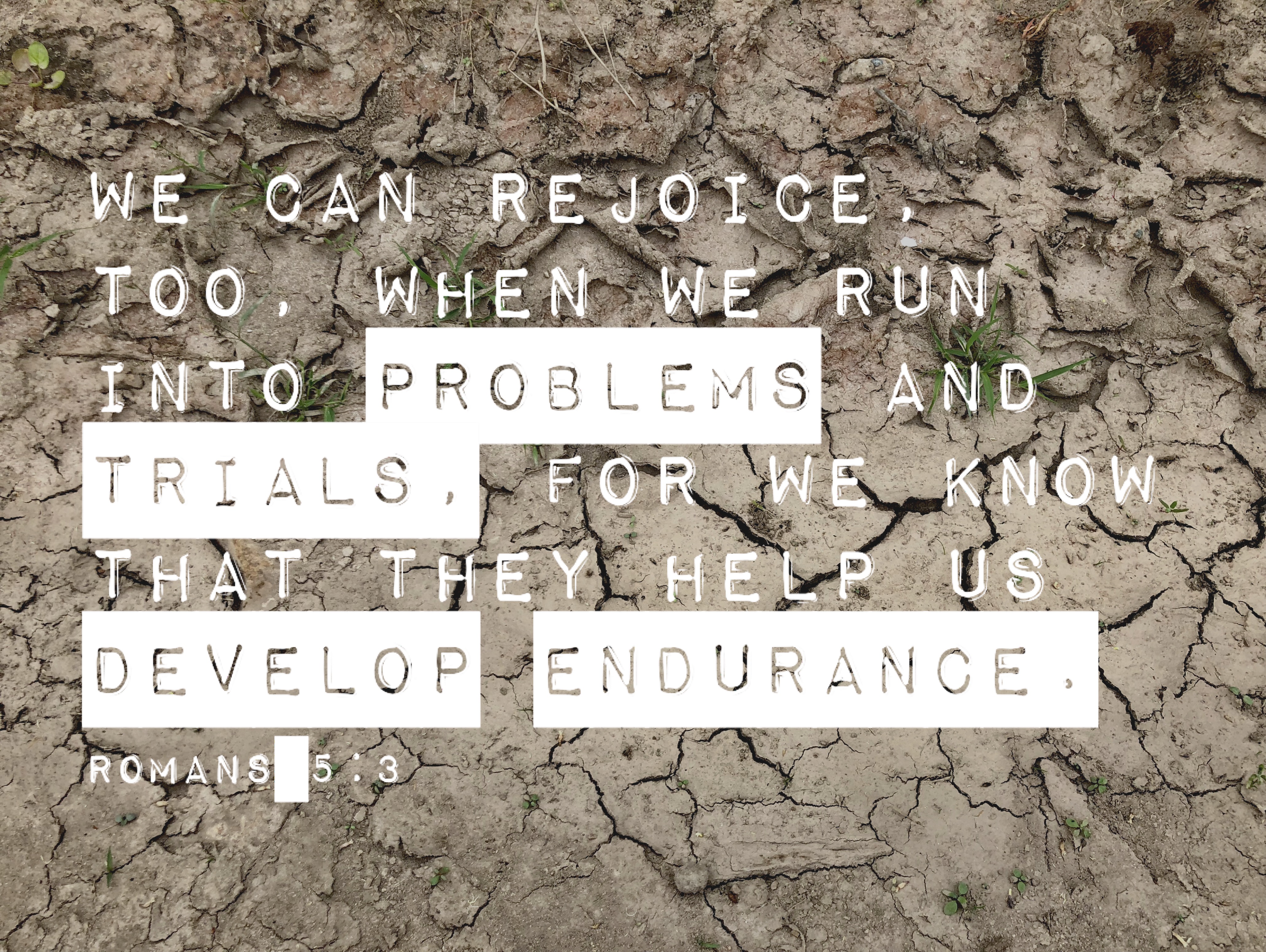
As I go through my own trials, I‘m learning a little more about the depths of God‘s love for me everyday—“We can rejoice, too, when we run into problems and trials, for we know that they help us develop endurance. And endurance develops strength of character, and character strengthens our confident hope of salvation. And this hope will not lead to disappointment. For we know how dearly God loves us, because He has given us the Holy Spirit to fill our hearts with His love” (Romans 5:3-5).

How about you: Do you know too much about God? Or are you still open to learn more?

Mine!

I often joke that the first word infants learn to speak after “mama” and “dada” is “mine!” I usually joke that this is an indication of the sinful, prideful nature that is inherent in all humans.

But what do you think about when God says, “Mine!”?

He does say this, and He says it about you. God says, “You are Mine!” Not only that, but God wants us to say back to Him, “God, You are mine!” David expresses this I-am-God‘s-and-He-is-mine mentality in a great prayer in 2 Samuel 22. Forty-four times in just 51 verses David uses the personal possessive pronoun my.

David is thankful for the reality that God is close to him. He calls God my Rock, my Fortress, my Deliverer, my God, my Shield, my Salvation, my Stronghold, my Refuge, my Savior, my Support, my Lamp.

David says, “I am aware that God hears my voice and my cry, and He sees my distress. He delivers me from my enemies, my foes, my disaster. He rescued me because He delighted in me! Why? Because of my righteousness and the cleanness of my hands.

“God makes my way perfect, He makes my feet like the feet of a deer so that I will not stumble. God trains my hands and strengthens my arms for battle. You stoop down to make me great. You make my adversaries bow at my feet; You make my enemies turn their backs in flight; I destroy my foes. You delivered me from the attacks of my people. You set me free from my enemies; You exalted me above my foes.

Therefore I will praise You, O Lord, among the nations; I will sing praises to Your name. The Lord lives! Praise be to my Rock! Exalted be God, the Rock, my Savior!

Why does God want me to say, “Mine!”? Because it‘s only when I know that I am fully His possession that He is fully exalted. God loves to bless me when I acknowledge that “I am Yours and You are mine!”

Right now God is saying to you, “You are Mine!” Have you said “Mine!” to God today?

To Be Or To Do

Just pondering this quote from Oswald Chambers:

“God’s main concern is that we are more interested in Him than in work for Him. Once you are rooted and grounded in Christ the greatest thing you can do is to be.” (italics in original; I added bold)

God calls me not to do more for Him but to be more with Him. Being always trumps doing.

Now I ask myself: where do I need to do less so that I can be more?