As I was studying for our series Life Together, I remembered this poem from Ella Wheeler Wilcox, and I think it’s a perfect picture for remembering our joyful duty to one another—
Love thyself last. Look near, behold thy duty
To those who walk beside thee down life’s road.
Make glad their days by little acts of beauty
And help them bear the burden of earth’s load.
a
Love thyself last. Look far and find the stranger
Who staggers ‘neath his sin and his despair;
Go, lend a hand, and lead him out of danger,
To heights where he may see the world is fair.
a
Love thyself last. The vastness above thee
Are filled with Spirit-Forces; strong and pure
And fervently there faithful friends shall love thee
Keep thou thy watch o’er others and endure.
a
Love thyself last, and oh! such joy shall thrill thee
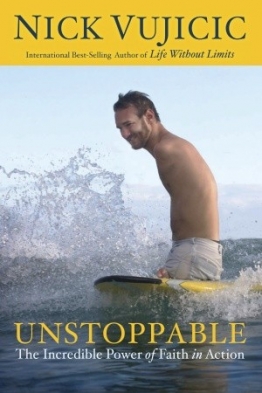
In Nick Vujicic’s book Unstoppable (you can read my book review by clicking here), he is very transparent about his thoughts of suicide. He wrote—
“My youthful self-acceptance and self-confidence did not begin to crumble until I began relentlessly comparing myself to my peers. Then, instead of taking pride in what I could do, I dwelled on those things my mates could do that were beyond my abilities. Instead of seeing myself as enabled, I saw myself as disabled. Instead of taking pride in my uniqueness, I yearned to be what I was not.”
According to the World Health Organization, the rate of suicides has increased dramatically, and is now the third leading cause of death for fifteen- to twenty-four-year-olds. I had a friend that committed suicide, and it wasn’t until after the fact that I could put together the warning signs that he had been exhibiting.
Nick lists some indicators that someone close to you might be depressed enough to harm themselves:
Unusual changes in eating and sleeping habits
Withdrawal from friends, family, and regular activities
Violent actions, rebellious behavior, or running away
Excessive drug and/or alcohol abuse
Unusual neglect of personal appearance
Marked personality change
Persistent boredom, difficulty concentrating, or a decline in school performance
Frequent complaints about physical symptoms, often related to emotions, such as stomachaches, headaches, and fatigue
Loss of interest in favorite activities
Intolerance of praise or rewards
Giving or throwing away favorite possessions or belongings
Becoming suddenly cheerful after an episode of depression
From Nick’s own experience, he offers these helpful words—
“Often individuals in distress don’t want to talk about their issues. Don’t push it, but keep the communication open without offering advice or judgment. Just being there for them, hanging out with them, and letting then know you care can make a difference. You don’t have to solve their problems unless you are a mental health professional. …
“Sometimes it won’t be easy to stand by a friend or loved one who is dealing with despair or depression. Your loyalty will be tested. You may feel hurt, slighted, or abandoned. I would never suggest that you allow someone to mistreat you. If that happens, maintain a safe distance, but do whatever you can to help. That may mean simply being there for those who are hurting, listening to them when they are willing to talk about their concerns, and assuring them that they are loved and valued by reminding them that other people care about them. If you sense that someone is more troubled than you are equipped to handle, you should contact a guidance counselor, a trusted clergy member, or a medical or mental health professional and seek his or her advice on what to do.”
If anyone around you is exhibiting any of these signs, please reach out to them in love. It would be much better to have a friend tell you, “I’m okay, but thanks for asking,” than for you to miss an opportunity to save someone’s life.
Contact the National Suicide Prevention Hotline online or call them at (800) 273-8255.
How do you feel this morning? Are you still feeling good from your day yesterday? I sure hope you are!
Did you know those good feelings are more from your thoughts than they are from anything else? Check out this insight from Jon Gordon—
“Research shows that grateful people are happier and more likely to maintain good friendships. A state of gratitude, according to research by the Institute of HeartMath, also improves the heart’s rhythmic functioning, which helps us to reduce stress, think more clearly under pressure and heal physically. It’s actually physiologically impossible to be stressed and thankful at the same time. When you are grateful you flood your body and brain with emotions and endorphins that uplift and energize you rather than the stress hormones that drain you.”
Listen to the podcast of this post by clicking on the player below, and you can also subscribe on Apple, Spotify, or Audible.
How many friends do you have? I don’t mean your “friend count” on Facebook, because you and I both know that some of your “friends” aren’t really those people with whom you would share confidential information.
No, I mean real friends.
There were few people as well-known in his day as the apostle Paul. His missionary journeys took him all over the place. The stories he could tell about his adventures would keep an audience glued to their seats. He knew church leaders and governmental officials. He planted churches and trained pastors. If ever there was someone that would have had a full list of friends on Facebook, it would have been Paul.
Yet here’s what he writes to the church at Philippi:
I have no one else like Timothy, who takes a genuine interest in your welfare. For everyone looks out for his own interests, not those of Jesus Christ. (Philippians 2:20-21)
Yet when Paul says. “I have no one like him,” he uses a Greek word only used once in all of Scripture. The King James Version translates this word likeminded. This word means equal in quality and quantity of soul.
In other words, of all of the people that would be considered a “friend” of Paul, only one—Timothy—did Paul call likeminded: someone who was Paul’s equal in soul.
If that type of friendship was rare for Paul, how much more so for you and me?
God may only bring one likeminded friend into your life (as He did with Paul). If you have that one likeminded friend, cherish that relationship and give God thanks for it! How blessed we are when we have a friend we can call likeminded!
This is a weekly series with things I’m reading and pondering from Oswald Chambers. You can read the original seed thought here, or type “Thursdays With Oswald” in the search box to read more entries.
A Friend Of God & Enemy Of The World
The Bible says that “God so loved the world, that He gave His only begotten Son…,” and yet it says that if we are friends of the world we are enemies of God. “Know ye not that the friendship of the world is enmity with God?” (James 4:4). The difference is that God loves the world so much that He goes to all lengths to remove the wrong from it, and we must have the same kind of love. Any other kind of love for the world simply means we take it as it is and are perfectly delighted with it. … It is that sentiment which is the enemy of God. Do we love the world in this sense sufficiently to spend and be spent so that God can manifest His grace through us until the wrong and the evil are removed?
Do I love the world the way God so loves the world?
Am I willing to let Him use me to change the world?
Am I willing to spend and be spent for God’s glory?
Jesus said, “You are salt and light.” But my salt does the world no good at all unless I allow the Holy Spirit to shake it out of me. And the light doesn’t benefit anyone if my apathy is not allowing the love of God to shine brightly through my life.
I must be a friend of God and an enemy of the evil in the world which keeps anyone from coming into a relationship with Him.
When do people typically ask you to pray for them? My guess it’s when things aren’t going so well for them.
How about you? When do you usually ask others to pray for you? When things are going well, or when you’re in a tough spot.
Why is it that we usually only think about prayer for sick friends or for friends in desperate need?
The apostle Paul wrote a letter to the Christians at Ephesus to encourage them. This church, as far as we know, wasn’t asking Paul for advice, and they weren’t facing intense persecution. They were mostly a spiritually healthy group.
So Paul wrote this to his healthy friends—
I have not stopped thanking God for you. I pray for you constantly. (Ephesians 1:16)
Paul went on to share with us his prayer for strong, spiritually healthy people (vv. 17-22). He asked God to make his healthy friends even stronger. He asked God to give them:
a super-abundance of the Holy Spirit
more wisdom and revelation
deeper intimacy with God
greater hope
greater power
and more strength
I’m not suggesting we stop praying for people in need. We definitely need to keep doing that. But perhaps it’s time to make a list of your healthy friends, and ask God to give them even more of Himself!
This is a weekly series with things I’m reading and pondering from Oswald Chambers. You can read the original seed thought here, or type “Thursdays With Oswald” in the search box to read more entries.
Publicly Holy
Try and develop a holy life in private, and you find it cannot be done. Individuals can only live the true life when they are dependent on one another. …
In the early Middle Ages people had the idea that Christianity meant living a holy life apart from the world and its sociability, apart from its work and citizenship. That type of holiness is foreign to the New Testament; it cannot be reconciled with the records of the life of Jesus. The people of His day called Him “the Friend of publicans and sinners” because He spent so much time with them.
He didn’t tell us to separate, but to season and shine.
We cannot influence people from a distance. We must live and work and interact where they are.
Jesus taught us: “Let your light shine before men, that they may see your good deeds and praise your Father in heaven.” (Matthew 5:16)
Jesus prayed for us: “My prayer is not that You take them out of the world but that You protect them from the evil one. … As You sent Me into the world, I have sent them into the world. (John 17:15, 18)
I must be around people who need to see The Light.
Each month I am so honored that the Solon Township officials invite me back to offer a simple invocation at the beginning of their trustee meetings. I really enjoy doing this!
I pray a short, simple prayer. It is always based on a passage of Scripture, and it is typically a prayer asking God to give our township officials wisdom in all of their deliberations. But something interesting happens each month. After I conclude my prayer, they say, “Thank you.” In other words, they feel I have done something kind for them.
And I have: I have asked God to guide them, to help them, and to bless our township through their efforts. Prayer is one of the most powerfully kind things we can do for someone else.
“Prayer molds us into the image of God, and at the same time tends to mold others into the same image just in proportion as we pray for others.” —E.M. Bounds
When a coworker tells you about a situation in their life, offer to pray for them. Right on the spot.
When a friend share about their illness, say, “Can we pray right now?”
When your pastor tells you about a tough situation, offer to pray right then for God’s discernment.
When a friend is grieving, pray for God’s peace in their life.
Praying for them is powerful, and kind, and God-honoring.
Listen to the podcast of this post by clicking on the player below, and you can also subscribe on Apple or Spotify.
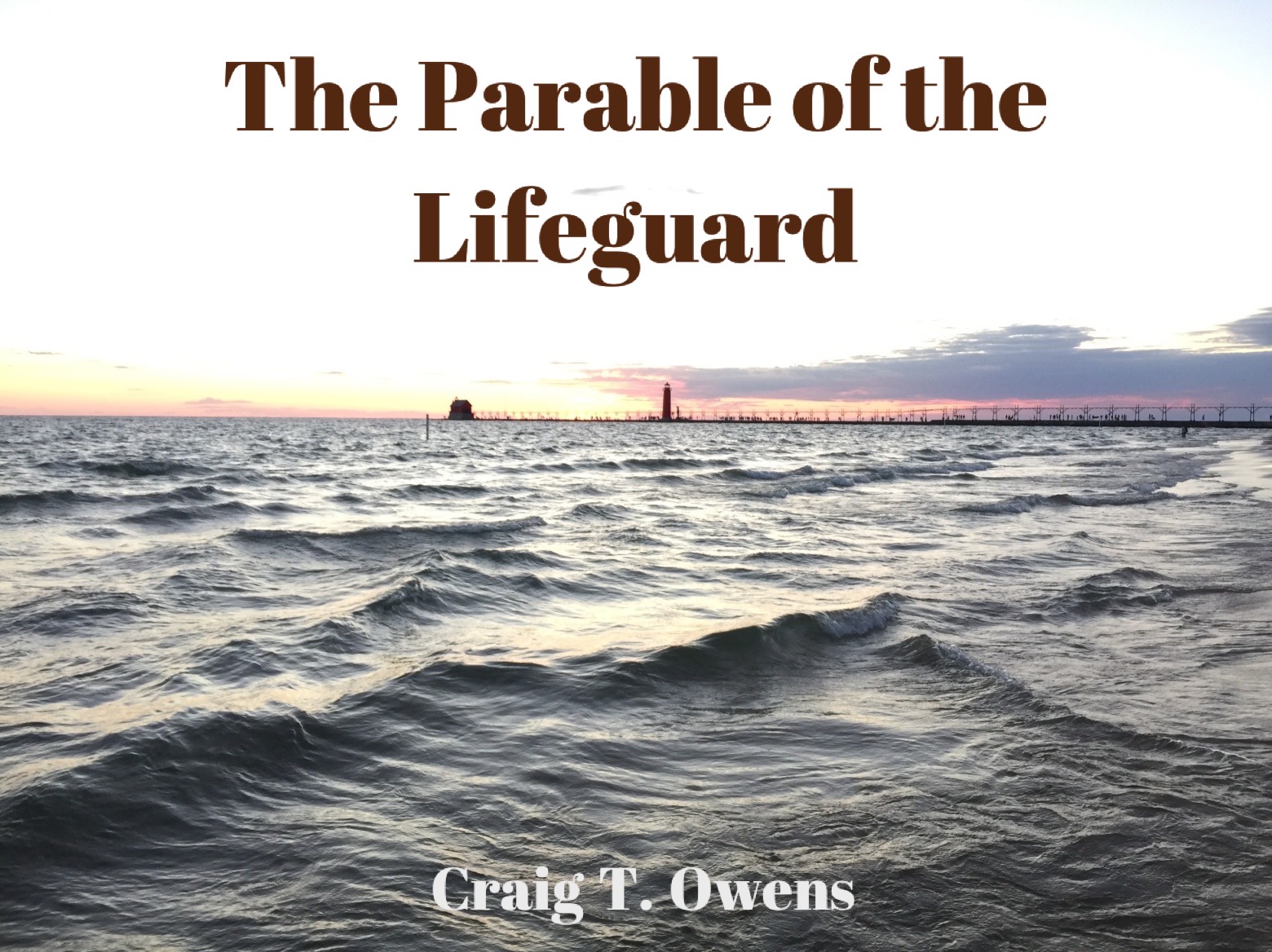
The waters looked choppy, the waves seemed so strong, and the rocks where the surf crashed on the shore seemed like cruel, dull, black teeth. And who knew what was under the surface of the water that I couldn’t see? Just the thought of swimming in those murky gray-green waters made my stomach twist into knots! But my friend announced, “I’m going for a swim.”
I tried to talk him out of it, “You’re joking, right? Do you realize how dangerous that is?”
“Relax,” my friend tried to reassure me with an unconvincing smile, “I know what I’m doing. I’ve swum in waters like these before, lots of times. I can handle it.” He headed off toward that pounding, angry sea with what seemed to be a swagger of confidence, but there was something in his eyes that seemed to be silently imploring me, “Please, save me!”
My friend had been going through a rough patch. His business which started out so well was now on the brink of closing in this crummy economy. Instead of realizing there was not much he could do in this downturn, my friend began to think that he was the failure. Recently at church—where turning from one’s sordid past is supposed to be celebrated—some scoundrels dredged up his past and used it as a cruel weapon against him. These mean-spirited, unforgiving people were jealous of my friend’s success in allowing Jesus to help him turn his life around. My friend did nothing wrong, but the spiteful words of these hypocritical church-attendees made him relive his forgiven past. Although he didn’t say it, I knew these hurtful words caused him to second-guess his value to God. And now, just last week, my friend happened to be in the wrong place at the wrong time and was charged by the police with a minor misdemeanor. No jail time nor fines were going to be imposed on him, just a few hours of community service. But yet again my friend’s self-esteem took a hit as he walked through this embarrassing process.
So now here he is feeling beat up, thinking to himself, “I’m a worthless failure,” walking toward something dangerous. I can’t understand why. Is he trying to escape reality? Does he really feel that poorly about himself? Doesn’t he see how much his wife and his friends love him? Does he feel so dead inside that this dangerous behavior makes him feel something again? Or does he feel too much and this dive into risky waters is merely an attempt to numb the pain, to self-medicate away the accusing thoughts?
While I was contemplating all of this, I didn’t realize what my friend had done. He had not only reached the shore and waded into the swirling waters, but he was now bobbing quite far from shore. All I could see was his head and shoulders. And his blank, lifeless, passionless face.
He seemed to be bobbing further and further away from me, and closer and closer to those vicious teeth-like rocks.
I ran down to the shore, as close to that angry ocean as I could get, and yelled. I don’t know whether he was ignoring me or couldn’t hear me, but he didn’t respond. He bobbed farther away and I yelled louder and waved my arms. I pointed at the rocks looming closer and closer with every swell of the sea. I screamed until my throat was raw. He drifted farther from me. He waved. And I heard just two distinguishable syllables above the pounding surf and howling wind, “…okay….”
“Okay?! Do you think it’s okay?! You’re killing yourself! It’s not okay!” My friend’s face changed. No longer was it a blank stare, there was emotion there now. I blinked my eyes against the spray of the ocean; I looked intently at my friend’s face. Then I saw it etched in the lines on his forehead. I saw it in his eyes. Panic!
I stared at him, my mind racing what to do. And then I heard it: two more syllables distinguishable above the roar. Two syllables that shot me into action: “Help me!”
I frantically looked around and spotted a tattered, faded orange life vest. It was really only half a life vest, but at least it still floated. It was tangled in seaweed and stained with muddy sand. I grabbed it, ran toward the shore, and flung the life vest toward my friend. It wasn’t a very good throw. Whether it was the wind or my weak attempt, the orange vest didn’t get very close to him. But even so, what was more disturbing was that my friend didn’t even make a movement toward it.
I got frustrated and stomped my foot in anger. Angry at my poor first attempt at a rescue, and angry that my friend made no attempt to reach out for what I had thrown him. I looked around again. I spotted an unattended lifeguard station 75 yards away. I raced to it and found an intact white life ring with a bright red cross emblazoned on it. I grabbed the life ring, sprinted back as close to my friend as I could get, and heaved the life ring as far as I could. It flew through the air. It seemed unimpeded by the wind, and landed within a few feet of my friend! The white and red ring stood out clearly in the dark waters!
I almost let out a shout of victory! Salvation for my friend was within arm’s reach of him! Yet my friend didn’t move. He wouldn’t reach for the help that was right there.
“Does your friend need help?” a strong voice behind me asked.
I wheeled around to see a tall, athletic man. A Lifeguard! “Yes! Yes, he needs help!”
The Lifeguard looked out across the churning waves and saw my friend getting closer and closer to those jagged rocks. It seemed like the next swell of the sea would dash him on those black sea-teeth. “Yes,” the Man said, “I can help him.”
My heart leaped and then seemed to stop in the very next heartbeat. The Lifeguard wasn’t moving. He just stood there looking at my friend.
“I can help him,” he repeated, “If he will simply ask for My help.”
“He did ask for help,” I argued. “I’ve been trying to help him.”
“No, he really doesn’t want help,” the Lifeguard said. “I can save him, but he has to ask Me to do it. And,” he added turning to look at me, “you have to leave.”
“What? He’s my friend! I’m not leaving him!”
“If he is your friend, you have to. You have to love him enough to leave him to Me. He’s been here before, and I have rescued him before. But as long as you’re here throwing flotation devices to him he will keep the rescue attempts alive without ever actually allowing himself to be rescued. The most loving thing you can do for your friend is leave him to Me.”
“How long?” I asked quietly, knowing in my heart that noble Lifeguard was right.
“That all depends on him,” the Lifeguard said. “As soon as you leave, that may get his attention and he may call out for My help immediately. Or he may wait until things get even more desperate. It’s his choice. I am the only One who can save him from this surf now. But he must call on Me before he is smashed on the rocks. I will not leave this spot. I will not sleep or become distracted. I will never leave your friend because I love him. I love him even more than you love him. So the sooner you leave him to Me, the sooner he can cry out for My help.”
I stood there weighing the Lifeguard’s words. I knew He was right, yet I didn’t want to leave my friend. And then He repeated, “The most loving thing you can do for your friend is leave him to Me.”
So I walked away.
That was last night. No word from the Lifeguard or my friend yet. I’m still waiting—and praying—that my friend will cry out for help to the only Lifeguard that can save him now.
I did the most loving thing I could have done. I left my friend to Him.
Have you read it? I’ve certainly heard lots of people reference it, and I’ve seen other authors quote portions of this classic work. But honestly I hadn’t read it for myself. I had sort of assumed that I knew all that was in this book just because I had read so many snippets from others.
But I was wrong. Dead wrong. Now I’m almost kicking myself for having waited so long to read this. The principles in this classic about how to deal with people in the right ways would have saved me a lot of grief. Who knows, it may have even helped me to win more friends and perhaps even influence more people. But it’s never too late to start.
I love this Carnegie thought: “Do you know someone you would like to change and regulate and improve? Good! That is fine. I am all in favor of it. But why not begin on yourself? From a purely selfish standpoint, that is a lot more profitable than trying to improve others—yes, and a lot less dangerous. So I’m beginning on myself.”
If you haven’t read this classic, get it, read it, and begin to improve your relationships.