White As Snow

As I watch the snow falling outside today, slowly covering everything in a pure, unblemished whiteness, the same thought enters my mind every year at the first snowfall. God says,

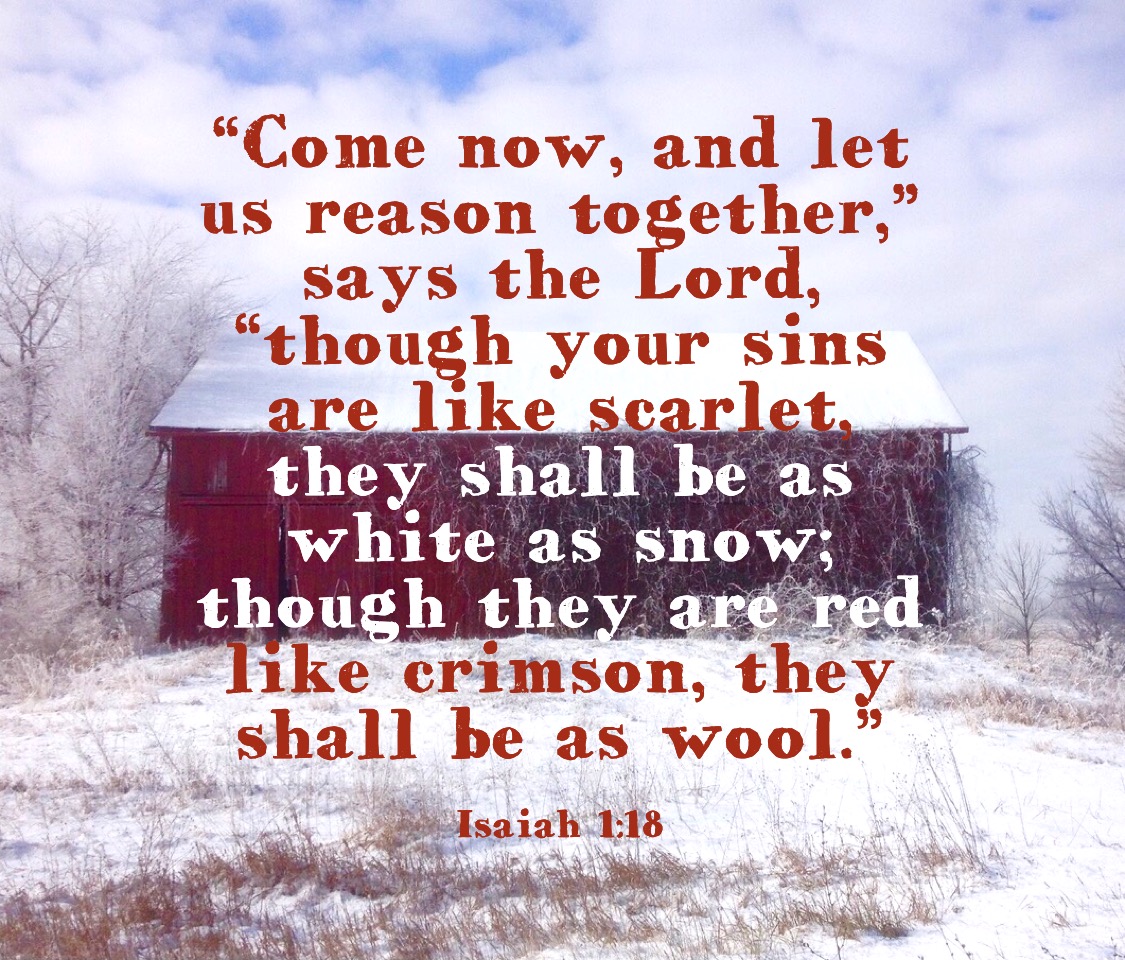
Learn to do good. Seek justice. Help the oppressed. Defend the cause of orphans. Fight for the rights of widows. “Come now, let’s settle this,” says the Lord. “Though your sins are like scarlet, I will make them as white as snow. Though they are red like crimson, I will make them as white as wool.”

And this line from the great old hymn,

My sin, O the bliss of this glorious thought, my sin, not in part, but the whole, is nailed to the Cross and I bear it no more. Praise the Lord, praise the Lord, O my soul!

Doing good, seeking justice, helping the oppressed, defending orphans, and fighting for widows doesn’t cleanse my crimson sin, but when my sin has been covered I DESIRE TO do these things!

What do you think of the snow?

What do you think of God’s incredible whiteness applied to your life?

Permission To Speak Freely (book review)

I was first introduced to Anne Jackson’s writings through her blog. Something about the raw honesty in the way she wrote was instantly both compelling and confronting. When Mad Church Disease came out, I devoured it in a couple of days. With Permission To Speak Freely, I couldn’t put it down, finishing it the first day I received it.

I say that Anne’s writing is both compelling and confronting. Compelling because her words create in me a desire to want to be the kind of Christian that loves people and embraces them just as they are, just as Jesus showed us. And confronting because I know I am so far away from this.

Permission To Speak Freely addresses a real problem in the church: we don’t let people speak freely. At least, not people with “problems.” People who appear to have their act together, who know how to quote Scripture left and right, who never have a bad day, who always say and do the right things, those are the kind of people that can speak up in our churches. But those who are asking the tough questions, those who are hurting, those who aren’t sure Jesus is for them, those who don’t know how to “behave” in church, those are the kind of people who need to keep quiet. Tough words, I know; but sadly, they are true more times than not.

Anne goes first. She steps out from behind the I’ve-got-it-all-together façade and tells us what sort of struggles she had and has. She gives us “the Gift Of Going Second.” She breaks the ice, she pulls down the churchy barriers so that the rest of us can say, “Yeah, that’s me too.”

Part of this book reads like Anne’s memoirs. But then there’s the poetry, and the artwork, and the handwritten postcards with real people confessing real hurts and real questions. This book grabbed my heart and made me take a hard look at how I expect people to act in church. My kids are PK’s (preacher’s kids) just as Anne was, so I had to take a look at my expectations for them. I confronted my expectations for the families and individuals in our congregation.

I believe that is what this book will do most for you: cause you to confront the way you’ve always believed people should act in church. I looked at myself, and I found myself needing to extend more grace. Thanks, Anne, for being transparent enough to get me to take an honest look at my own life.

I highly, highly recommend this book to you.

I am a Thomas Nelson book reviewer.

Lamenting Over The Fallen

How The Mighty Have Fallen! Long before Jim Collins entitled his latest book with this phrase, David said this when King Saul and Prince Jonathan were killed in battle. In fact, he said it not once, but three times in just eight verses.

It is understandable that David would lament the death of his friend Jonathan. They were covenant brothers, they shared the same heartbeat for God and for Israel, and they stood by each other through thick and thin.

But Saul? Why would David lament the death of Saul? This is the man who was jealous of David. So jealous that he did everything he could to trip David up. Including trying to kill him. Saul chased David from his home, from his family, from his wife, even from his country.

Why would David lament Saul’s death? Wouldn’t it be more appropriate to rejoice over it?

But David still saw Saul as “the Lord’s anointed.” David recognized the good in Saul. He called him…

  • the glory of Israel
  • a successful warrior
  • gracious
  • lovable
  • strong
  • Israel’s provider

When David heard Saul had been killed, he lamented, Oh, how the mighty have fallen!

When I see the mighty, God-anointed leader fall, do I lament?

I may shake my head, I may feel vindicated, I may be disgusted, but I don’t know that I have ever lamented or grieved when one of these mighty brothers has fallen. Or if I have, my lament has been short-circuited by other less appropriate emotions.

Despite their sin, they are still God’s anointed.

Who am I to sit in judgment? Who am I to do anything but lament their fall?

Lord, forgive me! Father, help me to see Your anointed ones in the proper perspective: as Your anointed. Holy Spirit, remind me of the tragedy of even one mighty one who falls. May my response be one of lament, and mercy, and prayer.

Judge Or Father?

I’m still thinking about the powerful worship time we had in our Impact youth service on Wednesday night. I can’t think of another way to describe it, except to say that it was intimate.

We sang a song written by Michael Gungor called Wrap Me In Your Arms. The lyrics are simple:

There is a God who loves me
Who wraps me in His arms
And that is the place where I’m changed
And that’s where I belong

Take me to that place, Lord,
To that secret place where
I can be with You
You can make me like You
Wrap me in Your arms

Far too many people view God as a Judge. Make no mistake, God will judge all of humanity at the end of the age, but in the meantime, Scripture portrays God as a loving Father who wants to wrap us in His arms.

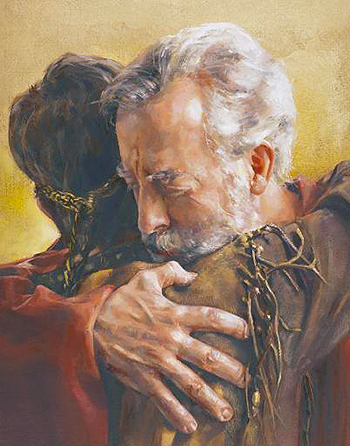
I love the picture in the story Jesus tells of the prodigal son: The young man who ran away from his father and squandered all of the wealth he had taken with him. When he reached the end of his rope, the wayward son turned toward home. If you were thinking of returning home after embarrassing your father and throwing away his money, would you want to return to a judge or a father?

The young man did turn toward home, and his father ran to him and wrapped him in his arms! How amazing!

On Wednesday night I encouraged our youth group to simply stretch their arms out toward their Heavenly Father and feel Him wrap them in His arms. It was so special to see tear-streaked cheeks and outstretched arms in the loving embrace of a God who loves anyone who turns to Him. Awesome!

I encourage you to do the same.

If you’ve blown it … if you feel distant from God … if you feel like you’ve let Him down … if you feel like you’ve embarrassed Him … see Him as a Father who is longing for you to return to Him. He will not judge you, but He will wrap you in His arms and make everything new.

If you wait until your life here is over without ever turning to God, then you will have to face God the Judge. Don’t wait! Embrace God your Father today.

Is Today Your Last Day With Us?

Okay, this seems a bit bizarre: God tells Moses, “Get Aaron and his son Eleazar and bring them with you up to Mount Hor. I want you to transfer the office of high priest from Aaron to Eleazer. And then Aaron is going to die on the mountain.”

Seriously!

Anyone reading this post knows their birth date, but none of us knows his or her death date.

Aaron did.

What do you think he did with his last few hours?

  • Did he need to apologize to someone? Ask their forgiveness?
  • Did he need to make amends?
  • Pass along some vital information to Eleazer?
  • Say “I love you” to someone dear to him?
  • Give one last kiss? One last embrace?

James wrote, “How do you know what your life will be like tomorrow? Your life is like the morning fog—it’s here a little while, then it’s gone” (James 4:14).

You and I don’t know what our death date will be, so our best bet is to live today like it’s our last day. What do you need to do with your last few hours?

  • Are you ready to meet God?
  • Do you need to ask Christ to forgive your sins?
  • Is there someone who needs your forgiveness?
  • Do you need to make something right somewhere?
  • Is there vital information you need to share?
  • Does someone need to hear “I love you”?
  • Who do you need to hug or kiss?

Don’t wait for tomorrow, because tomorrow may never arrive. Live today like it’s your last day. Because it may very well be your last day with us.

Liberal Forgiveness

I was reading about how Moses and God responded to the grumbling of the Israelites. After the twelve spies came back from sniffing around Canaan, only two of the spies said, “It’s all good. Let’s go!” The other ten said, “Yeah, it’s good, but there are too many giants for us to be successful.” These ten were able to persuade all of the Israelites to say to Moses, “We don’t want to go any further with you. Take us back to Egypt!”

God spoke out and said, “Stand aside, Moses. I’m going to destroy all of these ungrateful, rebellious people and begin again with you.”

But Moses stepped forward to intervene. He reminded God that He was slow to anger, abounding in love and forgiving sin and rebellion.

And then comes this amazing response from God: “I have forgiven them, as you have asked.”

Did you catch that?

The depth of forgiveness was exactly as Moses had asked!

Forgiveness doesn’t mean that the consequences for sin are removed. God said, “I have forgiven them, nevertheless they are still not going to be able to enter the Promised Land.”

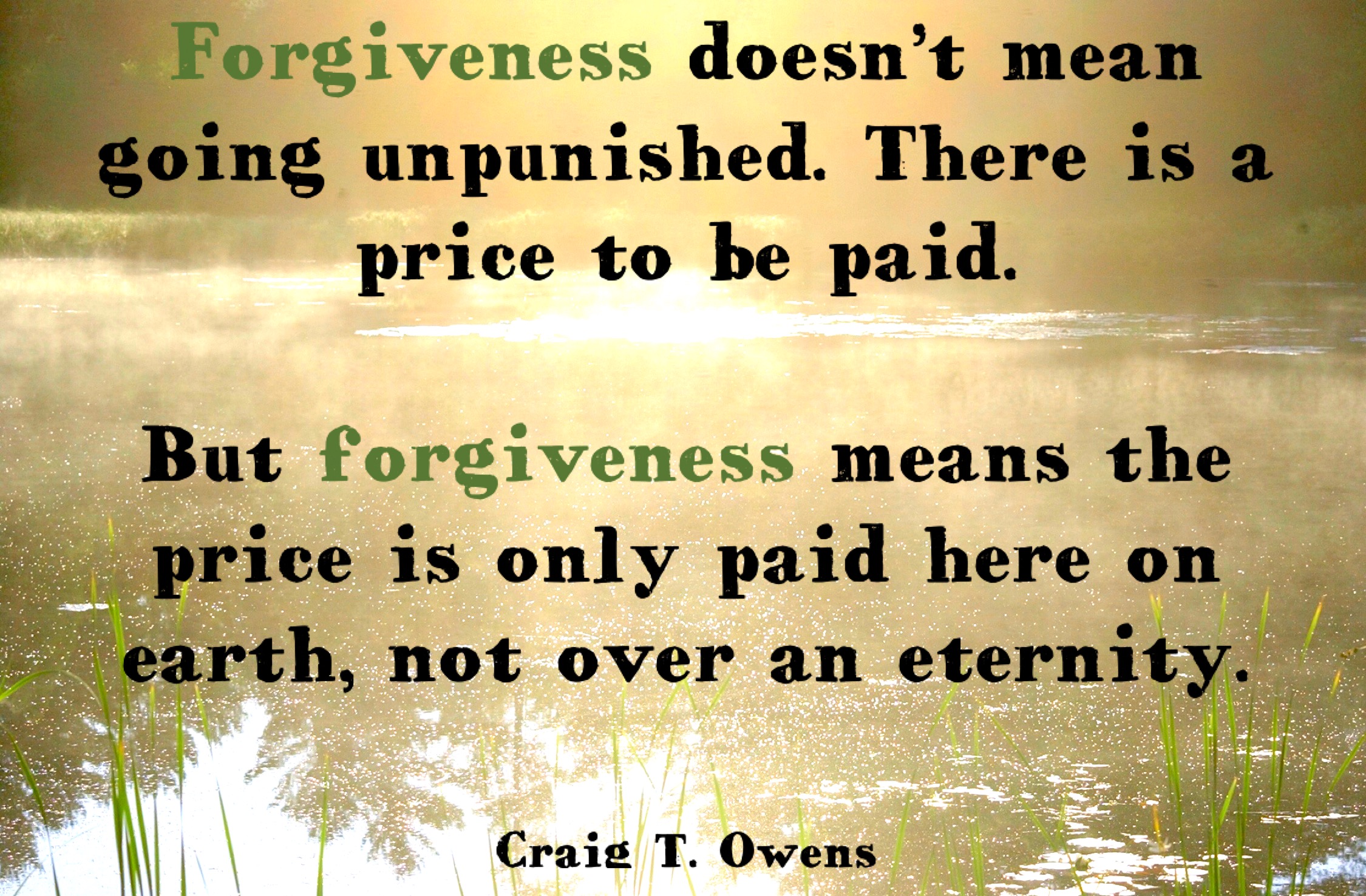
Being forgiven doesn’t mean going unpunished. There is a price to be paid. But forgiveness means the price is only paid here on earth, not over an eternity.

How liberally and deeply and completely do YOU want to be forgiven? Whatever that level is, ask God to just as liberally and deeply and completely forgive OTHERS. Hear Him say, “I have forgiven them, just as you have asked.”

What’s So Good About Good Friday?

Good Friday? Good for whom?

For you and me? Yes.

Good for Jesus, no. It was Bad Friday for Him, wasn’t it?

Or was it?

The writer of Hebrews says, “For the joy set before Him, Jesus endured the Cross, scorning its shame.”

What joy?

It was for the joy of what was nailed to the Cross.

So what exactly was nailed to the Cross?

Isaiah records an usual statement from God –

Comfort, comfort My people, says your God. Speak tenderly to Jerusalem, and proclaim to her that her hard service has been completed, that her sin has been paid for, that she has received from the Lord’s hand double for all her sins.

That seems unfair! We receive double (!) for our sins! Here’s a brief video where I explain what this means culturally –

Only when invoices were paid-in-full did they get doubled-up.

The Bible tells us that we’ve all sinned, and that the invoice or penalty for our sin is death. We have the IOUs of sin nailed to the door of our heart where God says “You owe Me your life!” But we cannot pay this debt by ourselves.

But Jesus can. And Jesus did! Check this out –

He personally carried our sins in His body on the Cross…. (1 Peter 2:24, NLT)

Having cancelled and blotted out and wiped away the handwriting of the note with its legal decrees and demands which was in force and stood against us. This He set aside and cleared completely out of our way by nailing it to His Cross. (Colossians 2:14, AMP)

That’s what is good about Good Friday. Jesus knew that taking our sins on His body, and then allowing His body to be nailed to the Cross, would double-up and nail-down our sin once and for all!

When Jesus said, “It is finished!” He was really saying, “It is was paid-in-full!”

Tiger Woods & I Have Something In Common

One part of Tiger Woods’ statement stood out to me this morning:

“I knew my actions were wrong, but I had convinced myself that normal rules did not apply … I thought only about myself…  I thought I could get away with anything I wanted to. … I thought I was entitled….”

This hits me right between the eyes. Because that sounds like… me.

And probably you, too.

I think the biggest stumbling points into sin are:

  • “This won’t hurt me.”
  • “I can handle it.”
  • “I deserve it.”

Tiger’s fame magnified what he did, but only in the eyes of our media and culture. In God’s eyes, my sins are just as painful as Tiger’s. In God’s eyes, my sins hurt my relationships with Him and with others as much as Tiger’s. But here’s the great truth for Tiger Woods, for me, and for you:

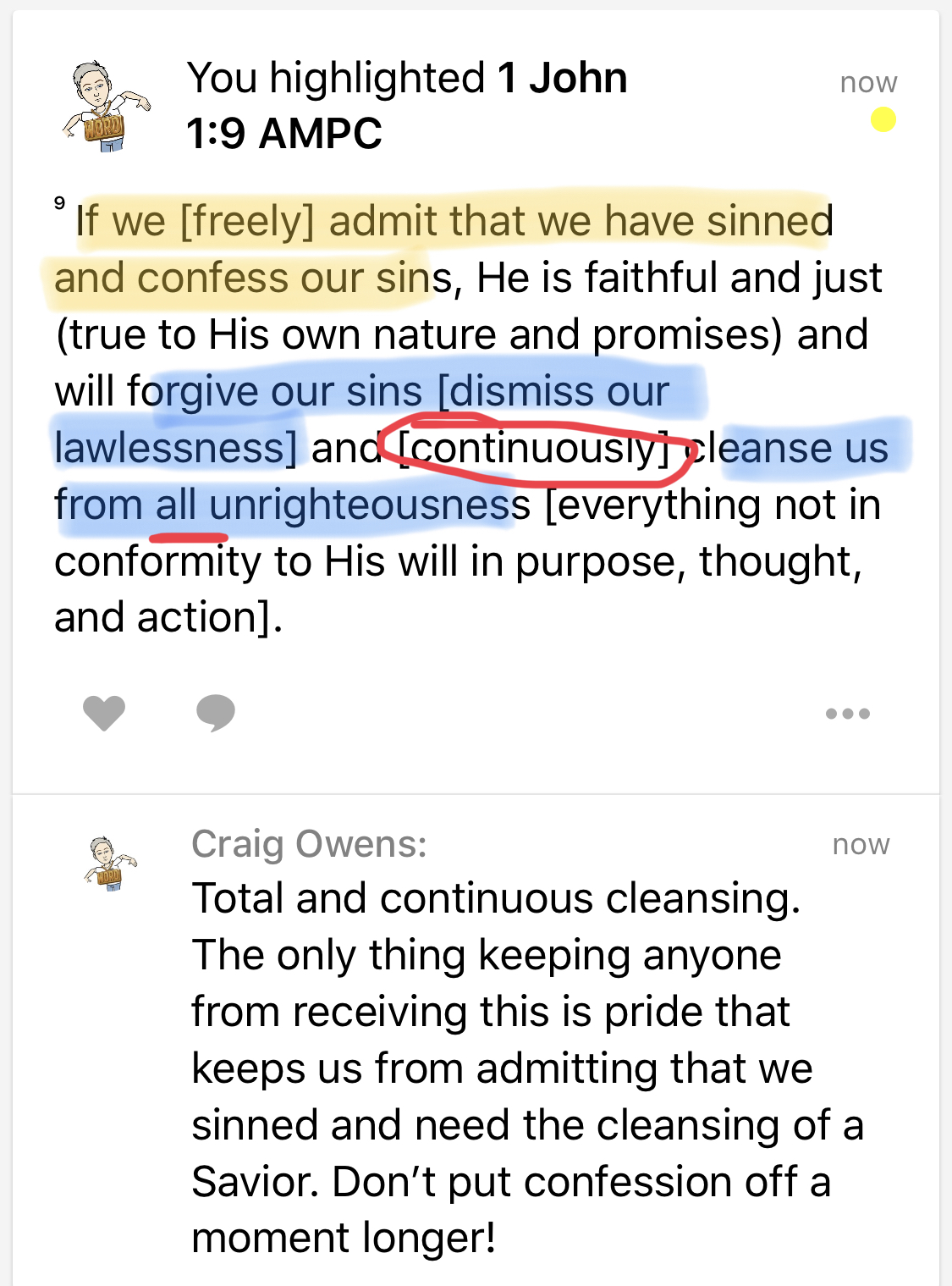
But if we confess our sins to Him, He is faithful and just to forgive us our sins and to cleanse us from ALL wickedness.

I’m glad that I can be forgiven!

Life’s Hardest Work

I’ve been reading through the life of Joseph in the Bible. If anyone had a lot to forgive, it was Joseph:

  • Sold out by his own brothers
  • Falsely accused and imprisoned
  • Forgotten in prison
  • Waiting years and years for God’s promise

Yet, he forgave so fully and so freely. Forgiveness isn’t easy. In fact, it may be one of the hardest things to do.

Here are a few quotes I’m mulling about forgiveness:

“We all agree that forgiveness is a beautiful idea until we have to practice it.” —C.S. Lewis

“For we find that the work of forgiveness has to be done over and over again. We forgive, we mortify our resentment; a week later some chain of thought carries us back to the original offense and we discover the old resentment blazing away as if nothing had been done about it at all. We need to forgive our brother seventy times seven not only for 490 offenses but for one offense.” —C.S. Lewis

“The glory of Christianity is to conquer by forgiveness.” —William Blake

“The weak can never forgive. Forgiveness is an attribute of the strong.” —Mahatma Gandhi

“Forgiveness is love’s toughest work.” —Lewis Smedes

It is hard work, but the results are so worth it. Don’t let your life be controlled by someone who wronged you in the past. Forgive them and free yourself.

He Gave His Own Blood

I just read an amazing story about a West Michigan doctor working in Haiti. You can read the full article here, but let me highlight one section:

At a small health clinic east of capital city Port-Au-Prince, a teenage boy with a broken pelvis was dying from loss of blood.

West Michigan orthopedic surgeon Gregory Golladay sized up the options, then acted.

“He was the same blood type as me. He had a hemoglobin level of 5. You don’t have that and live long. His heart rate was 150. His blood pressure was 80 and going south. He was going to die.”

“I gave as much as I could into an IV bag and he lived,” recalled Golladay, 39, who is among a rotating group of physicians from Orthopedic Associates of Michigan offering critically needed medical care in Haiti.

“It is indescribable really. To see him survive was a very emotional experience. We said we were brothers and I believe it.”

Sounds just like Jesus, doesn’t it?

We were dying. Crushed by sin. There wasn’t much time left. Then Jesus came to earth to die on a Cross for you and me. He gave us His blood so that we could live:

For God so loved the world that He gave His one and only Son. That whoever would believe on Him should not die but have everlasting life. (John 3:16)

And now, when we accept what Jesus did for us, we are His brothers and sisters:

God decided in advance to adopt us into His own family by bringing us to Himself through Jesus Christ. This is what He wanted to do, and it gave Him great pleasure. (Ephesians 1:5)