Responding For Those Who Can’t

Do you know what empathy is? It’s not the same thing as sympathy. Sympathy is just wallowing with someone who is hurting, but empathy goes beyond that. Empathy is a compound word:

em- + -pathos = joined + feeling 

I feel what you feel, but I can respond like you should even when you think you can’t.

Sometimes people get paralyzed by their deep hurts, or crushing depression, or infuriating anger. Someone in sympathy feels the pain, the depression, the anger, but their involvement stops at the feeling stage.

Someone in empathy feels the hurt AND responds in an appropriately healthy way.

Check out what Paul wrote:

Who is weak without my feeling that weakness? Who is led astray, and I do not burn with anger? (New Living Translation)

When someone gets to the end of his rope, I feel the desperation in my bones. When someone is duped into sin, an angry fire burns in my gut. (The Message)

Paul took those feelings his friends and loved ones were experiencing and he turned them into positive action. This is challenging and desperately needed.

Sympathy is easy; empathy is hard work.

Sympathy keeps people paralyzed; empathy helps them move forward.

Sympathy enables people to remain unchanged; empathy gives people a healthy way to respond.

If you want to help your hurting, discouraged, or angry friend, don’t sympathize with her hurt, empathize to help her heal. By responding in a healthy way—a way she isn’t able to yet—and you will help her move to a place of wholeness.

The Refinement Of Pain

I was recently invited to join a bunch of guys—mostly staff in the Cedar Springs schools—for some early morning basketball. I love playing basketball, I’m a morning guy, and getting to know new people in Cedar Springs made this an invitation I couldn’t refuse. So I started hoopin’ this week. It was nice to get back on the hardwood floor!

Yesterday morning, I jumped in my car to come home to shower. It’s a mile from the school to my house, but by the time I got home, my back muscles had seized up and I was barely able to stand up to get out of the car. I’ve had this happen to me once before, and it’s a whole lot of no fun!

So all day yesterday my schedule had to be modified, as it hurt to move, it hurt to stand for too long, and it hurt to sit for too long. I couldn’t get in the car. In fact, I couldn’t even bend over far enough to put my own socks on! All my plans for the day were shot.

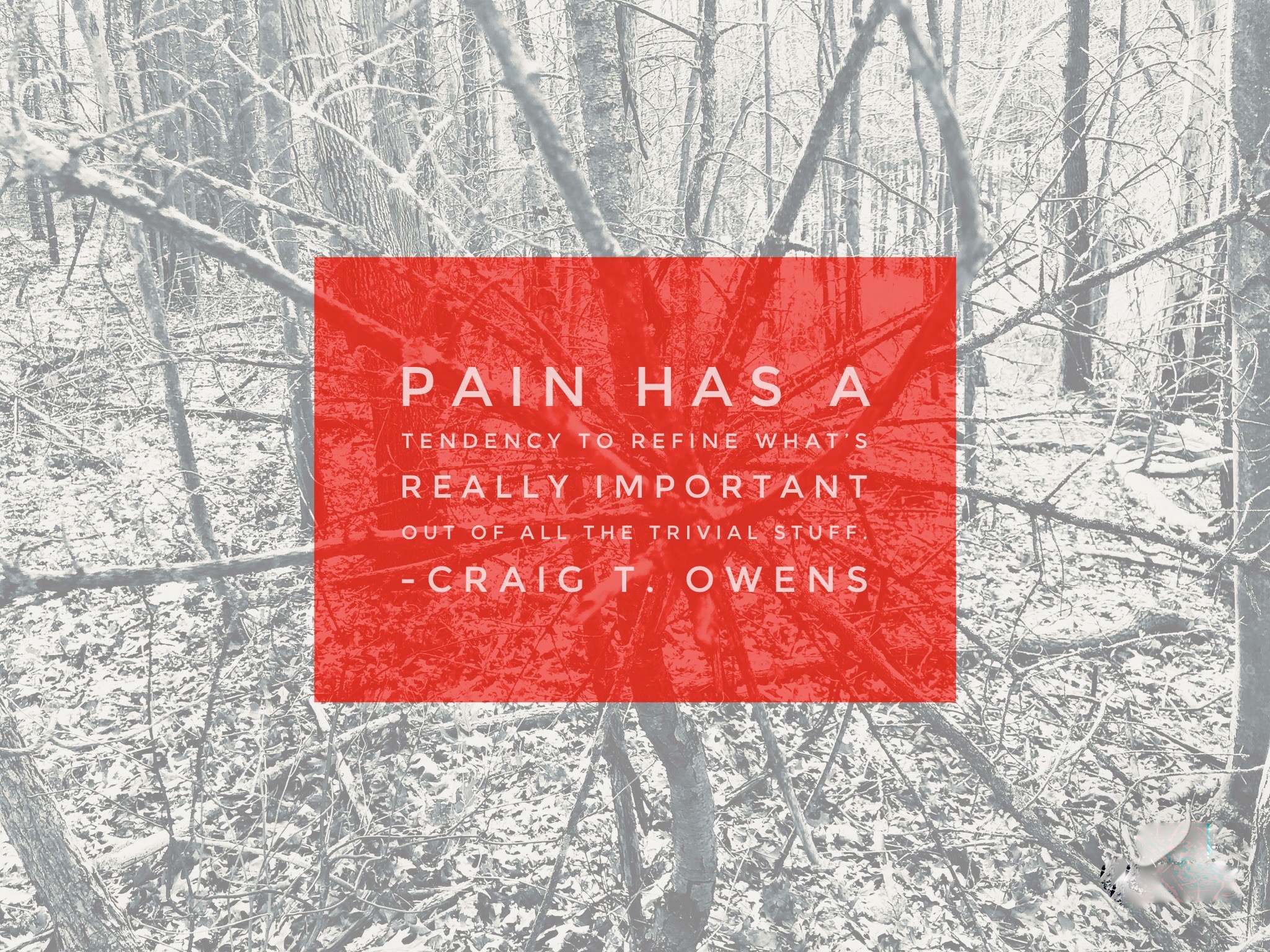
But here’s what I learned: my day wasn’t shot. My plans may not have worked out, but it was still a good day. Pain has a tendency to refine what’s really important out of all the trivial stuff.

  • A day in pain and immobility reminded me of just how blessed I am to normally have good health.
  • It prompted me to pray for others who are confined to a wheelchair or their beds.
  • It gave me greater empathy for those who live in chronic pain.
  • It made me more thankful that I have access to medicines and caregivers, things that some people have access to only rarely.
  • It let me see more clearly the love my family and friends have for me.
  • It gave me more time to pray.

Now here’s the tricky part: to live with these things on my mind even when I’m not in pain.

Here’s what C.S. Lewis wrote in The Problem Of Pain:

I am progressing along the path of life in my ordinary contentedly fallen and godless condition, absorbed in a merry meeting with my friends for the morrow or a bit of work that tickles my vanity today, a holiday or a new book, when suddenly a stab of abdominal [or back] pain that threatens serious disease, or a headline in the newspapers that threatens us all with destruction, send this whole pack of cards tumbling down. At first I am overwhelmed, and all my little happinesses look like broken toys. Then, slowly and reluctantly, bit by bit, I try to bring myself into the frame of mind that I should be in at all times. I remind myself that these toys were never intended to possess my heart, that my true good is in another world and my own real treasure is in Christ. And perhaps, by God’s grace, I succeed, and for a day or two become a creature consciously dependent on God and drawing strength from the right sources. But the moment the threat is withdrawn, my whole nature leaps back to the toys: I am even anxious, God forgive me, to banish from my mind the only thing that supported me under the threat because it is now associated with the misery of those few days. Thus the terrible necessity of tribulation is only too clear. God has had me for but forty-eight hours and then only by dint of taking everything else away from me. Let Him but sheathe that sword for a moment and I behave like a puppy when the hated bath is over—I shake myself as dry as I can and race off to reacquire my comfortable dirtiness, if not in the nearest manure heap, at least in the nearest flower bed. And that is why tribulations cannot cease until God either sees us remade or sees that our remaking is now hopeless.

With God’s help, I’m going to avoid running back to my “toys” today. I’m trying to keep the most important thing in the forefront of my thoughts today.

What lessons have you learned from pain?

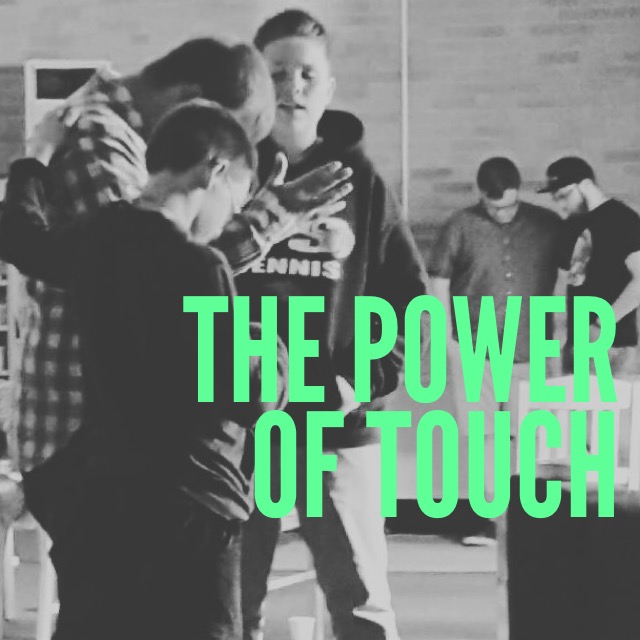
The Power Of Touch

I grew up in a church that believed in the literal “laying on of hands” while praying for someone. I still like to pray that way because I believe there is a power in the human touch.

Science has proven that human-to-human touch helps people feel better faster, lowers blood pressure, and stimulates cognitive development in newborns.

We shake hands with people when we meet them as a sign of acceptance.

We lay our hand on a friend’s arm or shoulder to show we empathize with their pain.

We embrace or kiss a loved one to show affection.

Dr. Paul Brand, a renowned surgeon who worked with leprosy patients in India, said that his hands were his most delicate and most accurate diagnostic tool.

How devastating when we withhold our touch! How crushing when the only time we touch is when we are angry!

  • Think about how much more meaningful our prayers with someone would be if we would just lay our hands on them.
  • Think about how much warmer the greeting would be if we gave someone the two-handed handshake.
  • Think about how much greater our bond with a hurting friend if we simply put our arm around their slumping shoulders.
  • Think about how much deeper the connection with your spouse and children if you held hands more often.

Touch someone today. When you do, you’ll be touching much more than their hand; you’ll be touching their heart. Your touch could make a world of difference to someone today.

Listen To Me

Have you ever been involved in high-level negotiations? The stakes are high. The potential for reward is great, but the chances of crashing-and-burning are also great. Everyone is on their A-game both mentally and emotionally. No one wants to misstep or misspeak.

Sounds like a hostage negotiator, or a government official brokering a treaty, or a business leader finalizing a multi-million dollar business deal, right?

Actually, these high-level, high-stress, high risk-or-reward negotiations happen almost every day. And you’re involved. Whenever you have a conversation with someone where you’re opening your heart to them—or they’re opening up to you—you’ve stepped into a place where wonderful or tragic things can happen.

Think about how your blood pressure rises when you hear…

  • …your spouse say, “We need to talk.”
  • …your boss intercoms you and says, “Will you come into my office.”
  • …your friend says, “This isn’t very easy for me to tell you this, but….”
  • …your coworker says, “You need to sit down for this.”

Here’s a scene from the Bible: Abraham’s beloved wife Sarah has died, and he wants to bury her somewhere special. The problem is, Abraham doesn’t own any land. So for the first time since leaving Ur, he has to negotiate the purchase of land. The Hittites know Abraham is a powerful man. They don’t want to give anything away for free, but neither do they want to anger him. Abraham is a wealthy man. He can probably pay any price for the land, but he doesn’t want to be seen as a sucker.

Let the negotiations begin. Multiple times throughout their conversation a phrase is repeated:

“Listen to me.”

In the Hebrew language, there is nothing unique or noteworthy about these words. But the fact that the phrase is repeated so frequently in so few verses is interesting. In fact, this phrase is only used one other time in all of Genesis.

Both parties are saying, “I realize that one misspoken word here could be hurtful. This is a difficult, touchy subject, but I want it to be a win-win. So don’t just listen to my words, hear my heart.

Here’s my takeaway for my emotionally-charged conversations:

  1. Take a deep breath and ask God for help.
  2. Go slowly.
  3. Make sure I’m in the right place emotionally to listen to them.
  4. Listen to the other person’s heart, not just their words.
  5. Be committed to finding a win-win.
  6. Go slowly.

Keep this in mind the next time you hear one of those blood-pressure-elevating opening phrases. When you hear those phrases, you have just entered into high-level negotiations. You can successfully broker a win-win for everyone if you’ll just hear their heart.

I Went Back To Middle School

Yesterday morning was the second annual Parent Shadowing Day at Cedar Springs Middle School, so I got to follow my daughter for a couple of hours. It was a little weird being back in middle school after 30+ years, but I had a lot of fun being with my daughter.

Here are a couple of thoughts on my day:

First hour band

  • Got to sit in my old section: percussion. It was all I could do to keep from jumping in on the marimba!
  • A little painful to listen to middle schoolers working their way through a song, but slowly Feliz Navidad and Greensleeves begin to emerge.
  • I love the way band teachers explain music verbally. Mr. Green said to the brass, “You’re supposed to start with a strong staccato ‘Tah!’ but you’re giving me a slurred ‘Blaaah.’”

Second hour computers

  • When I was in middle school we had precisely zero computers … in the whole building! Now each student is sitting at their own workstation.
  • I’m amazed at how fast these students are on the computer (but I’m still faster!)
  • Some kid just sneezed into the sleeve of his sweatshirt. Nice catch! He says, “Eww, gross!” I say, “Better your sleeve than your computer monitor!”
  • My overachieving daughter just completed her project that isn’t due for another two weeks!

Third hour writing

  • I used to dread going to writing class in middle school, but now I love writing. I’m thankful to Mr. Cochrane who encouraged and invested in my writing skills.
  • The class welcomed a new student who just moved to Cedar Springs. It’s got to be tough to be “the new kid.” I need to remember how that feels so I can make new people feel welcomed.
  • Cool! This class throws around a Koosh ball to help identify who’s supposed to be talking. It’s like having gym in writing class.
  • I love the peer-to-peer editing of each other’s research papers. They have to write down PATS: Praise, Ask a question, Tell something that sticks in their mind, and give a Suggestion. Encouraging encouragement is way cool.
  • The students here are much more quiet and respectful of their teachers than we were in middle school. I’m just saying….

Fourth hour science

  • Fascinating how a folded piece of pre-printed paper and a brass brad can help students learn the position of the sun relative to our latitudinal position in Michigan. And I’m amazed at how quickly the students grasp the concept.
  • We got to leave science early to wish student teacher Miss Nicki a fond farewell. She’s graduating and now looking for a full-time teaching assignment. We celebrated with Tootsie Pops.

What a wonderful experience. It’s so cool to “walk in someone else’s shoes.” I need to make that a more regular discipline in my life.

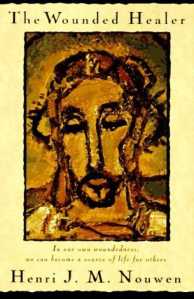
The Wounded Healer (book review)

Wounded Healer, The

“For the minister is called to recognize the sufferings of his time in his own heart and make that recognition the starting point of his service. Whether he tries to enter into a dislocated world, relate to a convulsive generation, or speak to a dying man, his service will not be perceived as authentic unless it comes from a heart wounded by the suffering about which he speaks” (from the introduction).

Henri Nouwen was a man ahead of his time. Although this book was written in the early 1970s, it sounds so applicable for today. The Wounded Healer challenged me as a Christian leader to step into the pain-filled lives as others in a more authentic way. Nouwen argues that healers must first be personally acquainted with the same type of pain that other wounded people are experiencing.

Isaiah 53 says that Christ “was wounded for our transgressions, He was bruised for our guilt and iniquities; the chastisement [needful to obtain] peace and well-being for us was upon Him, and with the stripes [that wounded] Him we are healed and made whole.” Because Jesus was wounded in the same way we are wounded, He knows how to help (see Hebrews 2:18).

One closing quote from Nouwen: “If there is any posture that disturbs a suffering man or woman, it is aloofness. … No one can help anyone without becoming involved, without entering with his whole person into the painful situations, without taking the risk of become hurt, wounded or even destroyed in the process. The beginning and the end of Christian leadership is to give your life for others.”

This book reconfirmed my desire to—like Jesus—be a wounded healer for others.

Walking In Someone Else’s Flip-Flops

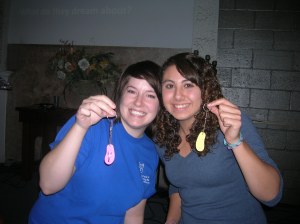
DSCN0970“Empathy is a stunning act of imaginative derring-do, the ultimate virtual reality—climbing into another’s mind to experience the world from that person’s perspective.” —Donald H. Pink
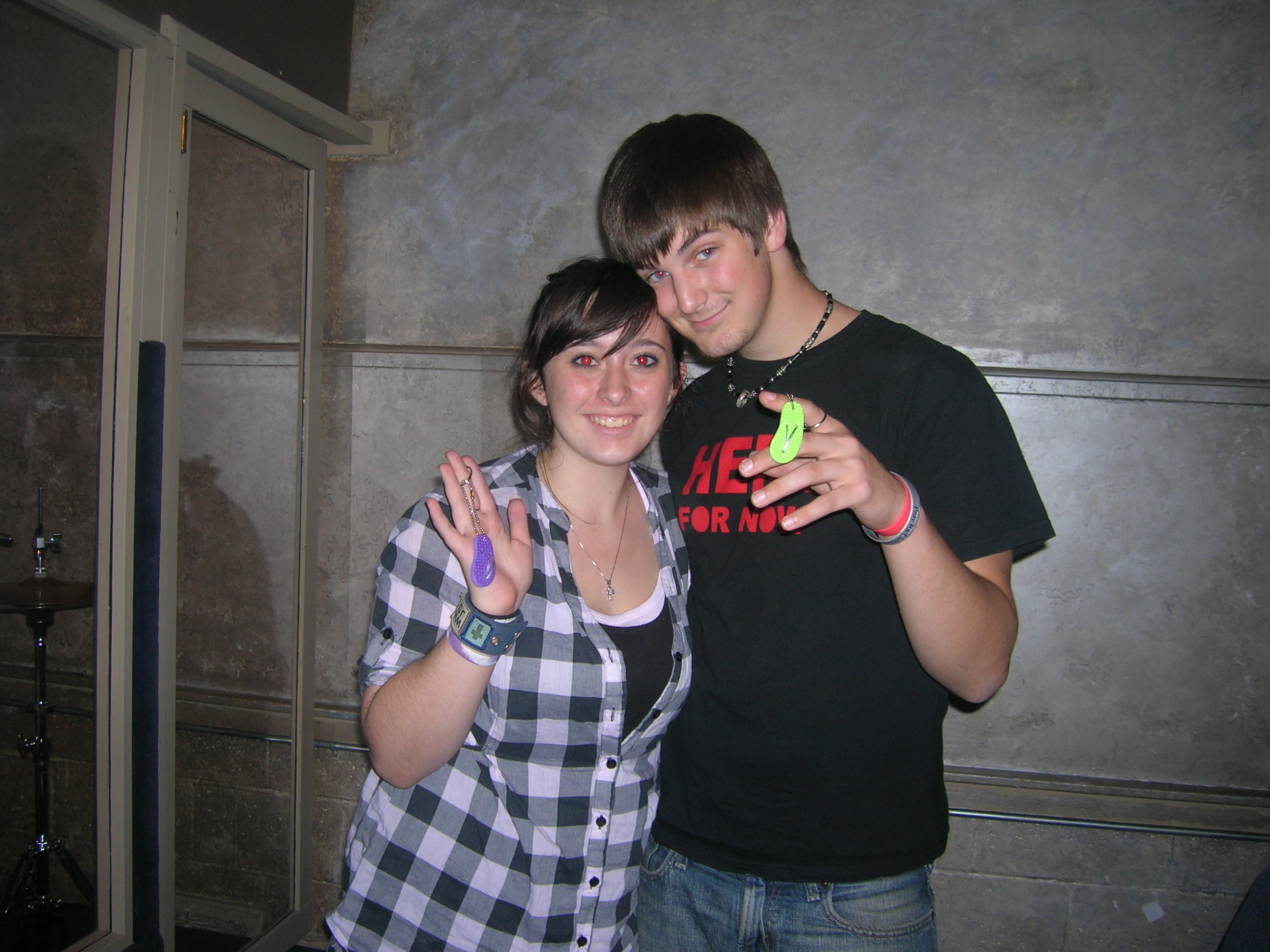
As we continued our series called Bigger Than Me last night (part 1 is here), we challenged our Impact! youth group to develop greater empathy. That word literally means to be immersed in the feelings of others … to step into someone else’s reality … to walk around in someone else’s flip-flops.

The greatest example ever of this is when Jesus Christ came to earth. He stepped into our flip-flops by coming to live among us in human flesh. He experienced everything we ever have or ever will experience; He knows our weaknesses, our dreams, our joys.

For we do not have a High Priest Who is unable to understand and sympathize and have a shared feeling with our weaknesses and infirmities and liability to the assaults of temptation, but One Who has been tempted in every respect as we are, yet without sinning. … For because He Himself [in His humanity] has suffered in being tempted (tested and tried), He is able [immediately] to run to the cry of (assist, relieve) those who are being tempted and tested and tried…. (Hebrews 4:15, 2:18)

Our youth have committed themselves to develop this Christ-like attribute of empathy. Last night they came to the altar to pick up a flip-flop keychain to remind themselves of this commitment. All of us who made this commitment are going to try to walk in others’ flip-flops by trying to find out:

  1. What do they cry about?
  2. What do they sing about?
  3. What do they dream about?

(Thank you, John Maxwell, for your instruction to me on this!)

I hope you have personally experienced the incredible empathy of Jesus. He understands your fears, your joys, and your dreams even better than you understand them yourself. And I hope that you will join us in our commitment to greater empathy with each other. What a blessing you can be to others when you choose to walk in their flip-flops for awhile.

The Right Time To Do The Right Thing

I spent yesterday afternoon and a good portion of this morning with a precious family. The 93-year-old patriarch of the family is in his last days on this earth. This family is absolutely wonderful, and it has been such a blessing to spend this time with them.

They laugh, tell stories, sing songs, read Scripture, joke with each other, and cry. The full range of emotions overflowing from a full life.

I have learned something—the human heart is designed to know and to be known. The human heart longs for relationship—deep, meaningful, satisfying relationship. In order to achieve this type of relationship, two things are key: (1) Time and (2) Empathy.

(1) Time. Relationships cannot be microwaved. We cannot just show up, press a few buttons, and—voilá—expect a meaningful relationship. Of course, just spending a lot of time together doesn’t mean a relationship will be successful either. However, the greater the quantity of time that is spent means a greater likelihood of quality time.

(2) Empathy. The Bible says, “Rejoice with those who rejoice; mourn with those who mourn” (Romans 12:15). It doesn’t say, “If people are low, bring them up; if they are too high, bring them down to realistic levels.” Empathy is all about letting the other person drive the agenda—to match whatever they are feeling. A Swedish Proverb says, “A shared joy is a double joy, and a shared sorrow is half a sorrow.”

Here’s a good pattern to follow—

Right Time + Right Thing = Meaningful Relationships
<or>
Quality Time + Empathy Time = Satisfying Relationships