Links & Quotes

Why do Christians lift their hands to God? This is a clip from one of the sermons in our series looking at the worship songs that Israelite pilgrims sang as they ascended to Jerusalem to celebrate the feasts.

I have a lot of new video content on my YouTube channel every week. Please check it out and subscribe so you don’t miss anything.

“Civil governments are established by God [Romans 13:1] to restrain the criminal elements of human society—even though these officers are often filled and run by evil people. We must divorce our feelings about the people that hold these offices from the authority of the office itself.” —Dr. Henry Halley 

“Outstanding leaders go out of their way to boost the self-esteem of their personnel. If people believe in themselves, it’s amazing what they can accomplish.” —Sam Walton 

This article opens with this thought: “Scientists will probably never fully understand photosynthesis as additional research uncovers even more fascinating mysteries.” It then goes on to outline how plants use quantum mechanics nearly perfectly to manage the flow of energy during photosynthesis. Truly this is more evidence of an All-Wise Creator.

In sharing a mini-biography of Henry Martyn, this article outlines how God prepares missionaries for the field to which He has called them. “God used [Martyn’s] classical education at Cambridge alongside his spiritual maturity formed by intentional mentorship to get him ready for his unique task of engaging Muslims and translating the Bible.”

T.M. Moore has an outstanding series for pastoral leaders. In a recent post, Moore wrote, “Paul’s vision was too vast, too all-encompassing, too transformative, too urgent, and too other-worldly to stop with, say, a vision that focused on more members, better facilities, larger budgets, additional staff, or regular ‘growth.’ None of these, nor any of a thousand other ways church leaders might express their hopes for their churches, is a proper vision for church leaders.” I was grateful for T.M.’s endorsement of my book Shepherd Leadership where I talk about the biblical metrics for church leaders.

“One of the dangers of having a lot of money is that you may be quite satisfied with the kinds of happiness money can give, and so fail to realize your need for God. If everything seems to come simply by signing checks, you may forget that you are at every moment totally dependent on God.” —C.S. Lewis 

Is That In The Bible?

Listen to the podcast of this post by clicking on the player below, and you can also subscribe on AppleSpotify, or Audible.

A meme that makes me chuckle every time I see it is a “quote” attributed to Abraham Lincoln in which he says, “The problem with quotes found on the internet is that they are often not true.” 

(Not to spoil the joke for you, but unless Lincoln knew how to time travel to the future, I don’t think he knew about the modern internet! 😂) 

I love this meme because it captures something that so many people fall into: a quick acceptance of a statement without verifying its source or thinking through the implications of the statement’s truthfulness. 

Some insightful comments sound Shakespearean, but William never wrote them. 

Some pieces of wisdom sound Socratic, but Socrates never taught them. 

Some religious maxims sound godly, but the Bible never recorded them. 

I would like to invite you to join me as we relaunch this series called Is That In The Bible? I think you may be surprised to discover just how many phrases we call biblical aren’t, and how many phrases there are that we never realized are actually in the Bible. 

By the way, if you have a phrase that you would like to have us explore in this series, please leave it in a comment below. You may want to check out the questions we have already addressed:

In this installment of this series, we asked: Is this in the Bible…

Links & Quotes

Many of the examples Jesus used to tell us about the Kingdom of God seem like such small things. But those small beginnings have irresistible growth potential! Check out more thoughts in my series of posts called Kingdom Praying. I have lots of new content every week, which you can check out on my YouTube channel.

My wife is a school teacher and I also work quite a bit in our local schools. I think T.M. Moore is spot-on in his analysis of the breakdown in our current educational system: “This commitment to the Law and Word of God as foundational to the education of the young was everywhere practiced throughout the pre-revolutionary period in colonial America. It was unthinkable in the colonies that young people should be submitted to any instruction for any length of time without being taught the commandments and statutes of God, including the Gospel of Jesus Christ. Parents insisted on it, colonial and local statutes required it, and local school boards dutifully saw to it in all their schools.Since the middle of the previous century, assailed by specious invocations of ‘the separation of Church and State,’ educational policy in America has increasingly denied a place to God, His commandments, and His Word in the public-school curriculum. Generations of American children have grown up in a ‘disenchanted’ world (Charles Taylor), a world in which God, spiritual things, and the Law of God are deemed to be irrelevant if not oppressive, or at least a nuisance. The present crisis of morality, culture, and social upheaval is only the most visible consequence of that policy.”

David Mathis shared some thoughts about the healthy pace of ministry Jesus demonstrates for us. He said, “Let’s sit together at the feet of Jesus, and consider the pace and patterns of His life and ministry. He was not idle. Nor was He frenzied. From all we can tell from the Gospels, Jesus’s days were full. I think it would be fair to say He was busy, but He was not frantic. He lived to the full, and yet He did not seem to be in a hurry. In Jesus, we observe a human life with holy habits and patterns: rhythms of retreating from society and then reentering to do the work of ministry. Even as God Himself in human flesh, Jesus prioritized time away with His Father. He chose again and again, in His perfect wisdom and love, to give His first and best moments to seeking His Father’s face.“ These words resonate with me, because they are thoughts that I considered quite extensively for my book Shepherd Leadership.

I love reading stories like these that show how a relationship with Jesus utterly transforms a person’s life! “Opal W. Eubanks joined the Mississippi Highway Patrol during the race riots of 1964. A large, broad-shouldered white man, he relished the opportunity to strike fear in the hearts of African-Americans who were in trouble with the law. By his own admission, he was a foul-mouthed sinner who liked ‘rough stuff.’ A radical conversion to Christ in the early 1970s altered the course of Eubanks’ life, and his hardened heart became tender toward African-Americans in his rural community. He and his wife, Thelma, ultimately pioneered an Assemblies of God congregation consisting mostly of African-Americans, which they pastored for 21 years.”

The Greek word for “teaching” in Mark 9:31 means an ongoing dialogue. It’s an imperfect verb here because it is an activity that is never fully completed. Jesus wants us to abide with Him—to dialogue with Him—to continually learn from Him. The New Living Translation says it this way, ”For He wanted to spend more time with His disciples and teach them.” This is just as true for us today! 

J. Warner Wallace addresses the claims that the Old Testament prophets actually foretold that Jesus would be the Messiah. I love considering the apologetics for the death and resurrection of Jesus Christ, and this video will become an added resource for me in the future.

Is That In The Bible?

Listen to the podcast of this post by clicking on the player below, and you can also subscribe on AppleSpotify, or Audible.

A meme that makes me chuckle every time I see it is a “quote” attributed to Abraham Lincoln in which he says, “The problem with quotes found on the internet is that they are often not true.” 

(Not to spoil the joke for you, but unless Lincoln knew how to time travel to the future, I don’t think he knew about the modern internet! 😂) 

I love this meme because it captures something that so many people fall into: a quick acceptance of a statement without verifying its source or thinking through the implications of the statement’s truthfulness. 

Some insightful comments sound Shakespearean, but William never wrote them. 

Some pieces of wisdom sound Socratic, but Socrates never taught them. 

Some religious maxims sound godly, but the Bible never recorded them. 

I would like to invite you to join me as we relaunch this series called Is That In The Bible? I think you may be surprised to discover just how many phrases we call biblical aren’t, and how many phrases there are that we never realized are actually in the Bible. 

By the way, if you have a phrase that you would like to have us explore in this series, please leave it in a comment below. You may want to check out the questions we addressed in both the first installment and second installment of this series. 

In this installment of this series, we asked: Is this in the Bible…

Is That In The Bible?

Listen to the podcast of this post by clicking on the player below, and you can also subscribe on AppleSpotify, or Audible.

A meme that makes me chuckle every time I see it is a “quote” attributed to Abraham Lincoln in which he says, “The problem with quotes found on the internet is that they are often not true.” 

(Not to spoil the joke for you, but unless Lincoln knew how to time travel to the future, I don’t think he knew about the modern internet! 😂) 

I love this meme because it captures something that so many people fall into: a quick acceptance of a statement without verifying its source or thinking through the implications of the statement’s truthfulness. 

Some insightful comments sound Shakespearean, but William never wrote them. 

Some pieces of wisdom sound Socratic, but Socrates never taught them. 

Some religious maxims sound godly, but the Bible never recorded them. 

I would like to invite you to join me as we relaunch this series called Is That In The Bible? I think you may be surprised to discover just how many phrases we call biblical aren’t, and how many phrases there are that we never realized are actually in the Bible. 

By the way, if you have a phrase that you would like to have us explore in this series, please leave it in a comment below. If you would like to check out the questions we addressed previously, please click here

In this installment of this series we asked: Is this in the Bible…

Check Out My YouTube Channel

But And And

Listen to the podcast of this post by clicking on the player below, and you can also subscribe on AppleSpotify, or Audible. 

Proverbs 10 begins with these words, “The proverbs of Solomon…” (Proverbs 10:1). 

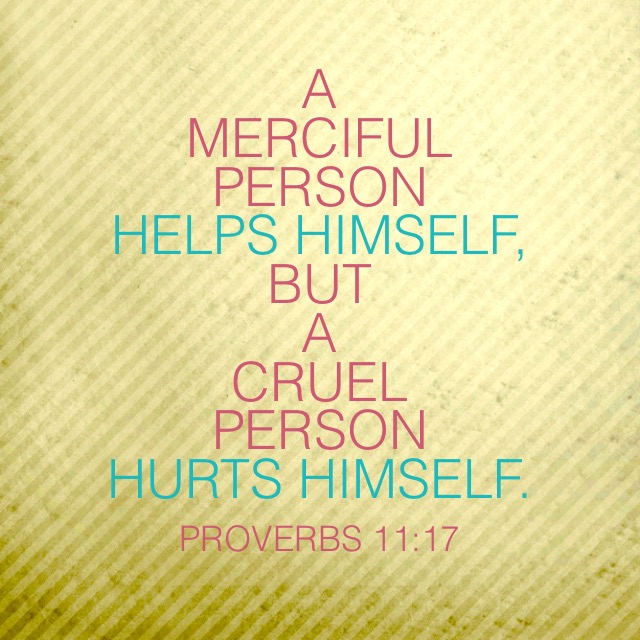
Over the next six chapters (184 verses) Solomon generously employs the contrasting conjunction “but” 144 times—that’s nearly 80 percent of these verses! He clearly tells us the blessings of trusting God’s wisdom contrasted with the pitfalls of trusting our own wits. 

I am also intrigued by the 21 verses where Solomon uses the amplifying conjunction “and.” These proverbs give us either the double advantage of leaning into God’s wisdom, or the double whammy of trying to do it our own way. 

I’ll let you read through these six chapters and notice the contrasting conjunction “but” for yourself, but in this blog post I want to especially direct your attention to some of the “and” statements. I’ve listed these in three categories.

(1) The double whammies—

  • malicious people cause grief to others AND ruin to themselves (10:10) 
  • trusting mortals is short-lived AND self-defeating (11:7) 
  • a quick-tempered person does foolish things AND is hated (14:17)

(2) The double blessings—

  • a generous person prospers AND is refreshed (11:25) 
  • a righteous life is a blessed life now AND an eternal life forever (12:28) 
  • fearing God brings security for you AND gives your children a sure refuge (14:26) 

(3) And these mixed proverbs using both a whammy and a blessing—

  • a righteous person is rescued from trouble AND it falls on the wicked instead (11:8) 
  • a prudent person is praised AND the one with a warped mind is despised (12:8) 
  • evildoers are trapped in their own evil AND innocent people escape evil (12:13) 

There is so much wisdom to be gleaned not only in these words of Solomon, but throughout the entire Bible. Take your time and soak it in as you read the Scripture for yourself. 

Here are some of the other posts I’ve shared that may help you in your Bible study time: 

I’ve also posted reviews on these study Bibles: 

However you do it, and whatever tools you may use, get into your Bible every single day, and then let the Word of God get into you too. I can promise you this: Your time in God’s Word will absolutely change your life! 

►► Would you please prayerfully consider supporting this ministry? ◀︎◀︎

The Best Leadership Manual

Listen to the podcast of this post by clicking on the player below, and you can also subscribe on AppleSpotify, or Audible. 

When the righteous thrive, the people rejoice… (Proverbs 29:2). 

I have read hundreds of leadership books and biographies of history’s most influential leaders. But no book even comes close to the leadership principles I discover on an almost daily basis in my Bible. Without a doubt, my Bible is my go-to leadership Book! 

A great place to start mining leadership principles is the book of Proverbs. Take time to study just one of the 31 chapters each day, and you will be astounded at the leadership insights you will have gleaned by the end of the month. 

Take Proverbs 29 as an example. Reading through this chapter, I’m reminded that:

  • righteous leadership causes people to rejoice 
  • a leader builds stability through consistent justice, but bribes or showing favoritism undermines a leader’s foundation 
  • leaders who speak up for those without a voice of their own will continue to exert influence long after their tenure is over 
  • wise leaders energize people when they share a compelling vision 
  • justice comes through a righteous leader, but ultimate justice come from God

I even read an important warning for leaders who make it their goal to lead righteously: Bloodthirsty men hate a man of integrity and seek to kill the upright (v. 10). 

But even on the heels of that warning I read this assurance to continue to lead righteously: Fear of man will prove to be a snare, but whoever trusts in the Lord is kept safe (v. 25). 

A mark of a godly leader is one who is continually finding new leadership principles in the Bible. 

Try it for yourself and see how applying God’s wisdom will increase your influence as a leader. 

This is part 58 in my series on godly leadership. You can check out all of my posts in this series by clicking here.

►► Would you please prayerfully consider supporting this ministry? ◀︎◀︎

The Thompson Chain-Reference Bible (book review)

Listen to the podcast of this post by clicking on the player below, and you can also subscribe on AppleSpotify, or Audible. 

Full disclosure: I’m a bonafide Bible study geek! I’m always on the hunt for any study tool I can get my hands on that will help me dive deeper into God’s Word. Quite possibly the gold standard for biblical study aids is The Thompson Chain-Reference Bible. 

As a young person, I would hear pastors talking about their Thompson Chain-Reference Bible, so I always assumed this was merely a “preacher’s Bible,” and as a result, I never really looked into it. Now I’m kicking myself as I think about all of the rich study material I had missed out on previously. 

Check this out: the back portion of this Bible contains 800 pages of cross-referenced study materials! Dr. Frank Charles Thompson (after whom this study Bible is named) spent almost 20 years compiling the notes that went into this Bible’s first printing in 1908. Since then, the improvements have only made using this study tool a richer experience. Because of Dr. Thompson’s detailed work, following the “chain” of scriptural references for a biblical character or a biblical theme is literally at your fingertips. There are even “chains” you can follow within each book of the Bible. 

If you love studying the Bible as much as I do, this fascinating work is a must-have for your library. 

►► Would you please prayerfully consider supporting this ministry? ◀︎◀︎

I am a Biblegateway Blogger Grid book reviewer. If you would like to read more about how to use this Bible, please check out this link on the BibleGateway Blog.

Thursdays With Spurgeon—Context Is King

This is a weekly series with things I’m reading and pondering from Charles Spurgeon. You can read the original seed thought here, or type “Thursdays With Spurgeon” in the search box to read more entries.

Listen to the podcast of this post by clicking on the player below, and you can also subscribe on iTunes or Spotify.

Context Is King

And the glory that You gave Me I have given them, that they may be one just as We are One: I in them, and You in Me; that they may be made perfect in one, and that the world may know that You have sent Me, and have loved them as You have loved Me. (Jesus in John 17:22-23)

     Some words serve many uses and have many meanings. We are very apt to make mistakes if we give the same sense in all places to the same word. The word world throughout Scripture is used with a very remarkable variety of meaning, and one had need to have his wits about him and to read carefully in order to know what is the precise source of the term in each place where it occurs. …  

     I say again, the word world, therefore, has many shades of meaning ranging from that jet black meaning in which the world lies in the wicked one—‘Love not the world, neither the things that are in the world’ (1 John 2:15)—upward to the milder sense in John 1:10, ‘He was in the world, and the world was made through Him, and the world did not know Him.’ And yet higher to the bright meaning, ‘The kingdoms of this world have become the kingdoms of our Lord and of His Christ’ (Revelation 11:15). It is not in the worst sense that our text speaks of the world, but in the same manner as we find it used in such passages as these: ‘The Lamb of God who takes away the sin of the world!’ (John 1:29). ‘God was in Christ reconciling the world to Himself, not imputing their trespasses to them’ (2 Corinthians 5:19). And again in 1 John 2:2, ‘And He Himself is the propitiation for our sins, and not for ours only but also for the whole world.’ 

     It is certain that ‘God so loved the world that He gave His only begotten Son, that whoever believes in Him should not perish but have everlasting life’ (John 3:16), and we cannot suppose that the great Redeemer would refuse to pray for those whom He was given. I understand in this particular place by the word world the whole mass of mankind upon the face of the earth who are not as yet converted. … 

     For the sake of the world, He would have the church in a high state of holy beauty and strength. May His gracious prayer be answered in all of us by the working of the Holy Spirit! … Our wish is to bring multitudes to the Savior and to conquer province after province of this revolted world for King Jesus. ‘Let the whole earth be filled with His glory’ (Psalm 72:19) is a prayer that we cannot, we dare not, we would not fail to pray! 

From The Glory, Unity, And Triumph Of The Church

When we are studying our Bibles, we must remember that context is so vital. We have to read each inspired word in its proper context so that we know how to believe, think, live, and pray. I urge you to slow down in your Bible reading—aim for better and richer comprehension than to just try to read a lot in one sitting. Sometimes in my own personal Bible study time, I may spend several minutes just thinking about one phrase, and that may be the only part that I read on that particular morning. 

I would also counsel you to use some trustworthy Bible study tools. I have a list here of 8 must-have Bible study tools, and you can find some new ways to use these tools in this post about three types of Bible studies you may not have considered before. 

However you read your Bible, make sure you are reading each part in its proper context. Pray before you begin reading and ask the Holy Spirit—Who inspired the Scriptures—to illuminate them to your heart and mind. These thoughtful Bible studies will do more to grow your spiritual maturity than simply rushing through your reading time.