Links & Quotes

link quote

“One profound biblical insight we need to know is that our heart exploits our mind to justify what the heart wants. That is, our deepest desires precede the rational functioning of our minds and incline the mind to perceive and think in a way that will make the desires look right.” —John Piper

“‘No hope’ is a cry which no human tongue should utter, which no human heart should heed. May God grant us grace whenever we get an opportunity to go and tell all we meet with that are bowed down, ‘There is lifting up.’ And tell them where it is likewise. Tell them it is only at the Cross. Tell them it is through the precious blood. Tell them it is to be had for nothing, through simply trusting Christ. Tell them it is of free grace, that no merits of theirs are wanted, that no good things are they to bring, but that they may come just as they are, and find lifting up in Christ.” —Charles Spurgeon

“We must not be naïve about the power of reason. Reason can only do so much. No one can be reasoned into believing the Gospel. That requires a work of the Spirit of God, a work of faith. Reason can clear the way for faith, but it cannot engender it. Only God can do that. … So, even as we reason with our unbelieving friends, we must remember that only if God the Spirit works with our words—and if our words are faithful to the Word of God—will are friends come to faith in Jesus Christ. Reason is a tool, but the Holy Spirit is the power for faith and eternal life.” —T.M. Moore

“The best reason to brand someone with a pejorative label is to push them away, to forestall useful conversation, to turn them into the other. Much more useful: Identify the behavior that’s counter-productive. When we talk about the behavior, we have a chance to make change happen. What would happen if the behavior stopped? When we call someone misogynist or racist or sexist or a capitalist, a socialist or an abstract expressionist, what are we hoping for? Every one of us is on the ‘ist’ spectrum, so the label becomes meaningless. Meaningless labels are noise, noise that lasts. If that person stopped acting like a _____ist, what would change? Because if there’s nothing we want to change, the labeling is useless. And if there’s a change that needs to be made, let’s talk about what it is.” —Seth Godin

Does anyone else find this statement ironic? “Christ, what does this mean?” says Greger Larson, an evolutionary geneticist at the University of Oxford, UK. Let me contrast two words: Christ (as in Jesus, the Son of God) and evolutionary (as in, don’t believe in God). Even the supposed God-deniers cannot help but evoke His name!

For anyone who works with students, Tim Elmore shares three balancing acts we all need to keep in mind.

Nancy Pearcey has an eye-opening post about the transgender fascination in our culture. In part, she writes: “The worldview implicit in the transgender movement is that our physical bodies have no particular value—that our biology is irrelevant to who we are as persons…. It is a worldview that drives a wedge between one’s body and one’s sense of self, which exerts a self-alienating, fragmenting effect on the human personality….” Please read Transgender Politics Vs. The Facts Of Life.

Links & Quotes

link quote

All married couples should check out this post from Mark Merrill: How To Have Healthy Conversations With Your Spouse.

Dr. Tim Elmore says, “Millions of parents need to hover less and train more. Millions of students need to learn to self-regulate.” Read more in his post One Way To Motivate Students To Go To Class.

“Now, my brethren, if you and I desire to walk among the sons of men without pride, but yet with a bearing that is worthy of our calling and adoption as princes of the blood royal of heaven, we must be trained by the Holy Spirit.” ―Charles Spurgeon

[VIDEO] J. Warner Wallace explains how we can verify the validity of the Gospels―

Links & Quotes

link quote

“Hope is not some vague emotion that comes out of nowhere, like a stomachache. Hope is the confidence that the stupendous future promised to us by the Word of the Spirit is going to really come true. Therefore, the way to be filled with the Spirit is to be filled with His Word. The way to have the power of the Spirit is to believe the promises of His Word.” —John Piper

“God never fits His Word to suit me; He fits me to suit His Word.” —Oswald Chambers

Good food for thought: Let’s Bring Conversation Back.

Seth Godin has more great insight in More Trouble Than It’s Worth.

An interesting discussion on the state of the United States Armed Forces: The World Is Becoming More Dangerous.

8 Quotes From “Life Cartography”

Life CartographyCharles Porter wrote a thought-provoking book for young people just starting out on life’s journey. You can read my full book review by clicking here. Below are some of the quotes I highlighted as I read.

“Everyone has baggage. Emotional hurts. Dysfunctions. Strange and broken ideas about the world. Some are small. Some are massive. The people who develop beautiful lives, that I’ve seen at least, learn early how to unload that baggage somewhere and not pick it back up. The emotional catharsis of unloading is easy. The mental, physical and spiritual disciplines of not picking it back up—that’s the hard part.”

“Good intentions don’t make up for bad thinking. You can’t be anything you want to be. But there is something, some unique place, where you can be you, and where your life will have meaning and purpose. The key is discovering what and where that is. Those who discover that early multiply their life satisfaction exponentially.”

“Emotions are real but not necessarily true. … I’ve ruined very few relationships when I was calm. But when I’ve been angry, I’ve done serious damage. … The flip side is that relationships come with an ebb and flow of feelings. Denying emotions is just as dangerous. Suppressed anger becomes depression. Feelings of rejection lead to private humiliation. Telling someone not to feel is like telling spring not to come.”

“We all tell our stories from our own perspectives. We see the world through our lenses. An editor can help us bring some balance, some clarity, and sometimes help us tell those stories in a way that others understand. The tough part is that editors usually aren’t popular. They challenge us. They forced us to rewrite, rethink, and reconsider. They generally don’t fall for the lies we sometimes tell ourselves.”

“When I start with the idea that everyone is interesting, questions become conversations.”

“Developing character is the most important, life-long process you’ll ever engage in. … Character is the product of a life sent through the fire of circumstances.”

“Sometimes, standing on the sidelines is an endorsement. By not taking a stand, you’re allowing things you wouldn’t endorse to take root and flourish.” 

“Have you ever met people who won’t take ‘no’ for an answer? I’ll bet they get things done. I’ll bet they succeed. And I’ll bet they leave a wake of relational destruction in their pads. ‘I never take “no” for an answer.’ That, my friends, doesn’t make you consistent. It makes you a bully.”

12 Quotes From “Tactics

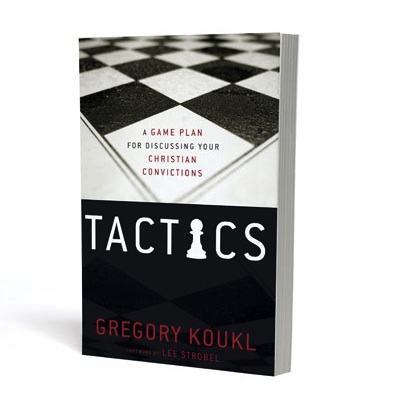
TacticsIn Tactics Greg Koukl gives Christians more how than what/why in defending the Biblical faith. It is an outstanding read that I recommend to all Christians (young or old). You can read my full book review by clicking here. Below are just a few of the quotes I highlighted in this empowering book.

“First, Christ’s ambassadors need the basic knowledge necessary for the task. They must know the central message of God’s kingdom and something about how to respond to the obstacles they’ll encounter on their diplomatic mission. … However, it is not enough for followers of Jesus to have an accurately informed mind. Our knowledge must be tempered with the kind of wisdom that makes our message clear and persuasive. This requires the tools of a diplomat, not the weapons of a warrior, tactical skill rather than brute force. Finally, our character can make or break our mission. Knowledge and wisdom are packaged in a person, so to speak. If that person does not embody the virtues of the kingdom he serves, he will undermine his message and handicap his efforts.” 

“The tactical approach requires as much careful listening as thoughtful response.”

“It is not the Christian life to wound, embarrass, or play one-upmanship with colleagues, friends, or even opponents, but it’s a common vice that anyone can easily fall into.” — Hugh Hewitt 

“Always make it a goal to keep your conversations cordial. Sometimes that will not be possible. If a principled, charitable expression of your ideas makes someone mad, there’s little you can do about it. Jesus’ teaching made some people furious. Just make sure it’s your ideas that offend and not you, that your beliefs cause the dispute and not your behavior.”

“The ability to argue well is vital for clear thinking. That’s why arguments are good things. Arguing is a virtue because it helps us determine what is true and discard what is false. … Paul warns against wrangling about words and quarreling about foolish speculations (2 Timothy 2:14, 23). But he also commands us to be diligent workmen, handling the word of truth accurately (2 Timothy 2:15). And, because some disputes are vitally important, Paul solemnly charges us to reprove, rebuke, and exhort when necessary (2 Timothy 4:112). This cannot be done without some confrontation, but disagreement need not threaten genuine unity.”

“If you want skeptics to believe in the Bible, don’t get into a tug-of-war with them about inspiration. Instead, invite them to listen—to engage Jesus’ words firsthand—then let the Spirit do the heavy lifting for you.”

“You have to know why Jesus is the only way before it is helpful to tell people that He is the only way.” 

“There are three specific things you can do to ‘ready’ yourself to respond. You can anticipate beforehand what might come up. You can reflect afterward on what took place. And in both cases you can practice the responses you think of during these reflective moments so you will be prepared for the next opportunity.”

“Knowing when to step back requires the ability to separate the hogs and the dogs from the lost sheep looking for a shepherd. But how do you know when someone has crossed the line? When do we have an obligation to speak, and when should we save our pearls for another time? Part of the answer can be found in Jesus’ next words in Matthew 7:6: ‘…lest they trample [the pearls] under their feet, and turn and tear you to pieces.’ Be generous with the truth except with someone who shows utter contempt for the precious gift being offered him. He will simply trample it in the mud and then viciously turn on you. … There is an exception to this principle, however. I have learned from my radio show that sometimes my real audience is not the person I’m talking to, but the people who are listening in, eavesdropping on the conversation. … Lee Strobel calls this ‘ricochet evangelism.’” 

“When I face an aggressive challenger, I often give him the last word. Not only is this gracious, it’s also powerful, conveying a deep sense of confidence in one’s own view. Instead of fighting for the final say-so, give it away. Make your concluding point clearly and succinctly, and then say, “I’ll let you have the last word.” But don’t break this promise. Grant him his parting shot, and then let it rest.”

“Know the truth. Know your Bible well enough to give an accurate answer. Tactics are not a substitute for knowledge. Cleverness without truth is manipulation.”

“Culture is most profoundly changed not by the efforts of huge institutions, but by individual people.” —Chuck Colson


Thursdays With Oswald—Appealing Control

This is a weekly series with things I’m reading and pondering from Oswald Chambers. You can read the original seed thought here, or type “Thursdays With Oswald” in the search box to read more entries.

Oswald Chambers

Appealing Control 

     We have to be so controlled by the Holy Spirit, to so submit our intelligence to Him, that Jesus Christ is presented along the line that appeals to those to whom we talk. 

From Bringing Sons To Glory 

God has given humans the amazing capacity of intelligence to think and reason, and to communicate our thoughts persuasively and creatively to other humans. This is a gift, but it can also be a hindrance. My intelligence is only going to glorify God when it is under the control of the Holy Spirit.

It is not my responsibility to convince others about God; it is my responsibility to be controlled by the Holy Spirit so that He can convince others. So the question I need to ask myself about my conversations with others is: Who’s in control?

Watch Your Mouth

I was reading Proverbs 10 the other day, and a recurring theme seemed to show up in this chapter. Since you’re reading this blog, I know you are highly intelligent, so I’m sure you can spot the theme as well as I can…

If you have good sense, you will listen and obey; if all you do is talk, you will destroy yourself.

If you have good sense, it will show when you speak….

If you have good sense, you will learn all you can, but foolish talk will soon destroy you.

You will say the wrong thing if you talk too much—so be sensible and watch what you say.

Honest people speak sensibly, but deceitful liars will be silenced.

If you obey the Lord, you will always know the right thing to say….

I’d say the theme was pretty obvious, wouldn’t you?

But one question still remains: What are YOU going to do with this?

Idle Words

Researchers say the average American male speaks 6073 words per day, and the average American female speaks 8805 words per day. That’s a lot of words! Can you remember everything you said today?

Can you at least remember the gist of your major conversations?

Hmmm…

Here’s what Jesus said:

But I tell you, on the day of judgment men will have to give account for every idle (inoperative, nonworking) word they speak. (Matthew 12:36)

The dictionary defines idle as “something of no real worth, importance, or significance.” And the Greek dictionary says idle in this verse means “free from labor; barren.”

So I’m taking a little time to reflect…

  • Are all my words worthwhile?
  • Are they important?
  • Are they significant?
  • Did all my words do some good to someone?

If I can’t say “Yes,” it’s time to change my vocabulary, or maybe I just need to speak fewer words.

What If…

…for just one day you and I only said what God told us to say?

“Everything?” you ask, “Is that even possible?”

Yes! Jesus did it. Look:

I don’t speak on My own authority. The Father who sent Me has commanded Me what to say and how to say it.

Everything Jesus said was directed by His Father. Yes, everything.

Want to try it today? First, we have to spend more time in God’s presence to hear His words. Then here’s a simple gauge to use (as given to us by James). Are my words…

  • true?
  • pure?
  • peace-promoting?
  • considerate?
  • courteous?
  • gentle?
  • sincere?
  • merciful?

Are you ready to give it a try?

A Voice Behind Me

In our series on Building Blocks, I’ve been talking about the basics of a relationship with Jesus Christ. An obvious foundation for any relationship is meaningful conversation.

If you think about any close relationship you have, the closeness was developed through conversation. Gradually you began to know their voice and know their heart. Our meaningful conversation with God produces the same increased intimacy. We talk with Him through reading His Word and through prayer.

The more you read the Bible and the more you pray, the clearer His voice becomes. Isaiah said it this way:

Your own ears will hear Him. Right behind you a voice will say, “This is the way you should go,” whether to the right or to the left. (Isaiah 30:21)

Earlier this week I was on a long road trip, so I took our dog Grace with me. After grabbing some lunch, I wanted to find a place for Grace to run around and stretch her legs, but I was in a town I didn’t know. As I came to the end of the driveway, my next appointment would have been right, but I felt I should turn left instead.

I did, and two blocks away was a huge, grassy park where I could sit and eat my lunch and Grace could frolic to her heart’s content.

Did I actually hear a Voice? No, but I felt a Voice. His Voice. Yes, I believe God even cares about helping me find a place for my lunch and for my dog to run. He cares that much about me. And you too!

He’s speaking to you all the time. Are you listening to the Voice behind you?