Why I Didn’t Participate In Pulpit Freedom Sunday

In order to challenge the IRS regulation that non-profit 501(c)3 organizations (such as a church) not endorse a political candidate, a group called Pulpit Freedom encouraged pastors to publicly endorse a candidate in their Sunday sermons.

This is what I shared with my congregation this morning. We are not participating in the “pulpit freedom Sunday” for the following reasons—

  1. The IRS 501(c)3 regulations are not immoral. The Bill of Rights states that “Congress shall make no law respecting an establishment of religion, or prohibiting the free exercise thereof.” I don’t believe this is happening.
  2. The church should be apolitical. We don’t see any biblical writers endorsing candidates. Individuals serve in political office, and Paul often greets them. He never tells those individuals to leave their political posts, but neither does he instruct Christians on who they should support/endorse for an office.
  3. If I did what this group is asking, I feel I would doing it to make a statement, but not necessarily a statement that pleases or honors God. “For we speak as messengers approved by God to be entrusted with the Good News. Our purpose is to please God, not people. He alone examines the motives of our hearts” (1 Thessalonians 2:4). My statements must please God and not violate my conscience.
  4. I trust your intelligence. My role as a pastor is to equip people to know and apply biblical principles to every aspect of their lives; including how they make decisions to vote. My role as your pastor is not to tell you who to vote for.

Sola

On October 31, 1517, a sea change in world history was begun. On that day Martin Luther nailed his 95 theses to the door of a church, challenging the traditions of organized religion which he believed had strayed far from the instructions in the Bible.

The Reformation had been launched.

I truly believe that we all must be students of history, partly because all of his story is His Story. When we study history, we can see how God is working out His Story.

Second, we also need to know our history because as George Santayana rightly said, “Those who do not learn from history are doomed to repeat it.”

A third reason to (re)learn the thoughts brought out during the Reformation is for doctrinal strength. It’s important to know not only what why believe but why we believe it. And there are some valuable doctrinal truths in the history of the Reformation.

Finally, I believe an important part of learning is unlearning. Sometimes we accept something just because it’s been handed down to us. That is in large part what Luther and other reformers were challenging, and calling us to unlearn tradition and relearn what the Bible has to say.

So beginning this Sunday we will be walking through the five Sola doctrinal statements the reformers taught. I am really looking forward to relearning and unlearning, and just outright learning the biblical truths of the five solas.

I hope you can join me at Calvary Assembly of God.

Here are the topics we covered in this series:

I Have Arrived!

Listen to the podcast of this post by clicking on the player below, and you can also subscribe on Apple, Spotify, or Audible.

Do you remember when you got your first job that came with your name on a business card? What about when you were promoted to an office with your name on the door? Even better: what if you became so influential that your name is now on the stationary, or even becomes a part of the organization’s official name?!?

Look at you! You’ve arrived!

At least that’s how a lot of people see it. The more their name is plastered all over something, the more powerful they feel.

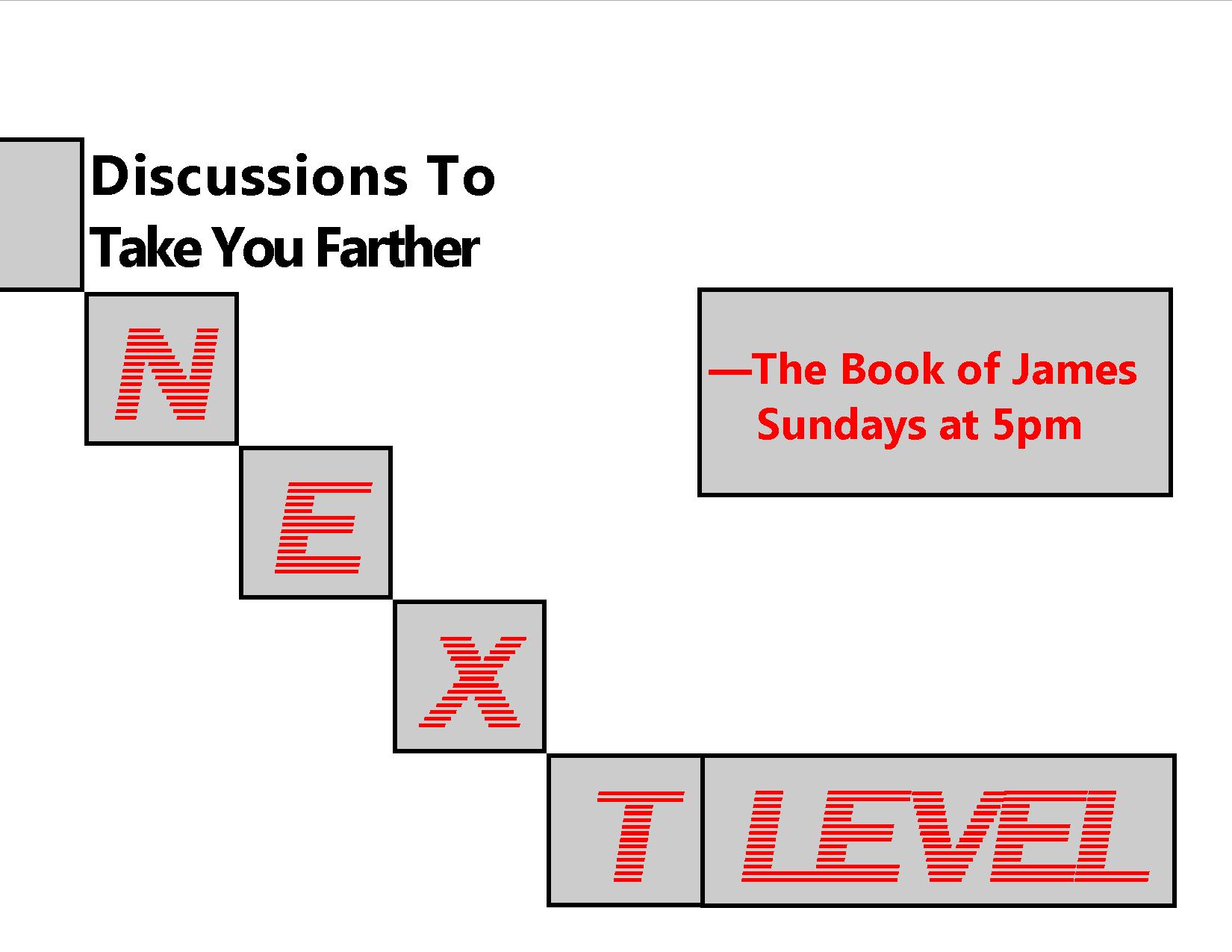
On Sunday evenings our Next Level Bible study is looking at the Book of James. In the first week of our study, we barely got past the first word: James. Who was this guy that has his name attached to a book in the Bible?

  • James was the half-brother of Jesus. In fact, since his name is listed first, he probably was the next oldest sibling after Jesus. Isn’t this the carpenter’s Son? Isn’t His mother’s name Mary, and aren’t His brothers James, Joseph, Simon and Judas? (Matthew 13:55).
  • Since Joseph (the earthly father of Jesus) is not mentioned again in the New Testament, many feel he died while Jesus was a teenager. As a result, after Jesus began His public ministry, the head-of-the-household responsibilities would have passed to James.
  • James met with Jesus one-on-one after His resurrection. Then [Jesus] appeared to James, then to all the apostles (1 Corinthians 15:7).
  • James was recognized by others as the leader of the Church in Jerusalem. James, Peter and John, those reputed to be pillars… (Galatians 2:9). He was also the chairman of the Council in Acts 15, and his decision was the final decision at that meeting.

From all appearances, it looks as though James has arrived! He’s got his name in all the right places, and is one of the most influential people in the early Church.

Yet look at how James referred to himself: James, a servant of God and of the Lord Jesus Christ (James 1:1).

If James thought he had “arrived,” it was only to arrive as a servant. His name may have been on the business card, or the church door, or the church letterhead. But he was only there to serve!

History gives us two other names for this great man: James The Just and Old Camel Knees (because of how much time he spent kneeling in prayer, and kneeling in service to Jesus and His followers).

If I ever “arrive,” I pray that like James I’ve only arrived to serve!

►► Would you please prayerfully consider supporting this ministry? My Patreon supporters get behind-the-scenes access to exclusive materials. ◀︎◀︎

Preying Or Praying

Listen to the podcast of this post by clicking on the player below, and you can also subscribe on Apple, Spotify, or Audible.

I wrapped up our Ticked Off! series yesterday with a sad story. It appears right in the opening pages of the Bible, and it’s a story where one man’s anger preys on him, like a lion on a wounded animal.

Now Able kept flocks, and Cain worked the soil. In the course of time Cain brought some of the fruits of the soil as an offering to the Lord. But Able brought fat portions from some of the firstborn of his flock. The Lord looked with favor on Able and his offering, but on Cain and his offering He did not look with favor. So Cain was very angry, and his face was downcast. 

Then the Lord said to Cain, “Why are you angry? Why is your face downcast?” If you do what is right, will you not be accepted? But if you do not do what is right, sin is crouching at your door; it desires to have you, but YOU MUST MASTER IT.” (Genesis 4:2-7, emphasis added)

We’re not sure exactly why “the Lord looked with favor on Able and his offering, but not on Cain and his offering.” Except we know that the Bible says obedience is better than sacrifice. In other words, it’s not what they brought as a sacrifice, but how they brought their sacrifice. Apparently, Able’s heart was worshipful and Cain’s was begrudging.

Able’s heart was focused on God; Cain’s heart was focused on himself. That’s why Cain became so selfishly angry, because he wasn’t getting what he thought he deserved!

This anger was setting up Cain for disaster. Anger itself is not a sin, but unaddressed anger can put us on a slippery slope toward sin!

Notice God told Cain, “YOU must master it.” God can’t help us until we stop trying to help ourselves. God wants to help us defeat the crouching lion of sin, but we have to ask him to help us.

Sadly, there is no biblical record of Cain asking God for His help. Instead in the next verses Cain—so consumed by his anger that he cannot think straight—murders his own brother. Cain was preyed upon by anger because Cain didn’t pray about his anger.

The devil is looking for any opening at all where he can pounce on you. And Ephesians 4:26-27 says that unaddressed anger is just such an opening. Don’t let your anger defeat you as it did Cain. Confess your anger to God (Psalm 32:1-5) and let God help you defeat the crouching lion of anger.

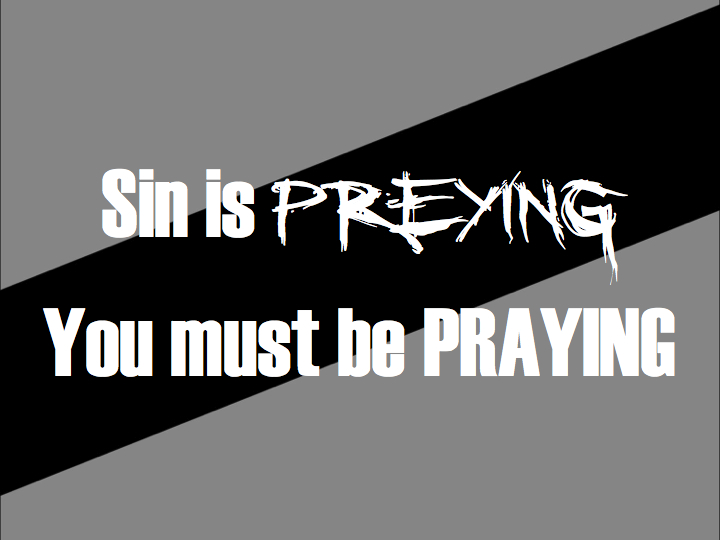
Sin is PREYing. You must be PRAYing.

If you want to check out the other messages in our series called Ticked Off! you may click here.

►► Would you please prayerfully consider supporting this ministry? My Patreon supporters get behind-the-scenes access to exclusive materials. ◀︎◀︎

Next Level: James

It was a time of explosive growth. And with that growth came challenges, questions, problems, and opportunities! I’m talking about the Church in its earliest days in Jerusalem.

The Bible tells us that God prepares people in advance (Colossians 2:10) to do the works that He has equipped them to do. Into this environment of rapid growth and previously unheard-of opportunities stepped a man named James. His leadership and wisdom were just what the church needed then.

And his leadership and wisdom are just what the church needs now.

That’s why I’m leading our Next Level study group into an in-depth look at the book James wrote. The wisdom that is found in the Book of James has been called “the proverbs of the New Testament,” and we’ll be learning how to apply those proverbs to our lives and our church.

Please join me for this fascinating and informative study at 5pm each Sunday afternoon.

Prayer For Israel

In addition to praying for the elections in the United States, the Bible also encourages us to pray for the peace of Israel—

Pray for peace in Jerusalem. May all who love this city prosper. O Jerusalem, may there be peace within your walls and prosperity in your palaces. For the sake of my family and friends, I will say, “May you have peace.” For the sake of the house of the Lord our God, I will seek what is best for you, O Jerusalem. (Psalm 122:6-9 NLT)

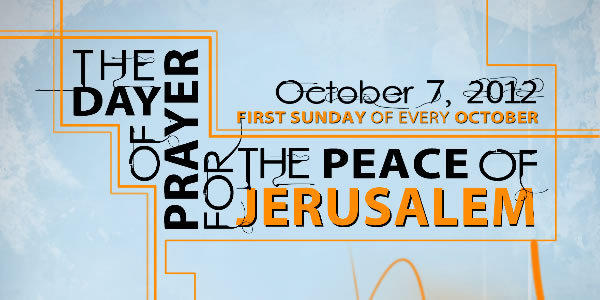
Sunday, October 7, has been designated as a day of prayer for Israel. We will be praying at Calvary Assembly of God, and I hope you and your church will join us in praying this very God-honoring prayer.

You can get more information and sign a prayer resolution by clicking here.

Don’t Play The Fool

Listen to the podcast of this post by clicking on the player below, and you can also subscribe on Apple, Spotify, or Audible.

You probably know this already: Once you get boiling mad, it’s hard to see things objectively anymore. You get steamed up—ticked off!—and you are on a no-detours course to “make things right.”

You might say things like…

  • “They need to know what they did wrong!”
  • “He’s got this coming to him!”
  • “She needs to get a taste of her own medicine!”

The unspoken completion of all of those phrases is the dangerous part. What we’re really saying is, “He needs to know what he did wrong, and I’m just the one to tell him!” Or, “She needs to get a taste of her own medicine, and I’m just the one to dispense that prescription to her!”

It’s been said that action has killed its thousands; reaction its tens of thousands.

Did he hurt you? Yes!

Is he a jerk for doing so? Absolutely!

Should he get punished for it? Probably!

Are you the one to do it? No. No! NO!

He played the fool… Don’t sink to his level and play the fool yourself! 

Wise King Solomon said:

Do not answer a fool according to his folly, or you will be like him yourself. (Proverbs 26:4)

A fool gives full vent to his anger, but a wise man keeps himself under control. (Proverbs 29:11)

So what can you do to the one who injured you?

The best thing you can do is to FORGIVE HIM!

That’s right: leave him in God’s hands. Let the All-Righteous Judge deal with him. Don’t stay wounded, because you are continuing to allow your injurer to keep you trapped, to keep you wounded. Leave him in God’s hands by taking your hands off of him!

Never pay back evil with more evil. Do things in such a way that everyone can see you are honorable. Do all that you can to live in peace with everyone. Dear friends, never take revenge. Leave that to the righteous anger of God. (Romans 12:17-19)

Don’t play the fool! Forgive him and let God take it from there.

If you want to check out the other messages in our series called Ticked Off! you may click here.

►► Would you please prayerfully consider supporting this ministry? My Patreon supporters get behind-the-scenes access to exclusive materials. ◀︎◀︎

It’s Not Anger Management

Listen to the podcast of this post by clicking on the player below, and you can also subscribe on Apple, Spotify, or Audible.

Aristotle had an insightful quote that was almost accurate—

“Anybody can become angry—that is easy; but to be angry with the right person, and to the right degree, and at the right time, and for the right purpose, and in the right way—that is not within everybody’s power and is not easy.”

I agree with most of this, but I would argue that it’s not within anybody’s power to express their anger in the right way.

The Bible says that our challenge is to not sin when we are angry (Ephesians 4:26). But most anger is selfishly provoked. That means, I’m angry because I have been offended, or my “rights” have been violated, or someone injured me.

If my anger has been selfishly provoked, how can I be expected to express my anger in any other fashion but selfishly?!

Instead of me trying to manage my anger, I need to listen to the Holy Spirit’s voice. There is one important question the Spirit asks us (which comes from Jonah 4:9)—

Do you do well to be angry?

  • Is it good for me to be angry with this? or should I let this go?
  • Is my anger righteously provoked? or is it selfishly provoked?
  • Does this grieve the Holy Spirit (Isaiah 63:10)?

God’s Spirit within you is never silent. He will either confirm that your anger is righteously provoked (as it was with Jesus in John 2:13-17), or it’s selfishly provoked (as it was with Jonah). That’s why you must ask yourself that question and allow the Holy Spirit to help you answer it: Do I do well to be angry?

If you answer “yes,” and the Holy Spirit confirms this in your heart, then He will help you to be angry with the right person, and to the right degree, and at the right time, and for the right purpose, and in the right way (as Aristotle said).

And if you answer “no,” the Holy Spirit is the only one who can help put out the flames of your anger in a healthy way.

So don’t try to manage your temper. Listen to the Holy Spirit asking you, “Do you do well to be angry?” And let Him guide you from there.

If you want to check out the other messages in our series called Ticked Off! you may click here.

►► Would you please prayerfully consider supporting this ministry? My Patreon supporters get behind-the-scenes access to exclusive materials. ◀︎◀︎

4 Myths About Your Temper

This morning I shared with my congregation—in part one of our Ticked Off! series—three myths about anger. I want to add a fourth here…

1.  Anger is a sin. 

God is angry numerous times; in fact, the Old Testament alone has hundreds of verses that mention God’s anger. In the New Testament, Ephesians 4:26 says, “…in your anger do not sin….” It doesn’t say, “don’t get angry,” but “when you’re angry, don’t sin.”

2.  Anger is always destructive. 

Some great advances have been brought about by people who got angry. For instance, Martin Luther, the father of the reformation, wrote, “When I am angry I can write, pray, and preach well, for then my whole temperament is quickened, my understanding sharpened, and all mundane vexations and temptations gone.”

3.  Anger doesn’t affect me.

Anger affects you physically. In one medical study researchers found that people who had strokes were more likely to have experienced anger in the two hours prior to having their stroke. It also affects your relationships. After you blow up, people close to you are injured and began to distance themselves from you.

4.  I can manage my anger.

Anger has a tendency to completely seize you, making it next to impossible to manage the furnace of emotions that is raging inside you. You cannot manage your anger! Instead, you need God’s help.

Check out the messages in this series by clicking here.

Ticked Off!

Have you ever been so angry that you couldn’t see straight?

Has someone ever pushed all your buttons?

Have you ever worked with someone who knew how to get on your very last nerve?

I can’t imagine anyone answering “No” to these questions. Of course, we all get mad. The real issue is what do we do when we get there?

More specifically: what’s a Christian to do when he or she gets thoroughly ticked off?

Starting this Sunday, I’m going to be exploring this topic, and I hope you can join me. We’ll be looking at what the Bible has to say about what we are supposed to do with these strong emotions. If you missed any of these messages, check them out here: