Doing Virtuous Business (book review)

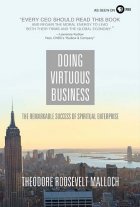
The quote on the front cover of Doing Virtuous Business by Theodore Roosevelt Malloch says it well: “Every CEO should read this book.” I agree!

It seems that our mainstream media has become more and more anti-capitalism and anti-private business. It seems a small — but very vocal — group would prefer that our government oversee every business enterprise. According to Theodore Malloch, nothing could be farther from the biblical way of thinking about business.

By using both real-time examples of virtuous businesses and the wisdom of Scripture, Mr. Malloch makes the strong case that businesses operating on biblical virtues become spiritual enterprises that can benefit all of society. As a former business owner myself, I couldn’t agree more.

A few quotes from the book to whet your appetite—

By creating wealth, we use God’s gifts responsibly, and provided that we work toward that goal in a spirit of humility and gratitude, we benefit all those with whom we deal long the way.

When people join together in an enterprise, they create a new person, the firm itself, which is something greater than the sum of its parts. It, too, has a soul, and if its members honor God, then it, too, honors God.

Profitability comes last among the principles: it is not the primary goal of the company, but the consequence of doing business in the right way, so as to honor God.

A company guided by faith will possess the virtues that I have described in this book: it will have the courage and perseverance to pursue its goals and also the humility, compassion, and forgiveness to guard against arrogance and offensiveness.

This is the first book I have read in quite awhile that deals head-on with the weak arguments the anti-capitalists use. And it does so winsomely, kindly, and quite persuasively. I repeat it again: every CEO should read this book!

I am a Thomas Nelson book reviewer.

We Shall See God (book review)

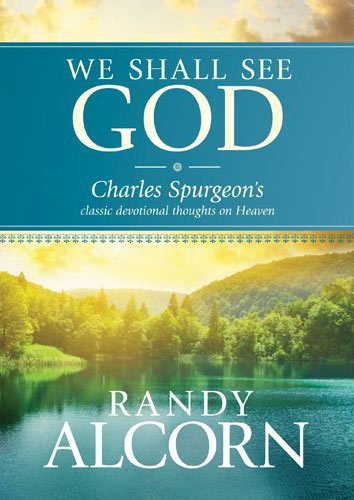
It wasn’t for nothing that Charles Spurgeon was called “the prince of preachers.” In We Shall See God by Randy Alcorn, you can get a taste of Spurgeon’s eloquence, and of Heaven’s majesty.

We Shall See God is a collection of Spurgeon’s sermons about Heaven. Randy Alcorn has done a masterful job of culling through the prince’s sermons to pull out excerpts that talk about the beauty of Heaven and the horrors of Hell. Randy’s comments following each passage from Spurgeon are wonderfully presented. He doesn’t “talk over” Spurgeon, nor does he simply rehash what Spurgeon already said. He eloquently amplifies or briefly explains.

This book is designed to be used as a 50-day devotional reading. But I’ll be honest with you: I couldn’t put it down! I was so enthralled by Spurgeon’s description of Heaven, that I couldn’t wait to read more. And now I can’t wait to tell others more about Heaven.

Lately there have been so many authors and blogger hypothesizing about Heaven and Hell and the after-life. But Spurgeon doesn’t give us his opinion, he gives us biblical insight. And wouldn’t you much rather hear what the Creator of Heaven has to say about it, than what any mere mortal has to say?

I highly recommend this book to you. You will not only look forward to Heaven even more, but you will enjoy your brief journey on this Earth even more too.

I am a Tyndale book reviewer.

How To Read The Bible (book review)

People who call themselves Christians should know how to read the Bible, right? Maybe, but many times I think we assume far too much. Fortunately How To Read Your Bible by A.J. Conyers can help.

  • Some people avoid the Old Testament, saying, “It’s too confusing!”
  • Some people simply flip their Bibles open to any passage and simply start reading.
  • Some people only open their Bibles when they’re at church.

All of these methods may work, but they’re not the best way to learn what God has to say to us in His Word. A.J. Conyers explains to his readers the art of reading the Bible, as well as the practice of reading the Bible. He gives enough background information to get you started in the right direction, and he gives you ample resources to continue digging into God’s Word more.

As you might have noticed, I love to read. But hands-down-without-question my favorite book is the Bible. Every time I open it up, I find something new to apply to my life. If you’re having difficulty getting started on a Bible study, this book may be just the thing to help get things rolling.

(I’m also a big fan of YouVersion: the Bible app for your smart phone. You can download it for your iPhone or Droid by clicking here.)

Wandering In The Wilderness (book review)

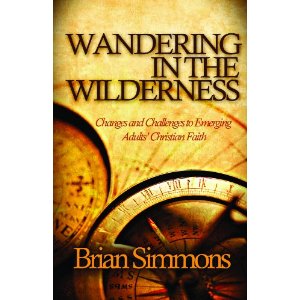
Brian Simmons addresses a vital topic for church leaders and parents: why are emerging adults leaving the church? Wandering In The Wilderness is chock full of timely research and observations that are vital for us to see a healthy future for the church.

Brian is a real boots-on-the-ground author. He works in a college setting and is very involved in the life of his students outside of the classroom. In fact, the prompting to write this book was a conversation with a former student who shared that she felt she was lost and wandering.

Wandering In The Wilderness has a very conversational tone, but it is by no means simply a collection of anecdotal observations from one college professor. On the contrary, the volume of research that is presented in this book is quite impressive. This level of research gives an authoritative tone to the conversation.

As a church leader, I was particularly drawn to the attitudes that emerging adults have about the church and organized religion. I found myself jotting down plenty of notes in the margin. I also have three children of my own who will soon be entering the emerging adult phase of their life, and I found ample information to help me guide them through this important transitional stage in their lives.

Recently I read and reviewed Tim Elmore’s outstanding book Generation iY. That book was a brilliant insight into the thought processes of emerging adults. I would recommend Wandering In The Wilderness as a companion piece, especially for church leaders who want to make sure this generation is well prepared to transition into leadership positions in healthy, growing, vibrant churches.

I am an ACU Press book reviewer.

Get Off Your Knees & Pray (book review)

I know the subtitle of Sheila Walsh’s book Get Off Your Knees & Pray is “a woman’s guide to life-changing prayer,” but I thought it was fantastic!

I think something special happens when women pray, so I’d love to see more women getting serious about their prayer life. In a moment I’ll tell you how to win a FREE copy of this book. But first, I’ve asked my wife Betsy to share a thought with you about prayer.

I have never viewed myself as a consistent prayer warrior who stands in the gap for others. I pray for those in need and talk with God on a regular basis about my life, my heart’s desires, my fears, my needs. I always had a simple trust that God would come through, He would somehow make things right. Then one day, things weren’t right. My life was in a place I never imagined. I felt completely out of control. All stability was gone, a majority of my comfort was gone, and I looked at the future and felt uncertainty. I didn’t like this place – at all! The most confusing part was that all I had ever attempted to do was follow God’s leading. Although I attempted to cry out to God, it was difficult because I was angry with God. It’s an interesting place to be when you are attempting to pray to the one who helps you forgive others, when you have anger directed at Him.

That was a long, dark time. I am happy to say, I’m not there today. I have pressed through and God has helped me. Those prayers and cries for help…He heard them all. I remember specific moments when I chose to stand upon God’s Word in prayer and to confess what I could not yet see. My final breakthrough came when I surrendered the need to know why, I was simply willing to trust Him. Let me tell you, it was not a simple choice. It was an act of my will. Today, many of my prayers are still unfilled, but I am confident that God’s plan is happening in my life and the lives of those around me.

One thing that helped me to recognize answered prayer, was to focus on the little moments in my life. As I became grateful and acknowledged God’s leading and provision in my normal everyday life, I became increasingly aware that He was working. In those dark days I believe He was working, I just was focused on the wrong things.

So, if you don’t believe that God is working in your situation, ask Him for a new set of eyes. Begin to thank him for the good things around you, no matter how small. I believe you will begin to see bigger and bigger things emerging.

Here’s how to win a free copy of Get Off Your Knees & Pray. To be entered in the drawing (which will take place Friday, May 27, at 5pm EDT), do one or both of the following:

  1. Leave a comment below about what you’ve learned recently about prayer. Even if your comment is “I need to pray more,” it will help others to know they are not alone.
  2. Send the following message via Twitter: Win a free copy of @SheilaWalsh’s “Get Off Your Knees & Pray” from craigtowens.com at http://wp.me/pmy10-19P #prayingwomen

If you are the winner, you will be notified after the drawing on May 27, 2011.

Average Joe (book review)

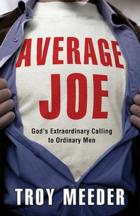
There’s nothing wrong with being an average Joe. And there’s certainly nothing “average” about Troy Meeder’s book entitled Average Joe!

For some time I’ve been concerned about the “feminization” of men. Particularly I’m concerned with how Christian men have bought into culture’s wrongheaded idea of what it means to be a real man. Should a real man be gentle? Yes! But “gentle” is not a code word for a passive sissy. Real men understand their God-given role to be the provider and protector for their family, which at times means they have to toughen up.

Being an average Joe for some guys has become a license to simply let life happen to them. Just take things as they come. Don’t get too worked up about anything. Don’t stand up too strongly for anything. Don’t make waves. As a result, average Joes then become another face in the crowd.

But not according to Troy Meeder. Real men stand up for what’s right. They don’t wait for life to come to them, they go and make life happen. They make good things happen, and they keep bad things from happening to those they love. A real average Joe looks a lot like Jesus Christ.

Average Joe is a collection of observations – almost individual essays – about what Troy sees as being a Jesus-honoring, family-loving, honest-to-goodness real man. I was challenged to look in the mirror with each chapter I completed.

This is a wonderful book for any REAL man to read. But the study guides in the book would also work very well as conversation starters for a men’s ministry, or even for small groups of men who are holding each other accountable.

I am a Multnomah book reviewer.

Experiencing The Spirit (book review)

Years ago I read Henry Blackaby’s outstanding book Experiencing God, which helped me see God’s relationship with me in a whole new light. Now Henry and Melvin Blackaby have done the same thing with the role of the Holy Spirit in a Christian’s life in Experiencing The Spirit: The Power of Pentecost Every Day.

I’m a fourth-generation Pentecostal, so I’ve grown up with a solid understanding of the Holy Spirit. But Experiencing The Spirit created in me a longing for something more. I don’t want it to just be a head-only theology, but a heart-felt relationship. In fact, this question in the book hit me right between the eyes: Do you spend more time and effort honing your skills than you do seeking the Lord and deepening your relationship with Him?

I don’t want to just know about God, I want to know Him. And a deeper relationship with the Holy Spirit is what allows that to happen. The Apostle Paul prayed for the church at Ephesus, and I want to make that my prayer too…

I pray that out of His glorious riches the Father may strengthen me with power through His Holy Spirit in my innermost being, so that Christ may dwell in my heart through faith. And I pray that as I am being rooted and established in love, I may have power, together with all the saints, to grasp how wide and long and high and deep is the love of Christ, and to know this love that surpasses knowledge—that I may be filled to the measure of all the fullness of God.

For a more intimate relationship with the Spirit of God, I recommend checking out Experiencing The Spirit.

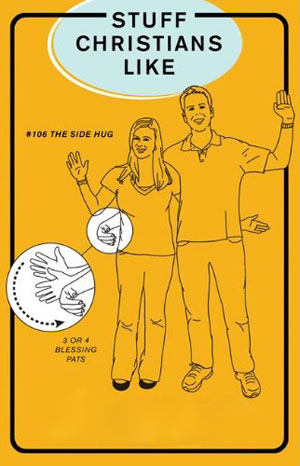
Stuff Christians Like (book review)

As a fourth-generation Pentecostal, I’ve grown up in the church. I readily recognize that Christians (like any other group) develop their own vocabulary and set of “acceptable” behaviors. But can you spot them? Jon Acuff has spotted them, and puts them on display in Stuff Christians Like.

This book is funny! I know some people think every discussion about anything related to the Bible and church needs to be stone-faced serious. I don’t happen to be one of those people. I see some great comedy in Scripture, and I have certainly seen even more in the church.

Jon writes—as any comedian does—in exaggerated terms. This is what makes his topics so enjoyable to read. He comes close to being irreverent, but never quite crosses the line. But in the process, Jon helps us to see what we often miss, but what those who don’t regularly attend church see so clearly.

If you’re easily offended, or don’t think Christians should laugh at themselves, stay away from this book. But if you enjoy lighthearted comedy with an underlying purpose, you will enjoy Stuff Christians Like.

MacArthur (book review)

General Douglas MacArthur was popularly called “America’s General,” and Mitchell Yockelson’s biography—MacArthur: America’s General—does an admirable job in telling us how he earned this well-deserved moniker.

(As an aside: I have really enjoyed all of the books in the Thomas Nelson Generals series. You can read my reviews of George S. Patton here, and Robert E. Lee here.)

MacArthur’s influence is still being felt at West Point as we train our future military officers, and around the world, where General MacArthur had a prominent role in three wars. And, if his advice about Vietnam had been heeded, perhaps his influence would have extended through four wars.

How did he achieve such prominence? It’s the classic debate: are great leaders born or made? In Douglas MacArthur’s case the answer is a resounding “Yes!” Yes, he was born into a family with a strong military heritage. MacArthur certainly benefited from the influence of his grandfather (a judge), his father (a decorated, combat veteran and general), and his mother (who used her charm to sway many influential people). But these family members could only open doors; it was up to MacArthur to march through them.

And, yes, march through them he did! At every opportunity he pressed forward. Sometimes with unconventional tactics, sometimes in opposition to his leadership, and sometimes through sheer willpower. But the results speak for themselves: Without a General Douglas MacArthur to lead our troops in perilous times, the outcome in three wars could have been disastrously different.

The United States of America is viewed as the world’s superpower (and rightly so). It is very likely that without MacArthur’s influence we would not be the prominent power that we are now. We owe a huge debt of gratitude to God for blessing us with the MacArthur family.

A lively and informative read for military buffs and students of leadership. Highly recommended!

I am a Thomas Nelson book reviewer.

How To Win Friends And Influence People (book review)

Dale Carnegie wrote How To Win Friends And Influence People over 70 years ago. It’s stood the test of time and has—rightly so—earned the label “classic.”

Have you read it? I’ve certainly heard lots of people reference it, and I’ve seen other authors quote portions of this classic work. But honestly I hadn’t read it for myself. I had sort of assumed that I knew all that was in this book just because I had read so many snippets from others.

But I was wrong. Dead wrong. Now I’m almost kicking myself for having waited so long to read this. The principles in this classic about how to deal with people in the right ways would have saved me a lot of grief. Who knows, it may have even helped me to win more friends and perhaps even influence more people. But it’s never too late to start.

I love this Carnegie thought: “Do you know someone you would like to change and regulate and improve? Good! That is fine. I am all in favor of it. But why not begin on yourself? From a purely selfish standpoint, that is a lot more profitable than trying to improve others—yes, and a lot less dangerous. So I’m beginning on myself.

If you haven’t read this classic, get it, read it, and begin to improve your relationships.