Soul Work (book review)

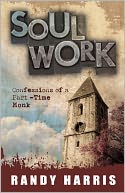
You probably think that being a monk is a full-time occupation, right? But what if you could learn from the most committed monks, without actually moving to a monastery? That’s exactly what Randy Harris shows us in Soul Work: Confessions of a Part-Time Monk.

I’ll admit that I was hooked more by the subtitle of this book. After all, whoever heard of a part-time monk. Randy Harris set out to find out more about the deep spiritual walk for which so many monks and hermits are renowned. In the beginning of the book, Randy states that there was something he disagreed with in almost every monastery or hermitage he visited. But he culled through all they had to offer, and presented the best practices in Soul Work.

In short, there is much to learn from the unhurried, quiet, peaceful, and deeply-abiding lives of those who separate themselves from general society. What a huge contrast with our frantic, noisy, stressful, superficial lives. Randy shares what he learned about…

  • Deeper intimacy with God
  • A more refreshed outlook on life
  • A life infused with hope
  • More meaningful prayer times
  • Greater levels of obedience
  • God-honoring humility
  • A more satisfying relationship with God

But we won’t pursue any of these things unless we are truly dissatisfied with our current spiritual level. As Randy wrote,

“We do not move in our spiritual lives until we experience some dissatisfaction with what we’ve got. … The first step toward living an intimate life with God is to realize our own desperation, and that desperation comes largely by developing some sense of God’s holiness.”

This is not a casual read. It’s a book that forced me to confront how much more of God I really wanted in my life, and if I was willing to make the necessary changes to achieve greater intimacy. I was challenged by Soul Work, and I think you will be too.

I am an ACU Press book reviewer.

What The Bible Says About The Holy Spirit (book review)

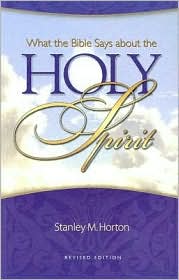
I know a lot of people get uneasy when people starting talking about the Holy Spirit. But what about when the Bible talks about the Holy Spirit? In Dr. Stanley M. Horton’s book, What The Bible Says About The Holy Spirit, you won’t get opinion, just Scripture.

I’m a fourth generation Pentecostal, which means I’ve grown up in an environment where the discussions about the Holy Spirit were numerous and candid. As a result, I thought I knew quite a bit about Him, but it turns out I was so wrong! Dr. Horton is a brilliant scholar, and his knowledge of Scripture is wonderfully on display in this book.

Dr. Horton begins with the Pentateuch and progresses all the way through the Bible, showing exactly what the Bible says about the Holy Spirit. Other books I have read talk more about what the Holy Spirit does, but Dr. Horton pulls out the Scriptures to show Who the Holy Spirit is. And, believe me, there’s a huge difference! The first approach broadens your mind; the second approach deepens your relationship.

If you want to go deeper in your relationship with the Holy Spirit, or if you are simply interested in learning more about (as Francis Chan calls Him) the Forgotten God, then check out What The Bible Says About The Holy Spirit.

Leadership Is Dead (book review)

It’s not that we don’t need leaders anymore; actually, we need more leaders. But we also need the right kind of leaders. It is exactly those right kinds of leaders that Jeremie Kubicek calls upon in Leadership Is Dead: How Influence Is Reviving It.

Many leadership books tend to be very head-oriented. That is, most leadership books give you the how to’s. Jeremie takes a different approach. Instead of leading with the how to’s, he leads with the why. From the opening chapter Jeremie wants his readers to look deep inside to find out why they want to be a leader, or a better leader. Then once that is firmly in mind, he begins to dismantle all of the self-serving motivations, and replace them with the ultimate tool for effective leadership: influence.

In many ways this book is as much a people-skills book as it is a leadership book. But, after all, unless you are leading sheep, you need to know about interacting with people. Rest assured, Leadership Is Dead is not a touchy-feely book; it is an in-your-face confrontation about doing reviving true leadership.

The last chapter is called “Why You Probably Won’t Do This.” In this chapter, Jeremie says, “Most leaders never reach the levels of significant influence because their instincts for self-preservation are too strong.” And then he adds, “True influence comes when you change yourself to change the world.”

Do you want to make a lasting impact on your world? It starts when you can make the changes in yourself that will lead to greater levels of influence on those around you. Because in order to change your world, you’re going to need a lot of help from a lot of other people! This book can help.

(Special thanks to Michael Hyatt for selecting me as a winner on his blog, so that I could get a copy of this book. And thank you as well to Howard Books for making these books available to Michael Hyatt.)

I Knew Jesus Before He Was A Christian (book review)

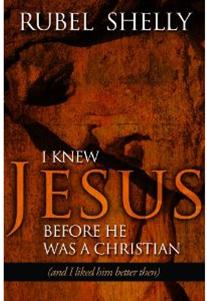
You know the cliché: “Never judge a book by its cover.” But with Rubel Shelly’s book, it’s really hard not to give in to this! The complete title is I Knew Jesus Before He Was A Christian… And I Liked Him Better Then. Provocative, huh?

His idea is that the Jesus that is presented in the Bible—which is also the Jesus that is presented to someone who doesn’t have a personal relationship with Him—is different from the Jesus people see in the organized church and in professing Christians. The Jesus in the Bible (or before someone becomes a Christian) is seen in freedom and abundant life. But the Jesus in the church (or after someone becomes a Christian) is a rule-keeping killjoy.

Honestly, I expected this book to be a church-bashing book. I excepted Rubel Shelly to come out blasting away on the rephrase I-love-Jesus-but-I-can’t-stand-His-followers! So I was more than pleasantly surprised right from the first chapter—appropriately titled “Pro-Jesus and Pro-Church”—that this book was not taking that track. Instead, Shelly makes the distinction between “institutionalized religiosity” and a vibrant personalized relationship between God and mankind. Then out of the overflow of this personalized relationship with God, a Christian’s outward lifestyle toward others should be notably more Christ-like.

This book is not targeted at any one segment. There are parts that every pastor would do well to heed. Then there are other parts that anyone who calls themselves Christian should read. And there are even parts that those not involved in a church or a relationship with Christ should take note of.

If, by the title, you were expecting to see the church get beat up, you will be sadly disappointed. However, if you feel like the Church has no room for improvement, you will not only be disappointed, but probably a bit angered too! On the other hand, those who love Christ and love His Bride (the Church), and want to see the Church operating more as she should, you will find much to process in this book.

I am an ACU Press book reviewer.

Leadership Gold (book review)

I thoroughly enjoy John Maxwell’s books, as they have opened my eyes to leadership principles more than any other author. And the “duet” of Leadership Gold and Go For Gold easily fit into the category of extremely helpful.

As I pondered it, I think what I appreciate most about Dr. Maxwell’s books is his level of affirmation. He challenges me to get better as a leader by showing me how I can do it. He encourages me to build on what I already know, and keep on growing. He helps me see what I can become and can accomplish as a God-fearing leader.

Leadership Gold is made up of 26 leadership lessons that Dr. Maxwell has learned over decades of leading. Each lesson comes with his personal example — sometimes failures, sometimes successes — along with actionable steps the reader can take. At the end of each lesson there are both application and mentoring exercises. To dig deeper into each lesson, the companion Go For Gold is a short reading for each day of the week that corresponds with the lesson in Leadership Gold. Combined, these books are a powerful one-two punch!

If you are in a leadership position, or if you aspire to be an effective leader, I can highly recommend these two books to you.

Secure Daughters, Confident Sons (book review)

Our society is bombarded by so many flat-out-wrong messages about boys and girls, and how to parent them. In Secure Daughters, Confident Sons, Glenn T. Stanton helps set the record straight.

Right out of the gate, Glenn makes an important statement about the need for a book such as this:

“If the rhetoric of political correctness keeps us from exploring the issue of gender differences, we lose something valuable to our humanity. Amazing scientific evidences of essential sex differences in the fields of anthropology, psychology, endocrinology, and neurology in the last few decades strongly disprove nearly all the thinking that drove the misunderstanding about gender in the first place. In fact, the more sophisticated this scientific research gets, the more it deepens our insight into the importance of male and female differences and how profoundly they exist within us.” (emphasis mine)

With a no-holds-barred approach, Glenn dismantles the politically-correct falsehoods like:

  • There are no real differences between boys and girls.
  • Kids can development just fine in a fatherless home.
  • Our children are just as healthy in a one-parent home as in a two-parent home.
  • Kids will be kids regardless of what their parents tell them.

The first few chapters alternate between information specifically for raising boys, and information specifically for raising girls. Then the later chapters zero in on the roles both Dads and Moms play in developing healthy, well-rounded, confident, secure children. Who (no surprise here) develop into healthy, well-rounded, confident, secure adults and future parents.

In one of the concluding chapters Glenn writes—

“Boys who grow up with warm and close connections with their fathers are more likely to develop a healthy masculine sense of self. …Boys who grow up with close, affectionate, and affirming relationships with their mothers have a better sensitivity to and understanding of women. …Girls who grow up close to affirming, warm, loving, and confident moms are more likely to be secure and healthy in their womanhood. Girls who grow up close to their fathers in loving and affirming relationships are more likely to be confident around boys and men as they grow.”

I cannot stress strongly enough how important it is for parents and soon-to-be parents to READ THIS BOOK! Raising children is an awesome responsibility, and we need all the help we can get!

I am a Multnomah book reviewer.

Doing Virtuous Business (book review)

The quote on the front cover of Doing Virtuous Business by Theodore Roosevelt Malloch says it well: “Every CEO should read this book.” I agree!

It seems that our mainstream media has become more and more anti-capitalism and anti-private business. It seems a small — but very vocal — group would prefer that our government oversee every business enterprise. According to Theodore Malloch, nothing could be farther from the biblical way of thinking about business.

By using both real-time examples of virtuous businesses and the wisdom of Scripture, Mr. Malloch makes the strong case that businesses operating on biblical virtues become spiritual enterprises that can benefit all of society. As a former business owner myself, I couldn’t agree more.

A few quotes from the book to whet your appetite—

By creating wealth, we use God’s gifts responsibly, and provided that we work toward that goal in a spirit of humility and gratitude, we benefit all those with whom we deal long the way.

When people join together in an enterprise, they create a new person, the firm itself, which is something greater than the sum of its parts. It, too, has a soul, and if its members honor God, then it, too, honors God.

Profitability comes last among the principles: it is not the primary goal of the company, but the consequence of doing business in the right way, so as to honor God.

A company guided by faith will possess the virtues that I have described in this book: it will have the courage and perseverance to pursue its goals and also the humility, compassion, and forgiveness to guard against arrogance and offensiveness.

This is the first book I have read in quite awhile that deals head-on with the weak arguments the anti-capitalists use. And it does so winsomely, kindly, and quite persuasively. I repeat it again: every CEO should read this book!

I am a Thomas Nelson book reviewer.

We Shall See God (book review)

It wasn’t for nothing that Charles Spurgeon was called “the prince of preachers.” In We Shall See God by Randy Alcorn, you can get a taste of Spurgeon’s eloquence, and of Heaven’s majesty.

We Shall See God is a collection of Spurgeon’s sermons about Heaven. Randy Alcorn has done a masterful job of culling through the prince’s sermons to pull out excerpts that talk about the beauty of Heaven and the horrors of Hell. Randy’s comments following each passage from Spurgeon are wonderfully presented. He doesn’t “talk over” Spurgeon, nor does he simply rehash what Spurgeon already said. He eloquently amplifies or briefly explains.

This book is designed to be used as a 50-day devotional reading. But I’ll be honest with you: I couldn’t put it down! I was so enthralled by Spurgeon’s description of Heaven, that I couldn’t wait to read more. And now I can’t wait to tell others more about Heaven.

Lately there have been so many authors and blogger hypothesizing about Heaven and Hell and the after-life. But Spurgeon doesn’t give us his opinion, he gives us biblical insight. And wouldn’t you much rather hear what the Creator of Heaven has to say about it, than what any mere mortal has to say?

I highly recommend this book to you. You will not only look forward to Heaven even more, but you will enjoy your brief journey on this Earth even more too.

I am a Tyndale book reviewer.

How To Read The Bible (book review)

People who call themselves Christians should know how to read the Bible, right? Maybe, but many times I think we assume far too much. Fortunately How To Read Your Bible by A.J. Conyers can help.

  • Some people avoid the Old Testament, saying, “It’s too confusing!”
  • Some people simply flip their Bibles open to any passage and simply start reading.
  • Some people only open their Bibles when they’re at church.

All of these methods may work, but they’re not the best way to learn what God has to say to us in His Word. A.J. Conyers explains to his readers the art of reading the Bible, as well as the practice of reading the Bible. He gives enough background information to get you started in the right direction, and he gives you ample resources to continue digging into God’s Word more.

As you might have noticed, I love to read. But hands-down-without-question my favorite book is the Bible. Every time I open it up, I find something new to apply to my life. If you’re having difficulty getting started on a Bible study, this book may be just the thing to help get things rolling.

(I’m also a big fan of YouVersion: the Bible app for your smart phone. You can download it for your iPhone or Droid by clicking here.)

Wandering In The Wilderness (book review)

Brian Simmons addresses a vital topic for church leaders and parents: why are emerging adults leaving the church? Wandering In The Wilderness is chock full of timely research and observations that are vital for us to see a healthy future for the church.

Brian is a real boots-on-the-ground author. He works in a college setting and is very involved in the life of his students outside of the classroom. In fact, the prompting to write this book was a conversation with a former student who shared that she felt she was lost and wandering.

Wandering In The Wilderness has a very conversational tone, but it is by no means simply a collection of anecdotal observations from one college professor. On the contrary, the volume of research that is presented in this book is quite impressive. This level of research gives an authoritative tone to the conversation.

As a church leader, I was particularly drawn to the attitudes that emerging adults have about the church and organized religion. I found myself jotting down plenty of notes in the margin. I also have three children of my own who will soon be entering the emerging adult phase of their life, and I found ample information to help me guide them through this important transitional stage in their lives.

Recently I read and reviewed Tim Elmore’s outstanding book Generation iY. That book was a brilliant insight into the thought processes of emerging adults. I would recommend Wandering In The Wilderness as a companion piece, especially for church leaders who want to make sure this generation is well prepared to transition into leadership positions in healthy, growing, vibrant churches.

I am an ACU Press book reviewer.