Churchill’s Ministry Of Ungentlemanly Warfare (book review)

Listen to the podcast of this post by clicking on the player below, and you can also subscribe on Apple or Spotify.
This book was a complete and pleasant surprise! I have read so many books about Winston Churchill, including a number of books that Churchill himself wrote, and I never knew about the prime minister’s special group that played such havoc with the Nazi war machine. Giles Milton unpacks the fascinating tale in Churchill’s Ministry Of Ungentlemanly Warfare. 

This book reads like a classic spy novel, but it is the actual historic record of saboteurs, weapons makers, and out-of-the-box plotters who absolutely frustrated Adolph Hitler’s war plans at nearly every turn. The start of World War II caught so many by surprise that they were woefully unprepared to confront what appeared to be the invincible German military. Some in the British government hit upon the idea of fighting a guerrilla-style war to slow down the Germans’ advance. 

Mr. Milton does a marvelous job of following six key gentlemen in the way they created new weapons, new training regimens, and new fighting styles. Everything they did was so unconventional that the traditional leaders in the British government and military hesitated to give their support to this special ministry, and even went out of their way to thwart their efforts. Fortunately, Mr. Churchill was all-in on this group and cleared out the roadblocks for them. 

Whether you enjoy fictional spy novels or non-fictional accounts of historical events, I’m confident you will thoroughly enjoy Churchill’s Ministry Of Ungentlemanly Warfare. 

►► Would you please prayerfully consider supporting this ministry? ◀︎◀︎
Secrets Of Dynamic Communication (book review)

Listen to the podcast of this post by clicking on the player below, and you can also subscribe on Apple or Spotify.

If you’ve ever seen Ken Davis speak, you will recognize instantly his ability to capture an audience’s attention and keep them engaged through his entire presentation. In Secrets Of Dynamic Communication, Ken has given us the step-by-step regimen he uses to prepare such enthralling presentations. 

Let me just state right up front that anyone who communicates with a group of people will need to get this book. I’m not talking about just those who speak to large groups of people, but even someone who runs a sales meeting or teaches a Sunday School class will benefit from the strategies outlined in this book. 

Ken has developed a whole course around the acrostic SCORRE. These are steps that have been battle-tested by Ken himself and refined over years of his public speaking. He has done a masterful job in distilling the basic structure of an engaging address, while still leaving ample room for every speaker to infuse their own unique style and personality. 

Each chapter ends with a review and practice section that will help you begin to learn and apply these steps. Ken also has some excellent tools in the Appendices that will jump-start your speaking craft. 

I’m so appreciative of Ken Davis’ willingness to open up his storeroom of speaking insights to share with all of us! 

►► Would you please prayerfully consider supporting this ministry? ◀︎◀︎
John Adams (book review)

Listen to the podcast of this post by clicking on the player below, and you can also subscribe on Apple or Spotify.

I find David McCullough to be one of the most thorough, impartial, comprehensive, and engaging historians that I have read. These attributes—and many others—are on full display in his biography of our second president John Adams. 

Many have rightly called Thomas Jefferson the pen of the Declaration of Independence and John Adams the voice of the Declaration. But it’s not just this historic document for which Adams should be remembered, but the very form of government which we enjoy right now is a living tribute to his forceful and persuasive genius. 

This biography is brilliantly told by McCullough through the first-person accounts of Adams’ vast quantity of letters, as well as the letters written to and about him, and the contemporary newspapers of the day. McCullough takes us back to Adams’ boyhood home to give us a good understanding of the upbringing and family heritage that fueled his quest for learning and leading. From his first elected office, through his time in Europe advocating for the newly created United States of America, into his presidency, and then through his long retirement, Adams was tireless in his efforts to make this country the best it could be. 

For students of history or leadership, this is a remarkably insightful look into a man that was at the heart of so much of what characterizes our great nation today. I have other books about John Adams in my library, but David McCullough’s lengthy work is, in my opinion, the definitive source. 

►► Would you please prayerfully consider supporting this ministry? ◀︎◀︎
How Christianity Changed The World (book review)

Listen to the podcast of this post by clicking on the player below, and you can also subscribe on Apple or Spotify.

Alvin Schmidt claims, “No other religion, philosophy, teaching, nation, movement—whatever—has so changed the world for the better as Christianity has done.” And I quite believe him. He lays out the evidence to back up this bold claim in his book How Christianity Changed The World. 

A few years ago I presented a series of messages to make the case for the resurrection of Jesus. One of the pieces of evidence I presented was the cultural engagement of Christians whose lives had been transformed by a personal relationship with the resurrected Jesus Christ. Alvin Schmidt’s book is like taking this single point of mine and putting it on steroids! 

Using the reports of first-person observers from the first century all the way through present day, Mr. Schmidt shows how there is not a single part of the culture that hasn’t benefitted from the involvement of those who live out the Christian principles they have discovered in the Bible. From the care of the sick and elderly, to the elevation of women and marriage, to art, and architecture, and music, and medicine, and science, and education—every sphere of life has been improved by practicing Christians. 

I would highly recommend reading this book and then keeping it close at hand to share with those ignorant or skeptical of the claims of Christianity. As William Barclay noted, “Anyone who asks the question, ‘What has Christianity done for the world?’ has delivered himself into a Christian debater’s hands. There is nothing in history so unanswerably demonstrable as the transforming power of Christianity and of Christ on the individual life and on the life of society.” To that, I add a hearty Amen! 

Please get a copy of How Christianity Changed The World for your library. 

►► Would you please prayerfully consider supporting this ministry? ◀︎◀︎
Reading The Bible With The Founding Fathers (book review)

Listen to the podcast of this post by clicking on the player below, and you can also subscribe on Apple or Spotify.

You know how they say, “Never judge a book by its cover?” Well, I did that with Reading The Bible With The Founding Fathers, and I judged incorrectly. My son gave me this book as a gift and I thought I would be reading passages of Scripture that our founding fathers had highlighted in their Bibles. Although that wasn’t the case at all, I was delighted to be wrong. What Daniel Dreisbach has given us in this book is a masterpiece of American history that I so thoroughly enjoyed devouring. 

This book is about the Bible’s influence on not only the founders’ thought process as they contemplated independence from Great Britain, but also as they formed our own republican form of government. It’s also about the common lexicon that the colonists had with each other because the Bible was the most well-read book in the American colonies. This allowed our founding fathers to speak in figurative language that rang true to the hearts of their fellow Americans. 

Mr. Dreisbach often takes us back to Europe and the Protestant Reformation era to help us understand how biblical thinking had coalesced and gained strength in the minds of the mid-eighteenth century Americans. Things like did the Bible sanction rebellion against the king of England, or could principles for a sound government structure be found in the pages of Scripture? 

Reading The Bible With The Founding Fathers is a fascinating and eye-opening read. Not only to help us understand the foundational thoughts of our great country but also to see the role that biblical literacy still plays in our governmental operations today. This book is extensively footnoted, so the curious reader can dig even deeper than Mr. Dreisbach has already taken these topics. 

For Christians who want a better understanding of the Bible’s place in the republican form of government in these United States of America, I would recommend reading this book alongside your Bible so you may ponder for yourself how much of our civic framework is supported by a proper understanding of Scripture. 

P.S. Another great study of our founding fathers is Faith Of Our Fathers.

►► Would you please prayerfully consider supporting this ministry? ◀︎◀︎

UPDATE: I share some quotes from this book here.

His Last Bow (book review)

Listen to the podcast of this post by clicking on the player below, and you can also subscribe on Apple or Spotify.

They say all good things must come to an end, but that doesn’t mean I have to like it! Arthur Conan Doyle had attempted many times to stop writing Sherlock Holmes stories, but the reading public kept clamoring for more. At last, Doyle brought them an epilogue entitled His Last Bow. 

Readers of my blog may recall that I seldom read fiction books, but there are two notable exceptions to that rule: One of them is Doyle’s Sherlock Holmes stories. Although I hated to come to the end of these great stories, Doyle did some unusual things in this set of memoirs that I hadn’t read before, so it really kept me on my toes. 

For instance, in one story, Holmes solves the entire case while lying sick in his bed. And in the final story, Doyle uses a device never before seen in his great detective stories: he told the story not as he usually does in first person through Dr. John Watson, but in third person through an unnamed observer. There are a couple of other twists in these stories that careful Sherlock Holmes readers will probably catch as well. 

All in all, His Last Bow was a very enjoyable final send-off for the world’s greatest detective. 

►► Would you please prayerfully consider supporting this ministry? ◀︎◀︎
How To Bring Men To Christ (book review)

Listen to the podcast of this post by clicking on the player below, and you can also subscribe on Apple or Spotify.

Among the last words Jesus spoke to His disciples was His commission that after they were empowered by the baptism in the Holy Spirit they should go into all the world, preaching the gospel, and making more disciples of Jesus. R.A. Torrey spent his life fulfilling this commission, and he shares the lessons he learned in his book How To Bring Men To Christ. 

This book is a highly practical guide that is set up almost like an encyclopedia. After a brief introduction, the second chapter is simply entitled “How to begin,” and it outlines the broad, big-picture strokes. Then the next nine chapters are all entitled “Dealing with….” Torrey gives us a detailed listing of passages of Scripture, including how and when to use them, for various types of people, such as: the indifferent, those anxious about their eternal fate, those with false hopes, those who lack assurance of salvation, skeptics, complainers, and the hardheaded. Torrey gives the Christian soul-winner all of the biblical help they will need, plus some personal examples of how he employed these scriptures himself. 

The final two chapters of this book focus on the role of the Holy Spirit in helping Christians progress in their own sanctification and grow in their maturity as soul winners. 

How To Bring Men To Christ can probably be read through quite quickly, but it is a book that many Christians will want to put in a place of reference where they can return to it again and again. All Christians who want to live out the Great Commission that was given to us by Jesus Himself will want to read this highly practical book.

►► Would you please prayerfully consider supporting this ministry? ◀︎◀︎
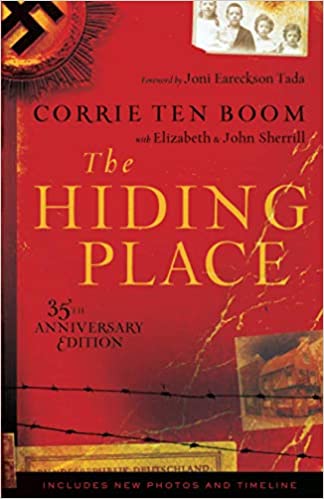
The Hiding Place (book review)

Listen to the podcast of this post by clicking on the player below, and you can also subscribe on Apple or Spotify.

In The Problem of Pain, C.S. Lewis writes, “Suffering is not good in itself. What is good in any painful experience is, for the sufferer, her submission to the will of God, and, for the spectators, the compassion aroused and the acts of mercy to which it leads.” This sentiment was never more fully displayed than in the lives of the ten Boom family. Corrie ten Boom relates her story in The Hiding Place. 

The ten Boom family had lived in Holland for a couple of generations at the time the Germans occupied their country during World War II. Immediately, their family home and watch repair shop became a hub for underground resistance activity. But the start of this war was not the start of their compassionate activity in their city. The ten Booms lived out their Christian faith in tangible, compassionate ways every single day, and their neighbors reaped the benefits. 

The entire ten Boom family was actively involved in the efforts to protect at-risk people during the Nazi oppression of their country, including the elderly and sick, their Jewish neighbors, the mentally disabled, and the young men that were being pressed into duties to support the German war effort. As The Hiding Place progresses, the story begins to zoom-in on two sisters: Betsie and Corrie, especially their activities inside the German prisons and concentration camps in which they were imprisoned. 

The miracles that God performed for these women are too many to recount here, but it seems like hardly a page in the story passes before another miracle is seen. These Christian women took full advantage of each miracle and used them to continue to bring light and love into one of the most dark and hateful times in human history. Even after the war has ended and Corrie has returned to her Holland home, the ministry of healing, forgiveness, and reconciliation continued unabated through her tirelessly loving activities. 

The Hiding Place is truly a heroic tale! I highly recommend parents and grandparents reading it aloud to their children and grandchildren. May all Christians follow the example of the ten Boom family in finding ways to daily share the love of Jesus to their neighbors-in-need. 

►► Would you please prayerfully consider supporting this ministry? ◀︎◀︎
Voice Of A Prophet (book review)

Listen to the podcast of this post by clicking on the player below, and you can also subscribe on Apple or Spotify.

I’ve always appreciated A.W. Tozer’s prophetic voice. By that I mean, his unabashed call for Christians to live up to the Christlike standard given to us in the Scriptures. But in Voice Of A Prophet, Tozer hits a little closer to home for me (and for all of us who are in ministry positions) as he specifically calls on pastors to live up to the prophetic standard given to us in the Bible. 

Sometimes people misunderstand the title “prophet” to be one who foretells future events. At times, that is the function of a prophet, but primarily the prophet is more of a forthteller than a foreteller. The prophet is called upon to boldly proclaim God’s truth and tell forth where godly people are falling short. Prophets are God’s messengers to God’s people, usually sent to reawaken His people to truths that they have forgotten or strayed from. 

Tozer calls modern-day pastors and preachers—those he calls “the sons of the prophets”—to look to the prophetic fathers of the Scripture. He calls us to live up to the God-fearing standard of the prophets like Elijah, Isaiah, John the Baptist, and Jesus. He forthtells how too many have succumbed to the voice of culture instead of adhering to the voice of their Lord, and how they have traded “Thus saith the Lord” for “Thus saith me.” 

The opening chapter of Voice Of A Prophet reprints a prayer that Tozer wrote out when he was ordained in 1920. Part of that prayer for himself should remain a prayer for all who are called by God to be pastors today: “Let me stand before the great or minister to the poor and lowly; that choice is not mine, and I would not influence it if I could. I am Thy servant to do Thy will, and that will is sweeter to me than position or riches or fame and I choose it above all things on earth or in heaven.”

Voice Of A Prophet is an important read for those in pastoral ministry. FAIR WARNING: You will be challenged and convicted by Tozer’s timeless words! But if you will heed those words, God will be pleased to bless your efforts. I would also recommend this book to anyone who would like to know how they can better support and pray for their pastor, as I think they will find valuable insights in this book. 

Would you please prayerfully consider supporting this ministry?

Talking To GOATs (book review)

Listen to the podcast of this post by clicking on the player below, and you can also subscribe on Apple or Spotify.

I’m a student of leadership, so I love to learn about what makes leaders “tick,” how they overcome obstacles and deal with adversity, and watch how they prepare themselves to be the best they can be. Broadcaster Jim Gray has had a front-row seat (literally!) to some of the most outstanding athletes in recent history, and he unpacks his stories about these leaders in his book Talking To GOATs. 

For those of you wondering, GOAT stands for “greatest of all time.” We’re talking about people who stand out from their peers over a long period of time, those who set the standard for everyone else, those who have so excelled that their sport has had to change things up to try to accommodate them! Superstars like Muhammad Ali, Tom Brady, Michael Jordan, Tiger Woods, Mike Tyson, Hank Aaron, and Michael Phelps. 

Jim Gray’s book is a behind-the-scenes look at not only the hard work he put in to produce and present interviews with these GOATs, but also insights rarely seen of the intense work these athletes put in to become the GOATs of their particular sport. Jim shows us how both he and these athletes deal with setbacks, criticism, the challenges that come with success, and their own internal drive to keep being the best. 

This book isn’t all about athletes, but it’s a bit of a memoir of Jim’s life too. I really enjoyed learning about the role that Jim’s parents, and especially his dad, played in helping Jim get into these “front row seats” to cover these amazing athletes. Jim is also very candid about how he has processed the inevitable criticism that comes from interviewing a certain athlete in a way that not every fan appreciated. It was a very enjoyable read. 

The sports fans in your life will almost certainly know who Jim Gray is, and they will love hearing what went into some of the more memorable moments in sports broadcasting. My son gave me this book as a gift and I thoroughly enjoyed it, so I know that the sports fans that you love will also give you kudos if you send Talking To GOATs their way.