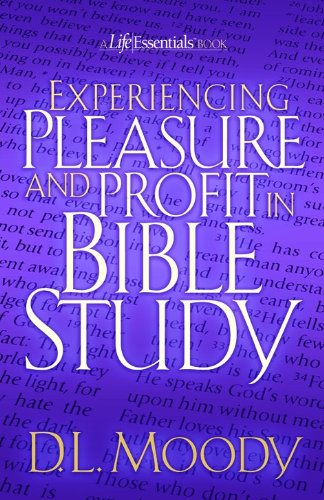
D.L. Moody’s Word To Pastors About The Word

Pleasure & ProfitAs I read D.L. Moody’s book Pleasure & Profit In Bible Study, I noticed several of his comments were directed to pastors.

In my humble opinion, the pastor needs to be the “Bible Student In Chief” of his or her congregation. The pastor’s love for God’s Word will create a hunger in the congregation to study this amazing Book!

You can read my full book review of Pleasure & Profit by clicking here. Below are some of the words to us pastors from this book.

“Oh! let every minister tell the truth, though he preach himself out of his pulpit. … If the Bible only has a chance to speak for itself, it will interest the people.” 

“Give the people the Word of God. Some men only use the Bible as a text book. They get a text and away they go. They go up in a balloon and talk about astronomy, and then go down and give you a little geology, and next Sunday they go on in the same way, and then they wonder why it is people do not read their Bibles.”

“It a good thing for a minister to have the reputation of feeding his people. … People can get along without your theories and opinions, ‘Thus saith the Lord’—that is what we want.”

“Christ did not have a short-hand reporter to go around with Him to write out and print His sermons, and yet the people remembered them. Never mind about finished sentences and rounded periods, but give your attention to making your sermons clear so that they stick. Use bait that your hearers will like.”

“It is a thing to weep over that we have got thousands and thousands of church members who are good for nothing towards extending the Kingdom of God. They understand bazaars, and fairs, and sewing-circles; but when you ask them to sit down and show a man or woman the way into God’s kingdom, they say: ‘Oh, I am not able to do that. Let the deacons do it, or some one else.’ It is all wrong.” 

Pastor, how is your personal Bible study time? Is it invigorating, or humdrum? We’ve got to get immersed in the Word so that we can encourage our congregations to do likewise.
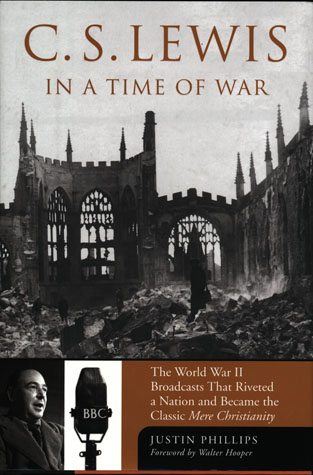
10 Quotes From “C.S. Lewis In A Time Of War”

In A Time Of WarI loved C.S. Lewis In A Time Of War by Justin Phillips! It appealed to my interests in World War II history, old-time radio, and one of my favorite authors: C.S. Lewis. You can read my book review by clicking here. Below are 10 quotes from this book which will give you a little of the flavor of this work.

“In a time of uncertainty and questioning it is the responsibility of the church—and of religious broadcasting as one of its most powerful voices—to declare the truth about God and His relation to man. It has to expound the Christian faith in terms that can be easily understood by ordinary men and women, and to examine the ways in which that faith can be applied to present-day society during these difficult times.” —James Welch, the BBC director of religious broadcasting responsible for getting C.S. Lewis on the air

“It seems to me that the New Testament, by preaching repentance and forgiveness, always assumes an audience who already believe in the law of nature and know they have disobeyed it. In modern England we cannot at present assume this, and therefore most apologetic begins a stage too far on. The first step is to create, or recover, the sense of guilt. Hence if I gave a series of talks, I should mention Christianity only at the end, and would prefer not to unmask my battery till then.” —C.S. Lewis

“Having seen more of his original manuscripts than probably anybody else, Walter Hooper observes that there is next to no evidence of rewriting or of copious changes. The manuscript of The Screwtape Letters is a case in point. There was only the one draft.” —Justin Phillips

“A charitable trust was set up called The Agape Fund, using the Greek word for love. Until his marriage in 1957, two-thirds of all Lewis’s royalties went into this fund to help those in need—normally under the cover of anonymity.” —Justin Phillips

“If the whole universe has no meaning, we should never have found out that it has no meaning.” —C.S. Lewis

“Walter Hooper had discovered a calculation made by Warnie [Lewis] in 1967, described in his diary some four years after Jack’s [C.S. Lewis] death, that by the time the typewriter was finally packed up Warnie must have written at least 12,000 letters on it on his brother’s behalf.” —Justin Phillips

“Any amount of theology can now be smuggled into people’s minds under the cover of romance without them knowing it.” —C.S. Lewis 

“But if you will go to God just as you are, fully admitting that you care about Him very little, and put yourself in His hands, if you’re even ready to be made to care and leave Him to work, He’ll do the rest.” —C.S. Lewis

“All I am in private life is a literary critic and historian, that’s my job. And I am prepared to say on that basis if anyone thinks the Gospels are either legends or novels, then that person is simply showing his incompetence as a literary critic. I’ve read a great many novels and I know a few amount about the legends that grew up among early people, and I know perfectly well the Gospels are not that kind of stuff. They are absolutely full of the sort of things that don’t come into legends. Take one simple example. The passage in which Our Lord is scribbling in the dust before He gives His answer about the woman taken in adultery. Nothing whatever comes of it, no doctrine has ever been based on it, it has no point at all; there’s no conceivable reason why anyone should ever have written it down, unless he’s seen it happening. From first to last the things strike me as records of fact. And, in my opinion, the people who think that any of the episodes in the Gospels are imaginary are the people who have no imagination themselves and have never understood what imaginative story-telling is.” —C.S. Lewis

“Numbers vary, but in the year 2000 some estimates put worldwide sales of Lewis’ books at over 200 million copies in more than thirty languages.” —Justin Phillips

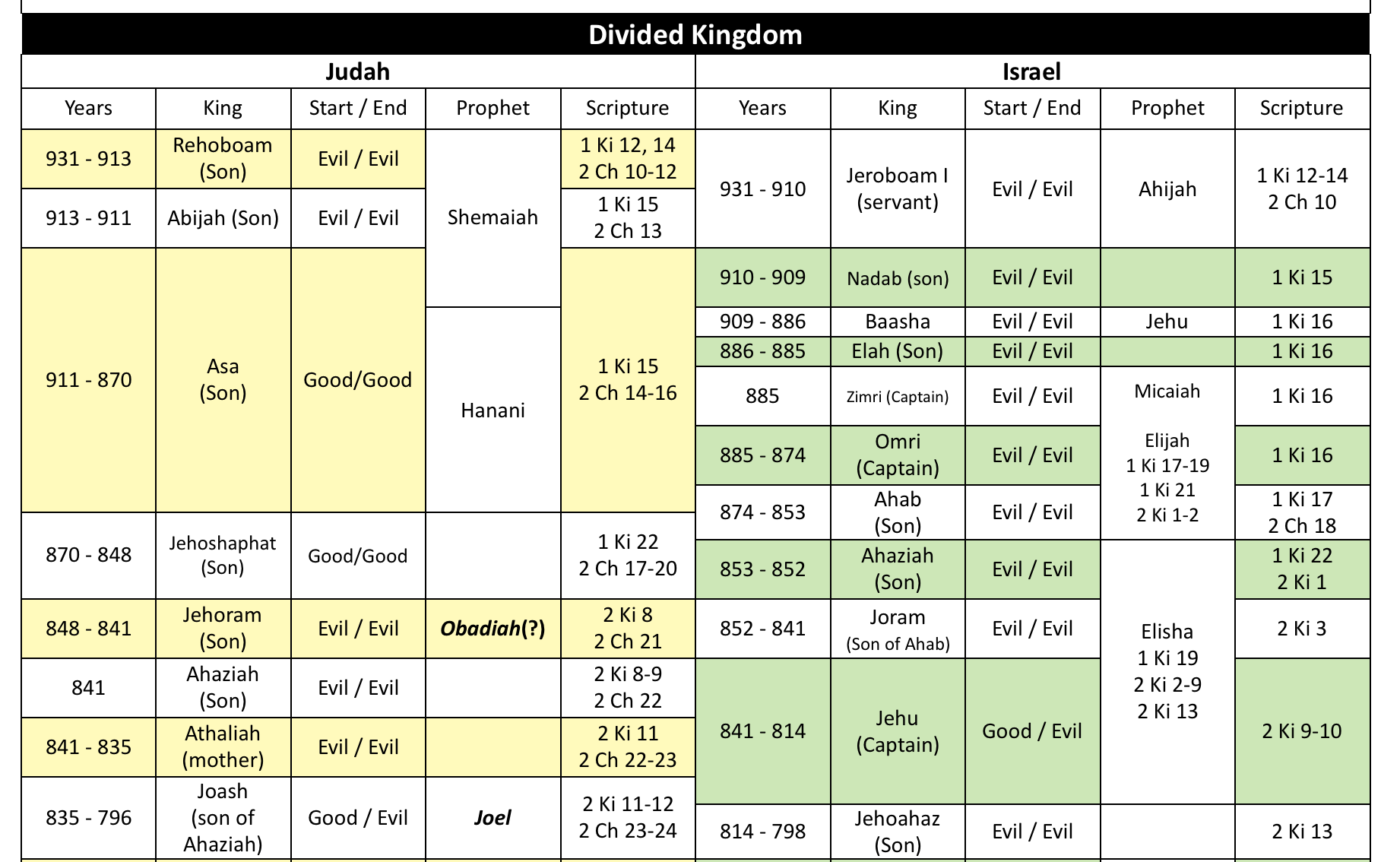
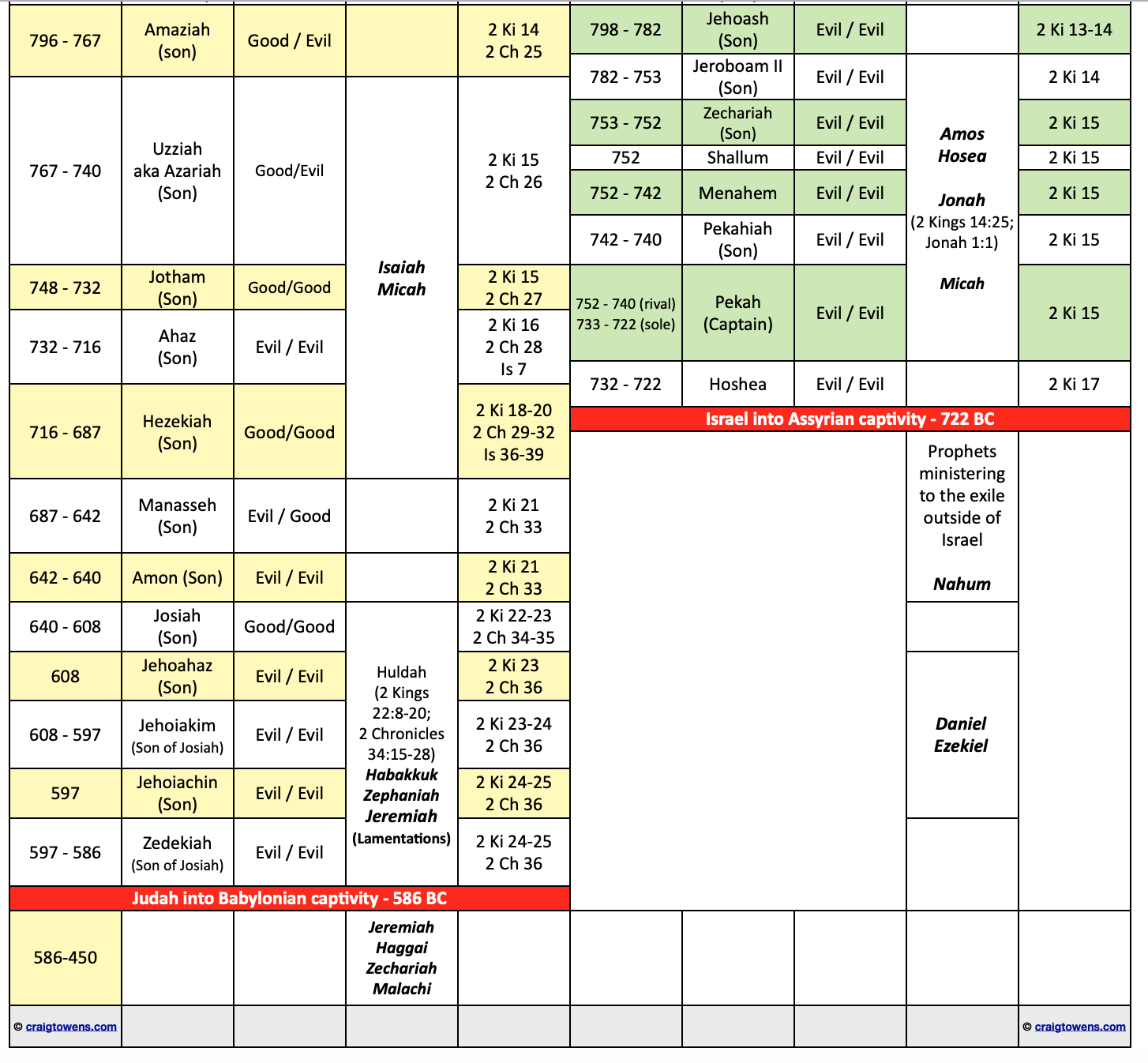
Israel’s Kings & Prophets

click for larger view

click for larger view

click for larger view

I posted earlier that I am reading through my Archeological Study Bible in chronological order. In other words, I’m reading the books of the Bible not in the order they appear, but in order of the historic events they cover.

On the Biblegateway website, Jacob Edson has taken my chart and added even more details and cross-references to related Scriptures for each of the kings on this chart.

One challenging point in history is the divided kingdoms of Israel (the 10 northern tribes) and Judah (the 2 southern tribes). What makes it challenging when reading straight through the Bible is the history is covered in 1 and 2 Kings and then again in 1 and 2 Chronicles. In the midst of these kingdoms, several prophets are sent by God. Some of these prophets only have their words recorded in Kings or Chronicles, while others have their words recorded elsewhere in the Bible (usually the book name is the prophet’s name).

In trying to keep all of these people and messages clear in my mind, I have put together a list of all the kings and prophets during the period of the divided kingdom (roughly 931-586 BC).

You can click the picture above to get a larger view, or you can download a PDF copy by clicking here → Kings of Israel & Judah ←

I am not a biblical scholar, nor do I have a history degree. This is just a chart I put together to help me in my Bible reading, and I thought it might help someone else too. I would welcome any corrections or clarifications that anyone would offer on this humble work.

Not all of these updates are reflected in the screenshots on this page, but they are all in the PDF version. 

**UPDATE 1: several people pointed out some tweaks I needed to make to this chart, and I am grateful for the input! This is the revised copy as of August 28, 2017.

**UPDATE #2: a few more tweaks … this is the revised version as of July 31, 2014.

**UPDATE #3: I have posted a chart zooming in on the chronology of the Old Testament prophets which I recreated from the Archeological Study Bible. You can read it and download it by clicking here.

A couple of notes:

    • Prophets who also have their words recorded in a book that bears their name are listed in bold italics.
    • The “start / finish” designation for each of the reign of the kings is clearly my subjective opinion.
    • Sometimes you will see dates for two kings’ reigns that overlap. These are where there was a co-regency (that is a father and son ruling simultaneously).
    • The prophets that are listed under the Israel side after Israel had gone into captivity are the prophets that God was using to speak to the Israelites in exile.

**UPDATE #4: I continue to do more research and get feedback from people far wiser than me. The latest version is dated August 28, 2017.

**UPDATE #5: The original chart stopped when Israel and Judah went into captivity. I have now added another line to show the prophets who continued to prophesy to both the exiles in Babylon, as well as to those who returned to Israel later.

**UPDATE #6: Scholars are unsure of the date of Obadiah. We know that it took place after invaders had caused problems in Judah (Obadiah 11)—and Edom responded in a way that angered God. Some scholars place this date after Nebuchadnezzar’s conquest of Judah in 586 BC, but since post-exilic prophets always named Nebuchadnezzar or Babylon, I think it’s more likely to have occurred during the reign of Jehoram around 840 BC (see also 2 Chronicles 21:8-10). Added Huldah as a prophetess during the reign of Judah’s King Josiah.

**UPDATE #7: Thanks to Anthony Wimmer, this chart is now available in French → Rois d’Israel & Juda

**UPDATE 8: I am always appreciative of the interaction with those who have downloaded my chart and are digging into the dates. After a few conversations, I have modified the chart slightly on the lower right quadrant of the last page to show those prophets who were ministering to the Israelites who were in captivity.

Pleasure & Profit In Bible Study (book review)

Pleasure & ProfitNear the beginning of Pleasure & Profit In Bible Study, Dwight Moody states the purpose of his book: “We cannot overestimate the importance of a thorough familiarity with the Bible. I try to lose no opportunity of urging people by every means in my power to the constant study of this wonderful Book. If through the pages that follow, I can reach still others and rouse them to read their Bibles, not at random but with a plan and purpose, I shall be indeed thankful.”

I am thankful that D.L. Moody took the time to pen this book for us. Though over a century old, his words are bringing a renewed excitement to studying my all-time favorite book: The Bible.

Moody devoured God’s Word, and had amazing recall of all he read. He reminds us that anything we are full of will be much easier to recall and apply. He then allows us a glimpse into his personal study time, showing us how he reads his Bible, what he looks for, how he marks certain passages, and other ways to engage Scripture.

If anyone ever felt like their Bible reading or studying was in a rut, this book will be a welcome rejuvenator. Even for those who already appreciate their time studying God’s Word, Pleasure & Profit will bring new insights for your study time.

I highly recommend this book!

C.S. Lewis In A Time Of War (book review)

In A Time Of WarC.S. Lewis In A Time Of War by Justin Phillips combined several favorite things for me: World War II history, an inside look at old-time radio, a biography on one of my favorite authors, and a fascinating look at the repercussions of one man’s life.

The BBC Radio was just coming into its own during the lead up to World War II. England again was to play a major part on the world stage, and the radio became not only the primary means of communicating inside Great Britain, but also to the world as well. Radio was used to inform, to pass along vital information, to entertain, and to boost morale.

After having already endured The Great War (what we now call World War I), the English populace was largely dismayed at being forced into another bloody conflict. As anyone might imagine, morale was at an all-time low and questioning God’s role in these cataclysmic events was at an all-time high. The BBC felt duty-bound to try to raise morale and answer these questions.

Looking back on history, C.S. Lewis seems the perfect choice to be the voice of encouragement and reason that the BBC would use, but at the time Lewis was a little-known don at Magdalen College who had never written a script to be read over the airways (something far different than writing for someone else to read themselves in essay or book form). So not only did the BBC take a huge leap of faith, but so did Lewis, as a failure in this venture could have seriously damaged his reputation and future.

As it turned out, Lewis’ talks were immensely popular, and the text of those talks ended up being published in the book form we now know as Mere Christianity. C.S. Lewis also experienced one of the most productive times of his life, cranking out many other of his most popular books, sermons, and talks given to the Royal Air Force and other military personnel.

If you are a fan of C.S. Lewis, World War II history or old-time radio, there is much to enjoy in this well told story by Justin Phillips. Definitely a great read!

NOTE: Focus on the Family produced an excellent audio drama using this book as the source. Check out my review of that production by clicking here

A Mathematical Quote From Gerald Schroeder In “There Is A God”

There Is A GodAs I said in my book review of Anthony Flew’s There Is A God, the real value of this book is in the arguments which contributed to Flew’s shift from atheism to theism. You can read my full book review by clicking here.

Frankly, it’s hard to share a lot of the quotes because the context of the full argument would be lacking, but I’ve been sharing a few of them over several posts. To continue, here is an extensive quote from mathematician Gerald Schroeder, which is set up by a quote from Anthony Flew.

“Schroeder first referred to an experiment conducted by the British National Council of Arts. A computer was placed in a cage with six monkeys. After one month of hammering away at it (as well as using it as a bathroom!), The monkeys produced fifty typed pages—but not a single word. Schroeder noted that this was the case even though the shortest word in the English language is one letter (a or I). A is a word only if there is a space on either side of it. If we take it that the keyboard has thirty characters (the twenty-six letters and other symbols), then the likelihood of getting a one-letter word is 30 times 30 times 30, which is 27,000. The likelihood of getting a one-letter word is one chance out of 27,000. Schroeder then applied the probabilities to the sonnet analogy. ‘What’s the chance of getting a Shakespearean sonnet?’ he asked. He continued:

‘All the sonnets are the same length. They are by definition fourteen lines long. I picked the one I knew the opening line for, “Shall I compare thee to a summer’s day?” I counted the number of letters; there are 488 letters in that sonnet. What’s the likelihood of hammering away and getting 488 letters in the exact sequence as in “Shall I Compare Thee to a Summer’s Day?” What you end up with is 26 multiplied by itself 488 times—or 26 to the 488th power. Or, in other words, in base 10, 10 to the 690th. 

‘Now the number of particles in the universe—not grains of sand, I am talking about protons, electrons, and neutrons—is 10 to the 80th. Ten to the 80th is one with 80 zeros after it. Ten to the 690 is one with 690 zeros after it. There are not enough particles in the universe to write down the trials; you’d be off by a factor of 10 to the 600th. 

‘If you took the entire universe and converted it to computer chips—forget the monkeys—each one weighing a millionth of a gram and had each computer chip able to spin out 488 trials at, say, one million times a second; if you turn the entire universe into these microcomputer chips and these chips were spinning a million times a second producing random letters, the number of trials you would get since the beginning of time would be 10 to the 90th trials. It would be off again by a factor of 10 to the 600th. You will never get a sonnet by chance. The universe would have to be 10 to the 600 times larger. Yet the world just thinks the monkeys can do it every time.’”

  • More quotes are forthcoming.
  • You can read some direct quotes from Anthony Flew by clicking here.
  • Some Albert Einstein quotes can be found by clicking here.

5 Quotes From Albert Einstein In “There Is A God”

There Is A GodAs I said in my book review of Anthony Flew’s There Is A God, the real value of this book is in the arguments which contributed to Flew’s shift from atheism to theism. You can read my full book review by clicking here.

Frankly, it’s hard to share a lot of the quotes because the context of the full argument would be lacking, but I’ve begun sharing some of them over several posts. To continue, below are some quotes from Albert Einstein.

“I am not a positivist. Positivism states that what cannot be observed does not exist. This conception is scientifically indefensible, for it is impossible to make valid affirmations of what people ‘can’ or ‘cannot’ observe. One would have to say ‘only what we observe exists,’ which is obviously false.” —Albert Einstein

“The man of science is a poor philosopher.” —Albert Einstein

“I want to know how God created this world. … I want to know His thoughts, the rest are details.” —Albert Einstein

“I’m not an atheist, and I don’t think I can call myself a pantheist. We are in the position of a little child entering a huge library filled with books in many languages. The child knows someone must have written those books. It does not know how. It does not understand the languages in which they are written. The child dimly suspects a mysterious order in the arrangement of the books but doesn’t know what it is. That, it seems to me, is the attitude of even the most intelligent human being toward God. We see the universe marvelously arranged and obeying certain laws but only dimly understand these laws. Our limited minds grasp the mysterious force that moves the constellations.” —Albert Einstein

“Every one who is seriously engaged in the pursuit of science becomes convinced the laws of nature manifest the existence of a spirit vastly superior to that of men, and one in the face of which we with our modest powers must feel humble.” —Albert Einstein

More quotes are forthcoming. You can read some direct quotes from Anthony Flew by clicking here.

9 Quotes From “Sidelined”

SidelinedSidelined was a book I could hardly put down: such a compelling story of love, and family, and overcoming adversity! You can read my full book review by clicking here. Below are some quotes I highlighted in this book, unless otherwise noted all of the quotes are from Coach Pagano.

“We can! We will! We must! By any means necessary—we have no choice—we will win.”

“We were determined to create a culture where guys couldn’t wait to come to work. We wanted people who would be excited about getting up in the morning and being here. … We wanted a workplace where people are honest and forthright with each other. We wanted open communication to be practiced daily. We wanted every person in the building to be treated with the dignity that every human being deserves. Sure, we’re tough guys, and we like to joke and trash talk sometimes as part of our fun. But there has to be a limit to that kind of behavior, and we wanted everyone to respect each other more than anything else. A joke’s only funny if we all share in it together at no person’s expense. And when we make mistakes or do something wrong, we don’t deny it. We want a place that if we are going to eat crow, we are going to eat it while it’s hot!”

“…My condition will not determine my position. I understand the condition, but choose to focus on my position. That is to stay positive and serve….” (part of a letter to his team before the Green Bay Packers game)

“Endurance is not just the ability to bear a hard thing, but to turn it into glory.” —William Barclay

“You brought the spiritual plane. That’s why your leadership goes beyond coaching. You set an example as a spiritual leader, and that’s what inspires people.” —Kevin Elko

“Coaching is a profession of love. You can’t coach people unless you love them.” —Eddie Robinson

“People sometimes ask me what we look for in a player—how we know he’ll be a good fit for our program. It’s a hard question to answer because there are so many variables. … We also go beyond all the facts and stats and determine if these are what we like to call ‘horseshoe guys.’ The horseshoe emblem of the Colts shows seven nails or studs. Each one represents a quality we want in a player/leader for our team—smart, tough, dynamic, physical, character, integrity, and respect. … Players who want to be a part of something bigger. Something great.”

“Part of the reason I couldn’t remain disappointed after our lost to the Ravens [in the playoffs] was that I knew we had built our foundation on solid rock. We had established something that wasn’t going to dry up and blow away in a matter of weeks or months. Our team was committed to building a program for sustained success. We called it ‘building the monster.’ We wanted to take our building blocks of athleticism, talent, and skill and bring them to life with our commitment, character, and determination.”

“Cancer can take away a lot—your hair, your appetite, your energy, and, yes, sometimes your very life. But cancer cannot take away the love that passes between you and the special people in your life. It can’t take away the support and encouragement, the creativity and beauty, the connections and relationships to others who are fighting alongside you. No matter how hard it tries, cancer can never contain the human spirit or diminish the power of faith.”

5 Quotes From Anthony Flew In “There Is A God”

There Is A GodAs I said in my book review of Anthony Flew’s There Is A God, the real value of this book is in the arguments which contributed to Flew’s shift from atheism to theism. You can read my full book review by clicking here.

Frankly, it’s hard to share a lot of the quotes because the context of the full argument would be lacking, but I’m going to attempt to share some of them in multiple posts. To start with, below are some of the direct quotes from Anthony Flew.

“I have said in some of my later atheist writings that I reached the conclusion about the nonexistence of God much too quickly, much too easily, and for what later seemed to me the wrong reasons. I reconsidered this negative conclusion at length and often, but for nearly seventy years thereafter I never found the grounds sufficient to warrant any fundamental reversal. One of those early reasons for my conversion to atheism was the problem of evil.” 

“The presumption of atheism can be justified by the inescapable demand for grounds. To believe there is a God, we have to have good grounds for the belief. But if no such grounds are provided, there exists no sufficient reason for believing in God, and the only reasonable position is to be a negative atheist or an agnostic (by negative atheist, I meant ‘a-theist,’ parallel to such words as atypical and amoral). … This argument garnered many and varied responses. Writing as an agnostic, the English philosopher Anthony Kenny maintained that there may be a presumption for agnosticism, but not for positive or negative atheism. He suggested that it takes more effort to show that you know something than that you do not (this includes even the claim that the concept of God is not coherent). But he said this does not let agnostics off the hook; a candidate for an examination may be able to justify the claim that he or she does not know the answer to one of the questions, but this does not enable the person to pass the examination. … By far, the heaviest challenge to the argument came from America. The modal logician Alvin Plantinga introduced the idea that theism is a properly basic belief. He asserted that belief in God is similar to belief in other basic truths, such as belief in other minds or perception (seeing a tree) or memory (belief in the past). In all these instances, you trust your cognitive faculties, although you cannot prove the truth of the belief in question. Similarly, people take certain propositions (e.g., the existence of the world) as basic and others as derivative from these basic propositions. Believers, it is argued, take the existence of God as a basic proposition.”

“If there is an infinite series of books about geometry that owe their pattern to copying from earlier books, we still do not have an adequate answer as to why the book is the way it is (e.g., it is about geometry) or why there is a book at all. The entire series needs an explanation.” 

“Science qua science cannot furnish an argument for God’s existence. But the three items of evidence we have considered in this volume—the laws of nature, life with its teleological organization, and the existence of the universe—can only be explained in the light of an Intelligence that explains both its own existence and that of the world.”

“My discovery of the Divine has been a pilgrimage of reason and not of faith.”

Check back soon for some additional quotes from this thought-provoking book.

Sidelined (book review)

SidelinedEvery once in awhile I come across a book that is hard to put down. Sidelined by Chuck Pagano, the head coach of the NFL’s Indianapolis Colts, is just such a book.

Before I lose anyone who says, “Football? Not interested,” let me assure you that this is not a football book. This is a great story of near-tragedy and triumph that happens to have a football coach as its main character. This is a book about family, and faith, and teamwork, and pulling together, and overcoming. It’s a love story with a happy ending. It’s a great book!

In a nutshell, Chuck Pagano is hired as the head coach of the Colts, the first time in his career he has gotten a shot at being a head coach. Just a couple of games into his very first season, he is diagnosed with leukemia and sees his coaching responsibilities immediately halted. He enters into a life-and-death struggle with cancer, and ultimately beats it. But the real triumph of the story is the way his diagnosis pulled together a whole city, and even other NFL cities, to raise awareness of this dreaded disease.

Sidelined doesn’t really have an ending, because Coach Pagano’s career is still ongoing, and so is the fight against leukemia. After reading this book, I’m not only cheering for Coach, but I’m also cheering on those in the fight of their lives against cancer as well as those searching for a cure for this disease.

I am a Thomas Nelson book reviewer.