Comparative Religion Class In Sudan

Guest Author: Dick Brogden

There is a wonderful Egyptian Mission agency active in Sudan that exists to give Christ’s living water to the last, least, and lost.  One annual ministry they provide is a Book and Bible exhibition in the middle of downtown Khartoum.  They sell Christian books and Bibles, show Christian films, and host lectures on aspects of the Christian faith.  The exhibition is set up in an empty lot that opens on the major downtown avenue and is open to all.

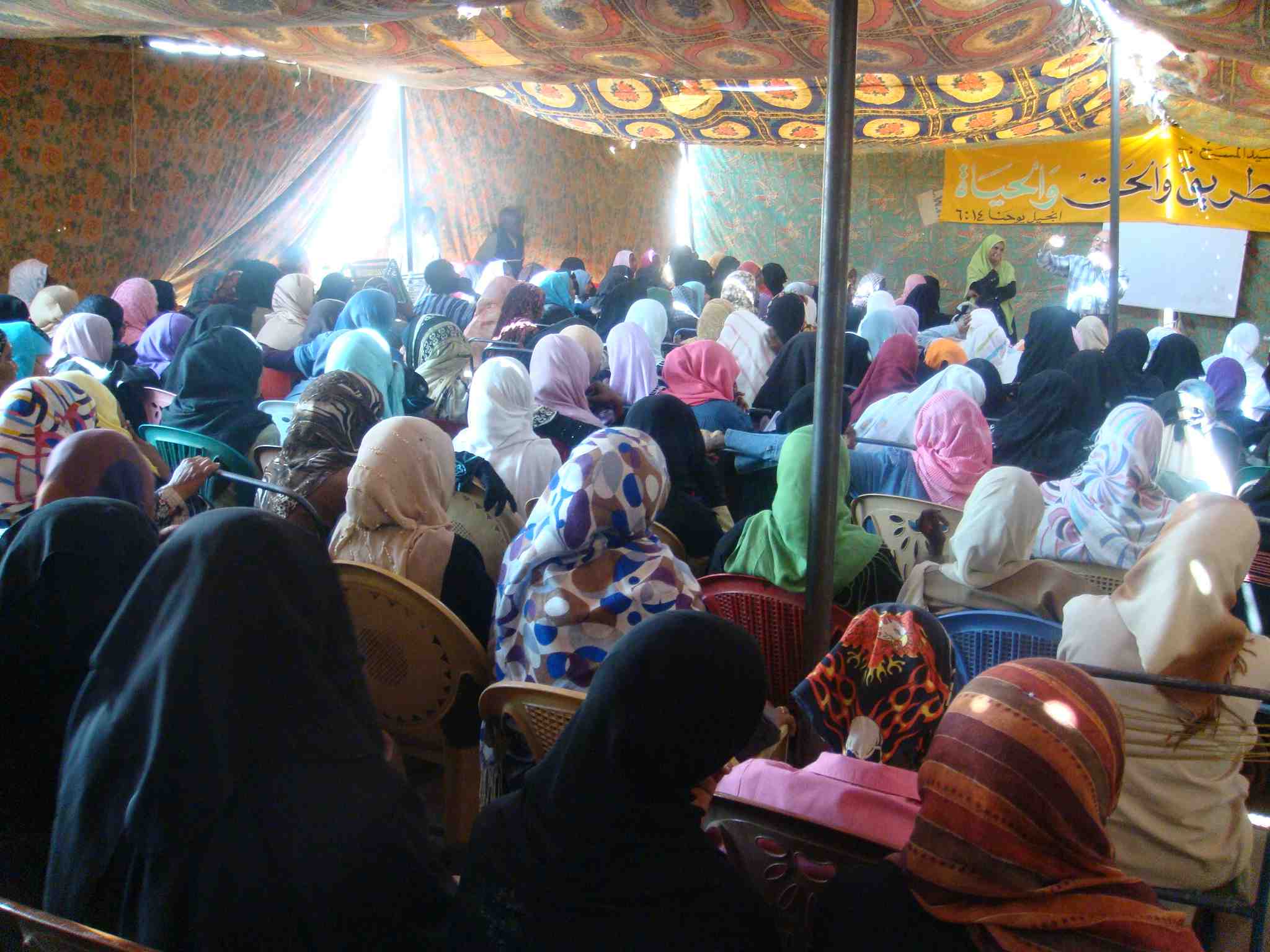
Last month during the exhibition, five buses pulled up and 150 veiled-to-the-eyes Muslim women plodded out.  They were the first year students from a local Islamic University.  Their professor of comparative religion, Dr. Yathrub, decided they needed to interact with some Christians.  The 150 women were respectful, participated in the events, and took home some free literature as a gift.  Dr. Yathrub asked if she could return with the 4th year students.

A couple days later, five more buses, and 150 more Muslim women, most veiled-to-the-eyes showed up.  One hundred of them marched right to the lecture tent and asked if the lecturer could address the issue of the unity of God and the Trinity.  The staff obliged and a wonderful question and answer time followed.  Again, all the students were kind, earnest, and respectful in their interaction.  They too were given a free Christian book titled, “Did Jesus ever claim to be God?” and went home happy.  Dr. Yathrub asked if she could bring the entire year 2 and 3 students, and of course the staff of the event agreed.

The next day Dr. Yathrub called to apologize.  She could not make it nor bring the other students.  Evidently, 300 veiled Muslim women marching around the campus happily reading, discussing, and sharing Christian material was too much for the administration and they opened an investigation of censure against Dr. Yathrub.  To her credit she did not back down, insisting that in comparative religious studies you must be free to compare religions.  A novel and dangerous idea.

Would you join us in praise and prayer.  Praise God that 300 Muslim women were gracious and brave enough to visit the exhibition.  Pray that the words they heard, and the literature they now posses, would be used of the Holy Spirit to delight their hearts in Jesus and unveil their spirits.  Praise God for the courage for Dr. Yathrub.  Would you pray with us that God would reward her with Himself and unveil Jesus to her.  Praise God for the Living Water Team.  Please pray that they continue to be bold and loving in witness and that as a result they too experience a mighty refreshing.

Amazing Book!

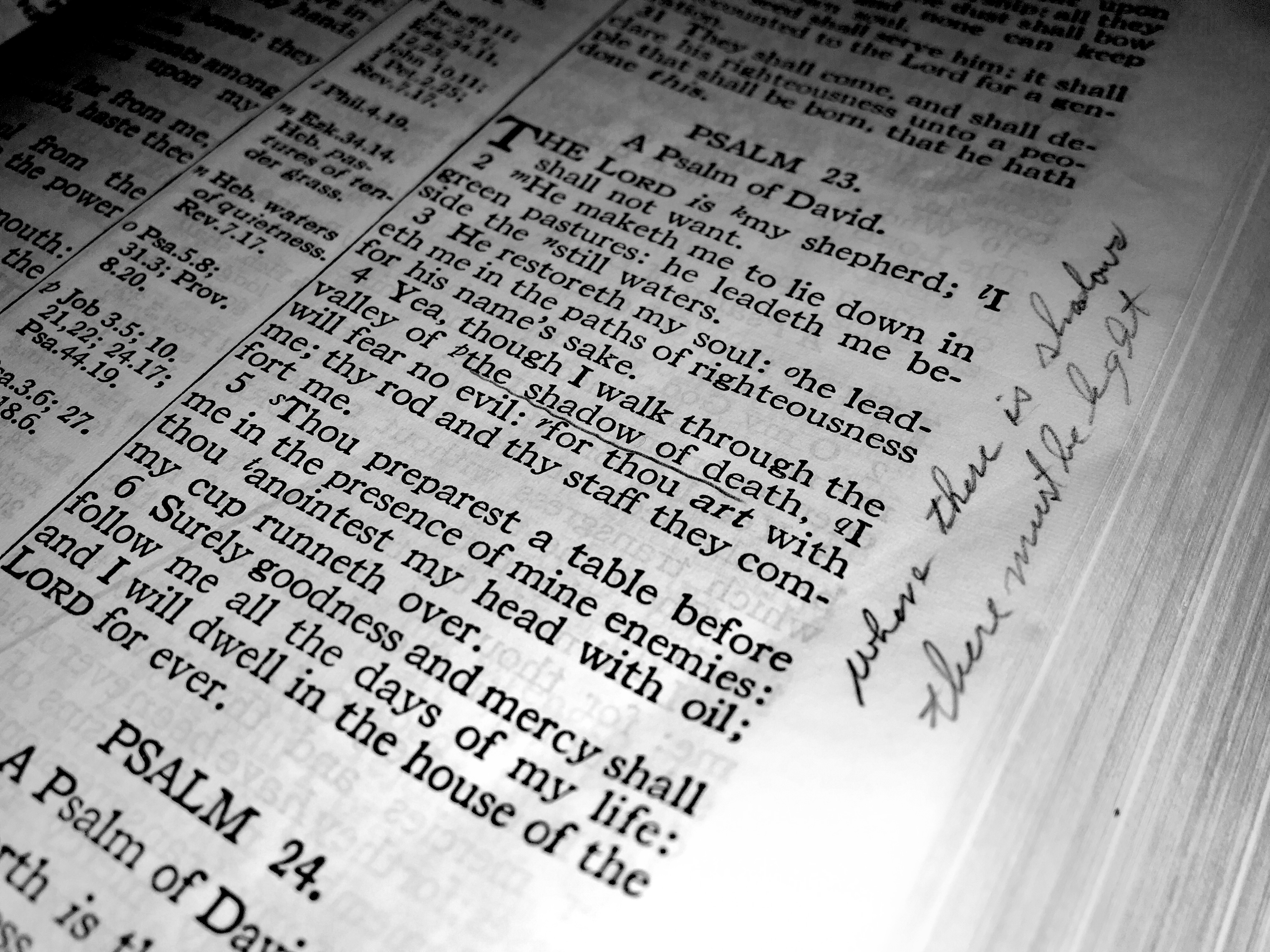
I was reviewing some of my notes for our Spiritual Self-Defense class, and I’m always amazed at the unity and accuracy of the Bible. The Bible tells one unified story from beginning to end. For any other book, this is no big deal; in fact, we expect our books to tell the same story all the way through.

But what’s so mind-boggling for me is the fact that the Bible tells its unified story considering:

  • It was written by 45 different authors
  • Writing over a span of 1500 years
  • In three different languages
  • On three different continents

Not only does the Bible tell the same story, but it does so without error or contradiction! What an amazing book!

Power To Serve (book review)

Smith Wigglesworth: funny-sounding name, but he spoke such powerful, confronting words. Power To Serve was not actually written by Wigglesworth, but spoken by him. This book—like most books that bear his name—is a series of sermons transcribed for us.

I liked the feel of this book. Instead of the fine polished writing of an accomplished author, these words feel like they are coming right from the mouth of this fiery Pentecostal preacher. Wigglesworth is an expositor of God’s Word with few peers. He takes a passage of Scripture and finds the many facets of life in which to bring its holy application.

This book (as its title suggests) challenged me to think about leadership in terms of servanthood. The greatest of leaders are the greatest of servants. And the best servants are those who serve like Jesus.

This is not a book I could speed-read, but had to digest it slowly as I thought about the application to my own life. Here’s a quote which sums up the head-on, no-holds-barred challenges that these words bring to me:

“The Bible is the plumb line of everything. And unless we are lined right up with the Word of God, we will fail in the measure in which we are not righteous. And so, may God the Holy Spirit bring us into that blessed ministry of righteousness.”

I’m trying to line up to God’s Word. These sermons are a great reminder of just how far I still have to go.

Tell Your Story

People often ask me why I read so much, or even why I read the things I read. I like to read widely: classics to contemporary, history to biographies, and even a little poetry.

Tim Sanders wrote a book called Love Is The Killer App. In this wonderful book, he says that reading and studying should be motivated by love. We read and learn so that we can be informed enough to help others who are in need. Not reading just to read, but reading with a purpose. Reading to help tell someone a story. I haven’t found a book that does this better than the Bible.

The world’s greatest storyteller (ever!) was Jesus of Nazareth. Check this out:

With many stories like these, He presented His message to them, fitting the stories to their experience and maturity. He was never without a story when He spoke (Mark 4:33-34, The Message paraphrase).

Jesus could tell a story to anyone at any time. He learned, He studied, He observed, so He would always be ready. He frequently used whatever was at hand to tell His stories—a child, a farmer, fish, bread made with yeast, a coin, a bridal party—but He had to know something about each of those things in order for His stories to be effective for each person’s “experience and maturity.”

Once Jesus encountered a man so demonized that he spent his life naked and living in the graveyard (my friend Jim Wiegand calls him “the naked, cat-eating guy”!). Jesus set this man free from his demons. When this newly-freed man wanted to accompany Jesus, He told him, “Go home to your own people. Tell them your story” (Mark 5:19, The Message).

Tell them YOUR story.

The best story you can tell is your story.

It’s wonderful to read to be informed—I highly encourage this. I love to be able to say, “Benjamin Franklin said…” or “I love the Longfellow poem about…” or “Stephen Covey wrote that we should….” But it’s so much more effective to say, “Here’s what I have learned from my personal encounter with Jesus. Here’s MY story of what Jesus did for me!”

What about you? Do you have a story to tell? If you’re in a relationship with Jesus, you always have a story to tell. Keep walking with Jesus. Keep reading His love letter to you written on every page of the Bible. Then tell YOUR story—the best story of all!

Random

Betsy has no summer school today so we’re just chillin’ around the house. This is also one of the rare weekends that I’m not speaking anywhere. To celebrate the start of a long, lazy weekend, I thought I’d post some random thoughts about me.

Here goes…

  • I also blog short quotes and pictures on Tumblr. Check me out!
  • I don’t drink coffee.
  • I love tea: black, green, white, red, hot or cold.
  • My favorite author is C.S. Lewis.
  • My favorite book is the Bible.
  • A life-goal of mine is to read an autobiography or biography of every U.S. President.
  • I enjoy my Coke Zero with fresh-squeezed lime.
  • My favorite Detroit team is the Tigers.
  • My favorite all-time Tigers player is Ty Cobb.
  • Betsy and I dated for 5 years, 8 months, and 2 days before we got married.
  • I still love going out on a date with Betsy!
  • My ideal vacation is sitting by a lake with a huge stack of books and a big glass of iced tea.
  • I get jazzed by closing all my circles on my Apple Watch every single day.
  • I am more in love with Jesus today than I ever have been in my life!

There you go: a whole bunch of stuff you probably never knew or even cared to know! Have a great weekend!

A Silly Dream World Or The Real Deal?

“What is ‘real’? How do you define ‘real’? If real is what you can feel, smell, taste, and see, then ‘real’ is simply electrical signals interpreted by your brain. … Have you ever had a dream, Neo, that you were so sure was real? What if you were unable to wake from that dream? How would you know the difference between the dream world and the real world?” —“Morpheus” in The Matrix

We are created in God’s image. God is eternal and unrestricted, yet we are contained in finite bodies and constrained to the time-space dimension of our universe. That hardly seems “real.” Yet our souls—the “real” part of us—were made to be timeless and unbound. It seems like a dream, and yet sounds real.

To help humanity navigate the dream-real state in which we find ourselves, God gave us incredible insights into His Word: the Bible. The answers to our dream-real questions are there if we’re willing to search for them.

C.S. Lewis wrote, “What we see when we think we are looking into the depths of Scripture may sometimes be only the reflection of our own silly faces.” The Apostle James talks about God’s Word as a mirror in his letter to the church (1:22-25). In this, I see three people.

(1) One who never looks in the mirror; one who simply accepts what’s presented to him. Again “Morpheus” comes close: “You have the look of a man who accepts what he sees because he is expecting to wake up.” James says this is a man who attends church regularly, but never applies what he hears. In fact, he probably never even hears anything other than what he thinks the pastor said. That man is silly, shallow, and stunted in his spiritual growth (if there is even any growth at all!).

(2) One who looks in the mirror but doesn’t do anything about what he sees. He hears the Word of God at church and perhaps even reads his Bible often at home; he knows all the stories and how everything should be. But he, too, never makes any changes in his spiritual “appearance.” He is content with where he is. If he ever feels the pull of desire that there could be more real to his dream-real world, he quickly explains it away. He is at the same spiritual maturity level today as he was years ago.

(3) One who looks into the mirror, recognizes that he is silly-looking, and then does something about it. It’s hard work and often this man feels like he’s not growing because he continues to see his silly face reflected back to him. As Albert Einstein noted, “As a sphere of light increases, so does the circumference of darkness around it.”

James says only this third man has been freed from his dream-real constraints and is called blessed by God. Only he is beginning to understand how to make the dream real.

In which category are you? Are you brave enough to look into the depths of God’s Word and see your silly face? Are you willing to make the changes the Bible shows you to free your soul?

I’ll Make You An Offer You Can’t Refuse (Book Review)

I'll Make You An Offer You Can't RefuseOkay, I’ll be honest with you, the title of Michael Franzese’s latest book sounds like a cliché—I’ll Make You An Offer You Can’t Refuse. Sounds like a line right out of “The Godfather” or “Goodfellas,” right? But if you’re involved in the world of business, Mr. Franzese’s book is exactly that: an offer (book) you can’t refuse. From how to craft a business plan, to picking the right people, to learning how to negotiate the best deals, Mr. Franzese uses his years of wiseguy street-smarts to give you an advantage.
From the very first page, this book engaged me because I felt like I was having a conversation with the author. His style is very relaxed, and his stories about his business successes and failures are compelling. It’s not often that a business book reads like a novel, but I’ll Make You An Offer does just that.

Throughout all of his lessons, Mr. Franzese makes the contrast between the principles spelled out in the mobster’s bible (The Prince by Machiavelli) and principles articulated in the Holy Bible (specifically the writings of Solomon). Although he learned his strategies from his years in La Cosa Nostra (“this thing of ours” or the mob life), he makes a strong case his strategies will work in the legit life. The difference is the motivation that drives the strategies: Machiavellian or biblical.

“A dictionary definition of success says it’s ‘the favorable or prosperous termination of attempts or endeavors.’ … But dictionary definitions are like sausage casings. It all depends on what you stuff inside” (quote from page 144).

Whether you are just getting started in a new business venture, or whether you are not satisfied with the results of your current business venture, you will find invaluable strategies here to help you. This former mob boss truly does make you an offer you can’t refuse.

Real Raw Emotions

This week I’ve been writing about my favorite book—the Bible—and why I find it so fascinating. Yesterday I talked about how the Bible helps me mentally. But we are not just mental creatures, we are emotional, too, and I have found my Bible to be an excellent way to express some of my deepest, rawest emotions.

(If you would like to read the other parts of this series, they are here, here, here, and here.)

Humans are created in God’s image, and God expresses emotion. In fact, God expresses emotion more deeply and purely than we humans can His sorrow is more bitter, His love is more intense, His jealousy is more pure.

Emotion is expressed throughout the Bible, but I’m particularly attracted to the emotional responses in the Psalms. These are prayers and songs which express the deepest emotions of angry, loving, hurting people. A few examples—

You know what I long for, Lord; You hear my every sigh. (Psalm 38:9 NLT)

Be merciful to me, O God, for men hotly pursue me; all day long they press their attack. My slanderers pursue me all day long; many are attacking me in their pride. (Psalm 56:1-2 NIV)

God, smash my enemies’ teeth to bits, leave them toothless tigers. Let their lives be buckets of water spilled, all that’s left, a damp stain in the sand. Let them be trampled grass worn smooth by the traffic. Let them dissolve into snail slime, be a miscarried fetus that never sees sunlight. Before what they cook up is half-done, God, throw it out with the garbage! (Psalm 58:6-9 The Message)

O my God, my life is cast down upon me and I find the burden more than I can bear…. (Psalm 42:6 AMP)

My God, my God, why have You forsaken me? Why are You so far from saving me, so far from the words of my groaning? O my God, I cry out by day, but You do not answer, by night, and am not silent…. I am poured out like water, and all my bones are out of joint. My heart has turned to wax; it has melted away within me. My strength is dried up like a potsherd, and my tongue sticks to the roof of my mouth…. Dogs have surrounded me; a band of evil men has encircled me, they have pierced my hands and my feet. …But you, O Lord, be not far off; O my Strength, come quickly to help me. (Psalm 22:1-2, 14-16, 19 NIV)

Jesus came to earth as fully God and fully man, able to experience the deepest, rawest emotions of anyone. “He was despised and rejected—a man of sorrows, acquainted with deepest grief” (Isaiah 53:3). Jesus knows what you feel because He felt it, too: “For we do not have a High Priest Who is unable to understand and sympathize and have a shared feeling with our weaknesses and infirmities and liability to the assaults of temptation” (Hebrews 4:15). As a result, “He lives forever to intercede with God on [our] behalf (Hebrews 7:25).

Don’t ever be afraid to express your rawest emotions in God’s presence—He knows profoundly what you are feeling. When you are struggling with deep emotion, the Bible knows how to speak your heart’s cry to God.

Winning The Argument Or The Battle

When I entered college, I did so as a science major: pre-med biomedical chemistry, to be exact. I still really enjoy all of the medical sciences: biology, microbiology, organic chemistry, inorganic chemistry, and the like.

As you might be aware many of the scientists today have a bent toward the theory of evolution. That means that a few of my professors and several of the authors I was reading taught and wrote from that paradigm.

This set up the environment for me to want to debate for my Creationist beliefs.

I had one professor who would specifically challenge me during lectures to refute what he had just said about evolution. An author who wrote a lengthy book about evolution carried on a year-long correspondence with me where we each brought out our best arguments. In all instances—although we believed passionately in our positions and could adequately defend them—the discussions never became shouting matches.

The Bible taught me how to do this.

(This week I’m discussing my favorite book—the Bible—from a couple of different aspects. You can read some of those thoughts here, here and here.)

At times I was tempted to “cross the line” to win the argument. And I may have won the argument, but I would have put myself in a position to lose the overall battle. There are two key passages of Scripture that I keep in mind to help me with this.

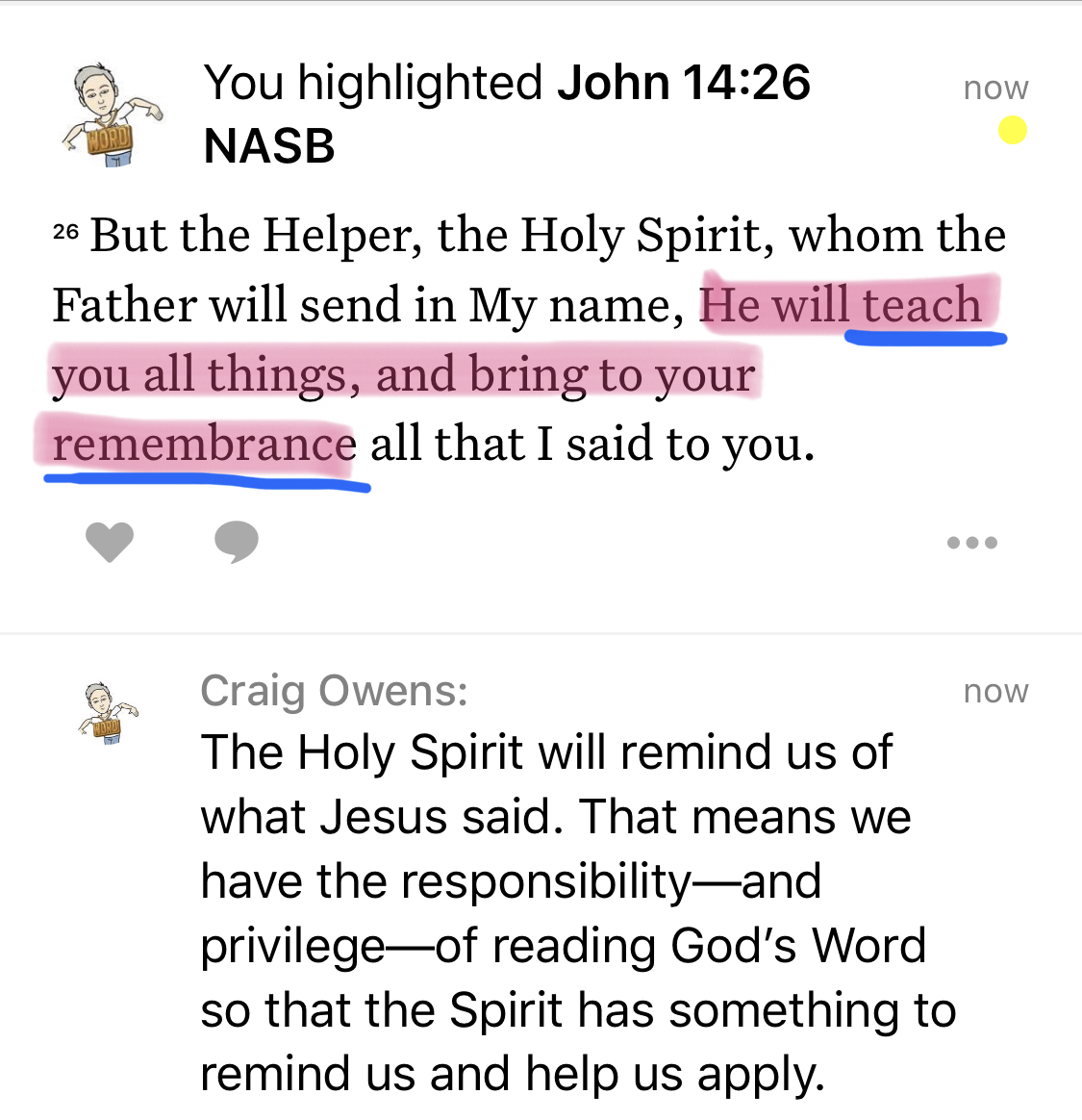
(1) In telling His followers about the Holy Spirit (John 14-16), Jesus said, “But when He, the Spirit of truth, comes, He will guide you into all truth” (John 16:13). And also, “But the Counselor, the Holy Spirit, whom the Father will send in My name, will teach you all things and will remind you of everything I have said to you” (John 14:26).

The Holy Spirit helps me apply biblical truths and principles to my everyday life. He guides me and reminds me of what I have studied.

(2) The second key passage is, “But in your hearts set apart Christ as Lord. Always be prepared to give an answer to everyone who asks you to give the reason for the hope that you have. But do this with gentleness and respect, keeping a clear conscience, so that those who speak maliciously against your good behavior in Christ may be ashamed of their slander” (1 Peter 3:15-16).

Yes, it is important for me to be prepared to give an answer, but this is the middle thought. First, I have to make sure what I’m saying is exalting Christ as Lord. Then I do my best to study and prepare to give an answer, but I must give that answer gently and respectfully.

Allowing the Holy Spirit to help you prepare from the Bible, and allowing Him to guide you into answering questions/critics gently and respectfully honors Christ. And that always wins the battle.

The Thinking Book

“The book to read is not the one which thinks for you, but the one which makes you think. No book in the world equals the Bible for that.” —James McCosh

My kids recently returned from a PK (Pastor’s Kids) Retreat weekend. Our Michigan Assembly of God District Youth Director Jeff Kennedy coordinates this weekend every year. A fun part of their time together is a take-off of Jeff Foxworthy’s “You might be a redneck if…” routine. It’s called “You might be a PK if….” Here are a couple of my favorites—

  • You might be a PK if you’ve used the church sound system as your personal stereo.
  • You might be a PK if National Take Your Kid To Work Day is any day you don’t have school.
  • You might be a PK if you’ve ever taken a bath in the baptismal tank.
  • You might be a PK if you occasionally take Sunday afternoon naps on a church pew.
  • You might be a PK if every answer your Dad gives you comes from the Bible.

Cute! And, for the most part, dead-on accurate!

But that last one got me thinking: do I do this? I sincerely hope (not just because I’m a pastor) that the answer is always “yes.”

I agree with James McCosh that no other book in the world compares to the Bible for challenging me to think. In the King James Version of the Bible, there is a phrase that James uses about God’s Word: he says that we should “receive with meekness the engrafted Word” (James 1:21).

The more I read the Bible, the more its principles become engrafted into my thought patterns. The more I think about the Bible, the more my attitude about life conforms to God’s attitude. And the more my attitude conforms to God, the more my actions and words align with the Bible.

You don’t have to read much every day for God’s Word to make a difference in your life. If you are honest with the Holy Spirit as He illuminates a passage of Scripture to you, you will see how God’s Word can be applied to your life today.

“The Bible is…a chart by which the Christian sails to eternity, the map by which he daily walks; the sundial by which he sets his life; the balance in which he weighs his actions.” —Thomas Watson

To be successful make sure you are looking often at the chart, the map, the sundial, and the balance of God’s Word.