Serve More To Lead Better

Listen to the podcast of this post by clicking on the player below, and you can also subscribe on AppleSpotify, or Audible. 

As King Solomon’s son Rehoboam was ascending the throne, he received some wise counsel:

If you will be a servant to these people and serve them and give them a favorable answer, they will always be your servants.

I also like the way The Message paraphrases this same verse:

If you will be a servant to this people, be considerate of their needs and respond with compassion, work things out with them, they’ll end up doing anything for you.

In other words: the more you serve, the better you will lead. Unfortunately, Rehoboam chose to reject this counsel, and his leadership disintegrated.

If you will be a servant [position] and serve [attitude] they will serve you.

This Hebrew word for serve is used quite a bit in the Old Testament. Interestingly, the first five times it is used are all in the agricultural sense: farming the land, tending to the plants, working, waiting, and ultimately harvesting. Leadership is never developed quickly. Servant leaders must be in it for the long haul.

Jesus also emphasized servant-leadership

But among you it will be different. Whoever wants to be a leader among you must be your servant, and whoever wants to be first among you must be the slave of everyone else.

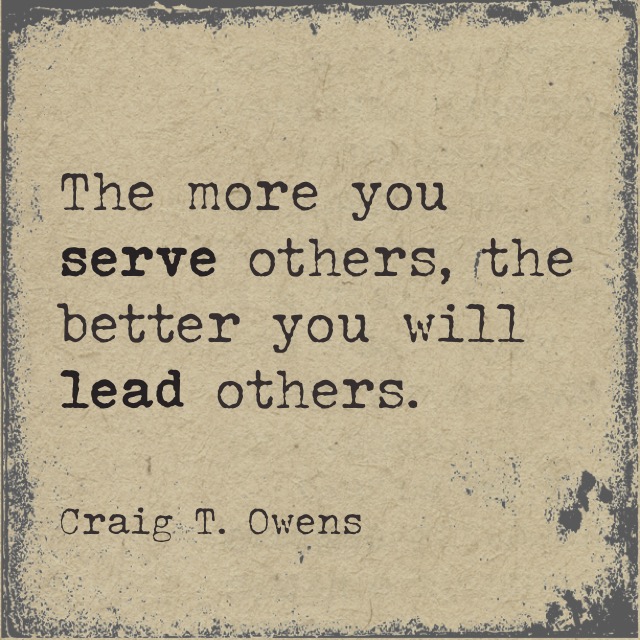
Bottom line: The more you serve others, the better you will lead others. 

I take a deep dive into this kind of leadership in my book Shepherd Leadership.

►► Would you please prayerfully consider supporting this ministry? My Patreon supporters get behind-the-scenes access to exclusive materials. ◀︎◀︎
Downhill

I was riding my bike back from volunteering at the Red Flannel 5k Race in Cedar Springs on Saturday, and there’s one stretch I really enjoy: it’s a nice downhill run. Downhill is so much fun! I get to zip along with very minimal effort.

King Solomon wrote a letter to another king and talked about his downhill run:

But now the Lord my God has given me rest on every side, and there is no adversary or disaster.

Downhill is a breeze, but there are some problems with it…

  • I build only minimal muscle going downhill
  • My stamina is not stretched at all
  • Aerobic exercise is almost non-existent
  • It’s harder to stop

Downhill is fun, but I need some uphill climbs too:

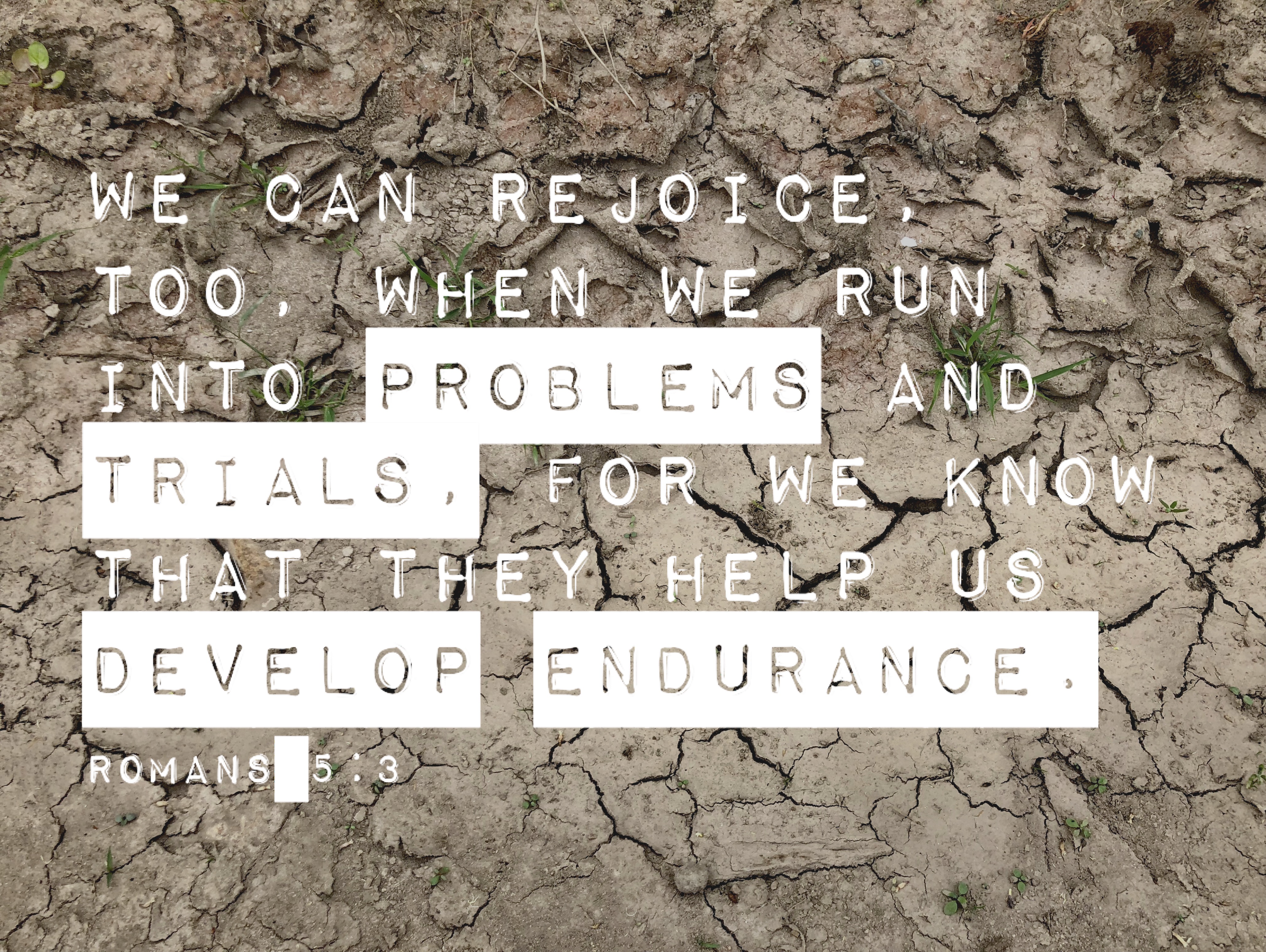
We can rejoice, too, when we run into problems and trials [some uphill climbs], for we know that they help us develop endurance. And endurance develops strength of character, and character strengthens our confident hope of salvation. And this hope will not lead to disappointment.

Manufactured Success

Listen to the podcast of this post by clicking on the player below, and you can also subscribe on AppleSpotify, or Audible.

Does success come from hard work, or does it have another origin? We can certainly manufacture success by doing some public relations, some spin, some creative promotion. And from the outside, it can look very successful. Someone may even do such a good job manufacturing their success that they begin to believe their own press releases.

But humanly manufactured success rarely lasts.

Consider the case of a man named Adonijah. He was the heir-apparent in Israel. As the oldest living son of the famed King David, Adonijah was the odds-on favorite to be the next king. And so Adonijah began to manufacture a successful transfer of power for himself. He invited all the right people and ignored those who he knew wouldn’t go along with his plan. He set up everything just the way a prince ascending the throne should have it. His followers joined him for a party and began to raise their glasses in a toast: Long live King Adonijah!

Except God—and King David—had other plans. Just as God directed, David had his son Solomon anointed king. When the few followers that were toasting Adonijah heard this, they all bailed on him and ran away. Even Adonijah recognized that something else can trump manufactured success. Here’s what he said:

“As you know,  the kingdom was mine. All Israel looked to me as their king. But things changed, and the kingdom has gone to my brother; for it has come to him from the LORD.” (1 Kings 2:15)

Success has come to him from the Lord.God’s success always trumps humanly manufactured success.

Manufactured success leads to pride (the kingdom was mine). And pride over-exaggerates our self-worth and obscures reality (all Israel looked to me as their king). God’s success comes to the humble who recognize His lordship and their place in His Kingdom. God’s success lasts.

Although Adonijah eventually recognized this, he didn’t learn from it. In the next scene, he is again trying to manufacture a way to ascend to the throne. And this time he not only loses his position but his life as well.

Here’s what Jesus says: For whoever exalts himself will be humbled [manufactured success], and whoever humbles himself will be exalted [God’s success].

►► Would you please prayerfully consider supporting this ministry? My Patreon supporters get behind-the-scenes access to exclusive materials, like this recent Bible study tip from the Book of Ecclesiastes. ◀︎◀︎

Loyalty

Listen to the podcast of this post by clicking on the player below, and you can also subscribe on AppleSpotify, or Audible.

How would you define loyalty? All of the dictionary definitions have to do with faithfulness. It’s almost implied that there is a blindness (at worst), or a dogged persistence (at best), to remain loyal to a person or to an idea. The thinking goes, “If I’m loyal to someone, like it or not, I become their Yes-man.”

But I think…

Loyalty is not telling people what they want to hear, but what they need to hear.

For an example, take the prophet Nathan in the Bible. We don’t know how old he is when he steps on the scene, or even where he came from. There isn’t a clue as to his tribal ancestry or even his father’s name.

King David wanted to build a temple for the ark of the covenant of the Lord, and he asked Nathan about this. Nathan immediately said, “Yes!” (kinda reinforces that idea of loyalty = Yes-man, doesn’t it?) But wait! That night, God speaks to Nathan and says, “Tell David he’s not the one to build the temple for Me.” So Nathan returns to David and loyally tells him no.

Later on, David steals another man’s wife and contrives a plan to have that man murdered on the battlefield. David thinks he’s gotten away with it until Nathan, the loyal friend, shows up to confront David with his sin. Nathan didn’t want to see David fail, but he wanted to give him a chance to confess and repent.

Near the end of David’s life, one of David’s sons, Adonijah, wanted to take the throne for himself. Many of the officials in David’s palace jumped on the bandwagon, but loyal Nathan did not. In fact, Nathan even got word to the King about Adonijah’s plans. As a result, David asked Nathan to anoint his son Solomon as king.

During David’s life, Nathan wrote David’s biography. If Nathan was just a mindless Yes-man, he could have easily left out the messy parts of David’s life. But the loyal friend wanted to show future readers that we all mess up, but God forgives and restores us when we repent.

Nathan’s name means the gift God gave or a giver. Both meanings fit this loyal man.

David was so blessed by Nathan’s loyalty that he named one of his own sons after the prophet.

Loyal friends give their friends the gift of life. They don’t let friends go down a destructive path. They don’t join with others when they attack. They remain constant, always-there, friends.

What a blessing to be called a loyal friend! And what an even greater blessing to have “Nathans” in our own lives!

►► Would you please prayerfully consider supporting this ministry? My Patreon supporters get behind-the-scenes access to exclusive materials. ◀︎◀︎

Success Is Going

King David is one of the most well-known characters in the Old Testament. Such incredible stories are told about him that his life can be summed up in one phrase that occurs four times in Scripture—The Lord gave David victory everywhere he went (2 Samuel 8:6, 14; 1 Chronicles 18:6, 13).

When David was faced with a challenge or an enemy, he threw himself fully into meeting the enemy head-on, and he was always successful. There is no record of David ever being defeated in battle. If he went out, he won.

Aha, keyword alert—The Lord gave David victory everywhere he WENT.

The only times David was defeated was when he stood still:

• When his son Absalom killed another of David’s sons, Amnon, David didn’t do anything. Even when Absalom returned from exile, David stayed home and didn’t reconcile with his son (2 Samuel 13-15).

• David’s son Adonijah behaved inappropriately and eventually rebelled against David, too. But David “never interfered with him by asking, ‘Why do you behave as you do?’” (1 Kings 1:6).

• David lusted after and then committed adultery with Bathsheba when, “In the spring, at the time when kings go off to war, Joab led out the armed forces. … But David remained in Jerusalem” (1 Chronicles 20:1).

• David angered God by ordering that a census be taken of all of the men eligible for military service in Israel. “So David said to Joab and the commanders of the troops, ‘Go and count…” (1 Chronicles 21:2). In other words, David stayed while others went.

Solomon correctly noted, “The path of life leads upward for the wise to keep him from going down to the grave” (Proverbs 15:24). There are only two directions: forward (or up) OR backward (or down). There is no standing still.

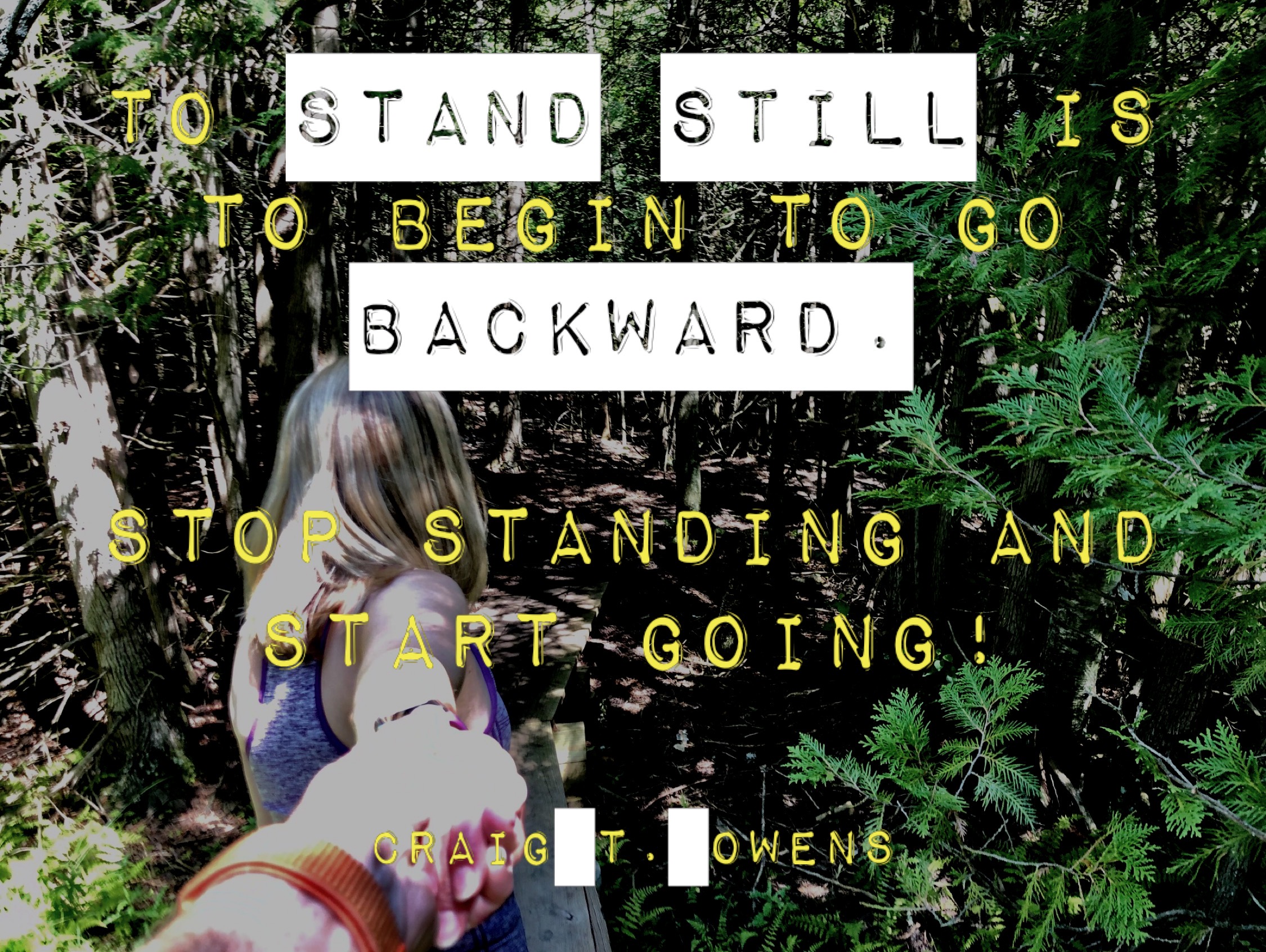
The Lord gave David victory everywhere he WENT, not everywhere he stood still. To stand still is to begin to go backward.

Is there a battle you need to fight? Is there a challenge you’ve been avoiding? Is there something you need to complete? Are you waiting for something to happen? Are you content just to stand still?

Stop standing still and start going! If you are following God, He will give you victory everywhere you go.

God’s Originality

Have you ever noticed all of the different ways that God reveals Himself to people? He is original with every original person.


I love looking at the Aha! moments that people have. You know, the moments when the light comes on and they understand Who God is to them?

  • When Jethro heard how God delivered Moses and the Israelites from Egypt he said, “Now I know that the true God is greater than all other gods.”
  • When Elijah raised a dead boy back to life the boy’s mother said, “Now I know that you are a man of God and that you only speak His words.”
  • When Naaman was healed of leprosy he said to Elisha, “Now I know that there is only one true God.”
  • When David recalled all the ways God has delivered him from certain disaster he sang, “Now I know that the Lord saves His anointed.”
  • When Peter was delivered from prison by an angel he said, “Now I know that God did this.”

(check out the references for these examples by clicking here)

God reveals Himself uniquely to everyone because we’re all unique originals.

“Let God be as original with other people as He is with you.” —Oswald Chambers

Here’s the problem with God’s originality: We try to make our unique experience with God a universal experience for everyone else. We think that because He did it such-and-such a way for us that everyone ought to experience it the same way.

Wrong!

Think about the deliverance from lions in the Bible. In Samson’s case, God gave him supernatural strength to kill a lion with his bare hands; Benaiah went into a pit to kill a lion with his club; Daniel never even touched the lions, and they couldn’t touch him either.

Imagine if Samson was there with Benaiah: “Hey, brother, if you’re going to go after that lion, just wait on God to give you supernatural strength. If you really had faith, you would lose that club!”

Imagine if Benaiah and Samson were giving lion-killing advice to Daniel: “My friend,” Benaiah might say, “Please use my club.” And Samson would interrupt, “How many times do I have to tell you? No clubs!” Yet in Daniel’s case, God wanted the lions alive.

Perhaps you had your “Now I know” moment after a prolonged struggle in a particular area. Your tendency would be to tell others, “Get on your knees and pray and pray and pray. Pray really hard! It might take years, but God will eventually help you breakthrough.” Perhaps God wants to deliver someone else instantly.

Perhaps your “Now I know moment” came while reading from the King James Version of the Bible. Your tendency is going to be to hand out KJVs to everyone. Perhaps God is going to speak to someone through the New Century Version.

Let God be original with you. Let Him uniquely work with others too. Don’t make your “Now I know” experience the theology which rules everyone around you.

I’m so glad God is unique with every unique individual because each of us is a one-of-a-kind original!

Conjunction Junction: BUT

Do you remember the School House Rocks videos? Fun and yet so educational! One of my favorite ones is called “Conjunction Junction.”

Conjunctions are very powerful connectors. Especially when I’m reading the Bible I slow down when I see and, or, or but. These conjunctions can open up a wealth of Scriptural knowledge.

Another thing that stands out to me when I’m reading God’s Word is the (parentheses). Little sidebars that can add so much richness. Today I saw a parenthetical comment followed by one of these powerful conjunctions.

Here’s the parenthetical comment: (There was never a man like Ahab, who sold himself to do evil in the eyes of the LORD, urged on by Jezebel his wife. He behaved in the vilest manner by going after idols, like the Amorites the LORD drove out before Israel) (1 Kings 21:25-26).

Ahab is not just evil—he’s not just bad—he’s the evilest, worst king… ever!

BUT = not one thing, but an entirely different thing.

But Ahab—the evilest king ever—humbled himself before God: “Have you noticed how Ahab has humbled himself before Me? Because he has humbled himself, I will not bring this disaster in his day, BUT I will bring it on his house in the days of his son” (v. 29).

I’m so glad God recognizes our humility and then extends His mercy. BUT is a great conjunction! Check out these passages with BUT

Do you not know that the wicked will not inherit the kingdom of God? Do not be deceived: Neither the sexually immoral nor idolaters nor adulterers nor male prostitutes nor homosexual offenders nor thieves nor the greedy nor drunkards nor slanderers nor swindlers will inherit the kingdom of God. And that is what some of you were. BUT you were washed, you were sanctified, you were justified in the name of the Lord Jesus Christ and by the Spirit of our God. (1 Corinthians 6:9-11)

Here is a trustworthy saying that deserves full acceptance: Christ Jesus came into the world to save sinners—of whom I am the worst. BUT for that very reason I was shown mercy so that in me, the worst of sinners, Christ Jesus might display His unlimited patience as an example for those who would believe on Him and receive eternal life. (1 Timothy 1:15-16)

It doesn’t matter if you were the vilest, meanest, worst-person-ever, when you humble yourself to ask for God’s forgiveness, He pronounces that great conjunctionBUTthat completely cancels your past!!

Wow! What a merciful, loving God! And what a great conjunction He inserts in our lives—BUT!

I’m happy today that I’ve been to God’s Conjunction Junction and He’s hooked a BUT between my former life and my present life. How about you?

Be An Intrusive Friend

Yesterday I talked about how to defeat depression in our personal lives. Maybe you’re not battling depression yourself, but since anti-depressants are one of the most prescribed medications, there’s a good chance that someone you know is dealing with depression. Beyond medicine or counseling, one of the greatest antidotes for depression is a friend: an intrusive friend.

In 1 Kings 19 when Elijah was running scared and slipping into depression, there is an important verse at the beginning of the story—Elijah was afraid and ran for his life. When he came to Beersheba in Judah, he left his servant there (v. 3).

One of our most natural reactions when we’re battling depression is to withdraw from others. It’s natural to want to be alone, but it is one of the worst things to do. Throughout Scripture, powerful people became vulnerable to attack when they left their friends behind—Samson, David, and Peter are prime examples. Even Jesus was tempted by the devil when He was alone in the wilderness.

So if it’s natural to want to be alone when depression is raining on our souls, a true friend will have to be an intrusive friend … a tenacious friend … a persistent friend. I love the lines in the Toby Mac song “Face Of The Earth” that say—

Now Hope Road is calling
Let’s pack you up and move
‘Cause real friends are willing to intrude
So I’m gonna push you in because I wanna love you well
Let the ghosts of your past rest

If you have a friend who is starting to become distant, dropping out of activities, or spending more time alone, these may be the warning signs of depression. Don’t let him be like Elijah and leave you behind, but love him or her enough to intrude in his or her life. Your encouragement just may be the best anti-depressant he/she will ever receive.

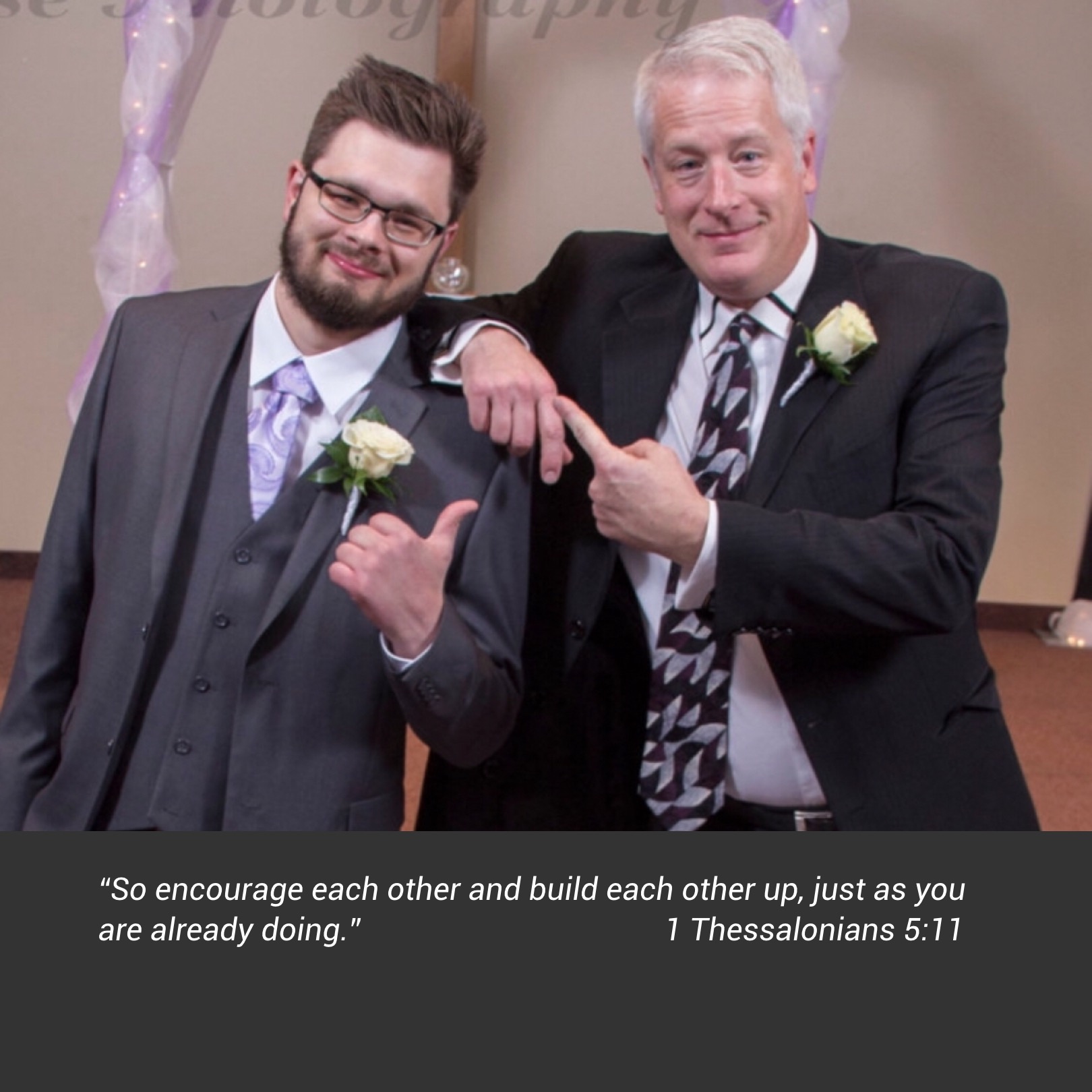
So speak encouraging words to one another. Build up hope so you’ll all be together in this, no one left out, no one left behind. I know you’re already doing this; just keep on doing it. (1 Thessalonians 5:11, The Message)

Jonathan went to find David and encouraged him to stay strong in his faith in God. (1 Samuel 23:16, New Living Translation)

Defeating Depression

In 1 Kings 19, Elijah hears that Queen Jezebel wants to kill him, so he “ran for his life.” Just four verses earlier Elijah “ran in the power of the Lord” (18:46) but now he is running scared. After 42 days of despondent wandering, Elijah ends up in a cave and God asks Elijah, “Why are you here?” (v. 9).

Elijah’s answer seems unresponsive. He tells God—as though He didn’t already know!—all about the spiritual conditions in Israel, but he never really answers the “why” question. God reveals Himself to Elijah more intimately (as “a gentle whisper”) and asks him again, “Why are you here?” Elijah gives the same, word-for-word answer.

During difficult times—when my “enemies” seem too numerous to count or too big to defeat—the eyes of my soul become cloudy. It becomes harder to look out and so I naturally tend to look inward. As a result, I become the center of my entire universe: “Now they are trying to kill me!”

In Psalms 42 and 43, the psalmist is clearly depressed. Look at his inward, me-focused questions—

  • When can I go and meet with God? (42:2)
  • My enemies continually taunt me, saying, “Where is this God of yours?” (42:3)
  • Why are you so downcast, O my soul? Why so disturbed within me? (42:5, 11; 43:5)
  • Why have You forgotten me? (42:9)
  • Why have You rejected me? (43:2)

Just as God’s question to Elijah was supposed to get him to look outward, the psalmist does begin to turn his gaze from himself. But notice how he does it—

  • My soul is downcast within me; therefore I will remember You (42:6)
  • Put your hope in God, for I will yet praise Him, my Savior and my God (42:11; 43:5)

When I’m battling depression, it takes an act of my will to praise God, to look outward and upward. Feelings follow actions. I don’t feel like praising Him because my problems feel so overwhelming, but when I will to praise Him, the feelings will follow.

Look how David did it—

I will extol the LORD at all times; His praise will always be on my lips.
My soul will boast in the LORD; let the afflicted hear and rejoice.
Glorify the LORD with me; let us exalt His name together.
(Psalm 34:1-3)

My friend, if you are depressed—if you have become inward-focused—only an act of your will can lift you out of this funk.

Use your willpower to act—look out, look up, praise God—and the cloud over your soul will begin to lift!

Ahead-Of-Time God

I was reading the well-known story of the prophet Elijah this morning, while still thinking about a life in limbo. Elijah has the audacity to say to the king of Israel, “As the LORD, the God of Israel, lives, Whom I serve, there will be neither dew nor rain in the next few years except at my word” (1 Kings 17:1).

That’s it. We just sort of jump right into this story. We don’t read about God instructing Elijah to say this to King Ahab. And more importantly, we don’t see God saying, “Elijah, even though the land will go through a severe drought, here’s how I’m going to take care of you.” Elijah’s life was in limbo. But I’m struck by God’s ahead-of-time provision for Elijah.

At the time of this story, the land of Israel is now under its sixth evil king; each one getting more and more sinful than the one before him. The current king, Ahab is called the most evil of all the kings yet. Israel had lived under sinful kings—which the Bible says were causing all of the people to sin, too—for over 70 years! Yet at least one family still faithfully clung to their belief in Yahweh, the true God. These parents named their son Elijah, which means “Yahweh is the one true God.” Although it might have seemed everyone was sinning and turning their back on God, at least one set of parents raised their son in a counter-cultural way, at least one set of parents trained their son to rely only on God, at least one set of parents equipped their son to stand firm in the face of overwhelming evil.

The ahead-of-time God provided God-fearing parents for Elijah to train him to fear God too.

As the famine began, God directed Elijah to a brook that continued to flow. This was also the place ravens would bring him food.

The ahead-of-time God provided food and water for Elijah.

The drought eventually dried up the brook that Elijah was using for water, and the ravens eventually stopped coming to that dried-up creek bed with food. So God sent Elijah to a widow in Zarephath with this promise, “I have commanded a widow in that place to supply you with food” (1 Kings 17:9). After Elijah entered this widow’s home, her supply of oil and flour never ran out throughout the entire three years of drought, giving all of them food to eat.

The ahead-of-time God provided oil and flour for a widow so that she could make food for Elijah.

My life may be in limbo, but I am confident that my ahead-of-time God has already provided for me. You and I have this promise: “And my God will liberally supply (fill to the full) your every need according to His riches in glory in Christ Jesus” (Philippians 4:19).

This story is in the Bible to reassure you and me that God supplies for us.